Archive for July 2026
The hack-trick of football judgments and Article 101(1) TFEU (I): first thoughts

The Court of Justice has recently delivered three consequential judgments, from a competition law perspective, revolving around the regulation of football. Tondela came in April, followed by ROGON and RRC Sports in July.
There is a great deal to unpack in these judgments, and many (or most) of the issues require a dedicated post. This said, now that Europe’s holiday month par excellence is about to start, it makes sense to share some initial thoughts on the lessons to draw from them. Hopefully it will start a conversation that we can continue once the rentrée is upon us.
First thought: the remarkable coherence and consistency of the case law. Since the late 2000s (once the decentralisation of EU competition law was underway, that is), the Court has been confronted with an unprecedented number of cases addressing the object/effect divide under Article 101(1) TFEU. Looking back, the coherence of the approach followed and the consistency with which it has been implemented in specific cases is remarkable.
In fact, the outcome of two of these cases (ROGON and RRC Sports) was already foretold in Delimitis and Cartes Bancaires. The first made it clear that an agreement that seeks to align the incentives of the parties is not restrictive by object. Cartes Bancaires, in turn, applied the same principle to the governance of joint ventures. ROGON and RRC Sports deal essentially with the governance of a particular type of joint venture and, since they follow the same approach, were decided in an identical way.
A while ago, it became cliché to argue that the case law on object restrictions is unclear and unpredictable. As I argued here, the opposite is true. The case law has, if anything, become increasingly predictable and clear over time. Which takes me to the next point.
Second thought: the ‘object-box approach’ to restrictions by object has been rejected, again. The Court has consistently rejected the ‘object-box approach’ to the identification of restrictions by object. This approach would identify agreements that are inherently inimical to competition on the basis of their form alone (e.g. a horizontal agreement that provides for price-fixing or market sharing would be by object under this school of thought).
The Court’s approach is, and has always been, contextual instead. Tondela and RRC Sports put the contextual approach to the test. The clause at issue in the former was a ‘no poach’ one, which would many saw as necessarily restrictive by its very nature. In turn, the second could be reasonably said to involve a form of ‘price-fixing’ (as the dispute at the national level shows). The Court, however, did not depart from its contextual approach and rejected the move away from the contextual approach, no matter how superficially egregious some clauses could have seemed.
Third thought: content, context, aims. Because the Court follows a contextual approach, it has become commonplace to say that ‘context is everything’ when establishing the object of an agreement under Article 101(1) TFEU. This idea is, of course, a bit of an oversimplification. It is through the interaction of the three elements identified in the case law (namely the content of the agreement, the aims it pursues and the relevant economic and legal context of which it is a part) that one can figure out the relevant object (the objective rationale, that is).
Against this background, Tondela and RRC Sports are particularly illuminating. They show how the three criteria interact in practice in the case law as well as the conclusions that the Court draws from this interaction. The richness of these contributions can only be captured in a dedicated post, if not a full-fat article.
Fourth thought: evaluating the context of the agreement is not the same as evaluating its effects. Together with the ‘object-box approach’, this aspect of the case law is the one that creates particular confusion. The need to consider the relevant economic and legal context has sometimes interpreted as a blurring of the boundary between object and effect.
However, the contextual approach is not, and cannot be, an analysis of the effects of the agreement. We must not forget the case law that insists on object and effect being alternative conditions, and neither can we ignore Expedia, which makes it clear that the significance of the effects is not relevant when considering the object of an agreement.
This is a point that the Court has consistently emphasised since Superleague. The trio of judgments illustrates how the contextual approach operates in practice. Hopefully these examples will show why object and effect are fundamentally different inquiries and, more importantly, they will provide guidance to courts and authorities so that they avoid the trap of conflating both.
Final thought (for the moment): Wouters and Meca Medina can only apply to non-object infringements. This is a point that the Court famously clarified in Superleague. To the extent that this is the case, there is no novelty. If I mention it, this is because of how obvious and inevitable the Court’s position seems when reading RRC Sports. However obvious, I promise to develop the point further in future posts.
Those who, like me, will soon be off for a few days: enjoy the time off!
CALL FOR SUBMISSIONS | Rubén Perea Writing Award 2027
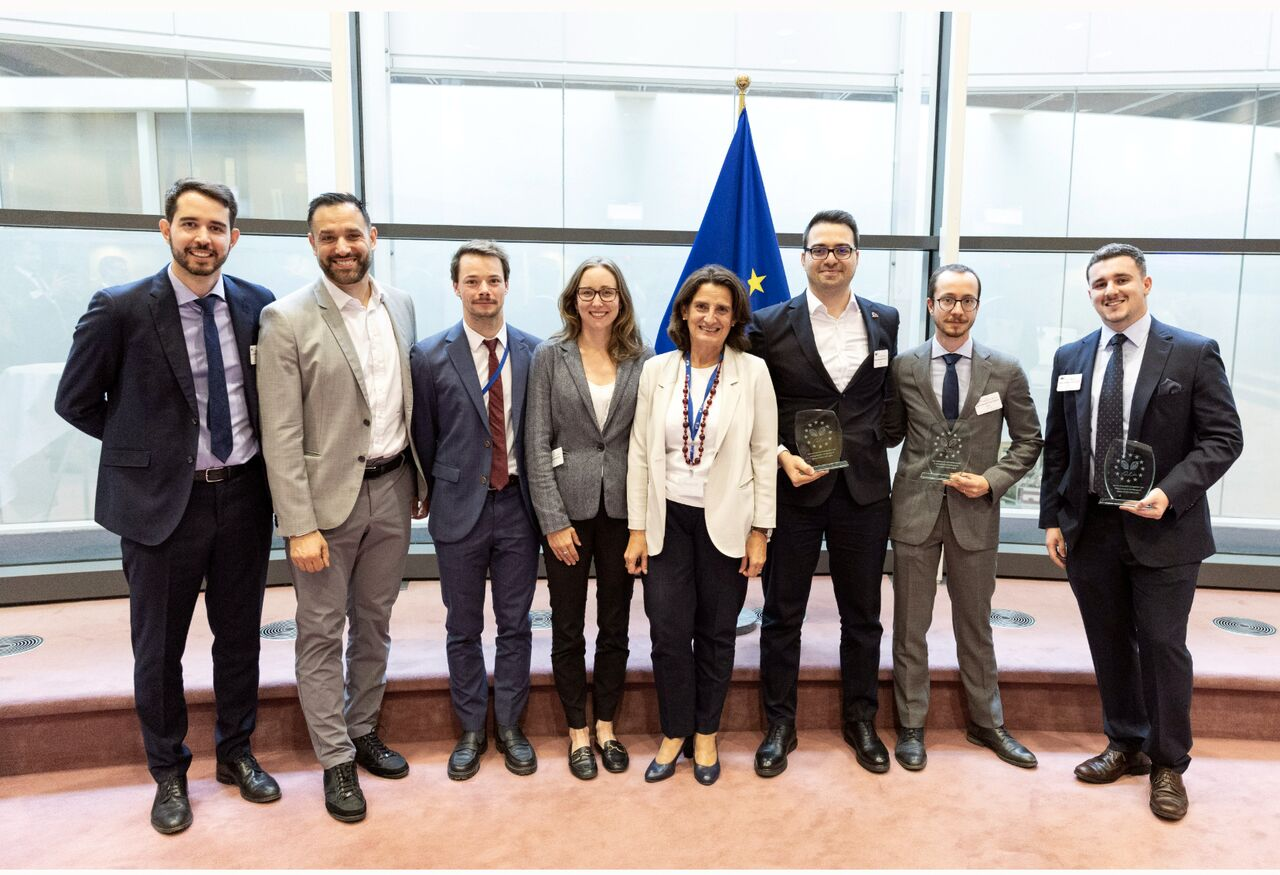
This blog is proud to celebrate the memory of the late Rubén Perea, a bright and most promising lawyer who left us all too soon. As we have done every year since 2020, we are launching a call for submissions to the new edition of the Writing Award created in his honour. The spirit of the prize has not changed: we invite the new generation of competition law scholars to share their work, and we give them the chance to see it publish in a leading outlet like the Journal of European Competition Law & Practice (JECLAP).
The winning paper, together with a selection of outstanding submissions, will be published in a dedicated issue of the journal.
Who can participate?
Undergraduate and postgraduate students, as well as early-career scholars, public officials and practitioners are all invited to submit their papers. Generally speaking, you may participate if you remain below the age of 30 by the submission date (i.e., if you were born after 16 November 1996). Submissions by authors having followed non-traditional career paths and also at an early stage of their career by virtue of this fact are very much welcome too.
What papers can be submitted?
You may submit a single-author unpublished paper which is not under consideration elsewhere. The paper may be specifically prepared for the award or originally drafted as part of your undergraduate or postgraduate studies. It may cover any substantive, institutional or procedural competition law topic (broadly understood, and thus comprising not just State aid and merger control but also the DMA or the FSR).
The paper must not exceed 10,000 words (footnotes included; we actively discourage the inclusion of a bibliography at the end of the paper).
IMPORTANT: prior to submission, please make sure your paper follows the JECLAP House Style rules, which can be found here.
How to submit?
Please submit the paper via this link: https://mc.manuscriptcentral.com/jeclap. IMPORTANT: when submitting the paper, you will have to indicate that your submission is specifically for the Rubén Perea Award (make sure you do so!).
What is the DEADLINE?
Papers have to be submitted by 23.59 (Brussels time) on 15 November 2026.
Article 102 TFEU and the Android judgment (I): understanding the law of the exceptional (and the exceptional within the exceptional)

The judgment of the Court of Justice in Android, delivered earlier this month, is one of the most consequential of, at least, the past decade. It builds on some aspects at which the Court already hinted in Google Shopping, all while introducing several of innovations and clarifications.
There will be no shortage of discussions and commentary on and around the judgment (and this blog will not be an exception). As an appetizer for what is to come, I thought I would share the conversation I had a few days ago with the great and indefatigable Alba Ribera Martínez. It can be accessed here. My intervention was structured around three main ideas:
Article 102 TFEU as the law of the exceptional (and the exceptional within the exceptional): It is easier to make sense of the judgment of the Court in Android as soon as one takes a long-term perspective. When one looks at the totality of the case law, all the way back to the 1970s, one can easily discern a distinct approach to the interpretation of Article 102 TFEU. The Court appears to regard dominance as an exceptional occurrence in the economy and draws a number of legal consequences therefrom. Android adds a layer: if Article 102 TFEU is the law of the exceptional, dominance in digital markets is the exceptional within the exceptional (with the legal adjustments that follow).
The comeback of competition on the merits: Dominant undertakings (including Google itself) revived the concept of competition on the merits. The hope was that, by requiring proof that the contentious behaviour departs from normal competition, it would introduce an additional burden on authorities and claimants. They were successful in achieving the comeback. However, the concept has not reduced the scope of Article 102 TFEU in any meaningful way. If anything, it has added a layer of uncertainty that promises to feature in discussions in the coming years. My take? Competition on the merits was discarded as an operational concept by German legal scholars in the 1950s. It will not be any different this time.
Causality and the analysis of effects: It is now jurisprudence constante that effects must be attributable to the behaviour of the dominant undertaking for Article 102 TFEU to come into play. How the causal link is established – and how the ping-pong between the authority/claimant and the dominant undertaking plays out – promises to be a legal point of contention in the coming years (and particularly so in digital markets, and for the reasons explained by the Court).
If you were wondering, there will be a blog post addressing each one of these three points. For the time being: hope you enjoy the chat with Alba!
NEW PAPER | Disinformation about green technologies as a restriction of competition

I have just uploaded on SSRN a new paper of mine (available here) entitled ‘Disinformation about green technologies as a restriction of competition‘. A presentation of the paper delivered to my colleagues at LSE Law School can be found here.
In spite of the staggering progress of green technologies across a number of sectors (including energy, transportation and food), it is not infrequent to read gloomy characterisations of the transition to a decarbonised economy: for instance, heat pumps are as noisy as an aircraft (and do not work), electric vehicles catch fire (and are much more polluting than their internal combustion rivals) and lab-based alternatives to meat are outright dangerous for human health.
The steady stream of disinformation about green technologies is sometimes ideological. However, it is often (if not most of the time) a rational and expected reaction by incumbent operators to the threat posed by emerging alternatives to their products. Suffice it to think, in this sense, of how renewable energies are transforming the electricity industry (towards one that is less concentrated and that empowers citizens and industrial users) or the potential transformation that would come with non-animal-based alternatives to products like butter or cheese.
To the extent that disinformation is driven by such economic concerns, competition law is potentially applicable. The paper provides a framework for the analysis of these strategies from a competition law standpoint. It builds heavily on the case law and administrative practice dealing with disparagement conduct in the pharmaceutical sector, which is the most obvious starting point for the assessment.
As I have not submitted it to a journal yet, it would be wonderful to get your comments on their piece. As ever, I am happy to clarify – in accordance with the ASCOLA declaration of ethics – that I have nothing to disclose.


