The hack-trick of football judgments and Article 101(1) TFEU (I): first thoughts

The Court of Justice has recently delivered three consequential judgments, from a competition law perspective, revolving around the regulation of football. Tondela came in April, followed by ROGON and RRC Sports in July.
There is a great deal to unpack in these judgments, and many (or most) of the issues require a dedicated post. This said, now that Europe’s holiday month par excellence is about to start, it makes sense to share some initial thoughts on the lessons to draw from them. Hopefully it will start a conversation that we can continue once the rentrée is upon us.
First thought: the remarkable coherence and consistency of the case law. Since the late 2000s (once the decentralisation of EU competition law was underway, that is), the Court has been confronted with an unprecedented number of cases addressing the object/effect divide under Article 101(1) TFEU. Looking back, the coherence of the approach followed and the consistency with which it has been implemented in specific cases is remarkable.
In fact, the outcome of two of these cases (ROGON and RRC Sports) was already foretold in Delimitis and Cartes Bancaires. The first made it clear that an agreement that seeks to align the incentives of the parties is not restrictive by object. Cartes Bancaires, in turn, applied the same principle to the governance of joint ventures. ROGON and RRC Sports deal essentially with the governance of a particular type of joint venture and, since they follow the same approach, were decided in an identical way.
A while ago, it became cliché to argue that the case law on object restrictions is unclear and unpredictable. As I argued here, the opposite is true. The case law has, if anything, become increasingly predictable and clear over time. Which takes me to the next point.
Second thought: the ‘object-box approach’ to restrictions by object has been rejected, again. The Court has consistently rejected the ‘object-box approach’ to the identification of restrictions by object. This approach would identify agreements that are inherently inimical to competition on the basis of their form alone (e.g. a horizontal agreement that provides for price-fixing or market sharing would be by object under this school of thought).
The Court’s approach is, and has always been, contextual instead. Tondela and RRC Sports put the contextual approach to the test. The clause at issue in the former was a ‘no poach’ one, which would many saw as necessarily restrictive by its very nature. In turn, the second could be reasonably said to involve a form of ‘price-fixing’ (as the dispute at the national level shows). The Court, however, did not depart from its contextual approach and rejected the move away from the contextual approach, no matter how superficially egregious some clauses could have seemed.
Third thought: content, context, aims. Because the Court follows a contextual approach, it has become commonplace to say that ‘context is everything’ when establishing the object of an agreement under Article 101(1) TFEU. This idea is, of course, a bit of an oversimplification. It is through the interaction of the three elements identified in the case law (namely the content of the agreement, the aims it pursues and the relevant economic and legal context of which it is a part) that one can figure out the relevant object (the objective rationale, that is).
Against this background, Tondela and RRC Sports are particularly illuminating. They show how the three criteria interact in practice in the case law as well as the conclusions that the Court draws from this interaction. The richness of these contributions can only be captured in a dedicated post, if not a full-fat article.
Fourth thought: evaluating the context of the agreement is not the same as evaluating its effects. Together with the ‘object-box approach’, this aspect of the case law is the one that creates particular confusion. The need to consider the relevant economic and legal context has sometimes interpreted as a blurring of the boundary between object and effect.
However, the contextual approach is not, and cannot be, an analysis of the effects of the agreement. We must not forget the case law that insists on object and effect being alternative conditions, and neither can we ignore Expedia, which makes it clear that the significance of the effects is not relevant when considering the object of an agreement.
This is a point that the Court has consistently emphasised since Superleague. The trio of judgments illustrates how the contextual approach operates in practice. Hopefully these examples will show why object and effect are fundamentally different inquiries and, more importantly, they will provide guidance to courts and authorities so that they avoid the trap of conflating both.
Final thought (for the moment): Wouters and Meca Medina can only apply to non-object infringements. This is a point that the Court famously clarified in Superleague. To the extent that this is the case, there is no novelty. If I mention it, this is because of how obvious and inevitable the Court’s position seems when reading RRC Sports. However obvious, I promise to develop the point further in future posts.
Those who, like me, will soon be off for a few days: enjoy the time off!
CALL FOR SUBMISSIONS | Rubén Perea Writing Award 2027
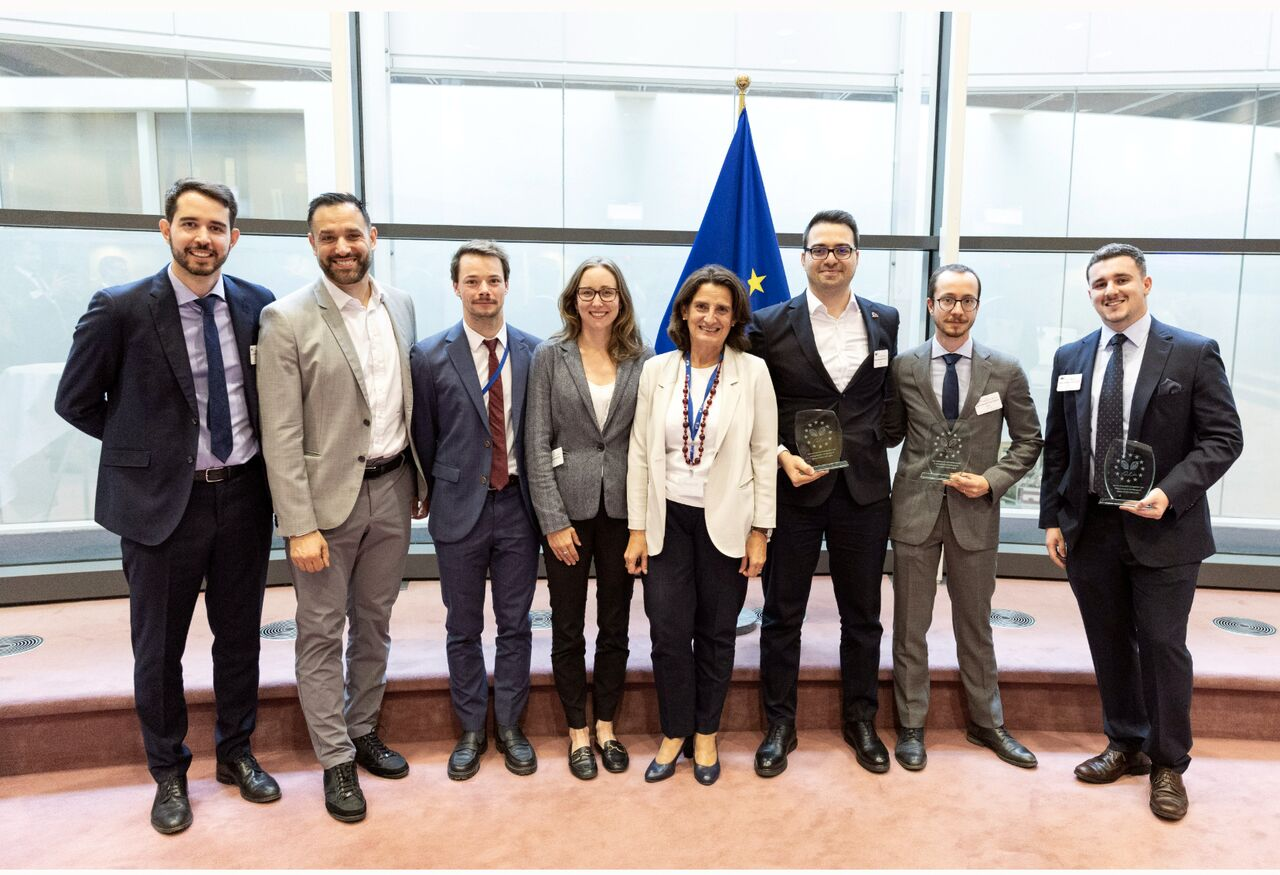
This blog is proud to celebrate the memory of the late Rubén Perea, a bright and most promising lawyer who left us all too soon. As we have done every year since 2020, we are launching a call for submissions to the new edition of the Writing Award created in his honour. The spirit of the prize has not changed: we invite the new generation of competition law scholars to share their work, and we give them the chance to see it publish in a leading outlet like the Journal of European Competition Law & Practice (JECLAP).
The winning paper, together with a selection of outstanding submissions, will be published in a dedicated issue of the journal.
Who can participate?
Undergraduate and postgraduate students, as well as early-career scholars, public officials and practitioners are all invited to submit their papers. Generally speaking, you may participate if you remain below the age of 30 by the submission date (i.e., if you were born after 16 November 1996). Submissions by authors having followed non-traditional career paths and also at an early stage of their career by virtue of this fact are very much welcome too.
What papers can be submitted?
You may submit a single-author unpublished paper which is not under consideration elsewhere. The paper may be specifically prepared for the award or originally drafted as part of your undergraduate or postgraduate studies. It may cover any substantive, institutional or procedural competition law topic (broadly understood, and thus comprising not just State aid and merger control but also the DMA or the FSR).
The paper must not exceed 10,000 words (footnotes included; we actively discourage the inclusion of a bibliography at the end of the paper).
IMPORTANT: prior to submission, please make sure your paper follows the JECLAP House Style rules, which can be found here.
How to submit?
Please submit the paper via this link: https://mc.manuscriptcentral.com/jeclap. IMPORTANT: when submitting the paper, you will have to indicate that your submission is specifically for the Rubén Perea Award (make sure you do so!).
What is the DEADLINE?
Papers have to be submitted by 23.59 (Brussels time) on 15 November 2026.
Article 102 TFEU and the Android judgment (I): understanding the law of the exceptional (and the exceptional within the exceptional)

The judgment of the Court of Justice in Android, delivered earlier this month, is one of the most consequential of, at least, the past decade. It builds on some aspects at which the Court already hinted in Google Shopping, all while introducing several of innovations and clarifications.
There will be no shortage of discussions and commentary on and around the judgment (and this blog will not be an exception). As an appetizer for what is to come, I thought I would share the conversation I had a few days ago with the great and indefatigable Alba Ribera Martínez. It can be accessed here. My intervention was structured around three main ideas:
Article 102 TFEU as the law of the exceptional (and the exceptional within the exceptional): It is easier to make sense of the judgment of the Court in Android as soon as one takes a long-term perspective. When one looks at the totality of the case law, all the way back to the 1970s, one can easily discern a distinct approach to the interpretation of Article 102 TFEU. The Court appears to regard dominance as an exceptional occurrence in the economy and draws a number of legal consequences therefrom. Android adds a layer: if Article 102 TFEU is the law of the exceptional, dominance in digital markets is the exceptional within the exceptional (with the legal adjustments that follow).
The comeback of competition on the merits: Dominant undertakings (including Google itself) revived the concept of competition on the merits. The hope was that, by requiring proof that the contentious behaviour departs from normal competition, it would introduce an additional burden on authorities and claimants. They were successful in achieving the comeback. However, the concept has not reduced the scope of Article 102 TFEU in any meaningful way. If anything, it has added a layer of uncertainty that promises to feature in discussions in the coming years. My take? Competition on the merits was discarded as an operational concept by German legal scholars in the 1950s. It will not be any different this time.
Causality and the analysis of effects: It is now jurisprudence constante that effects must be attributable to the behaviour of the dominant undertaking for Article 102 TFEU to come into play. How the causal link is established – and how the ping-pong between the authority/claimant and the dominant undertaking plays out – promises to be a legal point of contention in the coming years (and particularly so in digital markets, and for the reasons explained by the Court).
If you were wondering, there will be a blog post addressing each one of these three points. For the time being: hope you enjoy the chat with Alba!
NEW PAPER | Disinformation about green technologies as a restriction of competition

I have just uploaded on SSRN a new paper of mine (available here) entitled ‘Disinformation about green technologies as a restriction of competition‘. A presentation of the paper delivered to my colleagues at LSE Law School can be found here.
In spite of the staggering progress of green technologies across a number of sectors (including energy, transportation and food), it is not infrequent to read gloomy characterisations of the transition to a decarbonised economy: for instance, heat pumps are as noisy as an aircraft (and do not work), electric vehicles catch fire (and are much more polluting than their internal combustion rivals) and lab-based alternatives to meat are outright dangerous for human health.
The steady stream of disinformation about green technologies is sometimes ideological. However, it is often (if not most of the time) a rational and expected reaction by incumbent operators to the threat posed by emerging alternatives to their products. Suffice it to think, in this sense, of how renewable energies are transforming the electricity industry (towards one that is less concentrated and that empowers citizens and industrial users) or the potential transformation that would come with non-animal-based alternatives to products like butter or cheese.
To the extent that disinformation is driven by such economic concerns, competition law is potentially applicable. The paper provides a framework for the analysis of these strategies from a competition law standpoint. It builds heavily on the case law and administrative practice dealing with disparagement conduct in the pharmaceutical sector, which is the most obvious starting point for the assessment.
As I have not submitted it to a journal yet, it would be wonderful to get your comments on their piece. As ever, I am happy to clarify – in accordance with the ASCOLA declaration of ethics – that I have nothing to disclose.
OUT TODAY (finally!): The New Law of State aid and Subsidies
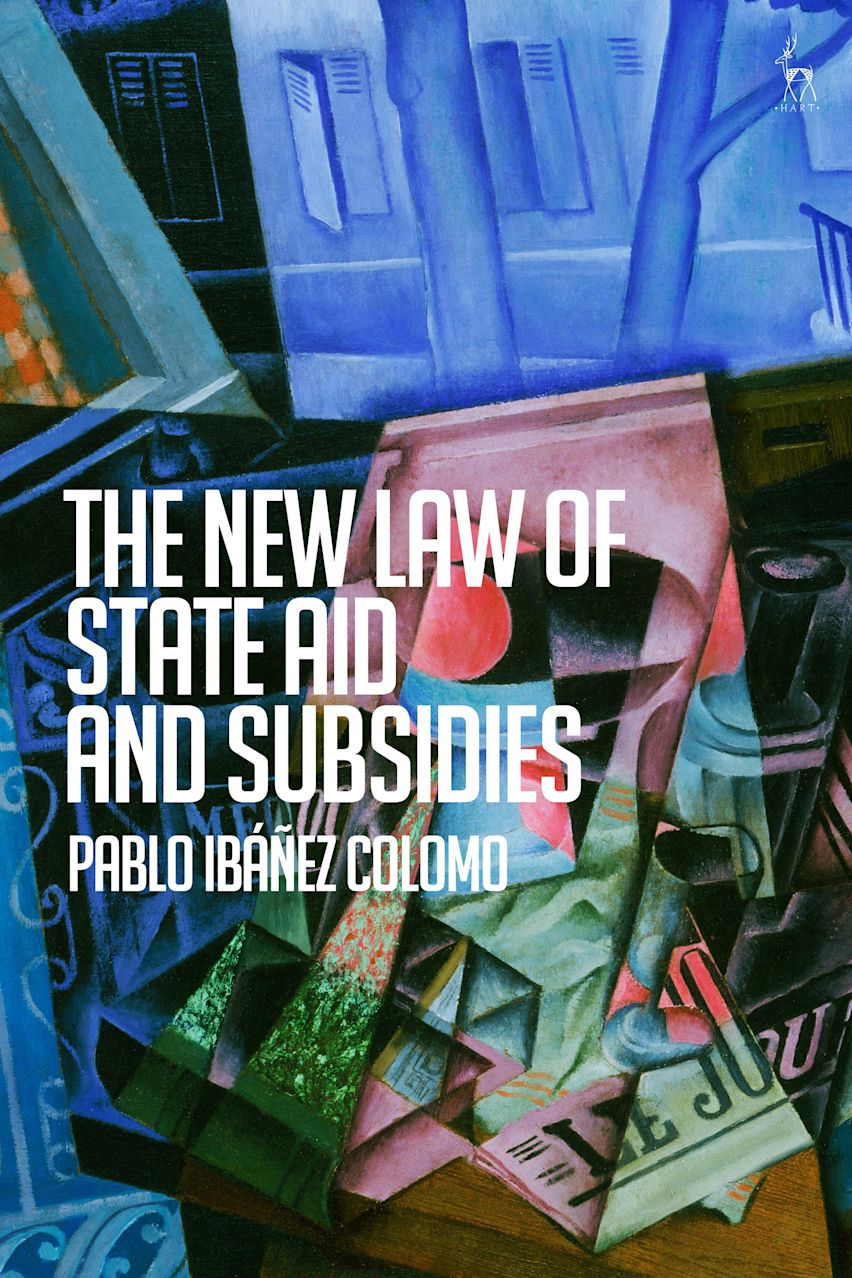
The New Law of State Aid and Subsidies is (finally!) coming out today with Hart Publishing (with a 20% discount if you purchase it via the publisher using this flyer).
As those who know me are aware, I have long been interested in State aid and subsidy regulation. With all the changes that the discipline has recently undergone and is currently undergoing, the moment felt right to both take stock of the evolution of EU State aid law and discuss how the discipline is evolving both within and outside the boundaries of the European Union.
It was particularly exciting to address emerging developments and regimes, including the UK subsidy control system and the EU Foreign Subsidies Regulation. I have been able to incorporate developments up until January 2026, including the Guidelines on foreign subsidies and the most recent judgments of the Competition Appeal Tribunal on the subject.
I really look forward to discussing the ideas in the book. For the time being, I have events scheduled at the University of Murcia, the European University Institute and the Luxembourg Centre for European Law, and hopefully more (not least at the LSE Law School, and in Brussels) will follow.
It would be really wonderful to keep the discussion going, so please do reach out if you have ideas in this sense! It has always been my view that State aid and subsidy regulation do not attract the academic attention they deserve. Hopefully the book will contribute to remedying that anomaly.
Upcoming events: Luxembourg (LCEL, 26th February) and Brussels (European Commission, 5th March)
The Luxembourg Centre for European Law and the Association of European Competition Law Judges have jointly organised a seminar on self-preferencing that will take place in Luxembourg on 26th February. More information on the event and on how to register can be found here.
The speakers are Judge Octavia Spineanu-Matei (Court of Justice), Professor Walid Chaiehloudj (Université Côte d’Azur) and yours truly. If you happen to be around, it would be great to catch up – and the organisers have wisely foreseen ample time for discussion after our presentations.
On 5th March, the European Commission will be hosting a conference on the future of merger control (Shaping the Future of EU Merger Control Conference). It promises to be one of the landmarks in the process leading to the review of the Merger Guidelines.
It is a day-long event that will kick off with a panel on ‘Driving productivity and innovation in the Single Market: the role of EU Merger control‘, which I will have the honour of moderating. It features a distinguished list of officials, academics and legal advisers. One to which I very much look forward. Again, hope to see many of you on the day!
What Lukoil means for the refusal to deal doctrines

The Court of Justice delivered its judgment in Lukoil as 2025 was coming to an end. It was the second case in the year that engaged head on with the conditions set out in Magill and Bronner.
It may be true that this judgment is not as consequential as the one in Android Auto for the present and future of the refusal to deal doctrines. This said, Lukoil marks a subtle but clear move away from the traditional rationale underpinning the application of these doctrines.
What makes the legal development even more interesting is that it appears to expand the scope of application of Magill and Bronner, where as Android Auto decisively reduced their scope.
Traditionally (and as recently as 2021, when the Court ruled in Slovak Telekom), the Magill and Bronner doctrines were justified on two grounds. Compelling a firm to deal with third parties interferes with fundamental rights and must therefore be confined to exceptional circumstances. What is more, it can be expected to negatively affect the undertaking’s incentives to invest and innovate.
This original rationale no longer reflects the reality of the case law. In Android Auto, the Court held that requiring a firm to deal with third parties with which it has chosen not to deal is not necessarily confined to the refusal to deal doctrines. Magill and Bronner will only be relevant, moving forward, when compelling the sharing of an asset would ‘fundamentally alter‘ the dominant undertaking’s ‘economic model‘.
Accordingly, a firm running a partially open platform can no longer invoke the refusal to deal doctrines by virtue of the fact that it has chosen to open other markets, not necessarily concerned by the dispute, to third parties.
Lukoil raises a different set of issues. One of the questions asked by the Bulgarian Administrativen sad Sofia-oblast was, in essence, whether the refusal to deal doctrines are applicable where the development of the infrastructure has been supported by means of State aid.
The answer would be clear if one were to look at the traditional rationale behind Magill and Bronner. Where State aid is involved in the roll-out of the infrastructure, the traditional concerns with firms’ incentives to invest and innovate are not present.
The award of public funding is an alternative, and mutually exclusive, approach to deal with the incentive-related issues. To the extent that it is, one could reasonably claim that public funding rules out, by definition, the application of Magill and Bronner.
One could, in fact, go further and argue that the award of State aid does not just exclude the application of the refusal to deal doctrines, but requires that the subsidised infrastructure be shared with third parties.
This is, after all, the (very reasonable) position taken by the European Commission in its Guidelines on State aid for broadband networks, where it holds that ‘[e]ffective wholesale access for third parties to the funded networks is an indispensable condition of any State aid measure‘.
The Court of Justice, however, did not follow the logic of the traditional case law. According to the judgment, the applicability of Magill and Bronner does not hinge on whether the infrastructure was built with public support, but whether the owner of the infrastructure acquired it ‘at a price and under conditions resulting from a competitive procedure‘.
As a result of this choice, a dominant firm controlling an asset can validly invoke Magill and/or Bronner even when its incentives to invest and to innovate would not have been negatively affected by an obligation to deal with third parties.
For the same reason, it is inevitable to conclude that the scope of the refusal to deal doctrines has been expanded to comprise scenarios where it would not have been applicable, at least in light with the twofold rationale provided by the Court in Slovak Telekom.
The conclusion seems clear: the scope of refusal to deal doctrines seems to have shrunk in digital scenarios, whereas it has expanded in the realm of public utilities (telecommunications, energy, gas, rail), where the incumbent often exploits infrastructures rolled out with public support.(if not outright ownership).
In a sense, the case law appears to have moved in line with enforcement priorities.
Why the reluctance to call ‘abuses by object’ by their name is not justified

Last week’s post discussed a quintessential example of a ‘by object’, namely disparagement strategies. By the end of the entry, I pointed out that, for some reason, there is some reluctance to call a spade a spade or, more precisely, to call abuses by object by their name. A number of potential alternative labels have been floated, such as ‘naked restrictions’.
It is not immediately obvious to understand the reticence to accept this category. Abuses by object are neither an academic theory nor a policy proposal: they are a creation of the Court of Justice.
A cursory overview of the case law reveals that there are some practices (say, pricing below AVC à la AKZO) that are prohibited (i) without the need to show anticompetitive effects precisely because (ii) they have no plausible explanation other than the exclusion of a rival.
What is more, Superleague dissipated any doubts that might have existed about the existence of abuses by object in the world of positive law.
If abuses by object are very much a thing, what explains, then, the reluctance to embrace a concept which brings not just clarity and consistency but which, moreover, dispenses with the need to establish the exclusionary impact of some practices?
Reading some commentary here and elsewhere, I believe I have come to understand, the mystery behind this counterintuitive attitude.
The reluctance appears to be based on a misunderstanding of the concept and operation of ‘by object’ infringements. According to this (mis)understanding, this category of infringement would be incompatible with some features of the case law interpreting the notion of abuse.
The Court made it clear in Intel that, even when the anticompetitive effects of a practice are presumed, it is always possible for the dominant firm to produce evidence showing that the said practice is incapable of having an exclusionary impact.
This is where, the argument goes, Article 102 TFEU departs from ‘by object’ infringements. According to this view, it is not possible to rebut a finding that an agreement restricts competition by object under Article 101(1) TFEU by showing that it is incapable of having anticompetitive effects.
The only problem is that this interpretation of Article 101(1) TFEU is, as the law stands, incorrect. Not only is it possible to rebut a finding of a ‘by object’ infringement on the basis of the absence of effects, this argument has been successfully invoked in a number of cases.
The judgment of the Court of Justice in Servier made this point clear, and arguably more explicitly than preceding ones (AG Kokott’s Opinion in Generics articulated this idea very effectively too). An agreement can only infringe Article 101(1) TFEU, whether by object or effect, where there is (actual or potential) competition to restrict in the first place.
By the same token, the agreement will escape the prohibition where it appears that competition would have been impossible (which would be the case, for instance, there are regulatory barriers to entry that prevented such competition irrespective of the behaviour of the parties).
Again, this is not such a theoretical possibility. As mentioned a few times here, this very question led to the partial annulment of the Commission decision in E.On Ruhrgas. It was also raised (unsuccessfully) in Toshiba, which was a plain-vanilla cartel case.
What matter for the purposes of this discussion is that, had the members of the cartel, proved that regulatory barriers to entry made competition between European and Japanese producers impossible, there would have been no infringement. This conclusion is clear from the appeal judgment in the case.
Against this background, there is nothing in the Article 101(1) TFEU case law that is at odds with Intel. When a practice is abusive by object, the possibility to rebut the presumption of effects exists, just like it does under Article 102 TFEU.
As far as ‘by object’ conduct is concerned, however, the bar to rebut the presumption is very high, as the Commission rightly explains in its Draft Guidelines. The dominant firm would have to show that competition would have been impossible in the relevant economic and legal context. The bar may be high, but the possibility exists nonetheless.
Relying on ‘abuse by object’ as a category, as opposed to ‘naked restriction’, has an additional advantage. It seems to me that the former is broader than the latter. There is conduct that is prohibited as a ‘by object’ infringement even though it can be plausibly explained other than as a means to restrict competition.
Conduct aimed at partitioning the internal market, at issue in cases like ABInbev, is the example that comes to mind immediately. It may be true that sometimes price discrimination can be rationalised as a pro-competitive strategy.
To the extent that it goes against the overarching objective of market integration, however, it is prohibited by object under Article 101(1) TFEU. And, coming back to the theme that motivated this post, it stands to reason that it is also prohibited as such under Article 102 TFEU.
Which takes me to the conclusion: it would be immensely beneficial if the codification exercise underpinning the Guidelines streamlined the fundamental issues and called ‘abuses by object’ by their name.
What the disparagement cases tell us about abuses by object (and the forthcoming Guidelines)

I have spent the past few weeks (re-)reading in detail the case law and administrative practice on disparagement and related issues, including landmark rulings such as (the other) Hoffmann-La Roche and AstraZeneca. The Commission decision in Teva-Copaxone is a fascinating read that builds on the extensive experience acquired at the national level (see here for a discussion of the some recent developments in France, where disparagement has long been a priority).
The reasons why I became interested in these cases will be apparent in a few weeks’ time. I will explore a different set of questions for the time being. As I was reading judgments and decisions, I realised they provide valuable lessons for the interpretation of Article 102 TFEU and the forthcoming Guidelines on exclusionary abuses.
My first thought was that disparagement cases perfectly illustrate why the Court of Justice is right to have crafted a ‘by object’ category of abuses. If conduct is restrictive by object under Article 101(1) TFEU, it stands to reason that it is also prohibited under Article 102 TFEU by its very nature (that is, without the need to show that it is capable of having anticompetitive effects).
In (the other) Hoffmann-La Roche, the Court held that an agreement aimed at disseminating misleading information with a view to reducing the competitive pressure that one product puts on another is restrictive by object. Nothing would justify requiring a case-by-case analysis of effects where the same practice is unilaterally implemented by a dominant firm.
The Commission was cautious in its analysis in Teva-Copaxone, and took the care of looking at the exclusionary capability in the relevant market. While this approach is easy to rationalise from the authority’s perspective, treating disparagement conduct as a ‘by object’ infringement under both Articles 101 and 102 TFEU would be preferable.
In this sense, it seems to me that the Commission would have discharged its burden of proof after showing that the behaviour is objectively aimed at disparaging a rival. From this perspective, the analysis of the anticompetitive effects would be superfluous as a matter of law – but might make sense as a safeguard from a policy-making perspective.
Since the decision in Teva-Copaxone has been challenged before the General Court, we may get an answer on this crucial point of law.
Consistency also demands that abuses by object are called by name, as opposed to say, ‘naked restrictions’ or ‘per se abuses’ (remember there is no such thing as a per se infringement in EU competition law).
The latest iteration of the Draft Guidelines on exclusionary abuses resists the idea of calling a spade a spade, thereby adding unnecessary clutter to law and policy. It would be preferable if the final version streamlined the issue by embracing the Court’s case law (which is, after all, the goal of the project).
My next post will explain why reluctance to accept the case law as it stands is unwarranted. In the meantime, I look forward to your comments on these questions.
LSE Short Course on State Aid and Subsidy Regulation (Feb 2026 edition)

The new edition of the LSE Short Course on State Aid and Subsidies Regulation will be organised, again, in February of this year. I really look forward to it, as it comes at a time when major developments are reshaping the discipline in fundamental ways (so fundamental, in fact, that they inspired me to write a whole book on them).
The Short Course will cover all these developments, including the changes brought about by the Clean Industrial Deal framework, the emerging administrative practice under the EU Foreign Subsidies Regulation and the growing case law interpreting the UK Subsidy Control Act 2022.
It always seemed to me that State aid and subsidies are learnt ‘along the way’ by many lawyers. The point of this Short Course is precisely to provide what many might miss: the necessary basics and conceptual framework to navigate the discipline and remain on top of contemporary trends.
As usual, the Short Course will take place online and it is designed with full-time professionals in mind. Attendance will be capped at around 25 participants to maximise interaction (always one of the big pluses of this format: every edition is shaped by the discussions that take place).
The sessions will be on four consecutive Thursdays: 6th, 13th, 20th and 27th February (at the usual time: 2pm to 6pm London time).
An LSE Certificate will of course be available upon completion, along with CPD points for practitioners.
If you have any questions about the organisational aspects of the two courses, do not hesitate to contact my wonderful colleague Mandy Tinnams: A.Tinnams@lse.ac.uk.


