Author Archive
Perfect competition

At university, I teach a course entitled “basic economics of competition law“.
Last week, I told my LL.M. students that there are only few real life examples of the perfect competition model.
I also told them that the “perfect competition” entry in Wikipedia only mentioned street food in Asia.
If I had to think personnally of additional illustrations, the only examples that sprung to my mind were:
- Le Carré in Liège => the city centre area where students get d***k on the WE
- The Kebab street close to the Grand Place in Brussels => the city centre area where people rush at night after they got d***k
Since then, one of my LL.M. students has apparently updated the Wikipedia entry :).
Hearing in CISAC v. Commission (and more)

I was yesterday at the General Court with my LL.M. students from Liege. We attended the hearing in CISAC v. Commission.
Here’s a grab bag of ruminations on the CISAC case, and some information on the Court. Let’s start with the case.
I. CISAC v. Commission
In this case, the Commission argues that national collecting societies have entered into an unlawful concerted practice “‘by coordinating the territorial delineations of the reciprocal representation mandates granted to one another“. The evidence brought in support of this finding hinges primarily on proof of parallel conduct, through the adoption of similar reciprocal representation contracts by the collecting societies.
During the hearing, the Judges repeatedly questioned the Commission on why it had brought no other evidence of concerted practice, in particular, documentary evidence. The judges found that surprising, especially given that the Commission enjoyed the implicit support of two collecting societies, i.e. BUMA and SABAM.
The Commission awkwardly conceded that there could not be any evidence of this kind, because it was not necessary for the collecting societies to “agree” on the terms of the reciprocal representation contracts (I heard something like: “there was nothing to agree upon“).
If I understand correctly, those terms – and more generally, the monoterritorial agreements – had been applied previously in other types of contracts, and it was simply the most rational decision for each collecting society to replicate them individually in the impugned reciprocal contracts. In so saying, however, the Commission made a daft mistake. It implicitly admitted that the wide-ranging parallel adoption of dozens of similar reciprocal contracts had an explanation alternative to concertation (i.e. individual, rational behavior from collecting societies) … and that it had not discharged the burden of proof required under the Woodpulp case-law.
The main applicant’s lawyer rightly noted, moreover, that territorial exclusivity makes a lot of sense from a rational, individual standpoint.
II. Reform of the Court
Alfonso referred to the reform of the Court a few days ago. Here’s some fresh information on the reform.
The General Court and the Court of Justice now have an agreement to propose the appointment of 12 new judges +3 référendaires for each (and importantly, 12 cars (without a driver though)).
Those 12 new judges will surely be appointed under a rotation model, similar to the one that prevails at the Civil Service Tribunal. There will be new jobs for référendaires thus, in particular in fields such as competition law. As pointed out by Alfonso, being a French native speaker is a HUGE asset. In fact, in each cabinet, there’s generally at least on French speaking guy. And this is unlikely to change. I heard that the new selection panel – which assesses candidate judges – drafted a report stressing that new appointed judges should hold two skills: a very good French and a strong publication track-record. As a French speaking academic, I could simply commend the work of those authors. That said, I will never hold a such prestigious position :(, given (i) my insulation from the French legal system; and (ii) that I have not followed THE standard professional avenue to the ECJ, i.e. Council of State or Ecole de la magistrature.
More information:
- At the ECJ, a vice-president will be appointed. New (I heard five) AG’s positions will be created.
- Specific rules will be adopted in relation to the 5 judges chambers;
- Other aspects of the reform may entail suppressing the rapport d’audience, providing for an accelerated preliminary reference procedure (duration ❤ months), limiting the size of written pleadings, etc.
- It will be up to the heads of State to decide on this.

Sixth Junior Competition Conference

In a somewhat risky bid to compete with the first ever Chillin’competition conference (just kiddin’ here), our UK friends (and possily readers) Kit Brown, David Bailey and Sarah Long are trying to put together what looks like a promising conference.
They have asked us to post an ad on this website. As soon to be “essential facility” operators in the competition law blogosphere, we want to avoid trouble. We thus had no other choice but to accept.
More seriously, this looks again like a great initiative. See below for more.
SIXTH JUNIOR COMPETITION CONFERENCE – CALL FOR SPEAKERS
The editors of the Competition Law Journal would like to draw your attention to the Sixth Junior Competition Conference. It will take place on Friday 27 January 2012 and will be dedicated to the issue of reform of the UK competition regime; for further details please go to the following web page:http://www.jordanpublishing.co.uk/publications/commercial/competition-law-journal
If you would like to speak at the conference, please contact Vian Quitaz – vjquitaz@hotmail.com – with an expression of interest and a short outline of your proposed topic.A separate announcement will be made in due course for those interested in attending the Conference.
The editors of the Journal look forward to hearing from you.
Competition Awareness

A big thank you to Sean F. Ennis, Executive Director of the Competition Commission of Mauritius. I just received this morning a bunch of very original compliance brochures.
This year, I have planned to make my lectures a little more interactive. With t-shirts from the Norwegian competition authority and the mangas of Singapore’s competition authority, those brochures will clearly help.
Hereafter, a ppt. presented at the ICN conference this year, with more examples of innovative public outreach instruments:
Competition Law Everywhere

I often tell my studs that there’s competition law everywhere.
Here’s an example, found this morning when reading the news at breakfast.
In several recent lectures, I have explained that the case-law insulates organs with “exclusively social functions” from the ambit of the competition rules. This is especially the case of social schemes that operate under the solidarity principle (ECJ, C-159/91 et C-160/91, Poucet and Pistre).
In France, the “mutualités” (complementaty social schemes) have recently announced their intention to collectively raise prices, to pass-on tax increases decided by the Government. I suspect that some of them do not operate under the solidarity principle, and might thus not benefit from the above exception. Needless to say that any coordinated plan to increase prices could be akin to an unlawful concerted practice or decision by associations of undertakings under Article 101 TFEU.
Moreover, it seems that the governement does not force them to pass-on the price increase (in which case they could benefit from the act of State defense). Hence, the sole economic situation in which 100% repercussion would be unavoidable, is where the “mutualités” already price at marginal costs. Otherwise, if they make a profit, they can take part (or all) of the tax increase on their profits. In this case, they should compete on the tax increase absorption. A joint decision to transfer it on consumers should thus be forbidden, in that it chills competition.
Now off to watch France v. Wales
Hammering out Public Restrictions of Competition

Article 101 and 102 TFEU have little grip against public restrictions of competition.
Of course, Article 4(3) TEU, read in conjunction with Articles 101 and 102 TFEU may provide a legal basis to challenge public restrictions of competition in the context of infringement proceedings. But to date, the Commission has been understandably reluctant to take Member States to Court. And to the best of our knowledge, the Italian matches case-law (ECJ, Consorzio Industrie Fiammiferi (CIF), C-198/01), which compels NCAs to declare such measures inapplicable, has been little applied in practice.
With this background, it will often fall on “positive integration” measures (read EU regulations) to remove public restrictions of competition. In connection with this, my research assistant Norman Neyrinck recently informed me of an interesting ECJ ruling that I had overseen.
In Société fiduciaire nationale d’expertise comptable v. Ministre du Budget, des comptes publics et de la fonction publique (C-119/09) the Court found that Directive 2006/123 on services in the internal market (AKA the “Bolkestein Directive“) “ought be interpreted as precluding national legislation which totally prohibits the members of a regulated profession, such as the profession of qualified accountant, from engaging in canvassing“.
This is likely to have profound practical implications, given the wide substantive scope of the services directive. Other regulated professions (legal services?) may no longer apply bans on advertising to their members.
And this is likely to also have important cultural consequences. See video hereafter:
Tougher Competition Law

The day before yesterday, in Joined Cases C‑403/08 and C‑429/08 (Premier League), the Court of Justice :
(i) failed to understand what a public good is;
(ii) further expanded the “object” box.
And a proposition: would I be a monopolistic supplier (like FAPL), I’d sell to one buyer only in the EU, at a very high price. Or I’d sell to all of them, at a very high, similar price (to limit arbitrage).
This case has been presented as a victory for market integration. I am afraid this is more of a knock-out.
GCLC Lunch Talk on VEBIC and Tele2 Polska

I am very pleased to announce a new GCLC lunch talk on “The Rights, Powers and Duties of NCAs following the ECJ Judgments in VEBIC and Tele2 Polska“.
It will take place on 24 October. Time and place as usual. Online registration available here.
We have invited E. Sakkers (DG COMP), F. Zivy (French Competition Authority) and S. Brammer (University College Leuven) to discuss those fascinating cases.
Some background documentation can be found here.
Antitrust Story
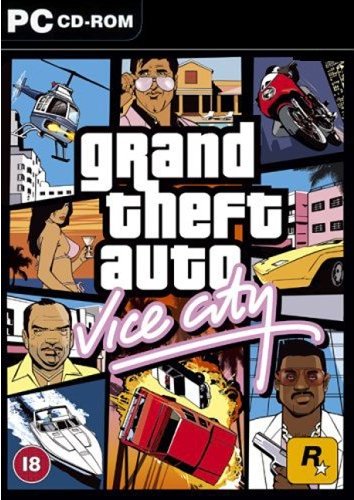
Like theft, monopoly pricing does not necessarily harm total welfare, but injures consumer welfare.
Depending on where you stand on the total v. consumer welfare equation, this may influence your social tolerance to theft.
A good illustration of this can be found in a story about William Baxter, a former Professor at Stanford Law School. Baxter also served from 1981 to 1983 as Assistant Attorney General in charge of the Antitrust Division of the DoJ:
“While strolling one evening on a quiet street near the Washington residence, Bill and his wife Carol were confronted by an armed robber; they emerged minus some personal property but without injury. At the next Antitrust Division holiday party, the incident became a skit in which the robber demanded Bill’s watch. When Bill resists, the robber points out that it would be only a wealth transfer – a mere redistribution that would not affect economic efficiency or total social welfare. Reassured that the robber shares his standards of economic analysis and acknowledging that the point is analytically correct, Bill immediately surrenders his watch”.
Source can be found here. Found in reading Ben Van Rompuy’s doctoral dissertation (VUB, Belgium).
Prizes (+ a Leak)

Last week at the annual congress of the International League for Competition (LIDC) in Oxford, Jérôme Gstalter (Foreign affairs service, France) and Pablo Ibanez Colomo (LSE) were both awarded the Nobel Prize in competition law Jacques Lassier Prize.
Jérôme wrote a very comprehensive Phd dissertation on the new monopolies of the information society. Pablo wrote a very dense dissertation on regulation and competition in the context of technological convergence, with a specific focus on audiovisual services. Both works were very different, with distinct qualities. It was a tough call for the jury. We eventually decided to award the prize to the two dissertations.
And tomorrow, the GCLC Prize will be awarded to the best thesis in competition law written last year by a coleurope stud’. A tip: the prize has been granted to a dissertation supervised by someone known as the lawyer who played a priest in a famous antitrust compliance movie (I cannot say more).


 Chillin'Competition