Author Archive
Making the buzz

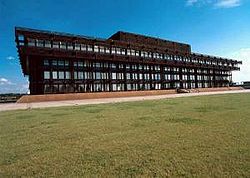
Still to be confirmed from official channels, but rumour has it that Marc Van der Woude will be appointed as the next Dutch judge to the General Court. Marc is a lawyer at Stibbe (a big Dutch-Belgian law firm) and Professor at the University of Rotterdam. He is well-known for his competition law handbook, as well as for his work on the energy sector. A nice pick from the Dutch government.
(Image possibly subject to copyrights: source here)
News from the Front
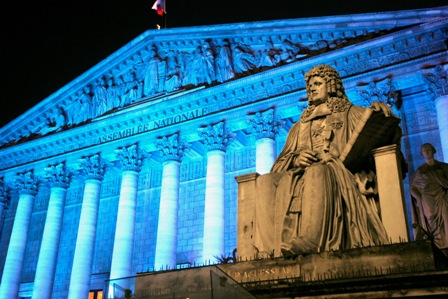
Monday’s Concurrences conference at the national Parliament in Paris was great, just great. With this event and the ongoing OECD gathering, Paris this week was clearly the world’s antitrust law capital. I was particularly impressed by the speeches of J. Padilla (on behavioral economics) and B. Kovacic (on the assessment of agencies’ performance).
I wish to congratulate here Nicolas Charbit, Prof. Laurence Idot and Frederic Jenny who have made a great job organizing this event. I never went to Fordham’s Annual antitrust gathering, but from what I hear, the Concurrences event – which will take place on a yearly basis – is likely to be a strong contender in the coming years.
On a related issue: straight after J. Almunia’s first speech as the new Commissioner for competition, James Kanter from the International Herald Tribune asked me what my impressions were. See here for more.
I have been away for a few days. Regular posting activity on this blog will resume early next week.
(Image possibly subject to copyrights: source here)
Slides – Conference on the Google Book Settlement

I post below the slides of our conference on the Google Book Settlement. It was a very good, stimulating, event. I wish to thank again all the speakers, in particular J. Grimmelmann who flew from NY to attend, and P. Samuelson, who accepted to speak at 6.00 am, California time.
Like I said at the conference, the GBS is a textbook example of an issue that, under competition standards, may warrant regulatory intervention: (i) intricate pricing issues; (ii) enormous fixed costs and unmatchable incumbency advantages; (iii) universal service – and other policy-related – issues (availability to users inside and outside the US, privacy, risks of disruption of service, censorship, etc.). Too early to tell, but in the future, Google’s digital library may exhibit the features of a good old essential facility.
Slides A Strowel – The GBS – A True Digital Library
Slides H Muller – The view of IFLA on the GBS
Slides I Forrester – GBS – A Good Thing or a Bad Thing
Slides J Grimmelmann – Perspectives on the Settlement
2.0
 Derecho de la competencia has upgraded. see http://lalibrecompetencia.com/
New design, new name and more contributors from different jurisdictions of Latin America:
In addition to Juan David, Ignacio de León (Venezuela, Queen Mary U. of London),Pablo Márquez (Colombia, Harvard U.and U. of Oxford), Victor Pavón Villamayor (México, U. of Oxford), Javier Tapia (Chile, U. College of London), Leopoldo Ubiratan (Brazil, LSE and U. of Sao Paulo) and Natalia Barrera (Colombia, U. Javeriana), have joined the venture.
Just Published: OGEL Antitrust Special

OGEL 1 (2010) – Antitrust in the Energy Sector (February 2010)
OGEL, the global Oil-Gas-Energy Law Intelligence service. OGEL focuses on recent developments in the area of oil-gas-energy law, regulation, treaties, judicial and arbitral cases, voluntary guidelines, tax and contracting, including the oil-gas-energy geopolitics. — www.ogel.org
A new issue has been published and can be found at www.ogel.org
This Antitrust in the Energy Sector special was prepared for OGEL by Prof. Nicolas Petit of the University of Liège (Belgium). This issue addresses the challenges arising from the implementation of the antitrust laws across various energy sectors.
EDITORIAL
- OGEL Special Issue – Antitrust in the Energy Sector
by N. Petit, University of Liège
A publication, an information and an explanation

My paper on competition authorities’ enforcement discretion has just been published in Concurrences. Amongst the various papers I published to date, I am really proud of this one. The reason? It embodies all the things which make research, and academic life, a thrilling job:
- It forced me to conduct research on a largely unchartered topic, and to propose an original – at least I believe – conceptual framework;
- I benefited from strong empirical input received from more than a dozen national reporters;
- The LIDC annual congress – for which I prepared the paper – was a great moment in a wonderful town. I met loads of fascinating people during the congress;
- We eventually managed, on the basis of this paper, to draft public policy proposals, which were eventually sent to competition authorities.
As to the information: the next LIDC congress will take place in Bordeaux (France), from 30 September to 3 October. To all those interested in learning how competition law and a Lafite Rotschild combine, I recommend the conference. A specific website has been created to advertise the conference.
Finally as the explanation: the past days have been increasingly busy. This explains the belated posting activity on the blog.
Conference – Google Book Settlement – 12 February 2010
We still have several seats for the conference on the Google Book Settlement next week! A new version of the programme is attached below.
IEJE-St Louis – Conference – Google Book Settlement – 12 February 2010
P. Pescatore
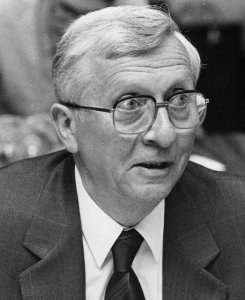
With great sadness, we learned yesterday that Pierre Pescatore passed away. P. Pescatore was a former Judge at the European Court of Justice, Professor at the University of Liege (ULg) and co-founder of the Institute for European Legal Studies (IEJE). With his death, the legal community loses one of the building blocks ofEuropean law. P. Pescatore, who helped drafting the 1957 EC Treaty personified what we generally label the “founding fathers“. Our thoughts and condolences go to Prof. Pescatore’s family.
First Issue of the ECN Brief
This brief brings an appropriate response to some of the flaws which were identified during the review of Regulation 1/2003. At first glance, the first brief contains plenty of useful information on the activities of National Competition Authorities. It will be published five times a year. A subscription service is available here.
Thanks to Sonia Jozwiak for the pointer (and congrats to her as well as her colleagues who have brought this useful project to life).
BEREC

A new creature is born : since 28 January 2010, the Body of European Regulators for Electronic Communications (“BEREC”) is formally and operationally part of the EU institutions’ food chain.
See here for the Press Release and here for more information.
Thanks to E. Provost for the pointer.
(Image possibly subject to copyrights: source here)


 Chillin'Competition