Author Archive
Chillin’ Competition goes running

We’ve returned from our holidays with recharged batteries and with plenty of new ambitious and perhaps unfeasible projects that we’ll be disclosing here in due course.
One of our blog-related aims for the coming months is to boost one of the most characteristic market failures in legal markets: not to much competition, but rather too many competititons.
We observe with interest that in our little antitrust world there are almost more prizes, awards and rankings as there are antitrust law specialists. To be sure, we’ve also contributed to this by creating the Worst-Antitrust development Prize and our Antitrust Oscars, but there are many more: just think of Concurrence’s new Writing Awards, of the Jacques Lassier Prize; of the many law firm directories ranking firms and lawyers such as Chambers, The Legal 500, Best Lawyers, IFLR, Global Competition Review’s Annual Awards, or in GCR’s well-known and recently-published 40 under 40 – by the way, don’t you also get the impression that some people must have lied about their age? 😉 -.
The problem with some of these sometimes pricey prizes is that they are inherently subjective. Whereas most of us admit that absolute neutrality and objectivity are unrealistic aspirations (a dozen recent complainants before the European Commission seem to think differently), some things in life can still be measured objectively. That’s why we at Chillin’ Competition have decided to create the first objective legal competition: we’re creating the “Fastest Antitrust Expert” Award.
The news of the Spanish professor who got sued because of an antitrust-related story that he wrote on his blog led us to question our way or life. “Should we run marathons instead of blogs“, we thought. This profound thought led both Nicolas and myself to register to run the Brussels 20 k on May 27th.
In the context of a mutually encouraging exchange of emails (which in essence consisted of Nicolas saying that my two previous running times reveal that I’m slow and of me responding that he’s short-legged) we came up with the idea of opening our challenge to all readers of this blog. These are the rules:
- The “Fastest Antitrust Expert” Award is open to all readers of Chilling Competition: public officials, lawyers, academics, students and, basically, to anyone who has registered for the 20k and who registers on the blog.
- Registering yourself with us is easy: you can either send us an email or write your name in a comment to this post; you must however do that before 1 May.
- On 2 May we will publish the list of names of those of our readers who are taking part in the 20k;
- In the weeks before the race we will be organizing some more stuff open to all participants (I have in mind something like Nicolas cooking pasta for everyone the night before the race…).
- The Prize: the winner will get an special interview at “The Friday Slot” as well as a pair of Li-ning running shoes.

And the winners are….

Concurrences and George Washinton Law School presented their Antitrust Writing Awards on Tuesday night in D.C.
The list of winners is available here.
Bill Kovacic was in charge of announcing the winners. We weren’t there, but we can imagine him saying something like: “And the award to the best academic paper on unilateral conduct goes to…….. Nicolas Petit, for “Credit Rating Agencies, the Sovereign Debt Crisis and Competition Law“!l
Yep, Nicolas is the proud winner of the award to the best academic article on unilateral conduct. His piece was also the most publicly voted one (the readers of this blog probably have something to do with that, so thanks on his behalf).
I want to congratulate not only Nicolas, but also all other winners as well as all the authors of all the other articles that had been selected for the competition.
Moreover, we want to congratulate the organisers: Concurrences (in the person of Nicolas Charbit) and George Washinton Law School. The creation of these awards is a fantastic initiative; we hope that they’re here to stay.
A few non-politically correct comments now:
1: To a certain extent Nicolas deserves credit for this prize. Nonetheless, any impartial observer should rapidly realize that I -in my capacity as the manager of Nico’s brilliantly conceived campaign– am the one responsible for his victory.. 😉 We’ll ask a credit rating agency who deserves more credit (wow, this is incredibly bad even for my standards…).
2: The picture illustrating one of our “campaign” posts was premonitory.
3: This must be the first time in a decade or so that a Frenchman wins any competition (except, certainly, for this one) 😉 In fair reciprocity (some background here), I -as a Spaniard- should write a piece hinting that Nicolas owes his victory to doping (which, by the way, was definetely the case since he finished it during a trip to Scotland; this is how his desk must have looked like).
4: How much sense does it make for a paper on “collective” dominance to be awarded the prize to the best article on “unilateral” conduct?? Just kiddin’ here: the core of the paper apparently deals with individual abuses of collective dominance, so it makes perfect sense.
5: You caught me: I just wrote “apparently”. I guess I’ll now have to read Nicolas’ paper.
P.S. One suggestion for the organizers of the Writing Awards: since client alerts and articles published in newsletters are elegible for the prizes in the “Business” category, why not extend it to blog posts? We also need incentives to compete!
Spanish professor sued over a blog post on competition law
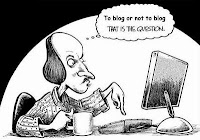
Blogging about competition law is getting dangerous!!
We have just learnt through Competition Policy International that a Professor at the Instituto de Empresa has been sued for defamation because he wrote on his blog that music group Promusicae’s copyright policy is contrary to the competition rules !!
The full story is available here.
I’ll better not comment in order to avoid the risk of being sued too.
Could anyone recommend us a good lawyer, just in case?
The vertical expression of a horizontal desire

A few days ago someone sent us a very interesting piece published by Okeoghene Odudu (who is also the author of a great book on Art. 101) in European Competition Journal (August 2011) under the title: “Indirect Information Exchange and the Constituen Elements of Hub and Spoke Collusion“.
Although we have enjoyed the substance of this article, the reason why it was sent to us in the first place was not its content but rather a particular footnote at the very end of it. It reads as follows:
“187. In his blog posting of 21 February 2011, Nicolas Petit expressed the view that there was nothing worthy of analysis in the hub-and-spoke phenomenon and concluded by writing, “The bottom-line: I will fight any proposal to organise an event on hub-and-spoke agreements. See https://chillingcompetition.com/2011/02/21/much-ado-about-nothing/.”
[*Note by Alfonso: The original post features a smiley face like this  right after this quoted statement. The face is nevertheless missing in the quote that appeared in the article. It’s a pity, because it would have been funny to see the smiley appear in European Competition Journal!].
However, by 24 May 2011 he seems to have had a conversion, announcing that, through the Brussels School of Competition Law, he had co-organised a seminar on information exchange, to deal in part with “Sharing Information through Intermediaries (supply-purchase relationships, distribution agreements, meet and release clauses, hub-and-spokes, etc)”. See https://chillingcompetition.com/2011/05/24/information-exchange-in-eu-competition-law-conference-22-june/“
We were surprised at this footnote (since we don’t always take what we write seriously, it’s curious to find out that people do), which nonetheless expresses a very legitimate opinion.
Enforcement Menu

It all started with endives.
#endives became a trending topic on this blog. However, after two posts (here and here) we decided that we should prevent endives from turning from a hot topic into a reheated topic. Therefore, we decided to put endives and other gastronomic topics in the fridge for a while.
Then the French sanctioned flour makers in an unsuccesful attempt to lead us to write about croissants. We kept our position: if you want to make headlines on Chillin’Competition, you’ll have to do butter, we said.
The French then brought their big guns out. It has been reported that President Sarkozy attended the presidential debate with one main goal: appear on Chillin’ Competition. And he made it. We did yield to the temptation of posting the video in which he explains the difference between endives and apples Apple and Microsoft (this useful explanation prompted some of our readers to stop wrapping their iPods in ham). Yes we were weak, but the temptation to comment on Sarkozy-sponsored cartels was irresistible.
We saw that post as a last exception; we decided to follow a diet and agreed that there’d be no more food on the blog, at least until the summer was over. “I need to be bikini ready” said Nicolas. I also thought that a strict no-food rule was necessary, particulary since Hump-Pilates (incredible video…) doesn’t work well for us. We’ll start next Monday, we said.
And now, come Monday, here are the suggested courses topics that we get from our readers:
The Autorité de la Concurrence fines dog and cat food makers € 35 million.
The Autorité de la Concurrence investigates yogurt producers.
We have to acknowledge our respect for this multi-jurisdictional multi-product strategy to deviate us from our diet. They’ve managed to make it to the blog again. But seriously, we solemnly promise to forget about food:
As God is our witness, we’ll never be hungry food-obsessed again!

We’ll start our diet…next Monday?
The Friday Slot (7)- Maurits Dolmans

This seventh edition of The Friday Slot features an interview with Maurits Dolmans (Cleary Gottlieb). Most of us are aware of his tremendous reputation as a leading antitrust lawyer, but his answers to our questionnaire will reveal facets of his personality and of his life that, until now, remained mostly unknown. It’s a privilege for us to publish Maurits’ bright and most interesting answers. Enjoy!
“Oscar” of the best competition law book? And of the best non-competition law book?
I do not read competition law books; I just use them as reference. A truly memorable “legal” book is Natural Justice by Ken Binmore, with fascinating game theory showing how, for all our competitive spirit, justice and fairness are innate in the human existence – a comforting thought in a turbulent world.
My non-legal favourites are probably Robertson Davies’ Deptford trilogy (The Manticore) and Cornish trilogy (What’s Bred in the Bone). I re-read these every once in a while – the sign of a great novel. Recent great reads include The Elegance of the Hedgehog, Robert Merle’s Fortune de France, and Het Woud der Verwachting (a magnificent historical novel by Hella Haasse on the life of Charles d’Orleans). From more innocent days, I loved reading The Education of Little Tree to our children (writer was a horrible man, but it’s a lovely little book).
“Oscar” of the best case-law development in the past year? “Oscar” of the worst case-law development?
Best non-case law are the Horizontal Guidelines. Undisputably the best judicial decision is KME v. Commission. The detailed and intensive review required in merger cases after Tetra Laval now also applies also to cartel cases. It is already having effect: In the hearing on the appeal for Masco in the bathroom fittings and fixtures case in February, the Commission explicitly agreed that the General Court should exercise a complete judicial review over the facts.
The worst is Pfleiderer v. Bundeskartellamt. Leniency statements should not be disclosed. The Court did not distinguish self-incriminating leniency applications from pre-existing documents. That is a mistake and could interfere with public policy to encourage revealing and closing down cartels.
Let’s do it like economists => assume that you could change 3 rules, principles, judgments, institutions in the current EU competition system. What would you do?
- The Commission should recognize privilege for in-house counsel who are full members of the Bar. Even after AKZO, the Commission has the discretion to do so. It is even more wrong for the Commission to reserve the right to seek access to legal advice from outside counsel who are members of a non-EU bar. It is a fundamental right of every client to seek legal counsel in confidence from a lawyer of his/her choice.
- To avoid confirmation bias, the DG Comp team that investigates a case and writes an SO should not be the one to make and write the final decision. The decision should be adopted (or recommended to the College for adoption) by a separate panel chaired by the Commissioner, which should independently review SO and written pleadings and attend oral hearings. Right now, decisions are adopted by a College of Commissioners none of whom have read the pleadings or attended the oral hearing, based on internal notes written by the team than write the SO, not accessible to the defendant. I have great respect for the integrity of EC officials, but this process is institutionally unsound.
- The “me-too” spirit of international merger control has led to a glut of unnecessary merger laws requiring parallel notifications. This is a monumental waste of time and resources, combined with a risk (already materializing) that merger control is used by “new authorities” to give advantages to national industries. Some kind of comity rules should be set out to allow the, say, three jurisdictions most affected to review a case, with others declining or focusing on local product markets.
Average working time/week?
Too long. Fortunately I love what I do and have an understanding wife, our children have grown up, and the firm has a generous sabbatical and vacation policy.
Why do you work in competition law? How did you first get into it?
It’s intellectually satisfying and relevant. I have always believed in the European ideal. Integration of national economies should prevent re-emergence of the old enmities that we have not seen for 67 years, and hope never to see again.
Most interesting, intense or funny moment of your career?
European Competition Football Championship 2012
[Note by Alfonso: That competition authorities compete to be among the world-class enforcers is something we all knew (see for instance GCR’s Ranking Enforcement Special Issue). What you probably didn’t know (and, frankly, we didn’t either) is that there is a football championship in which competition authorities also sweat out their competitive spirit. We have been asked by the organisers of the upcoming edition to help promote this event among competition authorities, and we’re glad to do it; it looks like sure fun!]
After two highly successful and memorable events hosted by the NMa and the Bundeskartellamt in 2010 and 2011, the Hungarian Competition Authority (GVH) has the pleasure to announce that the 3rd European Competition Football Championship (ECFC) will take place in Budapest this year.
The GVH is pleased to invite all European competition authorities to the 2012 ECFC in Budapest, which will be organised together with a workshop on sports and competition law.
Workshop on sports and competition law
3rd European Competition Football Championship 2012
7-8 September 2012
Budapest, Hungary
Should you have any questions, don’t hesitate to contact the organisers at ECFC2012@gvh.hu. Any interest in participating at the event should be made by the end of April.
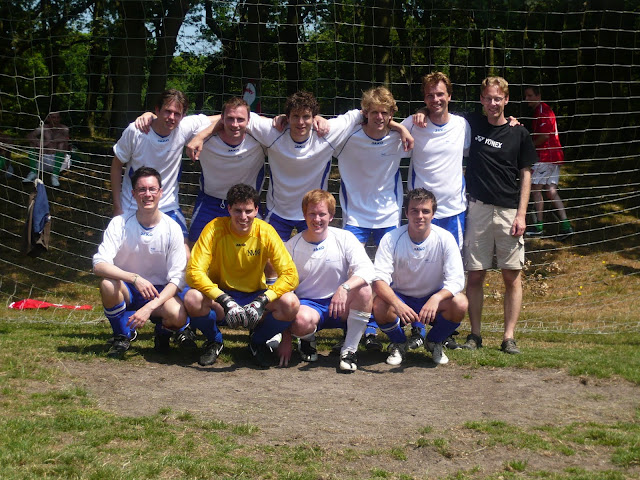
Here are some pics from the winners of the previous editions: The Ducth NMa (2010) and the Hungarian GVH (2011).

You’re invited
It’s very impolite to speak about parties to which only you have been invited. Yet, this is exactly what Nicolas did last Friday!
Nico talked about all these competition law-related social events that are taking place in Brussels this week, without realizing that many of us have not been invited (I guess this was not on the piece of Social Do’s and Don’ts that he suggested on his post…) 😉
To compensate for my co-blogger’s mistake, I will free-ride on my firm to invite you to some free drinks extend a personal invitation to all readers of Chillin’Competition for THE competition law social event of the month in Brussels: the launch of the book “Market Power in EU Antitrust Law” (we had intended to write a review here, but our objectivity is so compromised that we will ask someone else better placed than us to do it) next Tuesday.
I’m not kidding; you’re all welcome to share a drink with us. You only have to confirm your attendance to the email address that appears on the invitation.
Hope to see you there!

P.S. Nicolas will miss it because he will be lecturing in Russia, so here is another incentive to come.
A turn of the screw (José Luis Buendía on SGEIs)
[Note by Nicolas and Alfonso: Since we learnt the news that the Commission was preparing a reform of the State aid rules applying to services of general economic interest we have been trying to have our friend (also Alfonso’s boss) José Luis Buendía to give us his views on the reform. Apart from a being a top-notch State aid lawyer and the author of the seminal (and perhaps only) book on Article 106 (a new edition is in the pipeline), he was heavily involved in the drafting of the original “Altmark package” at the time when he was working for the European Commission. In fact, a few months ago a member of the European Commission said at a conference that whereas some people call this package the “Monti package”, many Commission officials refer to it as the “Buendía package”. We are very thankful for him for having taken the time to write this insightful piece that we believe will be a “must” for anyone dealing with this subject. It’s a privilege for us. Enjoy!]
The editors of this blog have kindly invited me to comment the recently adopted ‘Almunia package’, in which the EC has revisited the State aid rules applicable as regards the financing of Services of General Economic Interest (SGEI).[1]
I have chosen the expression “a turn of the screw” to introduce this short comment for two reasons. The first and most obvious reason is that the new rules would – at least at first sight – increase the pressure and make life more difficult for the big operators of SGEI. The second relates to a Henry James novel, “The Turn of the Screw” (1898), subsequently adapted to cinema by Jack Clayton under the title “The innocents” (1961). The reference to the story seems pertinent to me because it has had very differing interpretations, often mutually exclusive. The ambiguity of the story makes difficult to conclude whether the governess has actually seen the ghosts or whether she simply dreamed. “The Turn of the Screw” definitively looks like a ghost story but… is it really a ghost story? In any case it is a great story I can recommend.
As I will try to explain, when comparing it with the previous post-Altmark (or Monti-Kroes) Package, the Almunia package definitively looks as a turn of the screw as regards the rules applicable to the financing of SGEI.
In my opinion, and given the current political context, the most remarkable feature is the mere adoption of the package by the Commission. One has to remember that some Member States wanted that the rules on SGEI were adopted, not by the Commission but by the Council and the Parliament, under the new legal basis introduced in Article 14 TFEU by the Lisbon Treaty. Despite this political pressure the Commission chose not to make a proposal under this new basis (probably for the same reason that turkeys do not vote for Thanksgiving). Instead, it revisited the package under its own powers under Articles 106 and 107 TFEU. This decision seems wise and legally well founded, in particular given the limits of Article 14, but is still quite courageous in this time of centrifugal tendencies at the EU level.
Obviously this small comment cannot cover all the interesting issues raised by the package. It is however fair to say that the content of the reviewed package does not look as particularly conciliatory with those who wanted more flexibility for SGEI. It is true that there are some changes going in that direction. This is the case for the small operators in charge of SGEI that are exempted from notification (in particular, there is a new exemption of some social services and a new draft de minimis specially conceived for SGEIs), but the story seems quite different for the bigger operators that remain subject to individual notification. Under the Almunia package – and contrary to the previous Monti-Kroes package – the rules applicable to the big operators are going to be different and stricter from the rules applied to the smaller.


 Chillin'Competition