Archive for the ‘Breaking – Antitrust – News’ Category
A Big Win

Last Monday, a group of LL.M. students from the University of Liege (ULg) won the concours Lamy de la concurrence held at the French NCA in Paris. The team was composed of Anne-Sophie Come, Mathieu Coquelet, Pierre Sabbadini, Willem de Vos and Norman Neyrinck (coach). This is obviously a source of great satisfaction and pride. Hat tip to the students and their coach.
Below, the new LL.M. brochure for 2010.
Breaking News – Brussels based LL.M. in Competition Law and Economics

I am delighted to announce the setting up of the Brussels School of Competition (“BSC”). The BSC is organised under the aegis of the Federation of Enterprises in Belgium (“FEB”). Its primary purpose is to provide a high-profile, specialised course leading to an advanced Master (LL.M.) in Competition Law and Economics. This course has been especially designed so as to be fully compatible with the requirements of professional practice.
Over the past decades, the European Union (“EU”) competition rules have become a critical legal issue for companies in all sectors of the economy. With rules covering a variety of practices including cooperation and distribution agreements, abuse of dominance, unfair trade practices and State aid, firms in the EU and elsewhere face increased antitrust exposure and, in turn, a significant challenge in terms of compliance. In addition to this, the introduction of industrial economics into the various areas of EU competition policy has considerably increased the degree of analytical sophistication of antitrust proceedings.
To meet the growing demand for training in this discipline, I have – together with my FEB colleagues Charles Gheur and Philippe Lambrecht – established a full-fledged LL.M. programme which provides – unlike most Brussels-based seminars and conferences – (i) a comprehensive and structured teaching programme, with periodic assessments, and (ii) multidisciplinary courses in both competition law and economics.
You can find below a flyer presenting the LL.M. programme. As you will see, the LL.M. boasts an impressive faculty, comprising lawyers and economists, officials and private practitioners, who are all acknowledged experts in their fields.
For more information on the programme, please visit www.brusselsschoolofcompetition.eu or send us an e-mail: info@brusselsschoolofcompetition.eu
Competition Cassandras

There is a popular mantra in modern EU competition law. Competition enforcement ought to be case-driven, and substantive guidance to firms shall stem from individual decisions. At last week’s GCLC Lunch Talk, D. Schnichels repeatedly said that to justify that – 18 months following a wide-ranging sector inquiry – the Commission had not yet provided guidance to pharma firms over a number of disputed practices. Cases are in the pipe-line, and guidance will come, soon or later.
This has numerous shortcomings. First, until a final decision is adopted with respect to each and every practice, firms are left in a sea of doubt. Some may believe that the practice is not covered by the EU competition rules until a case has been completed (under-fixing problem) . An obvious example is abuse of collective dominance. Other firms, on the contrary, may be willing to comply, but cannot optimally observe the rules absent substantive guidance on the applicable principle. An obvious example is patent settlements (reverse payments).
Second, with the influence of economic analysis, cases become increasingly market-specific. The methodology, theories of harm and reasoning enshrined in decisions is growingly topical. As a result, individual decisions have only little normative value.
Regulation 1 provides a solution to (part of) this problem: under §38 of the Recital of the Regulation, the Commission may provide guidance to firms. To date, however, the Commission has been reluctant to issue such letters. The official reason for this lies in the alleged risk of reintroducing, through the backdoor, a notification procedure similar to the one that existed under Regulation 17/62. The unofficial, but more convincing, reason is that guidance letters generate less press exposure – and political returns – than negative decisions.
Anyway, contrary to the arguments invoked by some EU Commission Cassandras against guidance letters, the UK Office of Fair Trading just proved that issuing a guidance letter is perfectly compatible with a system of ex post enforcement, and does not entail the resurection of ex ante notification.
(Image possibly subject to copyright: source here)
Admission of Guilt

On Weds, the Commission adopted its first settlement decision in a cartel case. In a nutshell, the settlement procedure seeks to incentivize parties to cartel proceedings to admit early that they are guilty.
The procedure was introduced in 2008. It is based on Regulation (EC) No 622/2008 of 30 June 2008, which amended Regulation 773/2004. At the time, the procedure attracted much criticism, in particular because it allegedly forces firms to forfeit their right to judicial review (see paper by D. Waelbroeck et. al). Back in the day, I have published in Concurrences a chart which summarizes the procedure.
The ratio behind the procedure is plain simple: with leniency being a potential time-bomb in terms of workload, the Commission is adamant on achieving “procedural efficiencies” (sic). It thus tries to gain time in inducing parties to acknowledge their guilt. In turn, the Commission can reallocate scarce administrative resources to other – more demanding – investigations.
Importantly, this procedure is only likely to succeed if incentives for companies are right. On paper, the rewards for firms contemplating a settlement look attractive. In addition to the 10% potential discount on the fine, the limitation of the duration of proceedings leads companies to face lesser regulatory exposure over time, and management can return quickly to normal business. In addition, because “a sin confessed is a sin half pardoned“, companies may view new procedure as a means to exhibit repent, and minimize risks of follow-on proceedings.
Now the key question is whether the EU procedure is in practice workable, and delivers sufficient incentives to bring companies to the table of negotiation. On this, I have some doubts. The new system was introduced in June 2008. With this case – which started before this date – it took almost two years to the Commission to land its first settlement. On pure performance grounds, I do not view this as particularly efficient. The Commission implicitly confirms this in its press release, stating:
With experience and as the procedure applies to new cases, the Commission will deal with investigations more expediently
Predatory Pricing?

In a move that many analysts view as an act of war, Microsoft will release a free version of its upcoming Office 2010 suite… This looks like good news for consumers.
Office has long been the “cash cow” of the Redmond giant. With a price now equal to 0, and possible foregone profits in the short run, the new Office suite may raise questions in terms of predatory pricing. This being said, Microsoft’s offer could also constitute a good illustration of so-called “penetration-pricing”, or of a “meeting competition” – read Google Docs – counter-strategy.
The bottom-line: Advising Microsoft on a daily basis must be really exhausting.
(Image possibly subject to copyright: source here)
Bottom-Up Cross Fertilization
Apologies for the mysterious title of this post. It deliberately borrows to the jargon which political scientists use to look bright, and impress their colleagues.
Here’s the explanation. The Commission’s released today its drafts on horizontal cooperation agreements, which are intended to replace the Block Exemption Regulation on joint R&D, the Block Exemption Regulation on Specialisation Agreements and last, but not least, the Guidelines on Horizontal Cooperation Agreements. Pursuant to the Commission’s press release, the primary innovations of the Guidelines are:
- The inclusion of a chapter on the assessment of information exchange between companies;
- Guidance on standard terms in the chapter on standardisation;
- Clarification of the application of the competition rules to agreements between joint ventures and their parent
Now, what stroke me in going through the text is that the Guidelines abundantly recycle examples taken from the case-law of national competition authorities.
Read this:
Luxury hotels in the capital of country A, which is a tight and stable oligopoly operating in a non complex and concentrated market, directly exchange individual information about current occupancy rates and revenues. In this case, from the information exchanged the parties can directly deduce their actual current prices.
Looks familiar? Now read this:
The four companies owning all the petrol stations in country A exchange current gasoline prices over the telephone. They claim that this information exchange cannot have restrictive effects on competition because the information is public as it is displayed on large display panels at every petrol station.
Both those examples refer to cases dealt with the French competition authority in previous years. Those draft Guidelines are thus the proof that Regulation 1/2003 has triggered bottom-up, cross fertilization dynamics. More simply, the decisional practice of NCAs helps shaping the content of EU competition law.
(Image possibly subject to copyright. Source here)
Some recent news

The European Commission published yesterday the new Block Exemption Regulation for vertical agreements. New guidelines will follow soon.
Also yesterday, the DOJ and the FTC started circulating their new draft horizontal merger guidelines.
One more thing: at this time of the year some of our readers will be looking for a job. You might be interested in knowing that a prestigious anonymous law firm is hiring new associates. The ideal profiles they are looking for are outlined here.
Back to the Front

Back from Moscow, an absolutely awesome place.
A number of puzzling things though:
- The density of Porsche, Lamborghinis and other sports cars is far higher than in rich western European countries;
- Prices for consumer goods are not lower than in western European countries;
- Most shops are opened overnight;
- Most dairy goods are imported from the West. In fact, besides Oil and Gas, Russia seems to be very dependent on imports from other economies. This is strange though, and I wonder why Russia keeps importing basic goods, incorporating little technology, rather than developping local production.
- Traffic in Moscow is horrendous. Their metro network, which dates back from Staline, has nothing to envy to the dirty London tube, or to the old Paris metro.
Now, besides this, a number of hot, burning news:
- Registration for the IEJE’s Conference on the Reform of the New Framework for Electronic Communications is still open. The Conference will take place on 30 April. See here for more.
- The 44th Lunch Talk of the GCLC, entitled “The Lisbon Treaty and the Future of EU Competition Policy”, will take place on 28 April at the Marriott Hotel in Brussels. Hereafter, the registration form Registration Form – 44th GCLC Lunch Talk – 28 April 2010
- Antoine Masson received the Montesquieu Prize for the book he edited last year on the Legal Aspects of Firms’ Business Strategies. Congratulations!
(Image possibly subject to copyrights: source here)
The next battleground for competition lawyers
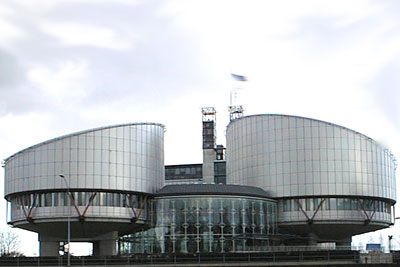
The vociferations of EU lawyers against alleged prosecutorial/decisional biases, criminal nature of the fines system, etc., will soon be put to the test.
Last week, the Commission proposed negotiation directives for the Union’s accession to the European Convention on Human Rights (ECHR). This means that acts of the EU institutions, including Commission decisions and rulings of the EU courts in the field of competition law might soon become challengeable in Strasbourg, for violation of the convention.
I suspect the judges in Luxemburg will not be happy about this.
Thanks to C. Bergqvist for the pointer.
(Image possibly subject to copyright: source here)
Lateral Hires
A very short post to congrat our friend Andrés Font Galarza for his nice move to Gibson Dunn & Crutcher LLP.


 Chillin'Competition