Archive for the ‘Breaking – Antitrust – News’ Category
TV Appearance
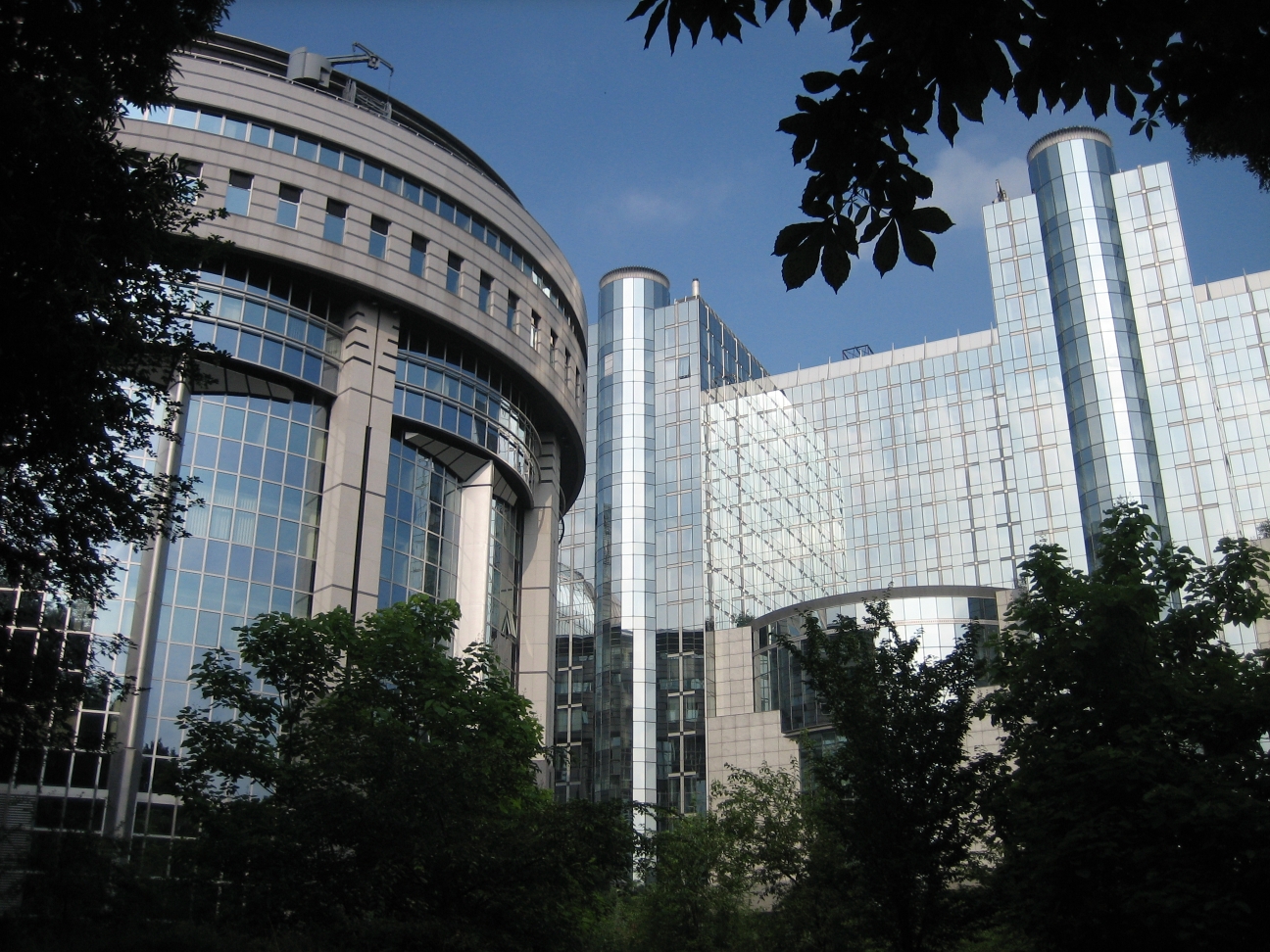
The European Parliament’s (EP) resolution on competition policy adopted a week ago has gone largely unnoticed (it is an answer to the Commission’s Annual Report for 2008). Shortly after the Lisbon Treaty, of which the EP is the big winner (source, P. CRAIG), this resolution signals the EP’s intention to be more vocal on antitrust issues. The resolution contains a great number of proposals, such as a: (i) call for introducing individual sanctions for competition law infringements; (ii) a greater focus on small and medium enterprises; and (iii) requests for the opening of sector inquiries. My gut feeling: I am skeptical as to what the Commission should do with this. This resolution may further politicize competition matters, and I therefore dislike it.
The good thing though: I was interviewed on Canal Z channel. The link to the interview can be found here (around 2.10).
Thanks to E. Provost for the pointer.
Guidelines
The upcoming guidelines on horizontal cooperation agreements will fill long lasting gaps. They will include some wording on standardization and information exchange agreements. I paste hereafter the words of the new DG COMP Director General in his first speech (three days ago):
The review of the horizontal guidelines is a good opportunity to clarify what is expected from standard setting organisations as regards disclosure obligations on both pending and granted patents if their standardisation agreements are to comply with the provisions of Article 101. It is also a good opportunity to include some guidance on the meaning of what are fair, reasonable and non-discriminatory (“FRAND”) terms for companies licensing technology. One possibility would be to include a mention of the benchmarks that could be used to assess whether the licensing terms are actually fair and reasonable.
On information exchange, the new guidelines are a good opportunity to provide legal and economic guidance to companies. Our intention is for the guidelines to specify what is considered to be a clear-cut restriction of competition or for example what are the market characteristics that may lead to an exchange of information having a collusive outcome. The guidelines should also give guidance on economic efficiencies that can be created by an exchange of information such as solving problems of asymmetric information or seeking a more efficient way of meeting of demand. It is also the intention that the guidelines will contain many examples as illustration, which will help companies in their assessment. Here again, more legal certainty will be conducive to a better competitive environment.
Windows

This is not a post on Microsoft.
In a move to make their films available early through various channels (DVD, VoD, etc.), movie distributors – big fishes like Disney – have sought to reduce the x-months exclusivity enjoyed by theatres over the first release of movies (the so called theatrical “window”).
Historically, movie distributors had been reluctant to do this, because the release of movies on a wide number of physical (DVDs) or digital (Internet) formats rang the opening hour of piracy. Moreover, the theatres’ temporal monopoly over the distribution of movies led to fat prices for consumers, and thus appreciable margins for the movie distributors (which normally receive a % on each ticket sold).
Movie distributors are manifestly changing their minds. A plausible explanation of this is that distributors increasingly perceive the theatrical window’s lenghty exclusivity as a key explanation for movie piracy. In addition, in times of crisis, consumers may prefer to stay home to watch movies, so the revenue generated by theatrical distribution decreases as compared to other formats. Think, for a second, to the situation of a budget-constrained family man. To him, watching a movie home is akin to a fixed cost. It is incurred once (renting the DVD) and can be spread over the various members of the family. By constrast, watching a movie in a cinema is a variable cost, which increases with the number of family members brought to the theatre.
So much for the theory. Why a post on this issue? On the occasion of the release of “Alice in Wonderland“, cinema chains have tried to undermine the distributors’ attempts to shrink the theatrical exclusivity window. To this end, they have engaged into the most brazen form of anticompetitive conduct: boycott. In the UK, it has for instance been reported that the three big cinema chains – Odeon, Vue and Cineworld – initially threatened to boycott Alice in Wonderland. The same has also happened, and may still be happening, in a number of European countries (Belgium, the Netherlands).
Under EU competition law standards, such boycott practices may be challenged on two possible grounds. First, they constitute a refusal to purchase movie distributors’ services (or they entail the termination of long lasting commercial relationships) and may thus be tantamount to an unlawful abuse pursuant to Article 102 TFEU (or its national equivalent). Assuming – I sound like an economist – that the theatres hold a dominant position (individual or collective), the interesting issue lies in the fact that theatres do not try to harm competition on a secondary upstream market as in classical “essential facility” cases (where upstream, or downstream, foreclosure is the concern). As a result, the Magill/IMS/Microsoft case-law which requires the elimination of competition on a secondary market should thus not apply to cinema chains practices. Yet, I am tempted to argue that there could nonetheless an abuse pursuant to Article 102 TFUE. In coercing distributors to maintain the current release windows through boycott, theatres artificially forestall the early entry of alternative viewing modes on the market. This in turn is prejudicial to “consumer welfare” in the meaning of competition law since it limits consumer choice and impedes the development of new markets. The increased emphasis of “consumer welfare” under Article 102 TFUE brings support to this interpretation.
Second, such practices may be tantamount to an infringement of Article 101 TFUE (or the national equivalent), provided the cinema chains have jointly decided to boycott movie distributors – again I sound like an economist. EU competition law has a strong enforcement record against collective boycotts. Back in 1974, the Commission held in Papiers peints de Belgique that “collective boycott is amongst the most egregious violations of competition rules”.
Apologies for the long post, but I find the issue fascinating. Thanks to T. Hennen for the pointer.
(Image possibly subject to copyrights: source here)
No surprises

Three complaints have been logdged before the EU Commission against Google. The complaints have been introduced by British price comparison website Foundem, French legal search engine ejustice.fr, and – guess who – ciao.de, a Microsoft subsidiary. Frankly speaking, this is everything but surprising.
First, given the mounting degree of antitrust exposure faced by Google in Europe, and elsewhere in the world (think of the GBS in the US), it was just a matter of time for DG COMP to at least scrutinize Google’s conduct. Now, the many press announcements made in this respect shall be toned down a little. If I understand correctly, the Commission has not, as reported by several journalists, “opened a probe”, but simply announced that it will review the complaints. A Commission official is quoted to have said: “The Commission can confirm that it has received three complaints against Google which it is examining. The Commission has not opened a formal investigation for the time being,“
Second, on legal grounds, the fact that Google’s conduct is challenged for a violation of abuse of dominance rules is also unsurprising. It is reported that Google would “unfairly” rank competing websites on its search engine. Whilst I have no particular information on this, I suspect the complaints to describe Google as an operator holding an essential search facility (a disputable argument actually). In turn, the systematic down-ranking of competitors could arguably involve, such as in the case of a physical infrastructure, something akin to a constructive refusal to supply, which squeezes rivals from the market. I would really love to see how the complaints are structured. There might also be issues of unlawful discrimination against competing websites (Article 102 c)).
The good news from Google: it can draw upon, and recycle, a lot of the Microsoft-related antitrust literature on dynamic efficiencies, software integration, refusals to deal, etc. Quite paradoxically, Google and Microsoft may well be foes on the commercial front, but as far as legal argumentation is concerned, they have a lot to share.
(Image possibly subject to copyrights: source here)
Making the buzz

Still to be confirmed from official channels, but rumour has it that Marc Van der Woude will be appointed as the next Dutch judge to the General Court. Marc is a lawyer at Stibbe (a big Dutch-Belgian law firm) and Professor at the University of Rotterdam. He is well-known for his competition law handbook, as well as for his work on the energy sector. A nice pick from the Dutch government.
(Image possibly subject to copyrights: source here)
News from the Front

Monday’s Concurrences conference at the national Parliament in Paris was great, just great. With this event and the ongoing OECD gathering, Paris this week was clearly the world’s antitrust law capital. I was particularly impressed by the speeches of J. Padilla (on behavioral economics) and B. Kovacic (on the assessment of agencies’ performance).
I wish to congratulate here Nicolas Charbit, Prof. Laurence Idot and Frederic Jenny who have made a great job organizing this event. I never went to Fordham’s Annual antitrust gathering, but from what I hear, the Concurrences event – which will take place on a yearly basis – is likely to be a strong contender in the coming years.
On a related issue: straight after J. Almunia’s first speech as the new Commissioner for competition, James Kanter from the International Herald Tribune asked me what my impressions were. See here for more.
I have been away for a few days. Regular posting activity on this blog will resume early next week.
(Image possibly subject to copyrights: source here)
P. Pescatore

With great sadness, we learned yesterday that Pierre Pescatore passed away. P. Pescatore was a former Judge at the European Court of Justice, Professor at the University of Liege (ULg) and co-founder of the Institute for European Legal Studies (IEJE). With his death, the legal community loses one of the building blocks ofEuropean law. P. Pescatore, who helped drafting the 1957 EC Treaty personified what we generally label the “founding fathers“. Our thoughts and condolences go to Prof. Pescatore’s family.
First Issue of the ECN Brief
This brief brings an appropriate response to some of the flaws which were identified during the review of Regulation 1/2003. At first glance, the first brief contains plenty of useful information on the activities of National Competition Authorities. It will be published five times a year. A subscription service is available here.
Thanks to Sonia Jozwiak for the pointer (and congrats to her as well as her colleagues who have brought this useful project to life).
BEREC

A new creature is born : since 28 January 2010, the Body of European Regulators for Electronic Communications (“BEREC”) is formally and operationally part of the EU institutions’ food chain.
See here for the Press Release and here for more information.
Thanks to E. Provost for the pointer.
(Image possibly subject to copyrights: source here)


 Chillin'Competition