Archive for the ‘Breaking – Antitrust – News’ Category
Death of an Antitrust Dogma?

Yesterday, the US AAG for Antitrust C. Varney murdered a widespread antitrust dogma:
“Defining markets and measuring market shares may not always be the best place to start” (see also here)
In many competition law regimes, market definition is indeed perceived as:
“a necessary precondition for the assessment of the effect of a concentration” (source: Case T-2/93, Air France v. Commission [1994] ECR I-1375, §143).
Of course, it is common in EU law to leave market definition opened, on the ground that regardless of the market’s exact boundaries, the merging parties’ market shares will not create or strenghten a dominant position.
This being said, many competition authorities nonetheless review this issue systematically, whilst they could screen anticompetitive concerns more rapidly. This burdensome analytical framework is particularly inefficient in cases where:
- The agency can immediately ferret out risks of competitive harm, because the key economic elements of a particular theory of harm are absent. This happens, for instance, in oligopolistic dominance cases, where tacit collusion is unlikely because the market is not transparent, or because oligopolists are asymetric;
- The agency can immediately establish that the merger raises serious doubts. This may happen, for instance, in cases where the merger involves the acquisition of a disruptive maverick player or where, thanks to sophisticated economic tools, the direct assessment of market power is possible (i.e. merger simulation on oligopolies with differentiated products).
Notwithstanding this, Varney’s assault on market definition analysis should not be interpreted as meaning that no preliminary work on market definition is required. In both scenarios 1 and 2, the competition authority should follow a “first-look” market definition analysis so as to identify – at least approximately – those firms which are likely to compete with the merged entity. To take again the above example of a merger involving a disruptive maverick, a gross market definition is necessary to establish that the maverick firm was, prior to the merger, competing head to head with – and threatening the business interests of – the acquiring firm. Similarly, in the above mentioned oligopolistic dominance example, the competition authority needs to frame the market, if only to establish that it faces a tight oligopoly where the conditions for tacit collusion ought to be tested.
A final remark: Varney’s statement holds the potential to lighten the evidentiary burden imposed on US antitrust authorities. Let’s just hope that the agencies will seek to use the newly freed-up administrative resources to improve their analytical framework, at the stage of the assessment of the theories of harm. This is particularly important in light of the fact that recent theories of harm in merger control are (i) increasingly intrusive: they may lead to forbid mergers with just a harmful effect on some customers (see TOTM excellent post on this); (ii) speculative: think for instance of behavioral, conduct-based, speculations in the context of vertical/conglomeral mergers; and (iii) and complex to test: think of merger simulation techniques, econometric analysis, diversion measurements, etc.
PS1: Whilst writing this post, I consulted the excellent book of Alistair Lindsay “The EC Merger Regulation: Substantive Issues”, Thomson – Sweet & Maxwell. I really recommend this book. It is the only EU merger related book that focuses only, and with great detail, on the substantive issues of EU merger analysis. My concern, however, is that the book is simply unaffordable (170£). My edition dates back to 2003. No chance I am going to change it any time soon for the 3rd edition of 2009. The bottom-line: not unlike some conference organizers, publishers should price discriminate and grant discounts to university researchers and students.
PS2: Varney’s speech was delivered in the context of the US agencies’ ongoing consultation process re. the 1992 merger guidelines.
(Image possibly subject to copyrights: source here)
Important Appointments
Congratulations to Thibaud Vergé who has just been appointed Chief Economist of the French Competition Authority. Thibaud Vergé is a very strong economist who, amongst other things, co-authored influential pieces on vertical agreements with Patrick Rey. See here.
In addition to this, Carlos Martinez-Mongay (Spanish, previously head of unit in DG Ecofin) and Olivier Guersent (French, previously head of DG Competition’s Cartels Directorate) are poised to become heads of the cabinets of J. Almunia (competition) and M. Barnier (internal market and financial services).
(Image possibly subject to copyrights: source here)
Recent Antitrust News

- The Commission has opened a consultation process on Best practices in antitrust proceedings, submission of economic evidence and on a Hearing Officers’ guidance paper. This initiative should lead to the adoption of much welcome guidelines on competition proceedings.
- Congratulations to D. Geradin who has recently been appointed William W. Cook Global Law Professor at Michigan Law.
- R. H. Lande has posted the best and the worst AT developments of the last decade. Within the AT community Lande is a non-conformist. His views often spark controversy. Although I often disagree with his positions, I like the fact that Lande stands up to challenge the easy, and overly rehashed, “small antitrust” arguments that have influenced, and still heavily influence, antitrust scholarship.
- The EU Commissioners’ hearings at the European Parliament will be shown live online here this coming week. Almunia’s hearing will take place on Tuesday in Brussels, from 4:30 to 7:30 pm. I attach hereafter the answers prepared by Almunia to the written questionnaire of MEPs (word document): Answers to EP Questionnaire – Commissionner Designate Almunia
(Image possibly subject to copyrights: source here)
FTC sues Intel

Yesterday, practically coinciding with the European Commission’s announcement of the end of the infringement proceedings against Microsoft, the FTC decided to sue Intel.
The FCT charges Intel with a violation of the Sherman Act as well as with a stand-alone violation of Section 5 of the FTC Act, which targets ‘unfair methods of competition’. Chairman Leibowitz and Commissioner Rosh have issued a statement which deals primarily with the second alleged violation, and which is particularly interesting in as much as it foreshadows a possible new trend in antitrust enforcement by US agencies.
In essence, the statement proposes to consider an increased use of Section 5 of the FTC Act in order to avoid the implications of perceived private over-enforcement under the Sherman Act:
‘[C]oncern over class actions, treble damages awards, and costly jury trials have caused many courts in recent decades to limit the reach of antitrust. The result has been that some conduct harmful to consumers may be given a ‘free pass’ under antitrust jurisprudence, not because the conduct is benign but out of a fear that the harm might be outweighed by the collateral consequences created by private enforcement. For this reason, we have seen an interesting amount of potentially anticompetitive conduct that is not easily reached under the antitrust laws, and it is more important than ever that the Commission actively consider whether it may be appropriate to exercise its full Congressional authority under Section 5′.
Desk Cleaning

Massive desk cleaning operations are currently taking place in Brussels.
Following its decision to close proceedings against Qualcomm a few weeks ago, the Commission closed last week infringement proceedings against Rambus, and did just the same today in the Microsoft case. In the latter two cases, the Commission accepted commitments submitted by the firms under investigation. In both cases, the Commission adopted an Article 9 decision, which renders those commitments binding.
Again, I was right a few weeks ago.
(Image possibly subject to copyrights: source here)
Dawn Raid Leaked?

Leaving aside energy law freaks, the news that the Commission and the Czech Competition Authority raided on 26 November the premises of ČEZ, the Czech energy incumbent, as well as two other related companies, might have passed relatively unnoticed.
This news comes, however, with a very unusual, and most unfortunate, development. The Commission’s purported dawn raid had apparently been leaked to the press and the concerned undertakings a few days before its occurence. The Prague Post reports:
“Czech news server Euro.cz posted a story telling of the raid on ČEZ 19 hours in advance. “The European Commission intends to initiate proceedings that will verify the behavior of operators in the Czech energy market,” the story read“
The Prague Post gives further information on the circumstances surrounding the leak (and seems to surmise that it might originate from the Czech Competition Authority itself):
“According to a Dec. 1 report in the daily Lidové noviny, Brussels told the ÚOHS [Czech Competition Authority] of its intention four to five days in advance, said director Petr Rafaj. The newspaper quoted an unnamed source at ČEZ as saying the paper shredders were running “at full speed” at ČEZ and EPH offices before the EC arrived. The companies denied the allegation“.
Since then, the Commission has acknowledged that the raid had not happened in full secrecy, and will inquire on the issue:
“Todd [the Commission’s spokesman] confirmed the EC’s unannounced raid had indeed been leaked to the media.”Yes, we know about the leak,” he said. “We are going to have to investigate it.”
In terms of legal implications, the source, if found, will likely to face tough disciplinary sanctions. Complainants might also file complaints for maladministration and the like. Thanks to my assistant, Norman, for the pointer.
(Image possibly subject to copyrights: source here)
Almunia appointed Competition Commissioner
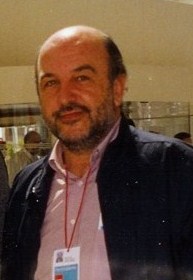
It’s official. As Nicolas anticipated last week, Joaquin Almunia will be the next Competition Commissioner.
Mr. Almunia is surely one of Spain’s most able politicians. He has earned wide recognition all throughout Europe because of his handling of the economic crisis as the Commissioner in charge of Economic Affairs, and he is also a well respected political figure at the national level despite many years under the spotlight (at 34 he was the youngest Minister of the first Gonzalez government; he held Ministerial offices for 9 years; later on he became the leader of the socialist party and ran for Prime Minister in 2000). By now his CV has widely circulated elsewhere, so there’s no point in insisting on that.
Apparently some are concerned about the fact that a socialist and former trade unionist will be taking over the Competition portfolio. In my view, at this point in time such concerns lack any basis, the consensus on the role of undistorted competition being widespread in both aisles of the political spectrum. Moreover, there is evidence of Commissioner Almunia’s longstanding commitment with strong and independent competition law enforcement.
Indeed, the fact that Mr. Almunia ran for Prime Minister against Aznar in 2000, means that his profile and policies were very carefully scrutinized at the time. Interviews, documents and press clips of the 2000 campaign provide nowadays very interesting information about his views on different issues. Not only do we know that he’s an opera fan and a supporter of Athletic de Bilbao (not doing bad so far this season), but, more interestingly, a review of those materials tells us that the promotion and defense of competition ranked, even then, at the top of his political priorities.
During the electoral campaign, then candidate Almunia explicitly distanced himself from the attitude towards public intervention prevailing in other Member States governed by socialist parties. He proposed to accelerate liberalization of the electricity, gas and telephone markets, and advocated for continuing the process of privatizations. He further affirmed that his policies defended ‘free competition, free market and the battle against oligopolies’ more than anyone else’s.
Such affirmations seemed not to be mere ‘lip service’, the urgent adoption of a new Competition Act being one the the top 10 priorities in his political program for the general elections (something quite unusual in Spanish politics).
Finally, l will recall one interesting episode, now almost forgotten, but which, at the time, received ample media attention:
At the end of February 2000, Mr. Almunia was speaking before an audience of businessmen about his economic program, and insisted on the necessity to grant the Competition Authority (then Tribunal de Defensa de la Competencia) greater powers enabling it to ‘act independently, without waiting for the Government to take the initiative’. At that moment, he was interrupted by the President of the employers association (late Jose Maria Cuevas, a very influential figure back then), who manifested its disbelief:
‘I start to doubt that not even you believe you will be elected Prime Minister because the last thing that anyone who wants to govern would do would be to grant more powers to the Tribunal de Defensa de la Competencia (…) If you really want to govern tell us what the f&%k you plan on doing with the Competition Authority’.
Almunia’s response:
‘I find it surprising that you want a Tribunal de Defensa de la Competencia kneeled before the government (…) That would introduce skepticism where there should be illusion’.
In sum, a decade ago Mr. Almunia stood up for independency in competition enforcement and made competition one of his political priorities. This record and his experience at the EU level make him, in theory, one of the best Competition Commissioners we could be hoping for. We wish him and his team the best of lucks.
BTW, while searching for info on this topic I found out that the news about appointment made its way into a website on ‘celebrity news, all the time’ under the heading ‘Antitrust Gossip’ (!) Is competition law getting glamorous??
(Image possibly subject to copyrights: source here)
Next Commissioner for Competition
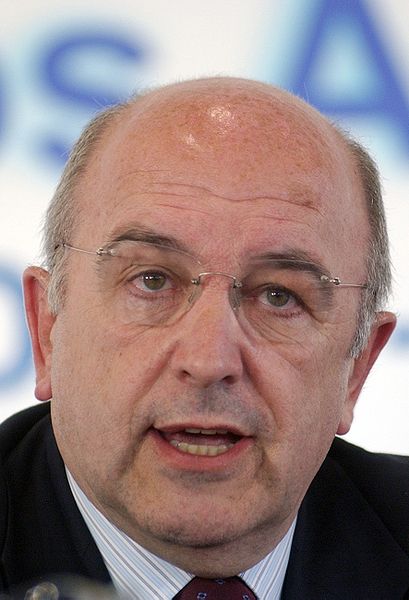
Jean Quatremer, on his excellent blog Les Coulisses de Bruxelles, report that Joaquín Almunia stands first in the race for the Competition portfolio in the next Commission. J. Almunia currently holds the portfolio of European Commissioner for Economic and Monetary Affairs. His résumé can be found here. N. Kroes will certainly be reappointed as Commissioner in charge of trade policy.
No doubt my co-blogger Alfonso, a Spanish citizen, will comment on this should Almunia’s appointment be confirmed.
Commission closes Formal Proceedings against Qualcomm

Confirming my speculations a few weeks ago, the Commission announced today that it would not invest any further resources in investigating the Qualcomm case.
I paste hereafter the press release in full (MEMO/09/516 Date: 24/11/2009)
“The European Commission has decided to close formal antitrust proceedings against Qualcomm Incorporated, a US chipset manufacturer, concerning an alleged breach of EC Treaty rules on abuse of a dominant market position (Article 82). The investigation was opened on 1 st October 2007 (see MEMO/07/389 ).
The European Commission is committed to fight against illegal behaviour by dominant companies in key innovative sectors like telecoms and IT when an abuse of their market power would deny consumers the benefits of competition and choice.
The Qualcomm case has raised important issues about the pricing of technology after its adoption as part of an industry standard. In practice, such assessments may be very complex, and any antitrust enforcer has to be careful about overturning commercial agreements.
The Commission has investigated whether the royalties that Qualcomm has been charging since its patented technology became part of Europe’s 3G standard are unreasonably high.
The Commission committed time and resources to this investigation in order to assess a complex body of evidence, but has not as yet reached formal conclusions.
All complainants have now withdrawn or indicated their intention to withdraw their complaints, and the Commission has therefore to decide where best to focus its resources and priorities. In view of this, the Commission does not consider it appropriate to invest further resources in this case”.
See here, here and here for more.
(Image possibly subject to copyrights: source here)
Tribute to Advocate General Ruiz-Jarabo Colomer
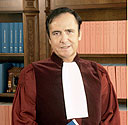 Advocate General Dámaso Ruiz-Jarabo Colomer passed away last night. This is a truly irreparable loss that comes as a great shock to all of us.
Advocate General Ruiz-Jarabo has been one of the very finest lawyers in the history of the European Court of Justice. Not only he was decisive in shaping the role the of Advocates General, but his contribution to the development of EU law has been critical in so many ways.
He will be remembered by all who met him and by all who learnt from his brilliant Opinions. Those Opinions will surely continue to inspire and influence European law for many years to come. We shall all miss him greatly.


 Chillin'Competition