Archive for the ‘Breaking – Antitrust – News’ Category
Case T-167/08, Microsoft v European Commission
I’ve just returned to Brussels after spending a great day of immersion into Korean culture in Frankfurt. The Korean Fair Trade Commission invited me to speak about international cartels to approximately 100 Korean executives of Korean companies operating in Europe within the framework of an Anti-Cartel Workshop [check out the program: Anti-cartel workshop :)] I had a great time in our very unorthodox and fun session as well as in the different social events with which they treated me afterwards. To all of them: 감사합니다 !! We have more things to tell you about this event and about recent trends in cartel case-law, but, first, let’s deal with today’s big news:

This morning the General Court issued its judgment with regard to the periodic penalty payment of 899 million euros that the Commission imposed on Microsoft for not complying adequately with the Commission’s 2004 infringement decision and, in particular, with the obligation to provide interoperability information under reasonable and non-discriminatory conditions. (Click here to read the Judgment).
We believe this post is the first hastily written analysis of the Judgment. Apologies for the long post, but this time we think we have something interesting to say.
[btw, you might recall that in previous posts we talked about the Hearing in this case (here), and even provided you with the report for the hearing (see here)].
I have only had time to skim through the Judgment, but here’s how I think its main points can be interpreted: Read the rest of this entry »
Nick Banasevic appointed head of the unit in charge of IT, Internet and consumer electronics

We have just learnt (via M-lex) that Nicholas Banasevic has been appointed Head of the Unit dealing with IT, internet and consumer electronics at DG COMP.
In previous posts we had already highlighted the importance of this appointment at a time when this particular unit is dealing with an immense workload which includes some of the most interesting ongoing cases in our discipline.
We hear that the competition for the job was very tough, and that says a lot both about DG COMP’s staff and about the newly appointed Head of Unit.
Nick is not only an excellent economist, a hard-working, nice and very very tall guy, but he’s also very reasonable, which means that he probably won’t mind about us commenting critically (for good or for bad) on his unit’s work.
Congrats and best of lucks to him!
Ruminations on the Google investigation

Over the past few months we have provided you with our views on the investigation undertaken by the European Commission with respect to Google. Here is an account of recent developments, thoughts, concerns, readings, ideas, and possible questions to be posed:
The developments. As you all may well know, the Commission has sent Google a preliminary assessment (a necessary formal step towards a commitment decision under Article 9 of Regulation 1/2003) and has requested Google to provide swiftly proposals of possible commitments that could address the concerns set out on that document. For the Commission’s statement identifying in broad terms the practices it objects to, see here.
In parallel, Google has lodged a complaint against Microsoft and Nokia. Google claims that “Nokia and Microsoft are colluding to raise the costs of mobile devices for consumers, creating patent trolls that side-step promises both companies have made. They should be held accountable, and we hope our complaint spurs others to look into these practices“. We have no additional information on this complaint and therefore do not have any opinion on whether it may be well-founded or not, but we regard it as something potentially interesting given that, until now, patent trolls had managed to stay more or less away from the antitrust spotlight in this bout of “patent wars” (note the IPCom settlement).
(By the way, the European Commission has excellent staff working on the unit dealing with cases related to IT, Internet and Consumer Electronics, but they must be incredibly swamped with so many complaints piling up on their desks).
The substantive concerns. We’ve already been quite vocal about our substantive concerns with regard to this case (note the caveat that we speak about matters of principle and on the basis of almost no case-specific information), so we won’t insist on them today.
The policy concern. We fully understand the policy rationale for changing the tone and attempting to address competition concerns in high-tech innovative markets swiftly and on the basis of “negotiated” solutions. However, the increasingly frequent recourse to such solutions also gives rise to several concerns. One of them is that commitment decisions do not contain a final position on the existence or non-existence of an infringement. If such decisions become the standard way of dealing difficult with cases –which would then be left substantively unresolved-, this would imply blurring the contours of the law. Laws should be clear. How can we expect the law on Article 102 to be clear when 14 out of the past 17 abuse of dominance cases were put to an end by virtue of brief and unconclusive commitment decisions? How does one strike the right balance between setting the law straight and addressing competitive concerns rapidly and effectively?
The doubt. (this one is not our’s but Pablo Ibañez’s): does publicly requesting a company to offer commitments fit with the letter and spirit of Article 9 of Regulation 1/2003?
The idea. We feel a bit frustrated by the fact that we’ve spent months thinking about this investigation having no information other than news clips and press releases. We’d love to see how the Commission has framed its concerns regarding Google under current competition law standards. We do not rule out the possibility that we may have been wrong all along, and maybe (although I have my doubts) having a look at the Commission’s preliminary assessment would convince us. How about requesting access to the non-confidential versions of the key documents in the file pursuant to Regulation 1049 as soon as the investigation is over? It could be an interesting exercise…
François Hollande and Competition Law

The French Presidential election was held yesterday and, as you know, François Hollande won.
There is significant expectation as to the changes that the result of this election might entail for the rest of the European Union. Now, should we expect any changes in the competition law domain?
Nicolas Sarkozy did have an undeniable impact on competition law. First he managed to delete from the Lisbon Treaty the reference to the objective of ensuring “free and undistorted competition” in the EU (see here and here) and then he taught us the difference between endive growers, Apple and Microsoft (an explanation that, as you may remember, prompted our friend Mark English to stop wrapping his iPhone in ham).
Those interested in Hollande’s views on competition law should read his replies to Concurrences’ interview (in French, though).
Judicial appointments (including a Chillin’ leak)

A few days ago it was reported that the Danish presidency had proposed that 12 extra Judges to the General Court be appointed pursuant to a “lottery system”. At first we thought it was an April’s fools joke, but no, it’s actually a true story.
We have already expressed here some of our opinions with respect to the debate concerning the reform of the General Court. In our view, people matter more than institutional arrangements; or, in other words, if Member States appoint the right Judges then the backlog and most other problems could be effectively solved. Many Member States have already done so and, needless to say, there are currently a number incredibly good and productive Judges at the General Court.
And speaking of judicial nominations, EU Governments are meeting this week to vote on the appointments or re-appointments of a number of Judges and Advocates General at the upper ECJ.
It has been reported elsewhere that EU Governments will reappoint Judges Arabadjiev, Arestis, Berger, Bonichot, Fernlund, Jarasiunas, Levits, Malenovsky, Prechal and Von Danwitz as well as AG Bot, and that the new faces will be Judge Da Cruz Villaça (Portuguese; former President of the GC and very familiar with competition law issues) and Advocates General Nils Wahl (Swedish; former Judge at the GC and another very good competition expert) and Melchior Wathelet (Belgian; lawyer and economist from the University of Liège with a Harvard LL.M; also former Judge at the ECJ).
What we believe no one else has yet reported is that the UK has formally nominated a renowned competition lawyer, Christopher Vajda QC, as the new British Judge at the ECJ. The letter sent to the Council by the UK´s permanent representation officially informing them of the proposal (and including Mr. Vajda’s CV and list of publications) is publicly available here.
Competition Press Clips (II)

Some months ago we wrote a post explaining that some news stories are read differently from the perspective of an antitrust geek. Let’s continue with that series:
– In the above-mentioned post we reported on the use of novel anti-competitive practices in the US pizza market (remember the guy who planted live mice on competing pizza parlors?). That story was an illustration of how dirty tough competition law can be when it comes to food (as I’m writing I keep on telling to myself: “don’t make an endive joke; don´t”, so: no endive joke here). But the economic downturn seems to have further complicated things. The New York Times recently published a brilliantly written and quite humorous piece on the origins and effects of the price war that is currently taking place in the streets of Manhattan. The article forecasts that we may even end up having free pizza.
– Few consumers would object to free pizza. We have a weird love for free stuff (Brussels is, btw, a great city for gratuity lovers: you could perfectly survive without spending a cent of food just by attending receptions and cocktails; there are people who qualify as professionals at doing this). But a recent Judgment from the 15th Chamber of the Paris Commercial Courts has confirmed once again that, although we like “free”, we don´t understand the competitive implications of free products/services. The Judgment in Bottin v Google -a great candidate to the 2012 worst antitrust law development prize- has completely ignored that providing a free service in one side of a two-sided market cannot be akin to predatory pricing, without at least considering pricing on the other side of the market. An unofficial English version of the Judgment has been generously issued for free by the association of complainants against Google iComp. Considering that other people provide transalations for a price, we hope iComp is not also fined for predatory practices because of this free translation! (In iComp’s defense, one could claim that there is also an obvious business motive underlying the provision of this free service. But then a cynic could respond asking whether horizontal cooperation specifically aimed at hurting a specific undertaking -even through the use of legal actions- could not qualify as an illegal anticompetitive practice itself?). 😉
– Not only pizza makers and search engines face tough competition. BBC reports that a London-based minicab firm Addison-Lee has asked its drivers to drive in the “bus lanes” as a sign of protest against the rules that reserve the use of these lanes to licensed black taxis and buses. The company argues that “the current bus lane legislation is anti-competitive and unfairly discriminates against the millions of passengers that use Addison Lee“. Drivers in Brussels must have objections to the legality of the whole traffic code; otherwise it’s impossible to understand why they drive the way they do.
– Nicolas’ piece on Credit Rating Agencies seems to have inspired some: As reported by mlex, asset managers have filed an antitrust complaint against Standard & Poors in Switzerland.
-And speaking of mlex (which, as we have said here before, does a terrific job and has almost turned into an essential facility for anyone in the business), we have just found out that one of their excellent writers, Lewis Crofts, does not only cover competition law issues for MLex but is also an accomplished novelist (click here for his personal website). His novel “The Pornographer of Vienna” tells the story of a painter who was famous for his sexually explicit depictions of the Viennese underworld. Those who read it will find some familiarity with the competition law world.
P.S. I really tried, but I just can’t help it: putting mice in competing pizza places is pretty bad, but putting endives on your rival’s pizzas would really be too much!

And the winners are….

Concurrences and George Washinton Law School presented their Antitrust Writing Awards on Tuesday night in D.C.
The list of winners is available here.
Bill Kovacic was in charge of announcing the winners. We weren’t there, but we can imagine him saying something like: “And the award to the best academic paper on unilateral conduct goes to…….. Nicolas Petit, for “Credit Rating Agencies, the Sovereign Debt Crisis and Competition Law“!l
Yep, Nicolas is the proud winner of the award to the best academic article on unilateral conduct. His piece was also the most publicly voted one (the readers of this blog probably have something to do with that, so thanks on his behalf).
I want to congratulate not only Nicolas, but also all other winners as well as all the authors of all the other articles that had been selected for the competition.
Moreover, we want to congratulate the organisers: Concurrences (in the person of Nicolas Charbit) and George Washinton Law School. The creation of these awards is a fantastic initiative; we hope that they’re here to stay.
A few non-politically correct comments now:
1: To a certain extent Nicolas deserves credit for this prize. Nonetheless, any impartial observer should rapidly realize that I -in my capacity as the manager of Nico’s brilliantly conceived campaign– am the one responsible for his victory.. 😉 We’ll ask a credit rating agency who deserves more credit (wow, this is incredibly bad even for my standards…).
2: The picture illustrating one of our “campaign” posts was premonitory.
3: This must be the first time in a decade or so that a Frenchman wins any competition (except, certainly, for this one) 😉 In fair reciprocity (some background here), I -as a Spaniard- should write a piece hinting that Nicolas owes his victory to doping (which, by the way, was definetely the case since he finished it during a trip to Scotland; this is how his desk must have looked like).
4: How much sense does it make for a paper on “collective” dominance to be awarded the prize to the best article on “unilateral” conduct?? Just kiddin’ here: the core of the paper apparently deals with individual abuses of collective dominance, so it makes perfect sense.
5: You caught me: I just wrote “apparently”. I guess I’ll now have to read Nicolas’ paper.
P.S. One suggestion for the organizers of the Writing Awards: since client alerts and articles published in newsletters are elegible for the prizes in the “Business” category, why not extend it to blog posts? We also need incentives to compete!
Spanish professor sued over a blog post on competition law
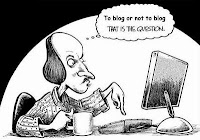
Blogging about competition law is getting dangerous!!
We have just learnt through Competition Policy International that a Professor at the Instituto de Empresa has been sued for defamation because he wrote on his blog that music group Promusicae’s copyright policy is contrary to the competition rules !!
The full story is available here.
I’ll better not comment in order to avoid the risk of being sued too.
Could anyone recommend us a good lawyer, just in case?
The Flour Cartel- A provocation?

Apparently someone at the French Competition Authority liked the series on the endives cartel (see here and here):
The Autorité de la Concurrence has imposed a fine of 242.4 million euros on flour makers.
Isn’t it obvious that this is a poor attempt to provoke us to write a new -and more appetizing- series on croissants?
Nice try, but they’ll have to do butter.


 Chillin'Competition