Archive for the ‘Uncategorized’ Category
Misc.

The winners of yesterday’s quizz are Anna and Alfonso. Here’s the source: B. Hawk, “Un tour d’horizon de la politique de la concurrence”, Cahiers de droit européen , 1992, n°5, p.1. I found the quote in one of my students (Mathieu Coquelet) dissertation.
I am currently reading students dissertations. I find this very stimulating intellectually. Two ideas came to mind in going through their papers:
- From an economic standpoint, the prohibition of RPM even at low market share levels makes some sense, because it allows price differenciation at the distribution level (e.g., distributors can efficiently price discriminate to serve more customers/recoup fixed costs more rapidly);
- What economic errors could give rise to compensation under Articles 268-340 TFUE ?: Saying that establishing tacit collusion does not require the proof of retaliation mechanism; using list prices rather than transaction prices to establish a finding of SIEC, whilst rebates are pervasive on the relevant market.
Will Never Get Funds from the EU :(
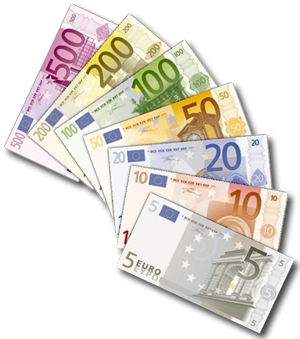
The Commission has published today a call for projects in the context of its FP7 programme (i.e., the EU’s main instrument for funding research in Europe).
This thing is a bitter news for us legal academics looking for research funds. Under theme 8 (socio-economic sciences and humanities), only one topic is related specifically to law.
This bitter feeling only gets worse when looking at the selected topic: “Rule of Law and Justice in a Multilevel Governance System“. Although I do love legal theory, I hate jargon-driven, remote from practice research topics, and don’t believe this is the direction where the EU should direct its funds.
Take a bite at it and read the following summary of the research topic. Really disconcerting.
“Interdisciplinary research -drawing from law as well as sociology, political science, history or others- should address the implications of the Lisbon Treaty on the very identity and’actorness’ of the EU with regard to its legal personality and the impact of this on the work ofthe EU and its Member States. The integration of the Charter of Fundamental Rights into theTreaty and the new provisions of the Stockholm Programme must be taken into account.More broadly research could examine how the interaction between the Community method,intergovernmental decision making, and matters decided by national and EU parliaments,executives, courts as well as international bodies influence the legitimacy and theeffectiveness of EU policies. The impacts of the diversity of legal cultural traditions and bodyof law (e.g. common, civil or Islamic law tradition) on mutual recognition of judicialdecisions, the internal market, family law and many regulatory fields should also be assessed.The citizen’s point of view when faced with a multilevel governance system in the field ofjustice needs to be examined, as well as the implications of the Citizen’s Initiatives foreseen inthe Treaty. Different degrees and forms of ‘litigiosity’ –in terms of intensity of resort to legal suit- across countries, sectors and political and legal cultures in contexts ranging from economic regulation to consumer’s safety and the development of alternative disputes resolution could be assessed“.
It’s a Long Way to the Top

See below. Found on LL.M Guide, a website advertising LL.Ms. One student made a strong plea in favour of our LL.M. in Liege. This triggered disagreement on the forum, with a respondent rightly arguing that I am not a “leading competition scholar” (as opposed to other “gods” of competition law, amongst which the amazingly good and esteemed Prof. Richard Whish).
 The chap who replies to him certainly has a point. It is still a long way to the top for me. If one day, I could get only close to Whish’s teaching skills…
Anyway, the funny thing is that I have thought a lot in the past weeks as to how I could improve my way of doing business. At this stage, my conclusion is that I need to refocus a little on things that really matter. To this end, I am facing a number of options on which I would certainly love feedback from my readers.
As far as time management is concerned – am running on scarce resources – shall I
- Stop the blog?;
- Quit GCLC?;
- Quit the new born BSC?;
- Surrender the Direction of the Liege Institute for European Legal Studies?
- Quit other courses which I give on an occasional basis (EDHEC in France, MGIMO in Russia, etc.)
- Stop organizing conferences
As to the selection of my areas of scientific interest, shall I:
- Keep an interest in the various areas of competition enforcement (101, 102 and merger control) or focus only on a micro area of EU competition law?
- Keep following Belgian and French competition laws, in parallel to EU competition law?
- Start writing papers in English only, or continue my 50/50 balance between contributions in French and English?
Happy to get your feedback on the above.
Nota: The picture above is taken from one of the greatest rock LPs of all time (source here). This LP features the title “It’s a long way to the top”, which has one of the most addictive and catchy riffs I have ever heard.
Competition Quote of the Day

A few years ago, whilst a young undergrad. student, the following quote opened my eyes:
“Antitrust litigation is not a process for deciding who can be rich or poor, nor can it decide how much wealth should be expended to reduce pollution” (R. Bork, The Antitrust Paradox – A policy at war with itself, Basic Books, New York, 1978, p.91).
Now a young under experimented scholar, I still find that it rocks. Thanks to Anne-Sophie Maes for the pointer.
Karel Van Miert
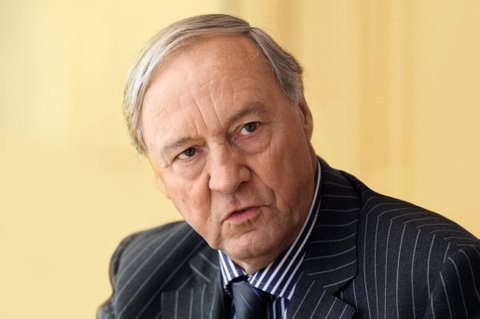
The European Commission held an inauguration ceremony of memorial plinth for Karel VAN MIERT, former European Competition Commissioner. A video of the ceremony is available here. I met him once, at a conference organized by the revue Concurrences three years ago. My impression: his reputation as someone who spoke his mind was not a myth. During the conference, VAN MIERT delivered a tough, vibrant speech against the State-sponsored industrial policy ethos.
As most readers know VAN MIERT was a flemish Belgian (read dutch-speaking). Yet, it seems that most of the ceremony took place in French (see the speeches of Barroso and Almunia). Quite funny, at a time where the country hosting the Commission is on the verge of linguistic explosion.
HLS Seminar discussion on refusals to licence.
Continuing with the series of posts written by Harvard Law students for the seminar on Antitrust, Technology and Innovation, you can find part of the discussion on refusals to licence in the comments to this post.
As explained earlier, some of these comments refer to the readings available in the syllabus.
Congrats
Hat tip and best of luck to my LL.M. students A-S. Come, M. Coquelet, M. DeVos and P. Sabbadini, who have reached the finals of the Concours Lamy de la Concurrence, and are now invited to Paris to plead their case at the French NCA. I am really proud. Congrats’ also to their coach Norman Neyrinck.
Again, our LL.M. offers unique training in antitrust and IP law, and this is just the proof of it.
Here’s a link to the subject of the concours.
I love Rock’n Roll

This one is to rock music what W. Baumol is to painting.
Most of the readers of this blog know Greg Sidak, the famous AT lawyer and economist, co-editor of the Journal of Competition Law and Econ, who co-authored a range of excellent papers with my former boss Damien Geradin.
Despite my incredulity, it seems that Sidak is also a serious musician. See picture hereafter:

I believe the URL and content of the website tell it all : http://www.gregorysidakmusic.com/
A quote worth reading (Sidak mission’s statement on the website)
“I want to show that rock music can be a medium capable of expressing powerful, consequential ideas and emotions beyond the simplistic sexual ones from which it (like the tango) rose into a much more complex art form“.
Competition Law on Trial

Once in their lifetime, academics in Belgium must deliver a public lecture on their particular field of expertise. This event – which is known under the name “leçon inaugurale” – is attended by students, but also colleagues, members of the civil society, family, etc. Mine took place two months ago. I attach below my speech (in French). It is entitled “competition law on trial“.
Motto
DG Comp has a slogan!

This appears now on top of DG Comp’s webpage, and if my recollections are correct, it was not there a year ago.
I made a quick search: this expression has been, and is still, used on many occasions by other Commissioners (consumer protection, internal market, etc.). “Making markets work better” has thus apparently became the grand, unifying goal of the Commission.
This motto sends a number of messages including subliminal ones:
- Markets do not necessarily work optimally (no kidding…)
- As far as DG Comp is concerned, an alternative suitable motto could have been “making markets competitive“. The fact that the motto does not refer to the concept of competition (or to a related concept) implicitly signals that DG Comp may seek to use competition rules to achieve goals not entirely related to competition.
- The choice of the word “better” (rather than “optimally” for instance) arguably indicates that full, cut-throat competition on markets might not always be a desirable outcome, let alone an achievable outcome.
- The choice of the word “Making” implicitly indicates that DG Comp believes it can manipulate pro-actively markets and steer them towards better outcomes. Again, this lends support to the view that the Commission does, and will, rely on the EU competition rules to regulate markets.


 Chillin'Competition


