Archive for the ‘Uncategorized’ Category
12th Annual Conference of the GCLC: Registration still open!

The Global Competition Law Centre will be holding its 12th Annual Conference next week. Take a look at the programme here and the registration page here if you are still thinking about attending.
It is devoted to ‘dynamic markets and dynamic enforcement’. The idea is not only to discuss the challenges that arise in industries that are fast-moving and innovation-intensive, but also to link this question to enforcement-related matters and thus to ask whether emerging challenges are having an impact on the way competition law is interpreted and applied across the world.
I am delighted that I will get to speak at an event that will feature a most impressive bunch of specialists. We – Alfonso and I, but also Nicolas Petit, who will also be speaking at the event – hope to see many of you there!
Judgment in Case T-699/14, Topps

On 11 January the General Court handed down its Judgment in the Topps case, concerning alleged anticompetitive practices in relation to collectible football stickers and trading cards. As some of you have noted, the subject-matter of the case makes it a must-cover for us.
We will say a few words on the Judgment (not that it is particularly remarkable, but given the scarcity of competition cases we can’t afford not to look at it; we want to collect posts on all of them) and leave the important stuff (i.e. the anecdotal facts) for the end. I have in any event marked in bold the truly important content of the Judgment.
Topps’ appeal targeted a Commission decision rejecting a complaint against Panini, FIFA, UEFA and a number of other national football federations. Following a preliminary inquiry the Commission rejected this complaint on the grounds that there was no EU interest and that there was a very limited likelihood of establishing an infringement so that pursuing an investigation would be disproportionate.
The Judgment deals with some procedural issues of no apparent interest before delving into substance.
Regarding market definition, the applicant argued that the Commission had committed a manifest error in holding that it was likely that relevant markets were not confined to, first, World Cup collectibles sold to children aged 6 to 14 and, second, Euro collectibles sold to children aged 6 to 14 [as if there were no geeky collectors after 14…]. The Commission reached that conclusion on the basis of several arguments challenged by the applicant, among which was the claim that it was not obliged to have recourse to the SSNIP test. Topps seemed to contend that since Panini’s collectibles were roughly 20%-50% more expensive than other collections and that price increases resulted in greater profits, this would necessarily imply that they were not substitutable with other collectibles. The Court nevertheless rejects this argument. There is nothing groundbreaking on this part of the Judgment. It confirms that the SSNIP test is not the only method available to the Commission, which may legitimately use others and goes on to validate its assessment of the facts at issue. Very unfortunately, the Court says that “it is not even necessary to adjudicate on the possibility of applying the SSNIP test to children”. We would have loved to read that discussion; perhaps we could have added the infant fallacy to the “cellophane fallacy” and “toothless fallacy”. Here goes a missed opportunity…
Regarding a possible infringement of Article 101. Topps claimed, first, that the parties had entered into long-term exclusive agreements with Panini that resulted in total foreclosure in the market for collectibles of the World and Euro tournaments. The Commission, however, took the view that their duration was not unreasonably long (“typically” relating to one tournament; the Judgment, by the way, contains a prior discussion on the meaning of “typically) and that the evidence suggested competition in the (most likely) relevant markets and not the foreclosure of Panini’s competitors. The Court also observed that agreements of over 4 years could potentially be justified or have little relevance when related to short events taking place every 4 years.
Ass regard the argument that Panini had imposed exclusivity obligations on retailers (due to a letter noting that retailers carrying non-official products would not be considered), the Court notes (i) that the claim is based on the wrong premise of unduly narrow relevant markets; (ii) that it only affected World Cup 2010 collectibles and only in Cyprus [By the way, an arguably important fact omitted in the Judgment is that Spain won that World Cup…] and that therefore there was no generalized exclusivity and no foreclosure.
Regarding a possible breach of Art.102.
On dominance. The Court endorses the Commission’s conclusions of the unlikelihood of finding dominance on the part of Panini noting once again that the complaint relied on the premise of a narrow market definition, and that once that market is enlarged it shows lively competition. Very interestingly, the Judgment notes that sales of football collectibles in Italy fell “following the enthusiasm for the collections relating to the Dragon Ball universe based on the eponymous manga”.
The Court also dismisses the idea of upstream dominance, thus validating the Commission’s conclusion that IP rights held by FIFA, UEFA and national associations are not indispensable for creating collectibles related to international tournaments. The Court noted that the lack of those rights did not preclude some collections by Panini and Topps in the past and underlined that, in any event, a claim of dominance based on this circumstance once again assumed a too narrow market definition.
On the alleged refusal to deal. The Court observes that Topps was not refused the IPRs at issue but was rather invited to some tenders, that on other occasions it merely sent a letter without any follow-up, and that the IMS conditions are not met, as the emergence of a new product was not prevented (the Court validates the Commission’s assessment that video trading cards and cards “made with pieces of match worn shirts” [?!] did not constitute new products but rather new features of existing ones). It further observes that it had not been demonstrating that the IPRs at issue were necessary to bring these to the market and that, in any event, numerous competitors are active in a correctly defined market, thereby suggesting the absence of foreclosure.
On the alleged excessive prices. The first Judgment discussing excessive prices in the wake of the Commissioner’s seminal speech at the… ehem…equally seminal Chillin’Competition conference (also attended by the Judge in charge of this case; see below) dismisses the claim simply by saying that the data available does not show that the price of World Cup and Euro collectibles is higher than that of other football collections neither in absolute terms nor compared with its cost of production.
Anecdotal facts
-The first (prohibition/fine) decision under Regulation 1/2003 was also about collectible cards (Pokémon) and actually targeted Topps; see here. The Judgment issued last week refers to that decision observing that the arguments developed by Topps were “diametrically opposed to those developed by Topps at the time” [by the way, perhaps this was the case, but when the Commission does that the Court simply says that it is not bound by its precedents…]
– This is the first competition Judgment in which Ian Forrester has acted as “rapporteur”.
– The Commission may not see collectible cards as an enforcement priority, but other competition authorities are still there, ready to act. I remember a Spanish precedent from not so long ago in which the national competition authority gave an example of prioritization and allocation of resources when sanctioning 5 distributors of Magic cards with 7,000 euros (one party received a 148 euro fine, another a 748 euro fine; the highest fine was 3,424 euros). I remember an official defending the investigation saying that geeks also had the right to consumer welfare…Indeed, but they paid twice, the first time as victims of the cartel and the second one as taxpayers financing a full-blown investigation that resulted in such fines.
And the winners are…

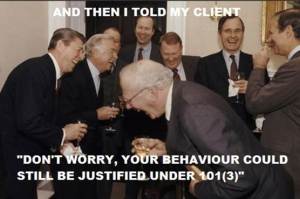
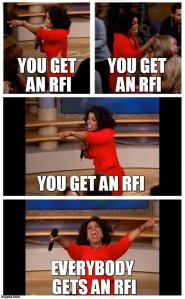
With some delay (that has triggered reminders such as the image above…), we are pleased to announce the winnerS of the meme competition. Thanks to everyone for participating. Those unhappy about not having won, please remember that the juror was my colleague Sam, not Pablo or I. Given the strong competition, we did decide to have not one but three winning memes, namely these:

We will contact the winners (congrats!) over email for logistical arrangements regarding collection of their sweet prize!
NEW(ish) PAPER: AG Wahl in Intel, or The Value of Realism and Consistency in The Context of Article 102 TFEU

My new paper, on AG Wahl’s Opinion in Intel, is available for download on SSRN here. It is not new in the sense that it is the write-up and polishing of some of the ideas discussed in an event organised by Concurrences back in October. Info and materials on the event, in which I presented together with Luc Gyselen and Damien Neven, can be found here.
I understand that Concurrences will be publishing several short papers on the Opinion together with mine and Nicolas Petit’s (see here). I chose to focus on what is, in my view, the single most important aspect of the Opinion: the emphasis placed on the virtues of realism and consistency in law-making.
Realism in law-making
A legal rule that is divorced from business realities makes bad law. When a rule ignores reality, it may be difficult to understand and anticipate. This is one key message conveyed by AG Wahl in his Opinion.
The summa divisio between loyalty rebates, on the one hand, and quantity-based schemes, on the other, has been with us since Hoffmann-La Roche. It does not capture, however, the reality of business transactions, which, as the case law shows, defies such a ready and stark categorisation.
What is more, the divide between loyalty and quantity rebates is premised on the idea that the two practices are fundamentally different in their nature, objective purpose and potential effects. Again, decades of case law provide empirical evidence showing that the reality is far more nuanced.
What happens when a rule is at odds with business realities? As AG Wahl explains, a gap opens between what courts say and what they do. Formally, courts may prefer to stick to the divide between loyalty and quantity rebates. In practice, however, they may do something very different. The analysis of ‘all the circumstances’ in cases like Michelin I and British Airways is simply an attempt to bridge the gap between rhetoric and reality.
A gap between what courts say and do is only good for academic lawyers like myself, who make a living trying to develop a systematic understanding of the field. It is bad for everybody else. Obscuring the reasoning of a ruling, or failing to make explicit the aspects that determine the outcome of a case is not conducive to legal certainty. In my view, Michelin II and British Airways exemplify the legal uncertainty created by this case law particularly well (I wrote about it here).
Consistency in law-making
AG Wahl’s Opinion also emphasises the value of consistency. Legal certainty cannot be meaningfully achieved if like practices are not treated alike. The Opinion proposes to achieve consistency both in the context of rebates and Article 102 TFEU as a whole.
In line with the Opinion, I have already pointed out that, if the case law has taught us something over the past thirty years, it is that the difference between the various types of rebate schemes is one of degree, not of principle. As a result, there should be no reason why they should be treated differently. All rebate schemes should be prohibited by object and/or by effect in accordance with the same criteria.
The Opinion distils a unifying legal framework that can apply across all potentially abusive practices. This framework revolves around a two-step test. According to AG Wahl, only the most serious infringements should be prohibited by object under the first step. The legality of all other practices should be subject to the second step. The two-step test must be performed in light of the economic and legal context of which the practice is part.
This aspect of the Opinion finds support in the case law. As I explained back in October, there are clear traces of a two-step test in past rulings. Post Danmark I is a good example in this sense. Selective price cuts can be abusive either when they are predatory within the meaning of AKZO (first step) or when they have exclusionary effects (second step). In Deutsche Telekom and TeliaSonera, the Court suggested that the first step is not sufficient to establish the abusive nature of a ‘margin squeeze’. Such a practice is only prohibited when it has exclusionary effects (that is, under the second step). Finally, a careful reading of Post Danmark II also suggests that a two-step approach was followed.
Antitrust Writing Awards 2017
If 2016 taught us anything is that voters always get things…well, never mind. But what is undeniable is that it does suit 2017 to start it off with a vote. The list of nominated publications for the Antitrust Writing Awards is now closed, and you can start voting for the best antitrust writings of the year.
Pablo and I are jointly nominated for the award on the “Academic/General Antitrust” category for our article On the Notion of Restriction of Competition (it could hardly be more general….). Pablo also has a standalone nomination for the “Academic/Unilateral Conduct” award for this piece.
We encourage you to click on the links above and vote for your favorite articles and also for ours (in case you have little time simply voting for ours will suffice). Although, actually, we are not too concerned, as our friends Dmitry and Evgeny have assured us that everything is being taken care of…. 😉
A fresh start to the year: three controversial doctrines with which I agree

I look back at the past few posts I have written and realise (well, I sort of knew that already) that they tend to be critical. In a sense, this is inevitable. We pick controversial matters and, as an academic, I instinctively focus– and always will – on the issues which I find to be inconsistent with my understanding of the law.
As positive thinking is in vogue at this time of the year, however, I thought the first post of 2017 would be devoted to three aspects of EU competition law that are seen by many as controversial and that are often criticised (or have often been criticised)… but with which I have no problem at all. Before I forget about it in the next couple of weeks in the same way others (not me!) forget about dieting and exercising, here’s to the power of positive thinking:
Market integration as an objective of EU competition law. This is a classic. Many people believe that EU competition law should not be enforced to achieve market integration, as it has been since Consten-Grundig. This policy goal, the argument goes, is not really about competition; it is a political one. I do not see things this way. Market integration is in fact where we come from, and the very reason we have a competition law system in Europe. Does it mean that our competition law is less ‘pure’ – whatever that means – as a result? Maybe, but I can certainly live with that.
Recoupment and predatory pricing: It is sometimes criticised that predatory pricing can be an abuse without evidence of the ability of the dominant firm to recoup its losses. I have little trouble with this rule. Pricing below average variable costs is in principle an irrational strategy for a firm to adopt. In this sense, it is the closest we can get to a ‘by object’ infringement in the context of Article 102 TFEU. And we know that it is not necessary to show the effects of a practice when it is restrictive by object.
Information exchanges under Article 101 TFEU: T-Mobile is a more recent judgment, but it has attracted a great deal of criticism. Does it make sense to prohibit as restrictive by object an exchange of information in the circumstances of that case, or in a situation like the one at stake in Bananas? Of course. There is no good reason why companies would get together to engage in such discussions. This is something that, as a company, you just do not do. It is true that fines, if imposed at all, should be proportionate to the gravity of the infringements (which means that in cases like T-Mobile and Bananas they should be modest). However, the fact that such exchanges are unlikely to have anticompetitive effects should not influence their qualification as ‘by object’ infringements.
Happy 2017 to all!
The implications of today’s Judgment in Cases C-20/15 and C-21/15 P (World Duty Free, Santander and Santusa)

This morning the ECJ annulled the General Court’s Judgments which in turn had quashed the Commission’ decisions in the Spanish financial goodwill cases. As some readers may know, my firm represents the parties that prevailed in first instance.
We had commented on this case before (most recently here) and Pablo’s statistical analysis predicted the outcome (actually, some of the comments in my last post could also be read in conjunction with today’s news).
We are getting a pretty significant number of calls and emails asking about the implications of this Judgment, so here go my personal main comments in this regard:
–The implications for the specific cases considered in the Judgment are actually limited. The cases now go back to the General Court, which (as acknowledged in para. 123 of today’s Judgment) had only examined the first part of only one of the four pleas presented to it. It is therefore pretty evident that the Judgment has in no way”fully upheld the two Commission decisions” as surprisingly claimed in the Commission’s Press release. The game is still on.
–The implications for the Apple cases and other cases concerning tax rulings are not evident, and most likely non-existent. Whereas establishing links can be good for headlines and the Commission may have had an interest in linking these cases to raise the stakes before the ECJ, the cases share little more than a wide interpretation of the notion of selectivity.
-The implications for State aid aw and tax law, and for institutional equilibrium between the Commission and Member States are simply huge:
The Judgment creates the concept of “behavioural selectivity” and thus places us in a brave new world.
From now onwards any tax measure conditioned on a behaviour (e.g an investment; i.e most tax measures) will automatically be considered as meeting the first of the three step test. In practice, this means that the European Commission becomes a tax co-legislator (some Member States did note that at the hearing and so did AG Kokott in the parallel Finanzlamt case), a role which it may nevertheless not want to assume (or at least not always, or not regarding every Member State).
Pablo is putting pressure on me to write an article on selectivity during the holidays, so perhaps we’ll develop our thoughts there.
-For law firms specialized in State aid, this means tons of new work…
–For the general interest, well, the news are perhaps not so great.
Chillin’Competition Memes Competition (VI)
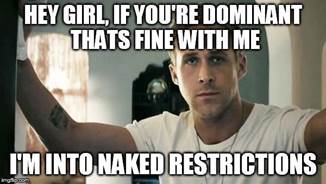
We have received literally hundreds of memes for our competition memes competition. Below you will find the very last selection. For the previous ones see here, here, here and here.
Since we have had a good laught with these, if any of you ever has any brilliant idea about memes related to current events or to our posts, please do send them our way! We will take care of seamlessly integrating them into our posts 😉
A committee of my colleagues will now pick the winner/s. If you have a favorite meme please feel free to say so as a comment to this post; any comments received will be considered in the final assessment.






The General Court annuls for the first time a settlement decision (Case T‑95/15, Printeos v Commission)

The (Extended) Fourth Chamber of the General Court annulled on Tuesday, for the first time, a Commission’s cartel settlement decision.The unusually brief Judgment is available here.
What happened in the case is essentially that, as if often happens with mono-product companies, the potential fines would have in principle exceeded the 10% turnover cap. In order not to exceed the said cap, the Commission granted reductions that ensured the fines would remain below it. The reductions granted were different for every company, but the fact is that the precise rates of reductions were undisclosed and that the decision did not explain the reasons for those differences (there was also one non-mono product company that benefited from an adjustment for equity reasons).The decreases in the fine resulted in adjusted basic amounts that revealed important discrepancies in terms of percentage as regards the 10% maximum.
According to yesterday’s Judgment, the Commission failed to meet its obligation to state reasons regarding the “weighting and assessment of the various factors taken into account in determining the amount of fines”, particularly when acting outside the framework set in the fining guidelines and in light of the obligation to have due regard to the principle of equal treatment. Since on the basis of this reasoning the parties would not have been able to dispute the merits of the decision with regard to the principle of equal treatment nor to ascertain whether equal treatment of different situations were objectively justified, the General Court annuls the decision.
A few comments beyond the newsletter headline:
A first, really? Actually, the issue had been brought to Court before in another settlement case (Euro Interest Rate Derivatives) but the appeal (by Société Générale) was withdrawn following an amended decision. It was then reported, however, that SG had submitted wrong turnover figures and that the new fine was calculated using new data but the same methodology as the earlier one. A related issue nevertheless did arise in Pilkington before the ECJ (see comment below) although it related to the General Court’s full jurisdiction rather than to the Commission’s fining powers.
–Is the General Court in annulment mood following the shortage of antitrust cases (only 11 last year)? Several judges (including Ian Forrester at the Chillin’Competition Conference) have recently encouraged more competition appeals and conveyed the message that companies and lawyers should not lose faith in the Courts and that appealing might well pay off. This could perhaps be seen as one more signal creating incentives.. Things may be different in the State aid front, particularly these days, given the political implications often at stake (some will understand what I mean).
-On the context and the effects on the Commission’s current policy. That fines reached the 10% used to be a bit of an oddity, but not so much for mono-product companies following the latest revision of the fining guidelines. This has given rise to concerns about compliance with the principle of non-discrimination between mono-product and non-mono product companies. Perhaps you remember that the impact of the current fining method was of particular concern to Commissioner Almunia. Back in 2011 he said in a few speeches that he was “examining how the mono-product ratio of companies – usually SME’s – can be taken into account when setting fines, so that they will not be treated in a discriminatory way”. The issue even attracted the attention of the European Parliament, which in a Resolution of February 2012 on the Commission’s competition annual report indicated that it “[a]waits an adaptation of the fining guidelines concerning ‘mono-product’ undertakings and SMEs, as announced by Commission Vice-President Joaquín Almunia“.In several cases (settlement or not) the Commission made sure to say that in those situations fines were reduced “taking into account the mono-product nature of the companies and their different degrees of involvement in the cartel” (see e.g. the window mountings). The policy, however, changed and the Commission does not do this anymore.
What now? The Commission is placed at a tough spot now if it wishes to grant reductions to mono-product companies or small and medium enterprises. And even if it does not, it still finds itself between a sword and a hard place in this case: what should it now do with the fine in this case? Paras 60-68 (in particular para. 66) of the Pilkington ECJ Judgment from September 2016 (which in a way may have anticipated this ruling) further complicate the issue as they could even suggest that reductions to mono-product companies are illegal (“the difference in the proportion represented by the fine in relation to the total turnover of the undertakings concerned does not, as such, constitute a sufficient justification for departing from the method of calculation that the Commission imposed on itself. That would be tantamount to conferring an advantage on the least diversified undertakings on the basis of criteria that are irrelevant in the light of the gravity and the duration of the infringement. When the amount of the fine is determined, there cannot, by the application of different methods of calculation, be any discrimination between the undertakings which have participated in an agreement or a concerted practice”). Admittedly the case law is not a paradigm of clarity in this regard.
–Reinterpreting the 10% limit? What it has seemingly done until recently is to (more or less, and in an admittedly opaque way) grant the reductions necessary for all companies to be below the cap (which necessarily implies very different reductions that are more related to turnover than to participation) and then, I guess, do some more or less sophisticated adjustments to reduce manifest differences in treatment between the different fined companies. The problem, of course, is that this reduction method may perhaps be commendable but cannot be exactly objective and proportionate and is therefore very hard to explain, as this case shows.
If from now onwards the Commission the Commission still wanted to reduce fines in this way (which, again, does not seem to be the case), then it would arguably have to set the max fine of 10% for the undertaking with the greatest turnover and participation, and none of the others could also reach the cap (unless their situation is pretty much the same as that of the “worst offender” in every case). Effectively, what this means is that at the very least in these cases the 10% limit would cease being a cap and will become the upper limit for the “worst” infringer. And this would somehow approach the re-interpretation of the limit to the interpretation given by the German Federal Supreme Court reinterpreted the cap in February 2013. As you may remember, despite the German cap being worded mirroring the EU text, the cap was reinterpreted as the maximum fining range precisely out of concern for discrimination of mono-product companies and SMEs (with the result that SMEs are now likely to face smaller fines and large companies, conversely, much larger fines).
In any event, and thinking about the bigger picture, it is pretty obvious that the 10% cap doesn’t guarantee that fines are no excessive or disproportionate to the finances of the sanctioned entity as it only looks at one –sometimes not useful- parameter of its financial status. Is it really a useful cap or should we think of alternatives?
–Judicial bias, really? -The reporting Judge in the case is Viktor Kreutschik, a former member of the Commission’s legal service whose appointment was doubted by some comments in this blog out of concern for a possible bias in favor of the Commission. As I wrote back then, it could actually be the other way around (see “Revolving doors: a contrarian view) and this Judgment suggests I may have had a point (for once). To be sure, I do have an issue with Judgments being annulled only for more or less important case-specific technicalities (I already said this not long ago, see here) and not so much when they deal with fundamental issues of principle and the stakes seem to be high (more on this coming soon).
–Want more? In the unlikely case that this post opened you appetite for more readings on fines, we suggest (aside from our usual self-promoted writings) that you take a look at this very recent OECD document.
-It’s all about the general principles. All these developments, by the way, confirm what I always say in my lectures on EU competition procedure, that when it comes to Court cases procedure (or rather general principles of law) often matters more than substance. So for more on this, we invite you to register for our module on procedure at the BSC 😉
Chillin’Competition Memes Competition (V)
And here goes the fourth selection of brilliant candidates for our competition memes competition with some strong candidates. For the previous sets see here, here and here. Nominations close tomorrow.
[And speaking of nominations, Pablo is nominated to 4, not 2, Antitrust Writing Awards. I only get one. He is therefore tied with Josh Wright. But since Pablo is not involved in the Trump transition team then Pablo wins hands down 😉 ….]













 Chillin'Competition