Archive for the ‘Uncategorized’ Category
Android meets Pronuptia, or why software licensing is like a franchising agreement

Imagine the European Commission issued a Statement of Objections against McDonald’s saying:
‘The McDonald’s brand is commercially important for McDonald’s franchisees. In its franchising agreements, McDonald’s has made the licensing of its trade mark conditional on selling only its own products. As a result, competing products cannot become the default fast food served at McDonald’s restaurants. These clauses deprive consumers of more interesting, potentially superior, fast food combinations. Just think of how amazing it would be to have McDonald’s, Chipotle and Pizza Hut all in the same store. In addition, the Commission is concerned that McDonald’s insists on making money out of its licensing activities’.
The EU competition law community would unanimously disapprove such a Statement of Objections. Yet, if you think about it, this is pretty much what the Commission argues in its press release on Android. Arguably, the press release is more controversial, as it goes further (as if the above example did not go far enough).
It took me a while to realise, but the agreements concluded by Google and mobile phone manufacturers are essentially franchising agreements. Apple is a vertically-integrated operator that sells its own phones to create a unique ‘look and feel’. As is well known, it does not rely on third-party manufacturers. Google (like McDonald’s, Pizza Hut and Subway) uses various contractual mechanisms to mimic vertical integration and create a competing ‘look and feel’.
Android and the Pronuptia conditions
The Court of Justice realised early on, in Pronuptia, that franchising agreements are pro-competitive in the sense that they enhance inter-brand rivalry. It ruled that some clauses included in franchising agreements do not violate Article 101(1) TFEU at all. The Court did not say that they are not restrictive by object. It ruled that they are never restrictive of competition, irrespective of the market power enjoyed by the supplier (or franchisor).
In particular, the Court held in Pronuptia that any clauses that relate to the protection of the (i) know-how of the franchisor and (ii) the reputation and uniformity of the franchise are not caught by Article 101(1) TFEU. The restraints challenged by the Commission in Android could be examined in this light. Is the purpose of the alleged bundling of Google applications to create a uniform brand image across devices? Do the ‘anti-fragmentation’ clauses seek to preserve the reputation and integrity of the network?
Some people might react to the above by saying that the Android agreements are far less restrictive than the typical franchising agreement. Generally, a franchisor requires exclusivity from franchisees. Even then, the agreement does not fall within the scope of Article 101(1) TFEU. In Pronuptia, the Court accepted that (outright) exclusivity obligations may be necessary to protect the reputation of the franchise.
In Android, the Commission does not claim that Google requires (outright) exclusivity from third-party manufacturers. At most, the concerns relate to an alleged obligation to exclusively pre-install Google Search. This requirement, if established, would be considerably less stringent. If outright exclusivity would be acceptable in the context of a franchising agreement, why would a less stringent restraint be an issue?
The importance of the counterfactual
The Court understood in Pronuptia that, if a supplier were not able to protect its know-how and brand image, it would not use franchising. In the absence of some core clauses, franchising would simply not exist, which is why these core clauses are never caught by Article 101(1) TFEU. As other cases, Pronuptia is all about the analysis of the counterfactual: does the practice restrict competition that would have existed in its absence?
It is difficult to gather from the Android press release whether the Commission has assessed the conditions of competition with and without the restraints. This is (or should be) a fundamental step in the analysis. Google – it is not a secret to anyone – makes most of its money through advertising. By challenging, inter alia, its ability to bundle applications, the Commission is in fact challenging Google’s very business model.
Against this background, it would be necessary to consider what would have happened if Google had not been able to make money through bundling and/or by requiring that applications be pre-installed on third-party devices. Would Google have invested in the development of an ecosystem rivalling Apple’s if it had not been able to monetise its efforts?
If the answer to this question is no, then Google’s practices cannot be contrary to Article 102 TFEU. If the Android ecosystem would not have been created absent the clauses challenged by the Commission, the said clauses do not restrict competition that would otherwise have existed.
Now that Android is up and running the Commission may believe that the world could be a better place if some contractual restraints were removed. But looking at the matter from an ex post perspective alone is misleading. One cannot have it both ways. A world with the restraints may look imperfect to some, but it is definitely better than a world without Android. A proper analysis of the counterfactual should look at the practice from an ex ante and an ex post perspective.
Ex ante thinking transpires from Pronuptia and other Article 101(1) TFEU rulings such as Nungesser. An ex ante approach to the analysis of practices also explains why a refusal to license an intellectual property right is only abusive in ‘exceptional circumstances’. If the Court had looked at the matter solely from an ex post perspective in Magill, every refusal to license would be abusive: ex post, every single compulsory licensing obligation promotes competition and benefits consumers.
Yes, but Google is dominant: a ‘special responsibility’ not to make money?
One could argue that all of the above is irrelevant, because Google is allegedly dominant in one or more of the markets covered by its practices. Some people like to claim that, when a firm is dominant, anything goes. After all, it is argued, Article 102 TFEU cases are very different from each other and dominance is an exceptional occurrence.
I do not see things that way. It would be a mistake to stop thinking rationally simply because a case is about a dominant firm. The logic behind Pronuptia is not less compelling just because Article 102 TFEU is potentially applicable to an agreement. Arguably, the case for protecting the know-how, reputation and uniformity of a franchise is stronger when it has become really successful.
I am also uneasy with intervention that questions the business model of a company, even if the company is dominant. The ‘special responsibility’ under Article 102 TFEU is a nebulous concept. But I do not believe the concept can be stretched as far as to support the claim that dominant firms have a ‘special responsibility’ to give up their way of making money (and thus to subsidise rivals).
Back from the conference tour: presentations and thoughts

I arrived yesterday from a pretty long conference tour (probably my longest one to date): in the course of a week I have been in Athens, Amsterdam and Bruges. This is the definitely the last time I do this… until next time I do this. The conferences were all very interesting and, more importantly, very varied in their context and approach.
IMEDIPA Conference (Athens)
In Athens, I attended the 9th IMEDIPA Conference, organised by the London-based Ioannides (Kokkoris, from Queen Mary; and Lianos, from UCL). Those who have attended their events know well they are amazing hosts. I was invited to take part in a panel discussing the rise (and demise?) of the effects-based approach in EU competition law.
Victoria Mertikopoulou and Lia Vitzilaiou gave an overview of recent Article 102 TFEU case law from different perspectives. See here for Victoria’s presentation and here for Lia’s. After the presentations I took part in a panel, chaired by Ioannis Lianos (the other speakers were Damien Gerard, Yannis Katsoulacos, Giorgio Monti and Renato Nazzini).
The fundamental idea I sought to emphasise is that the purpose of the effects-based approach is to preserve values that are dear to lawyers. This approach is indeed first and foremost about ensuring legal certainty and consistency (treat like practices alike). Economic analysis is only an instrument that serves these aims. In the same vein, I reminded the audience that the form-based approach came under attack primarily because it failed to provide a set of stable and predictable legal principles.
European Competition and Consumer Day (Amsterdam)
In Amsterdam, I took part in the European Consumer and Competition Day, organised in the context of the Dutch EU Presidency. A different city and a wholly different event, albeit not necessarily because of the speakers. President Bruno Lasserre and President Jacques Steenbergen, who were also in Athens, took part in the panel in which I shared my thoughts (see here) on the application of EU competition law to online platforms. The other participants were Thomas Kramler (aka Mr Digital Single Market) and Guido Lobrano (Business Europe).
The point of my presentation is quite simple. I tried to show how relying on fairly simple and well-established principles of EU competition law can take us a long way in the analysis of restrictions in the online world. One of this basic principles is the counterfactual (does the practice restrict competition that would have existed in its absence?), which is particularly relevant to scrutinise concerns with geo-blocking. I also explained that, following Cartes Bancaires, it is clear that, as a rule, restraints that are a plausible means to address free-riding are not restrictive by object. This principle is key to understand the approach of the French authority in Booking.com.
To be sure, our panel was not the high point of the European Consumer and Competition Day. That was instead Commissioner Vestager’s speech in the morning. The Commissioner hinted at what was going to happen on Wednesday (and which Alfonso reported, as usual, on the very day) and gave a good sense of future reforms in the field of merger control.
The Division of Competences in the EU Legal Order: a Post-Lisbon Assessment (Bruges)
The tour ended at my second academic home, the College of Europe in Bruges. Sacha Garben and Inge Govaere managed to attract a truly impressive line-up of senior academics, judges and officials. It is pointless to mention any of them because I would have to mention them all, but you can take a look at the programme here. The conference was the most academic of the three, and the one that was emphatically not devoted to competition law. Still, the organisers were able to find two competition lawyers interested in institutional and constitutional matters. Damien Gerard, another member of the ‘flying circus’ (to use Jacques Steenbergen’s expression), was invited to take part in a panel discussion. The presentation I gave can be found here.
Have a great weekend!
Breaking news: Pay-TV investigation- Paramount offers commitments

It has just been announced that Paramount Pictures has offered commitments to address the Commission’s concerns in the context of the high-profile Pay-TV investigation (in which, for full disclosure, I represent a third party, PACT -British Independent Producers-). Pablo has also in the past commented on this case in some detail (see here and here).
This looks like surprising news, as until now Paramount, like every other affected party, strongly disputed the Commission’s allegations. As you may remember, the allegations in this pilot case (with potential huge ramifications) relate to clauses present in bilateral agreements between Hollywood majors and Sky pursuant to which Sky must ensure that content is not broadcast outside of the territory covered by its license. The case relates both to satellite transmission and to online transmission, even if the two are subject to different copyright regimes (more on this in a second).
This is being portrayed as big news in the press, but is it really that relevant? Let’s see:
-For Paramount: I can’t judge on whether yielding makes business sense for Paramount. Surely they have their reasons (which are seemingly financial rather than legal). They are paying a price but they’re the only one who can judge whether the compensation is worthy from a business standpoint. Thus, logically, no comments on our part.
-For other companies: If this were a standard poker game appearances could suggest that Paramount is folding in the light of a strong hand on the part of the Commission. I doubt this is the case given the specificities of Paramount’s situation, but arguably that’s only an outsider’s impression. The only objective, legally relevant fact is that commitments do not imply the admission of an infringement, so the debate remains entirely open and this does not legally place others in a worse position.
Much to the contrary, it could even be argued that once the Commission has accepted commitments with regard to one undertaking, it could now not impose fines on others for exactly the same practices. This is because, as you know, commitments are only appropriate in cases where the Commission does not intend to impose fines. In fact, unless I’m mistaken there has never been a case or cases involving the same practices where the Commission accepted commitments and imposed fines. Last time a “hybrid” comparable scenario arose (in the Samsung and Motorola cases; see here for my comment on this point), the Commission decided not to impose fines on Motorola but rather to limit itself to declaring an infringement.
-For the Commission: For the Commission this means good press (it did get something out of the case), a bit less work (but not that much less since most of the work was done). As explained, it also arguably could mean that perhaps it cannot now impose fines on others. At the same time, it could also be argued that this move would somehow set the Commission on a pre-judged inevitable path (as it would appear odd that charges were withdrawn with regard to others after one has yielded), but in my personal view that would be a great mistake, as cases are not to be decided on the basis of a company’s strategy, but rather on the merits, and the Commission should continue examining the feedback it received in the replies to the SO and at the hearing, as I’m sure it is doing.
But forget about PR, and about winning or losing a specific case; is this offer something that changes anything in the marketplace or that achieves the Commission’s wider objectives? I’m not so sure.
Even if every major studio (or even every copyright holder in the world) were to offer similar concessions -which imply renouncing to given clauses that enforce their IPRs in a given way- the copyright legislation would still be in place (unless changed by the legislature, which is unlikely). This means that even if all geo-blocking clauses were suppressed, the “passive sales” that the Commission would like to see would not exist, because they would still be precluded by the regulatory framework (which in the online world grants copyright holders the right to authorize or prohibit communications to the public in every territory of broadcast; see Art. 3.3 of the Copyright Directive). I already hinted at this here.
That is why, at least in my view, the only concessions with which the Commission could achieve something meaningful in this case would be those of Member States in the context of the legislative process.
The Commission’s Statement of Objections in the Android case

The competition news of the past couple of days have just been confirmed. The European Commission has annnounced that it has addressed Google and its parent company Alphabet a Statement of Objections regarding its Android mobile operating system and apps. The Commission’s press release is available here.
Here are all of the previous posts that Pablo and I have written on the case. In the light of today’s press release they would still appear to be relevant and valid:
- More on Android (includes presentations on the case positing contrarian views, including one by Microsoft’s lawyer in the case)
- A comment on the Microsoft/Skype Judgment (although not directly related to this case, it dealt with many of the issues relevant to it. It seems I was among the few who read it attentively and took it seriously…).
- Also, you should check out this recent piece on “Systemic Efficiencies in Competition Law: Evidence from the ICT Industry” by Konstantinos Stylianou (who did the Harvard LLM with me and who is now at the University of Leeds).
P.S. 1- We have some new ideas on the bundling aspect of the case, but we still need to decide whether these should be “open source” or “licenseable” 😉
P.S. 2- In addition to the bundling allegations discussed in our posts above, the press relese refers to two other challenged practices concerning the anti-fragmentation policy and alleged exclusivity arrangements. These are new to us and we don’t yet have a view on them.
Burning issues at the ABA’s Antitrust Spring Meeting

This year’s ABA’s Antitrust Spring Meeting featured a panel on the antitrust issues faced by the marijuana industry (see here).
This is no joke; it seems that following its legalization by 23 States marijuana is the fastest growing industry in the U.S., currently worth $4 billion-per-year but this budding economy is expected to grow tenfold in the near future.
As in any rapidly growing semi-regulated industry, marijuana is poised to be an interesting green field for the application of competition law. Some report instances of boycotts, price fixing, false advertising, output limitation, distributor concentration and state-mandated vertical monopolies. Some of you may actually remember how alcohol provided many of the most interesting cases in EU Law (see here)
Since many of these issues remain in a doobious, funny smelling nebulous state, even expectations were high.
And mysteriously enough, although we are told that this was attended by the entire army of MLex journalists present in D.C, there is no public information about the content of the panel.
This is why we at Chillin’Competition have enquired among those who attended about what it was that happened there.
Their testimony is as follows:
- LC. Anonymous MLex Chief Correspondent , “We did our best. If anyone tells you that they remember what went on at the panel, they’re lying”.
- Mary Jane Green, Senior Associate, Wandon & Scott: “It was a very disappointing panel. Bingham´s “Port and Chocolate” reception always delivers what it promises, but the marijuana panel was a fraud; talk about false advertising! ”.
- Adam Smith, Senior Economist: “Nothing special went on. You know, people of the same trade seldom meet together in smoke-filled rooms, even for merriment and diversion. There’s nothing wrong with that”
- S. Senate aide: “It was half baked. The transatlantic perspective was missing. All the European officials interested in the topic were attending the panel on tax rulings…”.
- Panel moderator: “Let’s roll !
- Curro Farlopez, Partner, Baked and Stoned: “I swear I never tried that and I’ll never do it again”
- Senior Associate, Herb Smithsonian, “Best discussion on “Joint” ventures I ever attended“.
- Two LLM students at a Washingdon D.C college, who were denied entry to the panel: “We can’t help you. We toke a joint decision to attend, but the organisers really made a hash of the registrations.”
- Partner, Housefed, “ I smell the greatest collective action case in history”.
If any reader finds out more, please drop us a line.
Book Review: The Concept of State Aid under EU Law
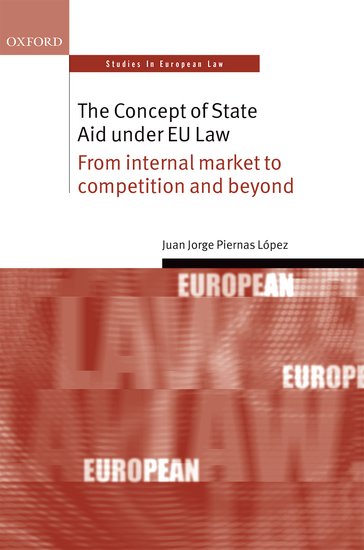
[The ECLR has just published my review of Jorge Piernas’ book on EU State Aid Law, which I reproduce below. I definitely recommend this monograph!]
EU state aid law has become a complex area. It is challenging for practitioners and academics. While publications for the practising lawyers keep growing (there are some excellent monographs and a specialised journal), works of a more theoretical nature remain relatively rare. Volumes approaching the subject from an academic perspective, such as Juan Jorge Piernas Lopez’s, are thus most welcome.
The thesis advanced by the author helps explain why it is difficult to find similar literature on the topic. Piernas argues that the (evolving) policy preferences of the European Commission (the Commission) are a major driver in the evolution of EU state aid law. If this is so, one would expect to find inconsistencies in the case law, as well as fluctuations in the emphasis given to some conditions of art.107(1) TFEU. Trying to develop, against this background, a systematic analytical approach to the case law is unlikely to prove easy.
Piernas’s approach reflects these difficulties. Instead of providing a top-down approach to the topic, and instead of offering a theoretical account capable of explaining the rationale behind the case law, the thrust of the monograph revolves around some of the leading cases in the field, which are presented in the form of short case notes. The absence of theoretical ambition is refreshing. Piernas argues that the policy position of the Commission in each of the cases is a more meaningful way to understand the outcome in each case. Thus, the description of the judgments takes into account the interpretation of art.107(1) TFEU proposed by the Commission. The effort in this sense is welcome and most illuminating.
Following a first part in which the author puts EU state aid law in perspective, he devotes four chapters to the elements of art.107(1) TFEU. The notions of advantage and selectivity are covered in Chs 4 and 5, respectively. The requirement that state aid be granted “by the State or through State resources” is addressed in Ch.6. Finally, the effect on trade and distortion of competition conditions are discussed in Ch.7.
Those interested in the field of state aid will be familiar with the choices made by Piernas. These are classic judgments that are likely to feature in any course devoted to EU state aid law. For instance, Ch.4 covers landmark rulings relating to the notion of advantage, includingSteenkolenmijnen, SFEI, Altmark and EDF. The reader is guided to the introduction of some key notions, including that of aid itself (which is an advantage that comprises measures such as tax breaks or sales below the market price) and the so-called market economy investor principle. Chapter 4 also discusses the conditions under which compensations for public service obligations fall outside the scope of art.107(1) TFEU.
The choices made by the author in Ch.5 are equally unsurprising. Piernas drives the reader through the landmark rulings that have contributed to the controversies around the notion of selectivity. This guide comprises old cases such as Italy v Commission . The Court held in that case that state aid is concerned with the effects of measures and not with their causes or aims. This statement, which was arguably uncontroversial and meaningful in the context in which it was introduced, has become an important source of confusion, as subsequent case law shows. British Aggregates, which is the ruling chosen by Piernas, illustrates this confusion particularly well.
Gibraltar is the last case discussed in Ch.5. It epitomises better than any other ruling how impenetrable the concept of selectivity has become. The judgment of the Court of Justice in this case has notable consequences that are difficult to ponder. It seems clear that all Member States use the tax system in a way that accommodates the economic structure of the country and the policy objectives of governments. It was safe to assume before the judgment, as explained by the Commission in its 1998 Notice on direct business taxation, that not all of these measures were caught by art.107(1) TFEU. For instance, a reduction in the taxation of labour is necessarily a general measure. According to the Notice, the fact that it favours, by definition, labour-intensive industries is not sufficient to trigger the application of art.107(1) TFEU.
It is no longer possible to have any certainty about the scope of the notion of selectivity after Gibraltar. The Court held that the application of art.107(1) TFEU should not depend on the “regulatory technique” chosen by the state, which means that even formally general measures may qualify as state aid insofar as they are designed to favour some undertakings over others. The additional layer of difficulty created by Gibraltar was reflected in the Draft Notice on the notion of state aid, in which the Commission struggled to reconcile the judgment with its general approach to the notion of selectivity.
Against this background, the reader is left with the impression that the discussion of Gibraltar is perhaps too brief. The author seems to express sympathy for the outcome of the judgment, but does not fully address its implications. One interesting issue that would have justified a lengthier development relates to the reference by the Court to the “regulatory technique” chosen by the state. The outcome in Gibraltar, which favours substance over form, is at odds with the judgment in PreussenElektra, in which the Court conceded that some “regulatory techniques” fall outside the scope of art.107(1) TFEU, even though they are equivalent in their effects. The reader has to wait until the section devoted to the latter to find a discussion of (only some) of these questions.
There is an omission in Ch.6 that some readers will find controversial. The question of whether aid must be granted by the state and/or through state resources has long been contentious. It says much about the conceptual confusion around the boundaries of the notion of aid. Uncertainty in this regard only disappeared in the early 2000s. The question was only truly settled after AG Jacobs’ magisterial opinion inPreussenElektra. Prior to that ruling, case law suggested that a measure need not involve the use of state resources for it to be caught by art.107(1) TFEU. What Piernas calls the Poor Farmers case is a clear example of this line of case law.
It cannot be disputed that Sloman Neptun and PreussenElektra deserved a lengthy discussion in the monograph. On the other hand, the reader is left with the impression that a full understanding of the evolution of this condition is only possible by expanding the analysis to include the subsequent ruling in Stardust Marine . While it was not possible to dispute after PreussenElektra that the use of state resources is required to trigger the application of art.107(1) TFEU, the scope of that concept remained undefined. In addition, the application of state aid rules to state-owned undertakings was contentious at the time (this is an issue that becomes apparent in the monograph through the discussion of cases like EDF and SFEI).
Stardust Marine is important insofar as it clarified that the concept of state resources comprises all resources that the state can use to achieve its objectives. In this sense, the ruling supported a relatively expansive understanding of art.107(1) TFEU. On the other hand, the Court was unambiguous in holding that a measure must not only be granted through state resources, but must also be “imputable” to the state. In this sense, it narrowed down the potential reach of art.107(1) TFEU.
Stardust Marine is the ruling that “closes the circle” in relation to this condition of art.107(1) TFEU. Piernas is right in suggesting that prior judgments were difficult to reconcile with one another. What is interesting about Stardust Marine is that it shows that the outcome in prior cases like Poor Farmers was not necessarily incorrect. The legal route that the Court would have followed after Stardust Marine , however, would have been markedly different.
In more general terms, it is likely that not all readers will agree with the thesis advanced by the author. The idea that the legal notion of aid has evolved in line with the policy priorities of the Commission is controversial. The cases chosen by Piernas appear to contradict this thesis. For instance, it is difficult to argue that the condition whereby aid must be granted by the state and through state resources results from the policy choices of the Commission. It is apparent that the Commission supported a notion of aid that was more expansive than that endorsed by the Court in PreussenElektra. Similarly, Stardust Marine contradicted the interpretation of art.107(1) TFEU defended by the Commission in the decision that was at the origin of the ruling.
A similar conclusion follows from an analysis of other cases. If one considers the broad context in which SFEI was adopted, it is difficult to argue that the Commission was the driver behind the ruling (given the reluctance of the Commission to intervene in such a case, there would be valid grounds to argue the opposite). Similarly, EDF, Azores and British Aggregates contradicted the policy choices made by the Commission. The monograph gives the impression that other factors (in particular, the liberalisation of major sectors of the economy) have been fundamental drivers in the evolution of the notion of aid, and that these factors have not been given sufficient weight.
In spite of these comments, there should be no doubt that the monograph makes a major contribution to the literature. It will be a lasting reference in the field both from a substantive and a methodological perspective. The author displays a very sophisticated understanding of the field and of the factors at play in the decision-making process. More importantly, he has found an elegant and effective way to introduce these factors in the analysis.
Remembering René Joliet (suddenly, unexpectedly)

I spent last Friday afternoon reading and re-reading books and old case law (yep, and you are paid to do exactly that when you are an academic). At some point, I found myself reading Ideal Standard, one of the classics on the interface between intellectual property law and free movement principles. I spare you of the substantive issues. What matters here is that, at some point, I found myself thinking: ‘wow, that is really clever, who was the rapporteur again?’ René Joliet. Of course! One does not become a legend of EU law for no reason.
There is a single paragraph on competition law in Ideal Standard. Needless to say, it is correct and pertinent as the rest of the judgment. It made me think of a recent Toshiba judgment. The Toshiba case was fairly straightforward. It was a plain vanilla market-sharing cartel that was examined as any other plain vanilla market-sharing cartel. Toshiba, however, attempted to argue that the Commission had not established that it was a potential competitor in the EEA market and thus that the agreement was restrictive of competition by object. On the facts, it looks like there were sufficient direct and indirect indicators suggesting that Toshiba was a potential competitor on the relevant market.
If it is established that Toshiba is a potential competitor: is the agreement restrictive by object? Both the Court and the Advocate General took a reasonable position on this question. We have always known that market sharing cartels are restrictive of competition by object. As a result, it makes no sense to show every time that these agreements are prohibited, by their very nature, under Article 101(1) TFEU. This approach is also in line with Cartes Bancaires. The analysis of whether an agreement is ‘by object’ must consider the experience acquired over the years, and be modulated accordingly.
When one reads the judgment, it is clear that the Court has market sharing cartels in mind. All the cases to which it refers in support of its conclusions are indeed cartel cases. However, the Court refers to ‘market sharing’ alone, which might be confusing. This is in contrast with Cartes Bancaires, where the Court was more precise and referred to price-fixing by cartels.
Does the nuance matter? Most of the time it does not. Typically, a horizontal market sharing agreement is a cartel. As Ideal Standard shows, however, sometimes it is not. Ideal Standard was about the assignment (sale) of a trade mark in France. Market sharing was the inevitable consequence of the agreement. However, the Court was careful to point out that not every trade mark assignment is restrictive by object. True, a cartel is sometimes implemented by means of a trade mark assignment. Sometimes, however, it has absolutely nothing to do with a cartel. This makes it necessary to consider (you guessed it) the nature of the agreement and the context of which it is part before jumping to conclusions.
Against the background of the above, I would add a nuance to the opinion of AG Wathelet in Toshiba. Experience teaches us that market sharing by cartels is restrictive by object. If this is what he wanted to express, I agree. Experience also teaches us – here comes the nuance – that not every agreement that amounts to market sharing is a cartel. Thus not all of them should be treated as such. Ideal Standard is there to provide a concrete example of our past experience in this sense!
By interesting coincidence, AG Wathelet issued last week an opinion on one of the big intellectual property issues of the day: the status of hyperlinks in copyright law. As not every reader of this blog is an IP aficionado, I will just mention that AG Wathelet defends a position that appears to be at odds with the relevant precedents, namely Svensson. In this sense, it is not certain that the Court will follow. I look forward to spending a Friday afternoon reading the judgment when it comes out!
Announcements and upcoming events

We have been silent for a few days, including, for once, on April Fool’s day (which last time around played out quite well; see here). It somehow felt strange to focus on narrow competition law issues with everything happening around, particularly after the Brussels attacks. But here we are, ready to pretend competition law is so important as to deserve your (and our) free time too.
Those of you who attended the Chilllin’Competition conference might remember that in my opening speech I mentioned in passing that a few of our speakers would be changing jobs in the coming weeks. You all know that Jacques Derenne soon after moved from Hogan Lovells to Sheppard Mullin; Alvaro Ramos (then at Cisco) went on to head Qualcomm’s busy global antitrust team, and it has now been made public that another friend of this blog, Kevin Coates, has left the European Commission to join Covington&Burling. Best of luck to all of them, and congratulations to their new employers for their terrific hires!
We will soon be announcing other new positions 😉
And speaking of announcements, a number of friends and readers of the blog have recently asked us to advertise some events; here they are:
-On 15 April the 10th Junior Competition Law Conference (put together by Sarah Long and Molly Herron) will be taking place in London. This is one event that we have always very gladly advertised. The programme is available here. The topics of this year’s edition are: Brexit? Divergence and convergence in UK and EU competition law & Private enforcement: calm before the storm?
[Regarding BREXIT, you should read the excellent report drafted by Lawyers In for Britain, a coalition of lawyers -including competition lawyers, like John Davies, the aforementioned Kevin Coates or Stephen Kinsella, among many others. See here. Their efforts show that lawyers can actually be useful to good causes sometimes. Although now that I think about it, if the UK were to leave my firm would probably be the largest EU firm, which should come in handy to our EU and competition law practice 😉 ]
-On 22 April I will be intervening at a Brussels School of Competition Morning Briefing in Brussels to discuss the impact of the ECJ’s Judgments in the cement case. For more info and registrations, click here. I’ll also be teaching there this Friday.
-On 13 June Concurrence’s New Frontiers of Antitrust conference will take place in Paris. It has established itself as one of the big events in the field. Tickets are still available here and you can get one for just above 1,000 euros.
-On 11 and 12 July Newcastle Law School will be holding a conference on “Fossilisation & Innovation in Law”. Among the speakers, there will be a premature fossil in the making (Pablo) and a constant innovator (Bill Kovacic)
Merger control and mobile phone operators, or the limits of competition law and sector-specific regulation
In the field of merger control, it is all about mobile phone operators these days. The hearing on the Three/O2 UK merger took place last week. It is yet another chapter in the wave of ‘four to three’ mergers in the industry. It remains to be seen what the Commission will decide. As much as Brexit (sigh), a declaration of incompatibility cannot be ruled out.
One of the most interesting aspects of the case has to do with the involvement of sector-specific regulators. These authorities – and in particular Ofcom – oppose the transaction, and they do not seem to mince their words (or reports). This is natural and unsurprising. Telecoms regulation is all about promoting competition and making sure that the market remains fragmented. Because the regulatory regime was conceived to undermine the position of the incumbent operator, an increase in market concentration looks like a failure.
A couple of days ago, the Austrian telecoms authority released a report examining, ex post, the effects of the merger between Hutchison and Orange in the country (we should definitely have more of the studies). You will not be surprised to learn that the Austrian regulator sides with Ofcom, and strongly suggests that the merger should never have been cleared. If you are not surprised, I am even less so. I remember presenting at a conference where the head of the Austrian authority did not leave any doubts about his (negative, if you ask) views on the transaction.
Above all, the attempts of regulatory authorities to influence the decision of the Commission reflect the limits of sector-specific regulation. Sectoral regulators wish they could do more about the wave of consolidation in the industry.
I have just mentioned the limits of sector-specific regulation, but Three/O2 UK made me think about the limits of merger control as well. Merger control is very valuable, but is also a very imperfect instrument, in particular in a heavily regulated sector. I would emphasise the following features of the system:
- In practice, efficiencies play no meaningful role in the analysis of transactions: Three/O2 UK is one of these cases in which one can neatly identify potential negative effects (in the form of higher prices) and potential positive effects (such as increased investments and better network coverage). As in other cases, I am afraid that efficiency gains will be of marginal relevance in the analysis. The outcome of the case will depend on the perceived negative effects on competition and on the remedies offered by the parties.
The principle that efficiency claims can be put forward to outweigh any negative effects is more rhetoric than reality (there is an interesting forthcoming article by Nicholas Levy and two of his colleagues where this point is discussed). My understanding is that the situation is not fundamentally different in the US, and it is similar to what we see in the context of Articles 102 and 101(3) TFEU (Alfonso has written quite a bit about the latter, see here and here).
Is the limited role of efficiencies in merger control – and EU competition law at large – a problem? In my view, it is not much of a problem provided that the negative effects of concentrations and practices are assessed carefully and rigorously. What matters is that all stakeholders acknowledge the inescapable reality: it is incredibly difficult to advance efficiency claims in competition law proceedings. More importantly, one should not be cynical about this fundamental question. I hear people say – some with a straight face – that it does not really matter whether we prohibit a practice by object or by effect. After all, the argument goes, one can always advance efficiencies. We know better than that. - Market definition is an imperfect instrument to understand industries: The background to Three/O2 UK is not a mystery. Things are changing in the UK, in particular for the incumbent telecoms operator. After the acquisition of EE, BT has finally emerged as a credible integrated provider that can (properly) offer broadband Internet, mobile phone services and content. It is natural that other players react by trying to gain scale and compensate for the advantages enjoyed by the new BT. The problem is that ‘bigness’ and ‘integrated operator’ do not fit well in the analysis. The CMA could not block the BT/EE merger out of a vague concern with ‘bigness’ and ‘incumbency’, or simply because the incumbent was gaining an ‘edge’ over its rivals. By the same token, the Commission is right to rely upon market definition. On the other hand, I cannot avoid the impression that some aspects of the big picture are being missed – this is probably inevitable, and the alternative definitely unscientific.
- Fighting the inevitable: I can think of many reasons why mobile operators are merging. Some of these reasons have to do with the regulatory choices made by authorities and legislators – there are no free lunches, and the obsession with net neutrality certainly does not come for free. The impression I have from the wave of ‘four to three’ mergers is that the process of consolidation in the industry is inevitable. It would seem that a market structure with four integrated providers is not sustainable in the long run. What is the role of merger control in such a context? Does it make sense to fight the inevitable? Or is it wiser to force firms to compete so long as rivalry is viable? I have not made up my mind on this one.
The ECJ annuls the General Court’s Judgments and the Commission’s decisions in the cement case (on the limits of information requests)

The European Court of Justice rendered this morning its Judgments in the cement case, concerning the Commission’s decisions requesting information to companies with a view to finding enough evidence to establish an infringement. See Cases C-247/14 P HeidelbergCement/Comission, C-248/14 P Schwenk Zement/Comission, C-267/14 P Buzzi Unicem/Comission and C-268/14 P Italmobiliare/Commission.
The Judgments have annulled the General Court’s previous rulings as well as the Commission decisions. In that sense, they are a blow to the Commission, but not one as far reaching as the Commission feared one would have thought.
When the Commisison won in first instance, it issued this press release noting that “these judgments are important because they confirm the scope of the Commission’s powers to investigate suspected antitrust infringements” and that “the Court confirmed that it is for the Commission to decide what information it considers necessary to request from companies when investigating potential anticompetitive practices”.
Today, after having lost, the Commission’s spokesman has stated that “the implications of the judgments are likely to be confined to the present case, as the ECJ pronounced itself only on the issue of reasoning”. In my view, this is only partly true.
Let me explain why:


 Chillin'Competition