Competition Press Clips (II)

Some months ago we wrote a post explaining that some news stories are read differently from the perspective of an antitrust geek. Let’s continue with that series:
– In the above-mentioned post we reported on the use of novel anti-competitive practices in the US pizza market (remember the guy who planted live mice on competing pizza parlors?). That story was an illustration of how dirty tough competition law can be when it comes to food (as I’m writing I keep on telling to myself: “don’t make an endive joke; don´t”, so: no endive joke here). But the economic downturn seems to have further complicated things. The New York Times recently published a brilliantly written and quite humorous piece on the origins and effects of the price war that is currently taking place in the streets of Manhattan. The article forecasts that we may even end up having free pizza.
– Few consumers would object to free pizza. We have a weird love for free stuff (Brussels is, btw, a great city for gratuity lovers: you could perfectly survive without spending a cent of food just by attending receptions and cocktails; there are people who qualify as professionals at doing this). But a recent Judgment from the 15th Chamber of the Paris Commercial Courts has confirmed once again that, although we like “free”, we don´t understand the competitive implications of free products/services. The Judgment in Bottin v Google -a great candidate to the 2012 worst antitrust law development prize- has completely ignored that providing a free service in one side of a two-sided market cannot be akin to predatory pricing, without at least considering pricing on the other side of the market. An unofficial English version of the Judgment has been generously issued for free by the association of complainants against Google iComp. Considering that other people provide transalations for a price, we hope iComp is not also fined for predatory practices because of this free translation! (In iComp’s defense, one could claim that there is also an obvious business motive underlying the provision of this free service. But then a cynic could respond asking whether horizontal cooperation specifically aimed at hurting a specific undertaking -even through the use of legal actions- could not qualify as an illegal anticompetitive practice itself?). 😉
– Not only pizza makers and search engines face tough competition. BBC reports that a London-based minicab firm Addison-Lee has asked its drivers to drive in the “bus lanes” as a sign of protest against the rules that reserve the use of these lanes to licensed black taxis and buses. The company argues that “the current bus lane legislation is anti-competitive and unfairly discriminates against the millions of passengers that use Addison Lee“. Drivers in Brussels must have objections to the legality of the whole traffic code; otherwise it’s impossible to understand why they drive the way they do.
– Nicolas’ piece on Credit Rating Agencies seems to have inspired some: As reported by mlex, asset managers have filed an antitrust complaint against Standard & Poors in Switzerland.
-And speaking of mlex (which, as we have said here before, does a terrific job and has almost turned into an essential facility for anyone in the business), we have just found out that one of their excellent writers, Lewis Crofts, does not only cover competition law issues for MLex but is also an accomplished novelist (click here for his personal website). His novel “The Pornographer of Vienna” tells the story of a painter who was famous for his sexually explicit depictions of the Viennese underworld. Those who read it will find some familiarity with the competition law world.
P.S. I really tried, but I just can’t help it: putting mice in competing pizza places is pretty bad, but putting endives on your rival’s pizzas would really be too much!
Professional moves

Lately, several good friends of Chillin’Competition have made interesting career moves. A brief recap:
- Scott McInnes (Jones Day and She Goes Electro) is moving to Mastercard. BTW, Alfonso, here’s a present suggestion for Ms. Lamadrid who recently got her driving licence: Scott sells a very nice car at a very competitive price;
- Ief Daems (ex Howrey/Shearman & Sterling) has moved to Samsung;
- Laura Zadunayski (former student of the ULg LL.M in Competition and IP law) leaves Johnson & Johnson for
booseDiageo (this one is very bad); - Tarik Hennen (Squire Sanders Brussels and GCLC) leaves the bar and is poised to reappear in a wholly unrelated market;
- Guillaume Taillandier has left Squire Sanders Brussels for a in-house position at Bemis – a flexible packaging company with its European HQ in Belgium;
- The new Richard Whish, Christopher Townley (King’s College London) has been awarded the title of Senior Lecturer with effect from 1 September 2012
- Alfonso ………….. stays at Garrigues.
- I stay full time in my good old Belgian university…
Congrats’ to all of them!
The Economist Corner (III): “Intent” in Article 102 cases

For this third edition of The Economist Corner we have invited Hans Zenger. Hans used to be a member of the Chief Economist Team at DG Comp and is currently Senior Consultant at CRA. He’s is not only one of the most brilliant economists in town, but he’s also a great gruy.
As noted here some months ago, and even though there remains much to be done, Hans will also be one of the co-authors (the others will be Miguel de la Mano, Renato Nazzini and myself) of the Article 102 chapter of the next edition of Faull & Nikpay’s The EU Law of Competition.
We leave you with his ruminations on the role of intent in Article 102 cases. This topic, and many others, are dealt with in his article “Loyalty Rebates and the Competitive Process”, which is forthcoming in the Journal of Competition Law & Economics.)
***
In criminal law, proof of intent plays an important role in establishing the scope of liability. If A intends to benefit at the expense of B, then A is probably up to no good. In antitrust, this principle has all too easily been extended to unilateral conduct law. The problem is that the intent of benefitting at the expense of others is essentially what generates the beneficial outcome of a market economy:
• The prospect of “exploiting” consumers is what provides firms with an incentive to produce valuable products that improve over existing varieties.
• And the prospect of “excluding” rivals from making sales is what provides firms with an incentive to cut price to expand output.
In other words, the self-serving intent to “exploit” and “foreclose” is a cornerstone of the competitive process.
Adam Smith succinctly explained this in 1776: “It is not from the benevolence of the butcher, the brewer, or the baker, that we can expect our dinner, but from their regard of their own interest … By directing that industry in such a manner as its produce may be of greatest value, he intends only his own gain, and he is in this, as in many other cases, led by an invisible hand to promote an end which was no part of his intention.”
If one too readily transposes the zero-sum logic of criminal law to unilateral conduct investigations, then Smith’s conclusion constitutes a paradox: If A intends to benefit at the expense of B, how could that possibly be good for B? But as Schumpeter has explained, “There is no more of a paradox in this than there is in saying that motorcars are traveling faster than they otherwise would because they are provided with brakes.”
The evidentiary value of intent evidence in Article 102 cases therefore has its limits. Perhaps not surprisingly, regulators on occasion have shown a tendency to read too much into such documents. As Judge Easterbrook has noted, “firms ‘intend’ to do all the business they can, to crush their rivals if they can … Rivalry is harsh, and consumers gain the most when firms slash costs to the bone and pare price down to cost, all in pursuit of more business. Few firms price unaware of what they are doing; price reductions are carried out in pursuit of sales, at others’ expense. Entrepreneurs who work hardest to cut their prices will do the most damage to their rivals, and they will see good in it. You cannot be a sensible business executive without understanding the link among prices, your firm’s success and other firm’s distress. If courts use the vigorous, nasty pursuit of sales as evidence of forbidden ‘intent,’ they run the risk of penalizing the motive forces of competition.”
Chillin’ Competition goes running

We’ve returned from our holidays with recharged batteries and with plenty of new ambitious and perhaps unfeasible projects that we’ll be disclosing here in due course.
One of our blog-related aims for the coming months is to boost one of the most characteristic market failures in legal markets: not to much competition, but rather too many competititons.
We observe with interest that in our little antitrust world there are almost more prizes, awards and rankings as there are antitrust law specialists. To be sure, we’ve also contributed to this by creating the Worst-Antitrust development Prize and our Antitrust Oscars, but there are many more: just think of Concurrence’s new Writing Awards, of the Jacques Lassier Prize; of the many law firm directories ranking firms and lawyers such as Chambers, The Legal 500, Best Lawyers, IFLR, Global Competition Review’s Annual Awards, or in GCR’s well-known and recently-published 40 under 40 – by the way, don’t you also get the impression that some people must have lied about their age? 😉 -.
The problem with some of these sometimes pricey prizes is that they are inherently subjective. Whereas most of us admit that absolute neutrality and objectivity are unrealistic aspirations (a dozen recent complainants before the European Commission seem to think differently), some things in life can still be measured objectively. That’s why we at Chillin’ Competition have decided to create the first objective legal competition: we’re creating the “Fastest Antitrust Expert” Award.
The news of the Spanish professor who got sued because of an antitrust-related story that he wrote on his blog led us to question our way or life. “Should we run marathons instead of blogs“, we thought. This profound thought led both Nicolas and myself to register to run the Brussels 20 k on May 27th.
In the context of a mutually encouraging exchange of emails (which in essence consisted of Nicolas saying that my two previous running times reveal that I’m slow and of me responding that he’s short-legged) we came up with the idea of opening our challenge to all readers of this blog. These are the rules:
- The “Fastest Antitrust Expert” Award is open to all readers of Chilling Competition: public officials, lawyers, academics, students and, basically, to anyone who has registered for the 20k and who registers on the blog.
- Registering yourself with us is easy: you can either send us an email or write your name in a comment to this post; you must however do that before 1 May.
- On 2 May we will publish the list of names of those of our readers who are taking part in the 20k;
- In the weeks before the race we will be organizing some more stuff open to all participants (I have in mind something like Nicolas cooking pasta for everyone the night before the race…).
- The Prize: the winner will get an special interview at “The Friday Slot” as well as a pair of Li-ning running shoes.
Costs in EU Competition Law

Competition lawyers often get lost in the semantics of costs…
To help clarify how and why costs are used in competition proceedings, the Brussels School of Competition (BSC) will organize on 9 May a half-day compliance seminar (this seminar was due in early 2012, but was rescheduled).
Amongst other things, this seminar intends to review recent case-law developments, in particular the recent judgments handed down by the EU Courts in the Post Danmark (C-209/10) and Telefónica (T-336/07) cases. Hopefully the Tomra ruling will also be out by this time.
In line with the interdisciplinary spirit of the BSC, this seminar attempts to “blend” competition law and economics. Under each selected topic (see agenda here), it thus brings together a team of one lawyer and one economist, who will seek to provide an integrated perspective on the issue.
This event is a joint initiative of the BSC and of the Institute for European Legal Studies (IEJE) of the University of Liege (ULg). The registration form can be found here.
The Friday Slot (8) – Johan Ysewyn

For this eighth edition of the Friday Slot, Chillin’Competition has interviewed Johan Ysewyn (Covington). Our readers willing to improve their presentation skills should once attend Johan’s seminar on cartel law at the Brussels School of Competition (BSC). With his partner in crime Ewoud Sakkers, they have managed to craft a real attractive seminar which combines high-level competition law teaching with role-playing. Both instructive and hilarious. And each year, the students’ evaluation reach sky-high levels. All of this to just say that the powerful and humourous Johan denotes within the grey world of the legal community. We are immensely proud to have him on this slot. Enjoy!
PS: In a gesture of solidarity with our fellow Spanish professor who got sued for defamation on his blog, Chillin’Competition will be closed next week. This decision has nothing to do with the fact that Alfonso will be away in Croatia with ‘Ms Lamadrid’ nor with the fact that I will be skiing in France.
“Oscar” of the best competition law book? And of the best non-competition law book?
The Oscar for the best competition law research book still goes to Korah’s yellow book. I kept my edition from my College of Europe days and although the last edition dates back to 2007, it still is a great – and to the point – introduction to the competition law field. Judge Bork’s “The Antitrust Paradox“, has been mentioned already by a number of my co-Friday slotters and remains an essential read. The idea that antitrust laws should be about protecting competition rather than competitors seems to be still a novel concept for a number of competition authorities.
A more fun competition-book is Christopher Mason’s “The Art of the Steal” which gives the background and history to the Christie’s/Sotheby’s cartel and is really a good “thriller”-type read. Highly recommended.
On the non-competition side, I have started reading some of the French modern literature. Jonathan Littell’s “Les Bienveillantes” is simply a must-read in dealing with the darkest period of the 20th century. Am also a big fan of Amélie Nothomb, especially where she describes the cultural clash between East and West. “Stupeur et tremblements” is an essential read for those of you who have Japanese clients. A friend recommended me Michel Houellebecq – La Carte et le territoire – but haven’t got beyond the first 20 pages yet.
“Oscar” of the best case-law development in the past year? “Oscar” of the worst case-law development?
Oscar of the best case-law development: All of the cartel judgments of the last year where the Commission is being criticised for misreading/misinterpreting the evidence. Finally.
Oscar for the worst case-law development: Pfleiderer. Commission now needs to legislate to avoid leniency statements being disclosed, something which strikes me as a no brainer.
Let’s do it like economists => assume that you could change 3 rules, principles, judgments, institutions in the current EU competition system. What would you do?
- Find a comity-rule for multi-jurisdictional merger filings. What a waste of time and money. Good for law firms but the benefit of having 20 countries or more looking at a merger – where some of them only have a tangential interest escapes me;
- Reinforce internal checks and balances within DG Comp. They have been slipping on that. And yes, I know we’d all look to split the decisional and the investigatory layer but I am a realist;
- More judges in the GC, resulting in speedier appeals.
Average working time/week?
I have realized that hours in the office and efficiency don’t necessarily match up.
Why do you work in competition law? How did you first get into it?
As many people from my generation, I started off doing a lot of general EU-type work as well as commercial work. There was the Internal market push by Delors – 1992 remember – and there was lots of advisory work on distribution contracts and the like. But things were changing. The Merger Regulation had just entered into force and national authorities were being set up all over Europe. So there was simply more competition work to do.
And yes, I enjoy it too. Saying that it combines law, economics and policy is so cliché – but it is true.

And the winners are….

Concurrences and George Washinton Law School presented their Antitrust Writing Awards on Tuesday night in D.C.
The list of winners is available here.
Bill Kovacic was in charge of announcing the winners. We weren’t there, but we can imagine him saying something like: “And the award to the best academic paper on unilateral conduct goes to…….. Nicolas Petit, for “Credit Rating Agencies, the Sovereign Debt Crisis and Competition Law“!l
Yep, Nicolas is the proud winner of the award to the best academic article on unilateral conduct. His piece was also the most publicly voted one (the readers of this blog probably have something to do with that, so thanks on his behalf).
I want to congratulate not only Nicolas, but also all other winners as well as all the authors of all the other articles that had been selected for the competition.
Moreover, we want to congratulate the organisers: Concurrences (in the person of Nicolas Charbit) and George Washinton Law School. The creation of these awards is a fantastic initiative; we hope that they’re here to stay.
A few non-politically correct comments now:
1: To a certain extent Nicolas deserves credit for this prize. Nonetheless, any impartial observer should rapidly realize that I -in my capacity as the manager of Nico’s brilliantly conceived campaign– am the one responsible for his victory.. 😉 We’ll ask a credit rating agency who deserves more credit (wow, this is incredibly bad even for my standards…).
2: The picture illustrating one of our “campaign” posts was premonitory.
3: This must be the first time in a decade or so that a Frenchman wins any competition (except, certainly, for this one) 😉 In fair reciprocity (some background here), I -as a Spaniard- should write a piece hinting that Nicolas owes his victory to doping (which, by the way, was definetely the case since he finished it during a trip to Scotland; this is how his desk must have looked like).
4: How much sense does it make for a paper on “collective” dominance to be awarded the prize to the best article on “unilateral” conduct?? Just kiddin’ here: the core of the paper apparently deals with individual abuses of collective dominance, so it makes perfect sense.
5: You caught me: I just wrote “apparently”. I guess I’ll now have to read Nicolas’ paper.
P.S. One suggestion for the organizers of the Writing Awards: since client alerts and articles published in newsletters are elegible for the prizes in the “Business” category, why not extend it to blog posts? We also need incentives to compete!
Veggie OD

Sorry, can’t help it.
It is now the Commission that puts food on the table.
Yesterday, the Commission announced a 169,000,000€ fine in the Freight Forwarders cartel.
On this occasion, it announced that some cartel participants had organised their contacts in a so-called “Gardening Club” and that they had used coded language based on names of vegetables – such as “asparagus” and “baby courgettes” – when talking about fixing prices…
Thanks again to Aoife White for the pointer
Spanish professor sued over a blog post on competition law
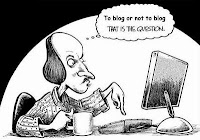
Blogging about competition law is getting dangerous!!
We have just learnt through Competition Policy International that a Professor at the Instituto de Empresa has been sued for defamation because he wrote on his blog that music group Promusicae’s copyright policy is contrary to the competition rules !!
The full story is available here.
I’ll better not comment in order to avoid the risk of being sued too.
Could anyone recommend us a good lawyer, just in case?


 Chillin'Competition