ChillinLeaks

We were the firsts to report on the replacement of N. Calvino and on the whole reshuffling of DG COMP a while ago.
We got a fresh hand on the draft horizontal guidelines, and provided some hints on their contents.
10 days ago, we were the ones to announce that the Commission is attempting to cook a cartel case on the exclusive basis of economic evidence.
Given our proven ability to chill competition on the market for breaking antitrust news, Alfonso and I have decided to formally start a ChillinLeaks column. We simply hope not to be accused of serious criminal offenses in Sweden.
Should you wish to contribute to the free flow of AT-related information, and send us revelations and stories for disclosure on this blog, please note that we apply the highest standard of confidentiality to our sources. You may also reach us by phone, should you prefer this communications means.
To inaugurate this new column, here’s the big news (still unofficial):
Kai-Uwe Kühn (University of Michigan) will be the next Chief Economist of DG COMP, and will replace D. Neven who’s supposed to step down shortly. Kühn is a specialist of collusion, collective dominance and hi-tech industries (read Microsoft and interoperability issues). He has consulted, if our information is correct, for CRA International. He holds a Phd in economics from Oxford University. Congrats to him.
Alfonso and Nicolas
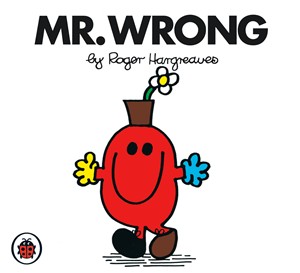
(PS: Image possibly subject to copyrights. Source here)
Effet Utile 1 – 0 Procedural Autonomy
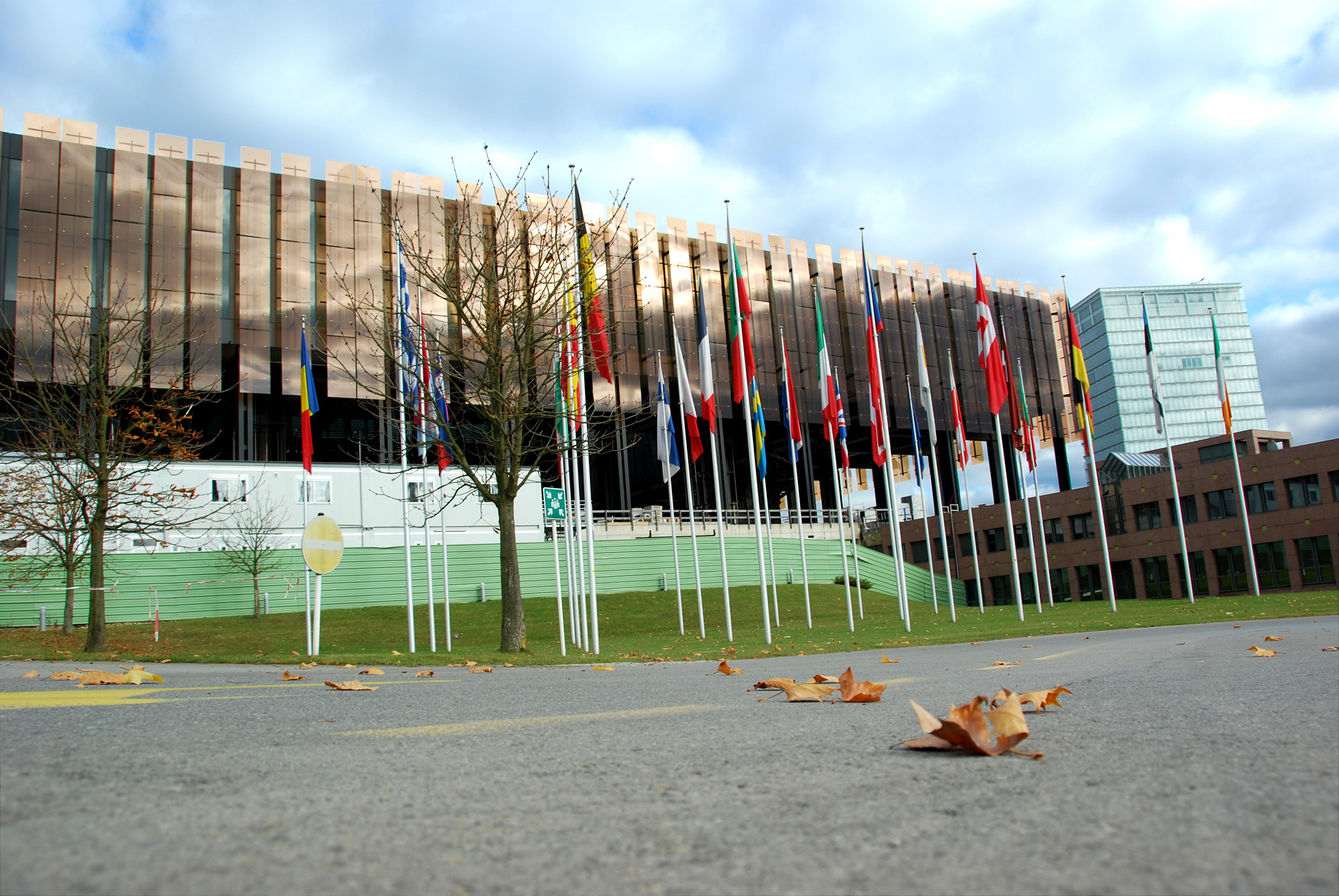
This is a big one and, I believe, a satisfactory judgment.
The VEBIC ruling, handed down today by the ECJ (Plenary Session) promotes an extensive interpretation of how far Member States must go to ensure the effet utile of Regulation 1 (although the principle was not quoted). The Court’s ruling might trigger a legislative change in Belgium or simply prompt the review courts to open proceedings to the Belgian competition council (the judgment says “precluding national rules“).
The case concerned the Belgian competition statute. This piece of legislation institutes a Belgian Competition Council as the NCA. Yet, it does not explicitly entrust the Council with the ability to appear before the competent review court when its decisions are challenged.
In the context of national litigation against a decision of the Belgian Competition Council (under national competition rules!), it was argued that the NCAs could possibly rely on Article 15 of Regulation 1/2003 to submit ex officio observations before national courts. Yet, some doubts existed as to whether (i) this applied to review courts ; (ii) this was a sufficient mechanism (oral observations must be authorized by the court).
More generally, this triggered a debate on wether the loophole in the Belgian legislation was compatible with Regulation 1/2003, and in particular Articles 2, 15(3) and 35(1). The review court referred four questions to the ECJ.
In its judgment, the ECJ quickly excludes that Articles 2 and 15 enshrine any obligation, let alone prerogative, on the part of the NCA, to participate in review proceedings against its decisions.
In contrast, Article 35 requests MS to appoint effective NCAs (§56). This provision reflects the underlying purpose of Regulation 1, which is to ensure that Articles 101 TFEU and 102 TFEU are applied effectively by NCAs.
The practical uphsot of this is to entrust NCAs with the ability to appear in review courts when their decisions are challenged. Otherwise, “there is a risk that the court before which the proceedings have been brought might be wholly ‘captive’ to the pleas in law and arguments put forward by the undertaking(s) bringing the proceedings” (§58).
Hence, Regulation 1 requires Member States to entitle their NCA to participate to review proceedings (§59). In addition, whilst NCAs are under no obligation to use this prerogative sytematically, “if a NCA consistently fails to enter an appearance in such judicial proceedings, the effectiveness of Articles 101 TFEU and 102 TFEU is jeopardised“.
Here’s the full quote:
Article 35 of the Regulation must be interpreted as precluding national rules which do not allow a national competition authority to participate, as a defendant or respondent, in judicial proceedings brought against a decision that the authority itself has taken. It is for the national competition authorities to gauge the extent to which their intervention is necessary and useful having regard to the effective application of EU competition law. However, if the national competition authority consistently fails to enter an appearance in such judicial proceedings, the effectiveness of Articles 101 TFEU and 102 TFEU is jeopardised. In the absence of EU rules, the Member States remain competent, in accordance with the principle of procedural autonomy, to designate the body or bodies of the national competition authority which may participate, as a defendant or respondent, in proceedings brought before a national court against a decision that the authority itself has taken, while at the same time ensuring that fundamental rights are observed and that EU competition law is fully effective.
Crystal Ball Gazing

I must have been over-optimistic when talking, a few days ago, of “the end of an enforcement paradigm”:
Last week, the Commission
1. opened a formal investigation against Google against what looks like a classic “secondary line injury” abusive discrimination case.
2. raided a bunch of pharma companies, as in the good old days of the Kroes mandate.
Now, Google has already made clear it was willing to cooperate. The case will most likely follow the Article 9 road, which may confirm my point.
Market Definition Teasers

Following Alberto Alemano’s comment a few days ago, I’d like to ask our readers to share possible ” market definition teasers“.
The concept covers funny AND intricate market definition examples. In other words, market definition illustrations which can be used with students approaching the issue for the first time.
Here are mine, centered on products placed on relevant markets with possibly fluctuating borders :
- Coca-Cola & Pepsi & other drinks
- Eurostar & Ferry & Airlines
- Personal computers & Macs
- Branded fragances v. non branded fragances
- iPhones & other mobile phones
- Inux & Windows
- Theatrical movie distribution & DVD rental distribution
- CD-recorded music & digital music files
- Low costs carriers & flag carriers
PS: The picture above is taken from Puggy’s latest album. This LP – which includes a song entitled teaser – is terrific.
How are we doing?

For the first time ever, DG COMP has posed this question to stakeholders and citizens by carrying out a comprehensive survey about the perception of its activities.
In the framework of this exercise, two independent companies have undertaken both a qualitative survey targetted to professional stakeholders and a quantitative survey of EU citizens from all Member States.
The aggregate stakeholder report is available here, and the individual reports for the various collectives interviewed are available in the following links (companies, lawyers, economic consultancies, consumer associations, national ministries, and national competition authorities). All of these reports cover issues such as legal and economic soundness of decisions, integrity, economic effectiveness, and external communication. There are tons of interesting comments on DG COMP´s activities, too many to be summed up here. I very much recommend taking a look at these if you find time.
The survey on citizen´s perceptions about competition policy can be consulted in its full version, as well as in an abbreviated one. The results, once again, are also extremely interesting (and sometimes shocking; e.g: did you know that 29% of the Spaniards interviewed doubted that price agreements should be prohibited?).
Some curious data: in practically all Member States the percentage of citizens who believe they are sufficiently informed about competition policy is below 5%; more than 25% of Bulgarian, Slovak, Polish and Estonian citizens have no whish whatsoever in becoming more informed about this stuff; the proportion of citizens who gave a “don´t know answer or who did not consider themselves qualified to reply was highest in…Belgium!). When asked in what sector the lack of competition was causing problems for consumers, citizens pointed out at energy (44%), pharmaceutical products (25%), telecommunications and internet (21%), transport (19%), financial services (18%), and food distribution (16%).
PS. We´re not ignoring the elephant in the room (the opening of a formal investigation about Google´s allegedly abusive practices); there´ll be plenty to come on this case.
Ruminations on Market Definition in Merger Cases

A thought to share:
In going through the RyanAir/AerLingus and Iberia/Vueling/Clickair cases – and following a discussion with David Hull yesterday – I have increased difficulties with the idea that low cost companies and flag carriers operate on the same relevant market.
Intuitively, I am prone to think that the demand served by low costs companies and flag carriers comprises several groups of customers, with different elasticities. In particular, low costs carriers likely face a bunch of captive customers, which would never switch to a flag carrier. In the same vein, flag carriers probably face a share of captive demand, which would never switch to a low cost carrier. I may be wrong out of sufficient technical knowledge, but it seems possible to argue that we have two distinct product markets (which, as the case may be, possibly exercise a competitive constraint on each other). My intuition is further confirmed by the fact that the features of low cost and flag carrier services are very different.
If I find time I’ll try to go through the decisions again, which might conceal the answer to this.
Save the Date – Best Conference ever on Belgian Competition Law

I have just finalized the programme of a major conference on Belgian Competition Law. This conference will take place on 11, 18 and 24 February, respectively in Liege, Charleroi and Brussels.
The purpose of the event is to provide an exhaustive overview of the first years of enforcement under the Belgian competition law passed in 2006.
To benefit from fresh input, I have applied the “below 40” rule. Most of the speakers are young practitioners. Hereafter, an overview of the programme:
- Le droit belge des ententes et de l’abus de position dominante, Damien Gérard (U.C.L.)
- Le droit belge des concentrations, Marc Abenhaïm (Van Bael & Bellis)
- Le droit processuel de la concurrence, Xavier Taton (U.L.B., Linklaters) et Joachim Marchandise (Linklaters)
- L’application du droit belge de la concurrence dans les secteurs libéralisés, Laurent de Muyter (Jones Day et U.Lg.)
- Le point de vue de l’autorité de contrôle, Laura Parret, Présidente de chambre au Conseil de la concurrence
Looks like we are going to have a lot of fun. A book will be given to registered participants on the day of the event. An official programme and a registration form will be posted here shortly.
Single Market and Competition Policy

In past decades, the Commission repeatedly insisted on the importance of competition policy for the purposes of achieving the Single Market.
A few weeks ago, the Commission adopted a Communication entitled “Towards a Single Market Act – For a highly competitive social market economy“. Quite strikingly, the word “competition” appears only 9 times in this document.
Of course, this document is not competition law related. Yet, it seems to place only little emphasis on competition in general, not to talk of competition policy. This ought to be contrasted with the earlier Report of Mario Monti which referred 69 times to competition, and pleaded amongst other things in favour of:
“a new approach to industrial policy which builds on a mutually reinforcing relation with single market and competition rules“.
As a matter of fact, the concept of competition seems primarily quoted in relation to the international competition faced by EU businesses, and the need to foster the competitiveness of European firms.
A little disappointing.
Btw: Mario Monti’s report has gone relatively unnoticed in the competition law community, and this is extremely unfortunate.
The beginning of an enforcement paradigm?

As noticed yesterday by Nicolas, the Commission´s stance with regards to 102 TFEU cases has certainly evolved under Almunia, in the sense that the Commission is nowadays more cautious in pursuing cases where it may lack sufficiently convincing evidence. Nico referred to this as “the end of an enforcement paradigm”.
However, it seems like this approach could be confined to cases related to alleged abusive conduct. The reason: rumor has it that the Commission may be thinking about initiating a “test case”, in which it would attempt to prove a cartel by virtue of economic evidence. The Chief Economist and its team would be playing a major role in the case. Could this be the beginning of an enforcement paradigm?
Such approach is certainly not unheard of (it was in fact trendy in the 70s given the influence of the Chicago School), but managing to prove a cartel by resorting exclusively to economic analysis is far from being a piece of cake. Discussions on the possibility to follow this path have previously been held, for instance, within the framework of the OECD (a policy brief is available here). In the course of those discussions, the Commission acknowledged that its “past experience has shown that it is very difficult to base a decision imposing fines on undertakings relying exclusively or in a large extent on economic evidence” (see here).
If the opening of such case were to be confirmed, it could be a clear indicator of the fact that the Commission´s self-confidence is not at all at its lowest. Whereas I acknowledge that economics could possibly play a greater role regarding the detection of cartels (an interesting presentation by DG Comp´s staff on this issue is available here), I´m somehow more skeptical in relation to the sufficiency of economic evidence to prove their existence.
It´ll be interesting to see whether this rumour actually turns into a reality or not. And in case it does, would the Court be prepared to undertake a proper review of the Commission´s economic assessment in such a case?
PS. For anyone interested on these matters I recommend a brilliant article by G. Werden: “Economic Evidence on the Existence of Collusion: Reconciling Antitrust Law with Oligopoly Theory”, 71 Antitrust Law Journal 719 (2004).
The End of an Enforcement Paradigm?

In going through Damien Neven’s latest paper entitled “Economics at DG COMP” (with M. de La Mano, see link hereafter), it seems now clear that the tough, negative enforcement paradigm that prevailed under Aricle 102 TFEU in the Kroes years is over.
In recent years, the Commission has dumped several cases for lack of convincing evidence. The Qualcomm excessive pricing case and the Velux rebates case provide good illustrations of this.
In other cases, the Commission has renounced to follow a hard line, and negotiated a settlement with the parties. Rambus and Microsoft II (Browser) are the main cases here.
The tone of the new Almunia administration is far less agressive, and it seems that the adoption of prohibition decisions is no longer an enforcement priority. Interestingly, and contrary to what was argued by the former senior staff at the Commission, cases like Port of Helsingborg (rejection of complaints re. excessive and discriminatory pricing ) bring almost as much guidance as prohibition decisions.
The only area where I disagree with D. Neven and M. de La Mano’s paper is judicial review. The authors seem to consider that the General Court is ready to undertake serious economic assessments. The thing is, Judge Wahl told us the contrary a month ago at the GCLC annual conference. Plus this may be true in the area of merger control (Ryan Air v. Commission, and before Airtours, Tetra Laval, etc.), but is certainly less obious in other areas (Article 102 TFEU).


 Chillin'Competition