Week-End Ruminations
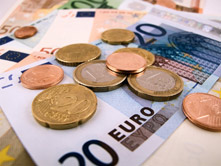
With all the fuzz about the Greek financial tragedy, I cannot help but drawing comparisons with what happened last year in the private sector. The most glaring similarities are:
- Not unlike the subprime crisis, this crisis stems from problems of asymetrical information and moral hazard, with Greece lying on the real status of its finances, and fooling its European Monetary Union partners;
- We here have a country that has become “too big too fail“, and Member States have to rescue it;
- Massive State aids are now provided. Those aids fall short of the prohibition of the TFEU. Yet, like aids granted last year to banks, this rescue scheme distorts competition between disciplined and careless governments. Of course, some may argue that Europe is not an area where Member States compete against each other, but where countries act jointly, in a spirit of solidarity. Well, as sad as this may sound, this is plain untrue. Each Member State individually defines its budget seeking to maximize domestic wealth. In addition, the competence over the main economic issues lies at the national level (social security, pensions, military, research and education, etc.);
- What’s missing in the European Monetary Union is a credible regulatory framework, with tough enforcement mechanisms.
Another puzzling thing: some of you may have heard that regionalism in on the rise in Belgium. A handful of influential Dutch-speaking politicians – who come from the wealthy northern part of Belgium – no longer want to subsidize the poor, French-speaking southern region. Now here’s something which puzzles me: how can those guys can reconcile this with the billions of € they are ready to lend to Greece (and more generally with their alleged pledge to build a stronger Europe)?
Upcoming GCLC Events
With Bernard Van de Walle de Ghelcke as our new President and Tarik Hennen as our new executive secretary, things are really pro-active at the GCLC. We have two events in the pipe:
On 20 May, Dominik Schnichels (DG COMP) and James Killick (White & Case LLP) will talk on forthcoming developments following the Pharma sector inquiry. Registration form can be downloaded here.
On 7 June, Donncadh Woods (DG COMP) and Axel Gutermuth (Arnold & Porter) will talk on the Commission’s Review of Horizontal Cooperation Agreements. Registration form can be downloaded here.
Location as usual: Hilton Hotel, Brussels
A Message of Hope, and some Food for Thougt

The unofficial purpose of this post is to send a message of hope to all our readers who believe that each and every email shall be answered in the minute. Some organizations are there to help you turn your blackberry off. Please note in addition, that from a time management perspective, checking emails on a live, constant basis is wholly inefficient and disruptive.
Those communications-related words allow me to jump to the official topic of this post. The last weeks here have been very telco oriented, with a talk at IIC forum (I eventually could not make it) on telcos, and a successful conference on Friday.
I attach the slides of the conference hereafter
Creation and purpose of Berec J.Doherty
Electronic Communications regulatory framework.Next steps- Giuseppe Conte
Functional Separation. Evolution, Revolution or Step back- Boaz Moselle
Institutional Issues in the EU regulatory Framework – NRAs – Axel Desmedt
The New telecoms package-Ripe for reform,again- Andrea Renda
Spectrum Regulation under the New Eu Framework- Phillipa Marks
Bottom-Up Cross Fertilization
Apologies for the mysterious title of this post. It deliberately borrows to the jargon which political scientists use to look bright, and impress their colleagues.
Here’s the explanation. The Commission’s released today its drafts on horizontal cooperation agreements, which are intended to replace the Block Exemption Regulation on joint R&D, the Block Exemption Regulation on Specialisation Agreements and last, but not least, the Guidelines on Horizontal Cooperation Agreements. Pursuant to the Commission’s press release, the primary innovations of the Guidelines are:
- The inclusion of a chapter on the assessment of information exchange between companies;
- Guidance on standard terms in the chapter on standardisation;
- Clarification of the application of the competition rules to agreements between joint ventures and their parent
Now, what stroke me in going through the text is that the Guidelines abundantly recycle examples taken from the case-law of national competition authorities.
Read this:
Luxury hotels in the capital of country A, which is a tight and stable oligopoly operating in a non complex and concentrated market, directly exchange individual information about current occupancy rates and revenues. In this case, from the information exchanged the parties can directly deduce their actual current prices.
Looks familiar? Now read this:
The four companies owning all the petrol stations in country A exchange current gasoline prices over the telephone. They claim that this information exchange cannot have restrictive effects on competition because the information is public as it is displayed on large display panels at every petrol station.
Both those examples refer to cases dealt with the French competition authority in previous years. Those draft Guidelines are thus the proof that Regulation 1/2003 has triggered bottom-up, cross fertilization dynamics. More simply, the decisional practice of NCAs helps shaping the content of EU competition law.
(Image possibly subject to copyright. Source here)
Slides of the 44th GCLC Lunch Talk on the Lisbon Treaty
I post hereafter the slides presented at last week’s GCLC lunch talk on the Lisbon Treaty and the Future of Competition Policy. They include presentations by Prof Alan Riley (CULondon) and Eric Morgan de Rivery (JonesDay). A most interesting event (and my first time presiding a GCLC lunch talk).
Now, a little advertising: contrary to the dominant viewpoint that the fundamentals of competition policy remain stable after Lisbon, I have developped arguments to the effect that the elimination of Article 3(1)g) had the potential to fragilize EU competition policy as a whole. See the paper below (in French) and my recent Antitrust Chronicle paper with Norman Neyrinck, my assistant.
Traité de Lisbonne_Revue Fac de droit
Alan’s position is virtually similar, with further arguments taken from public international law principles (the Vienna convention) and the recent financial and economic crisis. Please also note that Alan’s position has been further explored in Chris Townley’s brilliant book on public policy principles under Article 101(3) TFEU.
GCLC – Slides Alan Riley – The Competition Protocol
GCLC – Slides Eric Morgan de Rivery – The Future of Competition Policy – Institutions and Procedure
Telco

I was invited today at the International Institute of Communications (“ICC”) – Telecommunications and Media Forum in Brussels. For wholly unexpected reasons, I eventually could not make it.
I still wanted to share here the speaking notes that I had prepared. One of the topics of the forum was the demarcation line between ex ante regulation and ex post competition enforcement. In this respect, I have made a few comments on AG MAZAAK’s (see picture above) opinion in the Deutsche Telekom case, which will be decided by the Court of Justice in the coming months.
Speaking notes – IIC Forum, 29 April 2010 – N PETIT
PS: Thanks to E. Provost for her assistance in preparing this document.
…

I proved most of my colleagues wrong. I have been working for 10 days on a Mac, as a temporary replacement for my good old PC. Contrary to what they predicted, I did not fall in love with the Apple ecosystem. While using Apple’s OS and, more generally, this computer, I felt like playing with a toy. In addition, the protocols to launch apps and softwares are really counterintuitive.
So a piece of – personal – advice for lawyers in general, whose primary occupation is emailing and drafting documents: if you don’t care for design, but primarily for price, then don’t succumb to this irrational, politically correct, Apple frenzy.
And now two questions to competition lawyers. Here in Belgium, most retailers charge similar prices for Apple products. Is the situation the same in other Member States? If so, may the source of this price rigidity hinge on some sort of RPM-like system?
Finally, check this out: DG COMP’s blockbuster on competition policy and the consumer. The computer brand used in the movie is a most unfortunate coincidence. Borrowing to the semantics of the movie industry, I’d be tempted to talk here of a Commission “exhibition” bias (thanks to Pierre Sabbadini for the pointer)…
PS: Thanks to Julie Clarke for the kind words on the computer crash.
PS2: I found the above picture just hilarious, and could not resist posting it.
PS3: The bias is a favourable one. In its past decisional activities, the Commission has seemed particularly friendly to Apple and particularly unfriendly to other software/computer developpers. Full disclosure: in my previous life as a practitioner, I have done a bit of work for a rival software developper.
Best LL.M in Competition and IP Law (2.0)
 Amongst my various University activities (and besides research), the one I prefer is to manage the ULg’s bilingual LLM in EU Competition and IP law (created, back in the day, in 2004, by my predecessor Prof. Damien Geradin).
This LL.M has been increasingly successful in the past years, attracting students from everywhere in Europe and outside (Peru, China, etc.). I trust the many conferences we organize in Brussels, the bilingual format of the programme (English-French) and the opportunities for publication in e-competitions are interesting for prospective students.
Since my appointment a few years ago, I have nonetheless had the feeling that the programme could be improved, in particular by increasing its focus on core IP and competition law subjects.
To this end, I have recently undertaken, with the help of some colleagues – I shall here thank in particular Prof. Alain Strowel and my assistant Norman Neyrinck – to bring improvements to the LL.M.
Following weeks of ruminations and discussions, I am proud to disclose the 2.0 version of the bilingual LLM in competition and IP law of the University of Liege. The new programme, which can be found below, will enter into force in the next academic year 2010-2011. A brochure is in the pipeline, and will be out shortly.
The challenge now: how to best disseminate this without being ripped off having to pay thousands of euros to commercial advertising websites? If you have any clue, or feel like helping, please drop me a line. If you know people who could send our programme to students, please also contact me.
Compulsory Courses:
– Droit européen de la concurrence 60h – Nicolas Petit (ULg)
– Patents (exercises included) 30h – Geertrui Van Overwalle (KUL)
– Droit d’auteur et nouvelles technologies 45h – Alain Strowel (Covington & Burling, FUSL, ULg)
– Trade related aspects of intellectual property rights in the EU and the WTO 30h – Daniel Gervais (Vanderbilt University) et Norman Neyrinck (ULg)
– Droit européen des marques 30h – Jean-Jo Evrard (Nautha Duthil)
– Intellectual Property and Competition Law 30h – David Hull (Covington & Burling) et Alain Strowel
– Questions spéciales en droit européen de la concurrence 15h – Jean-Yves Art (Microsoft) et Jean-François Bellis (Van Bael & Bellis)
-Legal Writing Seminary 15h – Andrew Fine
– Aspects économiques du droit et de la concurrence 30h – Nicolas Petit
– Droit des aides de l’Etat 30h – Jacques Derenne (Lovells)
Options – Competition law (one course to be chosen amongst the two following subjects)
- EU Competition Procedure and Institutions Nicolas Petit
- Case Studies in EU Competition Law Luc Gyselen (Arnold & Porter)
Options – IP Law (Two courses to be chosen amongst the three following subjects)
- The Legal Protection of Designs and Models 10h Charles-Henry Massa (ULg)
- Droit des médias 10h François Jongen (UCL)
- IP Enforcement 10h Christof Karl (Pagenberg)
Compulsory Seminars for 2009-2011
- The law of geographical indications, quality labelling and certification – E. De Gryse (Simon Braun)
- Unfair Competition Law – A Kamperman Sanders (University of Maastricht)
- IP protection for biotechnologies and other technologies – S. Bostijn (University of Amsterdam)
- Related rights – F. Brison (Howrey and KUB)
- Introduction to Belgian Competition Law – C. Verdonck (Altius)
- Intellectual property and innovation technologies management – JF Serrier (Solvay)
- The Regulation of counterfeited goods – R. Munoz (European Commission and ULg)
- Introduction to US Antitrust Law – D. Hull
- Selected questions of private international law in relation to intellectual property rights – P. Wautelet (ULg)
- Pharmaceutical industry – O. Lemaire (Glaxo)
- WTO Law – Intellectual Property and Competition Issues – D. Luff (Luff and Appleton)
Some recent news

The European Commission published yesterday the new Block Exemption Regulation for vertical agreements. New guidelines will follow soon.
Also yesterday, the DOJ and the FTC started circulating their new draft horizontal merger guidelines.
One more thing: at this time of the year some of our readers will be looking for a job. You might be interested in knowing that a prestigious anonymous law firm is hiring new associates. The ideal profiles they are looking for are outlined here.
Competition Law and Sport (III)-Sale of Football TV Rights: One size fits all?

The rise of the three-year rule to dogma status may be explained by the “complex economic assessments” involved in establishing rigorously the anticompetitive effects of agreements on a case-by-case basis…
PS. Thanks go to Pablo Ibañez for very valuable discussions on this issue.


 Chillin'Competition