Creative Tribes

The pharmaceutical industry has always liked to emphasize the innovation factor, often to argue that any loss of income would result in less R&D.
The extent to which that may be true is the subject of incandescent debates (remember, for example, the late AG Ruiz-Jarabo’s views in Lélos that this was a “misleading” argument “aimed only at seducing public opinion”).
But what is undeniable is that the industry is at the avant-garde of legal innovation. Already in my very first post on this blog (just realized it’s been 8 years, to the day, already!) I already made a comment abut this (resorting to the traps set for the Roadrunner as the image). Here is a new, and delicious, chapter to that story:
Allergan was the target of patent challenges on the part of generic drugmakers; these challenges took place both before US federal courts and via the IPR (inter partes review) system. Allegan came to realize that certain entities (like Native American Tribes or public universities) enjoy sovereign immunity from challenges under the IPR system (“sovereign immunity”, codified in the 11th Amendment of the Constitution, implied that entities assimilated to sovereign rules –like monarchs- and arms of the state could not be sued without their consent).
So in order to fend off all IPR challenges, Allegan had an idea: transfer its patent rights to the Mohawk tribe, which would then license them back to Allergan (we discussed on this blog a similar –albeit much less creative- arrangement). The end-result is that Allergan pays a few million to shield its patents from a certain kind of challenge. To be sure, this had happened before with universities. But involving Native American Tribes adds a nice twist to it. As one would expect, this strategy is now extending to other fields, and Apple has already been sued by the so-called Three Affiliated Tribes.
Some US Senators have claimed that this strategy was “blatantly anticompetitive”. Others argue, however, that the patent rights continue to face challenge in federal courts and that the Mohawk deal cannot protect the patent against those; the argument would therefore be that the deal only helps the company avoid a “double jeopardy situation” created by an imperfect legal system. The Mohawk tribe has issued a Q&A document about its new patent business availabe here.
Queries:
-Under EU Law, would this by a “by object” or “by effect” restriction? What does “experience and economyc analysis” tell us about transferring IPRs to Native American Tribes?

Is this case more similar to:
a) the Lithuanian Railways case discussed in Pablo’s last post (a case that has remarkably led my co-blogger to defend a Commission decision and to label the case as one of the most straightforward ever)?
b) ITT Promedia and AstraZeneca (instances where companies were accused of gaming the legal system to obtain an advantage)?
c) Pseudo-assignments of IPRs to patent trolls?
c bis) the Microsoft-Nokia deal (again also discussed on the blog) and which triggered no action on the part of competition authorities?
d) pay-for-delay arrangements (also discussed at length on this blog)? Btw, last week I read and graded a very good BSC master thesis by Anne Robert from Sidley which somehow managed to bring together pay-for-delay and Game of Thrones; Allergan does at least not have a monopoly over creativeness…
Lithuanian Railways: the most straightforward abuse case ever?

On Monday, the European Commission announced its decision to fine Lithuanian Railways more than 27 million for abusing its dominant position. The practice itself is remarkable: the company dismantled 19 km of railway connecting Lithuania and Latvia to prevent a major customer from using the services of a competitor.
I welcomed the decision for two reasons.
It adds to the topicality of the seminar on network industries that I give in Bruges (and which, coincidence, I presented last Friday). I cannot wait to start.
More importantly, the information available on the case suggests that Lithuanian Railways may very well be part of a rare breed of practices: those that serve no purpose other than the elimination of competition. It would be great if a body of decisions concerning such practices developed.
Article 102 TFEU enforcement is controversial because the vast majority of potentially abusive practices have ambivalent effects on competition: they are capable of having both pro- and anticompetitive effects. Sometimes it is even trickier: the very effect that is potentially problematic is what makes the practice pro-competitive (think of combining two features in a single product).
But there are practices out there that are not capable of having pro-competitive effects or, more generally, that cannot be plausibly explained as a means to enhance competition.
For these practices, the ‘by object’ label is entirely justified. When a practice serves no purpose other than the elimination of competition, there is no reason to require evidence of anticompetitive effects on a case-by-case basis. This is a point that the Commission made in the Guidance, and I agree.
Examples of conduct of this kind? Pricing below average variable costs. Doing so is in principle irrational for a firm. Thus, the only plausible explanation for the conduct is that it is part of a plan to drive a rival out of the market.
I struggled to think of other examples of practices of this kind (besides that of a company blowing up a rival’s plant, which is a classic). Now Lithuanian Railways potentially provides a wonderful one (I have to say nothing similar ever crossed my mind).
It is not obvious for me to see, prima facie, how dismantling a railway connection can be plausibly explained on efficiency grounds. It is an Aspen Skiing sort of situation. And I look forward to the details of the decision (i.e. how the absence of a pro-competitive rationale for the behaviour has been established).
In this respect, the case appears to be different from others involving the leveraging of a dominant position. For example, while vertical integration (via organic growth or via a merger) can foreclose upstream and/or downstream rivals, we know that it can also have pro-competitive effects. What are exactly the pro-competitive effects of dismantling capacity in the circumstances of this case?
Similarly, I believe there is a clear difference between Lithuanian Railways and the famous ‘strategic underinvestment’ decisions in the energy sector. I fail to see why it would be an abuse for a dominant firm not to invest in capacity to accommodate (read: subsidise) rivals. But I certainly see how removing existing capacity to hinder competition can be in breach of Article 102 TFEU.
I look forward to your comments on the above (in particular, this time around, those of economists!).
On Excessive Pricing and Subjectivity- The CJEU’s Judgment in case C-177/16 AKKA/LAA

Excessive pricing has been one of the topics of the year. It’s also an issue close to our heart, first because Commissioner Vestager’s speech about it includes our names (the text is here and the full video is available here) and, second, because we are victims this practice daily (Pablo in his quest for vegan/bio products and me as a frequent purchaser of products for kids).
In spite of the public perception that competition law should be there to intervene directly against excessively high prices, these cases have –maybe for good reasons- been uncommon at the EU level (as explained before, at the national level things are quite different; see e.g. the CMA’s Phenytoin case). A cause and consequence of this situation is the lack of clarity on the applicable legal criteria, which have remained elusive. The prevailing legal test in this area was the fairly subjective “I-know-it-when-I-see-it-approach”. On a less legal note, that subjective approach is the rule in day-to-day life too; for example, my wife believes that whatever I buy is excessively priced and I think the same of what she buys. Fortunately I have the good sense of not saying it and of crossing this, she certainly wouldn’t have liked me to write that on the blog.
A recent Latvian case provided a good opportunity to clarify these criteria. A few months ago we commented on AG Wahl’s Opinion in the case (see here for our comments). The CJEU delivered its ruling on 14 September. It is available here. The name of the case is “Autortiesību un komunicēšanās konsultāciju aģentūra/Latvijas Autoru apvienība’ v Konkurences padome”. Since the acronyms aren’t so easy to remember either, it will probably be verbally referred to in the future as “the collecting societies case in…was it Latvia??”
As noted in our earlier post, the questions posed by the Latvian Supreme Court were right on the mark (except for one on the effect of trade between Member States the answer to which was evident and on which we will not comment). There is also a quite interesting issue regarding calculation of fines that is unrelated to the discussion on excessive pricing and on which we will comment in a future post.
In a nutshell, the issues posed by the case and the responses from the CJEU are the following:
Issue 1: In order to identify excessive pricing, “is it appropriate and sufficient-and in which –cases- to draw a comparison between the prices in the market in question and the price (rates) in neighbouring markets”? (underlining added)
The CJEU reformulates the question in para. 31 as only referring to whether the comparison is “appropriate”. Accordingly, the CJEU only responds to that question saying that yes, it is appropriate. It refers to established case law pursuant to which “a method based on a comparison of prices applied in other Member States must be considered valid” and that “that difference must be regarded as indicative of an abuse” (para. 38, citing Tournier and Lucazeau).
As the Court says, this was all “apparent from the case-law”. Actually, the referring Court was very much aware of it, as evidenced by the summary of its views contained in para. 20 of the Ruling. But can it be “sufficient” and, if so, “in which cases”? Those questions remain unanswered.
Issue 2: When is a comparison across markets sufficiently representative?
This is actually not a question that had been explicitly asked by the referring Court, but it certainly something that was in its mind, as perceptively observed in para. 39 of the Ruling. Since comparative exercises often boil down to this question (the apples and pears issue that we see everywhere), it is commendable that the Court went on to address it. It is however unfortunate that we may not be able to extract practical lessons. What the CJEU says in this regard is that:
- “A comparison cannot be considered to be insufficiently representative merely because it takes a limited number of Member States into account” (40).
This is pretty common-sensical, but does the inclusion of the word “merely” suggest that it nevertheless is a relevant factor?
- “Such a comparison may prove relevant on condition (…) that the reference Member States are selected in accordance with objective, appropriate and verifiable criteria” (41), that these “may include, inter alia, consumption habits and other economic and sociocultural factors, such as GDP per capita and cultural and historical heritage” (42), and that the comparison “must be made on a consistent basis” (44).
“Objective, appropriate, verifiable and consistent” all sound great and make sense, but I’m not sure they offer much practical guidance as they lend themselves to interpretation and gerrymandering as many different choices and divergent results can be said to be covered by those. Also, the examples provided by the Court “other sociocultural factors” or “cultural and historical heritage” are arguably perhaps not the best examples of objective and verifiable criteria. The CJEU concludes that all this is for national courts to assess depending on the circumstance of the case (42). If the comparison of prices requires competition authorities and courts to compare cultures and historical heritage, well, subjectivity will continue to play a major role.
Issue 3: In order to identify excessive pricing, “is it appropriate and sufficient- to use the Power Parity Index based on gross domestic product”?
Paras. 45 and 46 of the Judgment now make it clear that the PPP index “must be taken into account” when conducting comparisons between Member States. Whether the outcome of this assessment is or not conclusive or “sufficient” remains unclear (AG Wahl had said that it was useful and appropriate, its sufficiency depending on other factors), but we now know that it is not only “appropriate” but “mandatory”. This is a genuine development.
Issue 4: Should one compare user segments or average rates for all segments?
That was, again, an excellent and tough question. The CJEU’s sort-of-response is that it is possible to look at “one or several specific segments” (50), so that the assessment of average rates is not the only possible method. But the Court makes it clear that “it falls to the competition authority concerned to make the comparison and to define its framework, although it should be borne in mind that that authority has a certain margin of manoeuvre and that there is no single adequate method” (49). In other words, this is the sort of “complex economic assessment” for which some latitude on the part of the auhority is accepted.
Issue 5: When is a difference between prices “appreciable” and indicative of its abusive nature?
Once again, excellent question. The CJEU observes, first, that the differences in this case (twice as high in comparison to Estonia and Lithuania and between 50-100% higher than the average EU rates) were not as large as the differences that gave rise to the finding of excessive pricing by collecting societies in Tournier and Lucazeau (para. 54). It then notes, however, that this doesn’t mean that differences like those at issue cannot be abusive, given that “there is in fact no minimum threshold above which a rate must be regarded as “appreciably higher, given that the circumstances specific to each case are decisive in that regard.” The CJEU clarifies, along the lines of what AG Wahl had suggested, that “a difference between rates may be qualified as “appreciable” if it is both significant and persistent on the facts” (55) and that “that difference must persist for a certain length of time and must not be temporary or episodic”.
This all makes sense, the next question (aside from the unavoidable “what is significant”), being: “what is a certain length of time?”, what counts as “temporary”? Wahl’s Opinion (at 109) had acknowledged that those questions would always be there. His proposed solution was that an authority should intervene “only when it feels sure” that “almost no doubt remains” as to the abusive nature of a price.
FINAL COMMENTS
-Unlike AG Wahl’s Opinion in this case, and somewhat unlike in the Intel Judgment, the Ruling does not contain any wider statements of principle. Perhaps unsurprisingly, the Court does not delve into discussing why prudence may or not be needed in these cases, nor about the exceptional circumstances in which action may be needed. As AG Wahl had observed, legal monopolies –including collecting societies, at issue in this case, and companies benefitting from exclusive rights- are exceptional and perfect candidates in this regard.
-At the end of the day, the CJEU ultimately says that the elusive riddles are for national authorities and courts to solve on a case by case basis (although with a different “background music”, this is actually not so different from the bottomline of AG Wahl’s Opinion). Indeed, the end result of this story is that it is up to national Courts or competition authorities to (a) determine whether to rely on a comparison across Member States or on other methods also/instead (37-38); and, in case a comparison is used, to (b) come up with a relevant benchmark for the comparison considering objective, appropriate and verifiable criteria which include economic, sociocultural and historical elements (40-41); (c) decide whether to make the comparison within one or several specific segments (50), and (d) determine whether a given price difference is “both significant and persistent” (55).
-However, and as we said then, the main contribution in AG Wahl’s Opinion was the idea that since no method is perfect, a combination of methods would be the most perfect of imperfect solutions: “competition authorities should strive to examine a case by combining several methods among those which are accepted by standard economic thinking” (Opinion, 43). That made sense to me. The CJEU’s ruling, as explained, falls short of saying this. It appears to be less conscious, or less concerned, about the alleged flaws inherent to a methodology of comparison across Member States (arguably, the CJEU understandably operates under an internal market logic which might play a role) and seems to leave the door open to the idea that this method may be sufficient.
-To be sure, the CJEU has nonetheless clarified that any comparison analysis must take into account the PPP index, and that “appreciable” means “significant and persistent” (well, that last one we could have guessed… )
-In reality, however, and in the Court’s defence, perhaps this is all unavoidable. This may very well be one of the cases that is impossible to discuss in the abstract and that can only be assessed on a case by case basis. But as unavoidable as this might be, it says something (once again) about the lack of predictability of Art. 102 TFEU. If one admits that there is a large “margin of manoeuvre” for an authority to (a) define a relevant market; see here; (b) identify dominance; see here, (c) choosing what to compare to what; and (d) determining whether the result of the comparison is satisfactory, well, there may be an issue there.
But like Ortega y Gasset said of another problem that is unfortunately making headlines this week, this is one that perhaps cannot be resolved and that we need to carry on and live with…
Pop Antitrust

A few years ago we presented you with a selection of the best antitrust-related videos (see here, here and here) and comics (see here and here).
All those were made by, and mainly for, experts. But since then antitrust has made inroads as an element of popular culture (now there’s even hipster antitrust!) . Think about it, today:
-Messages are conveyed via comics (see here; source: Pablo’s favorite site: geeksaresexy.net; you probably think I am kidding…)
-Competition Commissioners deliver TED-Talks (read Commissioner Vestager’s talk here);
-And antitrust is even the subject of US late night shows (watch John Oliver’s latest show here);
On second thought, however, antitrust has always had some role in popular culture. Don’t believe me? Well, check out this report “Antitrust in Pop Culture, A Guide for Antitrust Gurus” (by the Institute for Consumer Antitrust Studies) discussing how antitrust has featured in movies, theater, television, music, books, cartoons, and more. If you have additional suggestions to include in that list, please feel free to comment on this post; we can then send a compilation of suggestions to Spencer Webber Waller
Registrations now closed
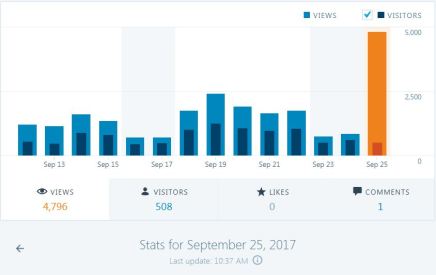
The tickets for the 3rd Chillin’Competition conference were all gone almost immediately, and after half an hour the waiting list already had 200 people.
Whereas it’s clear that we will not be able to fit everyone, we will do our best to reduce the waiting list to the minimum possible (we have some ideas, but we need to check whether they are feasible).
In any event, we need to think of a solution for next time. I guess an auction remedy might do the trick 😉

CHILLIN’COMPETITION CONFERENCE 2017- THE PROGRAM AND 10 THINGS YOU SHOULD KNOW

The 3rd edition of the Chillin’Competition Conference is poised to be greatest event in the history of law. Well, that may have been an understatement…
The program is below. And here are 10 things you should know about it:
1) The program features names, but it does not say much about substantive content. That is because we want to give speakers freedom to talk about the most interesting stuff they have to say. By the way, we are enormously grateful to all of them, particularly to Commissioner Vestager.
2) We will be striving to foster conversations rather than the usual monologues to which you may have grown accustomed at other conferences, and we will even be having Ted @Chillin’Competition talks (if any IP expert reads this, please let me know whether crossing the word does the trick). This is supposed to be an interactive, dynamic and chilled debate; tough job for moderators and speakers, but surely good news for attendees.
3) This time, and together with the big names of today, we have also invited some relatively new faces (they are the big names of tomorrow, so you better get used to them!).
4) We have found a new and pretty original venue “Area 42”, not far from the Madou tower; we hope you’ll like it as much as we do.
5) One of the reasons for switching venue is that other places “bundle” the catering. It was important for us to have the freedom to have the catering done by “We Exist”.
6) “We Exist” is an NGO, created by and for Syrian refugees, with whom we have cooperated in the past, so expect some Syrian delicacies. Even if you can’t make it to the conference you can participate in their events, or support their crowdfunding campaign to buy a food truck.
7) The conference remains free. That is all thanks to our sponsors (to be announced soon).
8) Every attendee will receive a special gift from Chillin’Competition (that is, if the shipment from China arrives on time and without major damage).
9) Unfortunately, we won’t be able to fit in more than 270 people…
10) Registrations open on Monday 25 September at 10am via a link that we will be posting on the blog at exactly that time.
***
THE CHILLIN’COMPETITION CONFERENCE
25 October 2017 (Area42, Rue des Palais 46, Brussels)
9-9.45: Registration and coffee
9.45-10: Introduction- A Year in Review
Alfonso Lamadrid (Garrigues and Chillin’Competition)
10-11.15: Competition Law Everywhere?
Pascale Déchamps (Oxera)
Kyriakos Fountoukakos (Herbert Smith Freehills)
Damien Geradin (EUCLID)
Sascha Schubert (Freshfields)
Moderator: Kevin Coates (Covington&Burling)
11.15–12.30: The Real Center Stage
Beatriz de Guindos (Comisión Nacional de los Mercados y la Competencia)
Philip Marsden (Competition and Markets Authority)
Jacqueline Riffault-Silk (Cour de Cassation)
Eddy de Smijter (European Commission)
Jacques Steenbergen (Belgian Competition Authority)
Moderator: Niall Collins (Mason Hayes & Curran)
12.30-14: Syrian Lunch by the NGO “We Exist”
14-15: Ted@Chillin’Competition
Pablo Ibañez Colomo (LSE, College of Europe and Chillin’Competition)
Kai-Uwe Kühn (University of East Anglia and CRA)
Miguel de la Mano (Compass Lexecon)
Mark Powell (White&Case)
Antoine Winckler (Cleary Gottlieb)
15-15.45: Keynote by Commissioner Vestager
15.45-16: Coffee
16-17.30 Mergers and Disquisitions
Gavin Bushell (Baker&McKenzie)
Catriona Hatton (Baker Botts)
Adrian Majumdar (RBB)
Michele Piergiovanni (European Commission)
Moderators: Susana Cabrera (Garrigues) and Paul McGeown (Wilson Sonsini)
17.30-19 Looking Ahead
Luca Crocco (Latham&Watkins)
Natura Gracia (Linklaters)
Pola Karolzcyk (Sidley Austin)
Jürgen Schindler (Allen&Overy)
Gianni de Stefano (Hogan Lovells)
Moderator: Peter Alexiadis (Gibson Dunn)
19 Onwards: Wine Tasting (and Pairing)
Registration for the 3rd Chillin’Competition Conference (+ other interesting events)
As announced back in July, our next Chillin’Competition conference will take place on 25 October in Brussels. We are quite satisfied with our previous events, but this time we want to do something even more interesting, dynamic and even fun. As always, it will be free for attendees. On Friday we will publish the program together with an explanation of some of the novelties envisaged for this new edition of the conference.
The registration window will then open via a link that we will publish here on Monday 25 September at 10 a.m. Last year all availabe tickets were gone in 6 minutes, so you better be quick! Unfortunately we have had to keep the maximum number of attendees at 275.
***
Since it may be problematic for a blog (an online platform after all) to advertise only its own conference, and because we want to prove that organizing our own conference was intended to address a market failure that causes an insufficiency of competition law events, see below some other very interesting events that will take place in the course of next month:
-On 4 October Queen Mary University will be holding a conference on “Cross-border challenges in competition enforcement in innovative markets” in London. The aim is to showcase areas of convergence and divergence in competition enforcement, in markets where innovation plays an essential role. The conference will present different perspectives from EU, US as well as China. More information is available here.
-On 13-14 October the UniSA School of Law will hold the 15th edition of its Competition Law and Economics Workshop (CLEC) in Adelaide, Australia, with the participation of Nicolas Petit. The programme is available here. The workshop will be held in partnership with the Australian Competition and Consumer Commission (“ACCC”). Click here for further info.
-On 18 October antitrustitalia will host its 40th lunch talk at the auditorium of DG Comp in the Madou Tower. Chief Economist Tommaso Valletti will deliver a presentation assessing the role of the Chief Economist and clarifying the methodological issues of economics and econometrics that can be crucial in determining which competition law enforcement to pursue, if any. It will offer a survey of previous cases where the economic analysis “made a difference” as well as other cases where the economic defences put forward by the parties were “out of focus”. For more info, click here.
-On 20 October the GCLC and UCL will be holding a joint event in London on “Transformations of Competition Law” with a superb list of speakers. More info is available here.
-On 26 October our friends at ERA will host a workshop on “Anticompetitive Practices in the Online World: Hot Issues”. It will also be streamed live. You can access the program and register via this link.
-On 25 October, unfortunately on the same day as our conference, GCR, Baker Botts and E.CA will hold a seminar on innovation, IP and antitrust. More info is available here.
The Serbian Menarini

[The global Human Rights Logo, above, was created by Predrag Stakić from Serbia]
Some in the EU claim that EU Courts are permissive of the alleged flaws of the institutional/procedural system for the enforcement of the competition rules. The prosecutor-and-judge debate is one of the most longstanding in contemporary competition law. Whereas the Menarini Judgment from the European Court of Human Rights seemed to indirectly endorse the EU system, some continue to question whether the ECHR’s requirements are complied with by a system where the Courts do not always exercise “full review”. In anticipation of possible future challenges, you will in fact have noted that, following Menarini, the expression “marginal review” has disappeared from EU competition law Judgments. The extent to which there was a problem, or to which there may have been a change, in this regard is further discussed here.
Now, what happens when the EU mode is exported to/imported by other jurisdictions with allegedly different checks and balances? Well, here’s a story that is currently making the headlines in the Balkans and that has triggered some unprecedented developments, including a common constitutional challenge on the part of the national Bar, Human Rights Organizations and criminal law academics, public accusations on the part of the competition authority against individual lawyers, alleged breaches of private correspondence and other black-novel-like developments. Who said competition law couldn’t be adventurous…
A quick recap follows:
More on Intel: some thoughts after the IBA Conference in Florence
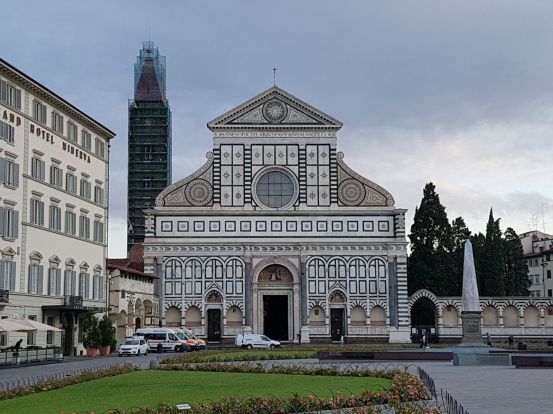
Last Friday I took part in an (ideally timed) panel on Intel at the IBA Conference in Florence. The panel was chaired by Thomas Janssens and Timur Bondaryev (thanks a lot to both, and the rest of the panellists!). I learnt a great deal.
Inevitably, I spent some time re-reading some decisions and judgments ahead of the event. In the process, I shaped my thoughts on Intel and its implications.
These are some key takeaways that I did not develop at any length in my first post, and which I believe are key:
The AEC test is a (valuable) proxy; it is not the only factor
One of the issues that came up in the conference (no surprise) is whether the AEC test can rule out, in and of itself, the existence of an abuse. As I understand the judgment, the AEC test is better understood as a proxy or filter, not as the end of the inquiry.
If the test suggests that an equally efficient competitor would not be forced to sell below cost (read: below ATC or LRAIC), the onus is on the Commission to show why the rebate scheme is capable of foreclosing equally efficient rivals. Anticompetitive harm is possible in such an instance, but it cannot simply be presumed. It has to be substantiated in light of the factors identified by the Court in Intel.
Post Danmark II is an exception; Post Danmark I is the rule
When Post Danmark II came out, some commentators claimed that the judgment made efficiency considerations irrelevant in practice. Intel suggests that an alternative reading of the judgment is probably more reasonable: as a matter of principle, Article 102 TFEU is concerned with the ability and incentive of equally efficient rivals to compete. This makes Post Danmark I the rule, and Post Danmark II the exception.
Post Danmark II is in fact a wonderful example of the sort of special circumstances that may justify a departure from the rule. In that case, Post Danmark’s position came close to a monopoly; this position was, moreover, protected by exclusive rights.
A victory for consistency and legal certainty
A strict stance towards exclusivity agreements and loyalty rebates has often been defended in the name of legal certainty. Is there something better for legal certainty, the argument goes, than a clear rule that states that X is unlawful?
I have never been persuaded by this claim. Those advancing the argument only pay attention to one side of the rule (the outcome) and lose perspective of the other side (the scope of the rule, or trigger).
And the scope of the rule in Hoffmann-La Roche (and Michelin I, and British Airways) has never been clear. Look no further than Intel: it is far from uncontroversial to say that all schemes in the case are truly conditional on customers obtaining ‘all or most’ of their requirements from the dominant supplier.
For a rule to provide legal certainty, both the scope and the outcome need to be clear and predictable: make the first vague and the only certainty is that an undefined but potentially very vast range of practices is caught by the prohibition.
The Court’s clarification in Intel (and I believe it is a clarification) is a valuable step towards legal certainty.
Why? Intel provides a uniform benchmark: companies know that a cost-based test can be confidently relied upon as a proxy across the board. They also know that the cost-based test will be, in practice, the starting point of any inquiry.
Intel also makes it clear that the legal characterisation of a rebate scheme no longer has fatal consequences: it does not really matter (or not that much) whether a scheme is qualified as a loyalty or a ‘third category’ rebate. The methodology and approach will be roughly the same in practice.
Capability = Plausibility
As I understand the law, the threshold of capability is a relatively low one (on this one, I understand I agree with the Commission’s submission). In a ‘by object’ case (both under Articles 101 and 102 TFEU), it is sufficient that anticompetitive harm is plausible.
By the same token, what a firm would need to show to rebut the presumption of harm is that anticompetitive effects are implausible.
The good thing about rebates and predatory pricing is that we know where the threshold of capability lies: if a practice does not force an equally efficient rival to sell below cost (again: ATC or LRAIC), anticompetitive effects are in principle implausible: absent other factors, an equally efficient rival would be in a position to match the prices offered by the dominant firm. Its ability and incentive to compete would not be affected.
Exclusive dealing and loyalty rebates are not hardcore cartels
A hardcore cartel worthy of the name is capable, always and everywhere, of having restrictive effects on competition – otherwise, the cartel would have no point. As Toshiba suggests, arguing that a genuine hardcore cartel is incapable of restricting competition is hopeless in the vast majority of, if not all, cases.
But exclusivity agreements and loyalty rebate schemes are not hardcore cartels. These practices are implemented even when anticompetitive harm is implausible – which is also the reason why small market players with little or no market power resort to them.
The acknowledgement of this reality in Intel is valuable: the Court makes explicit that not all restrictions by object are created equal and that the law should take this factor into account. What is true of exclusive dealing is also true, inter alia, of tying and RPM.
What about de minimis?
The Court held in Intel (para 139) that a dominant firm may challenge the capability of harm on the basis, inter alia, of the limited market coverage of the practice. Is there a contradiction between this principle and Post Danmark II, where the Court held that there is no de minimis threshold in Article 102?
I do not believe there is a contradiction. Once again, it is worth taking a look at how things work in the context of Article 101 TFEU.
We know from Expedia that a ‘by object’ infringement that affects trade between Member States is not de minimis. But we also know from Murphy that the parties to a prima facie ‘by object’ infringement can show that the practice is not capable of restricting competition. I have never heard anyone argue that there is a contradiction between the two.
The same system would operate in the context of exclusivity agreements and loyalty rebates under Article 102 TFEU. A claimant or a competition authority can build a prima facie case without showing that the practice is capable of having appreciable effects. This is the point the Court made in Post Danmark II. On the other hand, Intel clarifies that dominant firm(s) can show that the practice is incapable of having effects. The former does not preclude the latter (it should not).
Applications of Intel: intellectual property-related cases are the obvious candidates
Intellectual property rights may prevent actual or potential competition between firms. Competition between these firms, in other words, may be implausible due to the existence of intellectual property rights.
Cases involving the exploitation of these rights are thus an ideal arena in which firms are likely to rebut with success the presumption that a practice is capable of restricting competition.
Examples? Think of the disputes in pay-for-delay cases (Servier, Lundbeck), in which the disputes revolve essentially around whether patent protection made market entry by generic producers implausible .


 Chillin'Competition