Competition Law and Big Data: Do Competition Authorities Know How To Do It? #CPIChronicle
You may remember that just before Christmas I wrote a post saying that Pablo was putting pressure on me to write a joint article on selectivity in State aid during the holidays? Well, it should not surprise you to know that we never got around to it (it will happen, though).
We nevertheless did take the time to do some other non-work writing: Pablo did his thing (probably wrote the majority of his forthcoming books) and I did mine (wrote a couple of short pieces on general issues), namely one editorial for the next issue of the Journal of European Competition Law and Practice on “Competition Law and Fairness” (more on this soon), and one piece on competition and big data (co-written with my colleague Sam) for Competition Policy International’s special Antitrust Chronicle issue on “Competition in Digital Markets”.
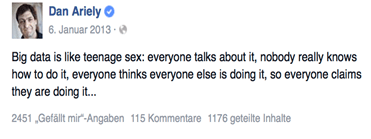
The latter contribution -which builds on the Dan Ariely quote above…- can be freely accessed here, courtersy of CPI: cpi-lamadrid-villiers
UPDATE: Pablo tells me that Common Market Law Review has published today an article on this topic by our friends Francisco Costa Cabral and Orla Lynskey; it will certainly provide you with insightful thoughts and views that may moreover diverge from the ones developed in our piece.
What drives academic writings in competition law and economics?

Are academic writings in competition law and economics driven by the (pecuniary) interest of commentators? Wouter Wils raised this important question in his instant classic on the Intel judgment. He speculated that the popularity of the so-called ‘more economic approach’ might be driven by an attempt of practitioners and practice-oriented academics to feed their own business and to re-shape the law in a manner that is advantageous to their (generally large and powerful) clients – and at the expense of smaller businesses and consumers. This intuition has recently been explored by Jan Broulik in a working paper. He comes to the conclusion that, indeed, it is plausible that scholarly commentators are driven by self-interest.
This question is relevant outside the narrow area of competition law. It should be discussed more often (and more openly), just as it is done in the US (see here for a recent example, from which I took the picture above). It is the sort of issue that may be widely acknowledged but rarely ever finds its way in articles and/or conferences. In this sense, the effort of the two authors is valuable and should be commended.
As any first attempt to explore an issue, these two papers raise a number of questions, which I hope will be explored in future work. Here are some thoughts.
The premise of the two articles
One key question relates to the premise on which the articles are based. If one reads them carefully, it appears that their central thesis rests on the idea that their preferred approach to the interpretation and enforcement of EU competition law is the only reasonable one. The prima facie prohibition of exclusivity agreements, Wils argues, is ‘legally but also economically sound, whereas the alternative so-called “more economic approach” is unsound and not fit for the purpose of interpreting Article 102 TFEU’. Similarly, Broulik claims that advocates of a case-by-case analysis of certain practices favour the ‘supra-optimal’ use of economics.
These substantive positions are reasonable and defensible. More controversial, however, is the conclusion that the authors draw from them. The two papers appear to suggest that, since their approach is the only reasonable one, advocates of alternative approaches must be driven by spurious motivations. But is it really the case that no reasonable and impartial person would favour the case-by-case analysis of some practices? Is it axiomatic that bright-line rules provide the optimal approach to the interpretation and enforcement of EU competition law? I am not sure many readers will find these claims particularly persuasive.
I like to think of myself as a reasonable and impartial person, and I do not agree that a rule-based approach makes sense in relation to certain (in fact, most) practices. And I believe that other people can reach this same conclusion without being driven by spurious motivations. For instance, I also like to think of the judges at the ECJ as reasonable and impartial, and they have in several occasions refused to adopt a rule-based approach when expressly invited to do so. In judgments like Delimitis, Coditel II, Post Danmark I and Deutsche Telekom, just to name a few milestones, they took the view that a case-by-case approach was appropriate.
In a different vein, I note a certain tendency by the two authors to equate ‘case-by-case’ and ‘fully-fledged economic analysis’. I believe it is dangerous to conflate the two, as it may obscure the discussion. The case-by-case analysis need not resort to full-scale balancing. It can – it should – be structured around a series of administrable proxies that give a sense of the likely effects of a practice. Just think of usual factors like market shares, the coverage of the practice or its duration.
The importance of the administrability of standards (and thus the need to rely on proxies and to avoid full-scale balancing) has always been acknowledged by economists with a solid grasp of the law (like Jorge Padilla) and even by the most Chicagoan of Chicagoans (like Frank Easterbrook and Richard Posner). In fact, those who argue in favour of a ‘fully-fledged economic analysis’ are, I guess, a small minority.
What is in the mind of an academic?
Another aspect that is worth exploring systematically in future work relates to the way academics think. The authors model only imperfectly the incentives of academics – who they are and what drives their activities. If this modelling is to be done rigorously, it is necessary to take into account that academics – typically talented students – willingly forego lucrative careers because they place more value on independence of thought and on freedom to work on whatever they find interesting.
In this sense, it is also necessary to take into account that a successful academic career – and, in the same vein, respect among academic peers – depends on work that has little or nothing to do with consulting. In fact, consulting work is more likely than not to be a distraction and a hindrance.
I would have been interested to see in one of the papers an attempt to match the theoretical intuitions of the authors with an empirical analysis of the work of leading academic lawyers and economists. Does the actual work of individual academics support their tentative conclusions?
It should be possible to address this question. The substance of academic work could be classified in accordance with certain criteria. As I write this, I think of some of the leaders of the profession in Europe (e.g. Ariel Ezrachi, Ioannis Lianos, Giorgio Monti) and I do not believe their work supports the proposition that academic research is generally – not even on average – pro-big business or anti-intervention.
What is the contribution of the pieces?
I was left thinking, after reading the two pieces, whether they had an important point to make after all. One possibility is to interpret the two articles as claiming that academic research in competition law and economics should be presumptively distrusted as it might be driven by the pecuniary interests of the authors. If that is the case, I am not sure that casting pre-emptive doubts over all research work on the basis of mere speculation counts as a meaningful contribution to our understanding of any phenomenon, whether simple or complex.
Another possibility is that the authors intend to highlight the fact that some research by some academics is specifically prepared to serve the interests of a particular client. If that is the point, it is one that we all knew before the two papers came out. I guess the real question is not whether this happens – because it does and it is not a secret – but whether it is a problem in the first place. That, I think, is a most important debate that it is worth having.
My own impression is that it is always preferable to play the ball, not the man. For instance, I do not believe that the idea of patent hold-up should be rejected simply because it might have originated in research funded by Intel. It should be taken seriously, and its validity tested theoretically and empirically, as many have done in the past few years. As Judge Forrester pointed out at the end of our conference back in November, we get closer to the truth by engaging with conflicting (and sometimes biased) ideas, not by summarily dismissing them.
12th Annual Conference of the GCLC: Registration still open!

The Global Competition Law Centre will be holding its 12th Annual Conference next week. Take a look at the programme here and the registration page here if you are still thinking about attending.
It is devoted to ‘dynamic markets and dynamic enforcement’. The idea is not only to discuss the challenges that arise in industries that are fast-moving and innovation-intensive, but also to link this question to enforcement-related matters and thus to ask whether emerging challenges are having an impact on the way competition law is interpreted and applied across the world.
I am delighted that I will get to speak at an event that will feature a most impressive bunch of specialists. We – Alfonso and I, but also Nicolas Petit, who will also be speaking at the event – hope to see many of you there!
Judgment in Case T-699/14, Topps

On 11 January the General Court handed down its Judgment in the Topps case, concerning alleged anticompetitive practices in relation to collectible football stickers and trading cards. As some of you have noted, the subject-matter of the case makes it a must-cover for us.
We will say a few words on the Judgment (not that it is particularly remarkable, but given the scarcity of competition cases we can’t afford not to look at it; we want to collect posts on all of them) and leave the important stuff (i.e. the anecdotal facts) for the end. I have in any event marked in bold the truly important content of the Judgment.
Topps’ appeal targeted a Commission decision rejecting a complaint against Panini, FIFA, UEFA and a number of other national football federations. Following a preliminary inquiry the Commission rejected this complaint on the grounds that there was no EU interest and that there was a very limited likelihood of establishing an infringement so that pursuing an investigation would be disproportionate.
The Judgment deals with some procedural issues of no apparent interest before delving into substance.
Regarding market definition, the applicant argued that the Commission had committed a manifest error in holding that it was likely that relevant markets were not confined to, first, World Cup collectibles sold to children aged 6 to 14 and, second, Euro collectibles sold to children aged 6 to 14 [as if there were no geeky collectors after 14…]. The Commission reached that conclusion on the basis of several arguments challenged by the applicant, among which was the claim that it was not obliged to have recourse to the SSNIP test. Topps seemed to contend that since Panini’s collectibles were roughly 20%-50% more expensive than other collections and that price increases resulted in greater profits, this would necessarily imply that they were not substitutable with other collectibles. The Court nevertheless rejects this argument. There is nothing groundbreaking on this part of the Judgment. It confirms that the SSNIP test is not the only method available to the Commission, which may legitimately use others and goes on to validate its assessment of the facts at issue. Very unfortunately, the Court says that “it is not even necessary to adjudicate on the possibility of applying the SSNIP test to children”. We would have loved to read that discussion; perhaps we could have added the infant fallacy to the “cellophane fallacy” and “toothless fallacy”. Here goes a missed opportunity…
Regarding a possible infringement of Article 101. Topps claimed, first, that the parties had entered into long-term exclusive agreements with Panini that resulted in total foreclosure in the market for collectibles of the World and Euro tournaments. The Commission, however, took the view that their duration was not unreasonably long (“typically” relating to one tournament; the Judgment, by the way, contains a prior discussion on the meaning of “typically) and that the evidence suggested competition in the (most likely) relevant markets and not the foreclosure of Panini’s competitors. The Court also observed that agreements of over 4 years could potentially be justified or have little relevance when related to short events taking place every 4 years.
Ass regard the argument that Panini had imposed exclusivity obligations on retailers (due to a letter noting that retailers carrying non-official products would not be considered), the Court notes (i) that the claim is based on the wrong premise of unduly narrow relevant markets; (ii) that it only affected World Cup 2010 collectibles and only in Cyprus [By the way, an arguably important fact omitted in the Judgment is that Spain won that World Cup…] and that therefore there was no generalized exclusivity and no foreclosure.
Regarding a possible breach of Art.102.
On dominance. The Court endorses the Commission’s conclusions of the unlikelihood of finding dominance on the part of Panini noting once again that the complaint relied on the premise of a narrow market definition, and that once that market is enlarged it shows lively competition. Very interestingly, the Judgment notes that sales of football collectibles in Italy fell “following the enthusiasm for the collections relating to the Dragon Ball universe based on the eponymous manga”.
The Court also dismisses the idea of upstream dominance, thus validating the Commission’s conclusion that IP rights held by FIFA, UEFA and national associations are not indispensable for creating collectibles related to international tournaments. The Court noted that the lack of those rights did not preclude some collections by Panini and Topps in the past and underlined that, in any event, a claim of dominance based on this circumstance once again assumed a too narrow market definition.
On the alleged refusal to deal. The Court observes that Topps was not refused the IPRs at issue but was rather invited to some tenders, that on other occasions it merely sent a letter without any follow-up, and that the IMS conditions are not met, as the emergence of a new product was not prevented (the Court validates the Commission’s assessment that video trading cards and cards “made with pieces of match worn shirts” [?!] did not constitute new products but rather new features of existing ones). It further observes that it had not been demonstrating that the IPRs at issue were necessary to bring these to the market and that, in any event, numerous competitors are active in a correctly defined market, thereby suggesting the absence of foreclosure.
On the alleged excessive prices. The first Judgment discussing excessive prices in the wake of the Commissioner’s seminal speech at the… ehem…equally seminal Chillin’Competition conference (also attended by the Judge in charge of this case; see below) dismisses the claim simply by saying that the data available does not show that the price of World Cup and Euro collectibles is higher than that of other football collections neither in absolute terms nor compared with its cost of production.
Anecdotal facts
-The first (prohibition/fine) decision under Regulation 1/2003 was also about collectible cards (Pokémon) and actually targeted Topps; see here. The Judgment issued last week refers to that decision observing that the arguments developed by Topps were “diametrically opposed to those developed by Topps at the time” [by the way, perhaps this was the case, but when the Commission does that the Court simply says that it is not bound by its precedents…]
– This is the first competition Judgment in which Ian Forrester has acted as “rapporteur”.
– The Commission may not see collectible cards as an enforcement priority, but other competition authorities are still there, ready to act. I remember a Spanish precedent from not so long ago in which the national competition authority gave an example of prioritization and allocation of resources when sanctioning 5 distributors of Magic cards with 7,000 euros (one party received a 148 euro fine, another a 748 euro fine; the highest fine was 3,424 euros). I remember an official defending the investigation saying that geeks also had the right to consumer welfare…Indeed, but they paid twice, the first time as victims of the cartel and the second one as taxpayers financing a full-blown investigation that resulted in such fines.
And the winners are…

With some delay (that has triggered reminders such as the image above…), we are pleased to announce the winnerS of the meme competition. Thanks to everyone for participating. Those unhappy about not having won, please remember that the juror was my colleague Sam, not Pablo or I. Given the strong competition, we did decide to have not one but three winning memes, namely these:
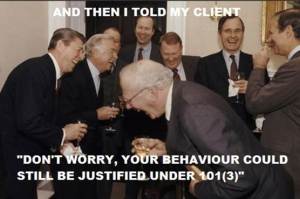
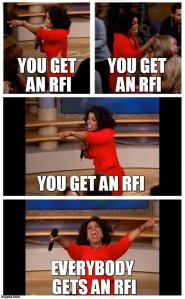

We will contact the winners (congrats!) over email for logistical arrangements regarding collection of their sweet prize!
NEW(ish) PAPER: AG Wahl in Intel, or The Value of Realism and Consistency in The Context of Article 102 TFEU

My new paper, on AG Wahl’s Opinion in Intel, is available for download on SSRN here. It is not new in the sense that it is the write-up and polishing of some of the ideas discussed in an event organised by Concurrences back in October. Info and materials on the event, in which I presented together with Luc Gyselen and Damien Neven, can be found here.
I understand that Concurrences will be publishing several short papers on the Opinion together with mine and Nicolas Petit’s (see here). I chose to focus on what is, in my view, the single most important aspect of the Opinion: the emphasis placed on the virtues of realism and consistency in law-making.
Realism in law-making
A legal rule that is divorced from business realities makes bad law. When a rule ignores reality, it may be difficult to understand and anticipate. This is one key message conveyed by AG Wahl in his Opinion.
The summa divisio between loyalty rebates, on the one hand, and quantity-based schemes, on the other, has been with us since Hoffmann-La Roche. It does not capture, however, the reality of business transactions, which, as the case law shows, defies such a ready and stark categorisation.
What is more, the divide between loyalty and quantity rebates is premised on the idea that the two practices are fundamentally different in their nature, objective purpose and potential effects. Again, decades of case law provide empirical evidence showing that the reality is far more nuanced.
What happens when a rule is at odds with business realities? As AG Wahl explains, a gap opens between what courts say and what they do. Formally, courts may prefer to stick to the divide between loyalty and quantity rebates. In practice, however, they may do something very different. The analysis of ‘all the circumstances’ in cases like Michelin I and British Airways is simply an attempt to bridge the gap between rhetoric and reality.
A gap between what courts say and do is only good for academic lawyers like myself, who make a living trying to develop a systematic understanding of the field. It is bad for everybody else. Obscuring the reasoning of a ruling, or failing to make explicit the aspects that determine the outcome of a case is not conducive to legal certainty. In my view, Michelin II and British Airways exemplify the legal uncertainty created by this case law particularly well (I wrote about it here).
Consistency in law-making
AG Wahl’s Opinion also emphasises the value of consistency. Legal certainty cannot be meaningfully achieved if like practices are not treated alike. The Opinion proposes to achieve consistency both in the context of rebates and Article 102 TFEU as a whole.
In line with the Opinion, I have already pointed out that, if the case law has taught us something over the past thirty years, it is that the difference between the various types of rebate schemes is one of degree, not of principle. As a result, there should be no reason why they should be treated differently. All rebate schemes should be prohibited by object and/or by effect in accordance with the same criteria.
The Opinion distils a unifying legal framework that can apply across all potentially abusive practices. This framework revolves around a two-step test. According to AG Wahl, only the most serious infringements should be prohibited by object under the first step. The legality of all other practices should be subject to the second step. The two-step test must be performed in light of the economic and legal context of which the practice is part.
This aspect of the Opinion finds support in the case law. As I explained back in October, there are clear traces of a two-step test in past rulings. Post Danmark I is a good example in this sense. Selective price cuts can be abusive either when they are predatory within the meaning of AKZO (first step) or when they have exclusionary effects (second step). In Deutsche Telekom and TeliaSonera, the Court suggested that the first step is not sufficient to establish the abusive nature of a ‘margin squeeze’. Such a practice is only prohibited when it has exclusionary effects (that is, under the second step). Finally, a careful reading of Post Danmark II also suggests that a two-step approach was followed.
Antitrust Writing Awards 2017
If 2016 taught us anything is that voters always get things…well, never mind. But what is undeniable is that it does suit 2017 to start it off with a vote. The list of nominated publications for the Antitrust Writing Awards is now closed, and you can start voting for the best antitrust writings of the year.
Pablo and I are jointly nominated for the award on the “Academic/General Antitrust” category for our article On the Notion of Restriction of Competition (it could hardly be more general….). Pablo also has a standalone nomination for the “Academic/Unilateral Conduct” award for this piece.
We encourage you to click on the links above and vote for your favorite articles and also for ours (in case you have little time simply voting for ours will suffice). Although, actually, we are not too concerned, as our friends Dmitry and Evgeny have assured us that everything is being taken care of…. 😉
A fresh start to the year: three controversial doctrines with which I agree

I look back at the past few posts I have written and realise (well, I sort of knew that already) that they tend to be critical. In a sense, this is inevitable. We pick controversial matters and, as an academic, I instinctively focus– and always will – on the issues which I find to be inconsistent with my understanding of the law.
As positive thinking is in vogue at this time of the year, however, I thought the first post of 2017 would be devoted to three aspects of EU competition law that are seen by many as controversial and that are often criticised (or have often been criticised)… but with which I have no problem at all. Before I forget about it in the next couple of weeks in the same way others (not me!) forget about dieting and exercising, here’s to the power of positive thinking:
Market integration as an objective of EU competition law. This is a classic. Many people believe that EU competition law should not be enforced to achieve market integration, as it has been since Consten-Grundig. This policy goal, the argument goes, is not really about competition; it is a political one. I do not see things this way. Market integration is in fact where we come from, and the very reason we have a competition law system in Europe. Does it mean that our competition law is less ‘pure’ – whatever that means – as a result? Maybe, but I can certainly live with that.
Recoupment and predatory pricing: It is sometimes criticised that predatory pricing can be an abuse without evidence of the ability of the dominant firm to recoup its losses. I have little trouble with this rule. Pricing below average variable costs is in principle an irrational strategy for a firm to adopt. In this sense, it is the closest we can get to a ‘by object’ infringement in the context of Article 102 TFEU. And we know that it is not necessary to show the effects of a practice when it is restrictive by object.
Information exchanges under Article 101 TFEU: T-Mobile is a more recent judgment, but it has attracted a great deal of criticism. Does it make sense to prohibit as restrictive by object an exchange of information in the circumstances of that case, or in a situation like the one at stake in Bananas? Of course. There is no good reason why companies would get together to engage in such discussions. This is something that, as a company, you just do not do. It is true that fines, if imposed at all, should be proportionate to the gravity of the infringements (which means that in cases like T-Mobile and Bananas they should be modest). However, the fact that such exchanges are unlikely to have anticompetitive effects should not influence their qualification as ‘by object’ infringements.
Happy 2017 to all!
The implications of today’s Judgment in Cases C-20/15 and C-21/15 P (World Duty Free, Santander and Santusa)

This morning the ECJ annulled the General Court’s Judgments which in turn had quashed the Commission’ decisions in the Spanish financial goodwill cases. As some readers may know, my firm represents the parties that prevailed in first instance.
We had commented on this case before (most recently here) and Pablo’s statistical analysis predicted the outcome (actually, some of the comments in my last post could also be read in conjunction with today’s news).
We are getting a pretty significant number of calls and emails asking about the implications of this Judgment, so here go my personal main comments in this regard:
–The implications for the specific cases considered in the Judgment are actually limited. The cases now go back to the General Court, which (as acknowledged in para. 123 of today’s Judgment) had only examined the first part of only one of the four pleas presented to it. It is therefore pretty evident that the Judgment has in no way”fully upheld the two Commission decisions” as surprisingly claimed in the Commission’s Press release. The game is still on.
–The implications for the Apple cases and other cases concerning tax rulings are not evident, and most likely non-existent. Whereas establishing links can be good for headlines and the Commission may have had an interest in linking these cases to raise the stakes before the ECJ, the cases share little more than a wide interpretation of the notion of selectivity.
-The implications for State aid aw and tax law, and for institutional equilibrium between the Commission and Member States are simply huge:
The Judgment creates the concept of “behavioural selectivity” and thus places us in a brave new world.
From now onwards any tax measure conditioned on a behaviour (e.g an investment; i.e most tax measures) will automatically be considered as meeting the first of the three step test. In practice, this means that the European Commission becomes a tax co-legislator (some Member States did note that at the hearing and so did AG Kokott in the parallel Finanzlamt case), a role which it may nevertheless not want to assume (or at least not always, or not regarding every Member State).
Pablo is putting pressure on me to write an article on selectivity during the holidays, so perhaps we’ll develop our thoughts there.
-For law firms specialized in State aid, this means tons of new work…
–For the general interest, well, the news are perhaps not so great.
Chillin’Competition Memes Competition (VI)
We have received literally hundreds of memes for our competition memes competition. Below you will find the very last selection. For the previous ones see here, here, here and here.
Since we have had a good laught with these, if any of you ever has any brilliant idea about memes related to current events or to our posts, please do send them our way! We will take care of seamlessly integrating them into our posts 😉
A committee of my colleagues will now pick the winner/s. If you have a favorite meme please feel free to say so as a comment to this post; any comments received will be considered in the final assessment.









 Chillin'Competition