On Salt and the Role of Monopolies in History

A few days ago the Chinese government announced that it will put an end to what is perhaps the oldest monopoly in the world, that of salt, which has been in force for well over 2,000 years (see here).
As of 2016 salt prices will be liberalized in China, and in 2017 the government will commence to grant new licences to operate in the market. Many citizens have expressed their reluctance to see the salt monopoly go (see here).
The salt monopoly was adopted in China by the Han dynasty in 119 B.C. with a view to funding the largest expansion in the history of China. Over the years, salt came to be the origin of 80-90% of the public revenues in certain Chinese states. The role that the salt monopoly has had in Chinese history, at all economic and even philosophical or religious levels is determinant, having been at the roots of major debates on foreign relations, wealth and inequality and the role of the State in the organization of the market. Or that’s at least what I’ve read…
Interestingly, salt monopolies also played a key role in other parts of the world, as, btw, did salt taxes (with the British salt tax in India eventually leading to Gandhi’s Salt March or Salt Satyagraha in 1930 and the French “Gabelle” contributing to the uprise that became the French Revolution). Salt is not the only monopoly that has had a transforming impact in history; think of the East India Company or the Casa de Contratacion (among many others).
I started reading about all this stuff almost by accident, and then spent part of Sunday evening reading a bit more with the idea to write a post on the role of monopolies in history.
On a second thought, that’s too ambitious a goal, but the subject is -I think- fascinating.
If any of you knows of any books or studies that touch on the role of monopolies in history, please send them my way and we’ll give them due publicity here.
Forget about the European Parliament: foreclosure is the crucial aspect of the Google case

I tried (hard) to write something about the European Parliament’s non-legislative resolution on various aspects of the digital economy, including search engines (in plural). But I could not. I kept thinking about foreclosure. My fixation with the concept is most probably due to the fact that I am slowly becoming an old curmudgeon. The self-serving answer with which I fool myself (quite successfully for the time being, may I add) is that all the fuss about the EP’s resolution (largely irrelevant) is a distraction from the crucial aspect of the Google case.
In the Guidance, the Commission committed to give priority to cases leading to anticompetitive foreclosure. This is a very sensible position. The experience accumulated over the years (just think of Michelin II, British Airways or the Microsoft saga) shows that potentially abusive practices do not always harm the competitive process. As a result, it makes sense to ensure that the limited resources of the Commission are devoted to cases where negative effects are likely. Equally sensibly, it is explained in the Guidance that ‘if the conduct has been in place for a sufficient period of time’ the authority would consider ‘evidence of actual foreclosure’.
After 4 years (I know because the investigation is about as old as my tenure at LSE), I am ready to guess that, if Google’s alleged discriminatory conduct were really exclusionary, there would already be overwhelming evidence in this sense. If there is not, that fact alone should be a sufficient reason to close the investigation. Surprisingly, foreclosure has so far been mentioned only very sparingly in the context of the case. As an academic, I would want debates in future months to address this question.
In particular, it would be desirable if the Commission clarified whether the investigation is really driven by foreclosure concerns. The statements made by the former Vice-President suggest that evidence of exclusionary effects is not a precondition for intervention. Concerns with innovation as such or with choice as such (that is, not resulting from rival foreclosure) could, it would seem, trigger administrative action under Article 102 TFEU. In other words, intervention would be justified not so much because the alleged discriminatory strategies are likely to harm the ability and the incentive of Google’s rivals to compete but because they would limit choice for consumers or reduce companies’ incentives to innovate.
Relying on innovation and/or choice alone in Google would entail a paradigm shift in enforcement. This is not necessarily bad per se. After all, ideas and priorities evolve. Flux is competition law’s second name. However, if the case is no longer about foreclosure as such, the Commission should be crystal clear about the matter and acknowledge it openly. The consequences of a paradigm shift cannot be ignored and should not be taken lightly. In spite of the growing popularity of the concept (more about it in the coming weeks), I have not seen anything close to a fully-fledged and internally coherent analytical framework based on choice. Very much the same could be said in relation to innovation. Relying on a standard that lacks clear boundaries would harm legal certainty and would make it difficult for firms to anticipate the outcome of administrative action. These are, let us not forget it, the reasons why the Guidance was adopted in the first place and why it was made to revolve around foreclosure.
And now from foreclosure to disclosure, which is quickly becoming as popular as choice and innovation: nothing to disclose.
Prof. Whish on the Intel Judgment

Professor Richard Whish (click here for his Friday Slot interview with us) has just written an editorial piece for the Journal of European Competition Law and Practice commenting on the General Court’s Intel Judgment (for our previous publications on the Judgment, see Pablo Ibañez´s “Intel and the problem with wrong economic assumptions” as well as the post on Wouter Wils’ piece, available here) [Btw, Pablo has written a proper article on the subject that will be out in a few days].
The editorial, which we are making available with the consent of both Prof. Whish and JECLP (thanks very much to both), predicts that “the Court of Justice will uphold the judgment of the General Court, not because it believes in the Dark Ages and enjoys wreckage, but because the judgment is perfectly sensible“. It then goes on to develop the reasons why he finds some criticism targetting the Judgment unconvincing.
The piece is as succint as it is interesting, so instead of summarizing it, we leave you with it:
Playing for the gallery- On the European Parliament’s resolution on the unbundling of Google

I’m typing on Sunday morning, on my plane back from Stockholm, right after reading the excellent pieces by The Economist on market power in the digital age (the image above comes from it), which summarizes many of the things we have been discussing here for quite a while in relation to the Google case (too many links to cite them here), the Microsoft/Skype Judgment (here), to the practical articulation of the economic theories on two-sided markets (here among others) and the interface between competition law and privacy (here and here). If you haven’t read it yet, we suggest you to do it here.
The Economist pays particular attention to what has been the talk of the town these days, European Parliament’s approval of a resolution that suggests the Commission “to consider proposals with the aim of unbundling search engines from other commercial services”. I’d told myself some time ago that I would reduce my coverage of Google related news (despite the increased number of visits they attract to the site) because I had the impression that it had ceased being about the law (admittedly, I´m not sure it ever was), but since everyone’s taking about it, and since I have been asked for my views on this quite a few times (Reuters actually published some of them in this piece), here you have them:
On the politicization of competition law. I very much like politics, and I very much like competition law, but I don´t like them together, at least when it comes to individual cases. In previous posts I have written about competition law and big politics (see here for “Antitrust and the Political Center” and here for a follow-up CPI interview on it) as well as, more recently, about competition law and “small politics” (see “On Competition Law and Politics”). When the new Commission structure was unveiled, we also wondered whether it meant that competition law would become more permeable to other policy areas (see here). Interestingly, last week I read that Commissioner Vestager had talked to Henry Vane at GCR about how she was concerned about lack of democratic accountability in competition law and believed that “building bridges with European Parliament is key”. I was intrigued by these words, and am curious as to how this will play out in practice.
On separation of powers (and Montesquieu’s death). My initial reaction was of surprised by the superficiality of the exercise; I thought it was remarkable that that 384 MEPs have voted for this resolution without undertaking any prior inquiry and without apparent due reflection on an issue that would require very careful scrutiny (unbundling cannot be taken lighltly; think of the debates about the energy and telecom sectors, where the remedy is far less controversial than it would in a rapidly moving industry). On second thought, I realized that that is not even the real issue: the true problem is that something is wrong with separation of powers (even in the peculiar EU context) when the legislative branch steps into the application of the rules and puts pressure on the executive -acting as quasi judiciary- to interpret and enforce the rules in a given way.
I, for one, am much more comfortable leaving competition law enforcement in the hands of perhaps less accountable, but independent, well trained and specialized DG Comp officials, who are, for good reasons, the ones empowered to apply the rules.
A bias against US companies? We’ve discussed this before in some depth (see here). Aside from the irony in politicians in the US telling politicians here not to politicize the debate (not the first time, though; see here), I find that particular criticism without merit. The EU doesn’t play industrial policy with competition law. If you look at the fines imposed in the EU and the US for antitrust violations, you’ll see that whilst most fines imposed in the EU affect EU firms, those imposed in the US are imposed on non-US firms. In my view, MEPs were certainly sought to protect certain interests, but not those of the EU versus those of the US.
As I told Reuters last week, the investigations don´t have to do with nationality bias but rather relate to the fact that “in most cases U.S. firms are the allegedly dominant players worldwide. I wish more European firms were in a position to be subject to similar investigations in the U.S.” I was glad to see The Economist making the exact same recommendation in their piece (“Europe’s leaders should ask themselves why their continent has not produced a Google or a Facebook.”)
The underlying strategy. Despite the significant media attention, I doubt that many people have taken this “suggestion seriously”. The way to spin it will be to say that even if a break-up seems excessive, the resolution shows that Google’s, sorry, search engines’ dominance has become too much of a problem. This is yet another smart move on the part of Google’s complainants (which, as I’ve always said, have played the game exceptionally well), but I guess I can’t say the same for the Parliament.
Overdoing criticisms might give one visibility, but only at the expense of credibility. The Parliament has always been on a quest for more recognition and powers, and, frankly, these things don’t help.
The Double Duality of Two-Sided Markets

I’m typing live from the Swedish Competition Authority’s top-notch Pros and Cons conference, which in this 13th edition deals with the pros and cons of two-sided markets.
Despite the fact that the conference has been opened by myself and will be closed by Nicolas Petit, I promise this is a serious and highly reputed event.
In my intervention I have focused on what I’ve called the double duality of (practices carried out in) two-sided markets. A paper on the subject is in the pipeline (to be finished when work and baby allow), but most of the views I just developed are contained in this presentation (comments would be very welcome):
Lamadrid_The Double Duality of Two Sided Markets
No comment


It’s quite frequent in our line of business to hear accusations against the Commission for acting as investigator, prosecutor, judge and executor at the same time.
Well, in a case decided the day before yesterday by a Brussels Commercial Court, the Commission acted as all those, and also as a complainant…. and lost.
You read well
As some of you may remember, after fining the companies involved in the elevator cartel with 992 million back in 2007, the Commission tried to show the world that it is feasible to go before a national Court and ask for damages, so it went to a Belgian Court to ask for compensation for the damages allegedly suffered by the Institution (estimated at 6 million), given that it had to pay a cartelized price for the elevators installed in its buildings.
[Btw, I remember hearing Richard Whish saying once that if the Commission really wanted to pick the case that had caused the greatest harm to its officials, then it should have targeted the beer cartel (I confess I’ve used this joke a couple of times…)].
The Belgian Court has ruled that “on sait pas faire ça” and that “ici c’est pas l’ Europe, c’ est la Belgique” rejected the Commission’s contention that there is a legal presumption that every cartel causes damage, and held that the Institution had failed to prove the overcharging and the causality link.
No comment.
Actually, I have one: unlike their EU counterparts, national Courts lately seem to be getting increasingly less deferential to the Commission, and to EU Law for that matter (a topic interesting enough to deserve an ad hoc post)
P.S. A due acknowledgement: I became aware of this development thanks to a Lewis Crofts’ piece for MLEX, not the greatest Lewis in the UK, but close (like in the case of Prof. Whish above, I’m also copying this joke from another big guy in the competition world).
P.S. 2: The pics above are actually of the engraving that decorates my living room, A Caucus Tale and a Long Race, by Salvador Dali, inspired by the work of another famous brit named Lewis. The back of the painting reads as follows: “Fury said to a mouse, That he met in the house, “Let us both go to law: I will prosecute you. –Come, I’ll take no denial; We must have a trial: For really this morning I’ve nothing to do.” Said the mouse to the cur, “Such a trial, dear Sir, With no jury or judge, would be wasting our breath.” “I’ll be judge, I’ll be jury,” Said cunning old Fury: “I’ll try the whole cause, and condemn you to death.”‘
XVIII edition of the EU and Spanish Competition Law Course

The Competition Law Course that Luis Ortiz Blanco and I direct at the IEB in Madrid is turning 18 this year.
It’s not the first time that we say this here, but the line-up of more than 50 high-profile guest speakers who come every year from all over Europe to enjoy Madrid lecture in Madrid is a true Who’s Who of EU competition law experts. Moreover, the 115 hours of scheduled classes allow for a more detailed coverage than that offered by many other competition law courses on the market. About half of the course is lectured in English. Price wise the course is unbeatable: full registration is available for 3,000 euros.
The final program for each module and seminar has yet to be confirmed, but the overall structure and dates have been set, so I’ve included the info below.
The 2015 program will be structured as follows:
– An inaugural/introductory session by the former-blogger-now-full-time-Professor-Monsieur-Nicolas-Petit will take place on January 9.
– A module on cartels (coordinated by Luis Ortiz Blanco, Garrigues) will be held on 12-14 January.
– A module on other restrictive agreements and practices (coordinated by Juan Andrés García Alonso; Peugeot) will take place on 19-21 January
– On 30 January there will be a seminar on recent developments in relation to Art. 101 (coordinated by Fernando Castillo de la Torre and Eric Gippini Fournier, both from the Legal Service of the European Commission).
– A module on abuse of dominance (coordinated by myself) will take place on 3-5 February.
– A module on merger control (coordinated by Jerónimo Maíllo; San Pablo CEU University) will be held on 10-12 February.
– A seminar on recent developments in abuse of dominance and merger control coordinated by Cecilio Madero (Deputy Director General, DG Comp), Nicholas Banasevic (Head of Unit at DG COMP) and Milan Kristof (Référendaire at the ECJ) will be held on 20 February.
– A module on competition law and regulation in network industries (coordinated by my co-blogger Pablo Ibañez Colomo, LSE) will be held on 2-4 March.
– A module on the application of competition and state aid rules to public entities (coordinated by José Luis Buendía -Garrigues- and Jorge Piernas -Universidad de Murcia-) will take place on 5-6 March. State aid seminar: Seminario Ayudas de Estado
– A seminar on Competition Law in the Technology Sector (coordinated by Alvaro Ramos -Cisco Systems- and myself) on 13 March.
– A seminar on competition law in non-adversarial scenarions (coordinated by Juan Andrés García Alonso; Peugeot) to be held on 27 March.
Anyone interested can register both for the full program or just for specific module/s or seminar/s. If you’re interested, feel free to drop me a line at alfonso.lamadrid@garrigues.com
For more info, click here: competencia2015.
P.S. Thanks go to Araoz y Rueda, Clifford Chance, Compass Lexecon, Cuatrecasas Gonçalves Pereira, Garrigues, Gómez-Acebo y Pombo, MLAB, NERA and Uría Menéndez for agreeing to sponsor the course.
Ofcom investigation into Football TV rights: towards yet another layer of bad regulation
Ofcom announced earlier this week the opening of an investigation into the licensing by FA Premier League of its live TV rights. This is an area where competition and regulatory authorities have been very active over the past decade. The way in which football associations offer their rights is now subject to tight conditions, which prescribe the TV operators to which the content is to be sold or the appropriate length of the agreements. The same can be said of the licensees who acquire these rights to exploit them. The fact that the regulatory apparatus is growing across the value chain does not mean that intervention was needed in the first place and/or that it has improved the functioning of markets. And it does not mean, to be sure, that the sort of intervention at which Ofcom hints in its press release will achieve anything meaningful.
In 2006, the Commission adopted a decision requiring the FA Premier League to license its TV rights in several packages, as it had done in previous cases like UEFA Champions League. The twist in Premier League is that the Commission sought to ensure that consumers would be made worse off following intervention. The football association was not allowed to sell all of its live TV rights to a single operator (which was assumed to be Sky, as it had successfully bid for them in previous auctions). After the decision, sports fans were required to subscribe to two different Pay TV services to have access to all games (some Commission officials have been candid with me about the angry letters they received from some of these fans).
Then came Ofcom’s pay TV investigation. In 2010, the sectoral regulator required Sky (the licensee of the TV rights offered by the FA Premier League) to offer its premium sports channels to its downstream rivals on regulated terms and conditions. Ofcom’s officials issued hundreds of pages during the investigation but never claimed that Sky’s premium sports channels were an ‘essential facility’ for competing pay TV operators or that they were indispensable within the meaning of IMS Health (most probably because they are a far cry from being one or the other). What is certain, on the other hand is that BT (which, in case younger readers do not know, is the incumbent telecommunications operator in the UK) is clearly better off in the aftermath of the investigation (and even better off when its effects are combined with those resulting from the Premier League decision). This was not, I believe, what the regulator intended.
Now Ofcom seems to suggest that the FA Premier League may not be licensing enough games to TV operators. Virgin Media, the complainant, claims that only 41% of Premier League games are offered on TV, which is apparently a low figure when compared to practices in other EU Member States. At first blush, this looks like a convincing case. It is a horizontal agreement whereby football teams taking part in the Premier League restrict output in a coordinated manner. This is it. A plain-vanilla cartel.
Well, reality is much more complex than that. The joint licensing of TV rights in this context has absolutely nothing to do with the restriction of output that one observes in the context of a cartel, for the simple reason that football teams are not really rivals offering the same product and limiting competition between them. Co-operation between football teams allows them to create a new, complex product, which is the league as a whole and which the teams individually would have been unable to offer. An agreement of this kind is similar in its nature to other pro-competitive horizontal ventures, including the one examined by the ECJ in Groupement des Cartes Bancaires or by the US Supreme Court in BMI v CBS.
If ‘output restriction’ in this context is not comparable to a cartel arrangement (I remember a wonderful piece by Bill Bishop and Alison Oldale explaining this point clearly and concisely), then it is necessary to understand why the FA Premier League does not license all of its games. The most plausible explanation, in my view, is that it is all about creating a certain brand image, that is, about making sure that fans are not flooded with football games. Is creating relative scarcity bad per se? And again, scarcity relative to what? I struggle to see why it would be an issue in itself. Is it not precisely what Apple or luxury firms do, and what explains in part their success? Is the Premier League itself not an excellent example of successful global brand positioning? Is the task of a regulator exercising its powers under the Competition Act to decide about brand positioning on behalf of right holders?
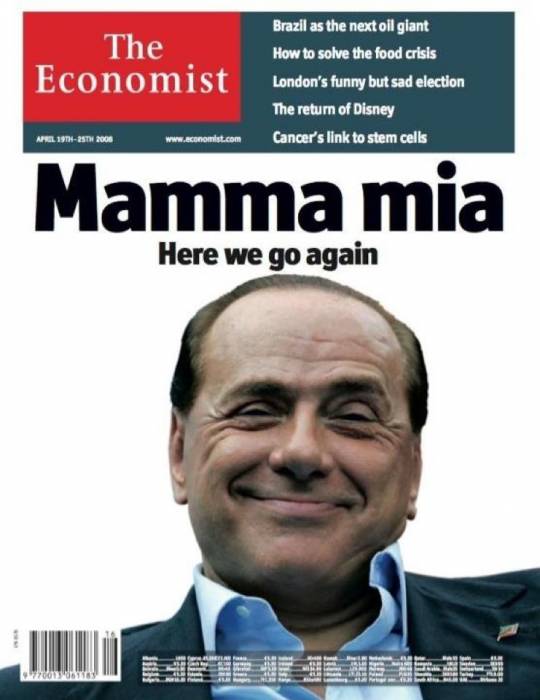
[about the pic: there is always an excuse to include one of the best magazine covers of all time!]
Mixed Tidbits

-The talk of the town these days –as reflected in our most recent posts- is about “Lux leaks” and the uncomfortable position in which it places President Juncker, State aids and our victory in Court last week. But there’s a paradox regarding these cases that has surprisingly not received much attention: do people realize that if Luxembourg’s rulings were declared to constitute illegal State aid the result would be that Luxembourg would receive several thousands of millions of euros??
– This blog is intended not only for us to get things off our chest, but also to foster some debate. In this context, I would suggest you to read the most recent comments on this and this post. You won’t find that sort of discussions in many other places and this is what makes this blog different; we’re very fortunate to have such active and sapient readers and we probably don’t emphasize that enough.
– The comments I just referred to reveal that there are still a few open issues regarding, in particular, the concept of restrictions by object and on how they can avail themselves to objective justifications. For those interested in clarifications, we remind you about the forthcoming ERA event on the subject (Restrictions by Object after Cartes Bancaires and the Commission’s initiatives); for more info click here.
– Btw, for those needing clarification on a wider set of issues, we will soon be announcing the program of the 18TH edition of the Competition Law Course that Luis Ortiz Blanco and myself direct in Madrid from January to March, with the participation of, among many others, my former and my current blogging partners. If you are interested in attending or know of someone who might be, you can drop me a line (alfonso.lamadrid@garrigues.com). This course is, by the way, where I first met Nicolas, interestingly through the intermediation of his subsequent replacement on this blog, Pablo.
– Thanks to Competition Policy International we have found this piece at the intersection of competition law and religion titled Is there a Vatican School for Competition Policy? For the record, we were pioneers in writing on the link between religion and antitrust: see my (2010!) post on An Antitrust Challenge to God
– Our friend Stephen Ryan, now at the Hong Kong Competition Commission, has informed us about a new media campaign initiated by the authority to inform the general public about the benefits of competition (see here and here). We’ll add these to our list of candidates for the Antitrust Oscars. The authority is also active on other fronts, having just released draft guidelines on the interpretation of the Competition Ordinance for public consultation.
On Champagne and Alfonso’s last post: an analysis

Champagne tastes great. A resounding victory against the European Commission probably tastes better. Yay! As the academic one in the duo (read: as someone who does not know how it feels to win a tough case after years of hard work), however, I cannot help spoiling the party with a geeky and anti-climactic counterpoint to Alfonso’s last post.
Last year, I published a statistical analysis of State aid litigation before EU courts. I was curious about the factors influencing the outcome of challenges against Commission decisions. I had of course some intuitions, but I was genuinely surprised with the results. It is interesting to compare some of the findings with the cases on selectivity that Alfonso discussed in his post.
- The single most remarkable finding is that the chances of success of an annulment action against a Commission decision increase dramatically when the Member State becomes involved in the proceedings (either as an applicant or in support of the recipient’s application). Close to one in two (44%) decisions were annulled with Member State involvement. Without the support of the central government, recipient firms did less well: only in in four decisions were annulled (26%).
- Many factors may account for this substantial divergence in outcome (I discuss some of them in the article). What matters for this post is that both Autogrill and Santander challenged the Commission decision without the support of the State, yet they won. One may interpret this outcome as meaning that their case was very strong on substance, or that they hired excellent lawyers. Or both, as they are not mutually incompatible. The latter is true here. Clearly. No doubt.
- What if the Commission decides to appeal the rulings before the ECJ? Interesting one. My study shows that the Court does not set aside GC rulings very often, except when the case revolves around selectivity… which is precisely the issue at stake in Autogrill and Sandander. If one examines the case law of the past few years, it seems clear that the ECJ tends to favour a broader notion of selectivity and the GC a narrower one (think of NOx, Gibraltar or British Aggregates).
- Against this background, the interdisciplinary scholar in me would say that the Commission would have a fair chance of winning the case on appeal. The black letter lawyer that I still am, on the other hand, would say that these cases will prove the limits of statistical studies. It is indeed difficult to believe that the ECJ will uphold the analysis of the Commission. Rendez-vous in a couple of years!


 Chillin'Competition