2The Law and Economics of Cartel Agreements
Ewoud Sakkers | Johan Ysewyn
Friday 17 October 2014, Friday 24 October 2014, Friday 7 November 2014
Relaxing whilst doing Competition Law is not an Oxymoron

In the past few days there have been some remarkable competition-developments coming from EU Courts, the last of which took place only minutes ago in the Greek lignite case (if you’re only interested in that one you can go directly to the bottom of the post). This is just a quick overview of some of those recent developments:
Some were anecdotal, such as President Barroso giving testimony as a witness before the General Court.
Others are relevant mainly for cartel geeks, such as the GC’s granting reductions of fines in 3 paraffin wax cartel related cases, in which it also (a) carried out a particularly detailed review of the exercise of decisive influence between a parent and its subsidiary (Sasol, available here); (b) observed a violation of the principle of equal treatment and, most unusually, found an infringement of the principle of proportionality in the calculation of the basic amount of a fine (but only due to the peculiar circumstance that the Commission had partly taken into accout the turnover of a company that had merged, in the course of the cartel, with another company participating in the infringement; see the Judgment in Esso, available here); and (c) shed some light on the assessment of the exercise of decisive influence in JV settings (in RWE, available here).
That challenges against the proportionality of fines imposed within the 10% limit are unlikely to be successful was confirmed by last week’s Judgment from the ECJ in the Telefónica case. Telefónica had challenged the GC’s Judgment upholding the controversial decision sanctioning it for a margin squeeze abuse. The ECJ’s Judgment contains nothing of particular interest (aside from an interesting explanation of why the General Court’s review is fully compatible with the requirements stemming from the ECHR). The case will mostly be remembered because of Advocate General’s Wathelet’s Opinion both on the issue of proportionality as well as on the qualities of the appeal lodged by Telefónica, which we’re told broke a record as the lenghtiest in the history of the ECJ. (For those of you who are wondering whether limitations on the number of pages didn’t apply, you should know that there’s a way to bypass them, which I won’t explain here in the interest of the efficient use of Court’s resources…).
And, finally, most interesting news came from Luxembourg minutes ago, as the ECJ has annulled the General Court’s Judgment in the Greek lignite case concerning the joint application of Articles 106 and 102 TFEU. As you may recall, some time ago we held a most interesting ménage à trois debate on the GC’s Judgment with Marixenia Davilla (see here), José Luis Buendía (see here) and Makis Komninos (see here). The ECJ and the Advocate General have followed the approach that José Luis had forecasted (the Mr. 106 nickname has a justification).
The Judgment is much more important than many may realize at first sight. The main issues raised by the case are covered in our previous posts, so I refer you to those. Observe only that the Judgment goes pretty far -in the right direction, I would argue- in ruling (in para 46) that “[a]ll that is necessary is for the Commission to identify a potential or actual anti‑competitive consequence liable to result from the State measure at issue. Such an infringement may thus be established where the State measures at issue affect the structure of the market by creating unequal conditions of competition between companies, by allowing the public undertaking or the undertaking which was granted special or exclusive rights to maintain (for example by hindering new entrants to the market), strengthen or extend its dominant position over another market, thereby restricting competition, without it being necessary to prove the existence of actual abuse“.
The Judgment would insuflate some life to Art. 106 which, as I said last week, has a tremendous potential which still today remains largely unused. This would nonetheless largely depend on politics at the incoming Commission and on the Commission’s discretion, and, judging by history, I’m not opimistic. As the GC reminded us with another Order last month declaring an appeal inadmissible (here), “the Commission’s refusal to act under Article 106(3) TFEU following the filing of a complaint by an individual against a Member State does not constitute a challengeable act“. This ruling is based on the max.mobil case-law, which I’ve always seen as unfortunate and in need of repeal.

In some previous posts we’ve commented on the interface between the competition rules and data protection/privacy regulation, which is one of the trendiest topics in international antitrust these days.
As you may recall, the European Data Protection Supervisor recently held a high level workshop (high level but for my intervention on it, that is) on Privacy, Competition, Consumers and Big Data. On Monday, the EDPS made available on its website a report summarizing what was discussed in the workshop (conducted under Chatham House rules). The EDPS’ summary is available here: EDPS Report_Privacy, competition, consumers and big data.
A summary of my intervention at the workshop was published in two recent posts (here and here).
For more, you can re-read Orla Lynskey’s A Brave New World: The Potential Intersection of Competition Law and Data Protection Regulation as well as the interesting comment by Angela Daly on my latest post on the issue.
The German Monopolkommission has also addedd its voice to the debate by issuing a recent report (“A competitive order for the financial markets“) which contains a section on data-related questions regarding the internet economy. The Press Release (in English here) expressess some concerns but notes that, according to the report, “an extension of the competition policy toolkit does not (yet) seem advisable on the basis of current knowledge and understanding“.

In a recent post on the diluted legality of competition law I voiced out the view that our discipline could partly be losing its last name, a development for which I blamed a number of factors. However, some developments in the past few weeks have led me to think that perhaps I missed a critical feature: the increasing involvement of politics in the application of the competition rules.
To be sure, since its inception and all along its development, antitrust law –as a public policy tool at the core of the economic Constitution of any State- has had as much of a tight link with politics as it has with economics. But whereas economics not only provides a justification for the existence of the rules but also plays an important role in the development of legal rules and in individual cases, politics had traditionally exerted its influence in the exercise of enforcement discretion, and arguably not so much in the development of the rules and the outcome of cases.
The link between politics and competition enforcement might have been more obvious at the national level, where national competition authorities often are attached (organically or otherwise) to the Government at issue, which often appoints its members in the light of political considerations. It’s against this backdrop that one has to interpret the European Commission’s recurrent calls for independence of national competition authorities (most recently on a Staff working paper issued last Wednesday).
I think it’s fair to say that the influence of politics on the European Commission’s application of the competition rules has been more tenuous. For the most part, EU competition law has developed under the auspices of a firm political view on the advantages of competition in a system of social market economy, but in isolation from short-sighted political interests/small politics. This is largely explained by the theoretical legal status of the Commission as a body independent from Member States, and by the practical status DG Comp as a quasi-specialized agency within the Commission that one was not to second-guess. However, there are signs that this might be changing. In recent times national politicians have increasingly given their views on how competition law should be applied (here is one very recent example), and so have members of the European Parliament and a number of EU Commissioners. Moreover, they are doing so not only when their national interests are at stake (political solutions have been and are all the more common in State aid cases and in some high-stakes mergers), but also concerning investigations of potential infringements.
There are several examples of this evolution. Most recently we have seen politicians –mainly Chancellor Merkel- vouching for the approval of the Telefónica/E-Plus deal (see here). But perhaps the best illustration of the trend can be found in the Google case, on which we have written extensively on this blog.
This is a case in which DG Comp has extracted (arguably using the commitment procedure and its impressive record in judicial review of 102 decisions to stretch the boundaries of current legal standards) a set of significant commitments on the part of Google (see my comments here), going beyond what US authorities did. This could be regretted by people interested in the clarity of the law, but would normally have been seen as a practical enforcement success on the part of the Commission. However, a number of motivated and well-funded complainants –led by some smart lawyers who know how to play with the system and who deserve credit for getting near what I would’ve thought was impossible- now start to seem capable of derailing the commitment procedure by politicizing it. First, the German and French ministers for economics wrote a most unusual joint letter to Vice-President Almunia asking for a tougher stance on Google. And now, a widely extended rumor has it that a few EU Commissioners are being persuaded not to approve any Article 9 decision during Mr. Almunia’s tenure. As you can imagine, not all Commissioners are persuaded with sophisticated legal arguments related to evidence on foreclosure and the such, some being more receptive to political lines alien to antitrust analysis, mainly “don’t let these guys off the hook because they don’t pay taxes in Europe and because the US spies on us”. Obviously, this has nothing to do with the law, or at least with competition law.
It’s difficult to guess how this will turn out. As recently explained in the FT (Alex Barkers’s coverage of EU competition issues is, by the way, excellent) “[s]ome people involved think the pressures make it more likely Mr Almunia will decide to launch a formal probe of Android”. And indeed, the Android investigation may be the second leg of this political game, and once again the Commission might be under enormous pressure to take a hardline. [By the way, if you’re interested in reading about the competition issues involved in the Android investigation, I would very much suggest you read the insightful pieces recommended by Kevin Coates here 😉 as well as this interesting brand new piece on the matter (particularly enjoyed footnotes 26 and 127…) (thanks to Jorge Marcos –ULg- for drawing our attention to it)]
Much more could be said about the politicization –and possible transformation- of antitrust and I look forward to your comments, but I’ll close it off now (mainly because the Word Cup final is already on). Some of you will recall my piece on Antitrust and the Political Center, in which I outlined some views on how antitrust embodies a centrist political ideology and can contribute to the expansion of sensible political views internationally. Well, in my view, the same is not true the other way around; infusing minor, short-sighted, political goals into the application of competition law can only contribute to disfigure even more a branch of the law which –let’s not forget- is, on its sanctioning dimension, quasi criminal in nature.
The political agreement in having technical competition rules applied by independent agencies is now an established idea, heralded internationally by the European Commission. And it makes sense because in spite of its unquestionable benefits, competition law’s constituency is diffuse and unable to mobilize politicians in the right direction. If you ask me, competition law can better serve its goals when dissociated from small politics.

A look at my recent posts shows that I have developed a taste for pending issues, whether it is rulings of the ECJ or Commission decisions. Rather than doing something new, I thought I would repeat the trick (I tell myself that the number of comments received in previous posts justifies the non-move). Some will have thought ‘Post Danmark II’ when reading the title. True, there is a second Post Danmark case pending before the ECJ. The little information available on the Court website, suggests that it may be another milestone in Article 102 TFEU case law.
But Post Danmark II has long been old news for most if not all of us (not to mention that discussing this case would involve writing yet another post about rebates). Due to the limited supply of Article 102 TFEU cases, it makes (economic) sense to cherish and discuss every single judgment, even prior to their adoption. Thus from the list of pending preliminary references in competition law, I thought I would repeat the trick by doing something else instead, and rather mention briefly (and invite your comments on) the following:
– Eventech concerns the use of bus lanes by taxis in London. The question is more precisely about the application of Article 107(1) TFEU to regulations that exclude private hire cars (minicabs) from such lanes. The key issue relates to whether such regulations involve the use of State resources. The information that is publicly available suggests that the answer is a clear ‘no’. But given that the Court mentioned in Gibraltar that what matters for the purposes of Article 107(1) TFEU is not the ‘regulatory technique’ but the effects of a measure, one is no longer 100% sure about these things.
– A colleague who is interested in EU law but not in competition law asked me a few weeks ago about the FNV Kunsten Informatie en Media case. This one is about the application of competition law to collective labour agreements. The agreement in question is interesting in that it dealt with the working conditions of self-employed workers who were not subject to it. In spite of the obvious distortions it entails this looks, again, like a straightforward case. What makes it worthy of mention, from my perspective, is that the mechanism used in the agreement to fix wages is not fundamentally different from that underlying the so-called Spanish Google tax. You may remember from my post on the question that the Spanish government seeks to ensure that Google News and other aggregators compensate newspapers for the use of ‘non-significant excerpts’ (I know I repeat myself, but this is a concept that never fails to amaze me) by making it impossible for the latter to relinquish their right (that is, by preventing negotiations between individual newspapers and aggregators).
– There are also some pending cases in Luxembourg featuring Alfonso. But it is probably better to let him comment on those.
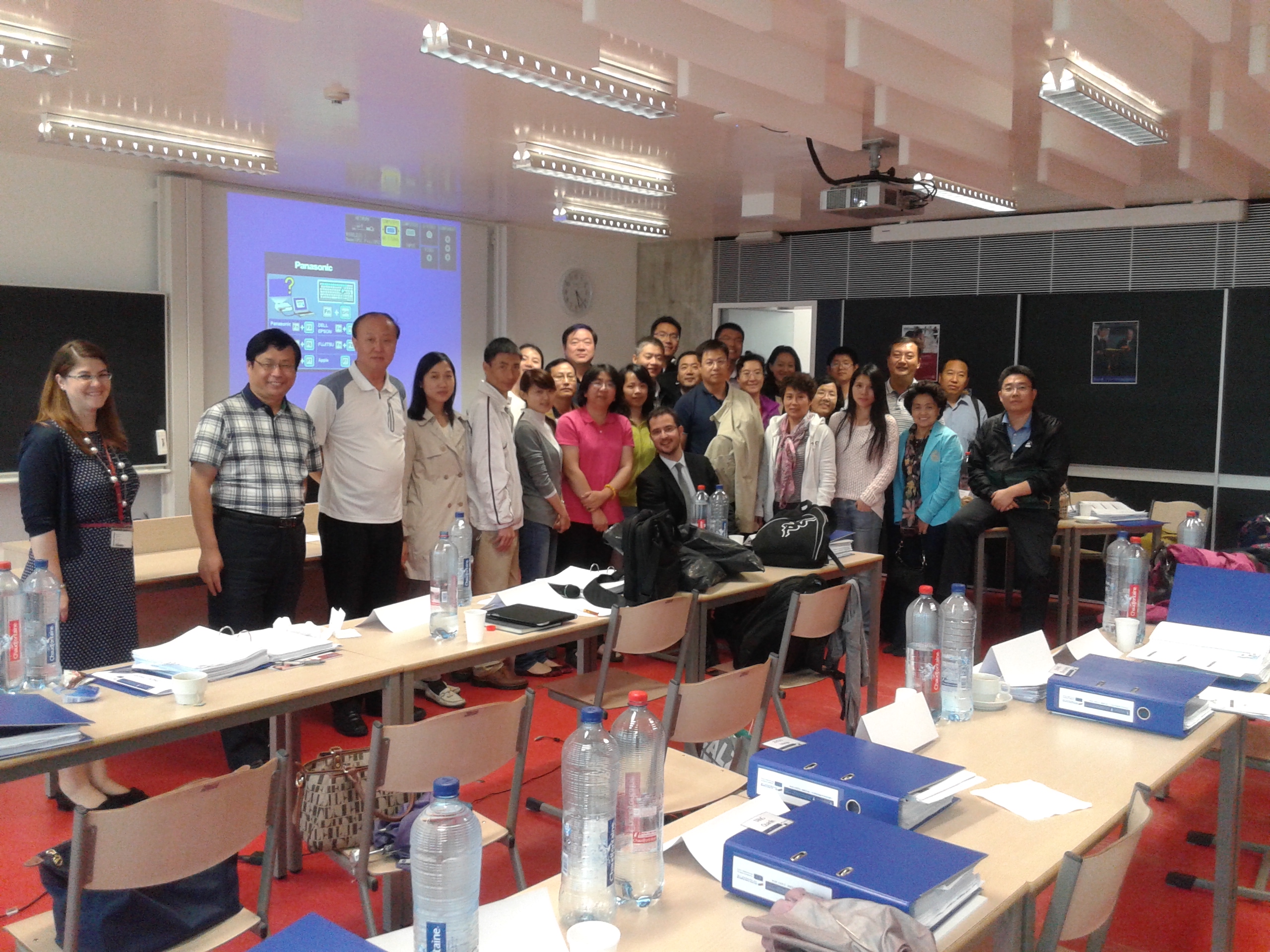
As you might have noticed, we took an unnanounced temporary break from bloggin’. First it was due to a particularly intense period of work (I might give more details about it in the future) and then to (my only…) week of Summer holidays during which I wanted to hear nothing about competition law [btw, I read these two very recommendable books (here and here), only to find out that the latter -a dystopian novel about tech companies- does refer to European Commission’s antitrust investigations as part of the plot…].
In between this break Chillin’Competition surpassed 750,000 visits [I checked the stats and only in the past year we’ve had visits from 193 countries (exactly the same as the members of the UN)], which still today feels pretty surprising. We are however increasingly struggling to find the time to improve what we do here; at least in my case, this is proving a challenge (and it’ll be even more in the near future once the upcoming paternity reshuffles my priorities). This is to say that you should expect some significant changes in Chillin’Competition after the summer holidays, hopefully for good.We’ll explain this in more detail soon.
Nicolas -who will soon end his time at DG Comp- and myself discussed a bit about this yesterday when we met by surprise at a corridor of the College of Europe in Bruges; we were simultaneously lecturing in two contiguous rooms and hadn’t realized about it… By the way, I was lecturing to a group of very smart Chinese officials (pictured above) about EU Competition Procedure and Article 106 TFEU (the provision with the greatest unexploited potential in EU Competition Law) and very much enjoyed discussing with them (this in spite of -excellent- consecutive translation, which added a level of complexity to the conversation). In case anyone is interested, here are the two power points I used (although I’m afraid you might have trouble understanding much): EU Competition procedure (CoE-China) and Article 106 (CoE-China) (many thanks, by the way, to Carlos Bobillo and Ana Balcells for taking care of these. One day they’ll realize that the main advantage of spending a few years at a law firm is that you can get someone to do your PowerPoints 😉 )

Registration for the 5th edition of the Brussels School of Competition’s specialized programme is now open.
Here’s the programme for the upcoming academic year:
General Introduction to Competition Law and Economics
Clinical Seminar 1: Competition Compliance

(by Pablo Ibañez Colomo)
Voices that relativise the problems with Article 102 TFEU case law are not infrequent. It may be true that the case law is not beyond reproach in all respects, the argument goes, but perfection is not of this world. The fact that rulings are often criticised simply means that Article 102 TFEU is an inherently controversial provision and that the stakes in abuse cases are generally very high, not that there is something fundamentally wrong with the preferences expressed by EU courts. And in any event, the alternative, economics-based, approaches have their problems too. The current case law is just the expression of a legitimate choice.
There is of course some truth in this position. At the same time, I find a bit defensive and as such problematic because it can become an obstacle to an honest and constructive exchange of ideas. I can think of at least a fundamental aspect that is uncontroversially (or objectively, if one prefers) wrong with Article 102 TFEU case law. What makes it even more interesting is that it fails to attract the attention that, in my view, it deserves. We all know that exclusive dealing and loyalty rebates are (absent an objective justification) abusive under Article 102 TFEU. The assumption underlying this rule is discussed far less often and is crucial to understand the case law. In paragraph 77 of Intel, the Court repeats the old formula whereby the abovementioned practices, as opposed to quantity rebates, ‘are not based – save in exceptional circumstances – on an economic transaction which justifies this burden or benefit but are designed to remove or restrict the purchaser’s freedom to choose his sources of supply and to deny other producers access to the market’.
This statement, as a matter of economics, is incorrect. Contrary to what the Court holds, there are perfectly valid pro-competitive justifications for exclusive dealing and loyalty rebates. I am inclined to believe that everyone at DG Comp and the Legal Service agrees by now with this idea, which has long been part of the mainstream. Suffice it to check any textbook on industrial organisation or the economics of competition law. To mention the three I had in my office when preparing this post, take Carlton & Perloff; Bishop & Walker; or Niels, Jenkins & Kavanagh (Hans Zenger’s piece on loyalty rebates is great too). Given its peculiar cost structure, some of these justifications are of obvious relevance in the microprocessor industry.
Article 102 TFEU case law will not evolve until the ECJ acknowledges that a rule-based approach to exclusive dealing and loyalty rebates is grounded on a misguided economic assumption. Interestingly, a shift in this direction would not require a major revolution. The ECJ would just have to accept – finally – that what is true under Article 101 TFEU must by definition be true under Article 102 TFEU. In paras 10-12 of Delimitis the Court holds that there are perfectly valid justifications for exclusive dealing and – by extension – for loyalty rebates. As a result, they are not restrictive by object. Article 102 TFEU case law cannot be based on the opposite assumption (i.e. that these practices are anticompetitive by their very nature because they have no economic explanation other than the exclusion of competition). Paragraphs 89-91 of Intel show the difficulties into which EU courts run whenever the tension between these two lines of case law is raised (Van den Bergh Foods being another excellent example).
I am convinced that an effects-based approach would follow logically from the suggested shift. The additional arguments raised in subsequent cases to justify the current approach are not particularly persuasive. The fact that dominant firms have a ‘special responsibility’ that derives from their status does not mean that an effects-based approach to loyalty rebates and exclusivity is not conceivable. There are recent cases, like Post Danmark and TeliaSonera, where the ‘special responsibility’ of dominant firms is seen as compatible with requiring evidence of an anticompetitive effect.
Paragraph 77 of Intel also made me think of the relationship between law and economics in competition law. It is interesting that the General Court reiterates the Hoffmann-La Roche formula to make it clear that there is a long line of case law supporting its position. ‘Exclusive dealing and loyalty rebates have no pro-competitive justifications because we have always said they do not’, the judges appear to claim. What is an economic argument is dealt with, in other words, as a legal one. From an economic perspective, to be sure, the fact that EU courts have consistently relied on the same assumption does not make the latter any less incorrect.
The Intel judgment also made me think of something I often say. Economic analysis is sometimes presented as an exogenous force that has interfered with EU competition law since the 1990s. What wrong assumptions such as the one discussed in this post show is that this view is not accurate. Economics is hard-wired into competition law – it is an integral part of it. The only debate should be whether to rely on one’s more or less accurate intuitions (à la market definition in United Brands, for instance) or to trust instead the analytical tools developed over several decades by competent individuals devoting their professional lives to a systematic understanding of the economic side of the discipline.

I realized yesterday that the slides used by all speakers at the Brussels School of Competition’s and Liège Competition and Innovation Institute’s very interesting conference on Commitment Decisions in EU Competition Policy are available here (the image above corresponds to one of mines ( Lamadrid_Commitments); as an animated GIF it looked better in slidehow).
As for my presentation, I don’t think I said anything that was particularly original. I essentially did a 20 minutes quick overview and categorization of the commitment decisions adopted so far on the bases of (a) the (real) underlying reasons to resort to them, which may not always have to do with procedural economy considerations; (b) the sectors they affect (you can observe clear clusters that provide useful insights regarding enforcement priorities complementing regulatory initiatives -or lack thereof-); (c) the theories of harm at issue in each case and (d) the remedies made binding. This exercise made (even more) evident that both the theories of harm and the remedies that we see in these cases are nowhere to be found in Art. 7 infringement decisions. My purpose was merely to provide an objective account of these cases, so I left the discussion on the pros and cons of this approach to my fellow panelists.
Btw, the Liège Competition and Innovation Institute will also be holding other two interesting conferences in the coming days:
Intel v Commission: More eco or more ordo fiendly? next Monday 16 of June
and
The Commission’s Decisions in the Samsung and Motorola Cases – IP v. Competition 2.0?” on 11 July
Have a nice w-e!

Minutes ago the General Court released its Judgment in Intel v Commission (T-286/09) dismissing the appeal in its entirety and upholding the 1.06 billion euros fine.
As I noted to Bloomberg some time ago, the ECJ’s Tomra Judgment had paved the way for the Commission’s victory in this case with regard to the substantive arguments at issue. Indeed, the Judgment resorts to Tomra in several occassions to support the key proposition that once a loyalty mechanism is demonstrated there is no need to demonstrate effects by means of an as efficient competitor (AEC) test (see mainly para. 145; I’ve spotted a few other references to Tomra in paras: 72, 73 , 77, 78, 91, 97, 103, 117, 119, 120, 132, 153, 176, 182, 184, 193, 527 or 998, plus a few more to AG Mazak’s Opinion in that case)
The General Court has also ruled out the procedural concerns previously identified by the Ombudsman, ruling that there was no procedural irregularity, and that even if there had been one it wouldn’t have affected the outcome of the case (paras. 601-664).
The Judgment has not yet been made public is available here. [Note: this post was initially written in the light of the Court’s Press release and was subsequently updated following a first very quick look at the actual Judgment]. I’ve only had the chance to skim through it quickly, but a quick look is enough to reveal the Judgment’s likely impact on the law on abuse of dominace and to anticipate that this ruling will no doubt stir many debates in the coming weeks and months.
The Court has found that the rebates are issue were “exclusivity rebates” and declared that these, “when granted by an undertaking in a dominant position are, by their very nature, capable of restricting competition and foreclosing competitors“. The Judgment states that in the face of such rebates it is not necessary to show effect on a case-by-case basis, and that “the Commission was not required to make an assessment of the circumstanced of the case in order to show that rebates actually or potantially had the effect of foreclosing competitors from the market“. Against this background the Court explicitly rejects the applicability of the “as efficient competitor test“. A similar approach is undertaken with regard to the conditional payments granted to several computer manufacturers.
Key to the Court’s reasoning is the idea that “a foreclosure effect occurs not only where access to the market is made impossible for competitors. Indeed, it is sufficient that that access be made more difficult”. (paras 88 and 149). According to para 150 the as efficient competitor test “only makes it possible to verify the hypothesis that access to the market has been made impossible and not to rule out the possibility that it has been made more difficult”.
In para 152 the Court distinguishes Intel from previous cases where the as efficient competitor test had been a key criterion (namely TeliaSonera, Deutsche Telekom and Post Danmark) by observing that “those cases concerned margin squeeze practices or low price practices)” which means that a price-cost comparison was needed. According to this para. “[a] price cannot be unlawful in itself. However, in the case of an exclusivity rebate, it is the condition of exclusive or quasi-exclusive supply to which its grant is subject rather than the amount of the rebate which makes it abusive”. In para. 153 the Court again resorts to Tomra (“which postdates” the above mentioned Judgments) to support its view that no effects assessment is needed.
The Judgment deals directly with the alleged incompatibility of this approach and the Commission’s Guidance paper. In paras. 154-161 the Court explains essentially that it is “not necessary to consider whether the contested decision is in line with the Article 82 Guidance” (157) because the latter only set priorities for cases initiated following its adoption whereas the Intel investigation was already at an advanced stage by then (paras. 155-156). According to the Court, the as efficient competitor test envisaged in the Guidance paper was only relied upon by the Commission “for the sake of completeness”.
In spite of the clear statement of principle regarding the no need to prove effects, the Court has also engaged in a detailed case by case review of both the rebates and the conditional payments and concluded that “even supposing that the Commission was required to show on a case by case basis that the exclusivity rebates and payments granted to Dell, HP, Lenovo and Media-Saturn were capable of restricting competition, the Commission demonstrated that capability to the requisite legal standard in its analysis of the facts of the case”.
This “just in case” review is what explains the lenght of the Judgment (283 pages in English). It also places the Commission in a much better position regarding an eventual appeal, for even if the ECJ were to quash the GC’s conclusions that effects didn’t have to be established (the upcoming Post Danmark II Preliminary Ruling will tell us whether that is or not likely to happen), the factual assessment of the case -beyond the scope of review of the ECJ- would be most likely to stand.
Even if somehow expected, this is a very important victory for the Commission. The main question relates to how this Judgment will impact future post-Guidance paper enforcement.

Last Thursday the ECJ delivered its –once again remarkably brief (4 pages)- Judgment in Kone, Case C-557/12. In her widely discussed Opinion in this case Advocate General Kokott had raised the stakes, pointing out that “[t]he Court’s Judgment in this case will without doubts be groundbreaking in the context of the further development of European competition law and, in particular, its private enforcement” (perhaps a bit of an overstatement if you ask me).
The question at issue was whether a national legal system can exclude the possibility that compensation may be sought in relation to damages suffered due to the overprice (legally) charged by non-cartelists who independently and rationally adapted to the cartel by increasing their own prices. The umbrella metaphor signifies that those companies can profitably increase under the cover of their competitors’ cartel.
The Judgment is remarkable because –following AG Kokott’s recommendation- it somehow endorses the “umbrella pricing/damages” theory by ruling that Member States cannot exclude it “categorically”. In the Court’s words:
“[t]he full effectiveness of Article 101 TFEU would be put at risk if the right of any individual to claim compensation for harm suffered were subjected by national law, categorically and regardless of the particular circumstances of the case, to the existence of a direct causal link while excluding that right because the individual concerned had no contractual links with a member of the cartel, but with an undertaking not party thereto, whose pricing policy, however, is a result of the cartel that contributed to the distortion of price formation mechanisms governing competitive markets”. (Para.33).
A brief background note
The preliminary reference had reached the ECJ because Austria Courts had previously ruled that the “umbrella pricing” theory would not be sufficient to establish a “causal link”. The referring Court cited a legal doctrine that holds sway in Germany and Austria according to which any claimant must establish the infringement of a “protective provision”. According to that doctrine, the decisive factor is whether the provision infringed by the person responsible for the loss had as its object the protection of the injured person’s interest. In this sense, it was generally considered in Austria that “umbrella pricing” theories were out of the scope of the protective provision given that the loss they could cause involved no relationship of unlawfulness and was rather “merely a side-effect of an independent decision that a person not involved in that cartel has taken based on his own business considerations”.
The Judgment’s reasoning in a nutshell
The Judgment (i) recalls the direct effect of the competition rules and that its effectiveness requires that any individual shall be able to claim damages for loss caused to him by a conduct restrictive of competition (paras 20-22); (ii) stresses the role of damages claims as a possibility that “strengthens the working of EU competition rules” (para 23); (iii) reminds that in the absence of harmonization the principle of procedural autonomy applies (meaning that whereas EU Law imposes the necessary “existence” of a right to claim damages national laws must govern the “exercise” thereof) (para. 24); (iv) observes that the principle of procedural autonomy is subjected to compliance with the principles of equivalence and effectiveness (paras 25-26); (v) states that “umbrella pricing” is “one of the possible effects of the cartel, that the members thereof cannot disregard” (paras. 27-30); and (vi) concludes that excluding the link of causality between the cartel and umbrella pricing categorically, for legal reasons and regardless of the circumstances would run counter the effectiveness of EU competition rules (paras. 31-35).
A handful of follow-up thoughts
I haven’t yet given much thought to this, but here are some preliminary -almost instinctive- reactions that might perhaps contribute to sparking some debate:
– From the viewpoint of general EU Law the Judgment fits within a consistent body of case-law endorsing an indirect harmonization of civil procedural rules by virtue of an ample reading of the principle of effectiveness that narrows the scope of the principle of procedural autonomy.
– The key assumption or stance underlying the Judgment is that there is a certain causal relationship between the cartel and the umbrella pricing in which the former acts as a facilitator or enabling mechanism for the latter (e.g. (a) “it is not disputed by the interested parties (…) that a phenomenon such as umbrella pricing is recognized as one of the possible consequences of a cartel”; (b) “even if the determination of an offer price is a purely autonomous decision, taken by the undertaking not party to a cartel, it must none the less be stated that such decision has been able to be taken by reference to a market price distorted by that cartel and, as a result, contrary to the competition rules”); and, more clearly, (c) the suffering of loss in “umbrella pricing” settings “is one of the possible effects of the cartel”).
To me this causal relationship would seem intuitively hard to establish, and I wouldn’t have bet on the Court taking it for granted (with the sole supporting arguent that the intervening parties in the case had not disputed that umbrella pricing is, very theoretically, a possible consequence of a cartel). In any event, those familiar with the Court’s case-law in other areas may observe that the ECJ might arguably have embraced a much narrower interpretation of the causality link in other areas, such as that of non-contractual liability of EU Institutions, where a “direct causal link” is required…
– Effectiveness trumps it all? The deviation from the general principle of procedural autonomy and the arguably flexible interpretation of the “causality” requirement might once again be explained by the perceived need to safeguard the effectiveness of the competition rules (read paras. 32 and 33 of the Judgment). Effectiveness has –rightly- been the core concern at the root of the case law on damages actions (Courage and Crehan, Manfredi, City Morors, Pfleiderer, Otis or Donau Chemie). However, one often has the impression that we hail the effectiveness of these rules too much in order to deviate from general principles of law to a greater extent than we do it with other legal regimes, particularly when dealing with cartels (para. 32 of Kokkot’s Opinion makes this last point more evident). I recently made the same point regarding the Court’s minimalistic interpretation of the limiting principles of necessity and proportionality in these cases for the sake of effectiveness
– At the level of incentives, what signal would this Judgment send to non-cartelists operating in a seemingly cartelized market? [admittedly not an easy group to target] How about “hey, raise your prices in the shadow of the cartel: you’ll reap the profits plus your rivals will have to pay extra for it”?
– It’s remarkable that, to my knowledge, this is an issue that hasn’t received that much attention in the U.S. in spite of private enforcement being much more developed. In fact, distric courts have tended to view this theory as too speculative or conjectural, observing that independent pricing decisions (which may be affected by several and complex factors) break the chain of causation. [e.g. Antoine Garabet, M.D., Inc. v. Autonomous Techs. Corp., 116 F. Supp. 2d 1159, 1167-68 (C.D. Cal. 2000)].
– The Judgment will be welcomed by many lawyers (because we now have an apparent better chance at overcoming the causality hurdle) and particularly economists (for whom, paradoxically, the endorsement of the umbrella theory could bring in a rain of new work) (I get metaphorical at lunchbreaks)
– At the end of the day, and in spite of all the above, I doubt this Judgment will have very significant practical implications. The only thing the Court really says is that national legislations cannot exclude the “umbrella theory” categorically and regardless of the specific circumstances of the case. However, it does in no way require national Courts to accept this theory when they examine the causal link originating responsibility in a given case. The causal relationship still will need to be proved in the light of the specific circumstances of the case and, well, good luck with that.
| M | T | W | T | F | S | S |
|---|---|---|---|---|---|---|
| 1 | 2 | 3 | 4 | 5 | ||
| 6 | 7 | 8 | 9 | 10 | 11 | 12 |
| 13 | 14 | 15 | 16 | 17 | 18 | 19 |
| 20 | 21 | 22 | 23 | 24 | 25 | 26 |
| 27 | 28 | 29 | 30 | |||
 | Luc Peeperkorn on What Lukoil means for the refu… |
 | Rofiat Popoola on On reading and writing: lookin… |
 | Tero on What Lukoil means for the refu… |
 | Emanuela Lecchi on Upcoming events: Luxembourg (L… |
| Dolapo Popoola on Ranking the rankings |


 Chillin'Competition