And the Stupidity of the Day Award goes too….

In the competition law world there would appear to be too many prizes, awards and things of that sort. If you or your firm haven’t received an award, or at least a nomination, in the past few days, then either you’re a loser or your firm should increase its sponsoring budget 🙂 (before anyone reacts, I’m kidding).
Someone should one day do an awards ranking and give a prize to the worst one. In the meanwhile, we at Chillin’Competition recently created the Stupidity of the Day Award, which is a purely merit-based award given to the person who contributes to the development of competition law and policy with the… most original thought.
Our first proud recipient was the then French Minister for Industry (appointed today Minister for the Economy and New Technologies (!); this is not an April Fools’ Day joke), Arnaud Montebourg, who said that the European Commission lives in a “legal delirium” and “makes up rules that don’t exist in the Treaties in order to perpetuate its powers” and that Vice-President Almunia is an “obsolete liberal integrist”.
And our second winner is….. Arnaud Montebourg again! He’s a goldmine. Look at this excerpt from a recent interview (Le Figaro, 3 février 2014)
“Quand je reçois l’Autorité de la concurrence, je lui dis : vous êtes contre les ententes. Moi, je les organise ! Qui a raison? Vous êtes nommé, je suis élu, donc c’est forcément moi !”
Translation: “When I receive the competition authority I tell them; you’re against agreements between companies. I arrange them! Who’s right? You were appointed, I was elected, so I’m certainly the one who’s right!”
(Thanks a lot to Benoît Durand (RBB) for this little gem!)
When one reads these things a thought comes to mind. Some say the problem with competition policy is that it doesn’t have constituents pushing for it; well, I don’t know; this might be politically incorrect (as if the rest of this post weren’t), but sometimes I’m glad that (for the most part) politicians keep their hands off it. This last thought gives me a new chance to once again promote my priZeless piece Antitrust and the Political Center and the follow-up interview).
Conflicts of Interest in EU Competition Law

It’s been two months since Nicolas temporarily left this blog for a half a year stint at DG Comp’s Private Enforcement Unit.
In the course of this short period he’s managed to single handedly unblock negotiations on the Commission’s proposal for a Directive on Antitrust Damages, and he’s adapted very well to the fonctionnaire lifestyle (meaning that he’s now taking some days of holidays) 😉 (jokes aside, congrats to Eddy de Smijter and to the rest of the people involved in the negotiations about the Directive).
As he anticipated in his farewell post, Nico is maintaining all academic activities. Within that context, he’ll soon be participating at a conference on one of is favorite topics organized by his University. So, on 24 April the Liège Competition and Innovation Institute will be hosting a conferece in Brussels on Conflicts of Interest, Ethical Rules and Impartiality in EU Competition Policy .
Although Nicolas knows that I don’t share the same passion for the topic (or maybe precisely because he does?), he’s asked me to advertise the conference here. So voilà. It will feature representatives from the General Court, the European Commission, the OECD, the Belgian Competition Authority, as well as lawyers in private practice, The New York Times’ Brussels correspondent and ULG Professors and Researches, including Nico himself. Even Emilly O’Reilly (the current Ombudsman, whom you may remember from this) is on the tentative list of speakers.
Why do I say I don’t share the passion for the issue? Because whereas some improvements could possibly be made in the rules -mainly regarding their transparency-, I think we should be careful in not overshooting the mark. Otherwise we’d risk creating the impression that there’s a major endemic problem where I’m not at all sure there’s one (I, for one, I’m much more concerned about the Commission’s recruitment processes and about internal rules that oblige experienced people to rotate jobs too often or too soon). Anyone working in Brussels for some time will have worked with, against and before friends or professional acquaintances (sometimes the line is drawn too thinly). In my experience who you have on the other side doesn’t matter (at least for good: I do know of situations where lawyers’ friends deciding on cases have been unnecessarily harsh on them just to make a point and dispel any concerns, and that’s as unfair as the contrary) and there are enough checks and balances to avoid problems. The only positive consequence of working before people who know you is that they will perhaps trust you, provided that you have never proved not worthy of that trust (and competition law practice is also a game of repeated interactions), but I don’t see what’d be wrong about that.
As I told Nico back when he wrote his controversial piece on this subject, what’s different in our field is that our “relevant market” is very narrow; we’re not so many lawyers/economists repeatingly interacting among us and with the same academics, officials and judges. The only solution to the perceived problem, as framed, would be to have virginal public officials and lawyers who have not moved around jobs, who know no one, who haven’t studied at the same places, who haven’t worked with different people and who haven’t established a personal rapport with those in their field. In my view, at least, in that case the cure (assuming it were feasible, quod non) would be worse than the disease.
That said, considering the speaker line-up I’ve no doubt the conference will be most interesting.
Restrictions of competition by object under Article 101(1) TFEU: chapeau bas, Prof Wahl!

Note by Alfonso: Advocate General Wahl’s Opinion in Groupement de Cartes Bancaires out on Friday, and its take at clarifying the object-effect conundrum is remarkable. Pablo Ibañez Colomo offers his views on the Opinion below:
Advocate General Wahl’s opinion in Groupement des Cartes Bancaires v Commission (published last Friday, and available in French and in Greek only for the time being) is a model of lucidity and flexible thinking. It is also very much in line with an article of mine on the subject, but that is plain irrelevant. What matters, and what makes this opinion remarkable, is that it manages to capture the logic underlying the existing case law addressing the boundaries between restrictions by object and by effect. Many commentators and some advocates general have tried in the past few years to identify the elusive factors that should be considered when establishing whether an agreement restricts competition ‘by its very nature’. Paragraph 56 of the opinion sets out a formula that is, in my view, more accurate and elegant than any previous attempt (the fact that I am forced to read it in French for the moment probably adds to the latter):
‘Ne devraient donc être considérés comme restrictifs de concurrence par objet que les comportements dont le caractère nocif est, au vu de l’expérience acquise et de la science économique, avéré et facilement décelable, et non les accords qui, au vu du contexte dans lequel ils s’insèrent, présentent des effets ambivalents sur le marché ou qui sont porteurs d’effets restrictifs accessoires nécessaires à la poursuite d’un objectif principal non restrictif de concurrence’.
In other words, what really matters is whether, given the context in which it is concluded, an agreement is a plausible source of efficiency gains. Thus only those agreements that have no credible redeeming virtues are understood to restrict competition by object. A careful reading of the relevant case law shows, in my view, that this is the ‘default methodology’ (which is the expression I use in my article) – or, if one prefers, ‘l’appréciation plus standardisée’ (as Advocate General Wahl writes in his opinion) – followed by the ECJ when it examines the nature of agreements under Article 101(1) TFE. The methodology changes, and rightly so, when market integration as an objective is directly at stake in a case (as is true of agreements restricting parallel trade).
From Societe Technique Miniere to Pronuptia and Delimitis, and from Remia to Wouters and Asnef-Equifax (to mention just a few landmark rulings), the ECJ has followed the same approach, which revolves around an analysis of the rationale behind the agreement. The Court typically seeks to identify the reasons why two or more firms would introduce some restraints in an agreement. If it appears that such restraints are a plausible means to achieve legitimate business objectives, it concludes that the agreement does not restrict competition by its very nature. In Groupement des Cartes Bancaires, the parties to the agreement claimed that it was intended to address free-riding issues and therefore that it did not have a restrictive object. In light of the relevant case law, the question in these proceedings is whether this story is a credible one given the nature of the agreement and the context in which it was concluded.
The opinion is notable for other reasons, of which I mention a couple:
– It is sometimes claimed that the category of ‘object restrictions’ captures those agreements that can be presumed to have anticompetitive effects (the famous speed-limit analogy and variations thereof). This interpretation of the notion is problematic insofar as it sits at odds with the principle, well established in the case law, whereby an agreement may restrict competition by its very nature irrespective of the effects it produces. Advocate General Wahl emphasises, in this same vein, the importance of distinguishing between the analysis of the nature of the agreement and the analysis of its effects. If the question of whether an agreement restricts competition by object depends on its presumed effects, the two would be confused. The rulings mentioned above indeed confirm that the two are separate steps and that the Court has been careful not to mix them (and has rightly reacted when the General Court has done so, as in Glaxo Spain – also discussed in the opinion).
– The opinion shows that, when confined to its role, the use of economic analysis can be very useful and, more importantly, wholly uncontroversial. Advocate General Wahl does not rely on economic analysis for normative purposes (that is, to state how the law should be, or to claim that the case law is misguided), but as a tool (among others) to make sense of a legal issue. Economics is used in the opinion, in other words, as a guide – a code – to decipher a complex reality. I hope this opinion contributes to a more fluid dialogue between disciplines. I was pleased and surprised to even find a reference to Rochet and Tirole’s ground-breaking work on two-sided markets – which, as you all know by now from Alfonso’s last post, is ‘the single most important and fascinating subject in contemporary antitrust (and beyond)’.
Lastly, I will also mention that writing this post brings very good memories of a great seminar (and even better post-seminar!) to which Luis Ortiz Blanco and Alfonso invited me last year and in which I had the chance to discuss these questions with some luminaries from the Commission.
Competition law in two-sided markets

This is a last call: exactly in one week (on thursday, 3 April) the Academy of European Law (ERA) will be holding an afternoon workshop on Two sided markets in abuse of dominance and merger cases.
I don’t think it’s an overstatement to say that this is the most interesting possible event ever to have been organized on what definately is the single most important and fascinating subject in contemporary antitrust (and beyond).
The two speakers (Thomas Graf and Lars Wiethaus) are great; the Chair a bit less so.
If you haven’t done so yet, you can still register here.
As a teaser, I leave you with the only slide I’ve been able to come up with so far 😉
Obama’s secret antitrust dealings in Brussels today
Many EU officials and some of the fauna making a living around them as well as many -like me- working in the EU area in Brussels are (once again) experiencing security checks, traffic disruptions and blockades today due to the visit of US President Barack Obama to conmemorate the 10th anniversary of the Microsoft decision, and to lobby Vice-President Almunia with respect to the Gazprom and Google antitrust investigations (Chillin’Competition has obtaiend a pic of the President discreetly entering the Madou tower this morning).
Chillin’Competition has also learnt that Obama’s travel arrangements haven’t gone according to plan:
First, Obama’s staff sent to Europe in advance to verify in person the recent developments on the antitrust damages front experienced some trouble as they were initiating the mission trying to consume a typical and typically cartelized product (beer).
Second, President Obama is reported not to have landed at Zaventem airport, as planned, but at the secret runway at Charleroi airport discovered by DG Comp (if you didn’t know about this one, click on the link; it’s too good to be true). Apparently, the managers at Zaventem told AirForceOne that it couldn’t land because the flight had not been scheduled with enough antitipation (“on sait pas faire ça, ici c’est la Belgique, monsieur“) were the exact controllers words.
Third, the President chose to spend the night at The Hotel (the usual venue for GCLC conferences) with the hope that he could perhaps attend a lunch talk. He couldn’t.
Finally, it seems that, at the end of the day, road blockages served no purposes:

On DG Comp’s fight against tax competition and tax planning

The European Commission has in recent years been very active applying State aid rules to tax provisions and regimes. The first paper I ever wrote back in 2004 (don’t read it, it was initially done for a tax course and I was a 20 year old student…) dealt with those issues; now, ten years later, I’ve taken interest again on this subject and am currently involved in a handful of cases dealing with the taxation/State aid interface before the General Court.
The fact is that the Commission has recently undertaken a more proactive and prominent role in resorting to State aid rules to public initiatives that, in its view, facilitate aggressive tax planning. Those of you attending the 2014 Competition Forum back in February will recall that the Commission held a panel on “Taxation and Competition Policy”, in which it inquired about the role of State aid investigations in tackling tax evasion, tax fraud and aggressive tax planning (a video recording of the discussion as well as the transcripts of the speeches are available here).
Against a background of lack of political consensus on how to deal with harmful tax competition and what is seen as tax avoidance, the Commission is keen on being regarded as a proactive authority (it’s not the first time that competition policy is used to achieve results that couldn’t be attained by governments and legislators).
As part of this effort, the Commission has sent information requests to various Member States in order to assess the compliance of tax ruling practices (advanced binding decisions in fiscal matters which may allow for special treatment for some particular companies) and patent box regimes (incentives designed to encourage companies to make profits from their patents) with state aid rules. Yesterday the European Commission went through the trouble of issuing a Press release aimed at naming and shaming Luxembourg for having failed to provide information (specifically, the names of thelargest 100 companies benefitting from the patent box regime) , invoking fiscal secrecy.
I was quoted yesterday in a Bloomberg piece in relation to this news, so I though it’d be interesting to recycle my thoughts explain my views in a bit more detail here:
This is a highly sensitive area where publicly visible messages (such as yesterday’s press release) may send powerful signals and give rise to concern on the parts of governments and companies, and where playing to the gallery might therefore be considered useful at times. That’s part of the game and shouldn’t surprise anyone.
But if we’re realistic, we should realize that (for as long as fiscal policy remains within the realm of nation States), there’s a limit to what can be achieved with State aid rules, and that it’s doubtful that the current investigation, focused on patent box regimes and tax rulings, will yield any meaningful results:
– Patent box regimes have been authorized in several Member States, and the Commission has consistently accepted that they do not confer the selective advantages that would qualify them as State aid.
– With regard to tax rulings –and whereas I’m not aware of the details of the investigation- even in the event that the Commission were to find incompatible State aids, this would only have the effect of suppressing divergent tax treatment within the Member State at issue (the Commission can only identify as aid deviations from “the system of reference” provided by the State’s standard tax regime ). This would therefore not at all address the main, big picture, concern linked to divergent treatment across, and beyond, different Member States.
It’d nevertheless be interesting to follow developments on this area. The amounts that could be in play for many companies would make any antitrust fine look insignificant. Anyone in need of a lawyer? 😉
Today 10 years ago: behind the scenes of the Commission’s (first) Microsoft decision

Ten years ago today, on 24 March 2004, the European Commission adopted its landmark Microsoft decision.
Whether one likes it or not, the 2004 Microsoft decision is arguably the most prominent decision ever adopted by the Commission; it contributed to place DG Comp at the forefront of worldwide competition enforcement, particularly in IT markets.It also started a series of Microsoft’s contributions to the EU Budget (see here for our suggestions on what could be done with the 2 billion Microsoft has paid in fines over recent year 😉 ). In many ways, it marked a turning point in EU competition enforcement.
Some of you may not remember that in the days prior to the decision it all seemed like the Commission and Microsoft would strike a deal. Microsoft’s Ballmer (whose birthday is also today) flew to Brussels probably with the expectation of an amicable hand shake with the then Commissioner Mario Monti. But negotiations derailed…
The whole, very detailed and must-read account of what happened in those days was published in the Financial Times in 2006, in the days prior to the Court hearings in Luxembourg. Tobias Buck wrote a great series of two articles in which he describes the sequence of events in quite some detail and in a novelesque manner.
As any good narration, it contains an interesting character depiction of the main actors of the story, including Mario Monti (“an ascetic man who spoke with professorial precision and never departed from his written brief“), Steve Ballmer (“a ruddy-complexioned, beefy-handed extrovert known for having the loudest voice in any room he occupied and possessor of an enthusiasm and self-belief that tended to drive all before it“), Brad Smith (Msft’s General Counsel, “a cheerful 48-year-old who graduated summa cum laude from Princeton [who was] described by a Commission official as the archetypal “problem solver”), Cecilio Madero (now Deputy Director General at Comp, but back then the Head of Unit leading the charge in the case, whose “energy inspired the team of young officials working under him“), Philip Lowe (“a wiry Briton with a penchant for German poetry” who was “keen to be involved” and who took a more “flexible and creative approach“; he just retired a few months ago) and the “three officials – none of them much older than 30 when they started on the case, that formed the core of the investigating team“: Jean Huby (“a young Frenchman whose quick mind and aggressive style in turn impressed and infuriated the Microsoft team“, who “had the habit of organising 2am conference calls” and who went on to be CEO at Areva Wind, now at MAKE), Oliver Sitar (“who left the team after Mr Monti’s decision for a spell at a New York film school” and who later retuned to the Commission and now deals with other issues) and Nick Banasevic (“a soft-spoken British economist who joined from the Commission’s foreign affairs directorate and is the only one still working on the case”; the “still” in that phrase was written 8 years ago, but Nick is currently the Head of Unit in charge of internet and consumer electronics, and, in many ways, is “still” working on the case and on its ramifications.
For the complete FT behind the scenes story, click here (Part I: How Microsoft and Brussels Squared Up) and here (Part II: When Microsoft and Brussels went separate ways).
For a list of other anniversaries, check AP’s Today in History
The Spanish Google tax, or (twice) the perfect cartel

(again by Pablo Ibañez Colomo, who’s covering up for me this week)
It is always tempting for firms in sectors in decline to collude. But a cartel may not always be feasible or successful. Sometimes, major competitors have no interest in playing the game (this may be so for various reasons; competitors may have a different cost structure, may be more efficient or use a different technology). The next trick is well known. If private collusion does not work, turn to the State to enforce an official cartel or to (bluntly) eliminate competition from other players. You want a well-functioning and sustainable cartel? Make sure that anti-dumping duties are imposed on your heartless competitors from other parts of the world.
Montebourg, who has become an endless source of competition-related stories, has been quite open (I admit he is very candid, both in the English and the Spanish sense of the word) about his dislike for Free Mobile and has even taken active steps to make its life more difficult. The operator has emerged as a phenomenal maverick, bringing much needed dynamism to the French mobile market. But apparently prices are too low for Monsieur le Ministre’s taste and French consumers, as responsible and forward-looking citizens of the Republic, should pay more for their calls (he has in fact referred to the ‘excesses of low-cost’). Needless to say, the three incumbent mobile operators are not particularly unhappy about the whole deal.
The proposed Google tax in Spain provides yet another example of State-enforced collusion, albeit a more subtle one (which is not difficult given that our dear Arnaud is leading the way in the abovementioned example). Traditional newspapers struggle to survive in Spain. Advertising revenues have been in steep decline for years and media groups are heavily indebted. The solution? Charge Google, which has become the default cash-cow (and access-cow), for the use of non-significant excerpts (which, I would mention in passing, sounds oxymoronic from a copyright law perspective).
For the Google tax to work in the interest of traditional newspapers, all media, including Internet-based papers (which have become very popular in Spain) need to play by the rules. How can this be achieved? Centralise the negotiation of the compensation and, more important, make it impossible for newspapers to opt-out of the regime. That is correct. A key feature of the proposed legislation, as I understand it, is that Internet-based papers will benefit from the system even if they do not want to (and some of them have already been quite open about their opposition). The government seeks to create, in other words, a watertight cartel protecting old media models from competition and slowing down their (inevitable) decline. Who knows, maybe the new Spanish super-quango will do something about it (this is a joke).
Why do I say that this proposed legislation is twice the perfect cartel? Those who are interested, as I am, in media law and freedom of expression issues, will have quickly understood. Governmental action cannot be expected to be subject to effective scrutiny and criticism (which, going back to yesterday’s post, is a precondition for progress to occur) when the media need legislative and financial protection to survive (centralising the negotiation of the compensation makes traditional newspapers even more vulnerable to pressures from the executive).
What makes a great teacher?
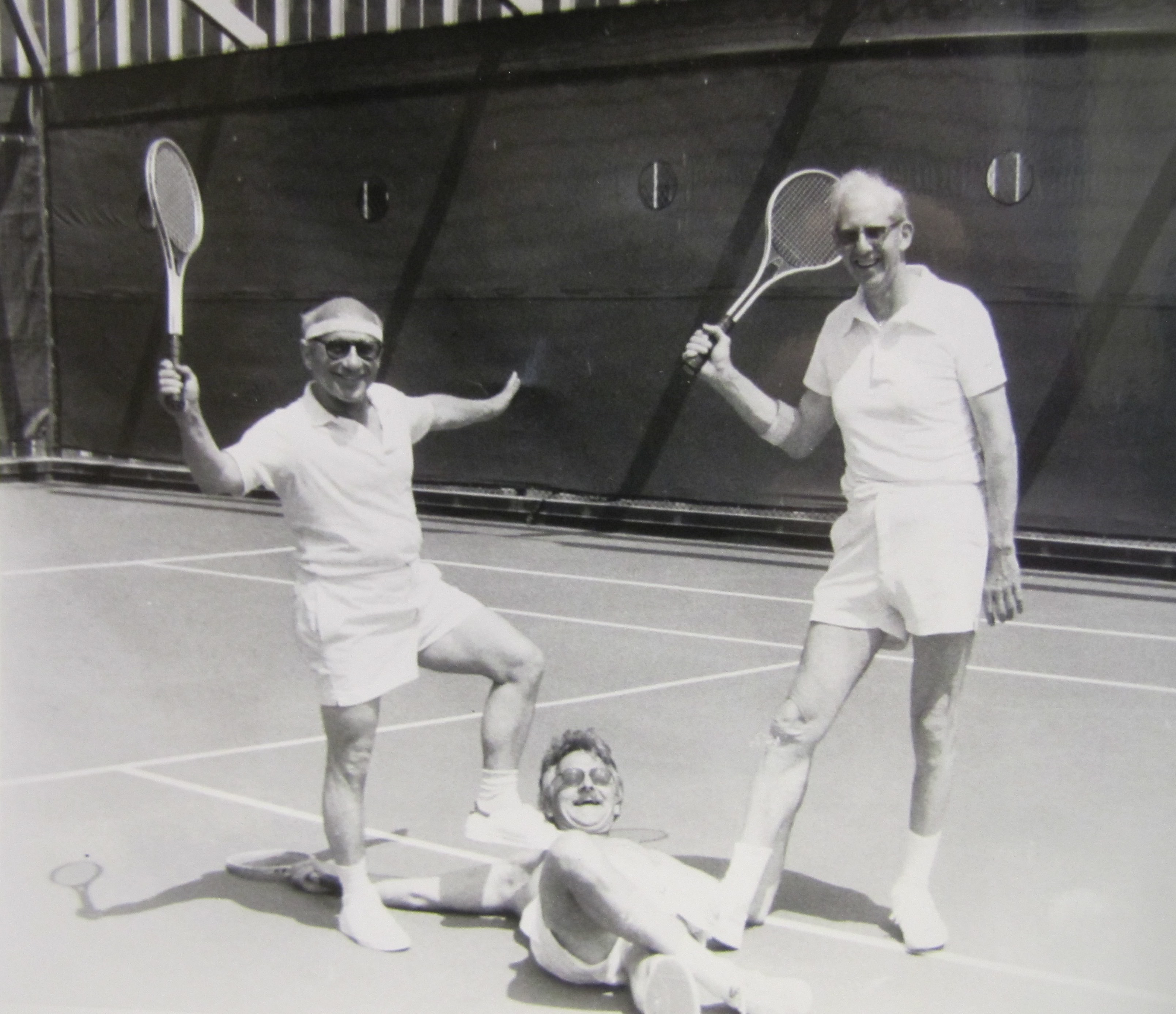
(by Pablo Ibañez Colomo)
The post Alfonso published last Monday made me think. It was controversial, but also a goldmine of follow-on topics. Call me oversensitive, but I could not help thinking he was targeting law teachers when he regretted the fact that fresh young graduates tend to be very critical of the case law without having always reached conclusions on their own. After a bit of back and forth, I thought I would write a post on what I think makes a great teacher, thereby mirroring Alfonso’s own recent post on what makes a great lawyer.
I will start by quoting some giants in our field, pretty much like Alfonso did. The intellectual ant that I am likes to learn from them and always bears their lessons in mind. To make it balanced (and thus to please Alfonso’s desire for neutrality), I will choose a lawyer and an economist, the first from Harvard and the second from Chicago.
In the Harvard Law Review issue dedicated to the memory of Phillip Areeda, Justice Stephen Breyer explained that the greatest antitrust lawyer of all time ‘did far more than simply teach antitrust law. [His casebook] showed the specialists how to blend economics with law (“economics informs the law”, Phil said), as it teaches both subjects together in plain and simple English. It showed the profession how law and lawyers can benefit from a knowledge of other disciplines. It tied this recondite specialty back to general legal principle. And it placed dramatically before the students’ eyes a clear demonstration of the necessary connections between intelligent analysis, law, and the more striking beneficial effects for society that law, when practiced properly, can help us all achieve’.
The Journal of Political Economy, one of the top economic reviews, and edited at Chicago, dedicated an issue to the memory of George Stigler. Thomas Sowell offered a student’s view on the Nobel Prize winner (and another one of my all-time favourites). When discussing the way in which Stigler approached the teaching of the economic side of our discipline, Sowell explained that ‘[f]ew, if any, areas of economics have as much confusion, circular reasoning, definitional traps, and fervent nonsense as industrial organization. It was the perfect place for Stigler to conduct a Demolition Derby. Nor was he hesitant about the task. Theories like “monopolistic competition” and “countervailing power”, which were treated reverently at Harvard (where they originated), were eviscerated by Stigler’. According to Sowell, ‘[w]hat Stigler really taught, whether the course was industrial organization or the history of economic thought, was intellectual integrity, analytical rigor, respect for evidence – and skepticism toward the fashions and enthusiasms that come and go’.
What do we get from these quotes? I would say the following:
- A great teacher knows the stuff inside out: It is true that not all great researchers are good teachers. But without being at the top of the discipline, it is impossible to be a great teacher.
- A great teacher necessarily conveys a view of the world: Somebody who has thought long and hard about a particular discipline necessarily comes up with strong views about it. It is inevitable that this (non-neutral) view of the discipline is conveyed when teaching students. There is nothing wrong about it. I would even say that this is what ideal university teaching is all about. Students are interested not only in the substance, but in how somebody, detached from commercial interests and focused only on seeking the truth, sees the discipline.
- A great teacher takes students very seriously: Students need to be stretched and learn to think for themselves, and this is in no way in contradiction with the above. I fully agree with Alfonso when he suggests that a teacher who indoctrinates students is an absolute failure. The challenge for a teacher is to make students discover and understand for themselves the logic underlying the discipline, the crucial transversal issues that cut across topics.
- A great teacher does not take her/himself too seriously: The teaching of a particular discipline should be put in perspective. For many, if not the majority of students, a particular subject may never be useful in practice. Therefore, teaching should be oriented towards contributing to a well-rounded education. And those of us teaching competition law are immensely fortunate: when taught properly, it has an awful lot to offer to students, even if they go on to do something completely different.
- A great teacher shows respect for ideas, not for institutions or authority: I would say this should be (and has been) the central contribution of universities to society. Truth is to be sought without prejudices and without respect for rank or authority. Nonsense is nonsense irrespective of whether it comes from a first year undergraduate or from the highest of courts. Law students in particular should learn that there is nothing mystical or sacred about our legal institutions, even if they are populated by very intelligent and experienced women and men (‘only a brilliant mind can make a brilliant mistake’, Stigler liked to say of past economists).
And now I leave you. I have to teach in an hour.
[Pictured above are two evil Chicagoans (Friedman and Stigler) after a discussion with a colleague].
Ads

On 20 March the Global Competition Law Center will be holding its 68th lunch talk. The topic is the 2014 Communication on the notion of State Aid, and the speakers Vittorio di Bucci (Director at the EC’s Legal Service), Nicola Pesaresi (Head of Unit, DG Comp) and my colleague/boss José Luis Buendía (Partner at Garrigues). You can register (this is an interesting, brief and cheap one: 30 euros) via this website.
The Institute for European Studies at the VUB in Brussels will be starting a series of lectures on the role of national competition law and national competition authorities. The inauguaral lecture will be delivered by Alexander Italianer (Director General at DG Comp) on 21 March at 12. More info is available here.
Also on 21 March there will be a seminar on the application of competition law by judges and arbitrators (in Madrid and in Spanish, though), organized within the framework of the course that Luis Ortiz and myself co-direct there.
On 3 April ERA will be hosting an afternoon workshop on Two sided markets in merger and abuse of dominance cases here in Brussels featuring Thomas Graf (Cleary Gottlieb), Lars Wiethaus (E.CA Economics) and myself. This is not to be missed. The program is available here: Two Sided Markets in Merger and Abuse of Dominance Cases (ERA)
The 21st St.Gallen International Competition Law Forum ICF (“Current issues and developments in competition law“) will be held on May 15th and 16th 2014. Even though for some odd reason we haven’t been invited to speak there (which obviously lowers the quality of any event 😉 ) we acknowledge that the speaker line-up is otherwise quite impressive. Further information including a detailed programme are available on the conference website: http://www.sg-icf.ch/.
Last but not least, the book Comparative Private Enforcement and Collective Redress Across the EU, edited by Barry Rodger, is just out. Looks quite promising.
P.S. And speaking of ads, I’ve just checked Chillin’Competition’s ad-related earnings and we get approximately $4 per month (which is slightly below my hourly rate) for approximately 25,000 monthly visits. We have high aspirations, though, and, I tell you, one day we’ll be getting enough to pay for at least two monthly beers.


 Chillin'Competition