Author Archive
Awareness and Public Outreach Programmes

Public outreach programmes were a key topic on the agenda of the ICN annual conference in the Hague.
Those programmes seek to raise awareness of the general public (including firms) to the scope, content, institutions and penalties of competition rules. They are particularly important in countries with young antitrust regimes. They induce firms to comply spontaneously with the new rules.
But they are also relevant to any agency seeking to improve its detection efficiency. To take one example only, too many individuals still believe that price-fixing is not unlawful. Through education, awareness programmes may prompt stakeholders to report infringements (by lodging complaints and leniency applications, for instance).
Now CAs accross the world have been very inventive in crafting such programmes, often with the active support of the ICN. The leniency movie is now a standard in many competition law jurisdictions. DG COMP has recently posted on its website a funny flash module which illustrates the scope of competition policy. The Norwegian and Brazilian CAs have produced t-shirts with competition-friendly slogans (would love to get one of them. My size S or M).
Without the shadow of a doubt, however, the prize of the best public outreach device must be awarded to the Competition Commission of Singapore (CCS). On its website, the CCS makes available (for free) a MANGA on abuse of dominance (in English). Bravo!
I am just back from the Hague with 6 paperback copies. They will be awarded to my best students this semester.
PS: A great experience. I am truly indebted to the DG COMP for its kind invitation.
Competition Tourism

Last week, I finished my lectures in Liege. Now comes the time of tourism for us academics:
- To start, a dream comes true: For the 1st time, I will be attending the ICN conference in the Hague as a NGA representative (a big thank you to the EU Commission for the invitation). Subject to Wifi availability, and to the interest of speeches, I will try to report/tweet live from the ICN tomorrow. In the Netherlands and elsewhere in Europe, an unusual number of competition law events are organized in the days that follow the ICN conference. Events organizers are taking
a free rideprofit of the presence in Europe of high-profile speakers from the overseas.
- On Saturday, I will be in Sorrento (Italy) where the Italian Antitrust Association organizes a conference entitled “Major Developments in EU and Italian Competition Law“. See programme hereafter. Sorrento – bozza programma – 22-2-11 – def (2)
- Finally, on 20th, 27th May and 10th June, the Brussels School of Competition (BSC) will be organizing a tour in the national competition laws of 4 Member States (Be, FR, DE, UK). See registration form hereafter. Nat_comp_registration_form
Forthcoming GCLC Lunch Talk – Roundtable on Leniency Programmes

The next lunch talk of the GCLC will be devoted to “Leniency Applications and the European Competition Network: Roundtable discussion on the Interplay between National and EU Procedures“.
It will take place on 27 May 2011 at The Hotel in Brussels.
Our speakers for this promising event are Saari Suurnäkki (DG Competition); Marcos Araujo (Garrigues); Mario Todino (Gianni, Origoni, Grippo & Partner); and Antoine Winckler (Cleary Gottlieb).
The registration form is available here.
DG COMP Stakeholder’s Study – A Counter-Survey

In July 2010, DG COMP published the results of a wide-scale stakeholder study (Alfonso commented on this a while ago).
According to the stakeholders study, DG COMP has arguably enforced the competition rules in a satisfactory fashion, both from a substantive and procedural standpoint.
As part of their exam, my students from EDHEC Business School have been requested to assess whether the findings of DG COMP’s stakeholder study are sound. To this end, I have required them to run a counter-stakeholders’ survey, which takes the form of a reduced questionnaire.
I would like to offer our readers the opportunity to help my studs, by filling-in the below questionnaire:
https://spreadsheets.google.com/spreadsheet/viewform?formkey=dHZVVWI0SzNhNUFQUlpsa2NnZWVra1E6MQ (or simply by clicking here)
Please note that it should take you a maximum of 15 minutes to complete this survey. Obviously, all the responses to the survey will remain confidential and will be used for the sole academic purpose of this study. If you have any questions or concerns about completing the questionnaire, you may contact my assistant at dgcompsurvey@edhec.com or eprovost@doct.ulg.ac.be.
Name of assistants/students involved in the research project: Elise Provost; Naruttama Asvamanee;Edouard Augris; Melissa Butarbutar; Guilain Lobut; Anne-Juliette Lepoutre; Sabine Racine; Mariama Sene.
Competition Parties

We recently received invitations to a new breed of parties. On 4 May, Compass Lexecon was having its “Exclusive Spring Party” (with “drinks and canapés“). Two days later, Crowell & Moring held its “CroMo Party” at Tour and Taxis (with DJ BENNY…).
Unfortunately, I could not attend any of those parties.
Yet, a question arose: what drives business law firms and economic consultancies to organize such summer parties?
In the case of Compass Lexecon, the answer is straightforward. The firm sought to celebrate the launch of Compass Lexecon Europe, following the acquisition of LECG’s EU Competition Policy Group. This party was a classic reception, similar in nature to many other receptions.
The case of Crowell and Moring is more interesting. The flyer and dressing code (“colorful casual”) suggest that CroMo’s party was primarily targeted at young professionals (from Cromo and elsewhere) rather than at partners and clients. No information was provided on drinks, but I suspect they came for free. There was no special thing to celebrate.
So why organize a loss-making party of this kind? Initially, the following reasons came to mind: acquiring information on competing law firms, possibly with the help of liquid substances; increasing busy associates’ procreation rate; assuaging partners’ midlife crisis.
On second thoughts, however, I dismissed most of them in favour of a more conventional explanation which has to do with “branding”. It plays at several levels.
First, with the commoditization of the profession, legal services are increasingly fungible. Clients shop around and competition amongst law firms becomes brutal. To prevail over rivals, law firms seek to be perceived as special. For a number of years now, law firms have organized academic conferences to look bright. Now, they organize parties to look cool, hype and creative.
Second, as stressed by Alfonso a while ago, there is an increasingly pervasive perception amongst students that working in a business law firm is “not cool”. Being an associate in a business law firm involves long working hours, little freedom and virtually no space for leisure and family life. This has dramatic consequences on law firms’ hiring opportunities. And unlike in the 1980s and 1990s, financial compensation no longer does the trick. No wonder why some law firms seek to change their image amongst young lawyers, and arguably organize parties to that end.
Please note that we are interested by pictures, feedback and stories in connection with those parties.
Day off for EU Civil Servants
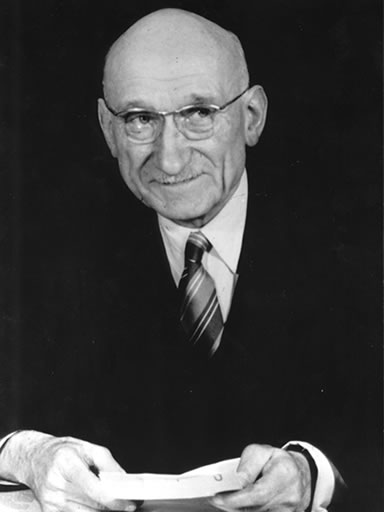
Felt like filing a merger today? Or having a call with a Commission official to discuss a case of common interest?
Unlikely to happen. Today is Europe day or in EU jargon, Schuman day. Most competition civil servants are off duty, chillin’.
What the EU institutions celebrate today is the anniversary of the Schuman declaration of 9 May 1950. In this declaration, R. Schuman, the French Minister of Foreign Affairs (see above picture), invited the governments of France, Germany and other European countries to team up and build a federal state.
The celebration of this event triggers the following remark on my end: as it stands today, the EU is a direct emanation of the Schuman declaration. Yet, 61 years after, and with the exception of competition policy perhaps, we are still far from a federal state with some sort of political existence (nota: I am a convinced federalist). This is true both internally – ever heard anyone saying he was a EU citizen? – and externally – think of the EU’s invisibility in relation to Lybia.
In addition, I am pessimistic on the future, given the increased fragmentation dynamics at the domestic level (think of the nefarious state of Belgian politics) and the somewhat mechanical, ever-enlarging nature of the EU (think of Turkey’s accession demands, backed to a large extent by those who only conceive the EU as a shopping mall).
Subversive thoughts (1) – Fines, Leniency and the Search for an Optimal Detection Policy

A somewhat heretical idea sprung to mind yesterday. The mainstream will not like it (fortunately disputes with the mainstream are not any longer settled by recourse to bonfires).
(Note to our readers: the mainstream comprises adepts of Chicago School thinking and Public Choice theory. It combats, with caricatural arguments, all attempts to intensify competition enforcement. As if we were subject to Pavlovian conditioning, all too often we lawyers side with the mainstream, thereby failing to remember that competition enforcement is a genuinely good thing).
But let´s get back to this idea: to improve cartelists incentives to report infringements to agencies, why not allocate the entire amount of the fines (or a significant proportion thereof) to the whistle blower?
As long as the ring leader(s) is (are) excluded from a such reward, I see no obvious perverse effects to the proposal.
Surely, it sounds quite immoral to reward financially what is plain and simple betrayal. But on the other hand, it is fair and efficient that society rewards those firms that exhibit the strongest desire to comply with the law.
Also, one cannot rule out that clever firms involved in multiple cartels will coordinate leniency applications so that each participant benefits at least once from the reward (some sort of market sharing on leniency applications). Yet, this hypothesis rests on restrictive factual assumptions. More importantly, given that the fine will likely change from one cartel to the other, cartelists will not withdraw equal benefits from leniency applications. In turn, this will undermine their incentives to join/observe the coordination.
Finally, some could be warry for the EU budget to which competition fines contribute. Again, the objection is not decisive. This is because competition fines do not increase the EU budget but finance it. Technically, they are deducted from MS contributions, who pay less when competition fines are high. The sole and whole issue there is thus distributional: shall we transfer the product of fines from MS to whistle blowers? I am not sure of the answer, but I am incline to believe that competition fines are just a drop in the sea of MS contributions.
Those thoughts came yesterday whilst I was preparing a lecture on public and private enforcement for the LL.M students of the University of Gent (see ppt. below). I am very grateful to Prof. Govaere for her kind invitation.
5 May 2011 – Public and Private Enforcement of Competition Law
Next GCLC Lunch Talk – EU and National Leniency Applications – 27 May

Our next lunch talk will be devoted to the interplay between national and EU leniency procedures.
It will take place on 27 May at The Hotel in Brussels. For this event, we’ll follow a somewhat specific format, with 4 speakers and a roundtable discussion.
Registration form can be downloaded below.
The ECJ rules the ECJ Rules

(Note by Nicolas: We have received a funny and interesting competition-related post from the Blogbuster (who is also a good friend of ours). In this guest post, the blogbuster makes a number of original points on IP and competition, a possible exclusionary abuse committed by the Court of Justice of the EU, and judicial review under Article 102 TFEU).
Remember 28 November 2008? On that day, the European Commission published the preliminary report on its inquiry into the pharmaceutical sector. The preliminary report found pretty much everything to be wrong in the sector. There was still some time before the Commission would release the final report. Yet, all seemed to indicate that the Commission would adopt far-reaching measures to bring back life to the life sciences sector. But things eventually turned out differently.[1] In the end the final report was pretty tame, if not lame, compared to the preliminary report. One of its main recommendations was, however, that the EU should create a EU-wide patent –at the moment, there are only national patents, even though the EPO provides for common procedures and recognition across Europe.
Draft rules for a EU patent have floated around Brussels for some time and on 8 March Luxembourg had a word to say, too. Upon request by the Council, the European Court of Justice examined whether the proposed establishment of a European patent court was compatible with EU law. The background was that the new patent court would (technically speaking) be an international, not EU, tribunal because – oh, horrors! – non-EU members such as Croatia, Norway or Switzerland would also be subject to the patent court’s jurisdiction.
The question was a tough one for the ECJ, which had in the past objected to making the EU and member states subject to an international tribunal –that’s clear from the Laying-up Fund and EFTA decisions. What made the new case difficult was that, unlike the Laying-up Fund and EFTA cases, the EU acquis was not directly affected. Precisely, the main problem with the patent law saga is that this is not an EU, but member state, competence. In addition, the draft patent court treaty lays out a few rules to address some of the concerns the ECJ had in those previous cases –for example, the requirement upon the patent court to apply EU law, and the possibility for the patent court to refer a case to the ECJ, being bound by the ECJ’s ruling in that scenario.
Still, the ECJ killed the patent court initiative. It did so on the basis of a line of reasoning reminiscent of the US Supreme Court’s decision in the case of The U.S. Supreme Court v. Everyone Else.[2] The ECJ found the establishment of the patent court to be unlawful as a matter of EU law because, well, it ruled itself:
“80. While it is true that the Court [ECJ] has no jurisdiction to rule on direct actions between individuals in the field of patents, since that jurisdiction is held by the courts of the Member States, nonetheless the Member States cannot confer the jurisdiction to resolve such disputes on a court created by an international agreement which would deprive those courts of their task, as ‘ordinary’ courts within the European Union legal order, to implement European Union law and, thereby, of the power provided for in Article 267 TFEU, or, as the case may be, the obligation, to refer questions for a preliminary ruling in the field concerned.”
In a separate but related development, Nicholas Forwood[3], judge at the ECJ’s subordinate court –the General Court– spoke out in favor of a specialist competition court at the EU level. At first sight, this proposal may be surprising, as one of the main reasons for creating the GC, despite its name, was to have a court more specialized in competition cases than the ECJ.
The proposal is also surprising because the GC’s track record in some types of competition cases is remarkably good. In cartel cases, the GC subjects Commission decisions to scrupulous scrutiny; around half of all cartel decisions that are appealed are at least partially annulled. In the merger arena, too, the GC puts the Commission under intense oversight. You will surely remember the Sony/BMG and Schneider/Legrand sagas where the Commission’s merger decisions were annulled by the GC. So the only area ‘under construction’ is abuse of dominance (for more, see the recent paper of one my host bloggers). An ‘under construction’ might even be an understatement. Just take a read at the latest ‘margin-squeeze’ judgment in TeliaSonera (an ECJ ruling though):
“54 TeliaSonera maintains, in that regard, that, in order specifically to protect the economic initiative of dominant undertakings, they should remain free to fix their terms of trade, unless those terms are so disadvantageous for those entering into contracts with them that those terms may be regarded, in the light of the relevant criteria set out in Case C‑7/97Bronner [1998] ECR I‑7791, as entailing a refusal to supply.
55 Such an interpretation is based on a misunderstanding of that judgment. In particular, it cannot be inferred from paragraphs 48 and 49 of that judgment that the conditions to be met in order to establish that a refusal to supply is abusive must necessarily also apply when assessing the abusive nature of conduct which consists in supplying services or selling goods on conditions which are disadvantageous or on which there might be no purchaser.
56 Such conduct may, in itself, constitute an independent form of abuse distinct from that of refusal to supply.”
Compare this to the US Supreme Court’s finding in linkLine, in very similar circumstances (ie, local loop access for telecom services):
“[A] firm with no duty to deal in the wholesale market has no obligation to deal under terms and conditions favorable to its competitors. If AT&T had simply stopped providing DSL transport service to the plaintiffs, it would not have run afoul of the Sherman Act. Under these circumstances, AT&T was not required to offer this service at the wholesale prices the plaintiffs would have preferred.”
Which of these two statements makes more sense?
The TeliaSonera decision is not an isolated case, of course. In British Airways, the ECJ (in)famously found exclusionary conduct to exist, even though the rivals supposedly being foreclosed gained market share during the relevant period. And, in Deutsche Telekom, the GC’s and ECJ’s rulings effectively ‘ordered’ DT to raise retail prices –although there was no claim that they were below cost– and the German telecoms regulator had actually signed off on DT’s pricing structure.
The ECJ’s failure to grasp the basics of abuse of dominance cases is all the more striking as, by eliminating its rival in the market for court adjudication –the patent court–, it showed it knows very well what exclusionary conduct is all about!
In this light, therefore, let’s take up Judge Forwood’s proposal but establish a specialized “abuse of dominance court”, not a competition court. Still– it’s a pity that the patent court deal was killed. Otherwise, transferring jurisdiction over abuse of dominance cases to an international tribunal might also have been a –perhaps safer– option!
The Blogbuster
Microsoft v. Google – Karate Competition Law?

The blog post that announced MSFT’s complaint identifies a half dozen of allegedly problematic practices, but keeps off from characterizing any of those practices as an abuse of dominance, under the qualifications of EU competition law. Rather MSFT seems to portray Google’s strategy as a bunch, collection, network of tactics which altogether have an unlawful, anticompetitive foreclosure effect. Read Brad Smith’s own words: “Google has engaged in a broadening pattern of walling off access to content and data that competitors need to provide search results to consumers and to attract advertisers”.
Based on my own, little experience of competition cases, this is not unprecedented in Article 102 TFEU complaints.
That said, there’s a beautiful legal question behind this. Assume that none of the allegations meets, in and of itself, the conditions for an unlawful abuse. Can the Commission still find an infringement of Article 102 TFEU out of the “cumulative effect” of a string of practices, which as a whole foreclose rival market players? In the language of Kyokushin Kaikan, should Article 102 TFEU apply only to headkick knockouts, or also – as is the case in many martial arts – cover knockouts achieved through a series of side and low kicks.
Take for instance allegations 1 (impediments to proper Youtube indexing on rival search engines), 2 (hurdles to the display of Youtube content on rival smartphones) and 3 (unavailability of orphan books for rival search engines). None of those allegations seems to involve an indispensable input, as explained previously on this blog. Hence, none of them should give rise to a stand-alone finding of unlawful abuse.
However, can the refusal to provide access to a bundle of important – yet not indispensable – inputs be tantamount to an abuse of a dominant position?
From an economic perspective, the answer ought to be affirmative if it is proven that this “multi-input” refusal to deal has foreclosure effects of the same magnitude as a “single input” refusal to deal (involving indispensable content). From a legal standpoint, one may nevertheless criticize a dangerous lowering of the threshold for intervention in Article 102 TFEU cases.
At any rate, some inspiration on this may be drawn from karate the case-law on Article 101 TFEU, which accomodates a reasoning of this kind through concepts such as “cumulative effects” or the “complex infringement” doctrine.


 Chillin'Competition
