Author Archive
AT Error of the Day

Found in the final report on the pharmaceutical sector inquiry:
“§537. Patents are proprietary, exclusive rights and enforcing one’s patents against parties infringing them is a legitimate procedural dimension of the material right granted to the patent holder. It furthermore is part of the fundamental right to a fair hearing before court as manifested in Article 7 of the European Convention of Human Rights (ECMR)“.
PS: beware of acronyms. With this §, some may believe that the substantive scope of the ECMR has hugely expanded :).
Bork on Private Enforcement
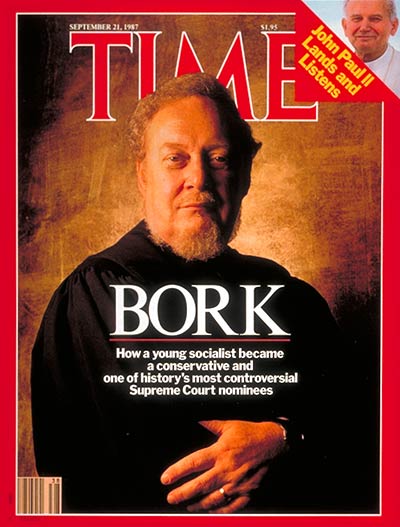
A refreshing – and couterintuitive – quote from Judge Bork as the EU is heading towards increased private enforcement:
“Much of the improvement in antitrust policy over the past decade and a half has come not from the courts but from the enforcement agencies. If the courts abandon economic rigor, only those agencies can preserve the rationality of the law, and then only partially. Private plaintiffs and their lawyers have rather less interest in rational rules than they do in triple damages and contingency fees. Expert economic witnesses can be found to support any theory. Without firm judicial control, private actions make antitrust “policy” ad hoc, as trials become ad hominem. Much more could be said about the devastating unfairness and anticompetitive consequences of much private antitrust litigation, but that is outside the scope of this book. In antitrust, it is possible to think the European Community as has wisely not followed the american example but has instead centralized all enforcement in a single government agency” (The Antitrust Paradox, Epilogue p.439).
In brief, Bork accuses the US courts system of the state of theoretical confusion in which antitrust law was until the 1980s. And he says that agencies often promote better substantive standards (though they select those most advantageous to them) than courts who hear cases brought randomly by private parties with evolving business interests.
We surely can agree with Bork – as we have endlessly advocated on this blog – that with prospects of increased private enforcement in the EU it becomes compelling to (i) induce judges to delve more into economic analysis; (ii) require a very stringent system of judicial review.
(Competition) Food for Thought

In the past months, our savory series of posts on food and competition law had been kept in the freezer.
Thanks to the French Competition Authority (“FCA”), it is our pleasure today to defrost this category of posts.
In Groupe coopératif Agrial/Bakkavör (a merger case), the FCA concluded to the existence of a product market for salads, distinct from the product market for other fresh vegetables.
But this is not all. The FCA further delineated the market on the basis of the “technology“(sic!) applied in this sector. It accordingly distinguished between salads of 1st category (i.e. fresh, raw, unwashed, unpeeled) and salads of 4th category (i.e. fresh, raw, washed, peeled).
The bottom-line: there’s technology everywhere.
PS: thanks to A. Ronzano for the pointer.
Tidbits from Luxembourg

With a group of LL.M. students from Liège, we attended last Wednesday the hearing at the General Court in Chimei InnoLux Corp v Commission (T-91/11).
This case is better known as the LCD panels cartel case. In a nutshell, Chimei InnoLux challenges a Commission infringement decision inflicting a €300,000,000 fine. Chimei seeks primarily to obtain a reduction of this fine. Its key argument is that the Commission could not include in the value of the sales used to calculate the fines, the so-called “Direct EEA sales through transformed products“, namely sales of cartelised LCD panels incorporated into finished products (screens) by downstream Chimei subsidiaries located outside the EEA. According to Chimei, those internal sales were outside the juridictional reach of EU competition law (the parties rely on Woodpulp).
On this occasion, we also had several most informative meetings with several people working at the GC and the CJ. Here’s a grab bag of impressions following this trip at the Court:
- It’s all about the facts => once again, I was amazed by the granularity of the arguments raised in proceedings before the General Court;
- G. Berardis, the juge rapporteur was just impressive. He was very picky, seemed to know the file inside out, and asked a gazillion questions to the parties. On several occasions, the parties had a tough time responding to his inquiries. External observers, like myself, often pass judgment on the intensity of judicial scrutiny just by reading judgments. I guess my views have slightly changed since last Wednesday. Judicial review is also about what happens in the Court’s room, and about how judges discharge their duties. Whilst I have, a few weeks ago, voiced concerns about the appointment of a former Commission official as judge at the GC, I also recognize that such appointments probably come with increased expertise, and in turn contribute to strenghtening the intensity of judicial review. The trade-off between impartial and efficient judicial review is clearly a complex one;
- Read Wouter Wils! We’ve praised Wouter’s papers on many occasions. But we did not know that his prose was that influential. In response to a question on the compatibility of administrative proceedings with Article 6 ECHR, someone working at the General Court said something close too: “we know there is a big debate over this issue in scholarship. I read Wouter Wils’ papers. Wils considers that there are no such problems. So my conclusion is that there are no problems“;
- Internal drafting guidelines: judges and référendaires are apparently requested not to quote any piece of scholarship, or at least to limit such quotes;
- And to conclude: rumour has it that the draft Intel judgment is approx. 700 pages long (double spaced)…
Overall, this was a great day in Court.
Private Enforcement in Ireland
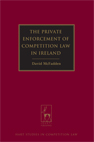
Hart has offered us a book in exchange of some advertisement on this blog.
So here we go: their latest competition law volume is a book by David McFadden entitled “The Private Enforcement of Competition Law in Ireland”.
Abstract: Competition is recognised as a key driver of growth and innovation. Competition ensures that businesses continually improve their goods and services whilst striving to reduce their costs. Anti-competitive conduct by businesses, such as price-fixing, causes harm to the economy, to other businesses and to consumers. It is small businesses and the consumer who ultimately pay the price for anti-competitive conduct. A coherent competition policy that is both effectively implemented and effectively enforced is essential in driving growth and innovation in a market economy. The importance of competition was recently emphasised when the EU/ECB/IMF ‘Troika’ included a number of competition specific conditions to the terms of Ireland’s bailout. Both Irish and Community law recognise the right for parties injured by anti-competitive conduct to sue for damages. This right to damages, in theory allows those that have suffered loss to recover that loss whilst helping to deter others from taking the illegal route to commercial success. However private actions for damages in Ireland are rare.
This book asks what the purpose of private competition litigation is and questions why there has been a dearth of this litigation in Ireland. The author makes a number of suggestions for reform of the law to enable and encourage private competition litigation. The author takes as his starting point the European Commission’s initiative on damages actions for breach of the EC antitrust rules and compares the position in Ireland to that currently found in the UK and US.
David McFadden is Legal Adviser and solicitor to the Irish Competition Authority and has published extensively on competition law and other regulatory issues in Ireland.
April 2013 302pp Hbk 9781849464130 RSP: £50 / €65 / US$100 / CDN $80
20% DISCOUNT PRICE: £40 / €65 / US$80 / CDN$80
Order Online in US
USA: http://www.hartpublishingusa.com/books/details.asp?ISBN=9781849464130
If you would like to place an order you can do so through the Hart Publishing website (link above). To receive the discount please type the reference ‘CCB’ in the special instructions field. Please note that the discount will not show up on your order confirmation but will be applied when your order is processed.
Order Online in the UK, EU and Rest of World
UK, EU and ROW: http://www.hartpub.co.uk/BookDetails.aspx?ISBN=9781849464130
If you would like to place an order you can do so through the Hart Publishing website (link above). To receive the discount please type the reference ‘CCB’ in the voucher code field and click ‘apply’.
Hart Publishing Ltd, 16C Worcester Place, Oxford, OX1 2JW
Telephone Number: 01865 517 530
Fax Number: 01865 510 710
Website: http://www.hartpub.co.uk
AT Paradoxes of the Day

I had weird thoughts today:
When the agency dismantles a monopoly in a market, it expands the consumer wealth open to appropriation by monopolists on other markets.
When the agency dismantles a monopoly in a market, it expands the amount of resources on which government can raise taxes.
Or the proof that all too often, we forget the basic principle that the economy works as a general equilibrium.
Law Firms = Cartels
From Judge Bork himself:
“The typical law partnership provides perhaps the most familiar example [of agreement on prices and markets]. A law firm is composed of lawyers who could compete with one another, but who have instead eliminated rivalry and integrated their activities in the interest of more effective operation. Not only are partners and associates frequently forbidden to take legal business on their own …, but the law firm operates on the basis of both price-fixing and market-division agreements. The partners agree upon the fees to be charged for each member’s and associate’s servicse (which is price fixing) and usually operate on a tacit, if not explicit, understanding about fields of specialization and primary responsibility for particular clients (both of which are instances of market division)” The Antitrust Paradox, 1978, p.265.
Bork used this example to criticize the blanket per se prohibition of price-fixing and market division schemes. Cartels formed amongst lawyers yield redeeming efficiencies (the combination of complementary skills, notably) + there are many law firms and all compete fiercely. Hence, output restriction is not a tenable hypothesis.
This later point ties in well with C‑226/11 Expedia Inc. v. Autorité de la concurrence, a judgment poised to earn a “worst antitrust development Oscar”. Bork’s example casts a bright light on the judgment non-sense: in this case, the Court held at §37 that conduct with marginal market coverage (<10%) ought to be deemed to have appreciable anticompetitive effects as long as it can be categorized as a restriction by object:
“It must therefore be held that an agreement that may affect trade between Member States and that has an anti-competitive object constitutes, by its nature and independently of any concrete effect that it may have, an appreciable restriction on competition“
In other words, a price-fixing scheme that covers 5% of the market is per se illegal under Article 101(1) TFEU. Again, a dispairing judgment…
Death of the Google Case – A Big Win for the Commissioner?

With the anticipated settlement in the Google search case (amongst other things), journalists keep asking whether this represents a major win for the Commissioner. Like I have said before, the best way to address this question consists in assessing the substantive merits of the case. The settlement certainly represents a major win if one believes that the case is meritless (I have argued this elsewhere). The FTC’s decision to do nothing on search supports this theory.
In contrast, this settlement is not a major win if one believes that the case is strong, and that the Commission could have easily pushed for an Article 7 decision (I have also made arguments to this effect, given the loose substantive and judicial review standards promoted by the EU courts in abuse cases).
But there’s one thing which may have dissuaded the Commissioner and his administration from using the conventional Article 7 track (remember, he actually voiced his disinterest for the Article 7 procedure and pleaded that fast moving markets need fast enforcement mechanisms (read Article 9): the protracted duration of such proceedings. The Commissioner’s mandate expires somewhere in the Fall of 2014. Under an Article 7 procedure, he might no longer have been in office to sign the prohibition decision. In short, to put the Google case on his hunt list, Almunia needed a settlement.
But is it really true that it takes so much time to adopt an Article 7 prohibition decision in an abuse case? After all, we are now 3 years and 2 months after the initial complaints in the Google case (they date back to February 2010), and the supposed celerity of Article 9 decisions seems all the more relative.
I made a quick check on the duration of Article 7 proceedings in abuse cases since 2005 (using COMP’s case search tool):
- Intel, 9 years following complaint
- Microsoft, 6 years following complaint
- Astra Zeneca, 7 years following complaints
- Tomra, 6 years since complaints
- GVG/FS, 4 years following complaint
- Wanadoo, 4 years following investigation
- Telefonica, 4 years following complaint
- Telekomunikacja Polska, 3 years following investigation
- Clearstream, 3 years following investigation
Two things stand out of this review: 1. Article 7 decisions can be adopted in 3-4 years; 2. cases with formal complainants are much longer than cases without.
Against this backdrop, the Commission could thus not have conceivably adopted an Article 7 decision before the term of Almunia’s mandate.
So if the Commission is ever to settle with Google, this will clearly be a big win for Commissioner Almunia.
PS: for a funny paper on Google death inactive account manager service, see here.
PS2: for yet another ordinary interview of the author of this post in the press, see here.
It’s all about the money
–
Competition conference organisers are yield management experts.
Take a look: if you register now for GCR’s next telco, media and tech conference due on 2 July, you will benefit from a “super early booking rate” of £650.00!
You read well: £650.00 for a one day conference in one of the cheapest cities of Europe, London.
Sure, the programme mentions no such thing at this stage – I guess it is still too “super early” in GCR’s language – but you may even get a free coffee/meal and a bunch of great GCR brochures for this price. Wow!
In contrast, GCR seems less familiar with the output-enhancing effect of third degree price discrimination. Take a look:
| Registration type | Super early booking rates: |
| Standard | £650.00 |
| In-house Counsel/ Government Agency |
£425.00 |
–
–
–
There are no categories for “academics“, let alone “students”. Sheeze.
Maybe it’s just that the event has no academic ambition, as the list of stakeholders speakers suggests.
After all, it’s all bout the business. And Chinese-speaking academics do not write on those issues: #1; #2; #3; #4; #5; #6.
PS: Kaï-Uwe Kuhn is presented as CRA. Did he quit the CET yet?
PS2: If agencies seek a target for excessive pricing investigations, they should sure throw an eye on the lucrative conference business.
Forthcoming events

On 23 May, the GCLC will have a lunch talk on Compliance Programmes in EU and National Competition Law.
Hendrik Bourgeois (GE), Steven Preece (OFT) and Wouter Wils (European Commission) will discuss this controversial issue.
Ahead of this event, some reading suggestions: Wouter has published a thorough paper in support of the view that compliance programmes should NOT be rewarded by agencies. Interestingly, a friend of this blog, Damien Geradin (Covington) has recently published a reply to Wouter, where he argues to the contrary. I have myself written that no rewards should be given for such programmes… but now that I have read their prose, I have to admit that I have done this less eloquently than those two antitrust titans.
Another friend of this blog, David Mamane, has asked us to advertise the programme of a forthcoming interesting seminar organised by the International Association of Young Lawyers (do I qualify for young?). This event will be devoted to competition law issues in regulated industies, and it will be held in the beautiful city of Marseille.


 Chillin'Competition