Author Archive
#ChillinCompetitionFineArt (V)
Remember when I’ll said I would stop posting memes and find the time for something substantive? Well, this is Round 5… Click here for Round 1 , Round 2 , Round 3 and Round 4.
41.”Commission asks company to be open-minded in compliance negotiations”

42. “When you learn that your client was first in line for leniency”

43. “When you learn that your client was not first in line for leniency”

44. “When opposing counsel tries to attack my credibility“

45. “Cartel”

46. “Commission punishing a cartellist, with the whistleblower in the background”
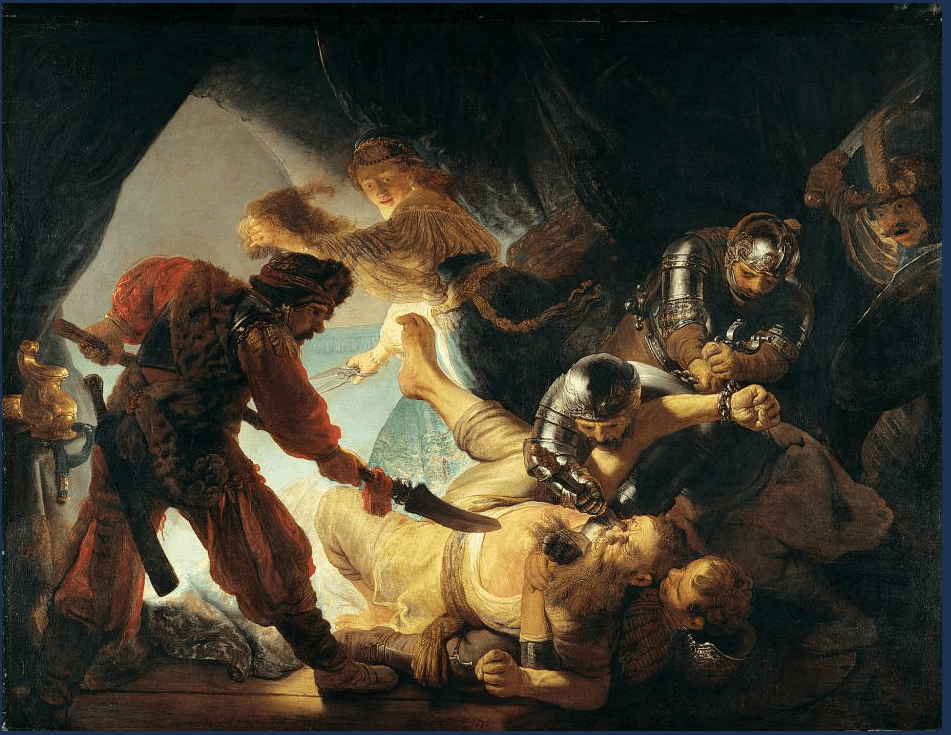
47. “Reviewing Excel Sheets Prior to Merger Filing”

48. “The Chief Alchemist”

49. “When you learn what your partner makes”

50. “Body language while I listen to my opposing counsel in Court“.

51. “When I am deep in concentration and I don’t want people interrupting in my office”

52. “Leniency Statement“.

53. “Co-conspirator takes the stand as your star witness”

54. “When the Judge says come see me in chambers”

5 Reasons to Register To…. (clickbait)

5 reasons why you should register to the upcoming module on EU Competition Procedure at the Brussels School of Competition. Click here for more info and to register.
1. Unless you are a student at the College of Europe (in which case I’m sorry that you also had to suffer through my guest lectures and the case study featuring Pablo and his tax returns), there is no other place where you can discuss in detail every aspect of competition procedure. This is the stuff that very often determines the outcomes of cases and, if you come, you will realize it is fun too.
2. What else would you rather be doing on the afternoons of Friday 18 May, 25 May and 1 June?
3. In 3 intensive 5-hour sessions you will be privy to the inner-workings of competition cases, to case-winning ideas and to a formidable syllabus that you will never have time to read.
4. You will receive a lecture from the handsome man depicted above. And he may perhaps invite you to a round of beers afterwards* (*Disclaimer: Offer Conditional on Evaluation Form).
5. The upcoming module at the Brussels School of Competition has recently been awarded the Chillin’Competition prize as the “Best Module on Procedure at the Brussels School of Competition“. My co-lecturers Nicholas Khan QC (EC Legal Service) and Konstantin Jörgens (Garrigues) are also respectively ranked as the “Best Public Official Teaching in the Procedural Module” and as the “Top-German Lawyer Teaching in the Procedural Module“. I myself have been listed as “Leading Under 36 Above 34 Lecturer on Procedure” and “Lecturer to watch” 😉
P.S. The description above should probably receive a Chillin’Competition Writing Award for “Best Description of a Competition Law Module on Procedure at the BSC“.
#ChillinCompetitionFineArt (IV)
And to finish off this is Round 4. Click here for Round 1 , Round 2 and Round 3. If you have any favorites, please let us know in the comments to this post.
A confession: this was initially conceived as a way to maintain my contribution to the blog during weeks when I didn’t have time to write anything serious. The success in terms of visits and contributions (sorry that we didn’t publish them all) suggests that I should abandon writing altogether and come up with more memes instead…
31. “Before and after commitments”

32.”Look son, we will notify in Zimbabwe”

33.”Hipster Antitrust”

34.”Searching for Market definition in Google Shopping”

35. “Cute, they think rules provide legal certainty” (inspired by Pablo’s post from yesterday)

36. “Fairness as a legal standard”
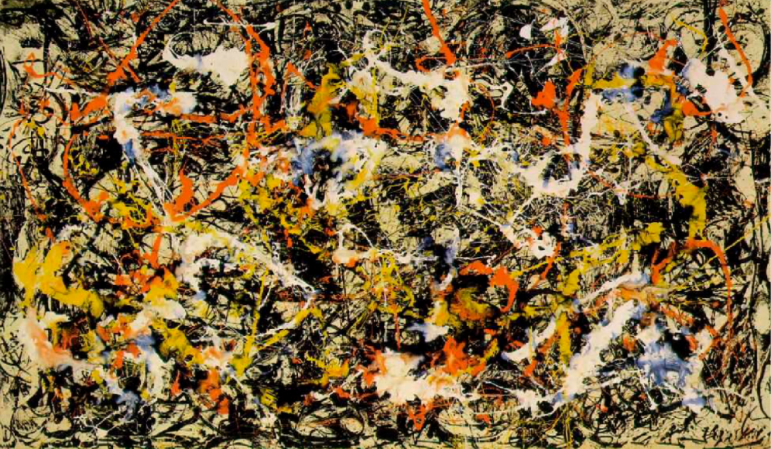
37. “When the Commission reads out the incriminating evidence against your client”

39. “Reading how the Decision summarized his arguments”

40.”And then the economist said: “If you look closely, he wasn’t as efficient”

#ChillinCompetitionFineArt (III)
And this is round 3! Click here for Round 1 and here for Round 2.
***
23.”When your boss makes a terrible joke but you want a promotion” *
(Authored by a soon-to-be-former Garrigues associate after seeing one of my memes)

24.”Definitely the final deadline!”

25.”Commission RFI generates 100,000 responses”
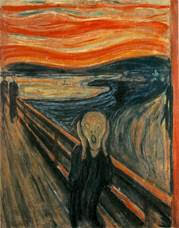
26.”On the way to the oral hearing”

27.”On the way back from the oral hearing”

28.”Entering the office after a Court victory”

29.”A dawn raid?? To the shredders!!!“

30.”Horizontal Overlap”

#ChillinCompetitionFineArt (II)
Here is the second wave of contributions for our Chillin’Competition Fine Art awards (for wave one, see here). We have received many more that we will be publishing in the next few days. We’ve had a good laugh. Thanks very much and keep them coming!
11. “Did someone say dawn raid?”
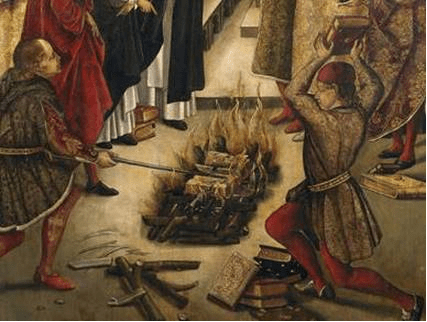
12. “New emails just before holidays”

13. “Propose some commitments you say?”

14. “One party refuses to settle”

15. “Access to documents”

16.”Sent the final version and realized he forgot the last edits”

17.”Client sent suggested edits”
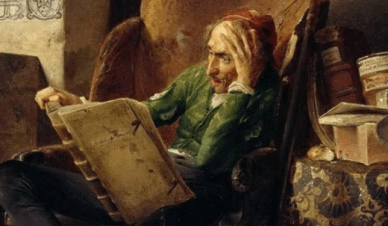
18.”Before the dawn raid, after the SO”

19.”Lawyers in search of efficiencies”

20. “Please! I’m telling you it was fair competition”

21. “Received an RFI on December 23rd”

22. “And that’s a potential anticompetitive effect!”
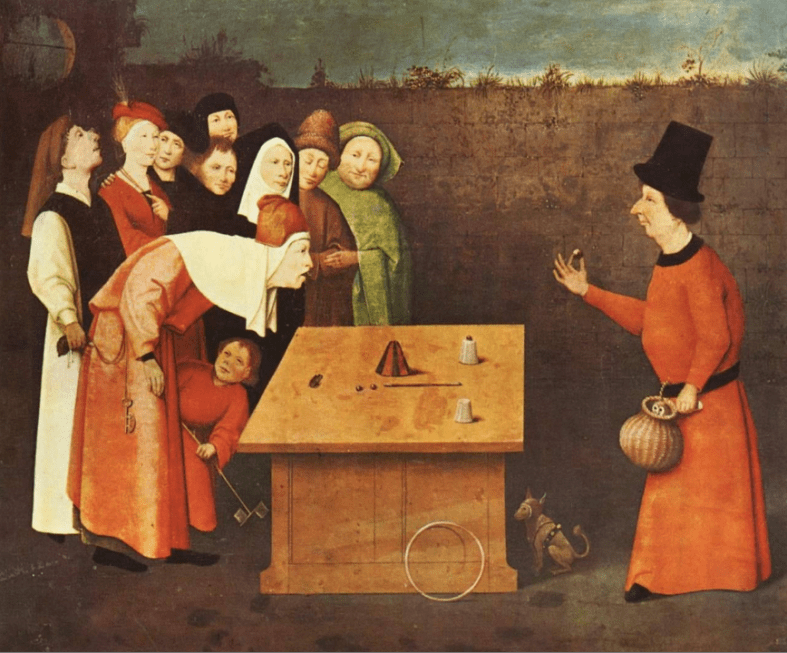
#ChillinCompetitionFineArt
Following the success of our Meme Competition last year (see here), we are launching a Fine Arts Competition. The challenge is to come up with a painting that reflects an aspect of the daily life of people working in our field. The 5 winners will receive a special prize. You can submit your ideas until May 30th, emailing them to chillingcompetition@gmail.com. We will be publishing a weekly selection every Thursday Monday. Enjoy!
The examples that follow are the result of today’s coffee-time brainstorming at the office…
- “A clarification of previous case law”.

2. “New lawyer joining the case team”
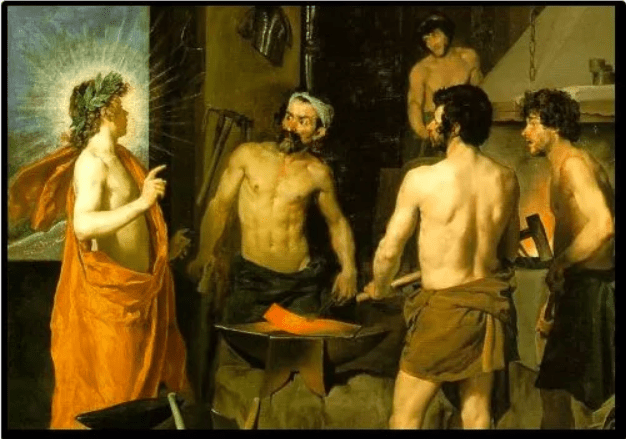
3. “So, the meeting at DG Comp went well…”

4. “When everyone suspects who it was that asked for leniency”
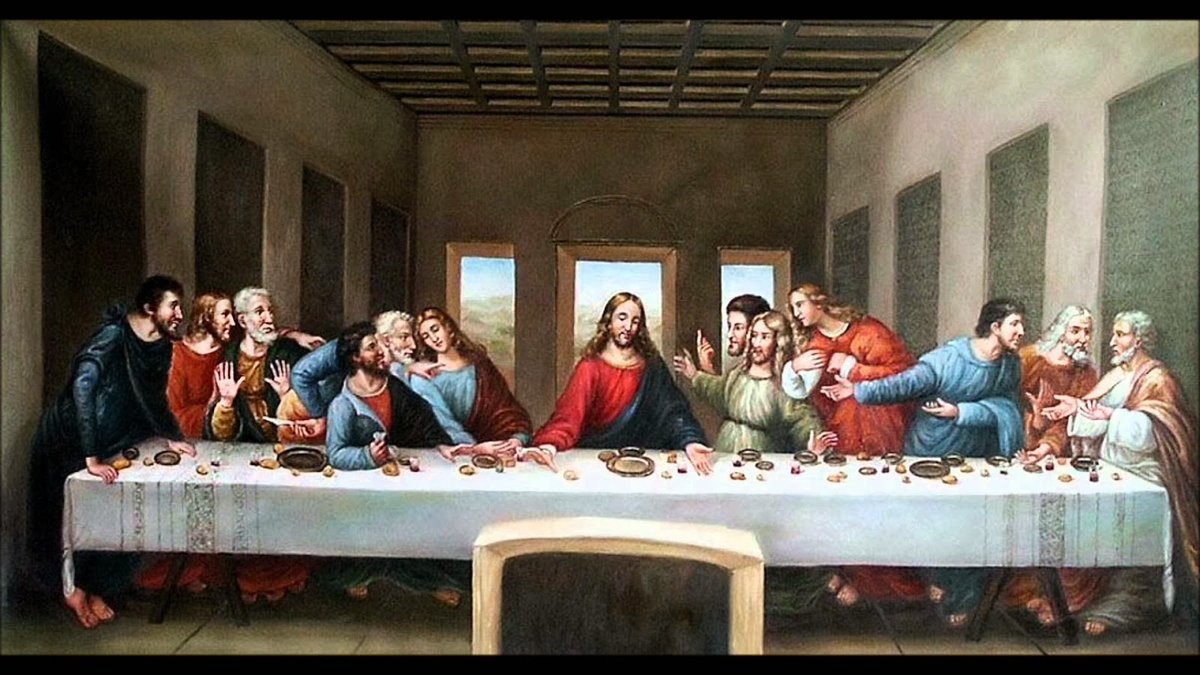
5. “Inability to Pay”

6. “Phase II is over…”
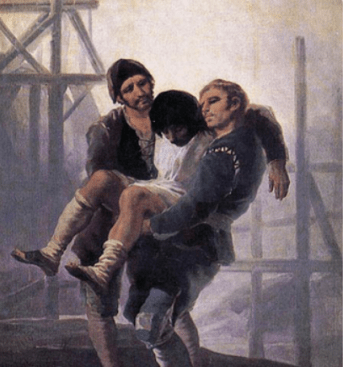
7. “So, who said this was legal?”

8. “Look! There really is a third paragraph!”

9.”How I imagine my opposing counsel”

10. “How my opposing counsel sees himself”

Developments in Art. 102 + Competition Law in Digital Markets

The Academy of European Law (ERA) has kindy invited us to take part in two upcoming events. Given the topics, it was an offer we couldn’t refuse.
On 12 April I will be chairing an afternoon workshop titled “Abuse of Dominance: Recent Developments and Practical Implications”. We will discuss the Intel Judgment, the Google Shopping case as well as Excessive Pricing following Akka/Laa. The speakers will be Brice Allibert (DG Comp), Oliver Bethell (Google), Thomas Graf (Cleary Gottlieb) and Agustin Reyna (BEUC). You can see the programme and info on registration here. It will take place in Brussels but will be streamed live.
And on 4 July, Pablo and I will be jointly teaching a 4hour session on competition in digital markets at ERA’s Summer Course on European Antitrust Law (which I attended as a student 13 years ago!). Our session will focus on vertical e-restraints, algorithmic collussion, multi-sided markets and abuse of dominance in the online world. All relevant information is available here.
–
Is the Guidance Paper on Article 102 binding on the European Commission?

A few posts ago (here) Pablo challenged me to explain my view on the binding force of the Guidance paper on Art. 102. The answer is crystal clear in my mind (and Pablo already anticipated the answer years ago labelling it as a “pre-commitment device”), but I have never seen the debate spelt out in full, nor have I seen what I think is the killer argument.
This is actually an issue that I have discussed with many people over the past few years, but never on this blog as it was pretty much a moot question. Until now every Commission decision challenged before EU Courts had been adopted prior to the release of the Guidance Paper. But the debate will now get serious, as the issue may come up in the Qualcomm (AEC test or no AEC test?) and Google Shopping cases (the first 102 standard infringement decisions adopted after the Guidance paper that do not mention it at all). All others mention it on substantive points unrelated to prioritization. [For the meticulous, ARA was a “settlement” and Romanian Power Exchanges was about an exploitative, not exclusionary abuse].
For various reasons I won’t discuss anything specific about those cases but rather the general theoretical point. I of course only work for non-dominant companies 😉 but since that view may be disputed (on the basis of a flawed dominance assessment…), please consider what I am about to say on its merits and with a critical mind.
First, we can all agree that the Guidance Paper is not the law and that it is not binding on EU Courts, national courts or NCAs in spite of its persuasive value as a “useful point of reference”. EU Courts are the sole and ultimate interpreters of the law. Recital 3 of the Guidance acknowledges this otherwise evident reality.
Second, we surely all agree that EU case law has consistently established the principle that “in adopting [soft law instruments] and announcing by publishing them that they will henceforth apply to the cases to which they relate, the institution in question imposes a limit on the exercise of its discretion and cannot depart from those rules under pain of being found, where appropriate, in breach of the general principles of law, such as equal treatment or the protection of legitimate expectations. It cannot therefore be precluded that, on certain conditions and depending on their content, such rules of conduct, which are of general application, may produce legal effects”. (See, among many others, paras. 209-211 here).
This means that even if the Guidance Paper is not the law and cannot bind courts, it certainly might bind the institution which adopted it and committed to apply it to future cases.
The Guidance Paper seems to meet all conditions. It was formally adopted, publicly announced and presented, published in the Official Journal of the European Union and it is currently listed in DG Comp’s website under “Legislation in force” (here). The Guidance itself stated (para. 2) that its purpose is to “provide greater clarity and predictability” and “to help undertakings better assess whether certain behavior is likely to result in intervention by the Commission”. The Commission also made sure to clarify that it would “fully apply the approach set out [in the Guidance Paper] to future cases”.
I actually had a hearing in Luxembourg some weeks ago where we discussed the legitimate expectations generated by a statement from a Commissioner in response to a parliamentary question. There is, in fact, an established line of case law making clear that legitimate expectations may arise not only from administrative or legislative acts, but also from settled practice and even from oral or written representations (State aid lawyers know this all too well). If a random oral representation can have such effects, does the same reasoning really not apply to a document like the Guidance Paper?
Third, we surely all agree that deviations are certainly possible provided a special statement of reasons is given. The EU Courts have recently clarified in ICAP that the duty to state reasons “must be complied with all the more rigorously” when the Commission departs from guidelines (para. 289).
The interesting debate comes now.
Fourth (the Commission’s counterargument)
Some of the Commission’s top legal minds (whom for understandable reasons wouldn’t have agreed with the Guidance Paper in the first place) argue that the Guidance Paper is in reality a different animal because it is a “Guidance paper” (as opposed to Guidelines)? that refers only to “enforcement priorities”. This was also the view eventually advocated by the Commission in the Intel hearing as transcribed here.
At the litigation workshop we held back in June, some of the Commission representatives added that the Guidance Paper is also different from other soft law in the competition field because it relates to an element (the notion of abuse) on which the Commission lacks any discretion. The idea is that the Commission cannot limit the discretion it does not have regarding the substantive assessment of cases.
[Note that these two views appear to contradict each other, because the Commission does have prioritization discretion and could therefore limit it and commit to pursue only some types of pre-defined cases. Let us in any event consider both lines of reasoning for the sake of argument]
Fifth (my rebuttal)
I have told my friends holding this view that:
- The case law makes it clear that the title of the document is irrelevant. Under EU law the denomination of an act is not decisive as regards its legal effects. This also applies to soft law instruments (se e.g. C-322/88). Rules of conduct of general application adopted by the EC may produce legal effects “depending on their content”. The Guidance Paper is drafted as substantive guidelines and refers to elements of the assessment that are only undertaken at every step of the investigation of a given case, not just in deciding what to prioritize.
- There is no reason to treat the Guidance Paper differently to all other EC Communications to which the EU Courts have applied the said reasoning. If anything, there are reasons to conclude that the protection of the principle of legitimate expectations is even of greater importance here. Indeed, the EU Courts have considered that a deviation from the fining guidelines will, absent a statement of reasons, be considered contrary to the principle of legal certainty even if fining policy is an area where predictability and foreseeability may not be desirable.
- The killer argument: The argument that the Commission could not limit its discretion with regard to its substantive assessment of Art. 102 cases because the notion of abuse is an objective one (and therefore the Commission would lack any such discretion) has already been disproven by EU Courts. The CJEU ruled in Expedia(para. 28) that the Commission is bound by its De Minimis Notice in the sense that a failure to state reasons for a deviation would imply a breach of the principle of legitimate expectations. Very importantly, the De Minimis Notice, like the Guidance Paper, refers to an objective notion in relation to which the EC enjoys no discretion (as confirmed in Case T-7/93, Schöller, para.75). And very importantly, all versions of De Minimis notice, like the Guidance Paper, have also been clearly drafted in terms of prioritization and in order for “undertakings to be able to judge for themselves whether their agreements do not fall within the prohibition” (pretty much what para. 2 of the Guidance Paper says). In my view, paragraph 28 of the Expedia Judgment pretty much closes any possible debate.
I rest my case. Look forward to reading your views!
Professor Ibañez Colomo

Barriers to academic promotion are lower than we thought… The London School of Economics has now officially announced that Pablo will be a full Professor as of the 1st of August.
This is big and excellent news and it could not be more deserved. I have said before that he is the prime academic of his generation, but that is an understatement.
Since this may be my last chance to justify a eulogy (from today on I will keep running jokes on him), let me just underline how extremely unlikely it is for someone to combine that kind of brain power (and freak memory that I enjoy showcasing at dinners), curiosity, hard-working nature, passion for a discipline and bullet-proof ethics. On top of that he is one of the most genuinely good people I know.
It’s a luxury to have him here and to learn from him everyday. His co-blogger could not be more proud.
P.S. Forget about all the above. I’m just trying to sugar coat him to see if that way he can go back to writing more frequently…
Judicial Review in Competition Law (Madrid, 9 March 2018)

The 21st edition of the Competition Law course that Luis Ortiz Blanco and myself co-direct in Madrid is coming to an end this week (and with it, my chances to go to Spain for at least a few hours…)
From today until Wednesday our very own Pablo will be coordinating a module on network industries featuring a stellar line up of experts who also happen to be good friends of this blog.
And on Friday 9 March, Judge Mercedes Pedraz (Audiencia Nacional/Spanish Court of Appeal) has put together a programme for the closing seminar. Take a look:
Friday, 9 March 2018- IEB (Madrid): Los Jueces Nacionales y el Derecho de la competencia
12:00 – 13.00: The application of Article 102 on abuses of dominant position in the case law of the Court of Justice of the European Union.
José Luís Da Cruz Vilaça (President of Chamber, Court of Justice of the EU and rapporteur in the Intel Judgment)
13:00 – 14:00: El control judicial en materia de cárteles en la jurisprudencia del Tribunal Supremo
Eduardo Espin (Presidente de la Sección Tercera – Sala de lo contencioso administrativo,
Tribunal Supremo)
14:00 – 15:30: Lunch Break
15:30 – 16:30: La cuestión prejudicial con especial atención a las relativas a ayudas de Estado
David Ordoñez (Magistrado, Juzgado de lo Contencioso-administrativo nº 4 de Oviedo)
16:30 – 17:30: Judicial review in competition law cases
Peter Freeman CBE QC (Hon) (Chairman, UK Competition Appeal Tribunal)
For registration and more info, click here.


 Chillin'Competition