Author Archive
EU Law Live Competition Corner (in cooperation with Chillin’Competition)

On September 19th 2022 EU Law Live launched its new Competition Corner, a section exclusively devoted to developments in the field of EU competition and state aid law. EU Law Live is a project devoted to the promotion and research of all areas of European Union law that has become a must-read for those interested in legal developments spanning beyond one practice area.
Chillin’Competition will be cooperating with this new project and with the driving forces behind it (namely ELL’s Editor-in-Chief Daniel Sarmiento and Competition Corner Editors Lena Hornkohl, David Pérez de Lamo, Lewis Reed and Pablo Solano).
Specifically, we will contributing to ELL’s Competition Corner with blog posts, op-eds and suggestions for symposiums. The first symposium is devoted to judicial review in EU competition law. In addition to our opening op-eds (here and here), the symposium will feature contributions from José Luis da Cruz Vilaça, Judge Alexander Kornezov, Paul Craig, Or Brook, Barry Rodger, Jorge Padilla, Assimakis Komninos, Fernando Castillo de la Torre and Silvère Lefèvre.
Stay tuned!
The DMA – Procedural Afterthoughts

In a recent post I argued that “procedure and rights of defence should not be afterthoughts, for they are what make public enforcement sound, effective and legitimate”. That is a point worth emphasizing again, now in relation to the DMA.
The DMA gets rid of the constraints flowing from competition law as regards substance, but it largely mimics competition procedure, largely transplanting rules from Regulation 1/2003, only with higher sanctions and more discretion for the Commission. This means that procedural constraints, rights of defence and fundamental rights will be, at the very least, as relevant under the DMA as they are under competition law.
The Commission, of course, understands this and is fully committed to respecting fundamental rights (see e.g. page 11 of its legislative proposal). The DMA itself makes clear that “the rights of defence of the gatekeeper, undertaking or association of undertakings concerned shall be fully respected in any proceedings”.
But while this general statement is welcome, I fear that procedural issues may have been somewhat of an afterthought in the process leading up to the DMA’s final text. After all, the aim was to get rid of constraints, not about putting them in place (as D. Geradin has noted, “some of the companies supporting a strong DMA (because they are business users or rivals of large tech firms’ services) were quite effective in setting the agenda and shaping the DMA as it was negotiated“). On top of that, since procedural rules will be developed in a future implementing regulation, there may have been an assumption that someone will eventually think more in detail about those. That someone may not have an easy task; have you tried counting the number of different types of Commission decisions envisaged by the DMA?
The DMA will raise plenty of procedural challenges for enforcers, and at various stages. Gatekeepers may perhaps decide not to raise them (my sense is that companies are focused on ensuring compliance), but some of these issues will inevitably arise, perhaps via third parties. The following are only a sample:
— At the stage of designation, for example: how will the Commission interpret the rule (in recital 23 and Art.3(5)) that a gatekeeper designation can only be rebutted by reference to the quantitative thresholds in Art. 3(2)? This means that gatekeeper designations will ultimately be based on the qualitative criteria in Art. 3(1), but that companies will not be able to exercise their rights of defence directly in relation to those. So the Commission could rely on qualitative factor to designate gatekeepers not subject to the presumption, but companies could not rely on those same factors to rebut the presumption. Query: is this compatible with companies’ rights of defence?
— What procedural rights will third parties enjoy? Unlike competition law, the DMA is not so much about protecting consumers, but competitors/ third parties. It is not about market power, but about the importance of gatekeepers for third parties relying on them. Our experience under competition law shows that third parties play an important and active role at all stages of the procedure, perhaps particularly in relation to remedies. As noted above, third parties appear to have played a pivotal role in shaping the DMA, and they will no doubt make great efforts to have an impact on its enforcement; it would be important to establish a clear procedural framework for them too.
— As regards access to the file, will gatekeepers have access to all materials in the Commission’s file, including potentially exculpatory evidence, or only to those on which eventual decisions will be based (as one could arguably infer from the latest amendments to recital 88)? Will the file include non-confidential versions of all relevant documents and minutes of all contacts held with third parties as per the CJEU’s Intel and the GC’s Qualcomm Judgments?
— I am not sure that the indicative deadlines set in the final DMA text (e.g. 12 months to run full non-compliance investigations or 2 months for market investigations) may be realistic if parties (and third parties?) are to enjoy meaningful procedural rights. The anxiety about moving fast could perhaps create the temptation to take shortcuts. And since the DMA is partly born out of frustration with the length of the competition procedures, we should be particularly cautious about expediency. To give you just an example, Art. 30(4) DMA, provides that “delay caused to the proceedings” may be a relevant factor for the purposes of calculating fines (!). It would be important to clarify that exercising one’s rights of defence cannot be equated with causing undue delays.
— How will the Commission specify the obligations in Article 6? What criteria will it use to ensure equal treatment? What procedure will it use so that other affected gatekeepers might make their views known? It is easy for commentators to say that obligations should be specified on the basis of business models (typically in favour of one’s clients and to the detriment of their competitors), but it is much harder for enforcers to do this without interfering in competition between different business models.
— How will the Commission ensure the proportionality of remedies? Under the competition system and the Alrosa case law the Commission was able to accept commitments going beyond its preliminary concerns. Under the DMA, where commitments are only envisaged for systematic non-compliance proceedings, ensuring proportionality by reference to the alleged infringement and the gatekeeper’s fundamental rights will be of even greater importance (some of the recent commitments proposed by Amazon would arguably not have been attainable under the DMA). In addition, the Canal + Judgment also made clear that assessing the proportionality of remedies should take into consideration their impact on third parties’ contractual rights, and there is no reason why things would be different under the DMA.
These are only a few issues, but I can think of many others regarding, for example, transmission of evidence, the use of evidence previously gathered by the Commission under Arts. 101 and 102, the question of whether the Commission will hold oral hearings, the role of the hearing officer, the interaction with the competition rules and with other regulatory regimes and sanctions, etc.
For the DMA’s implementation to work well, the Commission will not only need additional resources, but also a sound system of procedural rules. In my view, these need to reflect the principle that the greater the discretion enjoyed by the authority, the greater the need to take procedure seriously. It is important for everyone to understand that procedural safeguards are not there to protect gatekeepers, but to uphold the rule of law in a democratic society. It is mainly on that front that the EU should lead the way.
In the brave new DMA world, in sum, we may not discuss anymore about market power, competition on the merits, effects or efficiencies, etc. but there remain fascinating issues to explore for anyone interested in the law.
***
[Disclosure: I work for companies likely to be designated as gatekeepers, including for some directly targeted by the DMA. The views expressed in this post are strictly my own and have not been requested, nor paid for, by any clients. At the time of publication, I have not discussed this post with any of my clients].
Reversing the hold up vs hold out debate?

Exactly 7 years ago, on 16 July 2015, the CJEU rendered its Judgment in Huawei v ZTE (here are the comments I published that day).
The Huawei v ZTE Judgment essentially sought to clarify the circumstances under which the seeking of injunctions by a SEP holder could constitute an abuse of dominance. The Judgment confirmed the view, initially advanced in academic circles, and endorsed by the European Commission in Samsung and Motorola, (and vehemently opposed by many) that in certain cases patent hold up was a competition law problem connected to the leveraging of market power obtained through standardization. The underlying idea was that hold up could materialize in refusals to licence, excessive royalties or injunctions. In that Judgment the Court set up a procedural framework balancing the different stakes and incentives at issue.
7 years later many of these debates remain (and remain equally bitter). Interestingly, though, there appears to have been an effort to shift attention away from hold up and focus, instead, on hold out (i.e. the situation where implementers would allegedly refuse to negotiate in good faith). The argument is that innovation on the part of SEP holders would be discouraged should their royalties not be high enough as a result of hold out.
Paying attention to potential hold out on case-by-case assessments might be, to some extent, natural because implementing the procedural framework set out in Huawei v ZTE necessarily requires assessing whether implementers have entered into bona fides negotiations.
At the same time, however, the recent trend is to present hold out (aka “reverse hold up”) as the other side of the same coin. This view has made it from economic articles, to national litigation, to the “new Madison” policy in the US under AAG Delrahim. More recently, and more surprisingly, the European Commission’s draft horizontal Guidelines (recital 470) would appear to support this view:
“When the standard constitutes a barrier to entry, the undertaking could thereby control the product or service market to which the standard relates. This in turn could allow undertakings to behave in anti-competitive ways, for example by refusing to license the necessary IPR or by extracting excess rents by way of discriminatory or excessive royalty fees thereby preventing effective access to the standard (“hold-up”). The reverse situation may also arise if licensing negotiations are drawn out for reasons attributable solely to the user of the standard. This could include for example a refusal to pay a FRAND royalty fee or using dilatory strategies (“hold-out”)”.
Perhaps it is simply a drafting problem, but this paragraph appears to put hold up on the part of SEP holders and hold out on the part of individual users of the standard (and the concerns to which they both relate) at the same level, also from a legal standpoint. This is interesting for various reasons that we have often discussed on this blog. First, the shift in the focus of these debates is one more example of the pendulum oscillations that characterize competition law, but one where the swing would appear to be particularly wide. Second, this text would also appear to equate hold out practices with anticompetitive hold up practices on the grounds that both can affect the distribution of rents between the different parties, regardless of whether they involve the exercise of market power or not.
I would welcome your views on this point. Not having worked for clients on these issues, I have no view on the extent to which hold out may be a real-life concern. As a competition lawyer, however, I have trouble seeing how hold out practices could lead to genuine competition law concerns (i.e. how they could lead to foreclosure, anticompetitive leveraging, exploitation or otherwise restrict competition) absent dominance or a cartel/boycott-like arrangement at the level of would-be licensees. I see that others have expressed very similar thoughts (e.g. here or here).
Don’t get me wrong. As mentioned above, hold out considerations can be, and have been, relevant in case-by-case assessments under the Huawei v ZTE framework (under that framework injunctions remain legitimate in relation to implementers not acting in good faith). But to the extent that hold out concerns may be concerned with relative bargaining power (as opposed to market power) and with the distribution of rents between SEP holders and implementers (absent market power, exploitation or foreclosure), they would not appear to be a matter for competition law to address. In sum, while the narrative, the incentives, and perhaps even the economics, may be “the reverse” as those arising in hold up scenarios, this might not be accurate from a legal standpoint.
Case T-235/18, Qualcomm v European Commission (Part II: Substance)
On 15 June the General Court (“GC”) annulled the Commission’s decision imposing a close-to-1-billion euro fine on Qualcomm in relation to alleged exclusivity payments made to Apple in breach of Article 102 TFEU. In a previous post I discussed the Judgment focusing on procedure; this second post deals with substance, and concludes my comments on what this means for future cases.
What the case was about. The case concerns rebates (in the form of direct payments from Qualcomm to Apple) in exchange for Apple exclusively incorporating Qualcomm LTE chipsets in certain devices. The Qualcomm decision was the first Commission decision concerning exclusivity rebates following the CJEUs’ Judgment in Intel.
The Commission’s approach. The Commission largely built its case on the wording of the agreements, the extent of Qualcomm’s alleged dominance, the importance of Apple as a key client and certain (see below) internal documents from Apple. For additional background on how the Commission saw the case, see this guest post from Max Kadar that we published in 2020.
What the Judgment does not address. Throughout the case there were relevant discussions about market definition and dominance (including on the question of whether conducting a SSNIP test was necessary or not) and on the binding nature of the Guidance Paper on Article 102 (see here for my take; the Guidance Paper will likely be withdrawn before the Courts address this), but the Judgment did not need touch on those points as it annulled the decision on other grounds.
The Judgment’s substantive review.
The principles. The Judgment starts off recalling the principles that competition law is not concerned with the exclusion of competitors due to their inferior efficiency because dominant companies cannot be prevented from competing on the merits (349-351). The Judgment also recalls the special responsibility of dominant firms (352), retains the formal “presumption” that exclusivity arrangements are abusive (353) subject, however, to the “further clarification” in Intel (354). It recalls that for conduct to be abusive, it must be capable of producing exclusionary effects, and that this assessment requires examining all the relevant circumstances (355). The Court also recalls the Galp case law indicating that post-decision elements may be relevant (357) Tetra Laval standard of review applicable to complex economic assessments (358), and the rules on the burden of proof/presumption of innocence (359).
The F word. In my mind, the principle in 354 (the one set out by the CJEU in Intel) makes clear that, under Art. 102, effects=capability to foreclosure (that is also view that the Commission advanced in its Guidance Paper). The Court is saying that, even for conduct presumed abusive, whenever the dominant company offers evidence challenging capability to restrict, then it is for the Commission to carry out a foreclosure analysis. This is not new, but it’s relevant here, because the Commission’s decision does not refer to foreclosure (just run a Ctrl+Find search here; 373 shows that Qualcomm made the same point). The Commission’s argument is that there was no need to show foreclosure, and that the restrictive effect consisted in the reduction of Apple’s incentives to switch to competitors (381, 384). This debate is also key several pending cases (including some in which I represent clients), but I will reserve my views on those for now. Its also worth noting that the GC’s review looks both at “real world” foreclosure effects and at “hypothetical AEC world” foreclosure effects.
The relevant circumstances. The Court observes that while the decision defines a worldwide relevant market for LTE chipsets, the alleged abuse concerns a single important customer (380). It also notes that the decision did not allege the existence of a strategy to foreclose (383). It then goes on to examine several circumstances.
- Scope of the conduct. The Judgment observes a mismatch between, on the one hand, the Commission’s analysis and findings of abuse (which relate to LTE chipsets for iPhones and iPads) (389-391) and, on the other hand, the Apple documents and explanations invoked to support those findings, which only referred to certain iPad models which Apple planned to launch in 2014 and 2015 (395, see also 420 and 422).
- The counterfactual. The Court notes that, according to the decision itself (322), between 2011 and 2015 “Apple had no alternative as regards its requirements of LTE chipsets for its iPhone devices” (400); this, the Court underlines, is common ground (403, 405). Since iPhones represented approximately 90% of Apple’s requirements of LTE chipsets (408), this means that for a very large part of Apple’s requirements covered by the decision Apple could not have switched to competing LTE suppliers (409-410). The Judgment observes that, while the decision acknowledged this fact, it failed to consider it when analyzing whether Qualcomm’s conduct was capable of restricting competition (412, 415). The Judgment does not use the term “counterfactual”, but evidently applies that logic: Qualcomm’s payments could not have reduced Apple’s incentives to switch to rivals because, even absent that conduct, Apple could not have switched to rivals. In other words, there was no competition that Qualcomm could have restricted. For this reason, the Court concludes that the decision failed to take into account all the relevant circumstances (417).
- Conditions for granting the payment / exclusivity label. The Court does not dispute that the characterization of the payments as exclusivity payments, but explains that this is “not sufficient to conclude that those payments constituted an abuse” (424).
- Other circumstances invoked by the Commission. At 425 the Court finds that while the circumstances invoked by the Commission (extent of the dominant position, conditions for granting the payments, their amount and duration or the importance of Apple as a customer) “should not be disregarded, the fact remains that those factors (…) do not in themselves demonstrate, in the present case, anticompetitive effect and, in particular, foreclosure” (425). What this means is that “all the relevant circumstances” includes “all the relevant circumstances”, not only those that may support the finding of abuse.
The Judgment also engages, for the sake of completeness (442-444), in an analysis of whether Qualcomm’s conduct could have influenced Apple’s sourcing decisions concerning 2014 and 2015 iPads. In a nutshell, the Court observes that this section of the decision is based on Apple’s internal documents and explanations regarding only to certain versions of certain iPad models which were to be launched in 2014-2015 (439, 450), which do not necessarily match the Commission’s conclusions (455-456); the Court dismisses both the Commission’s argument that this was a clerical error (458). For this reason, the Court finds that the evidence on which the Commission relied is “inconsistent, both internally within such evidence, and in relation to the findings which it seeks to support” (462-463).
The Court goes on to address Qualcomm’s argument that the Commission failed to take into account evidence that demonstrated that Apple did not select Intel’s chipsets for reasons other than the payments concerned. [This is related to both the procedural points we discussed in the previous post and to the discussion on the counterfactual above]. This has to do with the question of whether Intel’s chipsets met Apple’s technical and schedule requirements. The Commission, based on certain Apple documents and explanations, concluded that it did. But, in the Court’s view, the evidence obtained by Qualcomm through the Section 1782 application (that the Commission opposed) “gives rise to doubts in that regard” (467, 476). Para. 475, for example, shows that the decision had relied on an internal Apple email, but that Qualcomm obtained other follow-up emails suggesting the opposite. For these reasons, the Judgment concludes that the decision failed to carry out a “true examination” of whether alternative chipsets could have met Apple’s requirements (480, also 477) and, therefore, failed to take into consideration all the relevant circumstances.
Finally, the Judgment concludes that the evidence in the decision was not only inconsistent and incomplete, but also that it was incapable of substantiating the conclusions drawn from it (483). In essence, the Court finds that the decision relied exclusively on Apple’s statements and documents which either did not refer to the models at issue (492, 496), were not conclusive (494), or had been internally challenged by other Apple’s employees according to evidence obtained by Qualcomm (498, 499). In a harsh concluding recital (505), the Judgment concludes that the Commission “in the context of a general analysis mixing models and years, relied on evidence which is not relevant, which is contradicted by other evidence or which is not capable of substantiating its conclusions (…) and which, therefore, does not make it possible to demonstrate that the payments concerned actually reduced Apple’s incentives to switch to the applicant’s competitors to obtain supplies of LTE chipsets”.
Comments
This is a thorough and (despite the confidentiality challenges) very clear Judgment articulating the principles set by the Court of Justice in its 2017 Intel Judgment. It is probably noting that the Commission’s case was initially conceived in one world (after the 2014 Intel Judment) but born in a very different (after the 2017 Intel Judgment).
From a legal standpoint, I do not see anything innovative other than the important message that enforcers must consider all, not only some, relevant circumstances. Perhaps ironically, the message from the Court in this case is, in my view, not very different from that of the Apple State aid Judgment (see my comments here). This is what I wrote exactly 2 years ago when that Judgment was delivered; everything applies equally, word by word, to this case:
“The Judgment will attract more attention than other annulments, but in reality, it is not in any way groundbreaking from a legal standpoint. The reasons, and the reasoning, leading to today’s annulment are exactly the same as the one that has led to the recent annulment of other decisions, including in Frucona Kosice, FC Barcelona, Real Madrid, Naviera Armas, Valencia and Elche cases, among others. In recent years the Courts have consistently insisted on the Commission’s obligation to actively and impartially gather and assess all the relevant evidence in relation to issues where the burden of proof is incumbent upon it. It was all there.
You might think this is easy to say in retrospect, but we already anticipated all of this here and here. At the time, we said that “it won’t be difficult for the Commission to continue to win cases if it incorporates this logic into its day-to-day. If that does not happen, we are likely to witness a series of annulments based on this logic (…) My bet is that I will be making a few future cross references back to this prediction”. Here’s one more cross reference, probably not the last one”.
Ditto.
AG Rantos’ Opinion in Case C‑42/21 P- Lithuanian Railways

AG Rantos delivered today his Opinion in the Lithuanian Railways case (see here for Pablo’s comments on the General Court’s Judgment). While the case concerns what Pablo has described as perhaps “the most blatant abuse that the Commission has ever considered“, AG Rantos has managed to use the opportunity to shed some welcome light on some contentious issues.
The Opinion is of particular interest in relation to the interpretation of the Bronner Judgment and the indispensability condition, which has been the subject of much debate, including on this blog. This issue is also relevant to cases where I am acting for clients, so I will stay away from discussing the relevance of this Opinion to those cases.
As you will see, the Opinion is firmly rooted in the established case law of the CJEU and sets out a clear and clean analytical framework:
First, the Opinion observes that it would appear that the Bronner case law applies to situations where there has been a “request” and a consequential “refusal”, either explicit or implicit. At paras. 74-75 the Opinion explains that conduct that “could be perceived as an implicit refusal of access (constructive refusal to supply) (…) ultimately having de facto the same result as an (explicit) refusal of access” must also be analysed under the Bronner framework where its constituent elements share the meaning intended by the judgment in Bronner.
Second, the Opinion (para. 76) confirms, in line with Slovak Telekom and Van der Bergh Foods, that where a case does not involve an obligation to provide access but rather “the provision of services or the sale of products subject to unfair conditions, the Bronner conditions do not apply“.
Third, and this is in my view the key, the Opinion identifies the legal (paras. 64, 81 and 85) and economic (paras. 65, 86) logic that have always justified the application of the Bronner conditions in certain cases:
-The Opinion explains that, from a legal standpoint, the Bronner conditions are necessary in cases where putting an end to the alleged abuse would have the “consequence” of interfering with the dominant undertaking’s freedom to contract and right to property by requiring firms to dispose of an aseet or conclude contracts with person with whom it had opted not do so (paras. 64 and 81, both citing Slovak Telekom).
-For this reason, the Opinion posits that “any intervention, for the purposes of Article 102 TFEU, which consists in imposing on a dominant undertaking a (complete or partial) duty to supply to its competitors may clearly affect that right and should be carefully considered and justified”. AG Rantos explains that “any approach that involves a strict interpretation and application of that judgment would, in [his] eyes, disregard that underlying purpose“. Accordingly, he argues that Bronner “should therefore be the leading judgment, and the rule rather than the exception” (fn. 19).
-At para. 85 the Opinion argues that the Bronner criteria should apply in relation to infrastructure “of which the dominant undertaking is the owner and which, in principle, result from its own investment”; the accompanying footnote (38) distinguishes these scenarios from others where facilities were developed with public funding.
-The Opinion also recalls that, from an economic standpoint, the Bronner conditions are justified by the desire “to promote competition in the long term, in the interests of consumers, by allowing a company to reserve for its own use the facilities that it has developed“, thereby preserving its incentives to innovate and invest (para. 64). At para. 86, the Opinion endorses the view that the pre-existence of a regulatory duty to supply is a relevant factor to consider in as much as it already affects and takes into consideration those incentives.
For these reasons (in my view, the right reasons) AG Rantos’ Opinion proposes to endorse the General Court’s Judgment which, in turn, validated the Commission’s decision.
To be continued…
Case T-235/18, Qualcomm v European Commission (Part I: Procedure)
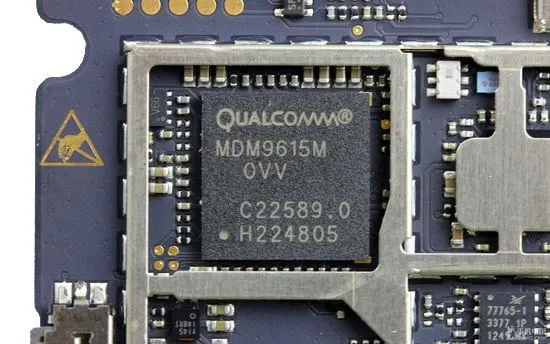
On 15 June the General Court (“GC”) annulled the Commission’s decision imposing a close-to-1-billion euro fine on Qualcomm in relation to alleged exclusivity payments made to Apple in breach of Article 102 TFEU. [For some helpful background on the Commission’s decision see this guest post from Max Kadar that we published in 2020].
I have no involvement in the case (beyond good friends on both sides), but I followed it closely and attended the public part the oral hearing. As I told many colleagues then, I left with the impression that Qualcomm could win based on a mix of interrelated procedural and substantive arguments.
The case is unique for various reasons. First, it concerns a single agreement with a single customer, Apple, which happens to be the largest company in the world. Second, the case appears to have been very largely based on information and documents provided by Apple itself (see e.g. ¶222). Third, it is quite extraordinary to see a full annulment in an abuse of dominance case. Fourth, it is a rare case where the procedural errors identified by the Court take center stage and have a material impact on the outcome of the case.
At the same time, however, my view is that this Judgment does not materially move the law in any way, certainly not in a way that may hinder the Commission’s ability to bring and win future cases. The Judgment simply requires the Commission to fulfill its (post-Intel) obligations regarding both procedure and substance. There is no attempt to create new law, no extravagance, no adjectives, no unnecessary obiter dicta; just a clear, logical and thorough application of the law to a unique set of facts. For those reasons, I very much doubt the Commission will contemplate an appeal.
This first post deals with procedure; I will discuss substance and other general comments in a second post.
Procedure
The Judgment is a must-read for anyone interested in competition procedure. It contains interesting discussions on admissibility of evidence, the practical application of measures of organization of procedure, and the Commission’s procedural obligations; it also provides details on Qualcomm’s smart move of resorting to a Section 1782 discovery request to obtain the evidence that might have been decisive to win the case:
On Section 1782. This is a provision that authorizes U.S. Courts to order persons in the US to provide information or documents “for use in a proceeding in a foreign or international tribunal.” It has attracted EU competition attention before, mainly when AMD tried to use it to gather information to boost its complaint against Intel (see here). [Side note: only two days before the Qualcomm Judgment the US Supreme Court severely restricted the use of this provision in arbitration proceedings; the SCOTUS has done much worse lately, though)]. Qualcomm brought its Section 1782 application after the Decision was adopted, in anticipation of judicial proceedings (see ¶140).
Rights of defence: Minutes and meeting notes. The CJEU already clarified in Intel that the Commission is required to take minutes of all meetings with third parties, and that Article 19 of Reg. 1/2003 makes no distinction between formal and informal meetings. In the Qualcomm case, the Commission argued that it is only required to draft “succinct notes” of meetings where parties provide inculpatory or exculpatory evidence. The Commission also acknowledged that:
- it had regrettably and inadvertently failed to provide any notes of one meeting and 3 conference calls (two competitors and two customers) prior to the adoption of the Decision (¶166; by the way, the last sentence in that paragraph may help you identify the most important of those third parties);
- it had held another meeting and another conference call with a third party which were never disclosed to Qualcomm and for which, regrettably, no notes existed. It appears that the Commission acknowledged this meeting in the context of litigation before the GC after Qualcomm learnt about it via Section 1782 discovery proceedings (see ¶231 in combination with ¶¶121, and 241-243). The identity of that party is confidential, but para. 234 appears to give a hint and reduce options to essentially two.
- before the opening of proceedings there had been a meeting with an anonymous third-party informant who provided inculpatory evidence; the Commission had taken no records of this meeting, which was only disclosed to Qualcomm during the litigation proceedings following a GC inquiry (¶¶269-273).
The Qualcomm Judgment clarifies that conference calls and meetings all fall within the scope of Art. 19 of Reg. 1/2003 (which is hardly controversial), and also that minutes must give meaningful “indications of the content of the discussion” (¶190), and “indicate the information gathered” (¶200). The Judgment acknowledges the recent case law indicating that Art. 19 does not apply to interview held before the formal opening of proceedings (¶276, citing the questionable judgment in Casino, currently under appeal). Regardless of that, the GC finds in this case that Commission’s obligations to ensure companies’ rights to access the file cannot be bypassed by resorting to the use of inculpatory information provided orally and require the Commission to draw notes and place them in the file (¶279).
Impact of procedural breaches on the outcome of the case. Pursuant to the case law cited at ¶160, procedural breaches may infringe rights of defence where a company shows that it would have been better able to defend itself absent the procedural error. [Longtime readers may remember that we had a panel debating these issues: “And so what? Procedural violations in EU competition law”: at our 2018 conference].
In Intel the Commission’s failure to take adequate minutes did not result in a violation of rights of defence. In Qualcomm the GC does consider that this error warrants the decision’s annulment. Why? First, because of the identity of the parties at issue (notably the one customer and the allegedly foreclosed rivals; ¶¶203-207). Second, because the sparse notes, or the absence of any notes, made it impossible to ascertain the possible relevance of the meetings (¶¶207-209, also 256-259 and 291-294). Third, because all these contacts related to the case and to Qualcomm’s business practices (¶¶210-211 and 239-245, 290).
Fourth, (and pay attention, because this is what ties procedure with substance and what may largely explain the outcome of the case), the Court repeatedly insists that the likely relevance of those meetings is also confirmed by “the content of the contested decision and the specific circumstances of the present case” (¶213; other references to the specific circumstances of the case can be found at ¶¶202, 221, 223, 224, 252, 266, 288, 291-292, 295-296). Despite redactions, ¶¶216-218, 223-224 and 263, 265 might help you understand what the Court has in mind; essentially: it cannot be ruled out that Apple the customer and competitors could have provided info as to whether competitors could truly have satisfied Apple’s requirements absent the exclusivity provisions. As discussed below, it turns out they could not have satisfied those requirements; it would appear that the Commission was somehow misled into believing otherwise, or in any event failed to verify it adequately. We will come back to this when we discuss substance.
Differences between the SO and the Decision. While the SO related to an alleged abuse on the markets for UMTS and LTE chipsets, the Decision’s scope was narrowed down to LTE chipsets alone. While this was to Qualcomm’s benefit, the narrower scope of the case meant that the evidence put forward by Qualcomm to deny that its practices were capable of foreclosing competitors (a critical margin analysis concerning both the UMTS and the LTE chipset markets) was no longer relevant (the GC notes that the decision itself also relied on a revised version that was no longer relevant; ¶328).
Following a summary of the case law on the relevance of SOs (¶¶307-310), the GC preliminarily notes that (i) abandoning objections does not imply a procedural error (¶¶313-314), and (ii) the Commission was not required to provide Qualcomm with the opportunity to comment on the reasons leading to that view (only on the matters of fact at law at the basis of that decision) (¶315). The GC, however, observes that “the possibility for an undertaking to submit that conduct is not capable of restricting competition, and in particular, of having foreclosure effects by relying on an economic analysis such as the critical margin analysis (…) is of no practical effect if the scope of the conduct concerned is modified by the Commission after the [SO] (…)” (¶352, developed in ¶¶333-337). The GC rules that the principle of observance of the rights of defence requires the Commission to bring to companies’ attention any modification of the scope of its objections that may be relevant for them to be able to make their views effectively and, where necessary, to adapt their analysis and evidence (¶¶338-340).
Comments
If you made it this far down the post, you will have realized that the case concerns a pretty unique set of facts. The Judgment shows, once again, that the GC takes rights of defence seriously. What is remarkable is that the GC goes beyond the usual slap on the wrist and finds that procedural irregularities suffice to annul the decision in its entirety. The GC does not attribute any relevance to the number of procedural errors nor to their seriousness; instead, it finds that the link between these procedural errors and the decision’s theory of harm makes the infringement of Qualcomm’s rights of defence particularly problematic.
Looking forward, it will not be difficult for the Commission to avoid repeating these errors. I see nothing in the Judgment that would place a heavy or disproportionate burden on the Commission’s case management; the Judgment is not too demanding, nor is it too harsh.
In my personal view, this Judgment should mainly be taken as a call for greater awareness. We come from a time when reliance on cooperation/negotiation proceedings (commitments, settlements, cooperation procedures, etc) may have relaxed attitudes vis-á-vis procedural matters, fundamental rights and rights of defence. That this relaxation may happen naturally (and not be matter of bad faith) is only one more reason to make an extra effort to prevent it. This Judgment reminds us, perhaps at the right time (I also have the DMA in mind now), that procedure and rights of defence should not be afterthoughts, for they are what make public enforcement sound, effective and legitimate.
3rd Edition of the Rubén Perea Award – How to Participate

We are delighted to announce the Third Edition of the writing award in the memory of our friend and colleague, Rubén Perea Molleda. As in previous editions, the winning paper will be published in a special issue of the Journal of European Competition Law & Practice, together with a selection of the very best submissions received (have a look at the special Issues of March 2021 and April 2022).
The winners of the two previous editions received their awards from Executive Vice-President Vestager on 22 March 2022. EVP Vestager will also deliver the award to the winner of the upcoming 3rd edition.
Who can participate?
You may participate if you have not reached the age of 30 by the submission date (i.e., if you were born after 15 September 1992). Undergraduate and postgraduate students, as well as scholars and practitioners are all invited to participate. If you are too old reading this and do not fulfil the criteria, please feel free to promote this opportunity among your junior colleagues or students.
What papers can be submitted?
You may submit a single-author unpublished paper which is not under consideration elsewhere. The paper may be specifically prepared for the award or originally drafted as an undergraduate or postgraduate dissertation.
The paper must not exceed 15,000 words (footnotes included; no bibliography needed).
Prior to submission, please make sure your paper follows the JECLAP House Style rules, which can be found here.
How to submit?
Please submit the paper via this link: https://mc.manuscriptcentral.com/jeclap.
IMPORTANT: As you go through the submission process, make sure that in Step 5, you answer YES to the question ‘Is this for a special issue’? and indicate that it is for the Rubén Perea Award.
What is the deadline?
Papers will have to be submitted by 23.59 (Brussels time) of 15 September 2022.
The Role of the EU Courts- A View from the Bar

A few weeks ago I participated at the Global Competition Law Centre’s Annual Conference, on a panel devoted to discussing the role of the EU Courts in competition cases together with General Court President Marc van der Woude and Judge Ingeborg Simonsson. My task was to talk about the role of EU Courts and judges from the point of view of lawyers. I guess this was much more comfortable than listening to what judges think about lawyers…
As I explained then, my views on this subject are necessarily informed and deformed by my own experience in quite a few cases before the EU Courts, both challenging and defending Commission decisions. Since the GCLC will be editing a book with speaker contributions, I thought it could make sense to post a summary of my general thoughts so that I can gather and incorporate additional feedback from the readers of this blog. So here they are.
In many ways, the view of lawyers about the role and the performance of Courts is quite straightforward: If we win a case, it’s our merit and the Court only fulfilled its role. And if we lose, then it’s the Court’s fault for failing to play its role.
That is only partly a joke, because we lawyers, but also other stakeholders, including in academia and in the press, tend to assess the performance of the EU Courts in quantitative terms. Too often we associate effective or thorough judicial review with annulments or with other observable metrics (number of cases decided, number of cases annulled, amount of fines confirmed or annulled, or average duration of cases). But all those are very superficial ways to measure performance.
So the key question that we should be asking is what is really the role of the Courts, and what can we reasonably expect from them? Once we have identified this benchmark, we can then enquire as to their performance and discuss the challenges they face.
A. What is the role that we expect the EU Courts to play in the field of competition law, and what are the hallmarks of effective judicial review?
In my view, the first and most important task of the EU Courts is to preserve the rule of law and the legitimacy of the EU competition enforcement system. Competition law is not only about policy, or economics or outcomes; it is primarily law, and it is for the Courts to ensure that its interpretation and enforcement are in line with fundamental rights and general principles of law that also apply in other domains. There are certain principles like, for example, the presumption of innocence, the rules on the burden of proof, or the principle of proportionality, that cannot be bypassed or sacrificed at the altar of expediency, because they are core rule of law requirements, and because there is too much at stake.
The second task of the Courts, very much linked to the first, is to contribute to a stable, consistent and predictable legal framework. The rule of law also requires legal certainty: to play by the rules, you need to know what the rules are. As much as we might enjoy the dynamic nature of competition law, and the case-by-case discussion, we need to build on a common and stable analytical framework that we can anticipate. This is important for companies required to self-assess their conduct, but also for repeat players like the European Commission, which needs to base its decisions on a clear and established analytical framework. It is of course desirable for the law to move and evolve, but wide pendulum swings do not benefit anyone.
At the same time, we also need to be realistic. We lawyers expect the Courts to state what the law is, but we often fail to realize that the Courts do not always have this possibility, as Courts are subject to their own constraints: they are called to decide on specific cases, on the basis of the arguments raised by the parties either under a review of legality or in reply to questions crafted by a national court in the context of a specific controversy.
The EU Court’s third main task, in my opinion, is to constrain administrative discretion while enabling effective enforcement. Courts do not only need to protect general principles of law and fundamental rights and lay down a stable and predictable framework, they also have the complex duty of doing this while not preventing sound and effective enforcement. In other words, the application of the law must not be arbitrary, discretional and based on mere hypothesis, but constraints need to be reasonable.
B. Measured against those benchmarks, how have the EU Courts fared so far?
First, there can be little doubt that the EU Courts have preserved the rule of law and the legitimacy of the EU competition enforcement system. Regardless of whether we as lawyers win or lose, the system does work.
I believe that there is a general feeling that, subject perhaps to exceptions, judicial review at the EU level has become more thorough and meaningful. Regardless of outcomes, the EU Courts have (i) recalibrated the standard of review following KME/Chalkor, marginalizing marginal review; (ii) placed a renewed emphasis on the right allocation of the burden of proof and the presumption of innocence (cases like Intel or Apple); and (iii) been acutely aware of the need to protect fundamental rights (I have in mind the very recent case law on ne bis in idem, Consob on the protection against self-incrimination, many cases, like Casino, on the right to a private domicile, or the Order in Facebook Ireland in relation to the right to privacy. Speed-Pro is perhaps a highlight in this trend).
EU Courts have also seen their role evolve as competition law became increasingly more about negotiations with the surge in settlement, cooperation and commitment decisions and the consequent decrease of litigation. In my view, the Courts have been up to the task, paying particular attention to new procedural questions regarding the presumption of innocence (ICAP, Pometon), non-discrimination (Timab), third parties’ rights and the principle of proportionality (Canal +), or the need to balance rights of defence and other considerations (Lantmännen Agroetanol). The Courts have made clear that negotiated solutions need to be guided, and can only be overridden, by procedural considerations and general principles of law.
Second, have the EU Courts contributed to a stable and predictable legal framework? I think we have made significant progress, particularly in the areas where preliminary references have been more common, but also in those where annulment proceedings have been more frequent in recent years, like State aid.
Absolute legal certainty may not be a reasonable aspiration, but I believe that there has been a meaningful incremental evolution in our understanding of some key notions. We now have a better idea, or a clearer framework to determine what is or what is not a restriction by object (Cartes Bancaires or Budapest Bank), what is not a SIEC (CK Telecoms), the criteria that are relevant to assess foreclosure in unilateral cases (Intel, Post Danmark cases). Preliminary rulings have also been particularly helpful (think of Slovak Telecom, Budapest Bank, Generics, Sumal, Volvo, bpost and Nordzucker).
There remains, in my view, room for improvement. We can currently more or less connect the dots across different cases, but we still lack a coherent and systematic framework in some respects, particularly in the field of Article 102, where some fundamental issues remain in dispute. At the same time, again, we need to be realistic; progress is incremental, and this is a good thing; if it were not, we would risk pendulum swings, which is precisely what we need to avoid.
Third, have the EU Courts succeeded at constraining discretion while enabling effective enforcement? In the past, many lawyers complained that judicial deference towards the Commission made it impossible for companies to successfully appeal Commission decisions in certain areas. Many practitioners will disagree with me, but I never bought that. Today, even if the ratio of annulments remains low, some commentators have argued that a few recent annulments would pretty much make competition enforcement impossible. I personally do not buy that either. I guess this position might make me unpopular on both sides, which is probably also how the Court must feel most of the time.
The one remarkable trend that I see in judicial review in recent years is the emphasis on the need to take the burden of proof and the principle of presumption of innocence seriously and avoid shortcuts. This is how I read Cartes Bancaires, and Budapest Bank on the “by object” shortcut, or the Court of Justice’s Judgment in Intel (which I believe is in many ways their equivalent for Article 102), Servier in relation to market definition, or the Starbucks, Apple and Amazon State aid cases when it comes to the criterion of advantage in State aid. The most recent General Court Intel Judgment raised some important issues in this regard. I will expand on those in a separate blog post.
C. What are the new generation challenges for the EU Courts in the field of competition law?
Challenges to the rule of law. Unfortunately, we live at a time when challenges to the rule of law are becoming common. There is perhaps a feeling that the law places uncomfortable constraints that ties our hands when facing certain problems. Sometimes we see a temptation to avoid constraints to pursue a certain view of the public good, including proposals to reverse the burden of proof, stretch legal bases, shield some decisions from judicial review or “take antitrust away from judges”. In my view, we need to remain vigilant here. The law is about constraints, and constraints are uncomfortable, but they are the wise restraints that make us free. There are a few vital red lines that we should not cross.
Keeping the law relevant in the DMA world. Under the DMA we will not need to be concerned about market definition, market power, counterfactuals, effects, efficiencies, proportionality, the competitive process and consumer welfare. It will all be about remedy design and outcomes. At first sight this does not leave much room for the law, lawyers and Courts. Creating a regulatory system from scratch is not easy, and it will be a challenge for Courts to keep the law relevant and make this system compatible with general principles of law and draw the necessary limits to administrative discretion.
Maintaining predictability and consistency in an increasingly fragmented landscape. A major challenge for the future will be to offer a stable EU law framework in an increasingly decentralized and fragmented landscape, at a time when much of what we knew is in dispute, where several Member States are experimenting with new theories, and where politicians are increasingly interested in competition law. While some degree of experimentation may be positive, major substantive divergences threaten the very idea of the internal market. As I have explained before, the problem here is that the Court’s current reactive tools are rather limited and, absent some changes, may not be sufficient.
Consistency. It might be important to make an extra effort to ensure consistency across competition law provisions, across time, between Courts (for example, between preliminary rulings and Judgments in annulment cases) and within Courts (frequent customers of the Courts, including some Commission lawyers, feel frustrated when they feel they receive different messages from different Chambers).
Evidence requirements. Evidential requirements on both the Commission and private parties need to be realistic and proportionate to the information that can be available to each party depending on their means and powers of investigation at their disposal. In my mind, the helpful clarifications on the allocation burden that one can see in recital 166 of the recent General Court Intel judgment (along the lines of the proof proximity principle) are also a step in the right direction.
Need for speed. Commentators frequently complain that it takes too long to find out what the law is. I can see how this is an issue, but at the same time it takes a while to go through all the motions of a case giving all parties sufficient time to make their case, study, organize and digest a hearing, write a thorough Judgment and translate it. Discovering the law often takes time and I, for one, much prefer thorough judicial review over quick and hasty review. There is, however, scope to strike a better balance, and the Courts are making an effort, even awarding damages in cases where judicial proceedings take too long. I have little doubts that the situation will continue to improve.
Are there any restraints on vertical block exemptions (by Stephen Kinsella)

[We are happy to publish a guest post from Stephen Kinsella touching on the VBER reform. We hope it will trigger a discussion; as always, we would be happy to hear different views]
Some time next month the Commission is due to adopt a revised version of the regulation that governs how the competition rules are applied to online sales in Europe. The Vertical Block Exemption Regulation (VBER) is set to run until 2034 and will have a major impact on the relationship between brand owners, retailers and consumers. It also risks causing harm to the European economy and creating considerable legal uncertainty because of the way in which the Commission has approached the renewal process.
The Commission does not have unlimited discretion when it passes laws in this area. It is bound by a Council Regulation dating from 1965 that only allows it to create a safe harbour for “vertical agreements” (agreements between parties at different levels in the supply chain) where it is clear that they are no more restrictive than necessary and will benefit consumers. In order to make sure that is the case, the Commission is supposed to carry out a rigorous assessment of the impact of its proposal on competition. Unfortunately in this instance, it failed to undertake that analysis. As a result the regulation it proposes goes beyond the powers it was granted back in 1965, and even beyond Treaty rules on competition, meaning its new regulation will be open to legal challenge. A regulation that is supposed to create legal certainty will instead generate considerable uncertainty.
A concrete example is the proposal relating to dual pricing. Under the existing regulation, when a brand supplies its goods to a retailer who then resells them both online and in its high street store, the brand owner has to offer a single wholesale price to the retailer. If the brand owner wants to encourage the retailer to invest in point of sale efforts, it can offer financial assistance. But it cannot “penalise” the retailer for reselling any of its stock online.
Under the new proposals, a brand owner will be able to say: here is a consignment of goods but for those you eventually sell in the store the wholesale price is X but for those you ultimately sell online the price will be Y. Meaning that it will only be apparent after a good has been sold to a consumer what will be the wholesale price that is retrospectively applied to that item.
So far so simple, one might say. But so many questions arise. Is the retailer to keep distinct consignments of stock, separating those to be sold online from those sold in-store? What if a customer comes into the store to view the goods but then places an order via the retailer’s website – is that an online or offline purchase? Conversely, if the customer orders online but for a click-and-collect purchase, how does one categorise that sale?
These issues and others could have been tested in a rigorous market study. After all, the process of renewing the regulation was launched over three years ago. But these dual pricing provisions (and a number of other changes) that were only proposed last summer, were never subjected to proper evaluation of their effects on the European economy, and there has been no attempt to explain what their impact will be. In particular, there has been no serious evaluation of what the impact of dual pricing could be when combined with other proposals, such as allowing brands to ban their retailers from selling via online marketplaces and allowing them to discriminate against online sales channels in general. Would not one outcome be that the majority of online sales are effectively reserved to suppliers via their own website? And is it not inevitable that measures that deter or make online sales more expensive are bound to lead to higher prices, undermining the Commission’s focus on controlling inflation?
The Commission itself recognises that the powers it was granted in 1965 are limited. A recital in the draft states that the benefit of the exemption “should be limited to vertical agreements for which it can be assumed with sufficient certainty” (my emphasis) that they satisfy the conditions for exemption laid down by the EU Treaty. Another provision goes on to say that the regulation “should not exempt vertical agreements containing restrictions which are likely to restrict competition and harm consumers or which are not indispensable to the attainment of the efficiency-enhancing effects”. Put simply, the Commission has the obligation to show that its proposals meet these tests.
The criticism of the approach adopted for this renewal, and the inexplicable failure to conduct a genuine impact assessment, is growing. BEUC, the pan European consumer body, expressed its concerns last year: “the Commission must be wary of unsubstantiated efficiencies. Any relaxation of the rules applicable to vertical agreements is likely to impact consumers.” Even national competition authorities, who take the vast majority of antitrust decisions regarding vertical / distribution agreements, do not seem convinced by the proposed relaxation regarding dual pricing. A senior French competition official recently described the proposal as “neither proportionate nor necessary”.
What can be done this late in the day? Many organisations who have contributed during the renewal process (and seen much of their evidence ignored) are weary of it, and it could be that the Commission is counting on that fatigue. But it may be that the only pragmatic solution would be to prolong the existing regulation for one year, to allow time for the objective empirical evaluation of effects that has been lacking to date. Otherwise we will find ourselves with a seriously defective regulation set to govern the digital space for the next 12 years, which is far too long when you consider how often the Commission talks about “future proofing” its legislation. By way of comparison, the parallel regulation that the UK intends to adopt will have a lifespan of 6 years.
If the Commission does not even now rethink its approach, the new regulation will certainly be open to legal challenge. That could arise in a number of ways, but will most likely come out of a dispute in a national court, where the question of validity will need to be referred to the European Court for an answer. In addition the national competition enforcers of the Member States will be asked to use their own powers to withdraw the benefit of the VBER because it will be permitting anticompetitive practices on a scale that threatens consumer interests. In short, we will be faced with an entirely avoidable mess.
Announcing the Winner and Finalists of Chillin’Competition’s 2nd Rubén Perea Award

On 1 April 2020 we lost Rubén Perea, a truly extraordinary young man who was about to start a career in competition law. We decided to set up an award to honour his memory, and to recognize the work of other promising competition lawyers/economists under 30. Today we are announcing the winner and runners-up of the 2nd edition of this award.
The winner of the 2nd (2021) edition of the Rubén Perea Award is JÉSSICA NEMETH, for her paper “Blockchain, Behavioral Remedies and Merger Control: How can access remedies do better?”.
Lass Tuesday Jessica and the winner of the first edition (Vladya Reverdin) received their awards from EVP Vestager, who very kindly accepted to give out the awards at her offices:

The jury also selected 4 finalists whose papers will be published in a special JECLAP issue. The finalists are:
-“Firm’s own price elasticity of demand in dominant position analysis” (by Jan Kupcik)
-“Trading Off the Orchard for an Apple: the iOS 14.5 privacy update” (by Alba Ribera)
-“Is ‘‘more’’ better? Broadening the right to sue in competition damages claims in both sides of the Atlantic” (by Grigorios Bacharis)
-“Should the New Competition Tool be put back on the table to remedy algorithmic tacit collusion?” (by Vasileios Tsoukalas)
Congratulations to Jessica, Alba, Jan, Grigorios and Vasileios, and many thanks to my fellow members of the jury, namely Damien Gerard, Lena Hornkohl, David Pérez de Lamo, Michele Piergiovanni and Gianni De Stefano.
We will soon be announcing the 3rd edition of the Rubén Perea Award. Stay tuned!


 Chillin'Competition