Author Archive
Why the DMA is much more than competition law (and should not be treated as such), by Agustín Reyna
[Chillin’Competition is publishing a series of posts featuring the views of various experts and stakeholders in relation to the European Commission’s proposal for a Digital Markets Act. We have received several contributions and will also be inviting some experts to ensure a plurality of informed views from a variety of perspectives. For our previous posts on the DMA see here (by Pablo), here (by me), here (by Cani Fernández, originally published in JECLAP), and here (by Tim Lamb, Facebook). Today we bring you some reflections by Agustín Reyna, Director of Legal and Economic Affairs at BEUC, The European Consumer Organisation)]
Following a non-football(istic) exchange via twitter (see here), Alfonso invited me to share some thoughts about why I think it is neither necessary nor desirable for the Digital Markets Act (DMA) to allow for an efficiency defence in the compliance process with the do’s and don’ts included in Articles 5 and 6 of the Commission’s proposal. However, before sharing our reasons, I think it is important to briefly reflect about three elements closely related to this discussion: the nature and objective of the DMA; its legal basis and, its interplay with competition law.
Nature and objectives of the DMA
The DMA’s objective is to ensure contestable and fair markets in the digital sector by laying down a list of obligations and prohibitions that would apply to designated gatekeepers in relation to a list of core platform services (CPSs). While it is possible to argue – especially amongst those who consider that EU competition law is much more than allocative efficiency (see our thoughts on this issue here) – that the DMA shares the similar objectives as competition law, the way of achieving these objectives is different. Competition law addresses, case-by-case, business conduct that disrupts competition in the internal market by applying the rules laid down in Articles 101 and 102 TEFU whereas the DMA seeks to pre-empt certain practices or impose specific obligations with a view to increasing market contestability, reducing entry barriers, stimulating innovation from rivals and companies who depend on the gatekeeper to reach consumers and, ultimately, to ensure consumers enjoy a healthy digital environment (we wrote more about this here and here). Whether a company designated as a gatekeeper could have breached Article 102 TFEU, or not, is simply irrelevant for the DMA because, by its very essence and nature, the DMA is not competition law.
The DMA is (pre-emptive) regulation under Article 114 TFEU
Article 114 TFEU has allowed the EU to intervene by means of approximation of laws in multiple sectors and areas of law from horizontal consumer protection law to energy, telecom and pharmaceutical legislation. As such, the choice of Article 114 TFEU as a legal basis does not depend on the sector that is regulated but on whether the measure is necessary to achieve the objective of “establishing or ensuring the functioning of the internal market” in the terms of Article 26 TFEU. Even if one could argue that the use of Article 114 TFEU can be at times arbitrary due to the broad scope of intervention of Article 26 TFEU, I think there is a clear case for 114 TFEU as the legal basis of the DMA for three good reasons. First, the companies to be designated as gatekeepers are providing cross-border services and as such are likely to impact the functioning of the internal market. Second, the proposal introduces proxies in the designation of gatekeepers that would exclude purely domestic scenarios (i.e. requiring presence in at least 3 Member States) therefore ensuring to capture cross-border practices. And third, all parties concerned namely the gatekeepers, business users and end-users would benefit from a set of common rules regulating the provision of services to consumers in different countries contributing to the well-functioning of the internal market by on one side facilitating cross-border operations and, on the other side, reducing risks of fragmentation.
Interplay with EU competition law
The DMA does not replace competition law. It rather complements it by pre-empting certain practices by companies some of which might also be prohibited under Article 101 or 102 TFEU. Furthermore, as mentioned above, dominance in the competition law sense is not a requirement for the application of the DMA, which follows a different path to designate gatekeepers (based on the combination of pre-established quantitative and qualitative criteria). It is, however, known that many of the companies to be designated gatekeepers have been, or are currently, subject to competition law proceedings. While it could be considered that there is a risk of friction between the two regimes, one needs to be mindful of the fact that once the DMA comes into force, competition agencies would have to take into account the DMA as part of the legal context in each specific case, thus reducing the risk of inconsistent outcomes.
Why should efficiency defence not be allowed under the DMA?
While assessing compliance with competition law an efficiency defence is relevant, I do not think the same should apply to the DMA for the following reasons:
- The DMA, unlike Article 102 TFEU, provides for well-defined obligations which would apply to well-defined gatekeepers in clearly identified services or markets (CPSs) to deal with clearly identified problems. Any possible trade-offs between efficiencies and the DMA objectives would have to be taken into account by the European legislation when designing the obligations of Articles 5 and 6. This means that each obligation would have already internalised such efficiencies. Therefore, there is no reason why further flexibility should be introduced.
- Since the DMA is not competition law and has a different legal basis (Article 114 TFEU), there is no need to apply competition law principles in terms of either substance or procedure. Think for example of consumer protection rules, which have been harmonised at EU level on the basis of Article 114 TEFU. The enforcement of these rules does not give any scope to companies to argue why a certain unfair term or practice is beneficial (or efficient) for consumers.
- In the hypothetical scenario where there would be a competition case involving one of the designated gatekeepers on the basis of Articles 101 or 102 TFEU (or the national equivalent), the scope to bring efficiency defences would be framed by whether the concerned practices were covered or not by the DMA. This is something that would have to be taken into account in any case even before the opening of proceedings by the competition authority.
- More practically, not allowing efficiency defences will make the DMA swiftly applicable and therefore operational as soon as the parties are designated as gatekeepers – or shortly thereafter – subject to specifications if needed for those obligations included in Article 6. Permitting gatekeepers to claim efficiencies would imply delaying the application of the rules when, as said before, this is simply not needed because any possible efficiencies would have been considered by the legislator when defining the scope of each obligation.
To conclude, I do not see the legal or procedural need to add a new layer of complexities in the DMA by allowing efficiency defences. The DMA is much more than competition law. It is (and should become once adopted by the legislator) regulation precisely defining the limits of what gatekeepers can or cannot do when operating their CPSs in the internal market, in the same old-fashioned way other pieces of EU law in other sectors have defined the boundaries of private initiatives to safeguard clearly defined public policy goals. Competition law will continue to apply in tandem with the DMA. However, taking into account that competition law cannot provide all the answers (e.g. regarding scope of intervention) in the most optimal timeframe (e.g. the Android case is a good example, the case started in March 2013, the decision was adopted in July 2018 and only last week the remedies were amended in a positive manner), there are good reasons for the legislator to step in.
The DMA has the potential to become a blueprint for regulating digital markets, but its success will depend on its swift and effective application and enforcement. The very same companies that would be regulated by the DMA have asked for many years for legal certainty about what they can or cannot do. And this is exactly what the DMA is aiming at.
The Legal Question(s) That All Platform Competition Cases Have In Common

Previous posts –mostly by Pablo– have already discussed many of the recent or ongoing platform-related cases (including Apple’s Epic lawsuit, the Commission’s investigations into App Store rules for music streaming apps and Amazon’s marketplace, the Google Shopping and Android decisions, the Italian Android Auto decision or the German Booking.com case). We have also discussed cases involving non-digital platforms, like Amex, Cartes Bancaires, Mastercard or Budapest Bank.
When you read the information that is publicly available about these cases or, even better, Pablo’s comments, you immediately realize that they share many commonalities. That might explain why Pablo’s views on all those cases are consistent, regardless of the companies affected by each investigation (and for that reason, somewhat of an anomaly among antitrust influencers).
Now, the usual disclosure: I am involved in several of the cases identified in the first paragraph, which is why I do not comment about them on the blog. In this post I will try to show that there is a fundamental legal debate that cuts across all of these various cases, and on which my position is also the same regardless of whether they may affect my clients, their competitors, or other parties.
Within the non-legal community, attention often focuses on questions on market definition and competitive relationships. This is understandable given (i) the very narrow market definitions in these cases, and (ii) that most commentators have a more defined view on the competitive relationship between many of these companies whereas they do not have a view on competition between, say, chemical by-products. This question is certainly of great interest, but it is a very context and fact-dependent one. The relevance of market definition questions in all these cases is no doubt a commonality, but it is one not exclusive to platform cases and, despite technical challenges (e.g. market definition in multi-sided or zero-price markets, multi-homing, etc), it is more an economic than a legal one.
What I have in mind now is a different commonality, or rather set of related commonalities:
First, all of the platform-cases identified in the first paragraph of this post concern vertical intra-platform rules. We know from our experience with vertical restraints that these are generally deemed not restrictive of competition when they enhance inter-brand (in this case inter-platform competition). This argument, of course, only works when we define a market in which platforms compete amongst themselves, which is not the fashionable thing to do and, as explained above, may or may not be the right thing to do depending on the case. This explains why, dominance thresholds aside, market definition is pivotal in these cases, but this is only part of what I wanted to discuss.
Second, while the platform-cases identified in the first paragraph of this post concern different practices/rules and different business models, all of them are about platform rules that restrain freedom of action on at least one side of the platform, generally to protect or maximize the value of the platform itself (think, for instance, of the justifications based on combating free riding common to all the MFN, app store, and payment system cases identified in the first paragraph of this post). This is unsurprising, as the very role of any platform sponsor is precisely to create value by harnessing positive externalities and preventing negative externalities via the design of platform rules.
This commonality also has a great impact on the legal analysis. As the Court has consistently emphasized in recent years, the question of whether a restriction exists in the first place, or whether such restriction is justified is independent of market definition, and it is also not one that can be addressed (one way or another) in the abstract. Answering this question in each case requires a comprehensive and context-dependent and multi-sided analysis, because very often the same practices will restrain competition on one side and will stimulate competition on the other. It is generally understood that practices enhancing a platform’s value may, depending on the circumstances, benefit not only the platform’s sponsor, but also consumers and business users in the aggregate. But sorting out and balancing the direct effects of a practice on multiple interdependent markets is complicated in practice. The recurring question then is how the legal arguments are framed who needs to prove what, and at what stage? That was the key question in the US Amex case, it was the key question in the EU payment system cases (Cartes Bancaires, Mastercard, Budapest Bank), and, for the reasons recently explained by Pablo here and here, it arguably should have been the key question in other platform cases including ISU and the German Booking.com case. Concerns about carrying this burden are precisely what explains the remarkable proposals to shift the burden of proof in platform cases, which have now made it to the DMA proposal. Like in the case of market definition, this is a question that will systematically arise in these cases, so it is certainly a meaningful legal commonality but, again, this is only part of what I had in mind.
The observation that triggers this post has to do with the very meaning of the notion of anticompetitive effects:
Third, if you think about it, all of the cases identified in the first paragraph of this post seek to fine-tune (sometimes second-guessing) different platform arrangements in situations where there is no apparent risk of anticompetitive foreclosure. Few would argue, for example (and I will leave my cases aside, because my belief that they are the best examples might not be objective) that Amex, Visa or Mastercard foreclosed anyone, that Amazon is likely to exclude or marginalize merchants or that Apple will ever have the hope of driving Epic or Spotify out of the market.
Most business users benefit from the opportunities offered by these platforms (otherwise platforms would not prosper), but would like to enjoy better conditions (can’t blame them; who wouldn’t?). This is why the concern in these cases is often about competitive (dis)advantages, fairness, or about the situation of specific business users, and not so much about actual or potential foreclosure (as understood in the case law). This is also why, as observed by the DMA’s Impact Assessment Report, some Member States wish to address these situations via laws on abuse of economic dependency. And this is also why the DMA Explanatory Memorandum (p.8) argues that competition law “is not sufficient to deal with all the problems associated with gatekeepers, given that [practices will not be captured] if there is no demonstrable effect on competition within clearly defined relevant markets”.
At the end of the day, regardless of market definition, regardless of business models, and regardless of the specific theory of harm, all of the platform-cases identified in the first paragraph are mostly about the optimal distribution of rents (or, as Pablo put it here, a fight for a larger slice of the pie). Commentators that strongly support some of these cases, and who observe that these have been transplanted into the DMA’s proposed obligations, have also identified the reallocation of rents as one of the DMA’s key goals (which necessarily means that the same applies to the cases from which these obligations originate). Depending on your views and perhaps also on your business interests this may be a positive or a negative development (we can leave that debate for another day), but it does mark an important paradigm shift in competition law. This question appears to have featured prominently and very explicitly in the Epic v Apple trial, but perhaps has not received enough attention and reflection in the EU. Hence this post.
Against the Fragmentation of EU Competition Law: A Proposal for Reform

Not so long ago it seemed like we had arrived to the end of history in competition law. The level of substantive convergence at the international level was remarkable and unique by reference to most other areas of the law. The level of substantive convergence within the EU (and the EEA more generally) was even more impressive. All national competition authorities and judges understood and respected the European Commission’s role as primus inter pares, the Commission exercised this role flexibly but responsibly, and politicians had not yet shown an interest in transforming the discipline.
But things have changed, and EU competition law enforcement is now facing a fragmentation threat. This post seeks to (A) demonstrate the existence of this threat; (B) identify the reasons why the existing safeguards may not be working; and (C) throw out there a proposal intended to spur some debate
A) Is there a risk of fragmentation of EU competition law?
Let me give you some very recent examples (for full disclosure: I have worked on some of them so I tend to view them critically, but I will leave aside the question of whether individual cases are right or wrong and, instead, will focus on the wider trend):
- Last week the German, French and Dutch Government asked for “leeway” to craft and apply different national competition rules going beyond EU law. In parallel, several other Member States (like Italy or Sweden) are considering the adoption of additional national rules inspired by the DMA.
- Also last week Germany already announced new investigations under its reformed Competition Act, which the European Commission itself has consistently invoked (e.g. here, p. 111) as a source of potential fragmentation so troubling that it would justify the adoption of the DMA.
- A couple of weeks ago the German Supreme Court confirmed the prohibition of Booking.com’s narrow MFN clauses, a conduct accepted by competition authorities in other EU jurisdictions. In spite of the risk of divergent interpretations of EU law, this is a case where the European Commission had not intervened and where the German Supreme Court decided not to submit a preliminary reference to the CJEU.
- Earlier this month the Italian Competition Authority adopted its Android Auto decision which, as discussed by Pablo, has little to do with EU case law as we know it (the decision in fact admits –para 315– that it relies on a “gatekeeper” theory of harm that cannot be traced back to the case law but to recent reports…).
- A few months ago the European Commission recently opened a formal investigation into Amazon but carved out Italy from the legal effects of the initiation of proceedings, thereby enabling parallel proceedings to take place at the EU and national level in relation to the very same conduct.
- Last October the Polish Competition Authority imposed the highest fine ever imposed under competition law (6.7 billion on Gazprom
, a figure slightly higher than that imposed by the Commission) without, as explained by EVP Vestager, ever informing the European Commission about its intentions.
B) Why aren´t the existing safeguards working?
Most people would agree that regulatory fragmentation is a serious problem. The DMA proposal, in fact, is based on the premise that this is a serious problem threatening the proper functioning of the internal market. The concern is not new; the uniformity in the application of EU competition law has always been a priority; ensuring effectiveness and uniformity were in fact the two drivers behind the adoption of Regulation 1/2003 and of the ECN+ Directive.
To be sure, differences and divergent outcomes are partly inevitable in a decentralized system, and there should be some margin for authorities to innovate and even perhaps explore the boundaries of the law. But if we truly believe in an internal market governed by common rules, there need to be limits or safeguards. And while we currently do have tools and safeguards to ensure the uniformity in the application of the rules, these do not appear to be working as intended. Until now, those tools were mainly:
- The obligation to apply EU law in parallel with national law whenever there is a likely effect on trade between Member States (an obligation that may arguably not have been strictly complied with in the German Facebook case or in the Polish Gazprom case). This is a problem that has also been discussed by Wouter Wils in this interesting paper. As Wouter explains, the Commission could theoretically take action against Member States breaching EU Law on this point but, for various reasons, that is extremely unlikely.
- The obligation not to prohibit under national law conduct that would not be prohibited under EU Law (an obligation diluted by the possibility for Member States to apply stricter national laws in relation to unilateral conduct under Article 3 of Regulation 1/2003; a crack in the system of increased interest to Member States, as illustrated by the joint German/French/Dutch position paper from last week);
- The possibility for the European Commission to comment on draft national decisions under Art. 11(4) of Reg. 1/2003. This, however, is something that the Commission often does cautiously, mostly orally, and always confidentially, even vis-à-vis the parties to each case. In addition, the Commission does not have sufficient resources to deal with almost 100 draft decisions every year. The Commission, moreover, has political and legal priorities of its own, and it is also an enforcer of the of the very same rules it is called upon to interpret (and so has a stake in the interpretation of such rules). There might be a certain tension between the missions of advancing a certain interpretation of the law and promoting its uniform and consistent interpretation. There are recent examples of cases where the Commission intervened at the national level to advance an interpretation of the law that was later (too late?) corrected by the CJEU (e.g. compare para. 82 of Budapest Bank with the Commission’s amicus curiae observations here). To be sure, this is no criticism; it is simply a natural result of a system in which the Commission is placed in a privileged, yet tough, spot (and, as we often hear nowadays, dual roles may result in conflicts of interests). At the end of the day, in my view, the Commission may not always be in a position to privilege the uniform application of the law over other perhaps equally legitimate interests.
- The possibility for the European Commission to resort to Article 11.6 of Reg. 1/2003 to open proceedings and deprive NCAs of their competence. As the Commission has explained (here, Chapter 3, Section 5), the Commission would do this when, for example, where “network members envisage a decision which is obviously in conflict with consolidated case law”, or where “there is a need to adopt a Commission decision to develop European competition policy in particular when a similar competition issue arises in several Member States”. The examples identified above, and the experience of the past 17 years, also confirm that the Commission is very unlikely to make use of this power.
- The main tool conceived to ensure the uniform interpretation of EU law (the preliminary reference procedure) is not available to national competition authorities, because these are not “Courts” (see here). This is of course correct as the law currently stands but, in a way, it is also an anomaly. There is arguably no other area of the law where a public authority can impose cuasi criminal sanctions pursuant to a direct application of EU law, but cannot request guidance from the EU Courts. In practice, this means that, in the best case scenario, decisive questions will only be raised before the EU Courts several years into an investigation and only once an administrative decision is final (like in the German Facebook case). This is far from ideal.
C) A proposal for (some) improvement
Unfortunately, growing political interest in competition enforcement means that Member States will continue to maintain enforce and enact national competition rules going beyond EU competition law as regards unilateral conduct. Again, this is the very risk that the Commission invokes to justify the adoption of the DMA but, as explained here, the content of the DMA Proposal does not prevent, but rather encourages, fragmentation. I suspect, however, that some stakeholders will prefer a legally vulnerable EU instrument if that means strong national powers.
Beyond harmonization, improvements could also come from a more effective use of the powers that Reg. 1/2003 vests on the Commission but, for the reasons explained above, the Commission may not be ideally placed to put the uniformity of the law above all other relevant interests.
My proposal would be to preserve the Commission’s powers, but to give national competition authorities the power to consult also an independent and well-resourced judicial body interested only in the correct application of the law, namely the General Court.
Enabling NCAs to pose questions to the General Court would, in my view (i) lead to the creation of a new and welcome body of authoritative guidance not constrained by the limitations inherent in actions for annulment; (ii) avoid legal disputes dragging on for years without the possibility to get to Luxembourg; (iii) ensure that the case law can come in time and decide on present, not past issues (we are still discussing Intel’s rebates); (iv) liberate Commission resources, which could be devoted to running more cases; (v) make a good use of the increased resources of the General Court; and (vi) free up CJEU resources at a time when its workload continues to increase.
There has been a debate for quite some time about whether to grant the General Court the power to render preliminary rulings in certain areas. As a matter of fact, the Treaties already open the door to this possibility. Article 256(3) TFEU provides that “the General Court shall have jurisdiction to hear and determine questions referred for a preliminary ruling under Article 267, in specific areas laid down by the Statute [of the Court of Justice]”. The transfer of this competence has, however, never materialized, possibly due to the CJEU’s arguably understandable reluctance to have a “first instance” Court deliver a final interpretation on the law of the land. There are, I think, ways of alleviating such concerns in addition to those already envisaged in Art. 256.
For example, one could conceive a system under which the General Court would issue Opinions (as opposed to “preliminary rulings”) on those questions. These could even be delivered by a judge appointed as Advocate General (the possibility of appointing AGs among the judges is also already envisaged in the existing rules). These Opinions would only be delivered in the context of administrative proceedings. Since the administrative decision resulting from those could always be appealed before national Courts, the latter would still enjoy the possibility of requesting a preliminary ruling from the Court of Justice. This, in turn, would enable the Court of Justice to retain the last word and correct the General Court’s approach if necessary. If not, the CJEU could simply validate the GC’s Opinion, possibly via an expedited procedure resulting in an Order.
In my view, some kind of solution along these lines would be good for the law, for NCAs, for the General Court, for the CJEU and for all those interested in an effective, uniform and faster application of the law. This proposal could be a small step in the direction outlined by General Court President van der Woude at our last conference (see here, min. 25-28.42), but a great leap for substantive competition law.
Chillin’Competition DMA Symposium (IV): Initial Reflections on the Draft Digital Markets Act, by Tim Lamb
[Chillin’Competition will be publishing a series of posts featuring the views of various experts and stakeholders in relation to the European Commission’s proposal for a Digital Markets Act. We have received several contributions and will also be inviting some experts to ensure a plurality of informed views from a variety of perspectives. For our previous posts on the DMA see here (by Pablo), here (by Alfonso) and here (by Cani Fernández, originally published in JECLAP). Today we bring you some reflections by Tim Lamb, Director of Competition at Facebook]
The proposal for a Digital Markets Act (DMA) signals a new approach to the regulation of digital services in the European Union. In the best case scenario, the DMA could establish targeted obligations for true bottlenecks in the digital economy that will help to preserve and re-distribute value for consumers and business users. That is a scenario that could be welcomed and for that to materialise the new regulation would need to pay particular attention to core virtual infrastructure, such as app stores, operating systems or productivity software.
The DMA will unquestionably apply to Facebook, Google, Microsoft, Apple, Amazon and could potentially to others such as Booking.com, SAP, Zalando, Deutsche Telekom, Schibsted and Orange in one form or another. These companies have to accept that and understand the implications for their respective consumer and business offerings and products. Critically, for companies to be able to understand the potential implications of the DMA, the proposal will need to ensure that it contains understandable and actionable obligations.
As it stands right now, the draft DMA is the crystallization of a growing drumbeat over the past few years pressing for new rules to address perceived concerns expressed in many conferences, regulator reports and academic papers. The drumbeat and the draft DMA itself contain an underlying assumption that the extensive powers already conferred on authorities under existing competition laws are insufficient to address a range of perceived harms.
While there are frequent debates as to whether the European Commission (the Commission) has the right tools to exercise its competition functions, there may be something different this time around. A central tenet of the current debate is the desire for a lower threshold for regulatory intervention and a material lowering of the evidentiary standards.
As a result, the draft DMA is advancing a form of quasi-competition regulation which is untethered from traditional competition law concepts such as dominance, detailed case by case assessments, economic analysis and an assessment of efficiencies. That untethering gives rise to three key implications that I wish to explore here.
● First, while competition law is generally concerned with market power and business conduct, the draft DMA has a keen desire to intervene in core product design. Yet that should call for a sharp focus on the consumer experience of those products which appears lacking in the draft DMA.
● Second, the prohibitions in the draft DMA have very few meaningful or identifiable limiting principles and risk capturing conduct that is both pro-consumer and pro-competitive. Such an outcome would be undesirable and careful thought should be given as to how to mitigate such risks.
● Third, innovation is a key driver of long-term economic growth. Yet the draft DMA’s proposals will very likely reduce, not increase, the ability and incentive for firms to develop innovative products for consumers.
The suggestions contained in the article are designed to strengthen the draft DMA. The full article is available here:
The notion of undertaking after AG Pitruzzella’s Opinion in Sumal (case C-882/19). Towards (eventual) ‘downward’ liability for competition law breaches? (by Marcos Araujo Boyd)
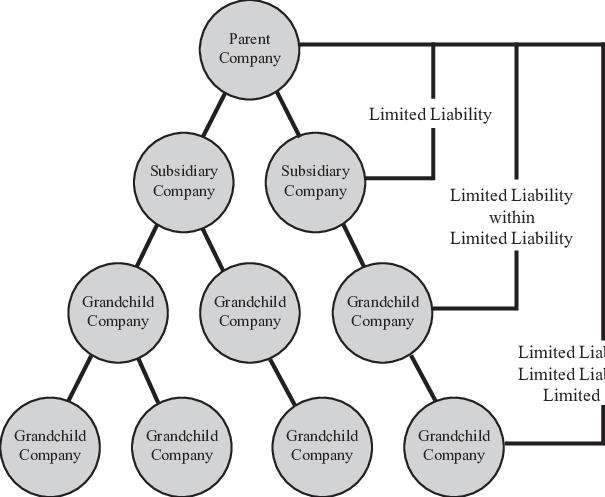
On 15 April 2021, AG Pitruzzella issued his much awaited Opinion in Sumal (not available in English at the time of writing, see here for the text in various language versions), which concerns the question of whether damages may be sought from affiliates of the entities identified in a previous public enforcement decision.
Sumal is one of the four preliminary references submitted by Spanish commercial courts in the context of the flurry of claims following the Trucks decision of the European Commission, together with case C-30/20 Volvo seeking clarification on territorial jurisdiction and Article 7(2) of Regulation (EU) No 1215/2012, case 267/20 Volvo and DAF Trucks on the retroactivity of the Directive 104/2014 and the recently submitted case 163/21, PACCAR, on rules of evidence. These claims have been followed by multiple authors in Spain, notably Fernando Díez, Francisco Marcos and Juan Ignacio Ruiz Peris and raise many issues of interest in the field of private enforcement.
The interest on these matters of course goes beyond this country. Back to affiliate liability, as reported by Caroline Caufmann, a Dutch court has enforced a decision against an affiliate. In Germany, Christian Kersting has discussed in D’Kart a decision pointing at that direction from the Dortmund Landsgericht. I refer the curious reader to my article published earlier this year by the Journal of Competition Law & Practice (draft available on SSRN).
This post provides a brief introduction to the Opinion. The comments follow the document’s structure.
Procedure (paras 4-10). The initial paragraphs of the Opinion recall the context of the preliminary reference and the main procedural steps at the Court, which will hear the case in Grand Chamber, the observations formulated by two Member States (Italy and Spain) and the decision not to hold an oral hearing, replaced by written submissions on specific questions placed by the Court. (para 10).
Admissibility (paras 11-18). AG Pitruzzella opines that the admissibility objections raised by the defendant in the original case, Mercedes Benz Trucks España, S.L.(MBTE) should be dismissed, save in respect of the fourth question, for lack of sufficient information. That question (‘If the answers to the earlier questions support the extension of subsidiaries’ liability to cover acts of the parent company, would a provision of national law such as Article 71(2) of the Ley de Defensa de la Competencia (Law on the Protection of Competition), which provides only for liability incurred by the subsidiary to be extended to the parent company, and then only where the parent company exercises control over the subsidiary, be compatible with that Community doctrine?’) may arguably be responded anyway through the general principles on primacy and direct applicability of EU law.
General observations (paras 19-22). The Opinion proposes to address the three questions jointly and then summarises the main arguments of the parties. The interesting bit there is in paragraph 21, where AG Pitruzzella notes that the initial position of the Commission in the case was contrary to affiliate liability, a position that evolved in the last written statements, where the Commission would have conceded that the subsidiary could be made liable (i) if there is a ‘link’ between its conduct and an essential element of the infringement or (ii) if a direct claim against the parent company was impossible or excessively difficult. This second element is not discussed further in the Opinion.
The notion of undertaking (paras 23-31). This section recalls the case-law on the doctrine of ‘economic unit’ under EU competition law, starting with ICI (case 48/69, EU:C:1972:70) and stressing its functional nature. This part hovers around the idea that an ‘economic unity’ or undertaking is based on organisational, economic and legal links defined by control. A good summary, but nothing revolutionary.
The foundations of upward liability (paras 32-47). This part looks at the parental liability doctrine. This might surprise, given that this is clearly not an issue in Sumal; it could be said it would be the exact opposite. The intention is clearly to discuss ‘downward’ liability by contrast to the established notion of ‘upward’ or parental liability.
At the outset, the Opinion notes that parental liability as found in case-law might be understood to be based on two constructions (para 33). One would be that parent companies are liable because of their capacity to determine the conduct of an affiliate. Another is based on the idea that all legal entities form an economic unit. AG Pitruzzella notes that the answer to the questions formulated in this case may determine the answer to be given, and resolutely opts for the second alternative (para 36), finding support in the recent jurisprudence of the Court which has stressed that the principle of personality applies to the undertaking, not to each legal entity (para 46). This section ends with candid comments on the evolution that is perceived in various fields of law towards some form of ‘enterprise liability’ or similar tools based on the true economic nature of groups of companies (para 47).
Economic unit and ‘descending’ liability (48-53). The discursive section on upward liability contrasts with the brief comments on the downward dimension. That is understandable, since the latter is built on the prior section. However, two elements in this part of the Opinion deserve a mention.
One is the four-step intellectual process proposed to impute a legal entity in both upward or downward situations, aimed at presenting them as identical (paras 48-52). It ultimately defends that the identification of the legal entity is just a last step in the logic process of attribution.
The other is the reliance on the General Court decision in Biogaran (case T-677/14, ECLI:EU:T:2018:910), for want of a better (ie, from the CJ) precedent. That case had been mentioned by the referring court and is helpful in defending the liability of subsidiaries with unproven knowledge of the infringement. At the same time, however, is a remarkably weak foundation for a principle with the importance of the one at stake here.
In the end, and this should be stressed, the discussion does not address ‘why downward liability exists in law’ but rather ‘whether there are logical reasons to discard it’ (para 52). By so doing, Sumal evades addressing the question as an obligation based on EU law, but as a tool that EU law would tolerate in certain conditions. It is difficult to overestimate the importance of that approach for the solution proposed to this case.
The conditions for declaring joint liability of the affiliate (paras 54-59). This is arguably the most interesting part of the Opinion. In it, AG Pitruzzella notes that, in ‘upward’ (parental) liability scenarios, the fact that the parent company determines the conduct of the affiliate suffices to impute the conduct to the former; however, in ‘downward’ liability cases, the mere existence of control would not suffice, it being necessary that the activity carried out by said legal entity is necessary for the implementation of the conduct. That would be the case where the affiliate is involved in the specific economic activity under consideration, for example, by selling the goods object of the cartel (para 57). In this respect, the Opinion relies on several UK cases starting with Provimi (fn 70) and ENI (case T‑39/07, EU:T:2011:356). As mentioned above, this link had been required in the written submissions filed by the Commission.
When explaining this logic, the Opinion argues that a subsidiary carrying activities in other areas would fall outside the functional notion of undertaking for these purposes. The consequences of this logic are difficult to anticipate and will require further reflection.
Extension of these principles to private enforcement (60-69). Paragraphs 60 ff of the Opinion move away from logic of public enforcement and build on Skanska (case C-724/17, ECLI:EU:C:2019:204). AG Pitruzzella recalls that the determination of the liable entity is directly governed by EU law and notably that it may not have a different meaning in public and private enforcement, linking the discussion in the prior sections to the case, and concluding that downward liability is as acceptable in private as it is in public enforcement.
The reliance on Skanska is understood; it is however noted that, unlike Sumal, that case was based on the principle of effectiveness, displacing national rules when it would stand in the way of EU law. In contrast, as above noted, the Opinion discusses if EU law would permit, not require, such ‘inverse’ claims. In other words – the Opinion does not advocate that EU law would impose downward liability, treating an eventual failure to do so as a breach of EU principles (as in Skanska), but proposes confirming that EU law would not impede such attribution of liability within certain conditions. Consequently, the procedural obstacles faced by claimants are acknowledged (para 68), but in no way considered a barrier that would stand in the way of the rights granted by EU law and that national courts should disarm.
While this logic is understandable, it leaves unanswered the question of what principle of law, either EU or national, would require affiliates to be held liable for these damages, despite offering a construction that would ultimately impose legal obligations on legal entities. That, of course, is just one out of many questions that arises from this case and will require further reflection.
Binding nature of the determination in the public enforcement decision (70-76). The last section of the Opinion discusses whether the determination of the legal entity made in the public enforcement decision would bind the referring court. If so, national courts would, out of respect to the decision of the Commission under Art 16 of Regulation 1/2003, be prevented from imposing liability in a follow-on case on entities other than those specifically identified in it.
This is a tricky issue on which there is limited authority. In Martinair (case T-67/11, ECLI:EU:T:2015:984, 37) the GC declared noted that the identification of an entity in the public enforcement decision would bind national courts. AG Pitruzzella does not mention that case and moves swiftly to proclaim that the national judge can determine a different legal entity, provided that that entity meets the above criteria of participation in the infringement (para 74). At this point, the Opinion quotes the Commission as having accepted this logic in its written submissions, creating the impression that these statements may have played a role.
Conclusion The Opinion concludes that, in a claim for damages as that before the national court (ie, a follow-on claim), a legal entity may be held liable despite the fact that only its parent company has been sanctioned by the Commission provided that the economic, organisational and legal links at the time of the infringement have been established, and that the conduct of the controlled entity has contributed in a substantial manner to the illicit behaviour and to the effects of said infringement.
The matter is now laid before the Grand Chamber of the Court of Justice. An eventual acceptance to the proposals formulated by AG Pitruzzella would facilitate private enforcement claims. Some additional clarity on the requirements that affiliates must meet to be liable in these situations will be needed over time. The potential weakening of the binding nature of the identification of the liable entity seems a price the Commission is happy to pay. However, questions shall be raised on the legal basis for this solution. Time, and indeed the Court, will tell.
W@ Mentoring Programme

Women AT recently announced a cross-disciplinary, cross-organisation and cross-border Mentoring Programme for women competition professionals spanning geographies from the North, Central & South Americas, to Europe, to South Africa.
This is a great opportunity for women professionals, which we are most happy to support.
If you or your female colleagues might be interested, please apply and/or encourage them to apply by 23 April.
Why The Proposed DMA Might be Illegal Under Article 114 TFEU, And How To Fix It
At the end of 2020 I wrote a post here titled “The Key to Understand the Digital Markets Act: It’s the Legal Basis“, noting how, in my view, this is the single most important legal and political issue when it comes to the design and adoption of the Digital Markets Act.
That post already sketched my thinking, but given the interest and importance of the subject, and the remarkable absence of a public discussion about it, I have now fleshed out those ideas in a paper co-written with my colleague Nieves Bayón.
The paper is available here:
Here is a summary of its content and main findings:
The Commission’s DMA Proposal seeks to create a new regulatory instrument including new ex ante rules applicable to “gatekeepers” and a new set of far-reaching powers. Like any EU legislative initiative, the DMA must be grounded on a legal basis provided for in the EU Treaties. The choice of the legal basis determines both the relevant legislative procedure and the scope for EU action. Recourse to an inappropriate legal basis has in the past led to the annulment of various pieces of EU legislation.
The current DMA Proposal is based on Article 114 TFEU. This legal basis empowers the EU legislature to adopt measures that are designed to approximate national rules and to prevent regulatory fragmentation in the internal market, provided that these measures are proportionate to the objectives pursued.
An analysis of the DMA Proposal in light of the relevant EU case law suggests that the current text could be incompatible with primary EU Law.
First, the DMA Proposal does not appear to be designed to prevent regulatory fragmentation. On the contrary, the current text of the Proposal, and in particular Articles 1(5) and 1(6), would enable Member States to enact and maintain in force national rules overlapping with, or going beyond, EU rules. Some Member States have in fact invoked the DMA as a reason to adopt parallel “supplementary” national rules. Absent a real harmonization effect, the DMA Proposal could result in increased regulatory fragmentation, and even give rise to ne bis in idem concerns. The EU Courts have made clear, in this regard, that Article 114 TFEU is not a valid legal basis for measures which do not approximate or harmonize national rules because they aim at introducing new legal instruments and/or leave unchanged the different national laws in existence.
Perhaps the best illustration that the DMA Proposal falls short of its declared objective of preventing regulatory fragmentation is the fact that none of the existing or likely sources of regulatory fragmentation identified in the Commission’s Impact Assessment to justify the adoption of the DMA would actually be affected by the DMA. The recent reform to the German Competition Act exemplifies how Member States could adopt new obligations simply by defining a scope of application that is not limited to “gatekeepers” as defined in the DMA and/or by presenting those obligations as an extension of their national competition rules.
Second, the definition of the DMA’s scope in Article 3 and some of the obligations and prohibitions listed in Articles 5 and 6 would appear to risk breaching the principle of proportionality, and impinge on the fundamental rights of the companies subject to its obligations. To ensure the proportionality of the DMA’s scope of application and content, the EU legislature would be required to set adequate limits on the Commission’s discretion, and verify that, in the light of the available evidence, the limitations on gatekeepers’ freedom to conduct their business and right to property do not go beyond what is necessary to ensure the proper functioning of the internal market.
For these reasons, the paper submits that the DMA Proposal would require important adaptations in order to validly rely on Article 114 TFEU and avoid the unanimity requirement applicable under Article 352 TFEU.
We identify 10 constructive solutions that could enable the EU legislature to achieve its goals while complying with the substantive requirements flowing from Article 114 TFEU and other general principles of EU law.
Absent these changes, the DMA would, in our view, be vulnerable to an eventual legal challenge before the EU Courts.
A Challenge for the Competition Community (1 Week Left to Support Kickcancer)
We are thrilled and very grateful for your reaction to this challenge. We truly appreciate your individual efforts, as well as the support of the various competition authorities and companies that have decided to collectively support this initiative. Thank you!
There is still 1 week left to buy some of the winning competition meme mugs and support Kickcancer‘s efforts to fight child cancer. Orders will close on 19 March, so hurry up!
To incentivize purchases in these last days, we have decided to add two additional all-time-favorite meme-mug models (see below)
You can BUY THEM HERE.


The prohibition of double jeopardy. Case law in need of a revamp (by Rafael Allendesalazar)

[This is a guest post by our friend Rafael Allendesalazar (MLAB) discussing the EU case law on the ne bis in idem principle in the wake of the Slovak Telecom Judgment and of Amazon’s appeal against the Commission’s decision to carve Italy out of its BuyBox investigation. A very interesting take on an important and timely topic]
The principle of ne bis in idem, also known as the prohibition of “double jeopardy”, “undoubtedly constitutes one of the cornerstones of any legal system based on the rule of law” and its “rationale lies in ensuring legal certainty and equality”, as reminded by the then AG Wahl in his Opinion in the Powszechny Zakład Ubezpieczeń na Życie Case C-617/17. The ECJ has repeatedly acknowledged that it is a fundamental principle of EU law, that has been enshrined in Article 50 of the Charter and Article 4 of Protocol 7 to the ECHR as regards criminal proceedings and penalties, but that must also be observed in proceedings that may lead to the imposition of fines under competition law. It precludes an undertaking from being found liable of proceedings being brought against it afresh on the grounds of anticompetitive conduct for which it has been penalised or declared not liable by an earlier decision that can no longer be challenged. The principle is subject to a twofold condition: that there is a prior definitive decision (the ‘bis’ condition), and that the prior decision and the subsequent proceedings or decisions concern the same person and the same offence (the ‘idem’ condition).
As to the ‘idem’ condition, the same offence could be defined by reference to the facts, to their legal classification or to the legal interest protected. Regarding criminal proceedings, the ECJ has opted for the first criterion and has explicitly rejected the other two (Case C-436/04, Van Esbroeck). “Same offence” is defined as the “identity of the material facts, understood as the existence of a set of concrete circumstances which are inextricably linked together, and which resulted in the final acquittal or conviction of the person concerned” (Case C-537/16, Garlsson). It does not require the facts to be identical, as it suffices that the offences “have the same essential elements” (Judgment of the ECHR of 07.12.2006, Application 37301/03, Hauser-Sporn); for instance, exporting and importing the same illegal goods from different States are considered the same offence. Furthermore, even where the imposition of a criminal penalty depends on an additional subjective constituent element in relation to the administrative fine of a criminal nature, this does not call into question the identity of the material facts at issue (Case Garlsson).
When applying the ne bis in idem principle to competition law cases, the ECJ has interpreted it narrowly and has required, not only an identity of offender and of facts (which includes the same territory and the same period) but also an additional third identity: the legal interest protected in both cases must be the same. This divergence in the scope of the ne bis in idem principle in criminal law and in competition law cases was strongly criticized by AG Kokott in her Opinion in Toshiba: “to interpret and apply the ne bis in idem principle so differently depending on the area of law concerned is detrimental to the unity of the EU legal order. The crucial importance of the ne bis in idem principle as a founding principle of EU law which enjoys the status of a fundamental right means that its content must not be substantially different depending on which area of law is concerned. For the purposes of determining the scope of the guarantee provided by the ne bis in idem principle, as now codified in Article 50 of the Charter of Fundamental Rights, the same criteria should apply in all areas of EU law”. AG Kokott concluded that retaining the criterion of the unity of legal interest protected would not be compatible with the requirement of homogeneity as enshrined in the third subparagraph of Article 6(1) TEU and the first sentence of Article 52(3) of the Charter. More recently, in his above-mentioned Opinion in Case C-617/17, the then AG Wahl also rejected the application of the three-fold criterion in competition law cases and concluded that “on the basis of the two-fold criterion based on the identity of the facts and offender, the principle of ne bis in idem can ensure effective prosecution of anticompetitive conduct in the European Union. It also ensures more legal certainty for undertakings”. AG Wahl recalled that the origin of the ECJ’s case-law requiring the identity of legal interest can be traced back to the Walt Wilhem judgment of 1969, at times where the risk of cumulative application of national and EU competition law was limited and such legislations were often designed to safeguard different legal interest; furthermore, neither the Charter nor Protocol 7 to the ECHR were then in force. More than fifty years later, and following the adoption of Regulation 1/2003, the risk of cumulative application is now inherent to the decentralised system of competition law enforcement it has set up, despite Regulation 1/2003 containing some rules seeking to avoid parallel prosecution, particularly in Articles 11 and 13. That is why —Wahl concludes— the application of these rules and of the principle of ne bis in idem should not be made “subject to overly cumbersome criteria”.
The Slovak Telekom judgment and its consequences
Notwithstanding these opinions, the ECJ has reiterated that the ne bis in idem principle requires the identity of legal interest and has defined rigorous formal identity requirements to apply Article 11(6) of Regulation 1/2003. In its recent judgment of 25.02.2021 in the Slovak Telekom Case C-857/19, the ECJ has reaffirmed its strict interpretation.
Read the rest of this entry »The Role of Competition Policy in Hi-Tech Markets (26 February)
Following the success of the first webinar organized within the framework of the IEB’s annual course on competiiton law, below is the program for this year’s second webinar, which will take place on Friday (26 February). Once again, we will be fortunate to hear from phenomenal speakers.
This webinar will take place via Teams and under Chatham House Rules. For further information and registrations, please contact competencia@ieb.es
16:30- 17:45 CET: Competition law in high tech markets in the EU and Spain
Nicholas Banasevic. Head of Unit, DG COMP, European Commission
José María Jiménez Laiglesia. Partner, Latham & Watkins
Ainhoa Veiga. Partner, Araoz y Rueda
Moderator: Milan Kristof. Référendaire, Court of Justice of the European Union
18:00-19:15 CET: The proposed EU Digital Markets Act and recent developments in the US
Nicholas Banasevic. Head of Unit, DG COMP, European Commission
Oliver Bethell, Director. Competition EMA, Google
Renata Hesse. Partner, Sullivan & Cromwell
Moderator: Lewis Crofts. Editor In Chief, MLex


 Chillin'Competition