Author Archive
Almunia appointed Competition Commissioner
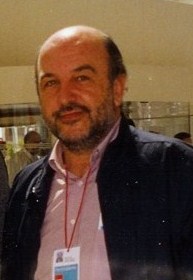
It’s official. As Nicolas anticipated last week, Joaquin Almunia will be the next Competition Commissioner.
Mr. Almunia is surely one of Spain’s most able politicians. He has earned wide recognition all throughout Europe because of his handling of the economic crisis as the Commissioner in charge of Economic Affairs, and he is also a well respected political figure at the national level despite many years under the spotlight (at 34 he was the youngest Minister of the first Gonzalez government; he held Ministerial offices for 9 years; later on he became the leader of the socialist party and ran for Prime Minister in 2000). By now his CV has widely circulated elsewhere, so there’s no point in insisting on that.
Apparently some are concerned about the fact that a socialist and former trade unionist will be taking over the Competition portfolio. In my view, at this point in time such concerns lack any basis, the consensus on the role of undistorted competition being widespread in both aisles of the political spectrum. Moreover, there is evidence of Commissioner Almunia’s longstanding commitment with strong and independent competition law enforcement.
Indeed, the fact that Mr. Almunia ran for Prime Minister against Aznar in 2000, means that his profile and policies were very carefully scrutinized at the time. Interviews, documents and press clips of the 2000 campaign provide nowadays very interesting information about his views on different issues. Not only do we know that he’s an opera fan and a supporter of Athletic de Bilbao (not doing bad so far this season), but, more interestingly, a review of those materials tells us that the promotion and defense of competition ranked, even then, at the top of his political priorities.
During the electoral campaign, then candidate Almunia explicitly distanced himself from the attitude towards public intervention prevailing in other Member States governed by socialist parties. He proposed to accelerate liberalization of the electricity, gas and telephone markets, and advocated for continuing the process of privatizations. He further affirmed that his policies defended ‘free competition, free market and the battle against oligopolies’ more than anyone else’s.
Such affirmations seemed not to be mere ‘lip service’, the urgent adoption of a new Competition Act being one the the top 10 priorities in his political program for the general elections (something quite unusual in Spanish politics).
Finally, l will recall one interesting episode, now almost forgotten, but which, at the time, received ample media attention:
At the end of February 2000, Mr. Almunia was speaking before an audience of businessmen about his economic program, and insisted on the necessity to grant the Competition Authority (then Tribunal de Defensa de la Competencia) greater powers enabling it to ‘act independently, without waiting for the Government to take the initiative’. At that moment, he was interrupted by the President of the employers association (late Jose Maria Cuevas, a very influential figure back then), who manifested its disbelief:
‘I start to doubt that not even you believe you will be elected Prime Minister because the last thing that anyone who wants to govern would do would be to grant more powers to the Tribunal de Defensa de la Competencia (…) If you really want to govern tell us what the f&%k you plan on doing with the Competition Authority’.
Almunia’s response:
‘I find it surprising that you want a Tribunal de Defensa de la Competencia kneeled before the government (…) That would introduce skepticism where there should be illusion’.
In sum, a decade ago Mr. Almunia stood up for independency in competition enforcement and made competition one of his political priorities. This record and his experience at the EU level make him, in theory, one of the best Competition Commissioners we could be hoping for. We wish him and his team the best of lucks.
BTW, while searching for info on this topic I found out that the news about appointment made its way into a website on ‘celebrity news, all the time’ under the heading ‘Antitrust Gossip’ (!) Is competition law getting glamorous??
(Image possibly subject to copyrights: source here)
The New Faces of Europe

The appointment of Herman Van Rompuy and Catherine Ashton as the visible faces of the EU has come as a surprise both within and outside Europe. The public reaction –or rather the media reaction- following the announcement has criticized their appointment on the basis of their ‘low profile’ and lack of EU-related experience, has highlighted the fact that neither of them has ever been elected to public office, and has even focused –not very kindly- on their physical appearance (!).
Although this blog doesn’t deal primarily with European politics, this is an issue which surely deserves a comment. Moreover, it reveals an endemic problem which, amongst other implications, also affects the ability of DG Comp to perform its role adequately. I do not host any criticism towards Mr. Van Rompuy or Mrs. Ashton. In fact, the contrary would be odd, since so far I know very little about them, about their previous accomplishments or about the agendas they intend to pursue. No elements can so far rebut the presumption that these are able people who may defeat the low expectations which seem to have followed their appointment. We should hopefully recall that similar criticisms arouse when Delors was appointed, and he certainly prevailed over skeptics.
My first concern is purely political (and leaves aside the Belgian problem of having to wake up, again, without a Prime Minister). The rationale of many commendable policies and actions in the European field has been to reinforce the EU’s legitimacy, to enhance transparent and democratic decision-making and, in essence, to approach it to the citizen. This was also one of the reasons for deciding in the first place to name one visible permanent President of the European Council. However, even a passionate pro-European can’t help but wonder whether we are asking the citizens too much when we intend them to feel attached to a project whose new faces are unknown not only to them but also to many of the leaders who have appointed those people. This is no doubt a rather interesting way of reinforcing the link between the citizens and the European institutions.
My second and main concern is a different one, and relates to a worrying tendency that is by no means new in the European environment, but which seems to be getting more acute with time. It seems that in order to be promoted to any higher post subject to political approval a ‘flexible’ profile is often a pre-requisite (it should go without saying that there are also numerous exceptions to this rule). Many are conscious that a meteoric career at the institutions partly depends on one’s willingness not to step on anyone’s foot, to bend or accommodate to national political pressures, and to always consider the political implications (i.e. the interest of larger Member States) relating to any action or decision, sometimes at the expense of more important considerations.
Such dynamic also has an impact on the DG-Comp and on its ability to undertake cases in the light of their economic relevance or pursuant to the need of establishing precedents and providing guidance on technically complex matters. Many of our readers are probably familiar with the experience of presenting a reasonable problem to the Commission and being rejected because of the presumable lack of political support on the part of specific powerful Member States. Ironically such refusals may eventually be effected under the cover of an alleged ‘lack of Community interest’.
The problem is therefore much larger than this isolated appointment episode, which only evidences the prevailing attitude. It is certainly no easy task to achieve consensus between 27 national political interests, but this should be no excuse for implying that consensus requires converging on the minimal common denominator. That, I believe, is comfortable, irresponsible and short-sighted politics. The European project was grounded on the vision and will of true statesmen who held political views and aspirations much higher than those currently prevailing. At a time when Europe needs to define its future role in the world stage, when audacious politics are needed more than ever, that’s when we –by failing to demand our leaders to abandon self-complacency and to act boldly as needed- are screwing it all up.
Tribute to Advocate General Ruiz-Jarabo Colomer
 Advocate General Dámaso Ruiz-Jarabo Colomer passed away last night. This is a truly irreparable loss that comes as a great shock to all of us.
Advocate General Ruiz-Jarabo has been one of the very finest lawyers in the history of the European Court of Justice. Not only he was decisive in shaping the role the of Advocates General, but his contribution to the development of EU law has been critical in so many ways.
He will be remembered by all who met him and by all who learnt from his brilliant Opinions. Those Opinions will surely continue to inspire and influence European law for many years to come. We shall all miss him greatly.
Predictably Irrational – Behavioral Economics and Competition Law

I’m currently reading Predictably Irrational, an extremely interesting and thought provoking book on behavioral economics. It challenges traditional assumptions regarding, amongst others, price theory and rational profit maximizing behavior, precisely the tenets of economic thinking that underpin competition law’s design and application.
The subject of the possible uses of behavioral economics for competition law purposes remains largely unexplored, even if now seems to be on the rise. Nevertheless, the controversy over the validity of rational choice theories is by no means new. Challenges to such theories have been rebutted in the past, sometimes brilliantly and even humoristically, by some of the most prominent antitrust scholars:
Skimming through ‘The Antitrust Paradox‘ I came across Bork’s dismissal of the objection that business are not purely, or even primarly, rational profit seekers. Bork argues -quoting Friedman- that price theory does not require the assumption of effective profit maximizing behavior, but rather that firms ‘generally behave as if they were engaged in maximization. But, in addition, he has a somehow more interesting argument when he states that:
‘[i]f required I should not hesitate to impute conscious profit maximizing to businessmen -experience with businessmen, and even more, with antitrust lawyers and consulting economists should convince anyone that profit is a goal not only consciously but constantly borne in mind‘.
(There we are, us, poor innocent antitrust professionals, turned into the quintaessential rent seekers….)
This notwithstanding, this book on behavioral econ. certainly has a valid point. Whilst behavioral econ. is ill-suited to replace rational choice theory as the theoretical framework for competition law, this rising discipline can surely contribute to raise our awareness about the existence of unavoidable flaws in traditional analysis.
Moreover, there are surely some direct applications of behavioral economics which could be useful for competition law purposes. Let’s illustrate this through a few examples.
First, behavioral econ. may help identify systematic biases or deviations from rational prescriptions which would aid in determining whether in some instances firms are more or less likely to engage in non-profit maximizing strategies than we generally tend to believe (e.g. predatory pricing when recoupment is unlikely).
Also, some studies aim at explaining why ‘overconfident entrants’ may decide to enter into a given market ignoring unfavorable conditions and high barriers and therefore tipically fail in their attempt (if that were so, then reliance on entry rates to qualify market power should be replaced by the sole study of successful penetration).
Another possible use of behavioral econ. relates to ex post assessment of predictions on the effect of mergers. Competition authorities could increase their efforts to empirically evaluate ex post how accurately economic models used in merger control predict the effects of mergers in order to explore whether systematic deviations might also take place. I understand that US authorities are starting to follow this path (after all, the laxity of the Bush administration in the area of merger control provides for a favorable environment for such exercise), but I am not aware of such developments in other jurisdictions.
Finally, the possible uses of this disciple in the area of competition law must not necessarily be confined to analyzing why businessmen and firms engage in irrational behavior; it would surely be interesting to study when and why competition authorities behave irrationally.
(Image possibly subject to copyrights: see here)
Anti-Monopoly
As anticipated in previous posts, we continue feeding up a ‘leisure time for competition geeks’ section.
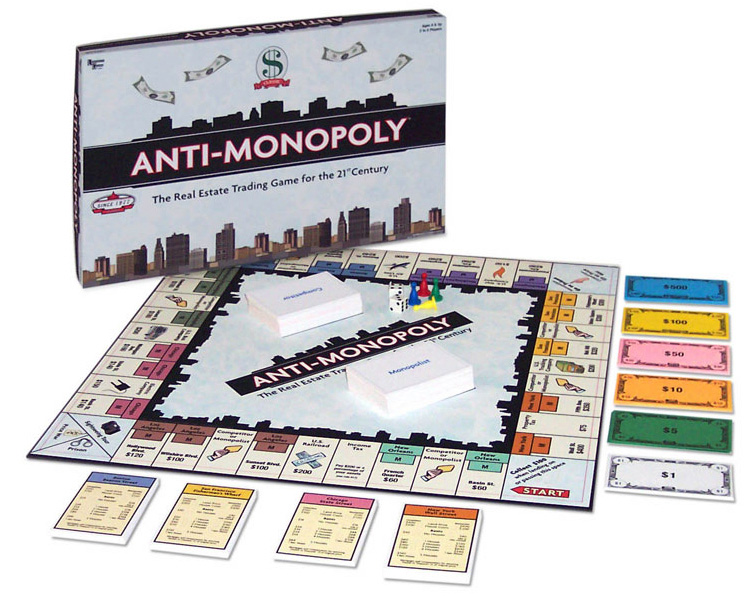
This post is about a board game, ‘Anti-Monopoly’, a different version of ‘Monopoly’ with an ‘anti-monopolistic’ theme.
In Anti-Monopoly®, players play either by or competition rules fixed at the beginning of the game:
COMPETITORS … charge fair rents, build as soon as they own a property, put five houses on their properties and occasionally go to Price War.
MONOPOLISTS… extort monopoly-high rents from their poor tenants, build only after they have monopolized a color grouping, restrict supply by putting only four houses on their properties and occasionally go to Prison.
The good guys are the small business entrepreneurs and the bad guys are the monopolists. Since players do not play by the same rules, fairness is achieved by a patented probability technique, has given each side equal chances to win.
OBJECT OF THE GAME: To be the richest competitor after all monopolists have been bankrupted or to be the richest monopolist after all competitors have been eliminated.
There is actually a great deal of controversy surrounding the creation of the game, which includes a 10 year long legal battle between the creator of Anti-Monopoly (Ralph Anspach) and the owners of the ‘Monopoly’ trademark. After more than 37.000 copies of ‘Anti-Monopoly’ were destroyed pursuant to a District Court’s order which found a trademark infringement in the use of the word ‘Monopoly’, the 9th Circuit Court of Appeals ruled in 1979 that the trademark ‘Monopoly’ was generic and thus unenforceable. Nonetheless, this wasn’t the end of the story. Soon after the 9th Circuit’s decision, the US Congress amended the Trademark Act to protect longstanding marks against generic claims, thereby allowing Hasbro to assert again its rights to the mark ‘Monopoly’ and its variants.
A settlement was eventually reached and the game is now marketed under a license from Hasbro.
For more info on the game as well as on the underlying legal story, click here
Thanks to Anne Dostert for the pointer (and indirectly to Scott Hemphill, from Columbia, who apparently has a copy of the game in his office) .
Spanish Court of Appeal strikes down CNC’s Inspection Practices

The Audiencia Nacional (‘AN’) – i.e. the Spanish Court in charge of the review of acts and decisions adopted by the Spanish National Competition Commission (‘CNC’) – recently delivered an important judgment quashing some of the CNC’s investigatory practices, which had elicited a great deal of controversy over the past few months.
Background: In a raft of recent cases, the CNC investigatory branch made use of the new investigatory powers provided for under Competition Act 15/2007. Those cases triggered a stern opposition from the legal community, which voiced that the CNC’s inspections might have deviated (i) from the standards set out by the ECJ in relation to inspections under EC competition rules, as well as (ii) from the limitations imposed by Spanish Courts with regards to police/and or administrative inspections, thereby breaching the rights of defense of the inspected undertakings. Disregarding the criticism, the CNC’s Council nonetheless adopted a number of decisions supporting the interpretation of the CNC’s Investigation Directorate.
The judgment: the AN’s Judgment originates in an appeal against one of those decisions. In essence, it can be summarised as follows:
1) The Court observes that many of the documents obtained -collected pursuant to the copying of computer hard drives- are unrelated to the sector under investigation as identified in the mandate as well as in the judicial authorization granted to the CNC, and therefore cannot be deemed to be covered by them. Consequently, the Judgment declares that there was a breach of the right to inviolability of the domicile of the undertaking inspected.
2) As to the consequences of the said breach, the Court rejects the claim that the whole inspection should be declared void. Instead, it holds that the documents related to the subject matter of the investigation did fall within the scope of the mandate and of the judicial authorization and were thus lawfully collected, and orders the CNC to return all other documents.
3) The Judgment affirms the rights of firms subject to an inspection to have access to the search criteria used to retrieve information stored in hard drives (allegedly no search criteria had been used in the inspection at stake).
4) The AN dismisses the claims related to the alleged violation of legal privilege arguing that the CNC has merely collected possibly privileged documents but has not made use of them.
5) The arguments related to a possible breach of the rights to privacy of correspondence of the undertaking’s employees are also dismissed on the basis that the inspection was not aimed at collecting such documents. Accordingly, the Court holds that any extra-limitation with regards to employee’s private documents stored in computers located at the undertaking’s premises must be subsumed within the breach of the rights of the undertaking inspected.
In my view, this is a most welcome judgment if only because it narrows the gap between the standards applied by the CNC and those of the European Commission.
However, the non-conformist lawyer that sleeps inside me has a couple of comments:
– First: the AN’s argument that there cannot be a breach of the rights of defense unless privileged documents are effectively used as evidence seems to be at odds with the ECJ’s ruling in Akzo with regards to the ‘cursory glance’ practice.
– Second: in this case, unlike in a number of other recent ‘dawn raids’ in Spain, the subject matter of the investigation had been clearly defined in the mandate as well as in the judicial authorization. Both identified the specific conduct under investigation, the product and geographic market affected, as well as the years during which the agreement was thought to have been implemented. Nevertheless, for the purpose of determining which documents can be deemed to be comprised within the scope of the mandate, the Judgment prescinds of those and merely takes into consideration whether it is related or not to the sector under investigation without any further qualifications, which is arguably still a wide criterion.
See below for link to the judgment.
(Image possibly subject to copyright. Source)
New book on EC and Spanish Competition Law
Volume X of ‘Derecho de la competencia europeo y español‘ is already out (volume IX was also published a few weeks ago). This edition, edited by Luis Ortiz and Eulalia Sanfrutos, includes contributions in English, French and Spanish on different aspects of both EC and Spanish competition law. No review because my objectivity is severely compromised: there are several good friends amongst the authors and I am the co-author of a contribution on the new Chinese Anti-Monopoly law (there’s always a ‘black sheep’ who doesn’t stick to the book’s title). This is the table of contents:
– Problemas prácticos derivados de las nuevas facultades de investigación de la Comisión Nacional de la Competencia / Carmen M. Cerdá Martínez-Pujalte
– La confidencialidad de las comunicaciones entre abogado y cliente: un intento de definición válido para el ordenamiento jurídico español / Violeta Tomás Gutiérrez
– Will the new Commission leniency and fining policy appeal to multi-jurisdictional lenency applicants? / Luis Ortiz Blanco, María Muñoz de Juan and Ángel Givaja
– An offer you can´t refuse? An analysis of EC cartel settlement / Mark English
– Foreign consumers and private antitrust litigation / Charlotte Leskinen
– Competencia y comercialización de derechos de televisión: ¿y si la intervención de las autoridades de competencia fuese el único problema? / Pablo Ibáñez Colomo
– Les mesures structurelles à la lumière du Règlament 1/2003 et du Règlament 139/2004: analyse comparative / Franz Stenitzer
– La regulación de la recuperación de las ayudas de Estado españolas y sus carencias: ¿un exceso de confianza en la autonomía procesal? / Pedro Cruz Yábar
– Defensa de la competencia “Made in China” / Alfonso Lamadrid de Pablo y Napoleón Ruiz García
First Ever Hollywood Competition Law Movie?

For those of you who are brave enough to take an additional drop of competition law stuff over the WE (if you’re reading this you’re probably within the category), rush to the theatre watch ‘The Informant’.
This movie -directed by Steve Sodenbergh and based on Kurt Echenwald’s book- tells the story of the DOJ’s investigation inthe lysine cartel from the perspective of the executive who blew the wisthle, Mark Whitacre (played by Matt Damon).
The lysine cartel was also sanctioned in Europe, and in fact Whitacre is also a relevant character in the Commission’s decision (see paragraphs 336-341).
You may already have watched the videos of the cartel’s meetings, taped thanks to Whitacre. In case you haven’t, the transcripts are available here in different segments: 1, 2, 3, 4, 5, 6 (the part in segment one where they joke about the FBI and the FTC being present at the meeting is particularly good).
P.S. If Nicolas keeps recommending books and I get started with movies we might build a “leisure time” section for all competition geeks.
Apple, Google, and more on Interlocking Directorates

Last Monday, Arthur Levinson -until now a member of the board of both Apple and Google- resigned from the board of Google. The resignation follows that of Eric Schmidt (Google’s CEO), who abandoned his position on the board of Apple in August. Both moves were aimed at addressing the FTC’s concerns over the possible anticompetitive effects arising from the close inter-personal nexus between the two companies.
Even though the FTC’s investigation on this matter may have reached its end, Google has not moved away from the antitrust spotlight. The initial book settlement was derailed pursuant to the numerous objections put forward against it, and the District Court has required a new version to be delivered by November 9th for preliminary approval. Meanwhile, the DOJ’s investigation concerning hiring practices at Google, Yahoo and Apple is ongoing. And some suggest that this could only be the beginning…
Those cases, as well as last week’s announcement of the opening of an investigation about IBM’s conduct in the mainframes market, have been seen as consequences of the stricter approach undertook by antitrust enforcers under the Obama administration regarding high-tech markets, particularly in the presence of network effects.
Now, coming back to the Google/Apple issue: in the US, the Google/Apple investigation constitutes the second challenge to interlocking directorates brought by the FTC under Section 8 of the Clayton Act over the past two years (the case brought against Commscope was resolved by a consent decree in December 2007).
In Europe, the ECJ and the European Commission have acknowledged that interlocking directorates and, more generally, minority shareholdings, could wield anticompetitive effects. It has also been held that such effects could be dealt with under Articles 81 and 82 EC (see the Judgment in cases 142 and 156/84, British American Tobacco and Reynolds v. Commission, and the Commission’s decision in case 93/252, Warner-Lambert/Gillete).
However, in spite of recent evolutions in merger control (see the Ryanair/Aer Lingus decision, currently pending before the CFI), to my knowledge, the Commission has never initiated any proceedings challenging the acquisition of minority shareholding and/or interlocking directorates since the Gillete case in 1993.
As a consequence of this lack of interest on the part of antitrust authorities and, to a certain extent, of commentators too, this remains, one of the under-explored areas of EC competition law. In contrast with the clear prohibition contained in Section 8 of the Clayton Act, companies in Europe are again faced with considerable legal uncertainty. In sum, a great topic for research if anyone’s interested.
For a brief and recent account of the state of the law in the US and the EU on this subject, check out these: US – EU.
(Source: image possibly subject to copyrights)
The Spanish Competition Authority declares a collective bargaining agreement contrary to EC and Spanish competition law
The CNC (Spanish Competition Authority) recently adopted a decision sanctioning a stevedoring trade association (over 900.000 euros) and several labor unions (with fines ranging from 3.000 to 168.000 euros) for having concluded a collective bargaining agreement contrary to Articles 81 EC and 1 LDC (Spanish Competition Law).


 Chillin'Competition