Author Archive
Shortcuts and Courts in the Era of Digitization

The October issue of Competition Policy International’s Antitrust Chronicle featured a short article of mine titled “Shortcuts and Courts in the Era of Digitization“. It is now freely accesible here, courtesy of CPI:
CPI-Shortcuts and Courts in the Era of Digitization (Lamadrid)
The article sketches some thoughts regarding the proposals to facilitate competition law enforcement in digital markets that will be familiar to readers of this blog, using the Special Advisers’ Report as a conducting thread. It focuses mainly on two related elements: the proposals to reverse the burden of proof in certain cases, and the vision of Courts and consolidated case law as an inconvenient.
My presentation on fiscal State aid (tax rulings and more) at Les Mardis de la Concurrence
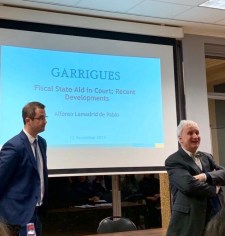
Fiscal State Aid In Court (Brussels, Tuesday 12 November)

In a week’s time I will be delivering a talk at the ULB’s great (except for this session) conference cycle “Les Mardis de la concurrence”, focusing on fiscal state aid, arguably the area of competition law where the case law of the EU Courts has recently experienced a more significant evolution.
We will do our best to extract clear lessons the most recent line of case law (including on tax rulings), and to better understand how the Courts and the Commission are likely to address these questions in the future. Anyone interested in attending and joining the chat can still register following the instructions available here.
Very much looking forward!
Chillin’Competition 2019- REGISTRATION IS NOW CLOSED

Thanks so much once again! Immediately after opening up registrations (and in spite of a malfunctioning link) the conference was already sold out and we have 300 people in the waitlist. Within the first 10 minutes we had over 10.000 clicks, which sets a record.
We know that many people experienced technical trouble during the first 4 minutes while others were able to register. Our apologies. We don’t know what this was due to, but we’ll do our best to release as many tickets as possible from the waitlist.
Thanks a million once again; we hope the conference will live up to the expectations!
Meeting and Shifting- The Burden of Proof (in Digital and Beyond)

This is the title of the last panel we will be hosting at our upcoming Chillin’Competition conference. The proposals floated to shift the burden of proof in relation to certain companies and practices were also the subject of a topical piece published yesterday in the Financial Times.
They were also the main issue I discussed in this recent piece for Competition Policy International: “Shortcuts and Courts in the Era of Digitization” (accessible to CPI subscribers; in a few days we will also make it freely available here). And it was also the topic on which I focused my intervention at a talk that Pablo and I had a couple of weeks ago with the great staff of the EFTA Surveillance Authority.
In spite of recent case law, talks like this one, books like this one, and papers like this one [note the relevant contributions from two brilliant young women in academia], there’s still a surprising amount of confusion as to what this burden entails, and as to when it falls upon the authority/plaintiff and on the defendants. These are questions we will address at our conference.
I say that the reigning confusion is surprising because most complex cases eventually hinge on this question. This is THE obstacle that authorities/plaintiffs need to satisfy in any given case. At times this has not seemed to be an issue, because enforcement has traditionally focused on clear-cut cases, and because in those cases we resort to presumptions that alleviate the burden (e.g. the “by object label”).
But the greater the complexity and the competitive ambiguity of the practice, the greater the importance of the burden of proof. Indeed, a number of decisions have been annulled with regard to more ambiguous practices (e.g. for failing to properly assess the relevant legal and economic context or the counterfactual or, in other words, for trying to shift the burden too soon).
It is certainly no coincidence that there are currently two opposite trends in our field, and that these changes are being suggested precisely at the time where EU Courts are placing greater emphasis on the Commission’s obligations in this regard (this was actually the lesson of Intel and Cartes Bancaires). And it is not surprising that many of the people suggesting these changes also advocate “Taking antitrust away from the Courts” (that is actually the name of the piece!).
And it is by no means an accident that the current proposals relate to practices that have ambivalent effects (my take on that is available here). This would not be necessary in situations (e.g. cartels) where a practice can only do harm. This is not about presuming harm in the light of clear lessons from economics and experience. It is about presuming harm absent those lessons, or against those lessons. It is about a dogma, believing in what we cannot see or prove. It may be somehow contradictory to argue that there is an abundance of obvious anticompetitive practices in the digital sector, but then recommend that their existence and anticompetitive potential be presumed, not shown on the basis of evidence. If a practice is truly anticompetitive, the evidence will be there.
But, of course, in the era of digitization we cannot bother with complexity, we have grown accustomed to immediate solutions and easy fixes that address our impulses.
The problem, however, is that the law doesn’t really work like that. As observed by President van der Woude in in this must-read JECLAP piece:
“[W]here the contested conduct of the public authorities is repressive in nature, it is hard to conceive, at least in free democratic societies, that citizens and firms can be condemned on the basis of estimates, approximations or guesses, even if they are informed ones. Uncertainty must then be balanced against the requirements of the presumption of innocence […]. [T]his balance is struck by relying on legal concepts, such as the burden of proof”.
Shifting the burden of proof in a quasi-criminal context is unheard of in jurisdictions subject to the rule of law and would set a first and dangerous precedent. Would the European Court of Human Rights, the EU Courts and Courts from Member States ever accept overturning the presumption of innocence? And, in the most unlikely scenario that they did, how could one confine ripple effects beyond digital platforms, and indeed beyond competition law?
Implementing these changes would certainly make enforcement much easier. No need to bother with foreclosure, effects, indispensability or causality. We could do away with those (and, in passing, with lawyers and judges too, as they also are annoying). I guess I have more trust in competition authorities: they don’t need this to bring up good cases.
Implementing these proposals would radically transform competition, but at a cost to basic legal principles that is just too high.
Chillin’Competition Conference 2019- The Program

It’s time to start disclosing some details:
The Chillin’Competition conference marking our 10th anniversary will take place on 9 December 2019 at L’Arsenal (Chaussée de Wavre 950, 1040 Bruxelles, pictured above). Registrations will open up next Tuesday (5 November) at 10.am Brussels time via a link that will be made available on the blog.
We are thrilled that the conference will feature keynote interventions by Commissioner Vestager and General Court President Marc van der Woude. We are also very grateful to all speakers for accepting our invitation to focus on what we believe are the current key themes in competition law, and to our soon-to-be disclosed sponsors (anyone interested can still drop us a line).
And this is this the program:
THE CHILLIN’COMPETITION CONFERENCE 2019
9.00-9.30: Registration
9.30-9.45: The 10-Year Challenge
Alfonso Lamadrid (Garrigues)
9.45-10.30: Keynote by GC President Marc van der Woude
10.30-11.30 TED@Chillin’Competition
Philip Marsden (Bank of England, College of Europe, CRA)
Frank Montag (Freshfields)
Jorge Padilla (Compass Lexecon)
Maurits Dolmans (Cleary Gottlieb)
11.30-12.15: Keynote by Commissioner Margrethe Vestager
12.15-13.30: 10 Years of Enforcement by the European Commission
Kim Dietzel (Herbert Smith Freehills)
Lars Kjolbye (Latham & Watkins)
Kai-Uwe Kühn (University of East Anglia and The Brattle Group)
Nicolas Petit (University of Liège)
Vanessa Turner
Chair: Lewis Crofts (MLex)
13.30-15: Lunch
15.00-16.00: A New Competition Law for a New Decade? Chillin’ with:
Renata Hesse (Sullivan & Cromwell)
Heike Schweitzer (Humboldt University Berlin, Special Adviser to Commissioner Vestager)
John Sutton (LSE)
16.00-17.15: Articulating the Effects-Based Approach
Christian Ahlborn (Linklaters)
Svend Albaek (European Commission)
Avantika Chowdhury (Oxera)
James Killick (White & Case)
Christian Riis-Madsen (GibsonDunn)
Chair: Pablo Ibáñez Colomo (LSE and College of Europe)
17.15-17.45: Coffee Break
17.45-19: Meeting or Shifting- The Burden of Proof
Eric Barbier de la Serre (Jones Day)
Kevin Coates (Covington & Burling)
Leigh Hancher (Baker Botts)
Kristina Nordlander (Sidley)
Nigel Parr (Ashurst)
Chair: Alfonso Lamadrid (Garrigues)
19-21.00 Drinks
23rd edition of the EU and Spanish Competition Law Course (Madrid, January-March 2020)
![madrid-1288x724[1]](https://chillingcompetition.com/wp-content/uploads/2019/10/madrid-1288x7241.png?w=452&h=254)
The Competition Law course founded by Luis Ortiz Blanco (and which I have helped co-direct for a few years now) is turning 23. The course takes place in between January and March at the IEB (around the corner of the buildings above) in Madrid, generally from 16 pm onwards.
We’re very satisfied of what this course has achieved so far, gathering top competition lawyers (judges, officials, practicioners, academics) and economists from all over Europe, and attracting students from competition authorities, companies, law firms and universities, also from Latin America.
The course has always remained affordable for students. This is to a great extent due to Luis’ efforts and to the great contribution from the sponsoring firms and economic consultancies, which include Garrigues, Uria Menéndez, Cuatrecasas, Gómez Acebo y Pombo, MLAB, Latham&Watkins, Clifford Chance, Araoz&Rueda, NERA, Compass Lexecon and KPMG.
While we work on the beautified flyer, the general program is the following:
Introductory session (17 January 2010), by Pablo Ibañez Colomo (LSE, College of Europe)
Module I: Cartels and procedure (20-22 January)
Module II: Other agreements and restrictive practices; horizontal and vertical agreements (27-29 January)
Practical Workshop: Inspections (31 January 2020)
Seminar 1: Recent Developments in EU Competition law (31 January 2020)
Module III: Abuse of Dominance (10-12 February 2020)
Module IV: Merger Control (24-26 February 2020)
Practical Workshop 2: Merger control in practice (6 March 2020)
Seminar 2: Competition Law in Hi-Tech Markets (6 March 2020)
Module V: Sector Regulation and Competition Law (16-18 March 2020)
Module VI: Public Competition Rules and State aid (23-25 March 2020)
Practical Workshop 3: Vertical Distribution Contracts (27 March 2020)
Seminar 3: Private Application of the Competition Rules: Procedural Aspects (27 March 2020)
***
For any practical question and information about registrations, please send an email to competencia@ieb.es or drop me a line.
Chillin’Competition Conference 2019- SAVE THE DATE
Chillin’Competition will very soon turn 10, and it recently reached 2 million visits. This calls for an even more special annual conference.
The Conference will take place on Monday 9 December 2019.
Commissioner Vestager has confirmed that she will be there for the 4th time in a row. Will you? 😉
We have been working on our ideal program and will start contacting speakers tomorrow.
We will be posting some updated info on the blog, but will also keep some surprises.
Registrations will open on 5 November at 10am (Brussels time) via a link that we will publish here. Be warned that in past years they were all gone within 2-5 minutes.
Should you need to travel long distance and plan more in advance, please drop us a line (we might not reply immediately, but we’ll try to do it asap).
As always, the conference will be free of charge. If you would like to contribute by sponsoring the event, please contact us.
The Fiat and Starbucks Judgments

Yesterday the General Court handed down the first and much awaited Judgments regarding the assessment of individual tax rulings under State aid. The Court roasted the Starbucks decision, but the Commission managed to drive home the Fiat one.
These Judgments raise complex issues and fit within a complex line of case law. Those interested in a full overview of these should attend a forthcoming presentation at the ULB’s Mardis de la Concurrence (more information here; incidentally, I’ll be the speaker).
But here is an appetizer. My colleague (and main specialist on the issue) José Luis Buendía, Pablo and myself all immediately devoured the Judgments yesterday and spoke to several media outlets about them. The text below contains a collage of our views:
General comments
The Judgments are carefully crafted in their content, outcome and intended message. Not much of a sexy headline, but the takeaway is that tax rulings may, or may not, amount to State aid: the Commission needs to do a thorough job, and the Court has demonstrated its willingness to exercise a strict control. In Pablo’s words “proceed – but with caution, because the court is watching.”
As I told Politico yesterday, “the Court has not challenged the Commission’s policy as a matter of principle, but has sent a clear message that the devil lies in the details of each specific ruling”. This complicates predictions (also as to the outcome of the Apple case, which moreover raises different issues) and arguably legal certainty.
The Judgments are nuanced on the law, avoiding some of the thorniest legal issues (notably the questions related to selectivity, which are effectively bypassed by focusing virtually all of the debate on the requirement of “advantage”). The Judgments are also fact-heavy, which might minimize the chances of success of possible appeals on either side.
Politically, the credibility of the Court and of the EU system may be reinforced by the fact that – fortuitously – it was only the US company (and the Netherlands) getting out of the hook, not the European one (and Luxembourg).
In our view, the key to understand the opposite outcomes of the Judgments is the Court’s insistence in taking the Commission’s burden of proof seriously. The Commission needs to establish the existence of an advantage, without shortcuts, however tempting.
Advantage
The GC confirms that the Commission was entitled to rely on the arm’s length principle (“ALP”) as a tool for screening whether a given tax measure is in line with market conditions. The Court seems cautious (just like the Commission itself) not to extract a general ALP principle directly from EU Law, but it accepts that it may be relied upon as a tool. The Judgments seem to be premised on the “nationalization” of the ALP; i.e., on the understanding that both the Dutch and Luxemburguese legal systems had – even if implicitly – incorporated this principle.
Given their recognition at the national level, the Commission was entitled to rely on this principle tool to check whether the specific tax rulings had accepted transfer pricing arrangements departing from normal market conditions (in the sense of Art. 107) and, therefore, departing from what had been the normal taxation of these situations without the tax rulings. Our view is that the Court did not endorse the far-reaching Commission theory that the ALP originates directly from EU law and would apply regardless of its recognition at the Member State level. One could argue that the “nationalization” of the ALP may have required an interpretation of the decision and of national laws that goes beyond the obvious.
Even if the Commission was entitled to apply the ALP in both cases, the judgement underlines that the ALP admits different methodologies, as the OECD guidelines show. Member States thus have a certain choice between them, and the Commission’s assessment ALP must therefore recognize the existence of a certain margin of possible inaccuracies. Crucially, the GC notes that the choice of a particular methodology, in and of itself, is beyond reproach. Thus, the mere fact that the Member State has relied on a method different from the one preferred by the EC does not automatically create a presumption of advantage.
Very much on the contrary, both judgements underline that it is the Commission that has the burden of proving the presence of an “advantage”, that this exercise may be demanding (as exemplified in Starbucks), but nevertheless feasible (as shown in Fiat). It is therefore not for the Member State or the beneficiaries to prove the absence of an advantage, but up to the Commission to prove its existence.
In fact, a too proactive defense by the Member State might even backfire in some cases, by providing the Commission with an analysis that was originally absent. In Fiat the Court validated the reasons offered by the Commission to question the methodology used by Dutch authorities. In Starbucks, it has ruled that non-compliance with methodological requirements cannot be used as a shortcut to find an advantage. Paradoxically, this may require the Commission to do a greater job when Member States do worse. In other words, the Commission cannot simply assume that because the Member State acted in a seemingly arbitrary manner the outcome was wrong. As Vice President van der Woude noted at the Apple hearing last week, one cannot fully exclude that there may have been a happy coincidence. The message, again, is that nothing is evident and that the Commission cannot take things for granted.
Selectivity
The General Court clearly avoided discussing “selectivity” to the extent possible. The Starbucks Judgment did not need to go there due to the finding that there was no advantage. The Fiat Judgment did require a selectivity assessment, but there the Court found its own shortcut.
Indeed, the Fiat Judgment endorses a “presumption” of selectivity for cases concerning individual aid (not in cases related to aid schemes). The tax rulings at stake look very much as individual aid. The GC considers that they are not the product of an “scheme” with a predetermined content but rather that they are tailor made by the administration applying discretionary powers. Therefore, if the Commission can prove that the individual tax ruling is advantageous (like in Fiat), it does not need to prove in addition that it is also selective. This is automatically presumed. The existence of such presumption in EU Law is, in our view, not totally clear. This could therefore be a point of law that the applicants could raise in a possible appeal.
Perhaps because the existence of the said “presumption” of selectivity is far from obvious, the General Court also applied – just in case – the “3 steps test” in order to confirm the selective character of the Fiat tax ruling. The Judgment claims that ruling would constitute a “derogation”, irrespective of how one were to define the reference system (only the treatment of companies belonging to a group vs those and also stand-alone companies). However, our impression is that the judgement does not entirely justify that claim. Instead, it equals the already established finding of an “advantage” with the finding of a “derogation” for selectivity purposes. This equivalence may be legally questionable and may also offer fertile ground for debate, perhaps on appeal.
Analysis
At the end of the day, the General Court has confirmed that the Commission may indeed use State aid rules against certain tax rulings, but it has also carefully framed its power to do so. It can rely on the ALP (except in the unlikely, and arguably purely theoretical, case that the national legislation explicitly excludes it), but has to recognize a certain margin of “error” to the Member States. Above all, the Commission must prove clearly that the tax ruling confers a real advantage.
The impact on these judgements on the pending tax rulings cases is hard to predict. It would largely depend upon the investigative evidence provided by the Commission in the different decisions. The impact on these judgements on other fiscal cases, dealing with general schemes, might be none.
The Commission may not even file an appeal against the Starbucks Judgment, since the judgement is eminently based on a factual assessment and avoids a taking position on important legal principles. Fiat and Luxembourg may have more incentives to try an appeal, perhaps arguing that the GC has denaturalized national law and raising points of law concerning selectivity. In any case, the chances of success may not be very high.
These judgements will allow the Commission to claim a partial victory and to vindicate its crusade against tax rulings. At the same time, however, they also underscore the need for detailed and thorough investigations. The Commission will no doubt be particularly careful in picking its cases from now on.


 Chillin'Competition