Archive for the ‘Our Organizations’ Category
Short Notice – Evening Policy Talk with J. Fingleton on 22 May

The Global Competition Law Centre will host J. Fingleton (OFT) on 22 May in the context of its Evening Policy Talk series.
More information can be found here.
This will likely be a stimulating talk. I hope to see many of you there.
The reason…

…. why Alfonso has not posted anything today, and did not post anything yesterday (he was preparing).
He does a great job, running an hilarious case-study with the Brussels School of Competition (BSC) students.
You’re invited
It’s very impolite to speak about parties to which only you have been invited. Yet, this is exactly what Nicolas did last Friday!
Nico talked about all these competition law-related social events that are taking place in Brussels this week, without realizing that many of us have not been invited (I guess this was not on the piece of Social Do’s and Don’ts that he suggested on his post…) 😉
To compensate for my co-blogger’s mistake, I will free-ride on my firm to invite you to some free drinks extend a personal invitation to all readers of Chillin’Competition for THE competition law social event of the month in Brussels: the launch of the book “Market Power in EU Antitrust Law” (we had intended to write a review here, but our objectivity is so compromised that we will ask someone else better placed than us to do it) next Tuesday.
I’m not kidding; you’re all welcome to share a drink with us. You only have to confirm your attendance to the email address that appears on the invitation.
Hope to see you there!

P.S. Nicolas will miss it because he will be lecturing in Russia, so here is another incentive to come.
Economics in competition law


Nicolas’ post from yesterday was somewhat of a declaration of lawove to economics. However, as the post noted, in my personal case this love is not at all unconditional.
Nico’s post stated that the “reptilian reflex of dismissing economics as a source of legal uncertainty is misguided“, but acknowledged that “on this point Alfonso has more nuanced views that he will develop here“.
So, here they are.
Those “more nuanced views” have been recently developed in a couple of pieces co-written by Luis Ortiz Blanco and by myself (one was presented at Fordham’s Annual Conference and the other at a GCLC Annual Conference, and both are about to be published as part of the proceedings of these two events). In these papers we argue that the growing influence of economics in competition law enforcement has brought about many positive consequences, but that we should be mindful of letting the about pendulum swing too far. We submit that there is a limit to the concessions that a legal regime can make without renouncing its nature, and that effects-based legality tests might approach decision-making to economic divination to the prejudice of legal certainty.
I’m conscious that these thoughts may not appear be shared by the mainstream (I don’t expect them to make me the most popular guy if I go to Place Lux for a drink tonight). Nevertheless, I do tend to think that there is a silent large minority/majority that supports these ideas. In fact, a very prominent European Commission official read outloud the following paragraphs from one of our papers at a conference held two or three months ago (by the way: he said he liked them, not that he endorsed them), and invited the attendants to reflect on them:
(If interested, click here to continue reading)
Concurrence’s Antitrust Oscars
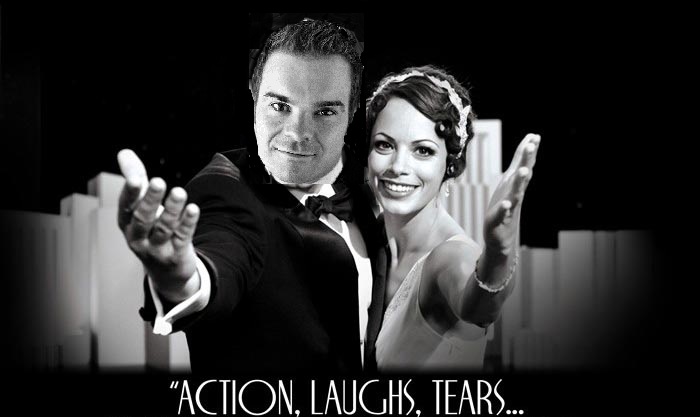
In spite of its title, this post is not related to our “Antitrust Oscars” series (see here, here, here and here).
My co-blogger Nicolas is, like Apple and Microsoft, on a complaining mood. Last week he was whining about how in the past few weeks I would (allegedly) not have complied with all of my blog-related duties. Nonetheless, he was smart enough to hide the criticism behind an excessive panegyrical of both my firm and myself, so now I feel I need to give something in return. That’s why I’m committed to give a last push to his campaign for Concurrence’s Antitrust Writing Awards:
Some weeks ago we referred here to this most interesting initiative by the Institute of Competition Law and George Washington Law School, and announced that Nicolas had been selected as one of the candidates for the award in the category of academic articles. Since we launched our online-campaign Nicolas’ piece has reached the first position both in terms of rating (4.44/5) and in terms of number of votes (with more than twice as many votes as the runner up) (temporary results are available here).
As you know, a French movie featuring a funnily looking French chap (see pic above) was the big winner at the Oscar ceremony held last Sunday. I never thought I would say this, but here it goes: please help the French winning streak continue! (Come on; think that it’s highly unlikely that any Frenchman will be winning anything else in the coming decades near future).
You can vote for Nicolas’ piece on “Credit Rating Agencies, the Sovereign Debt Crisis and Competition Law” by clicking here.
Something no one knows about this piece is that it has inspired a complaint lodged by a member of the Italian Parliament with the Italian Antitrust Authority (see here).
The usual incentive applies: if Nicolas wins, all those writing a comment to this post saying that they have voted for him will receive a free beer by courtesy of the candidate.
The awards ceremony will take place on Washington D.C on 27 March. If Nico wins, that moment could recreate another well-remembered landmark in the history of cinema: “Mr Petit goes to Washington” (see capture of the film below) 😉
 (Thanks to Susana Rodríguez Sogo for assisting with the photo-editing!)
The Gap

Competition law is like Gruyere cheese.
It is a savory discipline, which is also full of holes and gaps.
Think of the “oligopoly gap“, and the dozens of studies devoted to the notion of collective dominance in the past twenty years.
Think also of the “unilateral effects” gap, in relation to mergers falling below the single firm dominance threshold.
Think, finally, to the current “enforcement gap” in so far as positive decisions are concerned (i.e. Article 101(3) decisions and Article 10 decisions under Regulation 1/2003).
With all this, it seems competition specialists are experts at identifying gaps in the existing legal framework. In this context, the GCLC will devote its next lunch talk to the prospective, unsettled question of whether minority shareholdings should be covered under the EU Merger Regulation (EUMR). This possible gap was identified long ago already, but the issue has been revived in the context of the Ryan Air/Aer Lingus case, and following a statement of Commissioner Almunia at the 20th anniversary of the EUMR.
The event will take place in Brussels on 16 March. We have invited C. Rakovsky (DG COMP), G. Berrisch (Covington & Burling) and Y. Botteman (Steptoe and Johnson) to talk at this event. I will not be able to attend because I will be teaching in Russia. But our President B. Van de Walle de Ghelcke will make, as usual, a terrific job chairing the event.
New seminars in Madrid

This year’s edition of the EU and Spanish competition law course in Madrid has so far been a great success in terms of attendance, student’s evaluations and quality of presentations/discussions. Some of you have shown interest in the next seminars that will be held within the framework of the course, so here are the programs for:
– the seminar on recent developments in abuse of dominance and merger control (in theory I’m a co-coordinator together with Cecilio Madero but he’s actually the one who has put the program together) which will take place next Friday (click here: Seminar 24 February 2012);
– the seminar on the application of competition and state aid rules to public entities, coordinated by José Luis Buendía (Garrigues) and Jorge Piernas (EUI), and which will take place on March 1-2 (the program is available here: State aid and public intervention-1-2 March).
If any of you is interested in further info, you can contact me at alfonso.lamadrid@garrigues.com
New seminars in Madrid (and a secret)

I´m flying to Madrid today to speak tomorrow at a seminar coordinated by Eric Gippini and Fernando Castillo de la Torre (both from the European Commission´s Legal Service) within the XV European and Spanish Competition Law Course directed by Luis Ortiz.
The day program for tomorrow features (i) a discussion on “Investigative meaures and fundamental rights” with Ralf Sauer (European Commission´s Legal Service), Salomé Santos (British Foods), Rafael Baena (Ashurts) and Diego Castro Villacañas (Spanish Competition Authority); (ii) a panel on the functioning of the European Competition Network and the evolution of the decentralized enforcement system during 2011 with Ewoud Sakkers (Head of Unit at DG Comp), Rafael Allendesalazar (MLAB) and Diego Castro Villacañas (CNC); and (iii) a debate on novelties and case-law developments with regard to vertical agreements with Andrés Font (Gibson Dunn), Bernard Mongin (European Commission´s Legal Service) and myself. All the panel discussions will be moderated by Eric and Fernando. Registrations are now closed, but if any of our Spain-based readers is interested in attending you can drop me a line and we can try to arrange it.
Not that I´m objective, but coming to Madrid for this is always great fun. I´ll tell you a secret: one of the greatest attractives of coming to speak at this course are the post-conference dinner+drinks social events (in fact, Nicolas is still on a diet since his last visit two weeks ago; he´s back on Tuesday, so he´ll have to quit soon). The pic illustrating this post is actually from the entrance of the place where such events generally kick-off. (It´s also probably one of the places where I spend more time when I´m around, right after the office and home).
On February 24th there will be another seminar on “Recent Developments on Abuse of Dominance and Merger Control” coordinated by Cecilio Madero (Deputy Director General at DG Comp) and myself. Amongst other topics, this seminar will feature an interesting discussion on the prohibition decision adopted by the Commission in the Deutsche Borse/NYSE Euronext merger. The program for this seminar will soon be out. We´ll keep you posted.
An algorithm for competition law conferences

Last week was a very weird one. I spent almost as much time at competition law conferences than at the office. Here is a brief account of how the week went and of the thoughts that this conference overdose triggered:
As I have already mentioned on this blog, on Tuesday I participated at a workshop entitled “What is happening to Article 101 TFEU?” organized by Giorgio Monti at the European University Institute in Fiesole (as you know, Prof. Monti´s idea to hold this workshop was “inspired” by some discussions on this blog). The presentations by Giorgio Monti, Saskia King, Eric Gippini and Luis Ortiz and the discussion we had were all extremely interesting. I was overwhelmed by how smart (an genuinely nice and funny) the group was both during the workshop and outside of it. We tried to make sense out of the object/effect dichotomy and talked at length about what really is a restriction of competition as well as about the “deaths” of restrictions by effect and of Article 101(3). It´s a pity that only a small group could attend. On the plane back to Brussels, Eric, Luis and I mentioned that perhaps we could try to write a brief piece with our “non-mainstream” ideas some time soon. I´ll make sure that they don´t forget about it.
On Wednesday Charles River Associates (CRA) held its annual conference in Brussels. I attended most of the morning sessions and I have to say that the event was a great success. As excellent economists, these guys are conscious of the power of “FREE”. They deserve recognition for holding a free very high quality conference in Brussels.
Then on Thursday there was a lunch talk at the GCLC on the Menarini Judgment. I couldn´t attend, but all I hear is that the speakers were truly brilliant.
The reason I couldn´t attend the GCLC event is that at the same time I was speaking at yet another conference: the International Symposium on Competition Policy organized by the Centre for Parliamentary Studies. I was invited to this event following a recommendation from Nicolas (I really owe you one here, mate -please note the irony-). I was supposed to deliver the final keynote speech on “The future of EU Competition Policy“. I had prepared what I thought to be a fairly original and humorous prediction of what I think will certainly happen in the short term, of what should happen in the medium tem, and of what will inevitably happen in the long term. I´m not very sure that my messages will have the impact I´d hoped for: the audience was composed by two people from the Namibian competition authority, two members of the Malaysian competition Commission, a member of the Danish Ministry of Economic Affairs, a Scot from the Water Industry Commission, and my colleague Napoleón Ruiz who threatened me with taking pictures. Jokes aside, it was fun.
So many hours of sitting at these and other recent events made one thoughts spring to mind: I wouldn´t need the expertise of my friends at CRA to come up with an ad hoc algorithm or formula with which to predict how interesting a competition law conference is supposed to be. The general rule (subject, of course, to exceptions) is easy: the likelihood of getting to listen to new and interesting stuff is inversely proportional to the combination of three cumulative variables: the price of the event, the number of attendees, and the number and lenght of slide decks. It´s generally not a good sign if an event is pricy and crowded. The ones with a greater chance of not being interesting at all are those for which you have to pay in order to be a spayeaker (yes, there are plenty of those!). (Not that so many people care anyway, since some of these events are mainly about networking, a.k.a “free” drinks and nibbles + some gossiping).
That´s why the 1st Chillin´Competition Conference should also be free. We only have to figure out minor details, such us how to pay for it.. Here are some options: Voluntary contributions? Sponsoring? A lottery for a date with Nicolas?
Ideas welcome…
Judicial Review and Article 6(1) ECHR

With the Menarini judgment, the ECHR has demonstrated that it has nothing to envy to other Courts in terms of cryptic reasoning.
There are indeed two ways to read this judgment. If you follow what the Court says as a matter of principle, the EU judicial review system is not Article 6(1) compliant. Remember, the ECHR says that review courts should have full jurisdiction in competition matters. In the current state of affairs, the GC does not have full jurisdiction on all aspects of a case, and particularly not when it comes to “complex economic assessments“.
But if you read what the ECHR says on the facts, the EU judicial review system might well be Article 6(1) compliant. In casu, the Court considers that the Italian system of limited (or “weak“) judicial review is arguably akin to full jurisdiction (!) and thus compatible with the ECHR. This is obviously fictitious. On close examination, no such intense review exists under Italian law. Yet, the ECHR contends that the Italian review courts “ont pu examiner le bien-fondé et la proportionnalité des choix de l’AGCM et même vérifier ses évaluations d’ordre technique” (§64). With this ruling, the treshold for full jurisdiction comes real low…
Today, the ECJ just chose which of those two readings prevails in the EU. In its KME v. Commission ruling, handed down today, the Court states at §133 that:
“The review provided for by the Treaties thus involves review by the Courts of the European Union of both the law and the facts, and means that they have the power to assess the evidence, to annul the contested decision and to alter the amount of a fine. The review of legality provided for under Article 263 TFEU, supplemented by the unlimited jurisdiction in respect of the amount of the fine, provided for under Article 31 of Regulation No 1/2003, is not therefore contrary to the requirements of the principle of effective judicial protection in Article 47 of the Charter“.
I attach hereafter the slides presented by Marco Bronckers at today’s GCLC lunch talk: GCLC – Menarini 8 12 11REV


 Chillin'Competition