Archive for the ‘Uncategorized’ Category
For Whom the Bell Tolls

This is what happened to my computer tonight … The blue screen of death, as most IT geeks name it… Very scary…
Quote of the Day

“Price mechanisms must be put in place to correct the market when it proves incapable of setting a socially acceptable energy price, while allowing private operators to make necessary investments in the network“.
And a question: at what level does a price become socially unacceptable?
My gut feeling: when the market fails to serve all those customers whose reservation price is superior to the producers’ costs. But I suspect the author of this quote to envision something else.
Found in J. DELORS’ foreword to “Towards a European Energy Community: A Policy Proposal” drafted by Sami ANDOURA, Leigh HANCHER and Marc VAN DER WOUDE. Congratulations to them for putting together such a creative, and potentially controversial, policy report. The text of the report can be found hereafter.
(Image possibly subject to copyright: source here )
State Aid and General Interest

Julien de Beys (invited lecturer at the University of Louvain) has posted here a freely downloadable version of his Phd on State aid and General Interest (in French). The good, refreshing thing about this work is that it takes a rather original perspective on State aid. Unlike most other authors, who start from the idea that State aid is genuinely distortive, this research starts from the other side, and seems to argue that State aid is generally necessary to ensure general interest. Obviously, hardcore free-marketers, who believe that the accumulation of egoistic self-interest is the sole drivers of collectively optimal outcomes, will find this work particularly controversial. I paste hereafter the abstract, and wish to congratulate the author for his impressive piece of work.
The present thesis analyses the State aid control carried out by the European Commission as regards the concept of general interest. In doing so, this research contributes, on one hand, to situate the current position of this concept within EU law, as well as, on the other, it underlines the profound developments this control inflicts on the Member States’ economic intervention policies. Any person interested in State aid law knows that, in one way or another, State aid is deemed compatible with the single market because it benefits to society, namely because it allows the realisation of general interest objectives. Consequently, if general interest is at stake, what are the legal bases used in order to express it? What are the references of the Commission and how does it nourish its reflection? How come that the European Parliament and the Council appear to be apart? How are national interest and European interest articulated? In addition, Member States today have to justify to what extent their economic interventions are preferable to the free market and put them in the prolongation of the objectives sought at the European level. The necessity of this national policies’ orientation is not questioned. However, Member States should collectively find at European level the room for manoeuvre that they individually lose at national level. The first part of the thesis analyses the scope of State aid control. Why a general ban of State aid? Why are certain exemptions accepted? The second part describes the method by which certain general interest objectives are recognised. It specifies that these objectives are also “configured”, according to an original concept identified by the author. The third part shows that State aid control constitutes a national interest control at the service of the European policies. An important exception to this statement is however examined: the Member States’ competence to determine, set up and finance their public services.
(Image possibly subject to copyrights: source here)
An announcement: blog posts from Harvard Law School students

I am currently enrolled in a great seminar on “Antitrust, Technology and Innovation” taught by Prof. Philip Malone at Harvard Law School. As part of the requirements of the seminar, everyone attending it is supposed to write several posts on an internal blog only accessible to the rest of the class. Given that my classmates are a truly brilliant group of students, the discussions held in the blog have been extremely interesting. Accordingly, Nicolas and I thought that it would be very useful, particularly for our student-readers, to have access to these discussions and to be able to contribute with their own views.
Therefore, in the coming weeks, and in parallel with ordinary posting activity, we will be publishing here some of the posts written by HLS students on a number of selected issues, as well as follow-up comments by other members of the class.
Prof. Malone has kindly allowed us to include a reference to his terrific syllabus (really a great source of information) so that anyone interested will be able to better follow the discussions.
1 April

For all antitrust geeks: read the American Antitrust Institute 1 April column (pasted in full below). Simply hilarious.
AMERICAN ANTITRUST INSTITUTE LAUNCHES THE ANTITRUST CHANNEL |
| FOR IMMEDIATE RELEASE CONTACT: Bert Foer April 1, 2010 (202) 276-6002 bfoer@antitrustinstitute.org WASHINGTON, DC –
In a major breakthrough for cable television, the American Antitrust Institute (AAI) today announced that it has purchased the Golf II Channel from Comcast/NBC and will immediately convert it to The Antitrust Channel, airing antitrust news and events 24/7. AAI President Albert A. Foer refused to disclose the amount the AAI paid for the Golf Channel. He promised that The Antitrust Channel will not dismiss any reasonably plausible antitrust views, although this would exclude those of the Chicago School. Foer reported that content development is well underway and provided examples of the kind of programming that will be aired on the new channel:
In a move clearly aimed at expanding the public’s interest in the new channel, the AAI invites viewers to send additional ideas to aai@antitrustinstitute.org. Look for The Antitrust Channel on the cable monopoly in your area. If it is not being offered, call the FCC to complain and send a copy of your complaint to the AAI. ### About the American Antitrust Institute The American Antitrust Institute is an independent non-profit education, research and advocacy organization. Since its formation in 1998, the AAI’s mission has been to increase the role of competition, assure that competition works in the interests of consumers, and challenge abuses of concentrated economic power in the American and world economy. To learn more about the AAI, please visit www.antitrustinstitute.org. Because previous April 1 columns have been reported verbatim by the media as news, our attorneys have advised us that these columns should be accompanied by a disclaimer. We have rejected this advice. (Image possibly subject to copyrights: source here)
|
Penguin Dinner 2

This really addictive game will learn you how to allocate scarce resources efficiently, how to make economies of scale, and how to increase labour productivity.
Beware, your own productivity might in turn decrease dramatically. Found on the hilarious blog optimum (in French).
A question to our readers

For weeks now, I have unsucessfully been looking for a specialist of horizontal cooperation agreements under EU competition law.
Could someone help? I need to find a person able to deal with the various types of cooperation agreements.
You can throw names as comments to this post, or if you want full confidentiality, email me at nicolas.petit@ulg.ac.be. I would be immensely grateful for some help.
Oligopolistic collective dominance: the BCA’s Telefonica decision

Some weeks ago, the Basque Competition Authority (“BCA”) issued a decision which has gone largely unnoticed outside of Spain, but which is definitely worth commenting here. To my knowledge, this decision is the first ever to sanction an abuse of a purely oligopolistic collectively dominant position.
In essence, the decision concludes that Telefónica de España SAU (“TSAU”, a subsidiary of Telefónica SA) abused of its dominant position in retail fixed telephone market, and, more interestingly, that Telefónica Móviles (“TME”, another subsidiary of Telefónica SA) also abused of the collective dominant position it held together with Vodafone and Orange in the Spanish retail mobile telephone market.
The BCA considers that TME, Vodafone and Orange constituted a “tight oligopoly”, and pursuant to a thorough examination of market conditions at the moment where the investigated infringements took place, it concludes that the Airtours conditions for a finding of collective dominance are fulfilled. The BCA further refers to the existence of empiric evidence of parallelism of prices and other commercial conditions adopted by the members of the oligopoly. Moreover, citing the CFI’s Judgment in TACA, the decision rebuts the contention that a certain degree of internal competition (allegedly illustrated by the high degree of portability) is incompatible with a finding of collective dominance.
With regards to the abusive conduct, and also in a nutshell, the BCA asserts that both TSAU and TME charged discriminatory tariffs to calls destined to users of the Euskaltel mobile network. The decision concludes that such conduct breached Article 2 of the Spanish Competition Act, and imposes TESAU and TME fines of nearly 3 and 1 million euros respectively.
A few brief comments:
Firstly, it’s interesting to remark that the Comisión Nacional de la Competencia had attempted to affirm its jurisdiction to deal with this case, but the organism in charge of addressing jurisdictional disputes between the CNC and regional authorities ruled in favor of the Basque Authority in light of the strictly local effects of the conduct under analysis. My guess is that had the CNC investigated the case, its outcome would have certainly been quite different.
Secondly, collective dominance is one of the favorite topics of Nicolas and myself, but also of Javier Berasategi, the author of the Telefónica decision, see here (his first work on the subject while a student in Bruges) and here (English version of a recent and extensive report on tacit collusion in the daily distribution of consumer goods which relies heavily on Nicolas’ work). It seems as if this or a similar decision had been under gestation for quite some time.
Finally, independently of whether one believes or not on the necessity of having several regional competition authorities in one Member State, it seems fair to acknowledge that in the past few years, under the Presidency of Berasategi, the Basque Competition Authority has brought forward very interesting cases on which it has adopted brave and innovative but always technically sound decisions.
Only a few days after the Telefónica decision was issued, Berasategi stepped down from the Presidency of the Basque Authority to start a new project in private practice. Congratulations for the good work, and the best of luck in his new venture!
(Image possibly subject to copyrights: source here)
The Geographics of Brussels Competition Law Firms
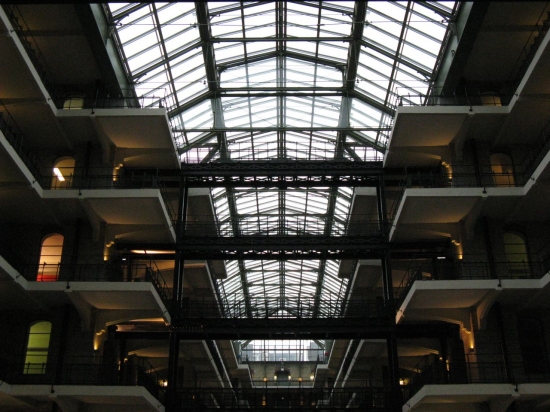
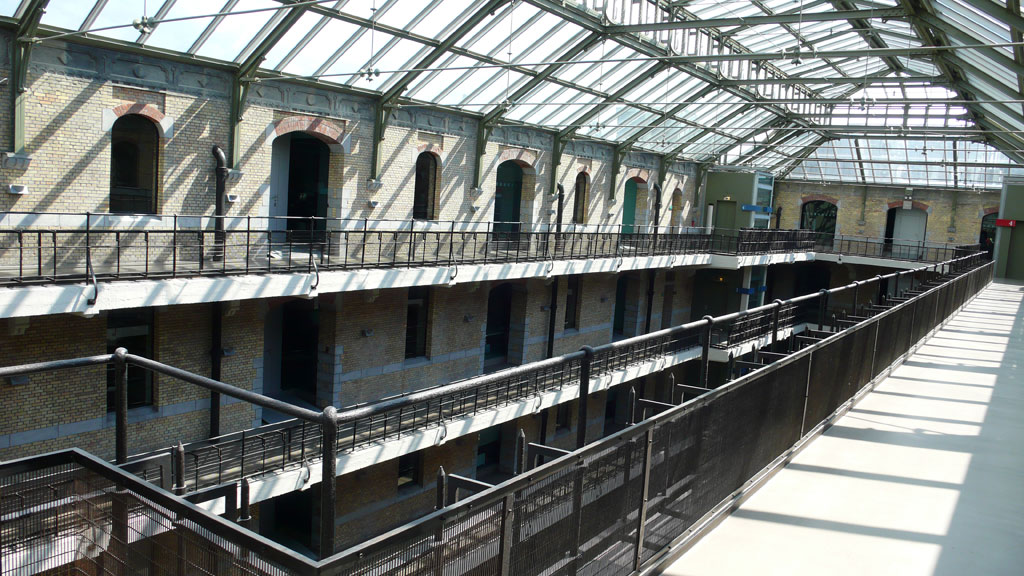
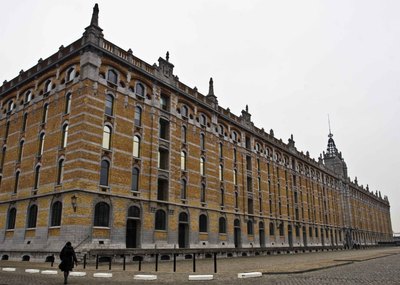
I visited today the offices of Altius, one of the top Belgian law firms. I was really amazed. Their offices are located at Tour et Taxis, and I must say this is a truly awesome spot for a law firm: very classy building mixing old and modern art; many restaurants, cafes, travel agencies and other service providers on the site; close to the train station and a mile away from the highway to Brussels international airport.
Against this background, I understand less the comparative advantage of settling on Avenue Louise, as most business law firms do when they do launch a practice in Brussels:
- It is more expensive than other areas
- Heavy trafic jam in the morning and afternoon
- There’s no metro station to get there (only a tram, which often finds itself struck in the trafic)
- It is far from the highway entry/exit points
- Buildings are generally huge towers which all look alike
Of course, there are nice shops in the neighborhood of Avenue Louise. Yet, as a law firm manager, you may actually view this as a counteradvantage, in that it will distract staff and associates during lunch breaks. Moreover, most of those shops sell expensive goods and services (jewelry, luxury suits, etc.). Even if competition lawyers earn a very decent life, I am not sure they purchase luxury shoes every day.
In fact, the only decisive thing about Avenue Louise is that it is near the bois de la cambre, which makes it a cool place for running lawyers.
A number of other firms (e.g., Stibbe, Howrey, Cleary) have actually decided to settle elsewhere than on Av. Louise.
Below, a few other pictures of Tour et Taxis.