Archive for the ‘Uncategorized’ Category
The DMA – Procedural Afterthoughts

In a recent post I argued that “procedure and rights of defence should not be afterthoughts, for they are what make public enforcement sound, effective and legitimate”. That is a point worth emphasizing again, now in relation to the DMA.
The DMA gets rid of the constraints flowing from competition law as regards substance, but it largely mimics competition procedure, largely transplanting rules from Regulation 1/2003, only with higher sanctions and more discretion for the Commission. This means that procedural constraints, rights of defence and fundamental rights will be, at the very least, as relevant under the DMA as they are under competition law.
The Commission, of course, understands this and is fully committed to respecting fundamental rights (see e.g. page 11 of its legislative proposal). The DMA itself makes clear that “the rights of defence of the gatekeeper, undertaking or association of undertakings concerned shall be fully respected in any proceedings”.
But while this general statement is welcome, I fear that procedural issues may have been somewhat of an afterthought in the process leading up to the DMA’s final text. After all, the aim was to get rid of constraints, not about putting them in place (as D. Geradin has noted, “some of the companies supporting a strong DMA (because they are business users or rivals of large tech firms’ services) were quite effective in setting the agenda and shaping the DMA as it was negotiated“). On top of that, since procedural rules will be developed in a future implementing regulation, there may have been an assumption that someone will eventually think more in detail about those. That someone may not have an easy task; have you tried counting the number of different types of Commission decisions envisaged by the DMA?
The DMA will raise plenty of procedural challenges for enforcers, and at various stages. Gatekeepers may perhaps decide not to raise them (my sense is that companies are focused on ensuring compliance), but some of these issues will inevitably arise, perhaps via third parties. The following are only a sample:
— At the stage of designation, for example: how will the Commission interpret the rule (in recital 23 and Art.3(5)) that a gatekeeper designation can only be rebutted by reference to the quantitative thresholds in Art. 3(2)? This means that gatekeeper designations will ultimately be based on the qualitative criteria in Art. 3(1), but that companies will not be able to exercise their rights of defence directly in relation to those. So the Commission could rely on qualitative factor to designate gatekeepers not subject to the presumption, but companies could not rely on those same factors to rebut the presumption. Query: is this compatible with companies’ rights of defence?
— What procedural rights will third parties enjoy? Unlike competition law, the DMA is not so much about protecting consumers, but competitors/ third parties. It is not about market power, but about the importance of gatekeepers for third parties relying on them. Our experience under competition law shows that third parties play an important and active role at all stages of the procedure, perhaps particularly in relation to remedies. As noted above, third parties appear to have played a pivotal role in shaping the DMA, and they will no doubt make great efforts to have an impact on its enforcement; it would be important to establish a clear procedural framework for them too.
— As regards access to the file, will gatekeepers have access to all materials in the Commission’s file, including potentially exculpatory evidence, or only to those on which eventual decisions will be based (as one could arguably infer from the latest amendments to recital 88)? Will the file include non-confidential versions of all relevant documents and minutes of all contacts held with third parties as per the CJEU’s Intel and the GC’s Qualcomm Judgments?
— I am not sure that the indicative deadlines set in the final DMA text (e.g. 12 months to run full non-compliance investigations or 2 months for market investigations) may be realistic if parties (and third parties?) are to enjoy meaningful procedural rights. The anxiety about moving fast could perhaps create the temptation to take shortcuts. And since the DMA is partly born out of frustration with the length of the competition procedures, we should be particularly cautious about expediency. To give you just an example, Art. 30(4) DMA, provides that “delay caused to the proceedings” may be a relevant factor for the purposes of calculating fines (!). It would be important to clarify that exercising one’s rights of defence cannot be equated with causing undue delays.
— How will the Commission specify the obligations in Article 6? What criteria will it use to ensure equal treatment? What procedure will it use so that other affected gatekeepers might make their views known? It is easy for commentators to say that obligations should be specified on the basis of business models (typically in favour of one’s clients and to the detriment of their competitors), but it is much harder for enforcers to do this without interfering in competition between different business models.
— How will the Commission ensure the proportionality of remedies? Under the competition system and the Alrosa case law the Commission was able to accept commitments going beyond its preliminary concerns. Under the DMA, where commitments are only envisaged for systematic non-compliance proceedings, ensuring proportionality by reference to the alleged infringement and the gatekeeper’s fundamental rights will be of even greater importance (some of the recent commitments proposed by Amazon would arguably not have been attainable under the DMA). In addition, the Canal + Judgment also made clear that assessing the proportionality of remedies should take into consideration their impact on third parties’ contractual rights, and there is no reason why things would be different under the DMA.
These are only a few issues, but I can think of many others regarding, for example, transmission of evidence, the use of evidence previously gathered by the Commission under Arts. 101 and 102, the question of whether the Commission will hold oral hearings, the role of the hearing officer, the interaction with the competition rules and with other regulatory regimes and sanctions, etc.
For the DMA’s implementation to work well, the Commission will not only need additional resources, but also a sound system of procedural rules. In my view, these need to reflect the principle that the greater the discretion enjoyed by the authority, the greater the need to take procedure seriously. It is important for everyone to understand that procedural safeguards are not there to protect gatekeepers, but to uphold the rule of law in a democratic society. It is mainly on that front that the EU should lead the way.
In the brave new DMA world, in sum, we may not discuss anymore about market power, competition on the merits, effects or efficiencies, etc. but there remain fascinating issues to explore for anyone interested in the law.
***
[Disclosure: I work for companies likely to be designated as gatekeepers, including for some directly targeted by the DMA. The views expressed in this post are strictly my own and have not been requested, nor paid for, by any clients. At the time of publication, I have not discussed this post with any of my clients].
3rd Edition of the Rubén Perea Competition Law Writing Award – Don’t miss the deadline!
The deadline to submit papers for the 3rd edition of the Rubén Perea Award is coming up (15 September, 23.59 Brussels time). If you are under 30, we would very much welcome your contribution (up to 15,000 words, including footnotes).
All relevant information about the award (including on elegibility, lenght, formatting requirements and procedure) is available here. Please remember that submissions are to be uploaded through the Journal of European Competition Law and Practice’s site (https://mc.manuscriptcentral.com/jeclap) indicating, in Step 5 of the process, that the submission is for a special issue.
Information about last year’s finalists, winner and awarding ceremony with EVP Vestager is available here.
We look forward to receiving your submissions and making the 3rd edition of the Rubén Perea Award another success!
SAVE THE DATE: 22nd September – Panel discussion on (EU and UK) Subsidies Regulation @LSELaw

The rentrée has finally caught up with us, and with it, conferences and other events. I am delighted to announce that, on 22nd September, LSE Law School will be organising an afternoon panel (5pm-7pm) on (EU and UK) Subsidies Regulation. The event will take place in the New Academic Building (Thai Theatre). Please make sure to save the date!
We will be offering the event in hybrid format, but we very much hope you will be able to join us in person for the occasion (as a plus, there will be drinks afterwards).
With the UK Subsidy Control Regime up and running (the Competition and Markets Authority has recently been consulting on the implementation of the system) and the formal adoption of the EU Foreigns Subsidies Regulation around the corner, the timing could not be better. Coincidentally, the new edition of Conor Quigley’s legendary treatise on State aid will be coming out on the very same day.
I am delighted to confirm the superstar panel of experts with whom we will be discussing these topics:
Claire Froitzheim, Director at the Competition and Markets Authority
Natura Gracia, Partner at Linklaters
Thorsten Käseberg, Head of Competition Policy at the German Federal Ministry for Economic Affairs and Climate Action
Conor Quigley QC, Barrister at Serle Court
I will soon be following up with details on registration (for free, as usual) and others. In the meantime, do not hesitate to drop me a line if you have any questions about the event. We look forward to seeing many of you there!
AG Rantos in Case C‑680/20, Unilever: on Intel as a general framework in Article 102 TFEU

Last week gave us, among others, Advocate General Rantos’s Opinion in Unilever (see here for the French version). As Servizio Elettrico Nazionale, the preliminary reference comes from the Italian Consiglio di Stato and originated in abuse of dominance proceedings before the AGCM.
Unilever raises two points of law. One relates to the single economic entity doctrine. The second, on which this post will focus, to the meaning and scope of the Intel judgment of 2017.
In essence, the Consiglio di Stato asks whether the framework laid down in Intel is also relevant outside the specific context of loyalty rebates, and more precisely where a dominant firm imposes outright exclusivity obligations on its customers.
The question from Italy’s highest administrative court has two elements: one substantive and one procedural. The substantive aspect has to do with the need to assess, as a matter of law, the capacity of an exclusivity obligation to foreclose competition. The procedural side of things concerns the need for the administrative authority to engage with the economic arguments raised by the dominant firm.
AG Rantos’s view on the point of principle is clear: the framework laid down in Intel applies irrespective of the practice at stake, to the extent that the dominant firm provides evidence showing the absence of effects (para 71).[1]
Thus, whenever the ‘Intel test’ is triggered, the authority is required to assess the actual or potential impact of the practice in light of the five criteria identified by the Court.
This clarification would be relevant when assessing the legality of ‘by object’ conduct, such as exclusive dealing (at stake in the case), predatory pricing and tying, since a finding of abuse does not necessitate, in principle, an assessment of effects.
It is difficult to disagree with AG Rantos on this point. As the Opinion explains, the very letter of the Intel judgment appears to suggest that the framework applies to any dominant undertaking (paras 74-76).
In addition, a teleological interpretation of Article 102 TFEU would go to confirm this view. As the Court made explicit in Generics, a finding of abuse presupposes that the contentious practice is capable of restricting competition.
Thus, it is only logical that arguments pertaining to the absence of actual or potential effects are considered across the board, and not only in the narrow factual circumstances of Intel (paras 78-79).
The answer to the substantive aspects of the question already addresses, by and large, its procedural dimension. If the Intel framework is applicable irrespective of the practice, by necessity a competition authority is under a duty to consider the arguments of an economic nature raised by the dominant firm (para 84).
The Opinion makes several important points from a procedural perspective. First, AG Rantos reminds us not to lose sight of the fact that authorities have the legal burden of proving the infringement, even if it is for dominant firms to reverse the presumption of foreclosure/exploitation in ‘by object’ cases.
Second, competition authorities cannot reject outright the economic evidence put forward by the parties, except by showing that the methodology relied upon by the dominant firm is not capable of substantiating claims about the potential effects of a practice (para 85).[2]
This point addresses one of the gaps left by previous case law, namely the standard of proof that dominant firms would have to meet to trigger the ‘Intel test’.
AG Rantos appears to suggest that authorities would only be dispensed from the need to engage with the evidence provided by a dominant undertaking when such evidence is irrelevant for the purposes of the assessment (a very low threshold indeed). Importantly, the Opinion makes it clear that, even in this scenario, the authority would still be subject to a duty to state reasons (para 85).
All in all, the answer to the question raised by the Consiglio di Stato seems straightforward. Its significance for future Article 102 TFEU cases, on the other hand, cannot be overstated. Some of the themes addressed by AG Rantos, such as whether the evidence has been adequately considered by the authority, are likely to be relevant again soon.
[1] The French version reads as follows: ’71. Pour les raisons suivantes, et ainsi qu’il a déjà été indiqué au point 63 des présentes conclusions, j’estime que ce même principe vaut de manière générale, et indépendamment du type de restriction, lorsqu’une entreprise dominante avance des preuves visant à démontrer que le comportement en cause n’était pas susceptible de produire de tels effets‘ (emphasis in the original)’.
[2] ’85. Or, même si l’autorité de concurrence considère, comme en l’occurrence, que la méthodologie utilisée aux fins de l’étude économique n’est pas pertinente, elle ne peut pas exclure d’emblée la pertinence d’une telle étude, sauf à indiquer, dans la décision par laquelle cette autorité qualifie un comportement d’« abusif », les raisons pour lesquelles elle estime que la méthodologie sur laquelle repose cette étude ne permet pas de contribuer à la démonstration du fait que les conduites mises en cause ne sont pas aptes à exclure des concurrents aussi efficaces‘.
Reversing the hold up vs hold out debate?

Exactly 7 years ago, on 16 July 2015, the CJEU rendered its Judgment in Huawei v ZTE (here are the comments I published that day).
The Huawei v ZTE Judgment essentially sought to clarify the circumstances under which the seeking of injunctions by a SEP holder could constitute an abuse of dominance. The Judgment confirmed the view, initially advanced in academic circles, and endorsed by the European Commission in Samsung and Motorola, (and vehemently opposed by many) that in certain cases patent hold up was a competition law problem connected to the leveraging of market power obtained through standardization. The underlying idea was that hold up could materialize in refusals to licence, excessive royalties or injunctions. In that Judgment the Court set up a procedural framework balancing the different stakes and incentives at issue.
7 years later many of these debates remain (and remain equally bitter). Interestingly, though, there appears to have been an effort to shift attention away from hold up and focus, instead, on hold out (i.e. the situation where implementers would allegedly refuse to negotiate in good faith). The argument is that innovation on the part of SEP holders would be discouraged should their royalties not be high enough as a result of hold out.
Paying attention to potential hold out on case-by-case assessments might be, to some extent, natural because implementing the procedural framework set out in Huawei v ZTE necessarily requires assessing whether implementers have entered into bona fides negotiations.
At the same time, however, the recent trend is to present hold out (aka “reverse hold up”) as the other side of the same coin. This view has made it from economic articles, to national litigation, to the “new Madison” policy in the US under AAG Delrahim. More recently, and more surprisingly, the European Commission’s draft horizontal Guidelines (recital 470) would appear to support this view:
“When the standard constitutes a barrier to entry, the undertaking could thereby control the product or service market to which the standard relates. This in turn could allow undertakings to behave in anti-competitive ways, for example by refusing to license the necessary IPR or by extracting excess rents by way of discriminatory or excessive royalty fees thereby preventing effective access to the standard (“hold-up”). The reverse situation may also arise if licensing negotiations are drawn out for reasons attributable solely to the user of the standard. This could include for example a refusal to pay a FRAND royalty fee or using dilatory strategies (“hold-out”)”.
Perhaps it is simply a drafting problem, but this paragraph appears to put hold up on the part of SEP holders and hold out on the part of individual users of the standard (and the concerns to which they both relate) at the same level, also from a legal standpoint. This is interesting for various reasons that we have often discussed on this blog. First, the shift in the focus of these debates is one more example of the pendulum oscillations that characterize competition law, but one where the swing would appear to be particularly wide. Second, this text would also appear to equate hold out practices with anticompetitive hold up practices on the grounds that both can affect the distribution of rents between the different parties, regardless of whether they involve the exercise of market power or not.
I would welcome your views on this point. Not having worked for clients on these issues, I have no view on the extent to which hold out may be a real-life concern. As a competition lawyer, however, I have trouble seeing how hold out practices could lead to genuine competition law concerns (i.e. how they could lead to foreclosure, anticompetitive leveraging, exploitation or otherwise restrict competition) absent dominance or a cartel/boycott-like arrangement at the level of would-be licensees. I see that others have expressed very similar thoughts (e.g. here or here).
Don’t get me wrong. As mentioned above, hold out considerations can be, and have been, relevant in case-by-case assessments under the Huawei v ZTE framework (under that framework injunctions remain legitimate in relation to implementers not acting in good faith). But to the extent that hold out concerns may be concerned with relative bargaining power (as opposed to market power) and with the distribution of rents between SEP holders and implementers (absent market power, exploitation or foreclosure), they would not appear to be a matter for competition law to address. In sum, while the narrative, the incentives, and perhaps even the economics, may be “the reverse” as those arising in hold up scenarios, this might not be accurate from a legal standpoint.
In the wake of the ISU and Super League hearings: why the focus on ‘conflicts of interest’ is potentially problematic (and unfair)

Once again, thanks to Lewis Crofts and his reporting abilities via Twitter, I have been able to get a sense of what has been going before the Court this week. If you have not done so, go check his tweeting on ISU and Super League. These two cases will have a major impact on the relationship between competition law and sports governance.
I have been following this topic closely for a while (the updated version of my paper on sports governance can be found here; I am really grateful, by the way, to those who reached out with comments).
Lewis’s reporting gives me the impression that much has been discussed about sports associations’ alleged ‘conflicts of interests’. According to a particular school of thought, it is concerning that governing bodies enjoy the power to regulate the sport and, at the same time, to authorise rival competitions.
I have never really understood why this idea has managed to gain so much traction. It is definitely an astute spin on the issues. As an outside observer, however, I am not sure it makes sense to frame discussions in terms of conflicts of interest. It is, in fact, a problematic way of looking into the underlying substance.
It is problematic, first, because it suggests that the fact that a firm protects its own economic interests is somehow a concern under competition law (of all disciplines). Second, because it is based on the (now discredited) idea that one can meaningfully distinguish between, respectively, sports-related and economic considerations.
Third, and finally, because it would be unfair to sports associations, in the sense that it would demand more from them than from any other entity engaged in an economic activity.
‘Conflict of interest’ is just another way of saying ‘protecting one’s economic interest’ (which has never been presumptively anticompetitive)
Discussions around conflicts of interests in cases like ISU and Super League give the impression that the situation is specific or unique to sports governing bodies, in the sense that it does not arise elsewhere in the economy (or only rarely).
In reality, the only thing that is unique to sports is the vocabulary used to frame the underlying issues. When it comes to the substance of these issues, there is nothing special, let alone exceptional, about the situations described in the abovementioned cases.
In reality, ‘conflict of interest’ is another way of saying that governing bodies have put in place mechanisms aimed at defending their economic interests. And we know from the case law that doing so is not necessarily or presumptively anticompetitive (not even when the firm enjoys a dominant position).
Just to illustrate how pervasive (and, sometimes, even prima facie pro-competitive) so-called conflicts of interest are, consider the following examples.
A franchisor finds itself in a position that is not fundamentally different from that of a sports governing body. It dictates the rules of the system (brand image, quality of the products, look and feel of the stores) and also limits competition: franchisees will typically be subject to a non-compete obligation preventing them from concluding similar agreements with other suppliers, or setting up rival shops themselves.
In spite of the blatant conflict of interest, franchising agreements are prima facie lawful under Article 101(1) TFEU.
Consider also the proverbial refusal to deal scenario. A vertically-integrated firm that produces an input and also manufactures the finished product would also be in a ‘conflict of interest’: this firm would be able to control competition against itself on the downstream market.
It is clear from the case law, however, that the vertically-integrated firm cannot be compelled to deal with rivals absent exceptional circumstances. This is so in spite of the fact that its dual status as supplier and competitor to its own (would-be) customers necessarily creates a conflict.
The ‘conflict of interest’ test would apply a stricter standard to sports governing bodies for no valid reason
To the extent that ‘conflict of interest’ is just another way of saying ‘undertaking acting as expected in a system based on undistorted competition’, there is no reason to make it presumptively anticompetitive.
What is more, seeing with suspicion this alleged ‘conflict of interest’ would lead to governing bodies being treated more strictly than any other undertaking in competition law. There seems to be no valid reason justifying this differential treatment.
As the Court held in Meca Medina, there is nothing that immunises sports associations from the application of competition law. They may be scrutinised under Articles 101 and 102 TFEU, just like any other economic activity.
Conversely, it is not because a case is about football or skating (as opposed to the manufacturing of aminobutanol, or the delivery of newspapers) that so-called ‘conflicts of interests’ should become problematic ipso facto.
As explained in my paper, cases like ISU and Super League are best understood when examined through the lenses of other horizontal co-operation agreements raising similar issues.
Think of Gottrup-Klim. The cooperative in that case faced a ‘conflict of interest’ just as much as the UEFA or the ISU do. In fact, members of the cooperative were prohibited from taking part in competing ventures.
The association decided who was entitled to compete with itself, while regulating the joint purchasing activities. Alas, the Court held that these non-compete obligations were ancillary and did not restrict competition, whether by object or effect (just like franchising).
The divide between economic and non-economic interests is more of an illusion than a reality
I can think of a final reason why the idea of the ‘conflict of interests’ of sports associations is problematic. It seems to be grounded on the premise that one can establish a clean divide between economic and non-economic measures. According to this understanding, governing bodies would combine functions relating to sport and then economic functions.
The problem with this understanding is that it is, at best, an oversimplification of what goes on in the sector. Scratch beneath the surface and you will realise that this clean divide between the economic and non-economic does not reflect the reality.
Think of salary caps, thinks of rules limiting how much money can be spent on transfers, and on how the revenues generated by a competition are to be allocated. Are these measures economic? Certaintly. Do they serve non-economic aims as well? Without any doubt: they will are typically introduced to achieve competitive balance.
The bottomline is the same: to the extent that they relate to the exercise of an economic activity, the rules adopted by governing bodies are best scrutinised, in the usual way, under Articles 101 and 102 TFEU.
As ever: nothing to disclose in this and, indeed, any other case.
Case T-235/18, Qualcomm v European Commission (Part II: Substance)
On 15 June the General Court (“GC”) annulled the Commission’s decision imposing a close-to-1-billion euro fine on Qualcomm in relation to alleged exclusivity payments made to Apple in breach of Article 102 TFEU. In a previous post I discussed the Judgment focusing on procedure; this second post deals with substance, and concludes my comments on what this means for future cases.
What the case was about. The case concerns rebates (in the form of direct payments from Qualcomm to Apple) in exchange for Apple exclusively incorporating Qualcomm LTE chipsets in certain devices. The Qualcomm decision was the first Commission decision concerning exclusivity rebates following the CJEUs’ Judgment in Intel.
The Commission’s approach. The Commission largely built its case on the wording of the agreements, the extent of Qualcomm’s alleged dominance, the importance of Apple as a key client and certain (see below) internal documents from Apple. For additional background on how the Commission saw the case, see this guest post from Max Kadar that we published in 2020.
What the Judgment does not address. Throughout the case there were relevant discussions about market definition and dominance (including on the question of whether conducting a SSNIP test was necessary or not) and on the binding nature of the Guidance Paper on Article 102 (see here for my take; the Guidance Paper will likely be withdrawn before the Courts address this), but the Judgment did not need touch on those points as it annulled the decision on other grounds.
The Judgment’s substantive review.
The principles. The Judgment starts off recalling the principles that competition law is not concerned with the exclusion of competitors due to their inferior efficiency because dominant companies cannot be prevented from competing on the merits (349-351). The Judgment also recalls the special responsibility of dominant firms (352), retains the formal “presumption” that exclusivity arrangements are abusive (353) subject, however, to the “further clarification” in Intel (354). It recalls that for conduct to be abusive, it must be capable of producing exclusionary effects, and that this assessment requires examining all the relevant circumstances (355). The Court also recalls the Galp case law indicating that post-decision elements may be relevant (357) Tetra Laval standard of review applicable to complex economic assessments (358), and the rules on the burden of proof/presumption of innocence (359).
The F word. In my mind, the principle in 354 (the one set out by the CJEU in Intel) makes clear that, under Art. 102, effects=capability to foreclosure (that is also view that the Commission advanced in its Guidance Paper). The Court is saying that, even for conduct presumed abusive, whenever the dominant company offers evidence challenging capability to restrict, then it is for the Commission to carry out a foreclosure analysis. This is not new, but it’s relevant here, because the Commission’s decision does not refer to foreclosure (just run a Ctrl+Find search here; 373 shows that Qualcomm made the same point). The Commission’s argument is that there was no need to show foreclosure, and that the restrictive effect consisted in the reduction of Apple’s incentives to switch to competitors (381, 384). This debate is also key several pending cases (including some in which I represent clients), but I will reserve my views on those for now. Its also worth noting that the GC’s review looks both at “real world” foreclosure effects and at “hypothetical AEC world” foreclosure effects.
The relevant circumstances. The Court observes that while the decision defines a worldwide relevant market for LTE chipsets, the alleged abuse concerns a single important customer (380). It also notes that the decision did not allege the existence of a strategy to foreclose (383). It then goes on to examine several circumstances.
- Scope of the conduct. The Judgment observes a mismatch between, on the one hand, the Commission’s analysis and findings of abuse (which relate to LTE chipsets for iPhones and iPads) (389-391) and, on the other hand, the Apple documents and explanations invoked to support those findings, which only referred to certain iPad models which Apple planned to launch in 2014 and 2015 (395, see also 420 and 422).
- The counterfactual. The Court notes that, according to the decision itself (322), between 2011 and 2015 “Apple had no alternative as regards its requirements of LTE chipsets for its iPhone devices” (400); this, the Court underlines, is common ground (403, 405). Since iPhones represented approximately 90% of Apple’s requirements of LTE chipsets (408), this means that for a very large part of Apple’s requirements covered by the decision Apple could not have switched to competing LTE suppliers (409-410). The Judgment observes that, while the decision acknowledged this fact, it failed to consider it when analyzing whether Qualcomm’s conduct was capable of restricting competition (412, 415). The Judgment does not use the term “counterfactual”, but evidently applies that logic: Qualcomm’s payments could not have reduced Apple’s incentives to switch to rivals because, even absent that conduct, Apple could not have switched to rivals. In other words, there was no competition that Qualcomm could have restricted. For this reason, the Court concludes that the decision failed to take into account all the relevant circumstances (417).
- Conditions for granting the payment / exclusivity label. The Court does not dispute that the characterization of the payments as exclusivity payments, but explains that this is “not sufficient to conclude that those payments constituted an abuse” (424).
- Other circumstances invoked by the Commission. At 425 the Court finds that while the circumstances invoked by the Commission (extent of the dominant position, conditions for granting the payments, their amount and duration or the importance of Apple as a customer) “should not be disregarded, the fact remains that those factors (…) do not in themselves demonstrate, in the present case, anticompetitive effect and, in particular, foreclosure” (425). What this means is that “all the relevant circumstances” includes “all the relevant circumstances”, not only those that may support the finding of abuse.
The Judgment also engages, for the sake of completeness (442-444), in an analysis of whether Qualcomm’s conduct could have influenced Apple’s sourcing decisions concerning 2014 and 2015 iPads. In a nutshell, the Court observes that this section of the decision is based on Apple’s internal documents and explanations regarding only to certain versions of certain iPad models which were to be launched in 2014-2015 (439, 450), which do not necessarily match the Commission’s conclusions (455-456); the Court dismisses both the Commission’s argument that this was a clerical error (458). For this reason, the Court finds that the evidence on which the Commission relied is “inconsistent, both internally within such evidence, and in relation to the findings which it seeks to support” (462-463).
The Court goes on to address Qualcomm’s argument that the Commission failed to take into account evidence that demonstrated that Apple did not select Intel’s chipsets for reasons other than the payments concerned. [This is related to both the procedural points we discussed in the previous post and to the discussion on the counterfactual above]. This has to do with the question of whether Intel’s chipsets met Apple’s technical and schedule requirements. The Commission, based on certain Apple documents and explanations, concluded that it did. But, in the Court’s view, the evidence obtained by Qualcomm through the Section 1782 application (that the Commission opposed) “gives rise to doubts in that regard” (467, 476). Para. 475, for example, shows that the decision had relied on an internal Apple email, but that Qualcomm obtained other follow-up emails suggesting the opposite. For these reasons, the Judgment concludes that the decision failed to carry out a “true examination” of whether alternative chipsets could have met Apple’s requirements (480, also 477) and, therefore, failed to take into consideration all the relevant circumstances.
Finally, the Judgment concludes that the evidence in the decision was not only inconsistent and incomplete, but also that it was incapable of substantiating the conclusions drawn from it (483). In essence, the Court finds that the decision relied exclusively on Apple’s statements and documents which either did not refer to the models at issue (492, 496), were not conclusive (494), or had been internally challenged by other Apple’s employees according to evidence obtained by Qualcomm (498, 499). In a harsh concluding recital (505), the Judgment concludes that the Commission “in the context of a general analysis mixing models and years, relied on evidence which is not relevant, which is contradicted by other evidence or which is not capable of substantiating its conclusions (…) and which, therefore, does not make it possible to demonstrate that the payments concerned actually reduced Apple’s incentives to switch to the applicant’s competitors to obtain supplies of LTE chipsets”.
Comments
This is a thorough and (despite the confidentiality challenges) very clear Judgment articulating the principles set by the Court of Justice in its 2017 Intel Judgment. It is probably noting that the Commission’s case was initially conceived in one world (after the 2014 Intel Judment) but born in a very different (after the 2017 Intel Judgment).
From a legal standpoint, I do not see anything innovative other than the important message that enforcers must consider all, not only some, relevant circumstances. Perhaps ironically, the message from the Court in this case is, in my view, not very different from that of the Apple State aid Judgment (see my comments here). This is what I wrote exactly 2 years ago when that Judgment was delivered; everything applies equally, word by word, to this case:
“The Judgment will attract more attention than other annulments, but in reality, it is not in any way groundbreaking from a legal standpoint. The reasons, and the reasoning, leading to today’s annulment are exactly the same as the one that has led to the recent annulment of other decisions, including in Frucona Kosice, FC Barcelona, Real Madrid, Naviera Armas, Valencia and Elche cases, among others. In recent years the Courts have consistently insisted on the Commission’s obligation to actively and impartially gather and assess all the relevant evidence in relation to issues where the burden of proof is incumbent upon it. It was all there.
You might think this is easy to say in retrospect, but we already anticipated all of this here and here. At the time, we said that “it won’t be difficult for the Commission to continue to win cases if it incorporates this logic into its day-to-day. If that does not happen, we are likely to witness a series of annulments based on this logic (…) My bet is that I will be making a few future cross references back to this prediction”. Here’s one more cross reference, probably not the last one”.
Ditto.
AG Rantos’ Opinion in Case C‑42/21 P- Lithuanian Railways

AG Rantos delivered today his Opinion in the Lithuanian Railways case (see here for Pablo’s comments on the General Court’s Judgment). While the case concerns what Pablo has described as perhaps “the most blatant abuse that the Commission has ever considered“, AG Rantos has managed to use the opportunity to shed some welcome light on some contentious issues.
The Opinion is of particular interest in relation to the interpretation of the Bronner Judgment and the indispensability condition, which has been the subject of much debate, including on this blog. This issue is also relevant to cases where I am acting for clients, so I will stay away from discussing the relevance of this Opinion to those cases.
As you will see, the Opinion is firmly rooted in the established case law of the CJEU and sets out a clear and clean analytical framework:
First, the Opinion observes that it would appear that the Bronner case law applies to situations where there has been a “request” and a consequential “refusal”, either explicit or implicit. At paras. 74-75 the Opinion explains that conduct that “could be perceived as an implicit refusal of access (constructive refusal to supply) (…) ultimately having de facto the same result as an (explicit) refusal of access” must also be analysed under the Bronner framework where its constituent elements share the meaning intended by the judgment in Bronner.
Second, the Opinion (para. 76) confirms, in line with Slovak Telekom and Van der Bergh Foods, that where a case does not involve an obligation to provide access but rather “the provision of services or the sale of products subject to unfair conditions, the Bronner conditions do not apply“.
Third, and this is in my view the key, the Opinion identifies the legal (paras. 64, 81 and 85) and economic (paras. 65, 86) logic that have always justified the application of the Bronner conditions in certain cases:
-The Opinion explains that, from a legal standpoint, the Bronner conditions are necessary in cases where putting an end to the alleged abuse would have the “consequence” of interfering with the dominant undertaking’s freedom to contract and right to property by requiring firms to dispose of an aseet or conclude contracts with person with whom it had opted not do so (paras. 64 and 81, both citing Slovak Telekom).
-For this reason, the Opinion posits that “any intervention, for the purposes of Article 102 TFEU, which consists in imposing on a dominant undertaking a (complete or partial) duty to supply to its competitors may clearly affect that right and should be carefully considered and justified”. AG Rantos explains that “any approach that involves a strict interpretation and application of that judgment would, in [his] eyes, disregard that underlying purpose“. Accordingly, he argues that Bronner “should therefore be the leading judgment, and the rule rather than the exception” (fn. 19).
-At para. 85 the Opinion argues that the Bronner criteria should apply in relation to infrastructure “of which the dominant undertaking is the owner and which, in principle, result from its own investment”; the accompanying footnote (38) distinguishes these scenarios from others where facilities were developed with public funding.
-The Opinion also recalls that, from an economic standpoint, the Bronner conditions are justified by the desire “to promote competition in the long term, in the interests of consumers, by allowing a company to reserve for its own use the facilities that it has developed“, thereby preserving its incentives to innovate and invest (para. 64). At para. 86, the Opinion endorses the view that the pre-existence of a regulatory duty to supply is a relevant factor to consider in as much as it already affects and takes into consideration those incentives.
For these reasons (in my view, the right reasons) AG Rantos’ Opinion proposes to endorse the General Court’s Judgment which, in turn, validated the Commission’s decision.
To be continued…
Case T-235/18, Qualcomm v European Commission (Part I: Procedure)
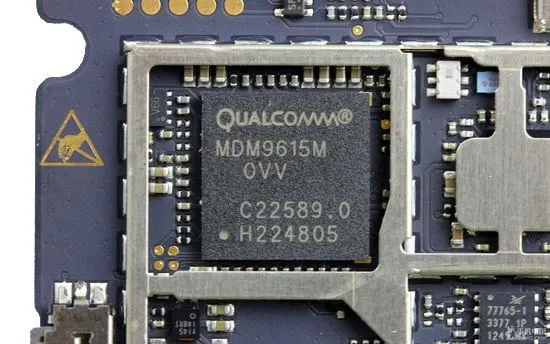
On 15 June the General Court (“GC”) annulled the Commission’s decision imposing a close-to-1-billion euro fine on Qualcomm in relation to alleged exclusivity payments made to Apple in breach of Article 102 TFEU. [For some helpful background on the Commission’s decision see this guest post from Max Kadar that we published in 2020].
I have no involvement in the case (beyond good friends on both sides), but I followed it closely and attended the public part the oral hearing. As I told many colleagues then, I left with the impression that Qualcomm could win based on a mix of interrelated procedural and substantive arguments.
The case is unique for various reasons. First, it concerns a single agreement with a single customer, Apple, which happens to be the largest company in the world. Second, the case appears to have been very largely based on information and documents provided by Apple itself (see e.g. ¶222). Third, it is quite extraordinary to see a full annulment in an abuse of dominance case. Fourth, it is a rare case where the procedural errors identified by the Court take center stage and have a material impact on the outcome of the case.
At the same time, however, my view is that this Judgment does not materially move the law in any way, certainly not in a way that may hinder the Commission’s ability to bring and win future cases. The Judgment simply requires the Commission to fulfill its (post-Intel) obligations regarding both procedure and substance. There is no attempt to create new law, no extravagance, no adjectives, no unnecessary obiter dicta; just a clear, logical and thorough application of the law to a unique set of facts. For those reasons, I very much doubt the Commission will contemplate an appeal.
This first post deals with procedure; I will discuss substance and other general comments in a second post.
Procedure
The Judgment is a must-read for anyone interested in competition procedure. It contains interesting discussions on admissibility of evidence, the practical application of measures of organization of procedure, and the Commission’s procedural obligations; it also provides details on Qualcomm’s smart move of resorting to a Section 1782 discovery request to obtain the evidence that might have been decisive to win the case:
On Section 1782. This is a provision that authorizes U.S. Courts to order persons in the US to provide information or documents “for use in a proceeding in a foreign or international tribunal.” It has attracted EU competition attention before, mainly when AMD tried to use it to gather information to boost its complaint against Intel (see here). [Side note: only two days before the Qualcomm Judgment the US Supreme Court severely restricted the use of this provision in arbitration proceedings; the SCOTUS has done much worse lately, though)]. Qualcomm brought its Section 1782 application after the Decision was adopted, in anticipation of judicial proceedings (see ¶140).
Rights of defence: Minutes and meeting notes. The CJEU already clarified in Intel that the Commission is required to take minutes of all meetings with third parties, and that Article 19 of Reg. 1/2003 makes no distinction between formal and informal meetings. In the Qualcomm case, the Commission argued that it is only required to draft “succinct notes” of meetings where parties provide inculpatory or exculpatory evidence. The Commission also acknowledged that:
- it had regrettably and inadvertently failed to provide any notes of one meeting and 3 conference calls (two competitors and two customers) prior to the adoption of the Decision (¶166; by the way, the last sentence in that paragraph may help you identify the most important of those third parties);
- it had held another meeting and another conference call with a third party which were never disclosed to Qualcomm and for which, regrettably, no notes existed. It appears that the Commission acknowledged this meeting in the context of litigation before the GC after Qualcomm learnt about it via Section 1782 discovery proceedings (see ¶231 in combination with ¶¶121, and 241-243). The identity of that party is confidential, but para. 234 appears to give a hint and reduce options to essentially two.
- before the opening of proceedings there had been a meeting with an anonymous third-party informant who provided inculpatory evidence; the Commission had taken no records of this meeting, which was only disclosed to Qualcomm during the litigation proceedings following a GC inquiry (¶¶269-273).
The Qualcomm Judgment clarifies that conference calls and meetings all fall within the scope of Art. 19 of Reg. 1/2003 (which is hardly controversial), and also that minutes must give meaningful “indications of the content of the discussion” (¶190), and “indicate the information gathered” (¶200). The Judgment acknowledges the recent case law indicating that Art. 19 does not apply to interview held before the formal opening of proceedings (¶276, citing the questionable judgment in Casino, currently under appeal). Regardless of that, the GC finds in this case that Commission’s obligations to ensure companies’ rights to access the file cannot be bypassed by resorting to the use of inculpatory information provided orally and require the Commission to draw notes and place them in the file (¶279).
Impact of procedural breaches on the outcome of the case. Pursuant to the case law cited at ¶160, procedural breaches may infringe rights of defence where a company shows that it would have been better able to defend itself absent the procedural error. [Longtime readers may remember that we had a panel debating these issues: “And so what? Procedural violations in EU competition law”: at our 2018 conference].
In Intel the Commission’s failure to take adequate minutes did not result in a violation of rights of defence. In Qualcomm the GC does consider that this error warrants the decision’s annulment. Why? First, because of the identity of the parties at issue (notably the one customer and the allegedly foreclosed rivals; ¶¶203-207). Second, because the sparse notes, or the absence of any notes, made it impossible to ascertain the possible relevance of the meetings (¶¶207-209, also 256-259 and 291-294). Third, because all these contacts related to the case and to Qualcomm’s business practices (¶¶210-211 and 239-245, 290).
Fourth, (and pay attention, because this is what ties procedure with substance and what may largely explain the outcome of the case), the Court repeatedly insists that the likely relevance of those meetings is also confirmed by “the content of the contested decision and the specific circumstances of the present case” (¶213; other references to the specific circumstances of the case can be found at ¶¶202, 221, 223, 224, 252, 266, 288, 291-292, 295-296). Despite redactions, ¶¶216-218, 223-224 and 263, 265 might help you understand what the Court has in mind; essentially: it cannot be ruled out that Apple the customer and competitors could have provided info as to whether competitors could truly have satisfied Apple’s requirements absent the exclusivity provisions. As discussed below, it turns out they could not have satisfied those requirements; it would appear that the Commission was somehow misled into believing otherwise, or in any event failed to verify it adequately. We will come back to this when we discuss substance.
Differences between the SO and the Decision. While the SO related to an alleged abuse on the markets for UMTS and LTE chipsets, the Decision’s scope was narrowed down to LTE chipsets alone. While this was to Qualcomm’s benefit, the narrower scope of the case meant that the evidence put forward by Qualcomm to deny that its practices were capable of foreclosing competitors (a critical margin analysis concerning both the UMTS and the LTE chipset markets) was no longer relevant (the GC notes that the decision itself also relied on a revised version that was no longer relevant; ¶328).
Following a summary of the case law on the relevance of SOs (¶¶307-310), the GC preliminarily notes that (i) abandoning objections does not imply a procedural error (¶¶313-314), and (ii) the Commission was not required to provide Qualcomm with the opportunity to comment on the reasons leading to that view (only on the matters of fact at law at the basis of that decision) (¶315). The GC, however, observes that “the possibility for an undertaking to submit that conduct is not capable of restricting competition, and in particular, of having foreclosure effects by relying on an economic analysis such as the critical margin analysis (…) is of no practical effect if the scope of the conduct concerned is modified by the Commission after the [SO] (…)” (¶352, developed in ¶¶333-337). The GC rules that the principle of observance of the rights of defence requires the Commission to bring to companies’ attention any modification of the scope of its objections that may be relevant for them to be able to make their views effectively and, where necessary, to adapt their analysis and evidence (¶¶338-340).
Comments
If you made it this far down the post, you will have realized that the case concerns a pretty unique set of facts. The Judgment shows, once again, that the GC takes rights of defence seriously. What is remarkable is that the GC goes beyond the usual slap on the wrist and finds that procedural irregularities suffice to annul the decision in its entirety. The GC does not attribute any relevance to the number of procedural errors nor to their seriousness; instead, it finds that the link between these procedural errors and the decision’s theory of harm makes the infringement of Qualcomm’s rights of defence particularly problematic.
Looking forward, it will not be difficult for the Commission to avoid repeating these errors. I see nothing in the Judgment that would place a heavy or disproportionate burden on the Commission’s case management; the Judgment is not too demanding, nor is it too harsh.
In my personal view, this Judgment should mainly be taken as a call for greater awareness. We come from a time when reliance on cooperation/negotiation proceedings (commitments, settlements, cooperation procedures, etc) may have relaxed attitudes vis-á-vis procedural matters, fundamental rights and rights of defence. That this relaxation may happen naturally (and not be matter of bad faith) is only one more reason to make an extra effort to prevent it. This Judgment reminds us, perhaps at the right time (I also have the DMA in mind now), that procedure and rights of defence should not be afterthoughts, for they are what make public enforcement sound, effective and legitimate.
3rd Edition of the Rubén Perea Award – How to Participate

We are delighted to announce the Third Edition of the writing award in the memory of our friend and colleague, Rubén Perea Molleda. As in previous editions, the winning paper will be published in a special issue of the Journal of European Competition Law & Practice, together with a selection of the very best submissions received (have a look at the special Issues of March 2021 and April 2022).
The winners of the two previous editions received their awards from Executive Vice-President Vestager on 22 March 2022. EVP Vestager will also deliver the award to the winner of the upcoming 3rd edition.
Who can participate?
You may participate if you have not reached the age of 30 by the submission date (i.e., if you were born after 15 September 1992). Undergraduate and postgraduate students, as well as scholars and practitioners are all invited to participate. If you are too old reading this and do not fulfil the criteria, please feel free to promote this opportunity among your junior colleagues or students.
What papers can be submitted?
You may submit a single-author unpublished paper which is not under consideration elsewhere. The paper may be specifically prepared for the award or originally drafted as an undergraduate or postgraduate dissertation.
The paper must not exceed 15,000 words (footnotes included; no bibliography needed).
Prior to submission, please make sure your paper follows the JECLAP House Style rules, which can be found here.
How to submit?
Please submit the paper via this link: https://mc.manuscriptcentral.com/jeclap.
IMPORTANT: As you go through the submission process, make sure that in Step 5, you answer YES to the question ‘Is this for a special issue’? and indicate that it is for the Rubén Perea Award.
What is the deadline?
Papers will have to be submitted by 23.59 (Brussels time) of 15 September 2022.


 Chillin'Competition