Archive for the ‘Uncategorized’ Category
Chillin’Competition DMA Symposium (IV): Initial Reflections on the Draft Digital Markets Act, by Tim Lamb
[Chillin’Competition will be publishing a series of posts featuring the views of various experts and stakeholders in relation to the European Commission’s proposal for a Digital Markets Act. We have received several contributions and will also be inviting some experts to ensure a plurality of informed views from a variety of perspectives. For our previous posts on the DMA see here (by Pablo), here (by Alfonso) and here (by Cani Fernández, originally published in JECLAP). Today we bring you some reflections by Tim Lamb, Director of Competition at Facebook]
The proposal for a Digital Markets Act (DMA) signals a new approach to the regulation of digital services in the European Union. In the best case scenario, the DMA could establish targeted obligations for true bottlenecks in the digital economy that will help to preserve and re-distribute value for consumers and business users. That is a scenario that could be welcomed and for that to materialise the new regulation would need to pay particular attention to core virtual infrastructure, such as app stores, operating systems or productivity software.
The DMA will unquestionably apply to Facebook, Google, Microsoft, Apple, Amazon and could potentially to others such as Booking.com, SAP, Zalando, Deutsche Telekom, Schibsted and Orange in one form or another. These companies have to accept that and understand the implications for their respective consumer and business offerings and products. Critically, for companies to be able to understand the potential implications of the DMA, the proposal will need to ensure that it contains understandable and actionable obligations.
As it stands right now, the draft DMA is the crystallization of a growing drumbeat over the past few years pressing for new rules to address perceived concerns expressed in many conferences, regulator reports and academic papers. The drumbeat and the draft DMA itself contain an underlying assumption that the extensive powers already conferred on authorities under existing competition laws are insufficient to address a range of perceived harms.
While there are frequent debates as to whether the European Commission (the Commission) has the right tools to exercise its competition functions, there may be something different this time around. A central tenet of the current debate is the desire for a lower threshold for regulatory intervention and a material lowering of the evidentiary standards.
As a result, the draft DMA is advancing a form of quasi-competition regulation which is untethered from traditional competition law concepts such as dominance, detailed case by case assessments, economic analysis and an assessment of efficiencies. That untethering gives rise to three key implications that I wish to explore here.
● First, while competition law is generally concerned with market power and business conduct, the draft DMA has a keen desire to intervene in core product design. Yet that should call for a sharp focus on the consumer experience of those products which appears lacking in the draft DMA.
● Second, the prohibitions in the draft DMA have very few meaningful or identifiable limiting principles and risk capturing conduct that is both pro-consumer and pro-competitive. Such an outcome would be undesirable and careful thought should be given as to how to mitigate such risks.
● Third, innovation is a key driver of long-term economic growth. Yet the draft DMA’s proposals will very likely reduce, not increase, the ability and incentive for firms to develop innovative products for consumers.
The suggestions contained in the article are designed to strengthen the draft DMA. The full article is available here:
The ISU case and the SuperLeague: on ancillarity, object and burden of proof in the General Court’s judgment (Case T‑93/18)

The world of sport was shaken a few weeks ago when a number of clubs announced a breakaway tournament, the SuperLeague. The follow-up suggests that the consequences for sport will not be immediate (and might never be manfiested). From a competition law perspective, however, the implications may not take long to unfold: it appears that last week, a Spanish judge has referred some questions to the Court of Justice for a preliminary ruling concerning the compatibility of UEFA and FIFA regulations with EU competition law (see here).
The submission, arguably inevitable, could not be more timely: the ISU judgment (see here) was rendered by the General Court in December of last year and has since been appealed to the Court of Justice (see here). Some of the fundamental issues raised by the two cases are identical.
In essence, ISU was about a non-compete obligation imposed on athletes taking part in competitions organised by the International Skating Union and its members. The practical consequence is that participants in competitions not authorised by the ISU would face a lifetime ban (with all the dramatic consequences that follow).
The similarities are obvious with any disciplinary action that football governing bodies might take against teams having taken part in the organisation of the SuperLeague (or at least those that have not given up on the idea).
Interestingly, the public perception was not the same. While there was a great deal of sympathy vis-a-vis athletes facing a ban from the ISU, many thought football governing bodies would be right to take disciplinary action against the teams forming a breakaway league.
From a competition law perspective, howevever, I fail to see any differences between the two. In both cases, there is a (de iure or de facto) non-compete obligation imposed by the association setting up the tournament. Accordingly, whether or not the said obligation amounts to a restriction of competition (by object or effect) should be assessed in accordance with the same principles.
Which takes me to the General Court’s judgment in ISU. I already explained, when the Commission decision came out (see here), that I struggle to see how a non-compete obligation such as the one at stake in the case can be seen as a restriction by object. Moreover, I explained why a finding of a ‘by object’ infringement in the case is difficult to reconcile with, inter alia, Cartes Bancaires and Maxima Latvija (the first crucial in relation to free-riding considerations and the second on non-compete obligations).
That post still reflects my views on the case. I fail to see why an association investing in the development of a competition and giving visibility to athletes would be infringing Article 101 TFEU, by object, when taking measures against free riding by competing organisations.
Alas, the General Court came to a different conclusion. The first instance judgment, however, seems to be at odds, in some crucial respects, with the case law on restrictions by object. In this sense, it provides a test for the case law developed in the past few years and illustrates where the potential difficulties might arise in practice in the coming years.
The points on which to focus (and the issues in which there seems to be some tension between the General Court judgment and the established case law), are the following:
- First, the conflation of the ancillary restraints doctrine (whereby some agreements escape Article 101(1) TFEU altogether) and the question of whether a practice is restrictive by object.
- Contrary to what the judgment appears to suggest, a disproportionate measure is not necessarily restrictive by object.
- The General Court relies on case law dealing with ‘by effect’ infringements to assess the restrictive object of an agreement; there is therefore a mismatch between the case law cited and the conclusions drawn from it.
- Second, the allocation of the burden of proof.
Ancillary restraints and restrictions by object: why they tend to be conflated (or object and effect in Ordem dos Técnicos Oficiais de Contas)
The judgment is valuable in that it reveals that there are two tests that tend to be conflated in practice: the ancillary restraints doctrine, on the one hand, and the assessment of whether an agreement is restrictive by object, on the other.
Under the ancillary restraints doctrine, the question is whether some clauses are ancillary to a pro-competitive transaction and thus whether they fall outside the scope of Article 101(1) TFEU altogether. Where a restriction is found to be ancillary, there is no restriction of competition, whether by object or effect.
The ancillary restraints doctrine has an illustrious history in EU competition law: salient examples include Metro I (on selective distribution) and Pronuptia (on franchising). When it comes to non-compete obligations, Remia is an excellent example.
These cases define the conditions under which the clauses are ancillary and thus escape the prohibition altogether. Typically, these conditions include a proportionality assessment: only where the measure is proportionate does it escape Article 101(1) TFEU. What if one or several of the conditions, including proportionality, are not fulfilled? In that case, it would still be necessary to assess whether the agreement is restrictive by object or effect.
This is the stage at which errors arise. Every now and then, courts and authorities wrongly conclude that, because the ancillary restraints doctrine is not applicable (for instance, because the measures go beyond what is necessary), the agreement is restrictive by object. In other words: the test under the ancillary restraints doctrine and the assessment of the restrictive object of the agreement are sometimes conflated.
A clear example of this conflation is provided by Ping (see here for my analysis). In that case, the UK CMA concluded that the clauses in the agreement were restrictive by object insofar as they were not objectively necessary to attain the pro-competitive aims of the agreement. In other words: the CMA conflated objective necessity and restrictive object. The CAT identified this error of law on appeal (see here).
I notice a similar conflation in the ISU case. It is well-established case law that, in certain circumstances, sporting rules fall outside the scope of Article 101(1) TFEU altogether. In cases like Meca Medina, the Court of Justice referred to key ancillary restraints judgments such as Wouters and Gottrup-Klim. More precisely, the Court ruled, in para 47 of Meca Medina, that any restrictions must be proportionate for them to fall outside Article 101(1) TFEU.
It does not follow from that case law, however, that the agreement is necessarily a restriction by object if it goes beyond what is necessary to attain a legitimate objective. Quite the opposite, in fact. Para 47 of Meca Medina expressly refers to the potential restrictive effects of the agreement (as opposed to its object) where the clauses in question are found to be disproportionate.
There is clear tension between this line of case law and paras 100-114 of the ISU judgment, where the General Court suggests, in contradiction with the abovementioned rulings, that a measure that pursues a legitimate objective is restrictive by object if it goes beyond what is necessary (see in particular paras 103 and 110). In the same vein, Wouters and Meca Medina are not capable of substantiating the conclusions drawn from them.
The General Court makes abundant references to Ordem dos Técnicos Oficiais de Contas. This judgment is relied upon to justify a finding of a restriction by object, even though (just as Meca Medina) the Court did not treat the restraints in that case as ‘by object’ infringements (in fact, the Court of Justice expressly ruled that they did not amount to a ‘by object’ prohibition).
That judgment exemplifies, perhaps better than any other, that, contrary to what the General Court suggests, measures that go beyond what is necessary to attain a pro-competitive aim (for instance, because they provide for penalties that are too severe) are not necessarily restrictive by object.
Conflating the ancillary restraints doctrine (or, more generally, objective necessity) and the question of whether an agreement is restrictive by its very nature could have major consequences in practice. It would substantially expand the ‘by object’ category and would thus run counter to the principle whereby the said category is to be interpreted restrictively.
I guess this point will be central in the assessment before the Court of Justice.
Burden of proof and restrictions by object: what the authority needs to prove
If I look back at the landmark cases of the past few years, it appears that the rules governing the allocation of the burden of proof are at the heart of most disputes. It would seem that, very often, administrative action is quashed for reasons pertaining to the allocation of the burden of proof. From State aid to merger control, the issue cuts through key judgments.
ISU might well be the next on the list. It is unquestionable that the Commission bears the burden of showing that an agreement amounts to a restriction by object. One would be forgiven for reaching a different conclusion when reading ISU. The judgment goes over the content of the non-compete obligations and their objectives, and rules that they go beyond what is necessary (even if the legitimate objectives were to be accepted).
What seems to be missing, however, is the following step (that is, the evaluation of the evidence showing, to the requisite legal standard, that the object of the agreement is restrictive of competition). That step is crucial: it is still necessary for an authority to show that the contentious measures are caught by Article 101(1) TFEU by their very nature.
Contrary to what one may infer from ISU, it is one thing to rule out some potential justifications for the agreement and another one to evaluate whether the agreement in question is restrictive by object. The second does not follow, logically and inevitably, from the former. As already pointed out, this second step was missing in the judgment.
Here and there, the judgment gives the impression that it is for the parties to show that the agreement is not restrictive by object. This conclusion is inescapable when one reads the evaluation, by the General Court, of the objectives pursued by the contentious rules (paras 84-89). The tension between the judgment and the rules governing the allocation of the burden of proof also transpires from an analysis of paras 110-114.
The General Court, while accepting that the economic nature of the restraints cannot be a reason to conclude that their object is anticompetitive, relies on Ordem dos Técnicos Oficiais de Contas to rule that the ISU did not behave in a manner consistent with its duty to ensure undistorted competition. As pointed out above, it is sufficient to take a look at the Ordem dos Técnicos Oficiais de Contas judgment to realise that this fact alone is insufficient to substantiate the claim that an agreement is restrictive by object.
It remains to be seen how these points will be addressed by the Court in the appeal. In any event, ISU provides an excellent illustration of the areas, concerning the interpretation of Article 101(1) TFEU, in which tension between the case law and the administrative practice are likely to arise.
I very much look forward to your comments (as ever, nothing to disclose).
Apple, common carrier antitrust and anticompetitive effects: a follow-up
As an academic, I sometimes feel that ideas of principle are not discussed often enough. One misses, every now and then, deep exchanges on substantive issues. Sometimes there is so much noise around these debates that, even when they take place, they are silenced or not sufficient attention is paid to them. Therefore, I very much welcome Damien Geradin‘s post discussing my views on the ongoing Apple investigation (see here).
When I read it, I felt that it provided a wonderful occasion to discuss the case law on anticompetitive effects. By the way, much of what follows was already addressed at length in my paper on the notion of effects, which I am proud to be publishing with the Journal of Competition Law and Economics (coincidentally co-edited by Damien himself).
I will start this post by clarifying that, contrary to what Damien appears to suggest, I do not believe that the Statement of Objections issued by the European Commission is a ‘rather reckless’ move. There is nothing reckless or unusual in opening an investigation.
My own research has shown me that the European Commission regularly tests the outer boundaries of the law, and occasionally interprets Treaty provisions in a way that is not immediately obvious to reconcile with the case law. We have seen examples this very week, with the annulment, by the General Court, of the Commission decision in Amazon’s tax ruling case (see here).
There is nothing reckless in that. Quite the opposite. If you ask me, an authority that dares take risks when enforcing the law is one of the treasures of the EU competition law system (just compare and contrast with the systemic underenforcement of antitrust provisions in the US).
The practical implication, however, is that some Commission decisions will fail to persuade the EU courts and thus will occasionally be annulled. I have written that the annulment of a Commission decision is nothing more than the sound of the system working. It means that both the EU courts and the authority are serving the public interest by doing what is expected from them.
Here’s hoping the competition law community will stop using sensational vocabulary (e.g. defeat, blow) when administrative action is quashed and take it for what it is: a manifestation of the routine operation of the law and its institutions.
Most of the points addressed by Damien in his post concern the notion of anticompetitive effects. He mentions most of the key cases, which helps structure the discussion. I will focus on this aspect of the post. If there was any doubt, I am interested in the law and have nothing to disclose in this or indeed any other case (on this point, by the way, I am particularly grateful to Damien for the clarity of his disclosure).
Losing customers to a dominant firm is not in itself evidence of anticompetitive effects: I explained in my post (and in the comments section) that evidence that rivals have lost, or are likely to lose, customers to the dominant firm (or, as a commentator – Charlie – and Damien coincide in putting it, ‘some diversion to Apple’) is insufficient to show anticompetitive effects within the meaning of Article 102 TFEU. Anticompetitive effects under that provision (and Article 101 TFEU) necessitate more than evidence in this sense.
I would not have anticipated that this point would be controversial. After all, we have a case (Post Danmark I) expressly addressing it. The facts of the case reveal that the new entrant had lost two customers to the dominant firm. This fact, alone, was deemed insufficient to justify a finding of effects.
The Court examined the nature of the practice and the features of the relevant market (paras 38-39) and concluded that, in spite of losing some customers to the dominant firm, the new entrant was willing and able to fight back (it maintained its distribution network and was even able to gain its two customers back after a while).
Against this background, it seems clear to me that, under the Court’s interpretation of Article 102 TFEU, the inquiry should revolve around the actual or potential impact of the practice on rivals’ ability and incentive to compete: so long as they are likely to remain willing and able to compete on the merits (and thus place pressure on the dominant firm), the practice will fail to have effects.
As in Post Danmark I, evidence that the new entrant maintained (or will likely maintain) its assets and means to compete is particularly valuable. Other factors in this regard have been identified in subsequent cases: for instance, the coverage of a practice has emerged as a crucial consideration since Post Danmark II and Intel.
A competitive disadvantage is not in itself evidence of anticompetitive effects: Damien refers to Deutsche Telekom in his discussion. It is particularly useful in the context of the Apple investigation. After all, a ‘margin squeeze’ is the prime example of a raising rivals’ costs strategy. The crucial point in Deutsche Telekom is that, according to the Court, evidence of a ‘margin squeeze’ is, in and of itself, insufficient to show anticompetitive effects (paras 250-253).
In other words: evidence that a practice would disadvantage rivals to such an extent that it would force them to sell at a loss does not suffice to establish anticompetitive effects. Something more, to be determined by paying attention to the nature of the practice and the features of the relevant market (e.g. whether there are alternatives to the incumbent’s network), is necessary.
Anticompetitive effects need to be considered by reference to the market as a whole: Generics, mentioned by Damien too, provides a valuable clarification. In that case, the Court ruled that anticompetitive effects involve harm to competition that goes beyond harm to individual rivals (para 172). In other words: the mere fact that a particular firm no longer has (or will likely no longer have) the ability and incentive to compete is insufficient to trigger Article 102 TFEU. Again, the factors mentioned above would need to be considered.
On business models and competition law: I will say a final word about business models. I noted in my post a change of attitude in this regard by the Commission: from reluctance, absent exceptional circumstances, to challenge business models to the relatively frequent enforcement of Article 102 TFEU in relation to them. It is yet another example of EU competition law becoming increasingly proactive.
Damien rightly mentions Microsoft as an example in which a business model was changed. The case illustrates, better than any other, the point above. The threshold for intervention in Microsoft is consistent with the exceptionality of cases challenging business models under traditional competition law. After all, a variation on the Magill/IMS Health test was applied in the case (requiring evidence, in particular, of indispensability within the meaning of Magill).
Times seem to be changing. Rather than judging whether the move is good or bad, it is important to consider the consequences that follow. In this sense, my post mentions that business model cases are trickier for competition authorities, in particular because establishing a restriction against the relevant counterfactual is considerably more complex.
Why Article 102 TFEU is about equally efficient rivals: legal certainty, causality and competition on the merits

As I mentioned last week, some of the most basic tenets of the post-modernisation consensus are being questioned (as much as the post-modernisation consensus itself). The idea that the vast majority of practices should only be prohibited following a case-by-case analysis of their likely effects is one of them.
More to the point, it has also become relatively frequent to challenge the idea that Article 102 TFEU is concerned with competitors that are as efficient as the dominant firm (at least so as a matter of principle).
This principle tends to be associated with the modernisation of the EU competition law system and the ‘more economics-based approach’. However, it has long been part of the case law. An explicit reference to equally efficient rivals can be traced back to the seminal AKZO ruling of 1991, where the Court explained that below-cost pricing is potentially exclusionary insofar as it is capable of foreclosing firms that are as efficient as the dominant player. In subsequent cases, the principle has been confirmed by the Court, perhaps more emphatically in Post Danmark I and Intel.
Two conclusions can be drawn from the case law. First, the idea that Article 102 TFEU is only concerned about the exclusion of equally efficient rivals is broader than the ‘as efficient competitor test’. The latter (‘AEC test’) is merely a manifestation of the broader principle. Accordingly, whether or not the AEC test is applied, Article 102 TFEU will still be concerned with the exclusion of equally efficient rivals. Similarly, the inquiry (is the practice likely to exclude equally efficient rivals?) is the same, irrespective of the instrument used.
Second, the principle is relevant across all parameters of competition. Because the AEC test and the broader principle tend to be conflated, there is a tendency to think that the latter applies only to price-based competition. However, the case law is unequivocal in this regard. In Post Danmark I, the Court made it clear that principle made it clear that Article 102 TFEU is not concerned with the exclusion of less efficient rivals in terms of, inter alia, ‘price, choice, quality or innovation’.
As we undergo times of change, it makes sense to look back and explain the logic of the case law. The hearing in Qualcomm (which took place last week) and the (UK) Royal Mail ruling have brought the discussion to the fore again. The analysis seems useful for two reasons. First, it is important to distinguish between the (narrow) AEC test and the broader principle, as the conflation of the two is relatively frequent. Second, it is an aspect of the case law that wonderfully exemplifies the extent to which law and economics go hand in hand.
The essence of the case law can be summarised as follows:
Competition on the merits: Article 102 TFEU seeks to ensure that firms remain willing and able to compete on the merits. The exclusion of firms that are less efficient is the very manifestation of the process that EU competition law is intended to preserve: it is the logical and expected outcome of a system based on undistorted competition. Protecting inefficient firms would alter the competitive process as much as a subsidy intended to keep a firm artificially afloat.
EU competition law protects a process, it does not engineer market structures: In the same vein, the point of Article 102 TFEU (and EU competition law) is not to design markets in accordance with a preconceived vision. Similarly, it is not for a competition authority to decide how many players should compete on the market (and for how long or with which assets). The protection of the competitive process as enshrined in the Treaty is far more modest in its ambitions: instead of determining outcomes and engineering market structures, Article 102 TFEU is there to ensure that rivals that have the ability to do so can thrive in spite of the presence of a dominant firm.
Causality: It is clear from the case law (think in particular of Post Danmark II), that any actual or potential effects must be attributable to the behaviour of the dominant firm. In other words, the Court makes it necessary for an authority or claimant to establish a causal link between the latter and the former. Where a firm is less efficient than the dominant player, any actual or potential effects cannot be attributed to the dominant firm, but to the fact that it is less attractive in terms of quality, price or any other parameter of competition. In other words, the causal chain would break in such a scenario.
Legal certainty: The case law suggests a final rationale. A dominant firm should be in a position to anticipate when it is in breach of Article 102 TFEU. For instance, a dominant firm knows its costs. Accordingly, it is aware of when it is pricing below cost (and thus where an equally efficient rival would be selling at a loss). Similarly, it can evaluate whether a rebate scheme is capable and/or likely to exclude a competitor that is at least as efficient as itself. On the other hand, a dominant player cannot be expected to be aware of the cost structure of a less efficient rival and, by the same token, it would not be able to tell in advance whether or not it is in breach of the law.
While some aspects of the case law are yet to be addressed, the principle has consistently been confirmed over the years. As we rethink EU competition law, the fundamental question we should be asking is whether there are compelling reasons to depart from it, and interpret Article 102 TFEU along different lines. I very much look forward to your comments on this point.
The Commission sends an SO to Apple: common carrier antitrust picks up speed
/cdn.vox-cdn.com/uploads/chorus_image/image/55907179/1_cCyCacaNtvXA2ImnM5-WIw.0.jpeg)
As readers will know, the Commission sent a Statement of Objections to Apple last week (for the press release, see here). The investigation focuses on the firm’s practices in relation to the conditions under which it provides access to its app store; it is confined to music streaming services. Most of you probably remember that the case traces its origins back to the complaint brought by Spotify, which concerned the 30% commission Apple ask on sales taking place via its app store.
According to the press release, the Commission has reached the preliminary view that the abovementioned practice amounts to an abuse of a dominant position. The document also mentions the ‘anti-steering provisions’ whereby app developers are restricted in their ability to inform users about alternative purchasing options.
The case has long intrigued the competition law community. The theory of harm that the Commission would pursue was not immediately obvious to infer from the publicly available information. Was the investigation really about exclusion, considering that Spotify is by some distance the market leader on the relevant market? If so, what are the conditions to assess the legality of the conduct? Was the case about exploitation instead?
The press release hints at some answers in this regard. Generally speaking, it suggests that common carrier antitrust (an emerging interpretation of competition law provisions and a new approach to enforcement) is picking up speed. I would note three aspects in this regard:
- First, the press release suggests that the lawfulness of potentially exclusionary conduct does not depend (or, rather, no longer depends) on an assessment of anticompetitive effects.
- Second, the press release signals that the Commission is ready to question firms’ business models in the digital sphere: what EU competition law, for decades, was reluctant to challenge absent exceptional circumstances, has now become a central feature of enforcement.
- Finally, the press release hints at an additional feature of common carrier antitrust: it would seem that each ecosystem is deemed a market on its own.
A farewell to anticompetitive effects?
Modern EU competition law, as interpreted by the Court of Justice, is based on the idea that the vast majority of potentially abusive practices are unproblematic where they are unlikely to have anticompetitive effects (in refusal to deal cases, the test is even stricter). This is the interpretation underpinning the most recent case law (including Deutsche Telekom, TeliaSonera, Post Danmark I and II, Intel, MEO) and the Commission’s Guidance Paper (in which the authority committed to prioritising cases that would likely lead to anticompetitive foreclosure).
The principles of contemporary EU competition law are not obvious to reconcile with the Apple investigation. In this sense, the case hints at the rise and consolidation of common carrier antitrust.
Rulings like Deutsche Telekom and MEO show that a raising rivals’ costs strategy is not anticompetitive in and of itself. An evaluation of the likely impact of the conduct is a precondition for the application of Article 102 TFEU (or, indeed, merger control and Article 101 TFEU). According to this case law, the Commission would need to establish the anticompetitive effects of Apple’s app store-related behaviour.
A cursory look at the relevant market suggests that showing the exclusionary impact of Apple’s practices on the market for music streaming services is anything but an easy task. The fact that the original complainant in the case is (and has been for a while) a market leader one of the factors in this regard. The fact that music streaming is accessible in many ways (that is, not only via Apple’s app store or, more generally, Apple devices) is another one.
The press release is interesting in that it suggests that the Commission believes that it can establish an abuse of an exclusionary nature without showing that the practice is likely to have anticompetitive effects. It would seem that the case is predicated on the idea that the Commission can discharge its burden of proof merely by showing that the practices distort competition by raising rivals’ costs. In this sense, it signals a move away from Deutsche Telekom (with all the implications and/or complications that follow).
The move away from anticompetitive effects does not seem to be an isolated instance. I have the impression that other cases in the digital sphere will be conducted following the same approach. One can think, in particular, of the Amazon case (which I discussed here). As is true of the Apple investigation, the use of non-public data by Amazon cannot be assumed to lead to the exclusion of rivals on the relevant markets (and might very well inject competition in Amazon’s marketplace).
This new approach to the assessment of practices comes at a time when the fundamental tenets of modernisation are being challenged. It has become relatively frequent to read that the effects-based approach has gone too far, or that it would place an undue burden on authorities in digital markets.
The move away from anticompetitive effects raises a number of fascinating questions. I will mention just two here. The first is whether the Court will agree to depart from the case law mentioned above and embrace the Commission’s expansive interpretation of its powers. The second is whether this new approach makes it possible to meaningfully constrain administrative action. To the extent that it equates a competitive disadvantage with harm to competition, its scope of application seems to lack clear boundaries (it is a criterion that seems fulfilled pretty much always and everywhere).
In this sense, the post-modernisation approach reminds one of the pre-modernisation times, when the Commission had a tendency to equate a limitation of a firm’s freedom of action with a restriction of competition.
Competition law and business models: what is the counterfactual?
The Apple investigation is also an example of another aspect of the emerging approach to enforcement: the Commission is no longer reluctant to challenge firm’s business models. Traditionally, the EU competition law system was deferential to firm’s strategies. It did not question, absent exceptional circumstances, a company’s decision to produce exclusively in-house. Similarly, the core of distribution methods like selective distribution and franchising are deemed prima facie lawful irrespective of their effects.
Common carrier antitrust is much less deferential to the central aspects of a firm’s business model. This approach to enforcement is fraught with challenges for an authority. First and foremost, one cannot simply assume that the undesirable aspects of a company’s core strategy can be removed without consequences. For instance, one cannot take for granted that a manufacturer will rely on franchising if it is required to accept competing products in the franchisees’ premises. Similarly, one cannot simply assume that forcing a company to deal with third parties will have no impact on incentives to invest and innovate.
Generally speaking, tweaking a firm’s business model via competition law enforcement requires a careful evaluation of the counterfactual. When it is said that a business model restricts competition, the question should be: compared to what? What would the world look like if the business model was a different one? How are the different aspects of a business model (both the desirable and undesirable) intertwined? I was reminded of these questions when reading the press release in the Apple case.
The press release suggests that a central aspect of the Commission’s case is that Apple’s 30% fee leads to higher prices for consumers (as the fee is passed on to subscribers). It is unlikely that challenging Apple’s ability to charge a fee to app developers will come for free; it will most probably be compensated elsewhere (possibly in the form of more expensive devices and/or services for end consumers). Once again: one cannot assume that the undesirable aspects of a business model can be removed without consequences.
I look forward to seeing how these central questions are addressed in the case. And I look forward to your comments, in particular if you see things differently. As you know, I have nothing to disclose in this or indeed in any other matter.
A New Kid on the Block: How Will Competition Law Get along with the DMA? (by Cani Fernández)

I was privileged to speak, yesterday, at the conference jointly organised by UCL and White & Case, which was devoted to the Moving Boundaries of Competition Law. With James Killick as chair, I discussed the institutional aspects of the Draft Digital Markets Act alongside Cristina Caffarra, Cani Fernández, Peter Freeman, Georgios Gryllos and Andriani Kalintiri. I learnt a great deal about procedure and the potential challenges that may result from the adoption of the new regime.
It was not the first time I benefitted from Cani Fernández‘s unique insights as President of an authority that deals with both competition law and sector-specific regulation (on top of a lifetime as a leading practitioner). She kindly accepted our invitation to write an editorial for JECLAP on the relationship between the Draft DMA and Articles 101 and 102 TFEU. The editorial is now available as an advanced piece, and free of charge, here.
As you see, Cani considers the potential impact of a new instrument that would overlap with existing provisions, and pleads in favour of the adoption of coordination mechanisms to ensure not only that Articles 101 and 102 TFEU continue to play a role in digital markets, but also to avoid discrepancies and preserve legal certainty. Enjoy!
LSE Short Course on State Aid and Subsidies Regulation (July 2021)

As mentioned last time, LSE Law is organising a Short Course on State Aid and Subsidies Regulation in July 2021. This course is part of the activities organised around the Jean Monnet Chair in Competition and Regulation.
More information about the short course can be found here. Do not hesitate to contact my colleague Amanda Tinnams at A.Tinnams@lse.ac.uk for registration and fees (or for any other queries).
This area is undergoing substantial change: EU State aid law keeps growing in complexity and the EU-UK Trade and Cooperation Agreement provides the basis for the development of a subsidies regime in the UK.
The idea behind the course is to get you up to speed in the field. It is intended for (i) practising lawyers that are or may be exposed to State aid law and/or subsidies regulation but have not studied the subject in any formal or in-depth way; (ii) in-house lawyers who would benefit from a greater understanding of the risks involved in the award of subsidies and similar measures; and (iii) professionals and students with an interest in developing an expertise in the field.
The course will be run online (via Zoom) over four Fridays in July (2nd, 9th, 16th and 23rd) To maximise interaction, the short course will be capped at 25 participants.
The meetings will run from 2pm-6pm (London time) and will cover both the EU State aid law system and the subsidies provisions enshrined in the EU-UK Trade and Cooperation Agreement (including on enforcement) and will be structured as follows:
- Day 1 (2nd July): Scope of provisions on subsidies and State aid.
- Day 2 (9th July): Advantage and selectivity/specificity.
- Day 3 (16th July): Special focus on tax measures (tax rulings, digital taxes and beyond).
- Day 4: (23rd July ): Procedure and enforcement.
A certificate will be available on completion, along with CPD points for practitioners. Once again, it would be wonderful to get to meet some of you for the occasion!
The notion of undertaking after AG Pitruzzella’s Opinion in Sumal (case C-882/19). Towards (eventual) ‘downward’ liability for competition law breaches? (by Marcos Araujo Boyd)
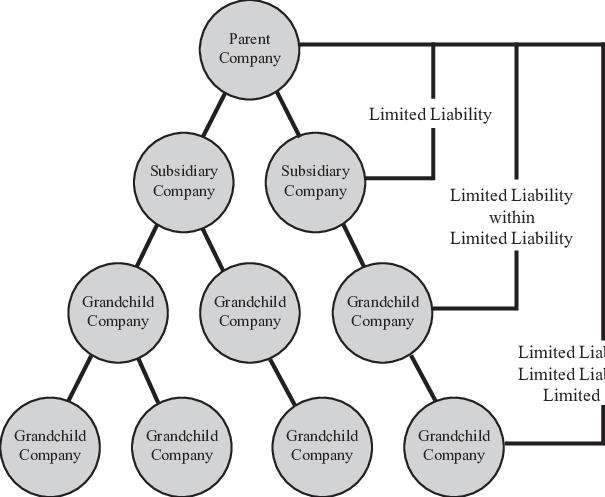
On 15 April 2021, AG Pitruzzella issued his much awaited Opinion in Sumal (not available in English at the time of writing, see here for the text in various language versions), which concerns the question of whether damages may be sought from affiliates of the entities identified in a previous public enforcement decision.
Sumal is one of the four preliminary references submitted by Spanish commercial courts in the context of the flurry of claims following the Trucks decision of the European Commission, together with case C-30/20 Volvo seeking clarification on territorial jurisdiction and Article 7(2) of Regulation (EU) No 1215/2012, case 267/20 Volvo and DAF Trucks on the retroactivity of the Directive 104/2014 and the recently submitted case 163/21, PACCAR, on rules of evidence. These claims have been followed by multiple authors in Spain, notably Fernando Díez, Francisco Marcos and Juan Ignacio Ruiz Peris and raise many issues of interest in the field of private enforcement.
The interest on these matters of course goes beyond this country. Back to affiliate liability, as reported by Caroline Caufmann, a Dutch court has enforced a decision against an affiliate. In Germany, Christian Kersting has discussed in D’Kart a decision pointing at that direction from the Dortmund Landsgericht. I refer the curious reader to my article published earlier this year by the Journal of Competition Law & Practice (draft available on SSRN).
This post provides a brief introduction to the Opinion. The comments follow the document’s structure.
Procedure (paras 4-10). The initial paragraphs of the Opinion recall the context of the preliminary reference and the main procedural steps at the Court, which will hear the case in Grand Chamber, the observations formulated by two Member States (Italy and Spain) and the decision not to hold an oral hearing, replaced by written submissions on specific questions placed by the Court. (para 10).
Admissibility (paras 11-18). AG Pitruzzella opines that the admissibility objections raised by the defendant in the original case, Mercedes Benz Trucks España, S.L.(MBTE) should be dismissed, save in respect of the fourth question, for lack of sufficient information. That question (‘If the answers to the earlier questions support the extension of subsidiaries’ liability to cover acts of the parent company, would a provision of national law such as Article 71(2) of the Ley de Defensa de la Competencia (Law on the Protection of Competition), which provides only for liability incurred by the subsidiary to be extended to the parent company, and then only where the parent company exercises control over the subsidiary, be compatible with that Community doctrine?’) may arguably be responded anyway through the general principles on primacy and direct applicability of EU law.
General observations (paras 19-22). The Opinion proposes to address the three questions jointly and then summarises the main arguments of the parties. The interesting bit there is in paragraph 21, where AG Pitruzzella notes that the initial position of the Commission in the case was contrary to affiliate liability, a position that evolved in the last written statements, where the Commission would have conceded that the subsidiary could be made liable (i) if there is a ‘link’ between its conduct and an essential element of the infringement or (ii) if a direct claim against the parent company was impossible or excessively difficult. This second element is not discussed further in the Opinion.
The notion of undertaking (paras 23-31). This section recalls the case-law on the doctrine of ‘economic unit’ under EU competition law, starting with ICI (case 48/69, EU:C:1972:70) and stressing its functional nature. This part hovers around the idea that an ‘economic unity’ or undertaking is based on organisational, economic and legal links defined by control. A good summary, but nothing revolutionary.
The foundations of upward liability (paras 32-47). This part looks at the parental liability doctrine. This might surprise, given that this is clearly not an issue in Sumal; it could be said it would be the exact opposite. The intention is clearly to discuss ‘downward’ liability by contrast to the established notion of ‘upward’ or parental liability.
At the outset, the Opinion notes that parental liability as found in case-law might be understood to be based on two constructions (para 33). One would be that parent companies are liable because of their capacity to determine the conduct of an affiliate. Another is based on the idea that all legal entities form an economic unit. AG Pitruzzella notes that the answer to the questions formulated in this case may determine the answer to be given, and resolutely opts for the second alternative (para 36), finding support in the recent jurisprudence of the Court which has stressed that the principle of personality applies to the undertaking, not to each legal entity (para 46). This section ends with candid comments on the evolution that is perceived in various fields of law towards some form of ‘enterprise liability’ or similar tools based on the true economic nature of groups of companies (para 47).
Economic unit and ‘descending’ liability (48-53). The discursive section on upward liability contrasts with the brief comments on the downward dimension. That is understandable, since the latter is built on the prior section. However, two elements in this part of the Opinion deserve a mention.
One is the four-step intellectual process proposed to impute a legal entity in both upward or downward situations, aimed at presenting them as identical (paras 48-52). It ultimately defends that the identification of the legal entity is just a last step in the logic process of attribution.
The other is the reliance on the General Court decision in Biogaran (case T-677/14, ECLI:EU:T:2018:910), for want of a better (ie, from the CJ) precedent. That case had been mentioned by the referring court and is helpful in defending the liability of subsidiaries with unproven knowledge of the infringement. At the same time, however, is a remarkably weak foundation for a principle with the importance of the one at stake here.
In the end, and this should be stressed, the discussion does not address ‘why downward liability exists in law’ but rather ‘whether there are logical reasons to discard it’ (para 52). By so doing, Sumal evades addressing the question as an obligation based on EU law, but as a tool that EU law would tolerate in certain conditions. It is difficult to overestimate the importance of that approach for the solution proposed to this case.
The conditions for declaring joint liability of the affiliate (paras 54-59). This is arguably the most interesting part of the Opinion. In it, AG Pitruzzella notes that, in ‘upward’ (parental) liability scenarios, the fact that the parent company determines the conduct of the affiliate suffices to impute the conduct to the former; however, in ‘downward’ liability cases, the mere existence of control would not suffice, it being necessary that the activity carried out by said legal entity is necessary for the implementation of the conduct. That would be the case where the affiliate is involved in the specific economic activity under consideration, for example, by selling the goods object of the cartel (para 57). In this respect, the Opinion relies on several UK cases starting with Provimi (fn 70) and ENI (case T‑39/07, EU:T:2011:356). As mentioned above, this link had been required in the written submissions filed by the Commission.
When explaining this logic, the Opinion argues that a subsidiary carrying activities in other areas would fall outside the functional notion of undertaking for these purposes. The consequences of this logic are difficult to anticipate and will require further reflection.
Extension of these principles to private enforcement (60-69). Paragraphs 60 ff of the Opinion move away from logic of public enforcement and build on Skanska (case C-724/17, ECLI:EU:C:2019:204). AG Pitruzzella recalls that the determination of the liable entity is directly governed by EU law and notably that it may not have a different meaning in public and private enforcement, linking the discussion in the prior sections to the case, and concluding that downward liability is as acceptable in private as it is in public enforcement.
The reliance on Skanska is understood; it is however noted that, unlike Sumal, that case was based on the principle of effectiveness, displacing national rules when it would stand in the way of EU law. In contrast, as above noted, the Opinion discusses if EU law would permit, not require, such ‘inverse’ claims. In other words – the Opinion does not advocate that EU law would impose downward liability, treating an eventual failure to do so as a breach of EU principles (as in Skanska), but proposes confirming that EU law would not impede such attribution of liability within certain conditions. Consequently, the procedural obstacles faced by claimants are acknowledged (para 68), but in no way considered a barrier that would stand in the way of the rights granted by EU law and that national courts should disarm.
While this logic is understandable, it leaves unanswered the question of what principle of law, either EU or national, would require affiliates to be held liable for these damages, despite offering a construction that would ultimately impose legal obligations on legal entities. That, of course, is just one out of many questions that arises from this case and will require further reflection.
Binding nature of the determination in the public enforcement decision (70-76). The last section of the Opinion discusses whether the determination of the legal entity made in the public enforcement decision would bind the referring court. If so, national courts would, out of respect to the decision of the Commission under Art 16 of Regulation 1/2003, be prevented from imposing liability in a follow-on case on entities other than those specifically identified in it.
This is a tricky issue on which there is limited authority. In Martinair (case T-67/11, ECLI:EU:T:2015:984, 37) the GC declared noted that the identification of an entity in the public enforcement decision would bind national courts. AG Pitruzzella does not mention that case and moves swiftly to proclaim that the national judge can determine a different legal entity, provided that that entity meets the above criteria of participation in the infringement (para 74). At this point, the Opinion quotes the Commission as having accepted this logic in its written submissions, creating the impression that these statements may have played a role.
Conclusion The Opinion concludes that, in a claim for damages as that before the national court (ie, a follow-on claim), a legal entity may be held liable despite the fact that only its parent company has been sanctioned by the Commission provided that the economic, organisational and legal links at the time of the infringement have been established, and that the conduct of the controlled entity has contributed in a substantial manner to the illicit behaviour and to the effects of said infringement.
The matter is now laid before the Grand Chamber of the Court of Justice. An eventual acceptance to the proposals formulated by AG Pitruzzella would facilitate private enforcement claims. Some additional clarity on the requirements that affiliates must meet to be liable in these situations will be needed over time. The potential weakening of the binding nature of the identification of the liable entity seems a price the Commission is happy to pay. However, questions shall be raised on the legal basis for this solution. Time, and indeed the Court, will tell.
W@ Mentoring Programme

Women AT recently announced a cross-disciplinary, cross-organisation and cross-border Mentoring Programme for women competition professionals spanning geographies from the North, Central & South Americas, to Europe, to South Africa.
This is a great opportunity for women professionals, which we are most happy to support.
If you or your female colleagues might be interested, please apply and/or encourage them to apply by 23 April.
Why The Proposed DMA Might be Illegal Under Article 114 TFEU, And How To Fix It

At the end of 2020 I wrote a post here titled “The Key to Understand the Digital Markets Act: It’s the Legal Basis“, noting how, in my view, this is the single most important legal and political issue when it comes to the design and adoption of the Digital Markets Act.
That post already sketched my thinking, but given the interest and importance of the subject, and the remarkable absence of a public discussion about it, I have now fleshed out those ideas in a paper co-written with my colleague Nieves Bayón.
The paper is available here:
Here is a summary of its content and main findings:
The Commission’s DMA Proposal seeks to create a new regulatory instrument including new ex ante rules applicable to “gatekeepers” and a new set of far-reaching powers. Like any EU legislative initiative, the DMA must be grounded on a legal basis provided for in the EU Treaties. The choice of the legal basis determines both the relevant legislative procedure and the scope for EU action. Recourse to an inappropriate legal basis has in the past led to the annulment of various pieces of EU legislation.
The current DMA Proposal is based on Article 114 TFEU. This legal basis empowers the EU legislature to adopt measures that are designed to approximate national rules and to prevent regulatory fragmentation in the internal market, provided that these measures are proportionate to the objectives pursued.
An analysis of the DMA Proposal in light of the relevant EU case law suggests that the current text could be incompatible with primary EU Law.
First, the DMA Proposal does not appear to be designed to prevent regulatory fragmentation. On the contrary, the current text of the Proposal, and in particular Articles 1(5) and 1(6), would enable Member States to enact and maintain in force national rules overlapping with, or going beyond, EU rules. Some Member States have in fact invoked the DMA as a reason to adopt parallel “supplementary” national rules. Absent a real harmonization effect, the DMA Proposal could result in increased regulatory fragmentation, and even give rise to ne bis in idem concerns. The EU Courts have made clear, in this regard, that Article 114 TFEU is not a valid legal basis for measures which do not approximate or harmonize national rules because they aim at introducing new legal instruments and/or leave unchanged the different national laws in existence.
Perhaps the best illustration that the DMA Proposal falls short of its declared objective of preventing regulatory fragmentation is the fact that none of the existing or likely sources of regulatory fragmentation identified in the Commission’s Impact Assessment to justify the adoption of the DMA would actually be affected by the DMA. The recent reform to the German Competition Act exemplifies how Member States could adopt new obligations simply by defining a scope of application that is not limited to “gatekeepers” as defined in the DMA and/or by presenting those obligations as an extension of their national competition rules.
Second, the definition of the DMA’s scope in Article 3 and some of the obligations and prohibitions listed in Articles 5 and 6 would appear to risk breaching the principle of proportionality, and impinge on the fundamental rights of the companies subject to its obligations. To ensure the proportionality of the DMA’s scope of application and content, the EU legislature would be required to set adequate limits on the Commission’s discretion, and verify that, in the light of the available evidence, the limitations on gatekeepers’ freedom to conduct their business and right to property do not go beyond what is necessary to ensure the proper functioning of the internal market.
For these reasons, the paper submits that the DMA Proposal would require important adaptations in order to validly rely on Article 114 TFEU and avoid the unanimity requirement applicable under Article 352 TFEU.
We identify 10 constructive solutions that could enable the EU legislature to achieve its goals while complying with the substantive requirements flowing from Article 114 TFEU and other general principles of EU law.
Absent these changes, the DMA would, in our view, be vulnerable to an eventual legal challenge before the EU Courts.


 Chillin'Competition