Archive for the ‘Uncategorized’ Category
Commissioner Vestager on ‘Merger Control: The Road Ahead’ (address at the ULB – 18 June at 7pm)
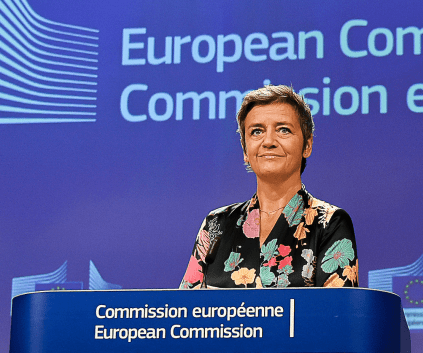
The famous Mardis de la concurrence (run by Jean-François Bellis and Denis Waelbroeck) are one of the most venerable institutions in the Brussels competition law community.
It is wonderful that the closing address of this year’s Mardis will feature Commissioner Vestager, who will share her thoughts on Merger Control: The Road Ahead.
The event, which could hardly be more topical, will take place in a week’s time (Tuesday 18 June) at 7pm.
The venue will be the superb Auditorium of the ULB (Salle Dupréel, Avenue Jeanne 44, Brussels), which many of our readers will remember from last year’s conference.
Attendance will be free of charge, but those interested are expected to sign up for it here.
More info can be found in the event’s flyer. We hope many of you will be able to make it!
Chillin’ State Aid Workshop: see you next week!
As you know, our State aid aid event will take place on Friday of next week – 14 June, @ Fondation Universitaire in Brussels (rue d’Egmont 11). We look forward to seeing many of you there!
You can check the final programme below. If you have not signed up yet: the event is unfortunately full but the waitlist is still open: do sign up for it here.

Persistent myths in competition law (II): ‘the analysis of the counterfactual is not relevant when a practice is restrictive by object’

As promised, this is the second instalment of the series of posts on persistent myths in EU competition law (these received ideas that will not be put to rest even though they cannot be reconciled with the case law).
For the first instalment, please see here.
This second myth is one that I have explored already in the past (see here, for instance).
This myth is about the idea that the analysis of the counterfactual is not relevant when a practice is restrictive by object. According to this view, it would be possible to establish an object infringement without considering the conditions of competition that would have existed in the absence of the agreement.
Why address it again? Because I keep listening to this idea at conferences.
Underlying this myth there are two ideas that are at odds with a consistent line of case law (these are two sub-myths if you prefer)
A restriction by object can never be established in the abstract
The idea that the counterfactual analysis is not relevant at the ‘by object’ stage assumes that a restriction by object can be established in the abstract.
Alas, this assumption is contradicted by the case law. As we have mentioned more than once (and twice) here, the Court has consistently held that, when establishing the object of a practice, one needs to consider its nature, as well as the legal and economic context of which it is a part.
For instance, it is incorrect to say that ‘price-fixing agreements between competitors are restrictive by object’ Stated in the abstract, this sentence means nothing (my undergrads know this well).
There is no shortage of examples showing that a price-fixing agreement between competitors is not always restrictive by object.
As mentioned in the first post, an agreement fixing the purchasing price of a product is not always a restriction by object. It sometimes is (as in Italian Raw Tobacco). Sometimes, it is not, as in Gottrup-Klim.
Again, it all depends on the legal and economic context of the agreement.
The evaluation of the counterfactual (that is, the conditions of competition in the absence of the agreement) may be a relevant consideration in this regard.
Think of Tournier. The case was about a form of co-operation between competitors that involved price-fixing and the restriction of output. By object? Cartel? Not at all.
Where did the counterfactual kick in? The Court explained that, in the context of the arrangement, price-fixing and output restrictions (via blanket licensing) could be strictly necessary to ensure that copyright would be adequately exploited. In the absence of these clauses, in other words, the legitimate aim of the arrangement would not have been achieved.
Another great example is Remia. Seen in the abstract, the practice would look like an obvious ‘by object’ infringement. The seller of a business agrees to a non-compete obligation. A firm that agrees with a potential competitor to leave the market? Is this not very similar to BIDS (i.e. a ‘crisis cartel’ and obvious infringement of Article 101(1) TFEU)?
Again, the Court concluded, in light of the counterfactual, that, in such circumstances, a non-compete (or market sharing) clause may fall outside the scope of Article 101(1) TFEU altogether (neither restriction by object, nor by effect). Why? Because the main (pro-competitive) transaction might otherwise not take place at all. The purchaser might never have agreed to the sale absent the non-compete (or market sharing) clause.
The bottom-line here, I guess, is that many people assume that, in the context of by object infringement, no assessment of any kind is necessary. The case law makes it abundantly clear that this idea is incorrect. The economic and legal context counts and needs to be considered. It is true that sometimes the assessment of the context can be very brief (which is the point made by the Court in Toshiba), but an assessment in the abstract will always fail to carry the day.
Considering the counterfactual is not the same as evaluating the effects of the agreement
Another reason why this myth about the counterfactual is so popular may have to do with another received idea. Some people assume that, as soon as we start considering the counterfactual, we are already considering the effects of the practices. And we all know that object and effect are distinct conditions.
Alas, it is not true that evaluating the counterfactual is the same as assessing the effects of an agreement.
Figuring out the object of an agreement and assessing its restrictive effects on competition are two different exercises.
The analysis of the counterfactual may be relevant at both stages – it would simply fulfil different purposes at each (at the object stage, its purpose is to find what the agreement is about; at the effects stage, its purpose is to evaluate its impact on competition).
If the evaluation of the counterfactual reveals that the conditions of competition would have been the same with and without the practice (that is, that the practice is incapable of restricting competition), then the object of the agreement cannot be anticompetitive. It can safely be presumed to be a pro-competitive one.
Tournier, mentioned above, is a wonderful example in this sense. If it turns out that copyright can only be meaningfully exploited (read: the legitimate aim of the agreement can only be meaningfully achieved) with price-fixing and output restrictions, then the object of the latter cannot be the restriction of competition. Their objective purpose, their rationale, is pro-competitive.
Coditel II is another wonderful example along the same lines. Remember that the licensing agreement gave absolute territorial protection to the licensee.
Absolute territorial protection is always by object, right? Not always (remember that restrictions by object can never be established in the abstract). And not in the specific context of Coditel II.
The reason is simple: what restricted competition in the specific circumstances of Coditel II was not the licensing agreement, but the underlying copyright regime. Even in the absence of the agreement, the cross-border transmissions at stake in the case would have infringed copyright.
Wait a second: did the GC judgment in Lundbeck not say that the counterfactual is irrelevant at the by object stage?
I am pretty sure many of you had this question in mind when reading the above. It is a relevant and important question.
As I see it, the GC assessed the counterfactual while denying the relevance of the counterfactual. It did one thing, it said another.
A considerable part of the first instance judgment, in fact, is devoted to whether the generic producers were potential competitors. In essence, this analysis amounts to asking whether, in the absence of the agreement(s) the generic producers would have had the ability and incentive to enter the market.
If it turns out that they were not potential competitors, then the agreement(s) would not have been capable of restricting competition that would otherwise have existed, whether by object or effect. And it (they) would have fallen outside the scope of Article 101(1) TFEU altogether.
So if the GC did assess the counterfactual, why did it deny its relevance at the by object stage? Good question, for which I have no answer. Fortunately, we will have an appeal judgment at some point in the coming months (and, according to the Court’s website, AG Kokott will deliver her opinion on 27 June).
EU Judicial Review: Major Antitrust Implications of Recent State Aid Cases, Part 2 (Real Madrid, Case T-791/16)

Last week the General Court annulled yet another Commission State aid decision in the Real Madrid case. This is an important development for at least 3 reasons:
1) First, because it is a “we told you!” scenario (add an irritating voice to that). Two months ago we wrote this post about “how the Court approaches judicial review of complex economic assessments when the burden of proof is on the Commission”. The conclusion was that “it won’t be difficult for the Commission to continue to win cases if it incorporates this logic [of not avoiding the examination of any relevant factor when it bears the burden of proof ] into its day-to-day. If that does not happen, we are likely to witness a series of annulments (…) My bet is that I will be making a few future cross references back to this prediction” (underlining featured in the original post). That prediction is faring well after only two months.
[Note that albeit the recent FC Barcelona annulment discussed in that post also had to do with Spanish football, the substance of the cases is completely different: one was about taxes and the other about urban planning].
2) Second, it confirms a trend. Over the past few months the EU Courts have annulled over a dozen decisions. Many of you will have heard me saying that for a few years many of the most interesting legal discussions in EU Law were happening in the field of State aid. All these cases show that EU judicial review is not meaningless. In fact, they show exactly what EU judicial review is about. We’ll discuss all this very soon.
3) Third, it is –sadly- the only thing that Real Madrid has won this year. All the matches I lost to my eldest playing the game picture above over the weekend (no kidding) don’t count…
For exactly the same reasons we outlined in the previous post, the lessons from these judgments are equally applicable to antitrust. Leaving aside all the case specific stuff, here is the general reasoning:
- Recital 89 reiterates the standard of judicial review for complex economic assessments (which, as you know, is the same for all areas of competition law);
- Recital 114 summarizes Real Madrid’s key argument about the implications of bearing the burden of proof: “Relying on various cases, the applicant asserts that the Commission bore the burden of proving that there had been State aid and that it was not for it to evaluate merely some of the benefits of the transaction in a selective and isolated manner”.
- At 116, the Judgment invokes the case law according to which “the Commission is required to carry out a complete analysis of all the factors that are relevant to the transaction at issue and its context”(my emphasis).
- At 118, the Court adds that “to assess the lawfulness of the contested decision, it is necessary to take into account the information at the Commission’s disposal or available to it at the date on which it adopted that decision. In that regard, if it should prove to be the case that the Commission’s assessment is contradicted or placed in doubt by information of which it was unaware during the administrative procedure, it must be established whether such information could have been known to and taken into consideration by it at the appropriate time and, if that were the case, whether that information should as a matter of course have been considered by the Commission, at least as relevant data” (read this together with the two Judgments commented upon in our previous post and you will see pretty much the same language);
- At 123, the Judgment places emphasis on whether a particular point (which the Commission did not explore) had been submitted during the administrative procedure. Interestingly, the Court made sure about this by requiring the applicant to confirm it “in a reply to a written question”
- At 125, the Court finds that “by merely examining the value of Plot B-32, the Commission did not take into consideration all the aspects of the transaction at issue and its context. Contrary to what it was required to do, it thus could not have carried out a complete analysis of all the relevant factors, for the purposes of establishing not only the valuation of the amount of aid, but also, above all, whether there was in fact an advantage resulting from the measure at issue, considered in the light of all the relevant factors (my emphasis).
- Failure to properly examine all the relevant circumstances and context to the measures automatically results in the annulment of the Decision (128): “The Commission therefore has not proven to the requisite standard that the measure at issue conferred an advantage to the applicant”.
The Bottomline(s)
… are exactly the same ones discussed at the bottom of our previous post on this topic.
NEW PAPER | Legal tests in EU competition law: taxonomy and operation

I have just uploaded a new paper on ssrn (you can download it here). As you see from the title above, it is devoted to legal tests under Article 101 and 102 TFEU. The paper seeks to map these tests and explain how they operate in practice.
I thought it would be a good idea to provide a complete taxonomy, and to shed some light on where potentially anticompetitive conduct stands in the spectrum ranging from the prima facie unlawful (e.g. cartels) to the prima facie lawful (e.g. above-cost prices).
In addition, I felt a paper could shed further light on some questions that have been abundantly discussed in recent years and inter alia the following two:
How is the presumption of capability rebutted in practice?
We know that conduct that is deemed prima facie unlawful is presumed to be capable of having anticompetitive effects.
We also know since Intel (and, in the context of Article 101 TFEU, since Murphy) that firms can rebut this presumption by showing why, in a specific legal and economic context, the practice in question is incapable of having such effects.
How does the rebuttal of the presumption work in practice? I explain in the paper that the presumption of capability can be rebutted in two ways:
- By showing that any actual or potential effects would not be attributable to the practice under consideration (remember Post Danmark II?); or
- By showing that the practice is objectively necessary to achieve a pro-competitive aim (remember Societe Technique Miniere?).
The first way of rebutting the presumption of capability is at the heart of Intel. The AEC test may tell us that an equally efficient rival would not be forced to sell at below cost, and thus provide a powerful indicator that the requisite causal link between the practice and any actual or potential effects is absent.
The second way or rebutting the presumption is at stake, for instance, in the Guidelines on vertical restraints. The Commission explains that, where necessary to enter a new market, an exclusive distribution agreement that insulates the reseller from active and passive selling may fall outside the scope of Article 101(1) TFEU (even though such an agreement is in principle a ‘by object’ infringement).
Why is indispensability required in some cases but not in others?
Another question that my paper addresses relates to an apparent puzzle in the case law. A refusal to deal and a ‘margin squeeze’ seem to be comparable in every way. Why is it, then, that, when it comes to establishing an abuse, indispensability is required in the case of the former but not the latter? Is the case law inconsistent, as some argue?
The paper identifies an aspect that is common to all cases in which indispensability was an element of the legal test (Commercial Solvents, CBEM-Telemarketing, Bronner, Magill and so on). In all of them, the remedy imposed was proactive in nature – a positive obligation to do something. In Commercial Solvents, for instance, the Commission prescribed the quantities and the price of the supplies.
Cases like Deutsche Telekom and Slovak Telekom are different. In these two cases, the remedy was the traditional reactive one – an obligation not to do something.
Proactive remedies are much more difficult to design, implement and monitor. Accordingly, it makes sense to introduce indispensability as a filter. In this regard, I submit (perhaps in contradiction with the prevailing view) that the case law is much more sensible than commonly conceded.
Recent news (from London, Murcia and Brussels)

We are glad to share some news coming from all over Europe (in the spirit of the ongoing election to the European Parliament):
- From London, younger readers pursuing or considering an academic career will be pleased to learn that King’s College London is expanding its competition law team (lucky them). It is an entry-level position (lectureship). You have until 7 June to apply. More info here.
- From Murcia, our friend Jorge Piernas is keen to let us know that his home university (Murcia), in cooperation with the University of Padova and the European Commission, has put together a programme to train national judges in State aid matters. If you are a judge (or an apprentice judge), note that the first residential seminar will take place in Murcia on 30 and 31 May and that there are a few (very few) spots available. Interested? You can reach Jorge at jjpiernas@um.es.
- From Brussels, our friends from the eminent Global Competition Law Centre have organised a lunch talk, to take place on Monday of next week, in which to discuss the priorities of the next Commission. As part of the lunch talk, they have come up with the great idea of inviting the competition law community to share their views on the matter. You have until 25 May to fill their survey, which can be accessed here.
Update Chillin’ State Aid Workshop: Keynote by Viktor Kreuschitz (General Court)

Thanks very much everybody for the interest in our State aid workshop (14 June, Fondation Universitaire, Brussels).
As you will have seen, registrations are now closed. But please do sign up for the waitlist, which is still open. We hope to be able to accommodate everybody.
We are proud to be able to bring an update to our programme.
Viktor Kreuschitz, Judge at the General Court and renowned State aid specialist, has kindly agreed to give a keynote at 4pm, right after the last panel. La cerise sur le gâteau of what promises to be a great event.
The updated programme (and the link to sign up for the waitlist) can be found here.
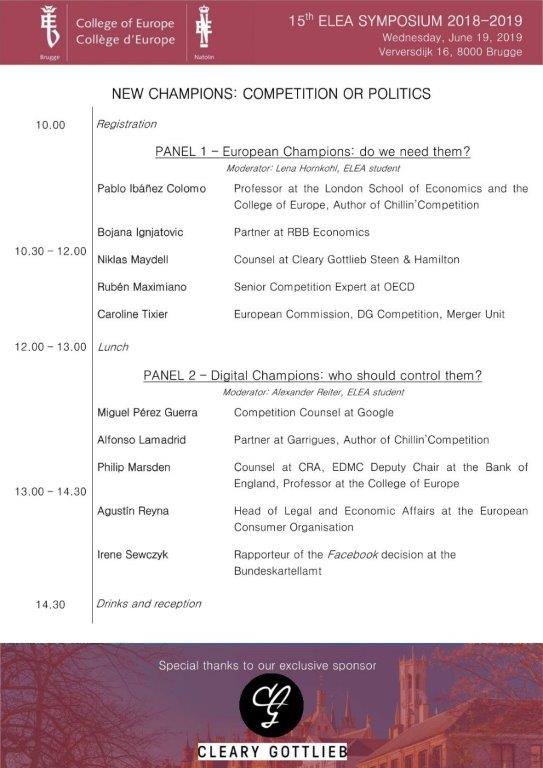
New Champions: Competition or Politics?, ELEA Symposium, Bruges, 19 June
On 19 June, the ELEA students at the College of Europe will be hosting a symposium focused on two of the main themes in competition law these days: Europen champions and industrial policy, and digital platforms.
They have managed to come up with an excellent line-up of speakers. Pablo and I will both be happy to join them.
There are only 10 seats left, so you better hurry up. For additional info and registration, click here.

Chillin’ State Aid Workshop (14 June) + Programme and registration info (it’s this Friday: stay tuned!)

As you know, we are a month away from our State aid event. You will find below the finalised programme. We are proud to have brought together a group of top experts (thanks again to all of them!).
The registration page will go live this Friday (17 May) at 10am London time and 11am Brussels time. You will find the link to the page via the blog, so watch this space!
Chillin’ State Aid Workshop: Charting the Territory
Where: Fondation Universitaire (Rue d’Egmont, 11 – 1000 Brussels)
When: Friday 14 June 2019
9am-9.15am | Registration and welcome
9.15am-11.15am | Selectivity and advantage
Introduction and chair: Pablo Ibáñez Colomo (LSE and College of Europe)
Speakers: José Luis Buendía Sierra (Garrigues), Jacques Derenne (SheppardMullin), Penelope Papandropoulos (European Commission) and Christina Siaterli (European Commission)
11.15am-11.30am | Coffee break
11.30am-1pm | Procedural and institutional issues
Introduction and chair: Alfonso Lamadrid de Pablo (Garrigues)
Speakers: Natura Gracia (Linklaters), Massimo Merola (BonelliErede), María Jesús Segura Catalán (Clayton & Segura) and Andreas von Bonin (Freshfields)
1pm-2.30pm | Lunch
2.30pm-4pm | State aid beyond the EU
Introduction and chair: Pablo Ibáñez Colomo (LSE and College of Europe)
Speakers: Juliette Enser (Competition and Markets Authority), Christian Jordal (EFTA Surveillance Authority) and Vincent Verouden (E.CA Economics)
4.00pm-4.45pm | Keynote speech: Viktor Kreuschitz (General Court)
4.45pm-5.15pm | Let’s find somewhere nice for a drink


 Chillin'Competition