Archive for the ‘Uncategorized’ Category
#ChillinCompetitionFineArt (II)
Here is the second wave of contributions for our Chillin’Competition Fine Art awards (for wave one, see here). We have received many more that we will be publishing in the next few days. We’ve had a good laugh. Thanks very much and keep them coming!
11. “Did someone say dawn raid?”

12. “New emails just before holidays”

13. “Propose some commitments you say?”

14. “One party refuses to settle”

15. “Access to documents”

16.”Sent the final version and realized he forgot the last edits”

17.”Client sent suggested edits”

18.”Before the dawn raid, after the SO”

19.”Lawyers in search of efficiencies”

20. “Please! I’m telling you it was fair competition”

21. “Received an RFI on December 23rd”

22. “And that’s a potential anticompetitive effect!”
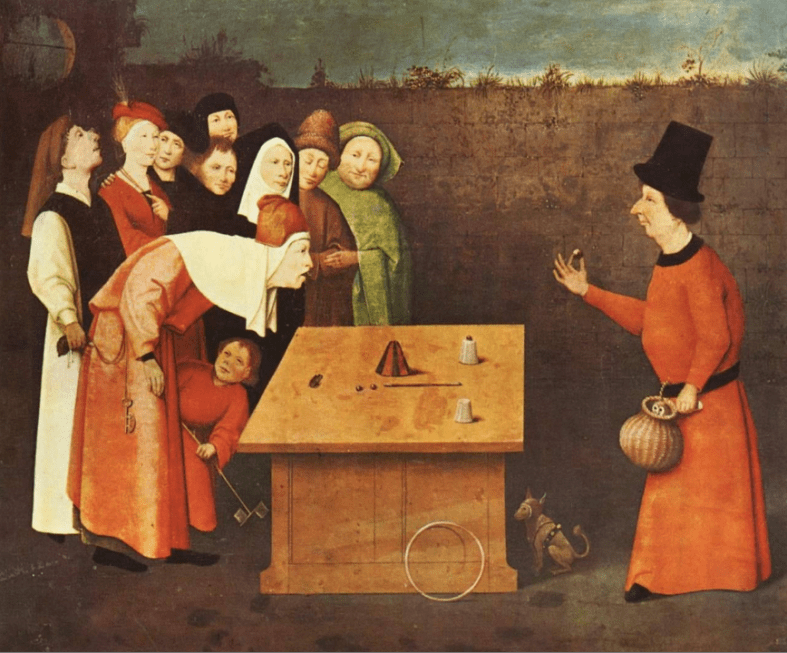
#ChillinCompetitionFineArt
Following the success of our Meme Competition last year (see here), we are launching a Fine Arts Competition. The challenge is to come up with a painting that reflects an aspect of the daily life of people working in our field. The 5 winners will receive a special prize. You can submit your ideas until May 30th, emailing them to chillingcompetition@gmail.com. We will be publishing a weekly selection every Thursday Monday. Enjoy!
The examples that follow are the result of today’s coffee-time brainstorming at the office…
- “A clarification of previous case law”.

2. “New lawyer joining the case team”

3. “So, the meeting at DG Comp went well…”

4. “When everyone suspects who it was that asked for leniency”
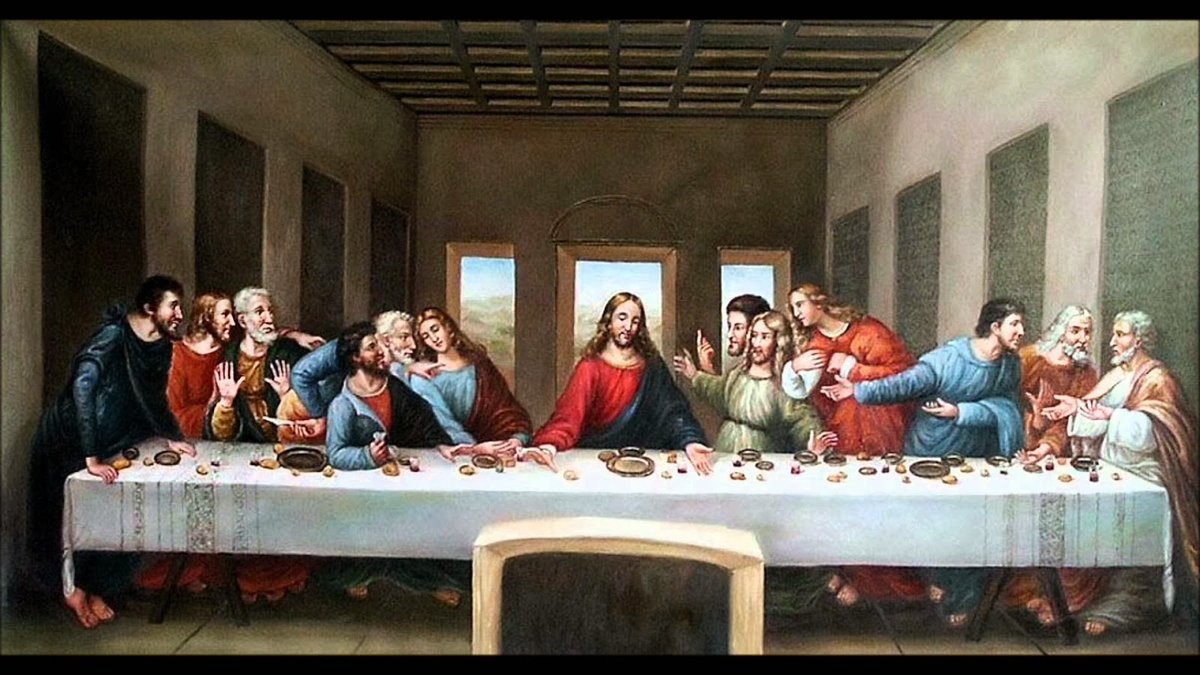
5. “Inability to Pay”

6. “Phase II is over…”

7. “So, who said this was legal?”

8. “Look! There really is a third paragraph!”

9.”How I imagine my opposing counsel”

10. “How my opposing counsel sees himself”

Brexit and Energy Markets @LSE – 12 April: Last chance to register (for free!)

I am proud that the LSE (Wolfson Theatre, New Academic Building) is hosting a conference on Brexit and Energy Markets (the 2nd of its kind), organised by the awesome Leigh Hancher and Adrien de Hauteclocque.
It will take place on Thursday of next week (12 April).
I have just been told that, there are a few places available. You can register (for free!) here. A pdf of the programme, in turn, can be found here. Students interested in energy issues would be most welcome to attend.
More info on the event? Please see below:
This conference, a follow-on from our first initiative in March 2017, aims to consider the wide-ranging impact of Brexit on the UK and EU energy markets, from a legal and economic perspective, and assess the developments and challenges which have emerged over the past year.
- How might a self-determined UK attempt to establish itself in the energy market outside of the EU?
- What will be the effect on electricity and gas trading?
- How will the UK’s exit impact EU market integration initiatives, such as market coupling, cross-border capacity mechanisms, and the development of network codes?
- How might it affect the EU ETS?
- What are the repercussions of the UK leaving the Euratom Treaty?
- The UK has promised that it will not shirk from it’s commitment to plans for an integrated all-island single electricity market in Ireland (I-SEM). But how will this work? How might this play out from a regulatory perspective?
These questions and more will be addressed through in-depth discussions at the conference.
Restrictions by object in ISU: why has the Commission not drawn the lessons from Cartes Bancaires and Maxima Latvija?

The Commission usually takes some time to publish its decisions. This is not necessarily a bad thing, at least for the purposes of this blog. We now have the chance to discuss a few decisions that have (finally) come out, and complement (or complete) our first thoughts on them.
I will start with ISU, about which I wrote earlier this year. The non-confidential version of the decision can be found here.
In my previous post, I asked myself whether the practice at stake was really a restriction by object. You will remember that the Commission took issue with a set of rules adopted by the International Skating Union. These rules sought to constrain athletes’ ability to take part in competitions run by rival organisations.
The Commission concluded that the rules, which are (in essence) a vertical restraint providing for a non-compete obligation, amount to a ‘by object’ infringement. Now we know the reasoning behind this conclusion.
There is something remarkable about the decision. If you take a look at it, you will realise that the Commission does not seem to incorporate the lessons of the most recent – and directly relevant – Court rulings, namely Cartes Bancaires and Maxima Latvija.
To prove my point, I propose a simple exercise: apply to the facts underpinning Cartes Bancaires and Maxima Latvija the reasoning found in ISU. You will come (inevitably) to the conclusion that the practices at stake in these two cases were restrictive by object.
In ISU, the Commission concludes that the eligibility rules are a ‘by object’ infringement for three main reasons:
- The objective and subjective purpose of the rules was to preclude other organisations from running competing events.
- The International Skating Union sought to protect its own economic interest through the rules.
- The eligibility rules were not related to a legitimate sporting objective.
Remember Maxima Latvija? In that case, the ‘anchor tenant’ of a shopping centre was given the power to veto the renting of other premises in the mall to third parties. The objective purpose of such a rule is clearly to avoid competition – and the Court ruling is based on this premise. In this sense, the case is no different from ISU.
And the anchor tenant, by restricting competition to itself and limiting the shopping centre’s freedom of action, was certainly trying to protect its own commercial interests (by the way: which firm doesn’t?).
In spite of the above, the Court ruled in Maxima Latvija that the practice was not restrictive by object.
Remember Cartes Bancaires? Essentially, the contentious rules sought to penalise one category of competitors. The objective purpose of these rules was to hinder these firms’ ability to compete. What is more, there was direct evidence in the case suggesting that the subjective intent of the rules was indeed to restrict competition and thus to protect the economic interest of another category of firms.
If one were to follow the reasoning in ISU, these two factors would be sufficient to conclude that the practice was restrictive by object. But you all know that the Court came to the opposite conclusion in Cartes Bancaires.
Cartes Bancaires is important for another major reason. The Court made it quite clear that a practice that seeks to address a genuine free-riding concern is not a ‘by object’ infringement. In other words: the fact that some firms seek to protect their economic interests is not in itself an issue (again, which firm does not seek to advance its economic interest by means of an agreement within the meaning of Article 101 TFEU?). The issue is instead whether the firms seek to address a market failure or simply extract rents (as in a cartel agreement).
The Court concluded that the measure was plausibly pro-competitive (and thus not ‘by object’) in Cartes Bancaires. And the free riding argument is also compelling in ISU, as I mentioned last time (but the issue does not seem to be given the relevance it deserves in the decision).
Against this background, the question that I find intriguing is why the Commission has not followed the case law on restrictions by object in ISU.
This question is intriguing in this particular case because establishing the restricting effects of the eligibility rules was a ‘home run’ for the Commission. Given the position of the International Skating Union, it could not have been much easier to conduct an effects analysis (as the Commission does in the case).
Had the Commission followed the ‘by effect’ route alone, the case would have been entirely uncontroversial. I would say more: the analysis of the Commission in the ‘by effect’ section shows that the case makes enormous sense from a prioritisation perspective too.
Why, if it was not at all necessary (and was in fact potentially counterproductive), did the Commission insist on qualifying the rules as a ‘by object’ infringement in ISU?
The most convincing explanation is that the Commission, as a repeat player, is interested not only in reaching the desired outcome in individual cases but in shaping the law in a particular way. In this sense, ISU provided an excellent opportunity to advance its interpretation of the notion of restriction by object in the wake of Cartes Bancaires.
I have to say I am not particularly surprised by this. I have spent the past couple of years reading pretty much every Commission decision, and this is a consistent pattern of behaviour across the board (Article 101 TFEU, Article 102 TFEU and merger control).
Examples? Just think of how the Commission interpreted Delimitis in Scholler and Langnese-Iglo (Valentine Korah, in her unique style, wrote at the time – mid-1990s – that Delimitis appeared ‘not to have been read’).
More examples? The Court emphasised, from the outset, that ‘competition’ for the purposes of Articles 101 and 102 TFEU means ‘competition that would have existed in the absence of the practice’. However, the Commission failed to consider the counterfactual in several landmark decisions that were annulled as a result.
In fact, if you read ISU, you will identify several controversial statements in this regard. For instance, the Commission asserts that the members of the International Skating Union – that is, the national associations – are potential competitors. However, this remarkable statement is not substantiated – as if the lessons from European Night Services, CISAC or E.On Ruhrgas (‘real, concrete possibilities’) had not been learnt.
Conclusions?
What do we make of the failure to incorporate some of the crucial insights from Cartes Bancaires? It is neither good nor bad. It is a reality and a feature of the EU competition law system we have to acknowledge and with which we have to live.
We have acquired sufficient experience over the years to know that the Commission is likely to behave in this way – across provisions and over the years. I would say that, first and foremost, it is useful for the authority to be aware of this reality, so as to anticipate when and why administrative decisions are more likely to be annulled.
Ithaca Competition Summit (23-24 August 2018): REGISTRATION NOW OPEN

The programme for the 1st Ithaca Competition Summit is now closed, and is available in pdf format here. As you will see, there are very few events with such an amazing line-up – and definitely none that takes place in western Greece during the summer.
Spread over two half-days, the event is intended to give room for extra-curricular activities in and around Ithaca. But there will be time for intense discussions too: speakers will be presenting a set of papers that will come out in a special issue of the Journal of European Competition Law & Practice.
If you are interested, you can register in the following Eventbrite page. Prices are merely intended to cover the costs. If you access the page, you will see there are two ticket categories:
- General admission tickets, at a price of EUR 160.
- A special price for current students in EU or Competition Law, at a (bargain) price of EUR 40.
You better run: there is only room for 120 attendants!
Want to know how to get to Ithaca? Check the programme above. If you have any other questions, you can send an email to Ithaca.Summit@gmail.com.
Horizontal mergers and innovation: why I agree with Tommaso Valletti

It is only fair that I start this post by thanking those who have congratulated me on my recently announced promotion – including Alfonso, who could not have used nicer words.
Now that the announcement is behind us, it makes sense to go back to what really matters: weekly blogging. Few things have given me more satisfaction in my academic career.
And what a better way to do so than to comment on a recent speech of an academic-in-exile. Tommaso Valletti is one of the most articulate, thoughtful and entertaining speakers around. So when he takes part in a conference, we can be pretty sure something exciting and topical will have been discussed.
Last week he addressed one of the big issues of the day: the introduction of innovation considerations in merger control – and more precisely horizontal mergers.
In essence, Tommaso argued that there is nothing new, unusual or exceptional in recent mergers (such as Dow/DuPont) that have looked at the effects on innovation. In this sense, recent criticism of the Commission practice would not be justified.
I agree with this point of view. These cases – as far as I can tell – are competition law as usual. What is more – and perhaps more importantly – there is nothing parameter-specific about innovation. If cases like Dow/DuPont are criticised many cases concerning parameters other than price could also be criticised, and for the same reasons.
The Commission need not show harm to innovation – or any other parameter – in EU competition law
There is a key point which, I believe, has never been given the importance it should have – which is why I think it makes sense to insist on it.
A lot of criticism of the Commission practice seems to be based on the assumption that the Commission, when evaluating the likely effects of a merger, needs to show, to the requisite legal standard, its impact on innovation – or price, or quality, or output.
This assumption is not supported by the case law (the opposite is true, in fact). The Commission can show that a transaction will give rise to a significant impediment to effective competition without – just to mention an example – quantifying the price increases in the post-merger scenario.
It is clear from the relevant rulings that an impediment to effective competition can be established by proxy – in light of the nature of the product, the features of the relevant market and so on.
In other words: if it can be shown that a significant source of competitive pressure will disappear after the merger, and that nothing suggests that this loss of competitive pressure will be corrected by the behaviour of competitors, suppliers and/or customers, a finding of significant impediment to effective competition will naturally follow.
Thus, the Commission does not need to enter into discussions about whether the rate of innovation will go up or down after the merger. All that it would have to show is that two competitors were exercising significant competitive pressure on each other. Just remember the GC judgments after Ryanair/Aer Lingus and Deutsche Borse/NYSE Euronext are challenged.
A proxy is a proxy is a proxy
If the above is – I think – clear from the Guidelines on horizontal mergers and the case law, why so much controversy?
This controversy is in part explained by the fact that the Commission may take action without there being a market in the strict sense of the word. According to some views, this shift would represent a major development in merger control. There would be a difference between intervening in cases where competitive pressure does not revolve around a distinct product that can be readily identified.
Again, I am not sure I am convinced. We have always known that the definition of the relevant product and geographic market is not an end in itself – it is just a tool (or proxy) to identify the competitive pressure faced by firms.
If that is the case, it is difficult to argue that the definition of the relevant market is, as a matter of law, a prerequisite for intervention. In other words, there has never been anything sacred about market definition.
If the degree of competitive pressure can be identified by means of other proxies – research poles, or capabilities and so on – this should be perfectly acceptable. This, I believe, is one of the key points that Tommaso Valletti is making. And it is not even a new one: the Guidelines on horizontal co-operation agreement have suggested that these alternative proxies can always be used.
As can be seen, I fail to see what is really new under the sun.
Well, perhaps there is something new. The argument some stakeholders are making, which amounts to suggesting that a reduction of competitive pressure is not necessarily problematic in innovation-intensive industries.
That claim is not implausible and is worth debating. But the EU merger control regime is already equipped to deal with it. The efficiency defence is the appropriate forum in which to advance such claims. Would it be difficult, if not impossible, for them to suceed in practice? Of course. But such difficulty is in line with the exceptionality of the claim itself.
Developments in Art. 102 + Competition Law in Digital Markets

The Academy of European Law (ERA) has kindy invited us to take part in two upcoming events. Given the topics, it was an offer we couldn’t refuse.
On 12 April I will be chairing an afternoon workshop titled “Abuse of Dominance: Recent Developments and Practical Implications”. We will discuss the Intel Judgment, the Google Shopping case as well as Excessive Pricing following Akka/Laa. The speakers will be Brice Allibert (DG Comp), Oliver Bethell (Google), Thomas Graf (Cleary Gottlieb) and Agustin Reyna (BEUC). You can see the programme and info on registration here. It will take place in Brussels but will be streamed live.
And on 4 July, Pablo and I will be jointly teaching a 4hour session on competition in digital markets at ERA’s Summer Course on European Antitrust Law (which I attended as a student 13 years ago!). Our session will focus on vertical e-restraints, algorithmic collussion, multi-sided markets and abuse of dominance in the online world. All relevant information is available here.
–
Is the Guidance Paper on Article 102 binding on the European Commission?

A few posts ago (here) Pablo challenged me to explain my view on the binding force of the Guidance paper on Art. 102. The answer is crystal clear in my mind (and Pablo already anticipated the answer years ago labelling it as a “pre-commitment device”), but I have never seen the debate spelt out in full, nor have I seen what I think is the killer argument.
This is actually an issue that I have discussed with many people over the past few years, but never on this blog as it was pretty much a moot question. Until now every Commission decision challenged before EU Courts had been adopted prior to the release of the Guidance Paper. But the debate will now get serious, as the issue may come up in the Qualcomm (AEC test or no AEC test?) and Google Shopping cases (the first 102 standard infringement decisions adopted after the Guidance paper that do not mention it at all). All others mention it on substantive points unrelated to prioritization. [For the meticulous, ARA was a “settlement” and Romanian Power Exchanges was about an exploitative, not exclusionary abuse].
For various reasons I won’t discuss anything specific about those cases but rather the general theoretical point. I of course only work for non-dominant companies 😉 but since that view may be disputed (on the basis of a flawed dominance assessment…), please consider what I am about to say on its merits and with a critical mind.
First, we can all agree that the Guidance Paper is not the law and that it is not binding on EU Courts, national courts or NCAs in spite of its persuasive value as a “useful point of reference”. EU Courts are the sole and ultimate interpreters of the law. Recital 3 of the Guidance acknowledges this otherwise evident reality.
Second, we surely all agree that EU case law has consistently established the principle that “in adopting [soft law instruments] and announcing by publishing them that they will henceforth apply to the cases to which they relate, the institution in question imposes a limit on the exercise of its discretion and cannot depart from those rules under pain of being found, where appropriate, in breach of the general principles of law, such as equal treatment or the protection of legitimate expectations. It cannot therefore be precluded that, on certain conditions and depending on their content, such rules of conduct, which are of general application, may produce legal effects”. (See, among many others, paras. 209-211 here).
This means that even if the Guidance Paper is not the law and cannot bind courts, it certainly might bind the institution which adopted it and committed to apply it to future cases.
The Guidance Paper seems to meet all conditions. It was formally adopted, publicly announced and presented, published in the Official Journal of the European Union and it is currently listed in DG Comp’s website under “Legislation in force” (here). The Guidance itself stated (para. 2) that its purpose is to “provide greater clarity and predictability” and “to help undertakings better assess whether certain behavior is likely to result in intervention by the Commission”. The Commission also made sure to clarify that it would “fully apply the approach set out [in the Guidance Paper] to future cases”.
I actually had a hearing in Luxembourg some weeks ago where we discussed the legitimate expectations generated by a statement from a Commissioner in response to a parliamentary question. There is, in fact, an established line of case law making clear that legitimate expectations may arise not only from administrative or legislative acts, but also from settled practice and even from oral or written representations (State aid lawyers know this all too well). If a random oral representation can have such effects, does the same reasoning really not apply to a document like the Guidance Paper?
Third, we surely all agree that deviations are certainly possible provided a special statement of reasons is given. The EU Courts have recently clarified in ICAP that the duty to state reasons “must be complied with all the more rigorously” when the Commission departs from guidelines (para. 289).
The interesting debate comes now.
Fourth (the Commission’s counterargument)
Some of the Commission’s top legal minds (whom for understandable reasons wouldn’t have agreed with the Guidance Paper in the first place) argue that the Guidance Paper is in reality a different animal because it is a “Guidance paper” (as opposed to Guidelines)? that refers only to “enforcement priorities”. This was also the view eventually advocated by the Commission in the Intel hearing as transcribed here.
At the litigation workshop we held back in June, some of the Commission representatives added that the Guidance Paper is also different from other soft law in the competition field because it relates to an element (the notion of abuse) on which the Commission lacks any discretion. The idea is that the Commission cannot limit the discretion it does not have regarding the substantive assessment of cases.
[Note that these two views appear to contradict each other, because the Commission does have prioritization discretion and could therefore limit it and commit to pursue only some types of pre-defined cases. Let us in any event consider both lines of reasoning for the sake of argument]
Fifth (my rebuttal)
I have told my friends holding this view that:
- The case law makes it clear that the title of the document is irrelevant. Under EU law the denomination of an act is not decisive as regards its legal effects. This also applies to soft law instruments (se e.g. C-322/88). Rules of conduct of general application adopted by the EC may produce legal effects “depending on their content”. The Guidance Paper is drafted as substantive guidelines and refers to elements of the assessment that are only undertaken at every step of the investigation of a given case, not just in deciding what to prioritize.
- There is no reason to treat the Guidance Paper differently to all other EC Communications to which the EU Courts have applied the said reasoning. If anything, there are reasons to conclude that the protection of the principle of legitimate expectations is even of greater importance here. Indeed, the EU Courts have considered that a deviation from the fining guidelines will, absent a statement of reasons, be considered contrary to the principle of legal certainty even if fining policy is an area where predictability and foreseeability may not be desirable.
- The killer argument: The argument that the Commission could not limit its discretion with regard to its substantive assessment of Art. 102 cases because the notion of abuse is an objective one (and therefore the Commission would lack any such discretion) has already been disproven by EU Courts. The CJEU ruled in Expedia(para. 28) that the Commission is bound by its De Minimis Notice in the sense that a failure to state reasons for a deviation would imply a breach of the principle of legitimate expectations. Very importantly, the De Minimis Notice, like the Guidance Paper, refers to an objective notion in relation to which the EC enjoys no discretion (as confirmed in Case T-7/93, Schöller, para.75). And very importantly, all versions of De Minimis notice, like the Guidance Paper, have also been clearly drafted in terms of prioritization and in order for “undertakings to be able to judge for themselves whether their agreements do not fall within the prohibition” (pretty much what para. 2 of the Guidance Paper says). In my view, paragraph 28 of the Expedia Judgment pretty much closes any possible debate.
I rest my case. Look forward to reading your views!
Professor Ibañez Colomo

Barriers to academic promotion are lower than we thought… The London School of Economics has now officially announced that Pablo will be a full Professor as of the 1st of August.
This is big and excellent news and it could not be more deserved. I have said before that he is the prime academic of his generation, but that is an understatement.
Since this may be my last chance to justify a eulogy (from today on I will keep running jokes on him), let me just underline how extremely unlikely it is for someone to combine that kind of brain power (and freak memory that I enjoy showcasing at dinners), curiosity, hard-working nature, passion for a discipline and bullet-proof ethics. On top of that he is one of the most genuinely good people I know.
It’s a luxury to have him here and to learn from him everyday. His co-blogger could not be more proud.
P.S. Forget about all the above. I’m just trying to sugar coat him to see if that way he can go back to writing more frequently…
Judicial Review in Competition Law (Madrid, 9 March 2018)

The 21st edition of the Competition Law course that Luis Ortiz Blanco and myself co-direct in Madrid is coming to an end this week (and with it, my chances to go to Spain for at least a few hours…)
From today until Wednesday our very own Pablo will be coordinating a module on network industries featuring a stellar line up of experts who also happen to be good friends of this blog.
And on Friday 9 March, Judge Mercedes Pedraz (Audiencia Nacional/Spanish Court of Appeal) has put together a programme for the closing seminar. Take a look:
Friday, 9 March 2018- IEB (Madrid): Los Jueces Nacionales y el Derecho de la competencia
12:00 – 13.00: The application of Article 102 on abuses of dominant position in the case law of the Court of Justice of the European Union.
José Luís Da Cruz Vilaça (President of Chamber, Court of Justice of the EU and rapporteur in the Intel Judgment)
13:00 – 14:00: El control judicial en materia de cárteles en la jurisprudencia del Tribunal Supremo
Eduardo Espin (Presidente de la Sección Tercera – Sala de lo contencioso administrativo,
Tribunal Supremo)
14:00 – 15:30: Lunch Break
15:30 – 16:30: La cuestión prejudicial con especial atención a las relativas a ayudas de Estado
David Ordoñez (Magistrado, Juzgado de lo Contencioso-administrativo nº 4 de Oviedo)
16:30 – 17:30: Judicial review in competition law cases
Peter Freeman CBE QC (Hon) (Chairman, UK Competition Appeal Tribunal)
For registration and more info, click here.


 Chillin'Competition