NEW PAPER | Form and substance in EU competition law

As one would expect from a proper rentree, I have just uploaded on ssrn (see here) a new paper, entitled ‘Form and substance in EU competition law’.
The piece deals with the unlikely comeback of formalism in competition law discussions. Formalism may be back, but the tone and substance of the debates are different from those of yore. During the 1980s and 1990s, formalism was criticised by those that championed the ‘effects-based approach’ and favoured restraint in the enforcement of competition law provisions.
In the past couple of years, formalism has been questioned for the opposite reason. Some leading commentators and practitioners see formalism as an obstacle to effective policy-making. From this perspective, the use of structured legal tests (such as the three Magill conditions or the ‘five criteria’ introduced by the Court in Intel) would hinder authorities’ ability to deal with anticompetitive conduct.
Against this background, the paper seeks to clarify what we mean by formalism (or form-based approach). It seems to me that people refer to different realities when they use the term.
The term was originally used to refer to an approach whereby the (i) categorisation and (ii) lawfulness of practices depend on their form (and their form alone). The meaning changed over time. For some, the ‘by object’ treatment of conduct is synonymous with formalism. For others, the use of structured legal tests (as opposed to unstructured or ‘liquid’ approaches), is also a manifestation of the phenomenon.
One of the conclusions of the paper is that it would be incorrect to conflate ‘by object’ and formalism. The analysis of the restrictive nature of an agreement is not necessarily formalistic. It can also rely on a substance-based approach. In the same vein, the paper explains that the use of legal categories is not inherently (and not always) formalistic. As pointed out by Wouter Wils in his instant classic on Intel, categories are a necessity in any legal order.
Another conclusion is that the Court of Justice has consistently placed substance above form both when it comes to assessing the object of agreements and when defining legal categories. There are two salient (and relatively recent) examples in this regard.
Super Bock confirmed that the form of an agreement does not and cannot determine, alone, whether it is restrictive of competition by object. The so-called ‘object box’ is elegant, intuitively appealing and incredibly useful as a first approximation to the issue, but does not reflect how the Court really goes about it.
After Super Bock (which implicitly overrules Binon), the last remaining pocket of formalism has fallen: resale price maintenance can no longer be said to amount, in the abstract, to a ‘by object’ infringement. The need to consider the ‘economic and legal context’ knows no exceptions.
Slovak Telekom, in turn, illustrates the substance-based approach that the Court follows vis-a-vis the definition of legal categories. According to the judgment, the applicablity of the Bronner test does not depend on formal criteria, but on substantive factors, namely whether requiring a dominant firm to deal with third parties would interfere with its right to property and its freedom of contract.
It would be really wonderful to get your thoughts on the paper. Do not hesitate to contact me. And, as ever, I am delighted to clarify that I have nothing to disclose.
Valentine Korah (1928-2023)

Valentine Korah left us a few days ago. It has been very moving to hear and read the tributes of those who worked with and were close to her. When I entered the competition law world, Professor Korah was no longer as active as she used to. However, her mark and contributions to the discipline were impossible to miss. She had greatly contributed to shaping the law and institutions I was discovering in the mid-2000s.
Professor Korah’s work on, inter alia, vertical restraints and technology transfer agreements was so foundational that there was simply no way around it. To this day, I still find interesting stuff in her articles. It is not unusual that I realise that something that I believed was a novel insight was already there, black on white, eloquently put.
If there is something I would highlight about Professor Korah’s legacy, is that how passionate she was about research in general and competition law in particular. The first memory that comes to mind is that of her sitting in the first row of a seminar room at UCL, well into her 80s, willing to learn from younger scholars, and keen to improve their work. May she rest in peace.
Case‑376/20 P, CK Telecoms: Tetra Laval survives, but the legal test for non-coordinated effects will have to wait

There will be no revolution in EU merger control after all. Today’s judgment in CK Telecoms sets aside the first instance ruling. However, it does so in a way that does not depart from Tetra Laval and the prevailing understanding of, inter alia, the principles governing the review of Commission decisions and the applicable standard of proof.
A close reading of the judgment shows that much of the appeal is about the specifics of the decision. The idea that the General Court ‘distorted‘ the Comission’s analysis pervades the ruling, and comes across as an element that must have been central to the outcome of the case. This post, as usual, will not focus on these specifics, but on the issues of principle addressed by the Court.
The most salient aspects of the judgment, which I examine in detail, can be summarised as follows:
- First, the General Court erred in law when setting the applicable standard of proof. ‘Strong probability’ sets the bar too high, the ECJ holds.
- Second, the ‘marginal review’ doctrine only applies to the legal characterisation of facts and only in relation economic assessments (para 124).
- Third, the General Court erred in law when laying down the conditions under which non-coordinated effects can arise absent dominance (and, similarly, by failing to take into account the full range of factors).
- Fourth, the General Court erred in law when defining the notion of ‘closeness of competiton’ and ‘important competitive force’.
Standard of review in EU merger control
As explained back in October, Advocate General Kokott had proposed in her Opinion a major departure from the Tetra Laval case law. If the Court had followed her approach, the review of merger decisions would have been confined to manifest errors of assessment.
The Court judgment makes it clear, first, that it is not for the Commission to interpret Article 2 of the Merger Regulation, including the concepts enshrined therein (para 129). In the same vein, the EU courts are not bound or constrained by the soft law instruments issued by the administrative authority.
Second, deference is only warranted, according to the judgment in relation to (i) the legal characterisation of facts and (ii) only insofar as economic matters are concerned.
The formula is repeated in several passages, but para 124 (with emphasis added) is perhaps the most explicit: ‘[…] the Commission has a margin of discretion with regard to economic matters for the purpose of applying the substantive rules of Regulation No 139/2004, in particular Article 2 thereof […]’).
Third, the fact that a particular concept requires the use of economic analysis when implemented does not mean that the Commission enjoys a margin of discretion when defining its scope and meaning. Para 127 gives several examples, including that of ‘dominant position’, ‘relevant market’ and ‘margin squeeze’.
Standard of proof
The standard of proof was one of the big bones of contention in the case (if not the biggest). The Commission took issue with the standard of proof (administered and/or declared) by the General Court in the first-instance ruling.
On this point, the Court makes a number of observations. First (para 74), it declares that the standard of proof does not change based on the type of decision (in other words, a decision declaring the compatibility of a transaction with the internal market is subject to the same standard as one declaring its incompatibility).
Second, the standard of proof does not change, either, based on the type of transaction. In other words, it would not be higher or lower depending on whether the transaction raises conglomerate, vertical and/or horizontal concerns (para 79).
Third, the Court seems to define the standard of proof in probabilistic terms (‘more likely than not‘), which is suggestive of a balance of probabilities standard (para 87). This point is to be welcome, if only because Advocate General Kokott’s Opinion had equated likelihood and plausibility. The judgment avoids the confusion that might have resulted from the conflation of these two concepts.
The legal test applied
The central substantive point of law at stake in the case is as exciting as it is unprecedented. When, absent dominance (individual or collective), is a impediment to effective competition significant? The General Court had tried to define a legal test inspired by the Preamble to Regulation 139/2004.
In accordance with this test, the Commission would need to show that the transaction would lead to ‘(i) the elimination of the important competitive constraints that the merging parties had exerted upon each other and (ii) a reduction of competitive pressure on the remaining competitors‘ (para 98).
The Court does not embrace this test, which it finds to be too restrictive (para 113). In this regard, the judgment appears to suggest that the first of these conditions would, alone, justify intervention. As explained in para 112, establishing such a condition is sufficient to prove a significant impediment to effective competition.
One should point out, in this regard, that, from an economic perspective, the two conditions defined by the General Court are one and the same (and therefore the test would not be as restrictive as one may assume). Pascale Déchamps and Maurice de Valois Turk explained in a piece for JECLAP (see here) that, if the first condition is fulfilled, one can safely presume that the second is, and vice versa.
Against this background, the change brought about by the ruling is more apparent than real.
The meaning of ‘closeness of competition’ and ‘important competitive force’
More significant and consequential than the legal test, in fact, are the passages devoted to the definition of the key concepts around which the decision revolved, namely ‘closeness of competition’ and ‘important competitive force’.
The General Court had construed both concepts with a seemingly clear rationale: require the Commission to show that there is something distinctive about the competitive relationship that would be lost as a result of the transaction.
The Court of Justice, by contrast, interprets them more expansively. As far as the closeness of competition is concerned, for instance, it holds that it is not necessary for the Commission to show that rivals were ‘particularly close‘ (para 191). It is sufficient that they are close.
How close? Reassuringly, the Commission is echoed in the judgment making it clear that not every firm within an oligopolistic market qualifies as a close competitor (para 173). Therefore, closeness of competition cannot be automatically assumed to exist in a tight oligopoly and would have to be established case-by-case.
The same is true of the concept of ‘important competitive force’. Contrary to what the General Court held, it would be sufficient to show that a firm is a maverick, that is, one that ‘has more of an influence on the competitive process than its market share or similar measures would suggest‘ (para 167).
The redefinition of these two concepts allows for more frequent intervention. The central challenge remains unchanged: how can they be construed so that judicial review remains meaningful, effective and faithful to the Tetra Laval principles?
Call for abstracts | JECLAP Special Issue: the review of Article 102 and of Regulation 1/2003

The Journal of European Competition Law & Practice (of which I am the Joint General Editor alongside Gianni De Stefano) regularly publishes special issues devoted to topical questions (see here for the one on the first-instance judgment in Google Shopping).
We are now working on a new Special Issue on ‘The Second Modernisation of EU Competition Law’. We welcome proposals addressing any procedural and substantive aspects relating to the two central questions that are currently under review: Article 102 TFEU (and the potential adoption of a new set of Guidelines) and enforcement (that is, Regulation 1/2003).
Topics include (but are emphatically not limited to) the following:
- The analysis of anticompetitive effects in abuse of dominance cases.
- The ‘as efficient competitor’ principle vs the ‘as efficient competitor’ test.
- The evaluation of foreclosure in digital marktes.
- Towards market investigations in EU competition law?
- The future of interim measures.
- Remedies in EU antitrust enforcement.
- Decentralisation and cooperation: how to tackle the risk of fragmentation?
If interested in publishing in the Special issue, please get in touch via email (P.Ibanez-Colomo@lse.ac.uk) by Friday of next week (21st July) with a brief outline of your potential contribution.
The proposal should take the form of an abstract of max. 250 words in which you identify:
- The question on which you would like to focus; and
- The contribution your piece is expected to make.
If your abstract is selected for publication, we expect the final article (of around 7,000-10,000 words) to be submitted by mid-September. As usual, please clarify in your proposal whether you have any conflicts of interests.
Do not hesitate to contact me with any other questions you may have. We very much look forward to reviewing your submissions!
Case C-211/22, Super Bock: the Binon (formalistic) era is over, and vertical price-fixing is no longer the odd one out

Last week’s post explained why formalism does not work when evaluating whether an agreement restricts competition. The fact that a clause provides for price-fixing or market-sharing does not mean that it necessarily amounts to a ‘by object’ infringement.
More importantly, the case law does not support the formalistic interpretation of Article 101(1) TFEU. Time and time again, the Court has emphasised that any conclusion needs to consider the relevant economic and legal context of which the agreement is a part.
All the case law? As in Asterix’s Gaul, there was a small pocket of formalism. In Binon, the Court of Justice held that vertical price-fixing is restrictive of competition by object (Binon, para 44). The conclusion was reached on the back of the form of the restraint alone.
Binon is an old case. As such, it was very obviousy at odds with the most recent case law. For instance, it contradicts Generics (and the body of judgments that followed) in that it suggests that the pro-competitive effects of the agreement can only be considered under Article 101(3) TFEU. Binon also ignores the relevant economic and legal context.
Against this background, there were already powerful reasons to argue that Binon was no longer good law (a point I raised in this paper addressing the implications of Generics and Budapest Bank for vertical restraints).
Last week’s judgment in Super Bock confirms that the Binon era is over. The questions raised by the Tribunal da Relação de Lisboa referred explicitly to vertical price-fixing and, more precisely to whether it is necessary to engage in a contextual analysis when determining whether it restricts competition by object.
In unequivocal terms, the Court of Justice rules (para 35) that a ‘by object’ infringement can only be established after considering the content of an agreement, its objectives and the economic and legal context of which it is a part (that is, the principles that it has consistently applied over the past decade).
What is more, the analysis of the pro-competitive effects of the agreement is part of the assessment of the economic and legal context under Article 101(1) TFEU (para 36) – and not simply under Article 101(3) TFEU, which Binon, in contradiction with the rest of the case law, suggested.
The conclusion that follows from the above is that the analysis is invariably context-specific and cannot be grounded, alone, on the formal features of an agreement. For the same reasons, a hardcore restaint within the meaning of the Vertical Block Exemption Regulation is not necessarily a restriction of competition by object.
The value of Super Bock is that it shows, once again, that the Court of Justice consistently places substance above form. This is true of the EU legal order at large. Given the importance of price competition, I was not certain that the ECJ would move away from Binon. The uncertainty is over, and the substance-based approach knows no exceptions.
It makes sense to clarify a couple of key points. First, considering the context of an agreement does not mean assessing its anticompetitive effects. Object and effect remain two separate stages, and the substantive analysis of the former should not be conflated with the latter.
Second, the context-specific analysis that the case law requires may be less straightforward to administer than a formalistic approach, but it minimises the risk of under- and over-enforcement. ‘By object’ is not the same thing as a ‘per se’ restraint. It is artificial to try and force US concepts into EU law.
AG Rantos in Case C‑331/21, AdC v EDP: why formalism does not work as a tool to identify restrictions by object

Discussions around formalism are making a comeback in competition law. And they are doing so with an interesting twist. Some of the constituencies that were opposed to formalism are now embracing it, and vice versa. This trend deserves a close look, and it keeps me busy these days.
People often mean very different things when they talk about formalism in competition law.
This piece concerns the least controversial and most straightforward understanding of the notion. Competition law is said to be formalistic when the formal features of a practice are used to determine whether or not it is lawful.
For instance, an authority would be formalistic when it infers a restriction of competition from the fact that the agreement under consideration provides for price-fixing or market-sharing.
The case law makes it unambiguously clear that the form of an agreement (or a clause) is as such insufficient to establish a ‘by object’ infringement . This point has been frequently addressed on the blog (see, in particular, here, where I discussed the legend of the ‘object box’).
We know from experience that it is incorrect to say, for example, that a price-fixing agreement between competitors is necessarily (even presumptively) restrictive by object.
The need to consider the relevant economic and legal context knows no exceptions. In fact, it is not difficult to find examples in the case law of practices that, formally speaking, look like restrictions by object but are not.
In spite of the above, formalism comes back every now and then. I can see why. It gives the illusion that establishing a restriction by object is a clean and fast exercise (as opposed to a context-specific and occasionally time-consuming one).
I thought of the eternal return of the formalistic approach when going over AG Rantos’ Opinion in Case C‑331/21, AdC v EDP (see here). As is invariably true, it is an incredibly rich Opinion. A single post would not do it justice (a key and elegant point AG Rantos makes, which can alone clarify our understanding of a thorny issue, will have to wait for a second entry).
The case (a preliminary reference) is about a non-compete introduced in an agreement concluded between an electricity supplier (EDP) and a food retailer (Continente). The clause was part of a cooperation arrangement that gave consumers participating in Continente’s loyalty scheme a 10% discount in their electricity bills.
Is such a non-compete clause restrictive by object? Maybe. Or maybe not. As AG Rantos’ analysis shows, context is crucial, and the task of applying the law to the facts of the case lies with the referring court, not the Court of Justice (Servizio Elettrico Nazionale, where AG Rantos also delivered the Opinion, recently emphasised this point).
One element of the context relates to whether EDP and Continente were potential competitors. In this regard, the Opinion is extensive and valuable. It cites, by the way, the work on the notion by my colleague Niamh Dunne. Another element of the context pertains to whether the non-compete clause is ancillary to the main transaction.
The single most notable section of the Opinion, in any event, is the one devoted to the notion of restriction by object. This section (perhaps because it is so brief) could be interpreted as suggesting that a non-compete clause in an agreement concluded between actual or potential competitors is a ‘by object’ infringement unless it is ancillary to the main transaction (paras 117-118).
This (seeming) conclusion appears to rest on two premises. First, that the non-compete clause would amount to market-sharing if not ancillary to the main transaction. Second, that market-sharing between competitors is restrictive by object without it being necessary to evaluate the relevant context (para 118).
The ambiguous drafting of this section, which hints at formalism, is just a drop in an ocean of consistent case law. As such, it cannot change the prevailing legal doctrines. The reason I write about it is because it is a really useful case study showing why a formalistic approach invariably fails when going about restrictions by object.
There are three main points to make in this regard.
First, the seminal (and recent) Generics ruling did not follow a formalistic approach. Like AdC v EDP, Generics concerned a (temporary) set of non-compete obligations (pay-for-delay) accepted by potential competitors (that is, generic manufacturers).
However, at no point did the Court hold that the relevant non-competes were presumptively a ‘by object’ infringement, and the ancillarity of the obligation played no role in the assessment.
In fact, the judgment goes as far as to hold that, in some instances, a pay-for-delay arrangement does not even infringe Article 101(1) TFEU (let alone by its very nature).
The ECJ made it clear that identifying the object of such clauses is a context-specific exercise (see in particular Generics, para 89) that takes into account a number of factors (including the pro-competitive effects of the non-competes).
Second, we have long understood that non-competes between actual or potential competitors are not always restrictive by object. This is so, crucially, even when the ancillary restraints doctrine does not apply.
Some examples can be drawn from the case law. One is provided by trade mark delimitation agreements, at stake in BAT (Toltecs-Dorcet). A settlement between right holders is not ancillary to a main transaction. However, it provides for non-compete obligations insofar as it defines the respective sphere of application of each trade mark. In spite of this fact, the Court ruled that a genuine trade mark delimination agreement is not restrictive by object.
Other examples can be drawn from the Commission’s own practice. Think of specialisation agreements concluded between competitors. Pursuant to such agreements, at least one of the parties ceases to produce one good, which it commits to purchasing from the other party. In other words: a straightforward non-compete between rivals (whicn, moreover, is not ancillary to any other transaction).
The Commission has never suggested that specialisation agreements are restrictive by object, as it has always understood them to be a plausible source of pro-competitive gains (namely economies of scale).
Third, not even every market-sharing agreement is necessarily restrictive by object. It may sound counterintuitive, but the experience acquired over six decades shows that an agreement between competitors that formally provides for market-sharing does not always amount to a ‘by object’ infringement.
I could provide many examples, but the Commission did a wonderful job in its Guidance on restrictions by object. You will see that the document provides an extensive list of scenarios showing, again, that form is an unreliable indicator when it comes to establishing restrictions by object (and this includes not just market-sharing arrangements, but also, among others, price-fixing).
Announcing the 4th edition of Chillin’Competition’s Rubén Perea Award (Deadline: 30 September)
We are delighted to announce the Fourth Edition of the writing award in the memory of our friend and colleague, Rubén Perea Molleda.
EVP Vestager hand-delivered the Award to its first two winners and she kindly offered to do the same in future editions, so the winner can expect to have a photo like this one. As in previous editions, the winning paper will also be published in a special issue of the Journal of European Competition Law & Practice, together with a selection of the best submissions received (the JECLAP special issue featuring the winner and finalists of the 3rd edition will be out within the next few days).
Who can participate?
You may participate if you have not reached the age of 30 by the submission date (i.e., if you were born after 30 September 1993). Undergraduate and postgraduate students, as well as scholars and practitioners are all invited to participate.
What papers can be submitted?
You may submit a single-author unpublished paper which is not under consideration elsewhere. The paper may be specifically prepared for the award or originally drafted as an undergraduate or postgraduate dissertation.
The paper must not exceed 15,000 words (footnotes included; no bibliography needed).
Prior to submission, please make sure your paper follows the JECLAP House Style rules, which can be found here.
How to submit?
Please submit the paper via this link: https://mc.manuscriptcentral.com/jeclap.
IMPORTANT: As you go through the submission process, make sure that in Step 5, you answer YES to the question “Is this for a special issue?” and indicate that it is for the Rubén Perea Award.
What is the DEADLINE?
Papers will have to be submitted by 23.59 (Brussels time) of 30 September 2023.
EVENT: Regulation 1/2003 and EU Antitrust Enforcement (Brussels, 29th June) – registration open
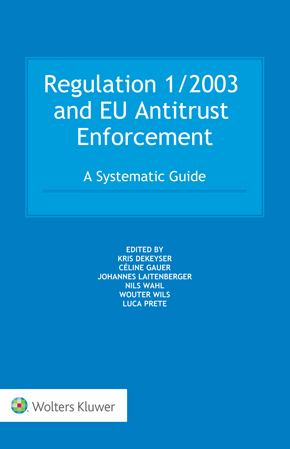
Earlier this year, a treatise on Regulation 1/2003 came out with Kluwer, with contributions from Alfonso (see here for his) and myself (mine on the enforcement aspects of the Digital Markets Act).
The volume is a genuine tour de force and it is only fitting to set up an event to celebrate the achievement and touch upon some of the key themes addressed in it (the timing, with the review of Regulation 1/2003 under way, could not be better).
We will be meeting on the afternoon of Thursday 29th June in Brussels, at the Fondation Universitaire (Rue d’Egmont, 11, next to Porte de Namur). You can register for the event here.
As you see in the programme below, we will be discussing the present and future of Regulation 1/2003 with several leading figures, followed by a drinks reception. We very much look forward to seeing many of you there!
16.30 | Welcome: Pablo Ibáñez Colomo (LSE and College of Europe)
16.45 | Introductory remarks: Johannes Laitenberger (General Court)
16.55 | Regulation 1/2003: looking back at its achievements
- Chair: Céline Gauer (European Commission)
- Lars Kjølbye (Lathan & Watkins)
- Margarida Matos Rosa (formerly Autoridade da Concorrência)
- Jacques Steenbergen (formerly Belgian Competition Authority)
- Wouter Wils (European Commission and King’s College London)
17.45 | Break
18.00 | Regulation 1/2003 and the future of enforcement
- Chair: Pablo Ibáñez Colomo (LSE and College of Europe)
- Pascal Berghe (European Commission)
- Or Brook (University of Leeds)
- Massimiliano Kadar (European Commission)
18.45 | Closing remarks: Nils Wahl (Court of Justice)
Antitrust Divergences and Convergences in post-Modern Times (Brussels, 26 June)

Eleanor Fox and Damien Gerard are two unique members of the competition law community. Eleanor is a force of nature, a brilliant scholar and probably the US academic who has paid more attention to convergence and divergence in US-EU antitrust enforcement. Damien is the total competition lawyer, with experience in private practice, top-universities, DG Comp and, currently, as Prosecutor General of the Belgian Competition Authority. Together, they have authored “EU Competition law: Cases, Texts and Context“.
To launch the second edition of this excellent book, Eleanor and Damien have organized a discussion about “Antitrust Divergences and Convergences in post-Modern Times” on 26 June in Brussels (Fondation Universitaire) featuring Inge Bernaerts (DG COMP), Nicholas Levy (Cleary Gottlieb) and myself (Garrigues).
If you want to join us for the discussion (and for the drinks…), just CLICK HERE. Look forward to seeing many of you there.
The Role of the EU Courts in Competition Cases: A View from the Bar

A year ago I participated at the Global Competition Law Centre’s Annual Conference, on a panel devoted to discussing the role of the EU Courts in competition cases together with General Court President Marc van der Woude and Judge Ingeborg Simonsson.
My more developed views on this topic have just been published as a chapter of Kluwer’s new book ‘The Transformation of EU Competition Law: Next Generation Issues’, edited by our friends Adina Claici, Assimakis Komninos and Denis Waelbroeck. More information about the book is available here.
Kluwer has authorized us to post here the full text (12 pages) of my contribution. To read it, click on the link below:


 Chillin'Competition
