Thoughts on the Commission’s Decision in UPS/TNT

My back of the envelope analysis of the Commission’s prohibition decision in UPS/TNT, following yesterday’s GCLC lunch talk.
Some facts first – With this decision, the Commission prohibited a merger to duopoly in the express mail business. The Commission found that the merger would have given rise to an overly powerful n°2 – DHL being the leading player – and to the disappearance of a “maverick“, TNT (a so-called “gap case” ). Whilst efficiencies were deemed sufficient to outweigh the restrictive price effects on a number of geographic markets, the balancing test in central and eastern European markets yielded a negative outcome. The parties did not manage to convince the Commission that their “last minute” proposed remedies package (divestiture of parts of TNT’s business to La Poste + 5 years’ access to UPS/TNT’s aircraft fleet) would allay its concerns. The Commission had thus no other choice but to block the merger. The deadline for appeal exprises next week. My feeling – based on smoke signals – is that the parties will appeal before the General Court. Unfortunately, the decision is not yet published. But the Commission has published a press release and a comprehensive MEMO on the decision.
On a possible toughening of EU merger policy – Contrary to what has been written in the press, the case does not suggest a harder merger policy. The headcount of prohibited mergers for Almunia currently lurks at 4, where Van Miert and Monti respectively had shot down 9 and 8 mergers. Rather, this decision shows that merger scrutiny remains effective, even in a period of merger morass and of depressed capital markets.
On the alleged protectionist instrumentation of EU merger policy – In the US, journalists were prompt to compare the EU with China, arguing that “the Commission uses antitrust enforcement to curb the efforts of American companies to expand in their countries”. To me, this is ill-thought: the prohibition decision also protects FedEx, a US company, from the fierce competition of DHL and UPS .
On the missed opportunity to “industrialise” EU merger policy – The Commission refused to view La Poste as a “suitable purchaser” for the parties’ proposed divestiture. From an industrial policy angle, one may argue that the Commission has thereby counter productively prevented the rise of a second European giant in the parcels business, besides DHL (Deutsche Post). Now, it is well known that the Commission also seeks to open postal markets to competition. A further strenghtening of La Poste may have undermined the Commission’s parallel liberalisation agenda.
On the perils of economic analysis in EU merger policy – Let’s be frank: in this case, the parties awkwardly offered to the Commission the rope to hang them. To prove that the disappearance of TNT would lead to price increases, the Commission relied on the price concentration study initially provided by UPS and TNT. It seems the Commission just had to tweak some numbers, and what looked like a minor positive correlation according to the parties became a significant impediment to effective competition (the parties did not deny the existence of a price effect, but they argued that it was de minimis in magnitude) which could only be offset by redeeming efficiencies. In other words, by pushing this price concentration study forward, the parties lifted the burden of proof away from the Commission, and placed themselves immediately in the uncomfortable position of having to argue efficiencies. The bottom line: economic analysis can backfire.
On the interpretation of the “efficiency defense” in EU merger policy – This case is probably one of the first merger cases in which the Commission accepted that – at least on some markets – cost efficiencies would be passed on to customers. So far, the Commission had often accepted the existence of efficiencies, yet rejected them as either insufficient in magnitude or on the ground that they would not be transferred to customers. This is a very positive evolution in merger policy.
On the fallacious distinction between fixed and variable costs in the context of the “efficiency defense” – The Commission rebuffed the administrative efficiencies (overheads) advanced by the parties on the ground that they constitute fixed cost efficiencies, i.e. one-offs which have no impact on prices charged to customer. To me, this is bad policy. Whilst firms do not seek to recoup ALL their fixed costs in their short term prices, most firms try to recoup some of their fixed costs in their short term prices. So if, with a merger gives rise to fixed costs reductions, then there is less to recoup on customers in the short term. The bottom-line: fixed costs efficiencies have an influence on short term pricing. Moreover, “one-offs” fixed cost efficiencies have an additional beautiful feature: they are “structural” efficiencies that benefit to consumers forever, regardless of market evolution (growth or decline). They are thus more plausible, and likely to unravel, than “conjonctural” variable costs efficiencies.
On the interface between EU merger policy and Article 102 TFEU – To reject the proposed remedy package, the Commission speculated that La Poste would likely not develop its own aircraft fleet, so that after the expiration of the 5 years’ access remedy, it would not exert significant competitive pressure on the integrators (DHL, UPS/TNT and FedEx). This is not very convincing, for both factual and legal reasons. First, La Poste has already started a process of vertical integration. Second, after the expiry of the 5 years commitment, the Commission remains able to maintain an access remedy under the Article 102 TFEU essential facilities doctrine.
On conflicts of interests in EU merger policy – Rumour has it that at the hearing, the parties infuriated a big fish from DG COMP. The reason? The official who previously held his position had dared appearing as consultant for the parties.
On the scope of the UPS/TNT decision – The Decision concerns only 29 countries in the EEA, and not 30. The explainer it that the Commission did not manage to get any significant data on Liechtenstein, so it decided to drop this country from its investigation.
For more on this, see A. Lofaro’s excellent RBB Brief here.
The ppts of the speakers at yesterday’s lunch talk will shortly be made available on the GCLC’s website.
And thanks to Stephan Simon for suggesting to title the event after AC/DC’s “TNT“, rather than after Queen’s “Another one bites the dust“.
ABA Spring meeting + New Spanish competition authority
 As explained in previous posts, there is a new and innovative Spanish competition law in the pipeline. I say innovative because the main change it will bring to the current system is the unification of sectoral regulators and the competition enforcer into a single “competition and markets authority”. We have voiced out some of our views about the draft law in a previous post. I’m still hesitating over the idea of writing a well thought out post explaining what’s going on in Spanish competition law (I do very little national work these days, but still follow it closely), but it might be wise to go through a cooling off period first.. Anyway, what I meant to say -mainly to our Spanish readers- is that the new draft law was approved by Congress and sent to the Senate earlier today. It’s available here.
 Also, I’ll be flying to DC on Tuesday for the ABA’s section of antitrust law spring meeting. The program is interesting, but this event is mostly about
 attending free cocktails networking (which may reinforce the perception some people have of lawyers as heavy drinkers). If any of the readers of Chillin’Competition is around, you can drop me a line (alfonso.lamadrid@garrigues.com); unfortunately we don’t always get to meet those of you outside Brussels. My firm will not be hosting a reception [hosting cocktails in the State can be risky from a legal point of view ;)], so I’m collecting cocktail invitations from others. I actually have a bet with an in-house counsel friend to see who gets more, and he’s clearly way ahead. Being an in-house at one of these events must feel like being the hot girl at a night club: everybody wants to buy you drinks…
Scholarships for Admission in the ULg LL.M in IP and Competition Law

My university is offering scholarships for admission in LL.M programmes, including in our LL.M in IP and Competition Law. EU and non-EU students are eligible.
A full description of the scholarships can be found here.
Please do not hesitate to contact me, should you have any queries on this.
Is associate lawyer the unhappiest job?

Looking at my Facebook newsfeed last night I saw that a friend (well, a Facebook friend, you know) had posted a story on how, according to a Forbes’ story, associate attorney is the No. 1 in a list of unhappiest jobs. Legal assistant ranks 7th.
This is quite troublesome, for it means that a great chunk of our readers are unhappy. I could have figured it out; who else would want to read half-serious competition law blogs?? [a suggestion to GoogleAds; it would be smart to place ads for anti-depressant pills on Chillin’Competition]
The list of happiest and unhappiest jobs has been compiled by a jobs website called CareerBliss, which has based it on reviews completed by more than 65,000 employees, accounting for factors such as life-work balance, work environment, compensation, growth opportunities, company culture and control over daily work. According to this site, a great deal of associates’s unhappiness is due to billable hour pressure, as well as to prevalent up or out policies.
Those who attribute this reported unhappiness to billable-hour pressure may find their ideas vindicated in a most interesting and provocative New York Times’ op-ed on The Tyranny of the Billable Hour published last week. At one point it refers to lawyers who ended up in jail for billing fictictous hours, which reminded me of a joke you might’ve heard:
– A prominent lawyer suddenly dies and arrives at the Gates of Heaven. When St. Peter greets him the lawyer protests that his untimely death had to be some sort of mistake: “I’m much too young to die! I’m only 35!”. St. Peter agrees that 35 seems to be a bit young to be entering the pearly gates, and agrees to check on his case. When St. Peter returned, he tells the attorney, “I’m afraid that the mistake must be yours, my son. We verified your age on the basis of the number of hours you’ve billed to your clients, and you’re at least 108.! “. 🙂
I believe I might have gone a bit off topic… Coming back to the issue of unhappiness, you may remember that in the past we’ve devoted some attention to this issue. See, e.g. my random thoughts on life at law firms, Nico’s I love my job and my reply in Re: I love my job, or the more recent Where to work in Brussels?
You know my take. We’re privileged. If I compare what we do with what other people outside our circle do, well, we don’t have much reason to complain. One of my best friends in the competition law world used to work, among many others, at suspect identification parades in England (Mark, you don’t mind me writing this, right?) and I bet that he likes it better now (do you?) 😉
But the fact remains that there’s a problem, that many associates are unhappy doing what is and should be a most interesting job, and that many things could be done better, so we’d like to pose you a question: what do you think is the problem, and how do you think it could be fixed?
ECJ’s ruling on France Telecom’s State aid case (Joined Cases C-399/10 P and C-401/10 P)
Note by Alfonso: As some you may have noticed, I’ve taken an unusually long blogging break from which I’m now back. As every time I’m out of combat, Pablo Ibañez Colomo (who, by the way, has recently been fast-track tenured -major review- at LSE and has just received a major review teaching prize; congrats!) comes up with a replacement post that’s better of what I would’ve written (we have a luxury bench at Chilin’Competition…). A few days ago Pablo sent us this post on France Telecom that we(I)’ve been slow to publish due to the easter holidaus and to to the frenchy’s posting frenzy 😉 We leave you with Pablo:

Some readers wll remember that during my short-lived tenure as a substitute blogger a few months ago, I wrote about a pending State aid case involving France Telecom. I guess that at least a fraction on those readers will be interested in knowing that the Court of Justice delivered its Judgment in the case on 19 March.
Unsurprisingly, the judgment is in line with AG Mengozzi’s (very sensible) opinion. The General court annuled the Commission’s decision on grounds that the Commission had not identified a clear link between the advantage deriving from a shareholder loan offer in favour of France Telecom and the State resources allegedly involved by virtue of the measure. As I argued in my previous post, the Court of Justice takes the view that the General Court’s interpretation of Article 107(1) TFEU would leave outside the scope of the provision measures suh as guarantees departing from market conditions (see paras 107-111). Such measures do not immediately place a burden on the budget of the State, but a ‘sufficiently concrete risk of imposing an additional burden on the State in the future‘. According to the Court, it is sufficient to identfy such a ‘sufficiently concrete risk‘ for State aid rules to come into play.
The broader picture is aguably more interesting than the outcome of this case. As I mentioned in the previous post, the Court of Justice has sided with the Commmission (thereby departing from the analysis of the General Court and the theses advanced y Mmember States) in some key cases revolving around the notion of selectivity. France Telecom, arguably the single most important case of the past years on the notion of State resources, seems to confirm this trend. The old principles of Article 107(1) TFEU case law, if anything, seem more solid following these high-profile disputes
CoE

The College of Europe – host organisation of the GCLC – has just appointed a new Rector, Prof. Jörg Monar, who will take over from Prof. Paul Demaret on 1 September 2013.
Congrats’ to Prof. J. Monar and thanks to P. Demaret for his support to the GCLC.
This is not a 1st April joke.
BTW: for those who are in town, we have a GCLC lunch talk on the Commission’s decision in UPS/TNT on 4 April. I am particularly fan of the title of the event :).
Law of Unintended Consequences

It is often overseen that there is a nexus between substantive competition law principles and procedural issues.
In this context, the current “resilience” of the forms-based approach in substantive competition law (see the recent Dole v. Commission case or the Expedia judgment) is likely to undermine the development of private enforcement.
If we follow §65 of the recent ECJ ruling in C-199/11, Europese Gemeenschap. v. Otis, national courts dealing with claims for damages in follow-on cases must comply with the agency’s prior decision, and admit the existence of an infringement akin to a fault.
Whilst it is true that, because of its obligation not to take decisions running counter to a Commission decision finding an infringement of Article 101 TFEU, the national court is required to accept that a prohibited agreement or practice exists, the existence of loss and of a direct causal link between the loss and the agreement or practice in question remains, by contrast, a matter to be assessed by the national court.
In this setting, the main role of national courts is thus confined to estimating the harm inflicted on victims and to establishing causality (assuming §65 also applies to NCAs).
But how can they possibly do this if the decision simply talks of anticompetitive “object” in the abstract, and fails to scrutinize the impact of the impugned practice?
In my opinion, if (i) we are serious about private enforcement; and (ii) we read Europese Gemeenschap. v. Otis in a “task sharing” perspective, then agencies must provide a necessary estimation of the anticompetitive impact of the unlawful practices. Alternatively, if they rely on “object” arguments, they should at least offer to national courts full access to the evidence in their possession, so the later can make the math.
The Shadow Procedure Rises

Today, Prof. I. Govaere kindly invited me to give a Jean Monnet lecture at the University of Ghent.
The subject was “Public and Private Enforcement of EU Competition Law”. My slides can be found below.
The main point of my presentation was the following: a textual reading of Regulation 1/2003 suggests the existence of a single procedural framework for competition enforcement.
However, my impression is that altogether, several recent legal innovations are giving rise to a “shadow enforcement procedure“.
Under this procedure, the Commission can achieve more in terms of remedial outcomes, with less in terms of evidence.
And if, up to this point, the Commission has (wisely) not yet exploited the full potential of this procedure, it may one day be able to extort even more intrusive remedies from parties without ever having to prove an infringement of Article 101 and/or 102 TFEU. A bleak prediction indeed.
I just wish I have the time to write a full-blown paper on this.
Lecture Gent – 29 March 2013 – Public and Private Enforcement of Competition Law (N Petit)
Competition Bank Runs?
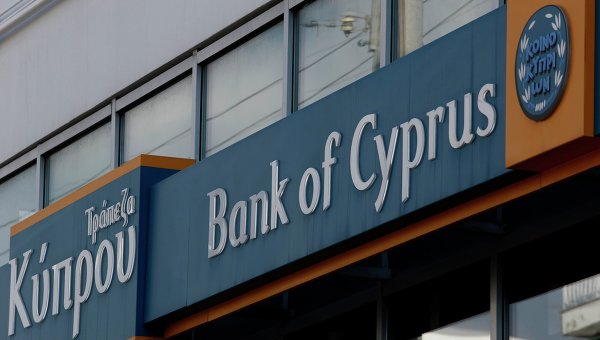
Jeroen Dijsselbloem triggered a spate of criticisms yesterday when he mentioned that the Cypriot deal was a “template” for future EU bailouts.
If this is true, the Commission may one day be subject to the sort of haircut imposed on wealthy Russian mobsters Cypriot bank account holders.
Up to this point, this is still sci-fi competition law. But take a look:
1. Fines paid to the Commission in cases with subsequent appeals are provisionally held in specific deposit accounts with commercial banks and they cannot be used to finance any other EU activities.
2. In 2009, a Special report of the Court of Auditors mentioned that the volume of fines held in such account lied in the ballpark of €5 billion.
3. At the time, the Commission had accounts with Fortis, BBVA, ING Belgium, KBC, ING NL and Citibank. In a not so distant past, several of those banks were bailed out. And it cannot be excluded they’ll have to be rescued again.
Interestingly, the 2009 Report warned at §47 that “this approach [i.e. leaving fines in such accounts] exposes the Commission to risk of loss in the event of banking failure. An optimum approach to better managing has not been established“.
I have no information on the status of this issue, but I understand that the Commission has been working on a better approach to address such risks (notably by using banks with good credit ratings…).
Yet, given the recent turn of events in Cyprus, I cannot help but thinking that one day the Commission could lose big money.
Not to think to the flood of legal consequences this may have, should the General court or the Court of Justice subsequently rescind (in part or full) the fines held in the Commission’s accounts.
Theories of Harm potentially applicable to Apple’s Distribution Tactics

On TV last week, I looked dumb reciting the obvious: in the EU, the law forbids RPM as an outright unlawful practice. So if it was proven that Apple is RPMing, then there could be trouble down the road.
Some voices blarred amongst some competition lawyers’ friends, as I had proferred accusation on Apple (I have not).
So I made some research in the WE. Upon inquiry, it seems that Apple’s tactics are more subtle. If I understand correctly, Apple tells its independent retailers that consumers can take a price up to a certain level (let’s say 500€), but no more. In turn, Apple sets in the contract a recommended maximum price of 500€. And then, it sells them the product at a price slighlty below this (let’s say 495€). On top of this, Apple would allegedly charge lower prices to its own retail distribution network.
On face value, such maximum prices are per se lawful. But the question is whether this can be akin to de facto RPM, given that with the high input price, Apple in essence gives little choice to its independent retailers but to apply the maximum price. Further evidence that this constitutes hidden RPM would stem from the fact that Apple accords much lower prices to its own retail operations (incl. over the Internet).
But there’s something puzzling with this theory of harm: why on earth would Apple seek to harm independent retailers? Possible options are (1) Apple engages into de facto RPM in countries where it does not have large retail operations of its own, so as to yield as much profit as possible; (2) Apple is reluctant to sell through independent retailers in countries where it has its own retail operations, but anticipates that with control over a “must store” product, it would be forced to supply.
In option 1, we are looking at a theory of anticompetitive exploitation, amenable to an infringement under the RPM framework, pursuant to 101 TFEU or to unfair pricing rules pursuant to 102 TFEU (if Apple is proven dominant).
In option 2, we are looking at a theory of anticompetitive exclusion, amenable to an infringement under article 102 TFEU (if Apple again is proven dominant), under the refusal to supply/price discrimination/margin squeeze doctrines.
A related puzzling thing is about retailers’ incentives to buy a product on which they make so little margin. But again, one may consider that they have incentives to do so at any rate, because this brings traffic towards their shop. And after all, each distributor is likely to believe that it is better to be the one to make the sale, rather than to leave it to another distributor.
All this, of course, should be backed by facts. The Commission is apparently looking into this, if I believe the latest news.


 Chillin'Competition