Conference – EU Competition Law and Financial Markets

On 22 November 2012, the Brussels School of Competition (BSC) and the Liege Competition and Innovation Institute (LCII) will hold in Brussels a joint conference on Competition Law and Financial Markets.
Issues covered span the emerging role of competition law amidst large scale price fixing allegations in the financial industry, open and fair access to financial infrastructure, competition in credit rating services, the trade-off between competition enforcement and financial stability, the impact of prudential rules, etc.
No State aid on the menu, there’s been far too many events devoted to this topic in recent months.
To discuss those issues, we have invited a range of triple A experts, including EU Commission and ECB officials, industry representatives, lawyers as well as leading academics.
More info on the programme can be found here. The registration form is accessible via this hyperlink.
Wake Up and Smell the Competition: Hong Kong’s New (Caffeinated?) Competition Law

[As Nico mentioned on his last post, he’ll soon be travelling to Hong Kong to participate at a conference on 21st century competition authorities. The timing is not accidental: at the beginning of the summer Hong Kong adopted its first comprehensive competition law. We have invited a friend of this blog, Sandra Marco Colino, currently an Assistant Professor at The Chinese University of Honk Kong to share her views on this new law. Sandra has a PhD on competition law issues from the EUI, and prior to moving to Hong Kong was a lecturer at the University of Glasgow. We leave you with her post on caffeine and competition law in Hong Kong].
It was close to midnight on June 14, 2012 when Hong Kong’s Legislative Council finally adopted the region’s first ever cross-sector Competition Ordinance (hereinafter ‘the Ordinance’). Rather geekishly, I remember exactly where I was the following morning when I first heard the long-awaited news: sipping my first espresso “ristretto” of the day at a café in the heart of the city’s financial district (strong coffee is a delightfully resilient habit I picked up in Florence). The news came almost two years after the Bill was originally tabled, and the debate
surrounding the legislative proposal has not been for the faint-hearted. Although preliminary studies indicated that the local community would welcome the introduction of the law, businesses and stakeholders repeatedly voiced their concerns about the threat it could pose to Hong Kong’s open economy. For many years, initiatives to regulate competition seemed to be frustrated before they even developed into concrete proposals as a consequence of a predominant mistrust towards any form of market intervention.
As I read through the text of the new Ordinance while enjoying my coffee, I couldn’t help wondering whether the twists and turns of the lingering ‘to antitrust, or not to antitrust’ discussion would have left a decaf taste on the law. As originally drafted in the summer of 2010, the Ordinance does indeed tackle anti-competitive agreements (the ‘first conduct rule’) and the abuse of a substantial degree of market power (the ‘second conduct rule’). For the time being, only anti-competitive mergers in the telecommunications industry may fall within the scope of the legislation. As regards institutional enforcement, an independent Competition Commission and Competition Tribunal will be set up to conduct investigations and decide whether there has been a breach.
Overall therefore, the general framework of the new legislation follows long-established principles of modern antitrust regimes. But when fleshing out the nitty-gritty, already in October 2011 the government had been forced to water down the original text of the Bill to respond to critics. For instance, it vowed distinguish between ‘hardcore’ and ‘non-hardcore’ violations
under the first conduct rule, the former comprising those restrictions of competition that are considered anti-competitive by object under Article 101(1) TFEU (price fixing, market sharing, output restrictions). In addition, it agreed to reduce the maximum pecuniary penalty to 10 percent of local turnover for each year of infringement, up to a maximum of three years. Moreover, the Competition Commission’s ability to impose fines in the original infringement notice would be removed from the Bill. The government also promised to introduce a de minimis threshold for the application of the first conduct rule for all agreements among undertakings with an aggregate turnover of HKD 100 million or less in the preceding financial year. Importantly, it gave consideration to the possibility of precluding private parties from bringing claims before the Competition Tribunal altogether.
The Ordinance, as adopted in June, includes most of these mitigating alterations, with two clarifications: the de minimis threshold (set at a combined worldwide turnover of HKD 200 million) will only be applicable in the absence of ‘serious anticompetitive conduct’; and ‘follow-on’ private rights of action have finally been granted to those who have suffered loss or damage as a consequence of an antitrust violation, once a breach of the Ordinance has been established.
My initial thoughts? Clearly, some concerns do spring to mind associated to the devil that might be in the detail. Nonetheless, with the adoption of the Ordinance Hong Kong has certainly taken a colossal and much-needed step towards the building of a palisade against the dangers of unrestrained market power. The strength of that palisade will, of course, very much depend on the implementation of the rules, unlikely to materialise before the end of 2013. For the time being, it appears that the Ordinance may indeed have sufficient caffeine to awaken competition in Hong Kong.
Misc.

A hotch potch of AT-related news, including some self propaganda:
- The next GCLC lunch talk will be devoted to the Microsoft compliance case, following the General Court’s judgment in Case T-167/08. Speakers are Eric Barbier de la Serre (Jones Day) and Thomas Kramler (COMP). See link hereafter for registration form: 61st GCLC Lunch Talk – Registration form
- The next GCLC annual conference will take place on 8 and 9 November, and will be devoted to “Competition law in times of economic crisis”. The final agenda is in the making.
- I will be speaking at a conference in Hong Kong on 19 October 2012. Just cannot wait to be there. See here for the conference website and hereafter for the programme: Leaflet_2012_9_4. My speech will be about challenges for 21st century competition authorities. If you have any suggestions of topics, items, or remarks to convey at the conference, please do not hesitate to drop a line;
- Our good friend Ewoud Sakkers from COMP is taking a one year sabbatical. He will be thinking and writing at Yale law school. May he also take some good rest while there;
- Marek Martyniszyn, a Senior Research Fellow at the Institute for Consumer Antitrust Studies (Loyola University Chicago) has posted online an interesting book review of the liber amicorum in honour of Professor Jacques Bourgeois.
Antitrust Comics

It is a well-known fact that competition lawyers increasingly compete in court with economists (at least in the US).
But they may now have to compete with comics artists.
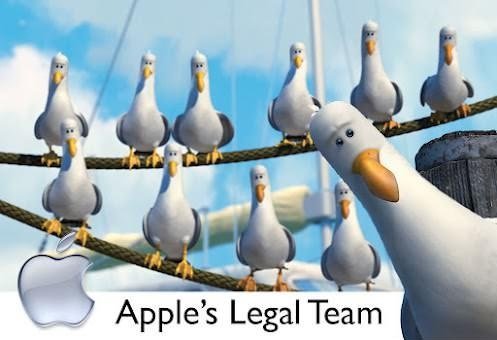
Some background: earlier in 2012, the DoJ filed suit against Apple and 5 e-books publishers for alleged violations of Section 1 of the Sherman Act.
Later in 2012, three publishers got off the hook, settling the case with the DoJ.
But the feud goes on between Apple, two publishers and the DoJ.
In this context, Bob Kohn, a media expert, has refiled a 25 pages request to participate as amicus curiae in the form of a comics. See link hereafter: 104906877-Kohn-Amicus (2)
The result is amazing, and possibly more convincing that the initial submission. Kohn even managed to quote judicial precedents.
So here goes the question: besides mock trial sessions, should law schools introduce drawing courses in their curriculums?
PS: the above pic is taken from the last strips I read. The Boys is dark, violent and very politically incorrect. A must read.
PS2: thanks to David Mamane (Schellenberg Wittmer) for the pointer.
Entry

With the fallout of the financial crisis, very few law firms have opened offices in Brussels in recent years.
To my best knowledge, the latest one would be Wilson Sonsini.
Several big US law firms without AT capabilities in Brussels thus keep referring work to EU law firms.
This decision clearly can be questioned under a simple cost/benefit analysis. Setting-up an office in Brussels seems to represent little costs, and can surely bring good money. All the more so given the thriving state of antitrust enforcement in the EU, irrespective of the crisis.
This may be what has prompted Baker Botts to launch today a Brussels practice.
Congrats and best of lucks to both Paul Lugard and Catriona Hatton for this new venture!
BTW, Baker Botts is known for being strong in the oil business, as well as for having taken over a large chunk of ex-Howrey lawyers in the US.
Best Antitrust Movie Ever
The Australian Competition and Consumer Commission just released “The Marker”.
In the category best compliance film, this one is poised to earn our Oscar this year.
Most antitrust films that we know look like crafted and played by competition officials themselves. Think of the hilarious “The Raid“.
Here, everything looks like the standard Hollywood film, i.e. casting, direction, music, photography, etc.
A real must see.
PS: Thanks to Joachim Marchandise for the pointer.
Facts of (our professional) life

Even though it’s only Tuesday, a few people in the Brussels competition law world are surely having a long and tough week. A number of us have been badly damaged by the 4-day feast incredible wedding we attended last weekend at a bullfighting ring in León (no kidding).
I’m telling you this for two reasons:
The first is that an official at DG Comp challenged me to write a post here about how among those attending there was a good mix of Commission officials, Court clerks, economists and lawyers (both in-house and from a few firms), which reveals how tiny our professional world is. This is undisputably a fact of our professional life. I’ll give you one example: two of the people (an in-house lawyer and an economist) with whom I’m currently working on a daily basis were present. Thank God we didn’t engage in any professional discussions, as I wouldn’t know how to bill it 😉
The second reason why I’m telling you this is that I’m trying to justify why I don’t feel in shape to come up with anything original to write, which is why I’m linking to another blog’s (Abovethelaw.com) content also dealing with facts of our professional life: How to Drive Associates Nuts! and What Drives Partners Nuts?
Where to work in Brussels?

Freshly graduated students often come with queries about life in law firms.
Many questions are related to wages and working hours.
But the key question is always about how cool (or stressful) it is to work for this or that law firm.
Here are a few cardinal principles to keep in mind:
- Wanna keep a social life? => Avoid merger factories;
- Life at European law firms is not necessarily better than in anglo-saxon law firms. This is because there is often a stronger pyramidal hierarchy in traditional (especially south european) law firms. In turn, junior associates are typically less involved in high level issues (meetings with clients, etc.) and must show a lot of deference to senior colleagues. In US law firms, partners – but this is again a generality – would tend to be more approachable;
- US firms pay better than UK firms, which pay better than continental firms. The same equation however applies to billable hours;
- What law firms seek to purchase with a strong paycheck is full availability, including at very short notice. Upon client/partner call, young associates must be ready to sacrifice family, holiday, wedding plans…;
- Minimum entry wage for a 1y associate in a Brussels competition pratice : 50K€/year;
- Like team work? Go for big law. Hate ghost writing? Go for academia;
- The above is of course contingent on the people. Several well-known merger factories are really cool places to work for, simply because the partners there are great professionals and very pleasant persons;
The bottom-line? The talk of the town is that there’s two places where it’s really good to work as a junior associate in Brussels, Sidley Austin and Hogan Lovells (and Garrigues, of course).
Negotiations (and other non-legal abilities) in Antitrust Practice

Two days ago I read the obituary of Roger Fisher -Emeritus Professor at Harvard Law School and director of the Harvard Negotiation Project. Fisher was a co-author of one of the best-selling books in the art of negotiating: “Getting to Yes, negotiating agrement without giving in“. Reading this book was one of the requirements of the Harvard negotiation program to which I devoted 3 intense weeks of my LLM’s winter term.
Skimming again through its pages last night I remembered the paper that I wrote also as part of the requirements for the negotiation program; I chose to do it about the specific features of the negotiations that take place in the field of antitrust (as is the case with other competition lawyers my mindset is programmed to think mainly about one subject…). I would post it here, but my only digital copy of that paper was lost under very peculiar circumstances that would merit an ad hoc post.
Anyway, let’s cut to the chase:
Antitrust practice nowadays requires inmense negotiation skills. In many cases, and after the law plays its role, the final outcome is determined pursuant to a negotiation. Moreover, quite often practitioners and authorities don’t limit themselves to the application or establishment of liability principles, but rather negotiate in the shadow of the principles that regulators and courts may be expected to apply (for some material about negotiating” in the shadow of the law”, click here or here). In other words, very often a negotiation is what determines the success or failure of the project or case at issue.
In spite of the increasing prominence of negotiated solutions in antitrust enforcement (think of cartel settlements, settlements in actions for damages, commitment decisions in abuse of dominance cases, or the design of remedies, among others), awarenesss about the importance of negotiation skills in our profession is still scarce. To be sure, this attention deficit is not exclusive to negotiation abilities; the same happens with other non-legal abilities that in practice are as important -or much more- than a thorough knowledge of the law (notably writing).
Law firms often attempt to resolve the issue through one day talks and other brief and not-so-serious means, but I’m not sure of whether that’s enough. Universities and postgraduate centers would be providing a great service should they focus on these extra-legal abilities.
Don’t get me wrong. I don’t think that doing a course/seminar on negotiation or on many other skills is going to radically change anyone’s life. Negotiation skills (like salsa dancing, basketball playing, maths, and almost anything) are to some extent natural abilities. In fact, the best negotiators I’ve ever seen in action act by instinct or experience and would probably laugh at the idea of “studying” about it. Moreover, in a field of repeated interactions like ours, building the necessary trust from your counterparts (authorities or competitors) takes time. In spite of it all, it is a fact that most skills are perfected upon reflection and training.
In order to contribute to filling this void, Nicolas is devising (and trying to sell) an executive training program for lawyers in order to deal precisely with all these non strictly legal skills.
Any suggestions you may have about it would be most welcome!


 Chillin'Competition