An algorithm for competition law conferences

Last week was a very weird one. I spent almost as much time at competition law conferences than at the office. Here is a brief account of how the week went and of the thoughts that this conference overdose triggered:
As I have already mentioned on this blog, on Tuesday I participated at a workshop entitled “What is happening to Article 101 TFEU?” organized by Giorgio Monti at the European University Institute in Fiesole (as you know, Prof. Monti´s idea to hold this workshop was “inspired” by some discussions on this blog). The presentations by Giorgio Monti, Saskia King, Eric Gippini and Luis Ortiz and the discussion we had were all extremely interesting. I was overwhelmed by how smart (an genuinely nice and funny) the group was both during the workshop and outside of it. We tried to make sense out of the object/effect dichotomy and talked at length about what really is a restriction of competition as well as about the “deaths” of restrictions by effect and of Article 101(3). It´s a pity that only a small group could attend. On the plane back to Brussels, Eric, Luis and I mentioned that perhaps we could try to write a brief piece with our “non-mainstream” ideas some time soon. I´ll make sure that they don´t forget about it.
On Wednesday Charles River Associates (CRA) held its annual conference in Brussels. I attended most of the morning sessions and I have to say that the event was a great success. As excellent economists, these guys are conscious of the power of “FREE”. They deserve recognition for holding a free very high quality conference in Brussels.
Then on Thursday there was a lunch talk at the GCLC on the Menarini Judgment. I couldn´t attend, but all I hear is that the speakers were truly brilliant.
The reason I couldn´t attend the GCLC event is that at the same time I was speaking at yet another conference: the International Symposium on Competition Policy organized by the Centre for Parliamentary Studies. I was invited to this event following a recommendation from Nicolas (I really owe you one here, mate -please note the irony-). I was supposed to deliver the final keynote speech on “The future of EU Competition Policy“. I had prepared what I thought to be a fairly original and humorous prediction of what I think will certainly happen in the short term, of what should happen in the medium tem, and of what will inevitably happen in the long term. I´m not very sure that my messages will have the impact I´d hoped for: the audience was composed by two people from the Namibian competition authority, two members of the Malaysian competition Commission, a member of the Danish Ministry of Economic Affairs, a Scot from the Water Industry Commission, and my colleague Napoleón Ruiz who threatened me with taking pictures. Jokes aside, it was fun.
So many hours of sitting at these and other recent events made one thoughts spring to mind: I wouldn´t need the expertise of my friends at CRA to come up with an ad hoc algorithm or formula with which to predict how interesting a competition law conference is supposed to be. The general rule (subject, of course, to exceptions) is easy: the likelihood of getting to listen to new and interesting stuff is inversely proportional to the combination of three cumulative variables: the price of the event, the number of attendees, and the number and lenght of slide decks. It´s generally not a good sign if an event is pricy and crowded. The ones with a greater chance of not being interesting at all are those for which you have to pay in order to be a spayeaker (yes, there are plenty of those!). (Not that so many people care anyway, since some of these events are mainly about networking, a.k.a “free” drinks and nibbles + some gossiping).
That´s why the 1st Chillin´Competition Conference should also be free. We only have to figure out minor details, such us how to pay for it.. Here are some options: Voluntary contributions? Sponsoring? A lottery for a date with Nicolas?
Ideas welcome…
Sunday Politics

A few days ago in Brussels, 26 Member States (“MS”) of the EU layed the foundations of a still-to-be drafted European Treaty.
Amongst the key measures to be included in the Treaty, a “golden rule” which will force MS to introduce in their Constitution the rule that budget deficits should not exceed 0.5% GDP. The European Court of justice will verify MS compliance with the golden rule.
With this forthcoming European measure, Sarkozy can put his main rival to the presidential election, François Hollande, into a corner. A few months ago, when the government tried to impose a golden rule domestically, the socialist candidate had proferred criticism. At the time, the socialists announced that they would not back a change of the Constitution to this effect. For those not versed in French constitutional law, amendments to the Constitution must be voted by a majority of 3/5 of the aggregate votes of both the Senate and the National Assembly (or by referendum). Currently, the National Assembly is dominated by the right wing and the Senate by the left wing…
But now that the measure has been endorsed by 26 MS, and that it will be imposed by a European Treaty, there’s little the socialists can criticize unless they want to be depicted as UK-Cameronesque politicians. No wonder why the socialists have been voiceless over the past few days. Sarkozy 1 – Hollande 0.
On closer analysis, the socialists’ “oppositional” options appear very meager. Sure, the socialists could be tempted to criticize the Treaty as insufficiently ambitious (e.g., on eurobonds or on the ECB mandate), and use this a a reason to refuse the ratification of the Treaty. Back in 2005, several socialists heavyweights (notably former Prime Minister Laurent Fabius) had actually used such rethorics to stand against the EU constitution. But the value of the argument is limited, given the reluctance of many other Member States (e.g., Germany) to more ambitious reforms.
The socialists could also play the good old nationalistic anthem. Challenging transfers of sovereignty to Brussels often has traction on the French political scene. My prediction: it is a matter of days before the Montebourg, Mélenchon, and Chevènement of this world announce that the forthcoming Treaty will rip off France’s fiscal sovereignty. I however doubt that Hollande, who is often presented as the spiritual son of Delors, could credibly side with them.
At any rate, what is close to certain is that the ratification procedure will again tear the socialist party apart. Sarkozy and his European colleagues just managed to revive the divisions that have plagued the socialist party before the referendum on the European Constitution. And with all this, I suppose that Hollande prays for a slow drafting process and a late ratification procedure, well after the presidential election of May 2012. Sarkozy 2 – Hollande 0.
Now here’s what could be the hat trick for Sarkozy. A quick Treaty drafting + ratification before May 2012 is unrealistic. But this does not prevent Sarkozy to launch a debate on the procedure to be followed for ratification during the presidential campaign, in a bid to expose the socialists’ internal divisions. There are indeed many procedural options on the table and experience suggests that they often give rise to fierce discussions in French politics. As hinted above, international treaties are normally subject to ordinary legislative procedure (Article 53 of the Constitution). Yet, if they entail amendments to the Constitution, an additional consultation must take place. The President must either request approval of the French citizens by Referendum, or, in the alternative, request the Senate + National Assembly to back the proposed modifications under a 3/5 majority rule (Article 89 of the Constitution). And even if the Treaty does not entail a change of the Constitution, the President can still hold a referendum on the Treaty, provided it has an “influence” on French institutions (Article 11 of the Constitution). A sovereignist left winger, Chevènement, just demanded the organisation of a referendum.
To date, Sarkozy still lags behind Hollande in the polls. But the shape of events to come is unpredictable, and the EU summit just gave Sarkozy a number of good cards to play.
PS1: Sarkozy could even score a 4th goal. With worrying threats on the French “triple A” rating, he could seek to anticipate on the future EU obligation, and already introduce the golden rule in the Constitution before the presidential election…
PS2: I was astonished by the lack of press information on the content of the agreement crafted in Brussels. A usual with EU affairs, I found a very good description of the agreement on the excellent blog of Jean Quatremer.
PS3: With this post, I am a little far from the core market of this blog. I even take a risky stint at French constitutional law. I thus apply for leniency with our readers, and already present my apologies for potential inaccuracies, errors, etc. The thing is that “we are just as politics geeks and fervent EU supporters as we are competition law geeks” like Alfonso said the other day, and I could not resist writing something on the EU summit.
Judicial Review and Article 6(1) ECHR

With the Menarini judgment, the ECHR has demonstrated that it has nothing to envy to other Courts in terms of cryptic reasoning.
There are indeed two ways to read this judgment. If you follow what the Court says as a matter of principle, the EU judicial review system is not Article 6(1) compliant. Remember, the ECHR says that review courts should have full jurisdiction in competition matters. In the current state of affairs, the GC does not have full jurisdiction on all aspects of a case, and particularly not when it comes to “complex economic assessments“.
But if you read what the ECHR says on the facts, the EU judicial review system might well be Article 6(1) compliant. In casu, the Court considers that the Italian system of limited (or “weak“) judicial review is arguably akin to full jurisdiction (!) and thus compatible with the ECHR. This is obviously fictitious. On close examination, no such intense review exists under Italian law. Yet, the ECHR contends that the Italian review courts “ont pu examiner le bien-fondé et la proportionnalité des choix de l’AGCM et même vérifier ses évaluations d’ordre technique” (§64). With this ruling, the treshold for full jurisdiction comes real low…
Today, the ECJ just chose which of those two readings prevails in the EU. In its KME v. Commission ruling, handed down today, the Court states at §133 that:
“The review provided for by the Treaties thus involves review by the Courts of the European Union of both the law and the facts, and means that they have the power to assess the evidence, to annul the contested decision and to alter the amount of a fine. The review of legality provided for under Article 263 TFEU, supplemented by the unlimited jurisdiction in respect of the amount of the fine, provided for under Article 31 of Regulation No 1/2003, is not therefore contrary to the requirements of the principle of effective judicial protection in Article 47 of the Charter“.
I attach hereafter the slides presented by Marco Bronckers at today’s GCLC lunch talk: GCLC – Menarini 8 12 11REV
Microsoft/Skype- On how to unconditionally clear a monopoly in Phase I

My “learned” co-blogger (and NY-Times interviewee of the week) initiated a very interesting debate yesterday with regard to the Microsoft/Skype clearance decision. I must confess that I read the decision last evening on the plane back fromFlorence (more on that tomorrow) and, to be frank, I was astonished. Let me briefly, and not exhaustively, explain to you why:
As our usual readers know, I’ve a particular interest in looking at how competition authorities appraise network effects in competition cases (it was the topic of my LL.M dissertation and it’s also supposed to be the topic of a pending PhD project). Since the Microsoft/Skype merger involves two entities benefitting from huge network effects I regarded this decision as a must read.
Well, I was wrong; the decision is a must RE-READ: I had to read certain paragraphs several times in order to make sure that it wasn’t just that I was tired and couldn’t make sense out of it. After several re-reads, I reached the conclusion that, actually, parts of it don’t make any sense.
Nicolas said yesterday that “the decision clearly shows that a merger involving a large monopoly can get Phase I clearance”. I was not involved in this case and therefore I may be missing something but, if you ask me, the decision reads as if the Commission already knew that it wanted to clear the decision in Phase I and then tried to construct an assessment that would fit its pre-determined conclusion. Arguing in a convincing manner that the creation of a “large monopoly” such as the one at issue does not raise competitive concerns and is suitable for Phase I clearance is practically impossible. Nonetheless, that is what the decision has tried to do. And, inevitably, that leads to serious logical problems.
Even from the perspective of an outsider [PS. see note at the end of the post] it’s easy to detect many defects, but for the sake of brevity (notably because I have only allocated one hour of today’s afternoon to write down my notes about this) let’s focus just on one of the Commission’s errors. I have chosen to present you with an error concerning the market for consumer communications because it involves network effects (which is what initially got me interested) and horizontal effects, and because all of us as consumers are able to understand it better. The decision is equally, perhaps even more, questionable with respect to the assessment of vertical and conglomerate effects in the market for enterprise communications, but that part is harder to explain in a brief post; I might develop my views on this in a later post.
In what follows I´ll explain what the decision says in this regards and I will provide you with my very personal views on the Commission´s reasoning. I might be right, but I certainly may as well be wrong. If interested in taking a look at the substantive stuff in other to arrive to your own conclusions, click here:
Google, Microsoft, Skype, et cætera

Confessing a lack of inspiration tonight, I paste hereafter a link to an interesting NYTimes paper on the ongoing Commission investigation against Google. Thanks to James Kanter for the opportunity to be interviewed.
The topic of this paper also gives me a nice pretext to remind our readers that the merger clearance decision in Microsoft/Skype was published a month ago. This decision is well worth reading. It makes a bunch of interesting points on several counts. Here’s a taste of them. First, the decision clearly shows that a merger involving a large monopoly can get Phase I clearance.
Second, it suggests that the tide has turned in so far as the Commission’s appraisal of ICT markets is concerned. On several occasions, the decision unambiguously depicts Microsoft as a vacillating player, in a sector (communications services) where the Facebook, Google and Apple of this world are poised to become – or are already – the market leaders.
Third, the §§ on the tying of Skype with Windows OS are not wholly consistent with the 2004 and 2009 decisions, where pre-installation was deemed problematic in itself, because of the lack of subsequent (switching) user behavior. Remember, those decisions relied on this theory that lazy users were often stuck with WMP and IE, for behavioral biases (the so-called “end-users’ inertia” at §870 of the 2004 decision). Here, the Commission stresses that pre-installation is unproblematic at any rate because consumers do not use whatever communication service found on Windows + there are many alternative means for rivals to reach out to consumers + Skype is already pre-installed on >50% of Windows PCs, but only a small share of Skype are registered and connected users.
Finally, the decision contains some nice wording on the flaws of standard antitrust analysis in dynamic markets. See for instance, §78, which calls for caution in applying conventional market share analysis to such sectors: “consumer communications services are a nascent and dynamic sector and market shares can change quickly within a short period of time. Furthermore, almost all communications services are offered free of charge”. See also §122: “Consumers are very sensitive to innovative services or products in consumer communications services. Providers of consumer communications services lose traction quickly if they are unable to offer users new and innovative functionality”.
Last Call – GCLC Lunch Talk on Menarini

On Thursday 8 December, the Global Competition Law Centre (GCLC) will hold its 55th Lunch Talk on the Judgment of the ECHR in Menarini Diagnostics SRL v. Italy.
Sir Christopher Bellamy QC (Linklaters) and Marco C.E.J. Bronckers (Leiden University and VVGBlaw) will share the stage.
Online registration at http://gclc.coleurope.eu/LunchTalk
The Friday Slot (1) – Ian Forrester
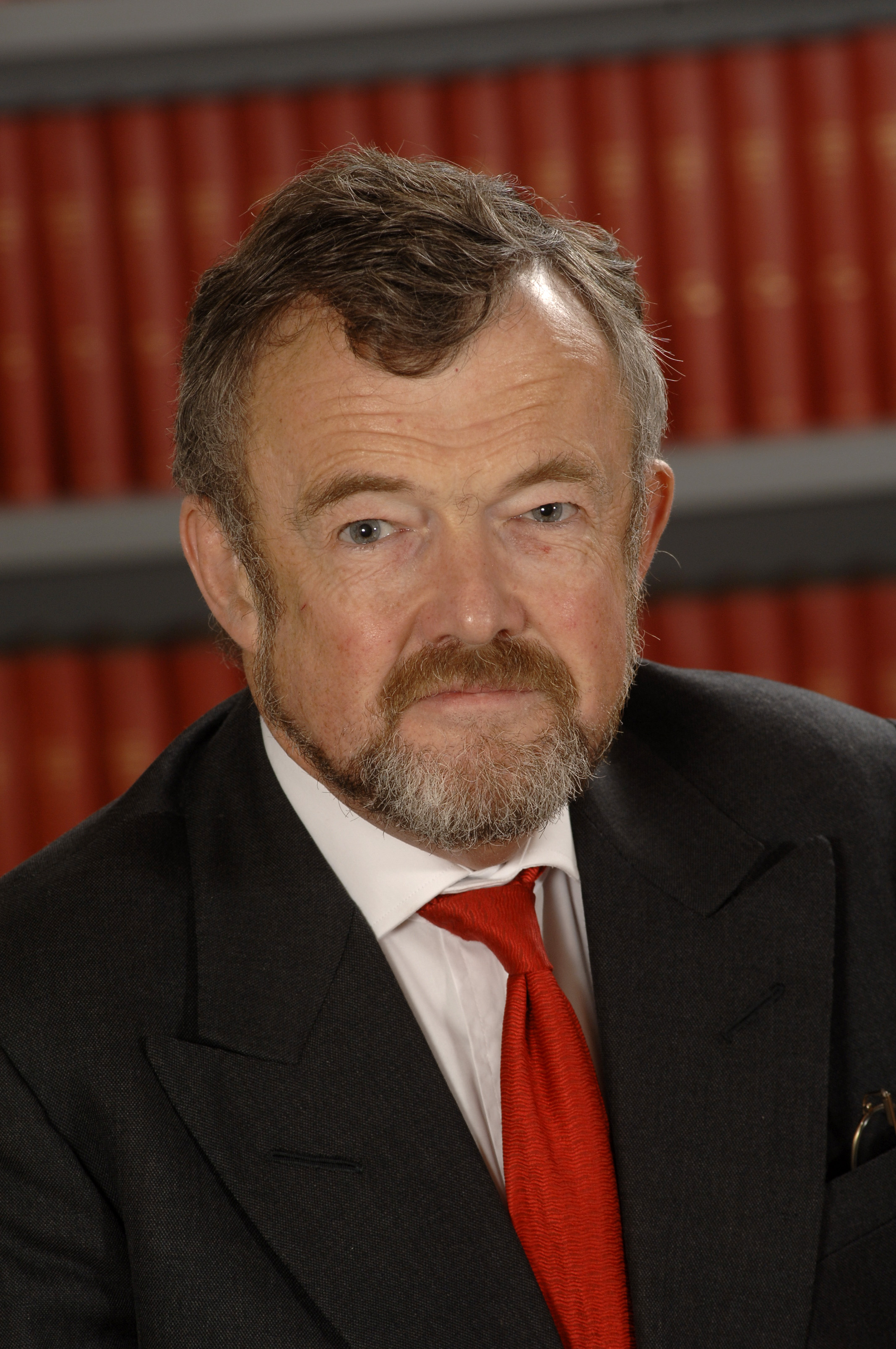
At Chillin’Competition, we have decide to emulate an unpopular practice of DG COMP. From now onwards, we will be launching Friday requests for informations (“RFIs”).
In line with the spirit of this blog, our RFIs will be a bit different from those of DG COMP. Our targets will be big names in the antitrust world who, in addition, are interesting people with a good sense of humor. Just like this blog, our questions will be partly professional and partly personal.
To start this new venture – in principle, the Friday slot will be opened twice a month – we have sent our first RFI to no other antitrust superstar than Mr. Ian Forrester (White and Case, full biography available at the end at this post)!
And guess what: Ian has accepted to address our questions very swiftly, and has provided remarkable, insightful, thought-provoking answers. Again, we are immensely grateful to Ian for the time he took to answers our questions. In exchange for his time, we offered him to baptise this new series of posts, and he offered the title “The Friday Slot” that appears on top of this post.
Question 1: “Oscar” of the best competition law book? And of the best non-competition law book?
The shortest and simplest book is by David Edward and Bob Lane: “European Community Law: An Introduction”. Competition law is not complex, though it can be made sophisticated. Proper analysis of the realities of the marketplace is where everything should start.
The items of competition law literature which I most regularly use are the reviews of competition law in the Oxford Yearbook of European Law since the first volume in 1981. Francis Jacobs was the first editor and for about fifteen years Chris Norall and I squeezed the juice from every development. We tried to avoid accepting the official propaganda and to enjoy advancing our particular theories. Then the reviews went through a period of being too comprehensive and too lengthily thorough, but now we are back on a good rhythm. The reviews are lively and opinionated, and you can disagree with them, but they ought not to be boring. Writing them has been hugely instructive for my colleagues (jacquelyn Anthony , Makis and a platoon of other talents) and me, a great way of learning, digesting and explaining. I often use the OYEL review as a way of reminding myself of what was important in a case. Sometimes that matches conventional wisdom and sometimes it doesn’t.
Question 2: “Oscar” of the best case-law development in the past year? “Oscar” of the worst case-law development?
The Oscar to the best case-law development could go to the Swiss watch parts case, where the Court overturned a Commission refusal of a complaint and took us back to simpler times when small folk could look to the protection of the competition rules. It is very rare for such challenges to succeed and the Court did a really careful job in writing its judgement.
Question 3: Let’s do it like economists => assume that you could change 3 rules, principles, judgments, institutions in the current EU competition system. What would you do?
Criminal liability; proof beyond a reasonable doubt; and judicial review as ferocious as the House of Lords.
Question 4: Average working time/week?
Excessive! I travel a lot, and when I am away the e-mails multiply, as do the messages from editors wanting manuscripts. But I am not complaining. It is fun to do interesting work in interesting places.
Question 5: Why do you work in competition law? How did you first get into it?
By accident. I was a customs specialist, then made a complaint for a friend’s uncle against a whisky producer (differential pricing): Bulloch/Distillers Co. Ltd. That was my first case in Luxembourg. Lord Bethell was the next, about the rights of complainants. Others followed. I never studied competition law, or indeed EEC law, at university, an educational void which is unlikely to be remedied. Read the rest of this entry »
Slides Evening Policy Talk – Bill Kovacic

Bill Kovacic was our guest yesterday at the GCLC.
He gave a superb presentation on the measurement of competition authorities’ performance. In so doing, he confirmed that he is the n°1 speaker on the conference circuit. A great speaker + a pure entertainer.
I attach his slides below.
A quote: in response to a question on why the CAs were so ineffective at communicating that they work in the public interest “we are in the business of instability”
Random News

Oops, the General Court did it again… Last week in EFIM v. Commission, the Court confirmed the Laurent Piau case-law: a collective dominant position under Article 102 TFEU covers situations of tacit collusion (here labelled, “tacit coordination“) and hinges on proof of (i) detection opportunities; (ii) retaliation mechanisms; and (iii) absence of countervailing power of actual and potential rivals. Interestingly, the Court made no reference to the notions of “collective entity“, “correlation factors” or “economic links“, used in previous cases. A welcome ruling. Yet, much remains to be done in relation to the concept of abuse of collective dominance.
A great hire by Compass Lexecon: Prof. Jonathan Baker just joined them as Senior Consultant. Prof. Baker has been the Chief Economist of the FCC and the FTC. But to me, J. Baker is one of the first economists who articulated a workable theory of unilateral effects in merger cases. For more, see his article with Timothy F. Bresnahan entitled, ” The Gains from Merger or Collusion in ProductDifferentiated Industries”, 33 J. INDUS. ECON. 427 (1985) and see link here (and in particular footnote 15).
On 12 December, the Brussels School of Competition will host a half-day conference on the proposed reform of Belgian Competition Law. See here for the programme. My assistant Norman Neyrinck and my friend Laurent de Muyter will speak at the conference. I cannot wait to listen to them.
An unconvenient truth: it is technically wrong to say that the default of a Eurozone State would trigger the end of the € as a currency. On this, journalists tend to oversimplify. Unless all failed States opt out of the Eurozone, the € will stay in business. And by the way, a defaulting State does not necessarily need to exit the Eurozone. True though, defaulting States may be tempted to exit so as to engage into competitive devaluation, and regain growth in the mid-term.
Finally, because I love self promotion, and also for my fan club – Alfonso, pls forward this asap to your colleague – a picture of me with a Chinese official who attended a lecture on EU competition law in Brussels 15 days ago.

Do economists do it with models?

Things are busy at work, and I just remembered that I told Nicolas I would take care of posting something today. When such things happen we generally resort to either (a) announcing a conference; or (b) posting a quick joke.
In this case, if I had chosen a) the post would´ve looked too short; but if I´d chosen b) I would be missing an opportunity for self promotion to announce an interesting event. Solution: let´s do both:
(a) Conference announcement: As anticipated last week, Giorgio Monti has put together a most interesting workshop that will be held next Tuesday (6 December) at the European University Institute. The program -which features Giorgio Monti (EUI), Saskia King (LSE), Luis Ortiz Blanco (Garrigues), Eric Gippini-Fournier (European Commission´s Legal Service) and myself- is available here: What is happening to Article 101 TFEU?
(b) Joke of the day: Economists don´t do it with models. The picture above (which I first saw in a ppp by Fréderic Jenny at Fordham last September) stands for the proposition that economists do it with models “because there´s no shortage of demand for the curves that they supply“.
Nonetheless, as you all know, economic theory can be used to defend one thing and its contrary. That is why there´s an alternative economic theory that explains why economists don´t do it with models. If you want to know about it, click here.


