New Entry in the Market for Competition Law Journals

I heard in Vienna that Oxford University Press (OUP) will be launching in 2009 the Journal of European Competition Law & Practice. This new bi-monthly journal intends to have a strong practical flavour. It will be edited by T. Lubbig and P. Nihoul and seeks, from what I am told, to compete head-to-head with the well-known European Competition Law Review (ECLR) from Sweet & Maxwell. Yet, I understand that ECLR has lately focused a lot on national competition law, and that this journal’s purpose is to deal primarily with EC competition law.
Interestingly,it ought to be noted that this new journal is not pure, greenfield, entry for OUP, but expansion with a new title besides, amongst others, OUP’s Journal of Competition Law and Economics (JOCLE). Whilst some may think that OUP’s move is not necessarily safe because the new journal may partly eat away some of the JOCLE readership, I understand the two journals are not substitutes, but complements (with the JOCLE focusing primarily on longer studies, with a stronger scientific, economic and comparative – EC/US – flavour).
My feeling is that OUP’s agressive, ambitious, expansion strategy should be welcome. I have indeed often deplored the paucity of european competition law journals. Let’s just hope that the pricing of this new title will be affordable.
New GCLC Working Papers on Vertical Mergers

A. Ramos, T. Mohan and F. Carloni (Howrey LLP)’s paper on vertical mergers has just been accepted for publication in the GCLC WP Series. Their paper discusses the Commission’s practice in applying the 2008 guidelines on non-horizontal mergers. It focuses on two cases on which, to date, there has been only little literature, i.e. Nokia/Navteq and Tom Tom/TeleAtlas.
Please note that the GCLC welcomes submissions for publications into the WP series. Papers should be sent directly to me. Publication in the WP series in no way prevents later publication in a regular competition law journal. On the contrary, publishers generally appreciate when a paper undergoes some empirical testing through a WP, prior, publication.
New book on EC and Spanish Competition Law
Volume X of ‘Derecho de la competencia europeo y español‘ is already out (volume IX was also published a few weeks ago). This edition, edited by Luis Ortiz and Eulalia Sanfrutos, includes contributions in English, French and Spanish on different aspects of both EC and Spanish competition law. No review because my objectivity is severely compromised: there are several good friends amongst the authors and I am the co-author of a contribution on the new Chinese Anti-Monopoly law (there’s always a ‘black sheep’ who doesn’t stick to the book’s title). This is the table of contents:
– Problemas prácticos derivados de las nuevas facultades de investigación de la Comisión Nacional de la Competencia / Carmen M. Cerdá Martínez-Pujalte
– La confidencialidad de las comunicaciones entre abogado y cliente: un intento de definición válido para el ordenamiento jurídico español / Violeta Tomás Gutiérrez
– Will the new Commission leniency and fining policy appeal to multi-jurisdictional lenency applicants? / Luis Ortiz Blanco, María Muñoz de Juan and Ángel Givaja
– An offer you can´t refuse? An analysis of EC cartel settlement / Mark English
– Foreign consumers and private antitrust litigation / Charlotte Leskinen
– Competencia y comercialización de derechos de televisión: ¿y si la intervención de las autoridades de competencia fuese el único problema? / Pablo Ibáñez Colomo
– Les mesures structurelles à la lumière du Règlament 1/2003 et du Règlament 139/2004: analyse comparative / Franz Stenitzer
– La regulación de la recuperación de las ayudas de Estado españolas y sus carencias: ¿un exceso de confianza en la autonomía procesal? / Pedro Cruz Yábar
– Defensa de la competencia “Made in China” / Alfonso Lamadrid de Pablo y Napoleón Ruiz García
LIDC Conference in Vienna – 22-25 October

I am flying to Vienna tomorrow for the LIDC (International League of Competition Law) annual congress. I have the great honour of being one of the two 2009 international reporters.
I attach below the programme of the conference as well as the latest draft of my international report. Looking forward to it.
LIDC – Programme Annual Congress
International Report – LIDC – Question A – Nicolas PETIT (12 10 09)
The “Last Hundred Days” Strategy – Is the Qualcomm Case Over?
Milton Friedman and his wife Rose Friedman are known for having theorized that recently elected governments generally enjoy a period of political immunity following elections, which allows them to push reforms, including tough ones, relatively easily (see Tyranny of the Status Quo, New York: Harcourt Brace Jovanovich, 1984). This theory is often related to the “first hundred days” honeymoon period enjoyed by political leaders.
My intuition is that this theory also applies to administrations reaching the term of their mandate and, in particular, the current European Commission. In this regard, Neelie Kroes, the Commissioner for competition, certainly enjoys an unprecedented ability to increase output in the last months of her mandate in deciding/closing cases. This is partly due to the fact that the repeated game of political interaction – where disgruntled colleagues, rivals, parties, etc. might retaliate in the future (and kill proposed decisions/legislative proposals) – comes to an end. At this stage, Neelie Kroes, who most likely will not be reappointed as Commissioner for competition (and, if I understand correctly, whose domestic carreer is largely over), has thus a relatively large margin of enforcement manoeuvre. In addition, ending administrations face lower exposure than newly appointed administrations: (i) other Commissioners might also be busy cleaning their desk, and in turn unable to scrutinize competition enforcement initiatives; (ii) journalists, medias, citizens, MEPs, etc. primarily care for the yet to be appointed Commission and its programme, and no longer pay much attention to what the present Commission is doing.
In this context, the Commissioner has given indirect signs that she may soon close the long-standing, high-profile, Qualcomm case (full disclosure: my former law firm, Howrey LLP has been working intensively on this case over the past years). In a nutshell, this case is about the amount of royalties charged by the US firm Qualcomm for its 3G WCDMA technologies, deemed to be excessive by a number of complainants, some of which are big EU telcos manufacturers. The case exhibited a number of interesting, controversial, features. To name only a few: should the cryptic, unpractical, case-law on exploitative abuses be applied to dynamic, R&D-driven markets?; does an ex ante FRAND commitment go beyond a mere commitment to negotiate licensing terms in good faith?; should the Commission get involved in a case that exhibits a strong revenue distribution (or “revenue sharing”) dimension, as well as industrial policy features (the classic US v. EU trade war story)?
In a speech entitled “On ex ante standards setting and new horizontal agreement guidelines ” delivered last week, Neelie Kroes unusually emphasized the difficulties encountered by enforcers in bringing forward excessive pricing cases:
In my view, there are a number of ways to assess whether there has been an excessive pricing abuse under Article 82 EC and the methodologies used will depend on the factual matrix. One method is to compare the (ex-ante) market value of the relevant IPR with the ex post royalty rate, if the evidence clearly permits such a comparison. If the ex post royalty is significantly and unjustifiably higher than the ex ante price, then we may have an excessive pricing case. In practice, such assessments may be much more complex than this brief description of the issues implies, and any antitrust enforcer has to be careful about overturning commercial agreements without a clear and coherent evidence base.
Matthew Newman, a Bloomberg journalist further reported:
When asked whether there’s enough evidence to pursue the Qualcomm case, Kroes said that “as a commissioner for competition policy, it’s always good to recognize if it’s well thought over, if it’s proven. If it’s not really proven, we should be careful — you can read between the lines.” Kroes added that the case has been “fascinating” and that she used a panel, known as a devil’s advocate, to weigh the nearly 4-year-old investigation.
In supporting negotiated solutions that are allegedly in the interest of both consumers and business, and dismissing unproven cases, the current Commissioner may also seek to raise her profile in the history of EC competition enforcement, in particular in defusing criticism that her enforcement record is only about harsh, tough, negative competition enforcement (read hefty fines), sometimes at the expense of the rights of defense.
First Ever Hollywood Competition Law Movie?

For those of you who are brave enough to take an additional drop of competition law stuff over the WE (if you’re reading this you’re probably within the category), rush to the theatre watch ‘The Informant’.
This movie -directed by Steve Sodenbergh and based on Kurt Echenwald’s book- tells the story of the DOJ’s investigation inthe lysine cartel from the perspective of the executive who blew the wisthle, Mark Whitacre (played by Matt Damon).
The lysine cartel was also sanctioned in Europe, and in fact Whitacre is also a relevant character in the Commission’s decision (see paragraphs 336-341).
You may already have watched the videos of the cartel’s meetings, taped thanks to Whitacre. In case you haven’t, the transcripts are available here in different segments: 1, 2, 3, 4, 5, 6 (the part in segment one where they joke about the FBI and the FTC being present at the meeting is particularly good).
P.S. If Nicolas keeps recommending books and I get started with movies we might build a “leisure time” section for all competition geeks.
New Book on Standard of Review in Competition Law and Economic Regulation
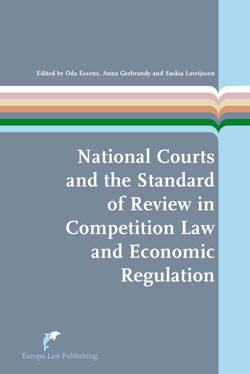
Oda Essens, Anna Gerbrandy and Saskia Lavrijssen (Utrecht University) have just edited a new book entitled National Courts and the Standard of Review in Competition Law and Economic Regulation (Europa Law Publishing). Once more, I cannot say much of this book because I am conflicted (I co-authored the Chapter on French judicial review).
Yet, the overall topic of the book is extremely interesting. In a nutshell, the whole point is to assess whether the ECJ’s Tetra Laval ruling, and the specific standard of review it encapsulates, has had repercussions on national judicial review practices. Congratulations to the editors for bringing this project to completion.
2009 Worst Antitrust Law Development Prize

With the awards season coming to a close, it is perfect timing to introduce the prize for the worst antitrust law development of the year. For the first time this year, this prize will reward a ruling, article, speech, career-move, research issue, policy initiative, or any other thing that has been undertaken, said or written that is stupid, infamous, crazy.
The prize will be awarded by the end of December 2009. Please refer to me anything that could qualify for it. I will keep all the info absolutely confidential, and will set up a jury of lawyers to award the prize (Alfonso and myself will be part of it). If you’d like to join, please let me know.
To give you an example: in 2005, a Dutch judge stated in 2005 that the Commission had exclusive competence to exempt an agreement under Article 81(3) EC (Rechtbank Zwolle-Lelystad, 4 April 2005, case n° 106345 / KG ZA 05-92, Walstock / Polar Electro). Surely, a strong candidate for this prize, had it been awarded in 2005.
(Image source: http://upload.wikimedia.org/wikipedia/en/c/c2/NobelPrize.JPG)
Call for papers
The Next Generation of Antitrust Scholarship Conference NYU School of Law January 29, 2010 Co-sponsored by NYU School of Law, American Association of Law Schools – Antitrust and Trade Regulation Section and the American Bar Association – Antitrust Section
Conference Co-organizers
Harry First – NYU School of Law
Ilene Knable Gotts – Wachtell, Lipton, Rosen & Katz Edward Cavanaugh – St. John’s School of Law
D. Daniel Sokol – University of Florida Law Levin College of Law
This conference is the first ever conference for the Next Generation of Antitrust Scholars. Much has changed in both the law and economic theory of antitrust in the past 30 years. The purpose of this event is to convene a conference of the next generation of antitrust law professors (people who started their teaching career in or after 2000) and provide them an opportunity to present their latest research. Senior antitrust scholars and practitioners in the field will comment on the papers.
Submissions are open to professors around the world. Papers will be accepted based upon the highest scores given to the 1,000-2,000 word abstract or full article submitted. Speakers who are accepted by an abstract must have a completed draft of the paper ready two weeks before the conference.
The conference organizers will not pay for any expenses for speakers or discussants. Refreshments at the conference, however, will be provided free of charge.
Please send abstracts of papers or completed drafts to nyuantitrustconference2010@gmail.com. Please email any questions about the conference to nyuantitrustconference2010@gmail.com.
The deadline for submissions is November 20, 2009. Participants will be notified by November 30, 2009.
For more see here.
No comment
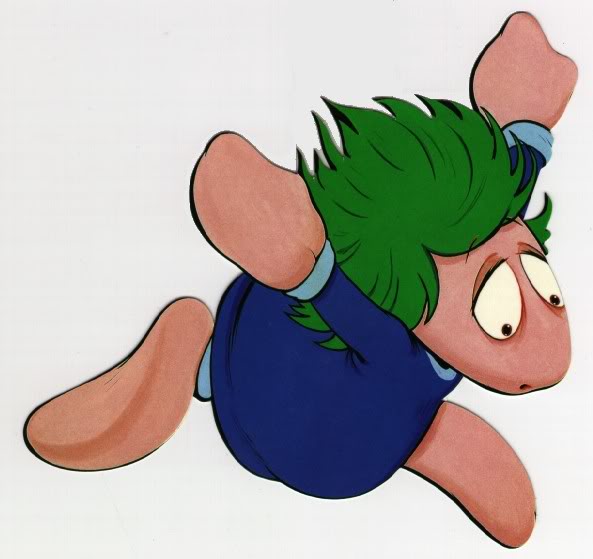
Unrelated to EC competition law, but could not resist to post it. In its conclusions under Case C-246/07, Commission of the European Communities v Kingdom of Sweden, 1 October 2009, Advocate General Poiares Maduro made a surprising reference:
Sweden did not let that decision-making process take its natural course and culminate in a Council decision either for or against the addition of PFOs to the Convention. Sweden should have engaged in the Community decision-making process until such a decision was reached, even if, politically, it felt that its efforts to achieve a common proposal on the addition of PFOs to the Convention were as doomed as lemmings heading towards the edge of a cliff.
Plain excellent. Thanks to Cedric Cheneviere for the pointer.


 Chillin'Competition