On DG Comp’s fight against tax competition and tax planning

The European Commission has in recent years been very active applying State aid rules to tax provisions and regimes. The first paper I ever wrote back in 2004 (don’t read it, it was initially done for a tax course and I was a 20 year old student…) dealt with those issues; now, ten years later, I’ve taken interest again on this subject and am currently involved in a handful of cases dealing with the taxation/State aid interface before the General Court.
The fact is that the Commission has recently undertaken a more proactive and prominent role in resorting to State aid rules to public initiatives that, in its view, facilitate aggressive tax planning. Those of you attending the 2014 Competition Forum back in February will recall that the Commission held a panel on “Taxation and Competition Policy”, in which it inquired about the role of State aid investigations in tackling tax evasion, tax fraud and aggressive tax planning (a video recording of the discussion as well as the transcripts of the speeches are available here).
Against a background of lack of political consensus on how to deal with harmful tax competition and what is seen as tax avoidance, the Commission is keen on being regarded as a proactive authority (it’s not the first time that competition policy is used to achieve results that couldn’t be attained by governments and legislators).
As part of this effort, the Commission has sent information requests to various Member States in order to assess the compliance of tax ruling practices (advanced binding decisions in fiscal matters which may allow for special treatment for some particular companies) and patent box regimes (incentives designed to encourage companies to make profits from their patents) with state aid rules. Yesterday the European Commission went through the trouble of issuing a Press release aimed at naming and shaming Luxembourg for having failed to provide information (specifically, the names of thelargest 100 companies benefitting from the patent box regime) , invoking fiscal secrecy.
I was quoted yesterday in a Bloomberg piece in relation to this news, so I though it’d be interesting to recycle my thoughts explain my views in a bit more detail here:
This is a highly sensitive area where publicly visible messages (such as yesterday’s press release) may send powerful signals and give rise to concern on the parts of governments and companies, and where playing to the gallery might therefore be considered useful at times. That’s part of the game and shouldn’t surprise anyone.
But if we’re realistic, we should realize that (for as long as fiscal policy remains within the realm of nation States), there’s a limit to what can be achieved with State aid rules, and that it’s doubtful that the current investigation, focused on patent box regimes and tax rulings, will yield any meaningful results:
– Patent box regimes have been authorized in several Member States, and the Commission has consistently accepted that they do not confer the selective advantages that would qualify them as State aid.
– With regard to tax rulings –and whereas I’m not aware of the details of the investigation- even in the event that the Commission were to find incompatible State aids, this would only have the effect of suppressing divergent tax treatment within the Member State at issue (the Commission can only identify as aid deviations from “the system of reference” provided by the State’s standard tax regime ). This would therefore not at all address the main, big picture, concern linked to divergent treatment across, and beyond, different Member States.
It’d nevertheless be interesting to follow developments on this area. The amounts that could be in play for many companies would make any antitrust fine look insignificant. Anyone in need of a lawyer? 😉
Today 10 years ago: behind the scenes of the Commission’s (first) Microsoft decision

Ten years ago today, on 24 March 2004, the European Commission adopted its landmark Microsoft decision.
Whether one likes it or not, the 2004 Microsoft decision is arguably the most prominent decision ever adopted by the Commission; it contributed to place DG Comp at the forefront of worldwide competition enforcement, particularly in IT markets.It also started a series of Microsoft’s contributions to the EU Budget (see here for our suggestions on what could be done with the 2 billion Microsoft has paid in fines over recent year 😉 ). In many ways, it marked a turning point in EU competition enforcement.
Some of you may not remember that in the days prior to the decision it all seemed like the Commission and Microsoft would strike a deal. Microsoft’s Ballmer (whose birthday is also today) flew to Brussels probably with the expectation of an amicable hand shake with the then Commissioner Mario Monti. But negotiations derailed…
The whole, very detailed and must-read account of what happened in those days was published in the Financial Times in 2006, in the days prior to the Court hearings in Luxembourg. Tobias Buck wrote a great series of two articles in which he describes the sequence of events in quite some detail and in a novelesque manner.
As any good narration, it contains an interesting character depiction of the main actors of the story, including Mario Monti (“an ascetic man who spoke with professorial precision and never departed from his written brief“), Steve Ballmer (“a ruddy-complexioned, beefy-handed extrovert known for having the loudest voice in any room he occupied and possessor of an enthusiasm and self-belief that tended to drive all before it“), Brad Smith (Msft’s General Counsel, “a cheerful 48-year-old who graduated summa cum laude from Princeton [who was] described by a Commission official as the archetypal “problem solver”), Cecilio Madero (now Deputy Director General at Comp, but back then the Head of Unit leading the charge in the case, whose “energy inspired the team of young officials working under him“), Philip Lowe (“a wiry Briton with a penchant for German poetry” who was “keen to be involved” and who took a more “flexible and creative approach“; he just retired a few months ago) and the “three officials – none of them much older than 30 when they started on the case, that formed the core of the investigating team“: Jean Huby (“a young Frenchman whose quick mind and aggressive style in turn impressed and infuriated the Microsoft team“, who “had the habit of organising 2am conference calls” and who went on to be CEO at Areva Wind, now at MAKE), Oliver Sitar (“who left the team after Mr Monti’s decision for a spell at a New York film school” and who later retuned to the Commission and now deals with other issues) and Nick Banasevic (“a soft-spoken British economist who joined from the Commission’s foreign affairs directorate and is the only one still working on the case”; the “still” in that phrase was written 8 years ago, but Nick is currently the Head of Unit in charge of internet and consumer electronics, and, in many ways, is “still” working on the case and on its ramifications.
For the complete FT behind the scenes story, click here (Part I: How Microsoft and Brussels Squared Up) and here (Part II: When Microsoft and Brussels went separate ways).
For a list of other anniversaries, check AP’s Today in History
The Spanish Google tax, or (twice) the perfect cartel

(again by Pablo Ibañez Colomo, who’s covering up for me this week)
It is always tempting for firms in sectors in decline to collude. But a cartel may not always be feasible or successful. Sometimes, major competitors have no interest in playing the game (this may be so for various reasons; competitors may have a different cost structure, may be more efficient or use a different technology). The next trick is well known. If private collusion does not work, turn to the State to enforce an official cartel or to (bluntly) eliminate competition from other players. You want a well-functioning and sustainable cartel? Make sure that anti-dumping duties are imposed on your heartless competitors from other parts of the world.
Montebourg, who has become an endless source of competition-related stories, has been quite open (I admit he is very candid, both in the English and the Spanish sense of the word) about his dislike for Free Mobile and has even taken active steps to make its life more difficult. The operator has emerged as a phenomenal maverick, bringing much needed dynamism to the French mobile market. But apparently prices are too low for Monsieur le Ministre’s taste and French consumers, as responsible and forward-looking citizens of the Republic, should pay more for their calls (he has in fact referred to the ‘excesses of low-cost’). Needless to say, the three incumbent mobile operators are not particularly unhappy about the whole deal.
The proposed Google tax in Spain provides yet another example of State-enforced collusion, albeit a more subtle one (which is not difficult given that our dear Arnaud is leading the way in the abovementioned example). Traditional newspapers struggle to survive in Spain. Advertising revenues have been in steep decline for years and media groups are heavily indebted. The solution? Charge Google, which has become the default cash-cow (and access-cow), for the use of non-significant excerpts (which, I would mention in passing, sounds oxymoronic from a copyright law perspective).
For the Google tax to work in the interest of traditional newspapers, all media, including Internet-based papers (which have become very popular in Spain) need to play by the rules. How can this be achieved? Centralise the negotiation of the compensation and, more important, make it impossible for newspapers to opt-out of the regime. That is correct. A key feature of the proposed legislation, as I understand it, is that Internet-based papers will benefit from the system even if they do not want to (and some of them have already been quite open about their opposition). The government seeks to create, in other words, a watertight cartel protecting old media models from competition and slowing down their (inevitable) decline. Who knows, maybe the new Spanish super-quango will do something about it (this is a joke).
Why do I say that this proposed legislation is twice the perfect cartel? Those who are interested, as I am, in media law and freedom of expression issues, will have quickly understood. Governmental action cannot be expected to be subject to effective scrutiny and criticism (which, going back to yesterday’s post, is a precondition for progress to occur) when the media need legislative and financial protection to survive (centralising the negotiation of the compensation makes traditional newspapers even more vulnerable to pressures from the executive).
What makes a great teacher?
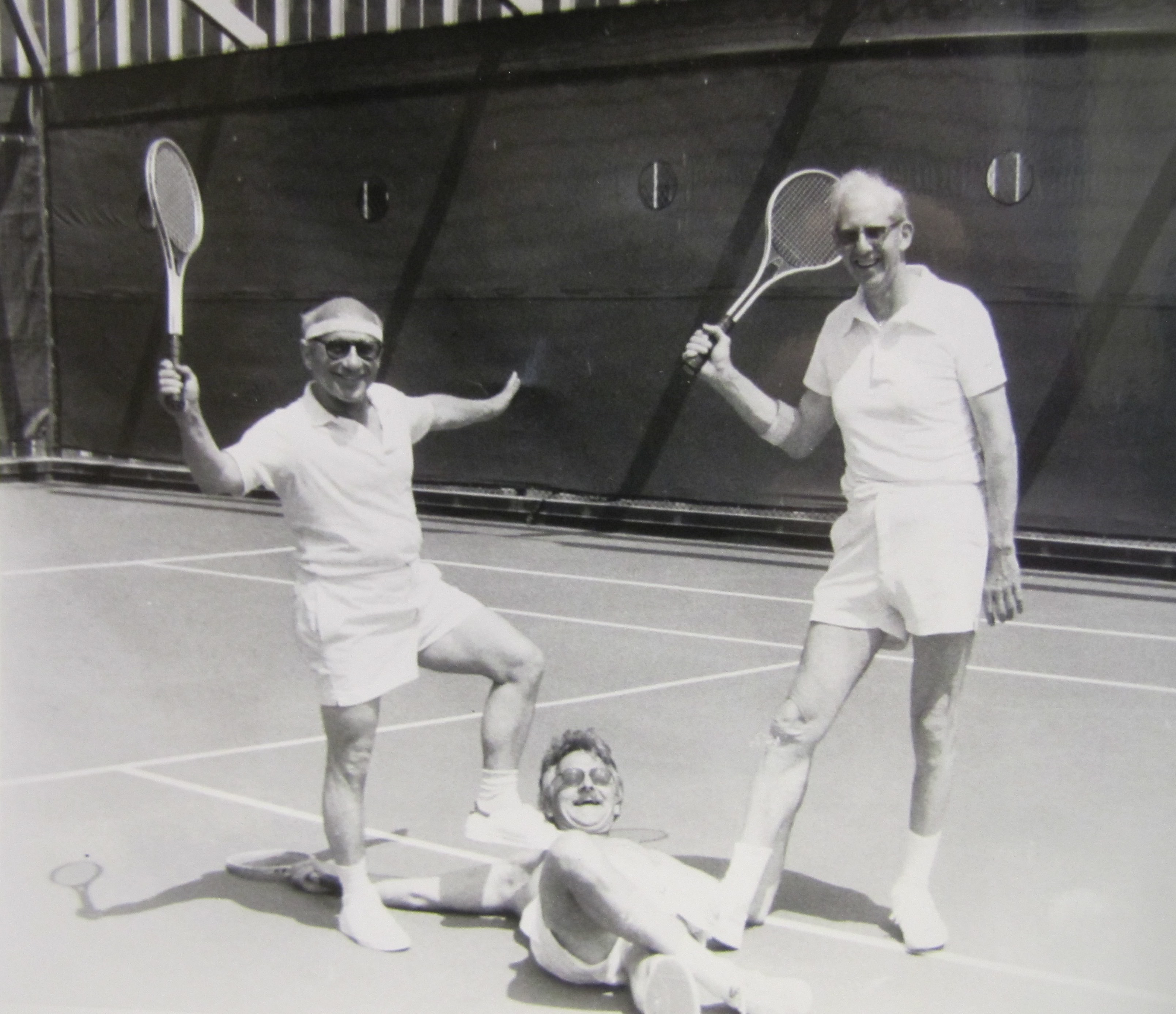
(by Pablo Ibañez Colomo)
The post Alfonso published last Monday made me think. It was controversial, but also a goldmine of follow-on topics. Call me oversensitive, but I could not help thinking he was targeting law teachers when he regretted the fact that fresh young graduates tend to be very critical of the case law without having always reached conclusions on their own. After a bit of back and forth, I thought I would write a post on what I think makes a great teacher, thereby mirroring Alfonso’s own recent post on what makes a great lawyer.
I will start by quoting some giants in our field, pretty much like Alfonso did. The intellectual ant that I am likes to learn from them and always bears their lessons in mind. To make it balanced (and thus to please Alfonso’s desire for neutrality), I will choose a lawyer and an economist, the first from Harvard and the second from Chicago.
In the Harvard Law Review issue dedicated to the memory of Phillip Areeda, Justice Stephen Breyer explained that the greatest antitrust lawyer of all time ‘did far more than simply teach antitrust law. [His casebook] showed the specialists how to blend economics with law (“economics informs the law”, Phil said), as it teaches both subjects together in plain and simple English. It showed the profession how law and lawyers can benefit from a knowledge of other disciplines. It tied this recondite specialty back to general legal principle. And it placed dramatically before the students’ eyes a clear demonstration of the necessary connections between intelligent analysis, law, and the more striking beneficial effects for society that law, when practiced properly, can help us all achieve’.
The Journal of Political Economy, one of the top economic reviews, and edited at Chicago, dedicated an issue to the memory of George Stigler. Thomas Sowell offered a student’s view on the Nobel Prize winner (and another one of my all-time favourites). When discussing the way in which Stigler approached the teaching of the economic side of our discipline, Sowell explained that ‘[f]ew, if any, areas of economics have as much confusion, circular reasoning, definitional traps, and fervent nonsense as industrial organization. It was the perfect place for Stigler to conduct a Demolition Derby. Nor was he hesitant about the task. Theories like “monopolistic competition” and “countervailing power”, which were treated reverently at Harvard (where they originated), were eviscerated by Stigler’. According to Sowell, ‘[w]hat Stigler really taught, whether the course was industrial organization or the history of economic thought, was intellectual integrity, analytical rigor, respect for evidence – and skepticism toward the fashions and enthusiasms that come and go’.
What do we get from these quotes? I would say the following:
- A great teacher knows the stuff inside out: It is true that not all great researchers are good teachers. But without being at the top of the discipline, it is impossible to be a great teacher.
- A great teacher necessarily conveys a view of the world: Somebody who has thought long and hard about a particular discipline necessarily comes up with strong views about it. It is inevitable that this (non-neutral) view of the discipline is conveyed when teaching students. There is nothing wrong about it. I would even say that this is what ideal university teaching is all about. Students are interested not only in the substance, but in how somebody, detached from commercial interests and focused only on seeking the truth, sees the discipline.
- A great teacher takes students very seriously: Students need to be stretched and learn to think for themselves, and this is in no way in contradiction with the above. I fully agree with Alfonso when he suggests that a teacher who indoctrinates students is an absolute failure. The challenge for a teacher is to make students discover and understand for themselves the logic underlying the discipline, the crucial transversal issues that cut across topics.
- A great teacher does not take her/himself too seriously: The teaching of a particular discipline should be put in perspective. For many, if not the majority of students, a particular subject may never be useful in practice. Therefore, teaching should be oriented towards contributing to a well-rounded education. And those of us teaching competition law are immensely fortunate: when taught properly, it has an awful lot to offer to students, even if they go on to do something completely different.
- A great teacher shows respect for ideas, not for institutions or authority: I would say this should be (and has been) the central contribution of universities to society. Truth is to be sought without prejudices and without respect for rank or authority. Nonsense is nonsense irrespective of whether it comes from a first year undergraduate or from the highest of courts. Law students in particular should learn that there is nothing mystical or sacred about our legal institutions, even if they are populated by very intelligent and experienced women and men (‘only a brilliant mind can make a brilliant mistake’, Stigler liked to say of past economists).
And now I leave you. I have to teach in an hour.
[Pictured above are two evil Chicagoans (Friedman and Stigler) after a discussion with a colleague].
Ads

On 20 March the Global Competition Law Center will be holding its 68th lunch talk. The topic is the 2014 Communication on the notion of State Aid, and the speakers Vittorio di Bucci (Director at the EC’s Legal Service), Nicola Pesaresi (Head of Unit, DG Comp) and my colleague/boss José Luis Buendía (Partner at Garrigues). You can register (this is an interesting, brief and cheap one: 30 euros) via this website.
The Institute for European Studies at the VUB in Brussels will be starting a series of lectures on the role of national competition law and national competition authorities. The inauguaral lecture will be delivered by Alexander Italianer (Director General at DG Comp) on 21 March at 12. More info is available here.
Also on 21 March there will be a seminar on the application of competition law by judges and arbitrators (in Madrid and in Spanish, though), organized within the framework of the course that Luis Ortiz and myself co-direct there.
On 3 April ERA will be hosting an afternoon workshop on Two sided markets in merger and abuse of dominance cases here in Brussels featuring Thomas Graf (Cleary Gottlieb), Lars Wiethaus (E.CA Economics) and myself. This is not to be missed. The program is available here: Two Sided Markets in Merger and Abuse of Dominance Cases (ERA)
The 21st St.Gallen International Competition Law Forum ICF (“Current issues and developments in competition law“) will be held on May 15th and 16th 2014. Even though for some odd reason we haven’t been invited to speak there (which obviously lowers the quality of any event 😉 ) we acknowledge that the speaker line-up is otherwise quite impressive. Further information including a detailed programme are available on the conference website: http://www.sg-icf.ch/.
Last but not least, the book Comparative Private Enforcement and Collective Redress Across the EU, edited by Barry Rodger, is just out. Looks quite promising.
P.S. And speaking of ads, I’ve just checked Chillin’Competition’s ad-related earnings and we get approximately $4 per month (which is slightly below my hourly rate) for approximately 25,000 monthly visits. We have high aspirations, though, and, I tell you, one day we’ll be getting enough to pay for at least two monthly beers.
Antitrust quote of the other day and more on the evolution of the law

Our last post revolved around a well-known quote from Philip Areeda that explains the evolution of the law in terms of judicial inertia/judging by catchphrase. Areeda’s explanation has the virtue of verbalizing brilliantly in simple and intuitively correct terms a human factor that explains why some legal rules may at times evolve beyond the limits of their logic. [To be sure, as noted elsewhere his explanation certainly applies not only to theories that expand liability, but also to those that limit it; in fact, the example I used may arguably refer to the latter category].
In my view, the idea underlying Areeda’s theory explains many other behaviors and situations in areas beyond competition law. At the end of the day, it is about people adopting a simple pre-established view or prism that makes further reflection unnecessary which, in turn, makes the process of forming a view much easier. We do that all the time in many other fields, politics being one of them (if, for instance, one dogmatically assumes that State intervention is always bad (think of Tea Partisans…), then one has a simplistic solid view on many complex specific instances without the need for further reflection; yep, this is one of my recurring themes). Uncertainty and doubt feel troublesome, but certainties -even when mistaken- are comfortable, save a lot of effort and provide seemingly confident opinions.
Judges may at times certainly favor simple pre-defined solutions uncritically (Areeda blamed the fact that there were “too few judges experienced enough with the subject to resist” the temptation of applying previous rulings uncritically), but they’re not the only ones. Think, for instance, of a group which, by definition, is not experienced enough with the subject to resist the temptation to assume stuff uncritically: students.
In the past few days I’ve had various interactions with students from various backgrounds, and I have again been reminded of how new generations of competition lawyers almost universally coincide in the view that the case law and the decisional practice (particularly, but not exclusively, in the domain of Art. 102 TFEU) is fundamentally flawed, absurd, “ordoliberal” and almost crafted by lunatics. But once you scratch below this initial thought, it seems that for some resason students often feel it must necessarily be THE right answer even if they can’t always explain why (which is ironic when what’s criticized is the alleged lack of analytical content in current rules and doctrines). To be sure, I’m not saying that the case-law is perfect (which it probably isn’t, but one needs to understand it and to reflect on it in order to have ideas on whether and how it is to be improved), nor that this is the case of all students, nor that professors don’t do their job right (although not all of them are Areeda either), but I like it better when I see young lawyers who have reasoned doubts than when I see them with unreasoned certainties (I, for one, have very few competition law-related certainties; in fact, I’m not even sure of whether the criticism I’m expressing here is entirely justified). And false certainties may be more common in relatively complex yet non-scientific disciplines, like ours.
Drop by drop, this process whereby some people learn formed opinions instead of the tools with which to form them might also have a crucial impact on the evolution of the law. As new generations get to higher roles (clerks, then Judges, etc), their preconceptions may follow. And, as Areeda noted, it wouldn’t be until their expansion became ridiculous that the process of cutting back would begin (perhaps engendering an analogous process holding contrarian views).
Antitrust quote of the day and the evolution of the law on refusal to supply

In 1989 late Philip Areeda (picture above) wrote one of the most influential and cited antitrust pieces in the history of the discipline: Essential Facilities: An Epithet in Need of Limiting Principles, 58 Antitrust L.J. 841. I recall my first reading of this article as student at the College of Europe and how I truly enjoyed it (at roughly the same time I remember having felt the same about Joseph Weiler’s The Transformation of Europe) (yes, those were two good indicators of geekishness). From time to time I’ve gone back to that piece from Areeda, and as a fan of pendulum-based evolutional/historical theories, I’ve quite often cited one particular excerpt therein; here it is:
“As with most instances of judging by catch-phrase, the law evolves in three stages: (1) An extreme case arises to which a court responds. (2) The language of the response is then applied -often mechanically, sometimes cleverly- to expand the application. With too few judges experienced enough with the subject to resist, the doctrine expands to the limits of its language, with little regard to policy. (3) Such expansions ultimately become ridiculous, and the process of cutting back begins“.
I think this captures the evolutionary process of the law in many other areas of law in general and of competition law in particular. To mention only one among many possible examples, I used it some days ago to explain the evolution of the notion of the “single and continuous infringement” under Art. 101 TFEU.
There’s an interesting additional thought in relation to this quote. A few years after this piece was published the ECJ ruled on Magill, and I think it’s not at all unreasonable to say that Areeda’s piece was pondered by the Judges in that case (see, and cast your vote, here). Now, if you think about it, Areeda in many ways anticipated how the evolution of the law on refusal to supply would discur in Europe:
(1) Magill was a extreme case to which the Court responsed with a reasoning that was very much tailored to the facts at issue (a point often forgotten); (2) The language of the response was then applied -possibly mechanically, as an illustration of judidicial inertia (not to be confused with stare decisis)- to other factual settings and, with too few judges experienced enough with the subject to dare to nuance it (?), the Magill criteria consolidated in cases like Bronner and IMS. (3) Their consolidation as the sole relevant criteria ultimately became perhaps unreasonable and inconvenient, which led to an attempt to nuance them [the Commission’s -in my view very reasonable- claim in the first Microsoft Decision that “there is no persuasiveness to an approach that would advocate the existence of an exhaustive checklist of exceptional circumstances and would have the Commission disregard a limine other circumstances of exceptional character that may deserve to be taken into account when assessing a refusal to supply.” (para. 555)].
As you know the the General Court did not follow the Commission on that particular point, not because it disagreed, it just didn’t need to rule on that point because it thought the Magill criteria were in any event fulfilled. That was done with the aim of minimizing the chances of getting quashed in an appeal and at the cost of some legal contortionism. In my view, it would have been desirable for the Court to assess whether all “extraordinary circumstances” to identify a refusal to suppy could or not be subsumed within the Magill criteria. Instead the Court gave a practical illustration of how its hammer can make square pegs fit round holes (an exercise that was repeated a few months later in BUPA re the Altmark criteria).
For a most interesting discussion on the legal contortions in Microsoft featuring some of the people who were actually associated to the case see the 16 comments to Nicolas’ post on The Magill-IMS Re-animator.
Supermarket power

Some of the tastiest issues in current competition law arise in the food sector. In fact, as you’ll see in a second, some of those issues are the same ones that we often face in other dynamic two-sided markets that generally attract more public attention.
At Chillin’Competition we’ve always paid our fair share of attention to food distribution and groceries (in fact our first posts on endives still ranks among out most read ever (actually, when you search for Chilling Competition on Google the word endives appears immediately in the autocomplete box, which may seem a bit odd). Today, we’re happy to include a “sponsored link” to the work done on this subject by a good friend of ours.
Javier Berasategi (former lawyer at Stanbrook in Brussels, former President of the Basque Competition Authority –yes, there is one-, surfer, runner, alpinist and overall a quite unique guy now running a solo legal practice) has authored an also quite unique work on supermarket power. As always, it’s original, thought provoking and perhaps a bit controversial.
But regardless of whether one agrees or not with the analysis and the suggestions in it, its approach is certainly interesting; here’s the abstract:
“This paper analyses the sources of supermarket power vis-à-vis shoppers and independent brands. This power transforms leading supermarkets into vertically-integrated competitive bottlenecks that are able to restrict competition between brands (including their own ones) and reduce consumer welfare. However, competition enforcement has failed to address their bottleneck role and the negative consequences of their practices on dynamic competition (i.e., a market where the competitive process fosters innovation, quality and variety), the ultimate goal of competition policy. This paper proposes complementary regulatory and competition remedies to ensure that access to supermarket platforms and competition within them promotes fair dealing, consumer welfare and economic growth. It draws inspiration from the remedies enforced in other competitive bottlenecks such as CRSs, mobile communication networks, internet service providers, internet search engines and credit card networks”.
[It’s interesting that the paper brings together groceries and tech stuff, particularly following Nicolas Sarkozy’s cautionary words about the perils of comparing endives to Apple (see here). Although, to be fair, Kevin Coates had done a similar link before with his “exploding banana hypothesis” (I’m saying this to force him to explain it on 21st Century Competition …)].
The report, titled Supermarket Power: Serving Consumers or Harming Competition, is available here Take a look, it’s only slightly above 350 pages.
Further work on this subject will also be made available through a new website: http://www.supermarketpower.eu/en/
P.S. The picture may be subject to copyright, but I deserve full credit for having found an image of a supermarket actually called power.
What makes a great lawyer?

In the course of a conversation last weekend someone asked me about who I thought were the best competition lawyers in Brussels. Not that I’m going to share my thoughts on that here because it wouldn’t be elegant to use the blog for self-publicity 😉 it would be unfair as, aside from the subjectivity inherent to the reply, I’ve only been exposed to the work of a limited number of people. Our conversation then shifted to what is it that makes a great lawyer, and that’s something that I thought could make an interesting subject for a blog post (it’d been a while since we didn’t post random ruminations).
To be sure, there’s no perfect lawyer for all situations, areas of practice and clients, but in any event the ideal recipe should probably incorporate a balanced doses of multiple ingredients, most of which aren’t taught, or at least not at law schools, and often not even at most law firms:
Typical (bad) legal education mainly centers on developing and evaluating brain power. In my own country as well as in other continental systems this too often means plain memory. In anglosaxon systems (and to some extent in the German system too, or so I’m told) logic, analysis and writing receive more attention. And once you’re out of university some people will measure how of a good lawyer you are internally in terms of billable hours (we’ve already dealt with that at length before), and externally in terms of which firm employs you and your hourly rate (in my experience very imperfect proxies too).
But, in reality, there are a wide array of intangible abilities or skills that are extremely hard to assess and even to perceive, but that, fortunately, can be developed and that are, in my view, what make the difference. I refer to things like empathy, integrity, creativeness, common sense, communication and people skills, diligence and responsibility, perfectionism, the ability to question everything starting with oneself, availability, hunger/ambition (to learn and to improve), commitment (often confused with the belief that success deserves absurd sacrifices), marketing and selling, loyalty, reliability, curiosity, passion, experience, good judgment, ability to prioritize (which has always made me distrust advice from lawyers who seem not to get priorities in their own life straight; or maybe I’m the erred one??), attention to detail, the ability not to lose the forest for the trees, having a practical business-oriented mind, being motivational and fair to colleagues, calmness, prudency, confidence (in your ability to improve, not the false security of thinking you already master everything), and I’m sure I’m forgetting many others.
Of course, there are many people that make partner at BigLaw firms without many of these, in which case some will consider that they are “successful”, “rich” and “hence” great lawyers. I would disagree because, lawyering being a service, excellent lawyering should be measured by its impact on others, not on the lawyer.
As I said earlier, to me, the ideal probably lies in a right combination of the skills outlined above, or perhaps in their relentless pursuit. But if I had to choose the single most important ability to have in a lawyer, I’d say the ability to understand people.
By people I mean clients, colleagues, decision-makers (judges, authorities, etc), opponents as well as the processes and interactions within and among them. And by understanding I mean trying to work inside their mind to know or guess -sometimes even to help them know or guess- what they want, what moves them and how they are likely to move and be moved. Knowing the law will provide you with a basic knowledge of the common framework you all move in, but then you need a lot of listening and a bit of intuition.
The above is only my Saturday morning take at a question without an answer, and, frankly, it’s highly unlikley that an ultra-specialized 30 year old lawyer who chose EU competition law for a career will get it right… So, it’s your turn: what is it that makes a great lawyer?
P.S. Pictured above is Atticus Finch, the legal hero from To Kill a Mockingbird, who recurrently tops up every list of fictional lawyers. His domination is so uncontestable that the ABA had to come up with this list of The 25 Greatest Fictional Lawyers (Who Are Not Atticus Finch)
Two-sided markets in merger and abuse of dominance cases

When you have a 8 9 10 to 9 ? job it’s often quite hard to do things on the side, and, between us, it may not make much sense that many of them are work-related. Only this month, and in addition to ordinary work -which included 5 Court deadlines- and blog posting, I had to lecture in Madrid about 102 (intro, tying and refusal to deal in 3 hours), participate in the panel on interop at AIJA’s antitrust and tech conference on a Saturday morning, finish and present a paper on evidence in cartel cases, and lecture -next Friday- for 6 hours at the Brussels School of Competition on procedure. And since I thought it would be the quietest month in sight, I took a week off for my postponed Christmas holidays (not very smart, no). Overall I spent almost as much times in planes (11 flights this month) as in the office, and had to compensate at the cost of sleeping hours.
Why should you care about all this? You shouldn’t; this is all to explain why during this whole month I kept on swearing myself that -blogging aside- I would refuse any non-work projects for the next few months. Well, said and not done:
On 3 April ERA will be hosting an afternoon workshop on Two sided markets in merger and abuse of dominance cases here in Brussels. They couldn’t have chosen a more interesting topic, so I gladly accepted to chair it. Not only is the subject matter a fascinating one, it will also be dealt with by two great panellists: Thomas Graf (Cleary Gottlieb) and Lars Wiethaus (E.CA Economics).
The program is available here: Two Sided Markets in Merger and Abuse of Dominance Cases (ERA)


