Archive for October 2009
Slides of the 40th GCLC Lunch Talk – Verticals Review
Two weeks ago, the GCLC held its 40th Lunch Talk on the review of the rules applicable to vertical agreements. I attach the slides of C. Rakovsky and S. Kinsella.
New GCLC Working Paper
Dan Sokol (University of Florida), has a new GCLC Working Paper (02/09) entitled “Limiting Anti-Competitive Government Interventions That Benefit Special Interests“. Timely paper. Public restrictions of competition are indeed an under-researched area of competition law. In addition, in the current post-crisis context, governments are increasingly tempted to make use of heavy-handed regulatory instruments.
Should you have a draft paper that you would like to submit for publication in the GCLC WP series, please send it to me.
Why this Blog (and who I am)?

This blog has a dual purpose. First, it aims at providing refreshing, original, news and comments on competition law and economics. Second, this blog aims at disseminating the research and activities undertaken by the LLM in competition and IP law of the University of Liege (ULg) and by the Institute for European Legal Studies.
This blog has two specificities:
- It is user-oriented. Please do not hesitate to post comments, suggest improvements, etc. I will occasionally post polls, or questions, to which readers are invited to answer if they find the issue interesting. Please note, however, that harsh and derogatory language is strictly forbidden on this blog.
- It will host guest bloggers. Our first guest blogger will be Alfonso Lamadrid, a good friend and former Garrigues associate, now following a LLM at Harvard.
Now, some information about me: I am a full-time Lecturer (“Chargé de cours”) in competition law and economics at the Institute for European Legal Studies (IEJE) Liege Law Faculty and co-director of the IEJE (www.ieje.net). I hold a PhD (thesis subject was on Oligopolies and tacit collusion in EC competition law, April 2007), a LL.M in European Law with Highest Honors (College of Europe, Bruges – 2001-2002) and a DESS in European Business Law (University Paris II, Panthéon Assas 2000-2001). From 2005 to 2009, I was an associate at Howrey LLP, Brussels. In 2008, I was awarded the Jacques Lassier Prize by the International League of Competition law. I was visiting researcher at Harvard Law School (January 2006) and have been since 2004 research Fellow of the Global Competition Law Centre and Secretary of the Scientific Committee, College of Europe, Bruges. I have also worked as a clerk at the Commercial Chamber of the French Supreme Court. My main research interests cover Abuse of Dominance, Belgian and French competition law, Economics of Competition Law, Procedural issues and Judicial Remedies, Network Industries and International Antitrust. I am finally a senior editor of the online magazine Global Competition Policy.
You can contact me at: Nicolas.petit@ulg.ac.be
(Image possibly subject to copyright. Source: see link here)
Hardcore Legal Interpretation
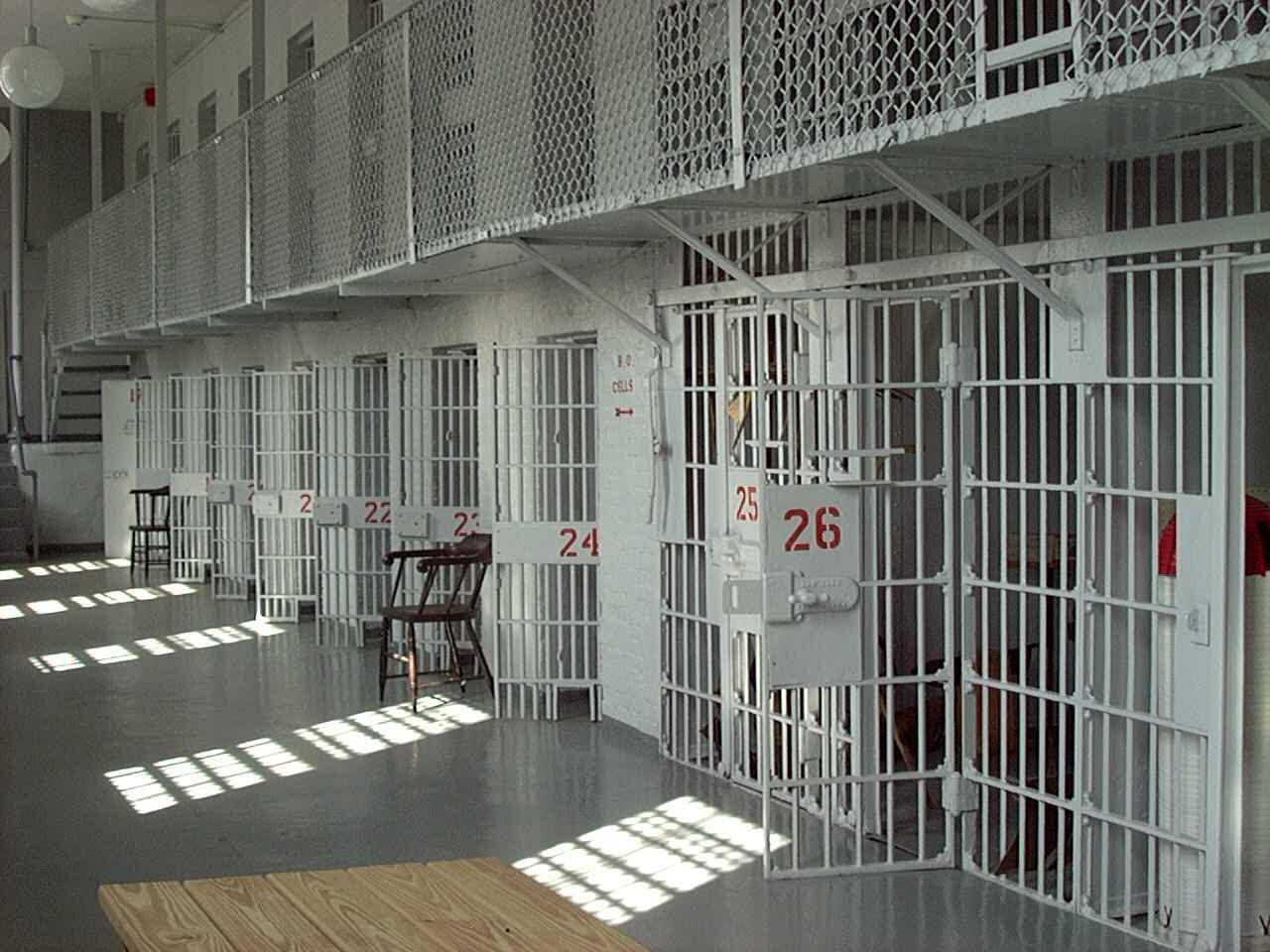 In its proposed Vertical Guidelines, the Commission’s interpretation of the concept of a “hardcore restriction” at §43 seems somewhat at odds with (i) the letter and spirit of Article 81 EC and (ii) traditional case-law:
“Including such a hardcore restriction in an agreement gives rise to the presumption that the agreement falls within Article 81(1). It also gives rise to the presumption that the agreement is unlikely to fulfil the conditions of Article 81(3), for which reason the block exemption does not apply. However, this is a rebuttable presumption which leaves open the possibility for undertakings to plead an efficiency defence under Article 81(3) EC in an individual case. In case the undertakings substantiate that likely efficiencies result from including the hardcore restriction in the agreement and that in general all the conditions of Article 81(3) are fulfilled, this will require the Commission to effectively assess – and not just presume – the likely negative effects on competition before making the ultimate assessment of whether the conditions of Article 81(3) are fulfilled“.
Four points here.
First, in essence, firms are now deemed guilty before being proven innocent. Whilst this may be ok in so far as clearcut hardcore restrictions are at stake (e.g., market sharing), the case-law shows – and the vertical guidelines contain – many examples of non-direct, hardcore, restrictions, which can only (or not) be deemed to be hardcore so following a careful, first, assessment under Article 81(1) EC: dual pricing, rebates conditioned on observance of recommended price, etc. Now, here’s my question: how can one reconcile the need for such a preliminary assessment under Article 81(1) EC, with the Commission’s assertion that Article 81(3) EC comes first?
Second, under the applicable 81(3) EC principles, efficiencies must be quantified and meet many other drastic conditions. This, in practice, implies that under the current standards, no firm can seriously articulate an efficiency defense, so that the principle that you can save hardcore restrictions will, de facto, remain dead letter. See here for more on this.
Third, saying that the appraisal process under Article 81 EC is binary (Article 81(3) EC for defendant, then Article 81(1) for Commission) is overly simplistic. As a matter of principle, there are at least five steps: (1) Commission proves 81(1) EC; (2) Defendent challenges 81(1) EC; (3) Commission meets objections and proves 81(1) EC; (4) Defendent proves 81(3) EC; (5) Commission dismisses/accepts the 81(3) EC defense. The Guidelines recognize this… in a footnote: “What is described here as two distinct legal steps may in practice be an iterative process where the parties and authority in several steps enhance and improve their respective arguments”. As nicely coined by A. Font Galarza at Wednesday’s conference, does the method whereby important principles are relegated to footnotes meet the EC standards of “Better Regulation”?
Fourth, is this also true from a self-assessment perspective (the Commission’s perspective here is about administative proceedings), that firms must go first through the lengthy, cumbersome, Article 81(3) EC assessment?
Will come back with more on another intriguing issue: buyer-related vertical restraints.
(Image possibly subject to copyrights. Source: http://www.houstoncriminallawjournal.com/uploads/image/Houston,%20Harris%20County%20Jail(1).jpg)
My Move
 From 1 October onwards, I will no longer work with the law firm Howrey LLP. I will dedicate 100% of my time to teaching and research at university.
I spent three great years at Howrey. Thanks to its multicultural membership and to Trevor Soames’ management, the Brussels office is an incredibly “cool” place. Now, I accumulated too much frustration not being able to undertake new research and projects (like this blog). As I often say, there is a paradox out there: the US Brussels-based law firm is in a sense far less entrepreneurial than the big, French speaking, university.
You can now reach me at Nicolas.petit@ulg.ac.be


 Chillin'Competition

.jpg)