Archive for December 2009
Desk Cleaning

Massive desk cleaning operations are currently taking place in Brussels.
Following its decision to close proceedings against Qualcomm a few weeks ago, the Commission closed last week infringement proceedings against Rambus, and did just the same today in the Microsoft case. In the latter two cases, the Commission accepted commitments submitted by the firms under investigation. In both cases, the Commission adopted an Article 9 decision, which renders those commitments binding.
Again, I was right a few weeks ago.
(Image possibly subject to copyrights: source here)
The Orwellian Numbering of Article 101 TFEU
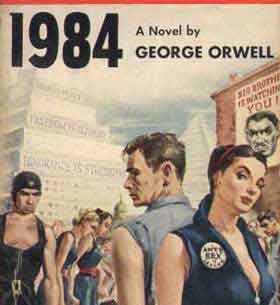
For all Orwell’s 1984 fans, the new numbering of former Article 81 EC involves a puzzling, unfortunate, coincidence. In Orwell’s brilliant novel, Article Room 101 is “a torture chamber in the Ministry of Love in which the Party attempts to subject a prisoner to his or her own worst nightmare, fear or phobia“.
As argued by many competition practitioners lately, the fact is that applying Article 101 TFEU – and in particular, Article 101(3) TFEU – is akin to entering into a room of intellectual contorsions, risks and uncertainties of Orwellian magnitude. Thanks to my colleague Christian Bergqvist for the pointer.
(Image possibly subject to copyright: source here)
We Can’t Talk about Pricing…

Skimming through some US antitrust cases I came across an interesting passage that I confess I’d never read before (it’s one of those ‘smoking gun’ sort of things that somehow always catches our eye). This is an unaltered excerpt of the 5th Circuit’s Opinion in US v. American Airlines 743 F2d 1114 United States v. American Airlines Inc L
“For some time before February 1982, American and Braniff were competing fiercely for passengers flying to, from and through Dallas Fort Worth, by offering lower fares and better service. During a telephone conversation between Robert Crandall, American’s president, and Howard Putnam, Braniff’s president, the following exchange occurred:
Crandall: I think it’s dumb as hell for Christ’s sake, all right, to sit here and pound the * * * * out of each other and neither one of us making a * * * * * * * dime.
Putnam: Well– Crandall: I mean, you know, goddamn, what the * * * * is the point of it?
Putnam: Nobody asked American to serve Harlingen. Nobody asked American to serve Kansas City, and there were low fares in there, you know, before. So–
Crandall: You better believe it, Howard. But, you, you, you know, the complex is here–ain’t gonna change a goddamn thing, all right. We can, we can both live here and there ain’t no room for Delta. But there’s, ah, no reason that I can see, all right, to put both companies out of business.
Putnam: But if you’re going to overlay every route of American’s on top of over, on top of every route that Braniff has–I can’t just sit here and allow you to bury us without giving our best effort.
Crandall: Oh sure, but Eastern and Delta do the same thing in Atlanta and have for years.
Putnam: Do you have a suggestion for me?
Crandall: Yes. I have a suggestion for you. Raise your goddamn fares twenty percent. I’ll raise mine the next morning.
Putnam: Robert, we–
Crandall: You’ll make more money and I will too. Putnam: We can’t talk about pricing.
Crandall: Oh bull * * * *, Howard. We can talk about any goddamn thing we want to talk about.
Putnam did not raise Braniff’s fares in response to Crandall’s proposal; instead he presented the government with a tape recording of the conversation.
(Image possibly subject to copyrights: source here)
Antitrust Figure of the Day – Quantifying Rebates

Preliminary observations: 1. The author of this blog hates sweeping, unsupported, antitrust law statements. 2. In the, past, the author of this blog has made a lot of work on rebates under Article 82 EC.
The mainstream scholarship on rebates often contends, without ever bringing quantitative evidence to this effect, that rebates, which are the essence of competition, significantly lower prices to customers. They ought therefore to be deemed pro-competitive. In turn, the recent scholarship argues, without much nuance, that the decision-making practice of competition authorities and, in particular, of the European Commission, would be overly restrictive. The case-law under Article 82 EC would allegedly chill competition in prohibiting a significant number of dominant firms’ pro-competitive rebates. A related assertion is that rebates are arguably pervasive. However, no robust evidence is ever given in support of the view that most industrial sectors have recourse to rebates.
Against this background, I recommend the reading of Matthew A. Edwards’s refreshing “The Law, Marketing and Behavioral Economics of Consumer Rebates”, (2007) Vol 12:2, Stanford Journal of Law, Business & Finance, 362. Whilst conceding methodological and informational problems, Edwards’ paper seeks to provide hard facts, and references, in support of the contention that rebates are pervasive, and overall entail significant price concessions to consumers. A few excerpts:
“During the past two decades, consumer rebates have become a major marketing method. Although exact figures are difficult to ascertain, estimates of total rebate offer volume now range from $4 to $10 billion per year. According to oneconsulting firm, over 80% of consumers participated in rebate offers in 2004,redeeming over five billion rebates worth more than $3 billion. The prevalence of rebates within the consumer electronics and high-tech products markets is particularly pronounced—one recent industry study indicated that 25% of all computer hardware product purchases, and almost 50% of personal computer sales included rebate offers”.
Antitrust goes political
In the global world we live in, US parliamentary representatives now directly write to the EU administration requesting it to speed up the review of business transactions involving US firms (!).
On 24 November, John Kerry and Orrin Hatch took the lead of a group of 59 Senators to request the EU Commission to quickly close its review of the Oracle/Sun Microsystems merger, approved earlier by the DoJ. Obviously, this is no more than political gesticulation. Yet, the context surrounding this letter exhibits again the GE-Honeywell-reminiscent “patronizing rethorics” which pollute transatlantic cooperation between competition agencies and, incidentally, affect adversely the interests of the firms under review.
In a nutshell, the Senators argue that since US agencies found no antitrust issue, it would be odd for the EU to raise competition concerns. The words used by Senator Hatch are crystal-clear:
“This transaction has been thoroughly reviewed by the United States Department of Justice, which has decided to take no action. Therefore, I hope the EC will quickly conclude their investigation into this transaction.”
Of course, there are many compelling reasons why an additional review of the EU is legitimate. The US review deals with the merger’s effects only on US territory, and not in the EU. In addition, one may argue that the intervention of a new agency is actually a good thing. First, the US agencies may be wrong on the substance. Second, the US may also be biased when it comes to a transaction involving US firms active on global markets.
Overall, rather than writing to an external agency on which they have no legal influence whatsoever, US Senators should seek to use their legislative powers (if my recollections are correct, they have a say on external relations) to devise a credible US position re. the way forward in terms of global antitrust.
This is also – although slightly different – the position of Commissioner Kroes, who urged the Senators to focus on other, more important, issues… As reported by the AP:
Kroes slammed the senators for “interfering in someone else’s decisions rather than taking the most important decision that you have control over: improving health care.”
“Is this really more important than fixing your own health care system?” she asked in a speech, adding that the senators needed to get their priorities straight.
I paste below the official text of the letter.
“As fellow government officials committed to the principle that competition is the cornerstone of healthy economic growth, we would like to take this opportunity to share our thoughts with you as to the proposed acquisition of Sun Microsystems, Inc. by Oracle Corporation. In addition, due to Sun Microsystems’ deteriorating financial condition and the possible negative effect on employment of the company’s workforce, we respectfully request the European Commission expedite the completion of its investigation into this transaction.
The United States Department of Justice, after an intensive investigation, closed its inquiry into this transaction without taking any action. In fact, the Justice Department did not find documentary evidence that this acquisition would harm competition. We recognize that the European Commission has a sovereign right to thoroughly investigate transactions where corporations utilize the European Union’s marketplace. Further, it is our understanding the Commission is concerned about competition in the database software market. However, we have been informed by Sun Microsystems that their subsidiary, which competes in this specific market, generates only €17 million in revenue and that the same market has competitors with capitalizations of tens of billions of Euros.
Unfortunately, Sun Microsystems’ financial position has become more precarious and the Commission’s inquiry has continued. Some have raised concerns over the company’s ability to continue to employ its thousands of workers. Accordingly, we respectfully request the European Commission complete its investigation of this transaction as quickly as possible.
Thank you for your attention to this matter“.
(Image possibly subject to copyrights: Source here)
Lost in Semantics

Pursuing the “Lost in” post series initiated a few weeks ago, and chasing possible inconsistencies in EU competition law, I recently noticed that Regulation 2658/2000 and its accompanying set of Guidelines on Horizontal Cooperation Agreements use a different wording to regulate the – almost – same categories of horizontal agreements.
Regulation 2658/2000 block exempts “specialisation agreements“. This expression is in turn defined under Article 1 of the Regulation. Pursuant to this provision, specialisation agreements cover:
“(a) unilateral specialisation agreements; or (b) reciprocal specialisation agreements; or (c) joint production agreements”.
Now, let’s turn to the Guidelines. At §§78 and following, the Guidelines refer generally to “production agreements” rather than to “specialisation agreements“. This, in and of itself, is already slightly confusing as what was a sub-example in the Regulation (see (c) above), becomes a generic type of agreements. The Guidelines further blur the dividing lines defined in the Regulation in stating that “production agreements” cover (§79):
“Joint production agreements; … unilateral or reciprocal specialisation agreements; … and subcontracting agreements (emphasis added)”…
The bottom line: messy semantics do not make good law.
(Image possibly subject to copyrights. Source here)
Chilling Competition’s Editorial Policy – A Clarification

It has been suggested yesterday in a comment to a previous post that the views expressed on this blog may be influenced by the fact that our previous employers represented specific interests in competition cases. Since this blog in no way constitutes a forum for pushing client related arguments, the author of the abovementioned comment, Alfonso and I have agreed to eliminate it.
As the authors of this blog, we nevertheless believe it is appropriate to make certain clarifications regarding Chilling Competition‘s general editorial policy. While in the past, both of us surely benefited from conversations with our former colleagues over pending competition law issues, we no longer are related to those law firms anymore.
In addition, whenever Alfonso or I have been personally involved in a case commented in the blog, we have always made that clear, applying a full disclosure rule.
The views expressed in all posts are thus strictly personal. They may be shared by clients of our former employers, but they may as well not be in line with their interests, or those of possible future employers.
We do however welcome comments from anyone who wishes to express substantiated views supporting, criticizing, or discarding our opinions. This is in fact the main purpose of our blog.
Alfonso and Nicolas
(Image possibly subject to copyrights: source here )
Dawn Raid Leaked?

Leaving aside energy law freaks, the news that the Commission and the Czech Competition Authority raided on 26 November the premises of ČEZ, the Czech energy incumbent, as well as two other related companies, might have passed relatively unnoticed.
This news comes, however, with a very unusual, and most unfortunate, development. The Commission’s purported dawn raid had apparently been leaked to the press and the concerned undertakings a few days before its occurence. The Prague Post reports:
“Czech news server Euro.cz posted a story telling of the raid on ČEZ 19 hours in advance. “The European Commission intends to initiate proceedings that will verify the behavior of operators in the Czech energy market,” the story read“
The Prague Post gives further information on the circumstances surrounding the leak (and seems to surmise that it might originate from the Czech Competition Authority itself):
“According to a Dec. 1 report in the daily Lidové noviny, Brussels told the ÚOHS [Czech Competition Authority] of its intention four to five days in advance, said director Petr Rafaj. The newspaper quoted an unnamed source at ČEZ as saying the paper shredders were running “at full speed” at ČEZ and EPH offices before the EC arrived. The companies denied the allegation“.
Since then, the Commission has acknowledged that the raid had not happened in full secrecy, and will inquire on the issue:
“Todd [the Commission’s spokesman] confirmed the EC’s unannounced raid had indeed been leaked to the media.”Yes, we know about the leak,” he said. “We are going to have to investigate it.”
In terms of legal implications, the source, if found, will likely to face tough disciplinary sanctions. Complainants might also file complaints for maladministration and the like. Thanks to my assistant, Norman, for the pointer.
(Image possibly subject to copyrights: source here)
Incomplete Price Discrimination

Global Competition Review (also known as GCR) knows how to design very nice competition law conference programmes (see the 2010 Dominance and Unilateral Conduct conference here). However, it seems less efficient when it comes to the pricing of those events, at least from an industrial economics perspective.
The above picture illustrates GCR’s system of price discrimination. What puzzles me is that through this system, GCR leaves aside a significant share of clients (me and my students academics, students, etc.) who might be interested to attend the conference, and ready to compensate for GCR’s costs. GCR could thus probably expand output, whithout incurring any loss… A little odd isn’t it?
Treaty of Lisbon enters into force (goodbye 81 and 82)
The Treaty of Lisbon entered into force on Monday. Probably its first impact in the daily life of many of us is that from now on we will no longer refer to Articles 81, 82, 86 or 87 EC, but to Articles 101, 102, 106 or 107 of the Treaty on the Functioning of the European Union; there isn’t anymore a Court of Justice of the European Comunities, but a Court of Justice of the European Union; the former CFI is now the General Court, and so on…
Btw, at the time of writing the Court’s web page was up to date on the changes, not yet the case of DG Comp’s web.


 Chillin'Competition