Author Archive
OOO

Some people are real professionals.
In response to a mass mailing a few days ago, we received the following Out of Office message:
Objet : Out of Office: LAST CALL: 8th Annual Conference: Competition Law in Times of Economic Crisis: In Need for Adjustment
I apologise for my absence. I am out of the office on Friday and the weekend. I have access to email except when travelling mid-Friday and Sunday evening, but my response time may not be as timely as you would like. If you expect a more immediate response, please contact my assistant at …
Unconventional. Had never seen a WE OOO email before.
My fear is that if lawyers start to apologise for being OOO on the WE, then those jobs will be increasingly difficult to sell to students, and in particular to clever ones.
Or maybe it’s just me, and I should just design my own WE OOO email?
The Gallois Report on Competition

Today, L. Gallois (former CEO of EADS) handed down to JM Ayrault a long awaited report on how to boost the competitiveness of the French economy.
This report comprises a section on competition policy. It is entitled “A competition policy that serves competitiveness“.
Hereafter is the text of the section (in French):
La politique de la concurrence « domine » toutes les politiques européennes qui ne peuvent se déployer que dans le cadre qu’elle définit. Cette « domination » est également idéologique ; elle s’appuie sur une administration extrêmement compétente devant laquelle les autres administrations s’inclinent le plus souvent. La politique de la concurrence de la Commission souffre de deux faiblesses : d’une part, elle intègre mal la dimension de la compétition mondiale à laquelle l’industrie européenne est confrontée et donne la priorité au consommateur par rapport au producteur ; d’autre part, les décisions relatives à la concurrence (aides d’État ou concentrations) ne peuvent être remises en cause que devant la Cour de Justice Européenne ; elles sont donc très largement fondées sur des critères juridiques et prennent mal en compte la dimension économique, la taille du marché pertinent, les dynamiques des secteurs à moyen terme, les effets d’échelle ou les régimes d’aide dont bénéficient les concurrents. Nous ajoutons que les délais des procédures sont déconnectés de la réalité industrielle. La politique de la concurrence doit être davantage mise au service de l’industrie européenne et de sa compétitivité. Nous proposons donc que toutes les décisions concernant la concurrence soient accompagnées d’un avis d’experts économiques et industriels, extérieurs à la Commission ; cet avis serait public. Il permettrait, sans remettre en cause les prérogatives de la Commission de la conduire à mieux intégrer l’économie réelle dans ses décisions. Un pas supplémentaire conduirait à ouvrir une possibilité d’appel des décisions de la Commission devant le Conseil des Ministres européen qui se prononcerait alors à la majorité qualifiée ; cette possibilité remettrait, sans doute, en cause une des prérogatives « fédérales » de la Commission. Elle ne ferait pourtant que reproduire les dispositifs nationaux où les décisions des autorités de la concurrence sont susceptibles d’appel devant les instances politiques.
On grounds of legal certainty, risks of decisional capture and other evils of the same kind, I can only disagree with the proposal to subject Commission decisions to appeal before a political organ.
And I actually fail to see where he found that NCA decisions were in general already subject to political appeal.
The same applies to his proposal to create a panel of external economists and industry representatives, with advisory power on the Commission. Most CAs, including the Commission, now have teams of economists that advise at all stages of the decisional process. Do we really need another layer of bureaucracy?
Gallois makes however several good points. First, when he says that the case-law of the EU Courts is overly legalistic. Second, when he contends that the Commission’s obsession with consumer welfare may not always be apposite. Third when he criticizes the protracted nature of competition proceedings.
But anyway, who cares. After all, this document will likely be watered down real bad, as most such reports have been in the past.
GCLC Annual Conference – 8 and 9 November

Back from HK where I had a great time. Will report on this later in the week.
As I am currently working on a paper for the forthcoming GCLC Annual Conference, I just realised we had not advertised this event on the blog.
So here we go. On 8 and 9 November, the GCLC will hold its Eighth Annual Conference. This 2012 edition is entitled “Competition law in times of economic crisis: In need for adjustment?” More information on the programme can be found here.
As usual, working groups have drafted reports which will be commented upon – inter alia – by Commission officials.
This undoubtedly will be a promising event. Unfortunately, I had to breach ethical rule n°3; “do not take speaking slots at conferences that you organize”. The explanation? Most of the persons we contacted to draft the paper on industrial policy and competition law – including my learned co-blogger – turned our invitation down. So I ended up filling this slot. But this is a great honour, and am very happy to do this.
PS: Alfonso and I have just decided that will be no more Chuck Norris jokes on this blog :(.
Nobel Prize to the EU?

The Nobel jury got it wrong last week.
France and Germany never waged war at each other again for fear of Chuck Norris intervention. That’s as simple as that.
Correlation is not causation.
SMP

During the WE, I read Pascal Lamy’s excellent note entitled “The Future of Europe in the New Global Economy“.
There are dozens of good points in this note.
In particular, I really liked Lamy’s rebuttal of the argument that European high salaries are the cause of our competitiveness deficit.
As he rightly argues, “when we look at salaries, we have to set them against worker productivity“. And on this, there is still a profound gap between the EU and other trade blocks like China and India.
Lamy, however, makes a more surprising point. He contends that in the global trade arena, EU firms should strive for what he calls “non-price competitiveness“.
So far, so good… But in his own words, non-price competitiveness covers:
“those characteristics that cause a product to stand out positively among its competitors, regardless of price. In particular, it comprises know-how, quality and innovation, which allow a company to sell the same products as its competitors but at twice the price“.
And Lamy further adds, that non-price competitiveness has this good that it:
“shields manufacturers from having to worry about fluctuating global prices and competitor attacks“.
In my own professional language, I call this “market power“.
So here’s a nut to crack: can market power be the way forward for the EU in terms of achieving a comparative advantage on the international trade scene?
Perpendicular Collusion

Last summer, I rediscovered how tasty a good old Desperados beer was.
But I was also amazed to discover how pricy that good old Desperados beer was.
In a standard Belgian supermarket, it cost me a little more than 16€ to acquire a pack of 6 Desperados… I recall that I actually complained to the cashier.
Now, the press in Belgium reports today that Belgian supermarket chains may have colluded to artificially push prices up. And on top of this horizontal price fixing scheme, they may have also colluded with suppliers of cosmetic and hygienic products, in some sort of large-scale RPM scheme…
I am now a little less surprised by the price of Desperados in Belgian supermarkets (although beer does not seem to be a target of the inquiry).
If the infringement is confirmed, we’ll have to come up with a creative label for this type of horizontal+vertical collusion. Here’s my take: perpendicular collusion.
But the decision may never come. The case has now landed on the desk of the decisional organ of the Belgian NCA. And, to put it euphemistically, this organ has not seemed very keen on actually enforcing the Belgian competition rules… This actually explains the recent legislative proposal that purports to suppress the existing NCA and replace it with a brand new competition watchdog, tailored alongst the lines of the French Competition Authority.
Heard through the Grapevine

Down here in Brussels, there is rising speculation over who will step-in to replace Kai Uwe Kühn when his term arrives.
Rumour has it that Massimo Motta is a very strong (Universitat Pompeu Fabra and Barcelona Graduate School of Economics) contender for a place in the seat of DG COMP’s Chief Economist.
Would be a very good decision. For long, I am a great fan of Massimo Motta’s book entitled Competition Policy – Theory and Practice.
Amongst others, his innovative paper on the effect of antitrust fines on share valuation is also a must read.
Conference on Fines, 3 December 2012


On 3 December 2012, TILEC and the Liege Competition & Innovation Institute (LCII, under construction) will hold in Brussels a one day event entitled:
Deterring EU Competition Law Infringements:
Are We Using the Right Sanctions?
This event will gather prominent speakers including judges from the EU and the US, Commission officials, academics, practitioners and in-house counsels.
I attach the programme below.
This is undoubtedly one of the hotest issues in modern EU competition law. Hopefully, after this event, we’ll see a little clearer on what needs to be done to achieve optimal deterrence.
Download full programme and registration form:
Deterring Competition Law Infringements – Conference Programme and Registration Form
Monday Read

Our colleague Christian Bergqvist, Associate Professor at Copenhagen University has offered us a working paper version of his piece on the “Use and Abuse of EU Competition Law”. See link at the end of this post.
In brief, Christian reviews the case-law under 101, 102 and the EUMR, searching whether the rules have been twisted, bent or manipulated to achieve objectives alien to the protection of competition.
A very interesting read. Christian is looking for comments on his work. You may directly write to him at: CBE@jur.ku.dk
Breaking News
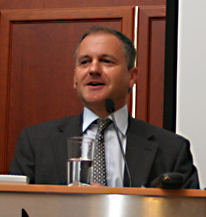
I was baffled yesterday when I learnt that Professor Richard Whish is leaving King’s College London.
Richard is one of our antitrust gods (we are polytheists at chillincompetition), and the author of a true competition bible.
(Click here to read our Friday-slot interview with him).
How can King’s let Richard go? If I were King’s dean, I would have offered a raise.
PS: I attach hereafter the slides I presented yesterday at a conference on Aims and Values in EU Competition Law in Copenhagen. The slides make a number of remarks on (i) industrial policy and competition law; and (ii) the current status of the Guidance paper on Article 102 TFEU.
Aims and Values in EU Competition Law – N PETIT (19 09 12)
Thanks to Caroline Heide Jorgensen and Christian Bergqvist for having me on the programme of this very good conference.


 Chillin'Competition