Archive for the ‘Antitrust Scholarship’ Category
Old Wine, New Bottles

In their 2010 Horizontal Merger Guidelines, the US agencies have poured old wine in new bottles.
The section on coordinated effects adds a theory of harm to standard tacit collusion analysis. It is entitled “parallel accomodating conduct“, and consists in:
“situations in which each rival’s response to competitive moves made by others is individually rational, and not motivated by retaliation or deterrence nor intended to sustain an agreed-upon market outcome, but nevertheless emboldens price increases and weakens competitive incentives to reduce prices or offer customers better terms. Coordinated interaction includes conduct not otherwise condemned by the antitrust laws” (see p.24).
My reaction: this looks familiar, and similar, to unilateral effects scenarios arising in oligopolies as a result of product/location differenciation or in cases of price leadership.
But aren’t those theories of harm already caught under merger control rules?
Moreover, shouldn’t unilateral and coordinated effects scenarios be mutually exclusive on a given relevant market? This also seems to be the view of DG COMP’s former chief economist.
The alternative explanation: an attempt of the US agencies to discretely relax the heavy evidentiary constraints required for a finding of coordinated effects?
PS: it is now summer time in Europe. Our friends keep harassing us with end afternoon drinks proposals at Brussels’ terrasses. For social reasons, Alfonso and I have thus decided to limit our posting pace to three stories a week in July. BTW, I heard through the grapevine that the Hogan Lovells party was huge (in very many respects…).
Antitrust Quotes of the Day

On the alleged non-structural views of Chicago scholars => “An industry which does not have a competitive structure will not have competitive behavior” (George J. Stigler, “The Case Against Big Business,” Fortune, May 1952)
On the 2004 Microsoft case => “The Commission’s case was like a jellyfish – shapeless and very painful” (I. Forrester). Thanks to I. Debois for the pointer.
The Spanish CNC at the avant-garde of competition enforcement?

Some posts ago we referred here to the Spanish Competition Authority’s decision sanctioning the main Spanish electricity companies with fines totaling some 61 million euros as a good illustration of how quantity and quality may not necessarily go hand in hand with regard to competition law enforcement in Spain.
(Btw, the comments to our previous post express interesting views on the CNC´s attitude and offers possible explanations to its causes. In the days after that post was published several other pieces on the CNC´s performance also appeared elsewhere).
As anticipated then, I believe that the “innovative” theories put forward by the CNC on its decision (which include “sham litigation” and a version of what Nicolas has labeled as “Karate competition law“) merit a comment on this blog, so here go some brief remarks on the decision:
(Before getting started, a disclaimer is in order: my firm is representing one of the entities sanctioned by the CNC. Accordingly, and although I am expressing my very personal views, you are at liberty to take them with a pinch of salt). Those interested in a summary overview of the facts and of the CNC’s official position, check out the CNC´s Press Release here.
Even though the decision declares that companies are responsible for two infringements I will merely focus on the one that can be of greater interest to our readers:
According to the CNC, this infringement consisted of a strategy (note: not a conduct, but a strategy revealed by circumstantial evidence) aimed at hindering customers from changing of electricity supplier at a moment in which deregulation was taking place. One –the main- component of this strategy was an agreement adopted by electricity companies within the framework of their association to appeal a Ministerial Order on the grounds that it contravened data protection rules by not envisaging the right of companies to refuse to provide certain personal data. The other alleged elements consisted of a temporal “cutt-off” of operations relating to applications to move to the free market (which both the Ministry and the Energy Regulator consider justified) as well as of a refusal to meet the requests of one supplier (that had previously been sanctioned by the CNC on a different decision).
(Click here if you’re interested in a comment on the issues that perplex me the most) Read the rest of this entry »
Unknown Truths about a Famous Antitrust Father
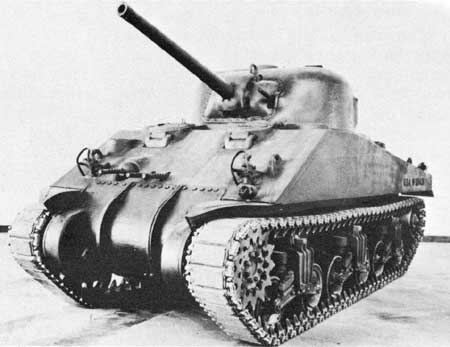
I just read a short and interesting piece by W. Kolasky on the life of one of the most anonymous antitrust celebrities: John Sherman. A few things worth keeping in mind:
1. John Sherman’s name has been used by the British army to name Medium Tanks M4. In the British army, it is conventional to name American-built tanks after famous Civil War generals. Whilst John Sherman was a politician, his brother, William Tecumseh Sherman was one of the most famous Union Generals during the civil war.
2. The Sherman Act originates in a bid to protect tariff regulations that promoted domestic US industrial interests (!). In the late XIXth century, the democrats alleged that protective tariffs had caused the spread of domestic trusts. Sherman, a Republican and a fierce defender of tariff legislation, sought to rebuff the link between the rise of trusts and tariffs. Eventually, to reduce pressure to abolish tariff legislation, the republicans were left with no other choice but to promote anti-trust legislation (p.86).
3. Following years of fierce parliamentary debate (p.87), the final version of the Act was expunged of most of the wording initially proposed by Sherman, and replaced by the text that we know (p.87). The disappointed J. Sherman later commented that this change in wording would deprive the bill of all effectiveness. He is quoted to have said that the bill would be “totally ineffective in dealing with combinations and Trusts. All corporations can ride through it or over it without fear of punishment or detection.” (p.88)
PS: Some law firms, like WilmerHale, follow an open-access publication policy. Most papers written by their lawyers are publicly available on their website. Nice.
Fordham Brainstorming Room (I)

As we announced last Friday, and thanks to Barry Hawk and Luis Ortiz Blanco, in the upcoming weeks we will be using this blog as a “brainstorming room” to come up with issues related to “European Competition Enforcement” that could be worth discussing at the 2011 edition of Fordham´s 38th Annual Conference on International Antitrust Law and Policy.
In addition to having your suggestions appear on the blog, once in a while we will devote a post to setting out our own ideas on possible topics.
Here go a handful of them. We look forward to hearing your views!
1. Positive v. Negative Enforcement of Competition Law
a. “Negative” decisions (decisions concluding to the absence of infringement). If we follow Tele2 Polska, NCAs cannot adopt such decisions under Regulation 1/2003. Importantly, this ruling may have an impact on how a number of NCAs run their decisional business, and in particular the French CA which occasionally adopted negative decisions.
b. Inapplicability decisions and guidance letters. Under Regulation 1/2003, the Commission can adopt several types of negative decision. To date, the Commission has never used such powers. In light of (a) stakeholders face now a competition enforcement system that looks very prohibitive. Query: could this lead to over-fixing/type I errors (with firms being excessively risk averse)?
c. Guidance on firm behavior through non-decisional instruments. As we reported on a previous post, the French CA adopted earlier this year a report (avis) on Google and more generally on search advertising. The French CA has an important track record in relation to such reports. Those documents are somehow akin to positive decisions in the making: they contain only provisional findings and do not prescribe remedies. Yet, they are a considerable source of concern for the companies targeted in such reports. They make individualized statements on market definition, dominance, abuse and so on. In practice, they may trigger follow-on complaints from third parties, litigation, etc. By contrast to positive decisions adopted as a result of formal proceedings, the companies targeted by such reports have little procedural rights.
2. Priority setting, “opportunité des poursuites”. On which sectors/practices should Commission/NCAs focus, both in abstract terms (e.g. sectors where consumer welfare improvements can be large?) and concrete ones (e.g. financial services?) ? Should there be coordination EU/NCAs and NCAs/NCAs in relation to the definition of enforcement priorities?
3. Impact assessment. How to quantify the contribution of competition policy to economic growth and other macro-economic indicators (investment, productivity, employment, etc.)?
4. Alrosa-like case law. A question on the state of play at the national level (Can commitments go further than conventional remedies? Can they escape a strict proportionality assessment?)
5. Appeals. NCAs ability/duty to stand in review courts to defend their decisions (see the VEBIC ruling, also commented on previous posts).
6. Integrated v. bifurcated agency model. Think of the ongoing discussions over the merger of the OFT and the CC in the UK.
7. Competition within agencies. It is somehow of a “secret de polichinelle” that there are diverging views on the effects-based approach between the Legal Service and DG COMP. Are such situations beneficial or counterproductive? In the latter case, could they be avoided?
8. Private enforcement. The elephant in the room? What are NCAs doing and what can they do to foster private interaction? How do they feel about the Judgment issued yesterday by the ECJ which states that it is a matter for national courts to discern whether access to leniency documents can be granted to parties seeking evidence to substantiate claims for damages?
Subversive Thoughts (2) – Excessive Pricing

Today, I would like to advance again four heretical propositions, this time in relation to excessive pricing cases under Article 102 TFEU. In essence, they challenge the mainstream view that there are insuperable conceptual and practical hurdles to the control of dominant firms’ pricing policies. No doubt this will again trigger opposition from the mainstream.
A Proposed Theory of Harm for Excessive Pricing Cases, the Foreclosure of Ir-Relevant Markets – To start, I believe that there is a reasonably sound – and overlooked – conceptual basis to challenge monopolists’ excessive pricing policies on the basis of the antitrust rules. Take a monopolist charging excessive prices in market A (the relevant market). With this, the monopolist dries up demand on neighboring markets (B, C, D …). But this is not all. He also dries up a range of unrelated markets (W, X, Y, Z) which include virtually all the markets where customers make purchases of goods/services. To take one example of this, a customer faced with an increase in the price of oil will purchase lesser quantities of milk, cereals, fruits, etc. (assuming finite resources). The monopolist’s pricing policy on market A thus forecloses – possibly unwillingly – the sales opportunities of other producers on a range of ir-relevant markets. In turn, this may force out a number of firms of those markets, increase concentration, decrease entry opportunities and eventually harm market competition. This effect will be particularly acute on markets relating to products/services that do not fulfill basic needs, where customers will simply forego consumption.
But this is not all. With this conduct, the monopolist may even distort, and drive demand up in market A. This is because consumers foregoing consumption of B, C, D, W, X, Y, Z will divert their freed resources towards market A, thereby consuming more of the monopolist’s product (for instance, because they fear a further increase in the price of A). This may give rise to extra-superprofits on the part of the monopolist.
From an economic standpoint, there is nothing truly shocking to my proposition. After all, we know since Walras that markets work altogether in equilibrium. Moreover, it suggests that dominant firms’ excessive prices inflict a collateral damage on other firms which, in the word of economists, is akin to a negative externality. Hence, there is good ground to regulate such pricing practices. Finally, the emphasis of this proposed theory of harm is on foreclosure (and not on exploitation, thereby limiting the risks that agencies will seek to achieve distributional goals).
In practice, the upshot of this first proposition is that competition authorities, who often view markets as silos, should not shy away from thinking outside of the box relevant market. There is nothing wrong to consider the effects that price increases may have on other unrelated markets. After all, competition authorities do this all the time. Think for instance of the complexities involved in the balancing, under Article 101 TFEU, of the anticompetitive effects of an agreement in market 1 with its pro-competitive effects in market 2. Likewise, many theories of harm under Article 102 TFEU involve practices that take place in one market, and that have anticompetitive effects in another market (e.g., predatory pricing, tying, etc.).
A Proposed Practical Benchmark to Screen Excessive Pricing Cases – The most powerful argument against excessive pricing cases is practical in nature. No one, let alone antitrust regulators, can arguably say at what level a price (and a profit margin) becomes excessive. Moreover, price-costs benchmarks would be unpractical, because there would be insuperable cost-measurement problems in a number of areas (e.g. multi-products firms, etc.). Read the rest of this entry »
Fine Arts in Brussels

In the past few days both Commissioner Almunia and Cecilio Madero, Deputy Director General for Antitrust, have spoken publicly about sanctions for breaches of EU Competition law (see here and here). Both have praised the current EU enforcement system as well as the changes that have been introduced to improve enforcement practice, namely the settlement procedure.
In his speech, Mr. Almunia also made a very welcome announcement. From now on “the Commission will indicate already in the Statement of Objections itself, the elements for the calculation of the fine such as the value of the cartelised sales – which is a critical factor – but also, for example, an indication of the gravity and issues of recidivism”. I see this as a great development, and one for which the European Commission must be congratulated.
But there are still a few issues which, in my view, should also be reconsidered by the Commission. Some opinions and suggestions in this regard are developed in an article I´m specially proud of, titled “Fine Arts in Brussels, Punishment and Settlement of Cartel Cases under EC Competition Law”. This article was authored by Luis Ortiz Blanco, Angel Givaja and by myself; it was presented by Luis Ortiz Blanco at a conference in Treviso in May 2008 and later published on the book Antitrust, Between EC Law and National Law.
Until now this article had never been available online, so we´ve decided to remedy that and make it available to the readers of this blog. As you will see, the arguments in this article are accompanied by Roman numbers; those numbers refer to paintings which graphically illustrate those ideas.
Here it is:
Subversive thoughts (1) – Fines, Leniency and the Search for an Optimal Detection Policy

A somewhat heretical idea sprung to mind yesterday. The mainstream will not like it (fortunately disputes with the mainstream are not any longer settled by recourse to bonfires).
(Note to our readers: the mainstream comprises adepts of Chicago School thinking and Public Choice theory. It combats, with caricatural arguments, all attempts to intensify competition enforcement. As if we were subject to Pavlovian conditioning, all too often we lawyers side with the mainstream, thereby failing to remember that competition enforcement is a genuinely good thing).
But let´s get back to this idea: to improve cartelists incentives to report infringements to agencies, why not allocate the entire amount of the fines (or a significant proportion thereof) to the whistle blower?
As long as the ring leader(s) is (are) excluded from a such reward, I see no obvious perverse effects to the proposal.
Surely, it sounds quite immoral to reward financially what is plain and simple betrayal. But on the other hand, it is fair and efficient that society rewards those firms that exhibit the strongest desire to comply with the law.
Also, one cannot rule out that clever firms involved in multiple cartels will coordinate leniency applications so that each participant benefits at least once from the reward (some sort of market sharing on leniency applications). Yet, this hypothesis rests on restrictive factual assumptions. More importantly, given that the fine will likely change from one cartel to the other, cartelists will not withdraw equal benefits from leniency applications. In turn, this will undermine their incentives to join/observe the coordination.
Finally, some could be warry for the EU budget to which competition fines contribute. Again, the objection is not decisive. This is because competition fines do not increase the EU budget but finance it. Technically, they are deducted from MS contributions, who pay less when competition fines are high. The sole and whole issue there is thus distributional: shall we transfer the product of fines from MS to whistle blowers? I am not sure of the answer, but I am incline to believe that competition fines are just a drop in the sea of MS contributions.
Those thoughts came yesterday whilst I was preparing a lecture on public and private enforcement for the LL.M students of the University of Gent (see ppt. below). I am very grateful to Prof. Govaere for her kind invitation.
5 May 2011 – Public and Private Enforcement of Competition Law
Jonathan Levin wins John Bates Clark Medal

One of our friends/readers -and former Stanford affiliate- has pointed us to some other news that we missed in the past few days:
The John Bates Clark medal -a sort of Nobel Prize for economists under 40 (in fact, a significant majority of its awardees have later received the Nobel)- has been awarded to Jonathan Levin .
For those who don´t know him, Levin is a Stanford Professor who has written extensively on industrial organization and whose research interests are now mainly focused on the internet and online markets. For a list of his publications and ongoing research check out his impressive CV.
Other curious facts: Levin is the son of Yale University President Richard Levin, and earned his PhD at the MIT, where he belonged to the same PhD class as the two other most recent awardees of the Bates Clark medal: Emmanuel Saez and Esther Duflo.
Competition Law and Free Riding

A common line of defense for companies subject to antitrust scrutiny is to argue that the complainant seeks to free ride on their investments.
With my assistant Norman Neyrinck, we explore in a recent working paper (in French) whether firms can instrumentalize the competition rules to free ride on others’ efforts. See link hereafter.
We come to the conclusion that attempts to free ride through Article 101 TFEU allegations are likely to fail. In contrast, Article 102 TFEU offers a more promising legal avenue to wanna-be free riders.
As usual, we apply the first footnote acknowledgment to comments.
Droit de la concurrence et instrumentalisation parasitaire – PETIT et NEYRINCK _24 03 11_


 Chillin'Competition