Archive for the ‘Uncategorized’ Category
Follow-up to our workshop on EU Courts and competition law
As you know, yesterday we held our workshop on EU Courts and Competition Law: Myths, Gaps and Challenges.
Our speakers were, as expected, absolutely fantastic and we were able to have the sort of interesting debates that we were aiming for. We are immensely grateful both to the main speakers as well as to the attendees.
A selection of photos from the workshop is available here.
The book by Fernando and Eric received unanimous praise; if you still don´t have it, that can be fixed by clicking here.
By the way, the proof that there is no protocol for book endorsements is available here…
Pastries from my family’s bakery were also a success, also as expected. Since I am on advertising mood, and for the sake of fostering online commerce, you can buy them here 😉 If Chillin’Competition is dominant I guess we just got in trouble…
EU Courts and Competition Law: Myths, Gaps and Challenges- 3 July 2017- The Final Programme
Please find below the final programme for our forthcoming workshop next Monday. Each speaker will discuss a specific topic for 5 minutes. We will then have 20-25 minutes per round to engage in a discussion with all attendees. We are very much looking forward to it!
Remember that it will take place at the Fondation Universitaire, Rue D’ Egmont 11, Brussels, from 15.00 to 19.00 h.
INTRODUCTION TO THE WORKSHOP- Alfonso Lamadrid
PRESENTATION OF Evidence, Proof and Judicial Review in EU Competition Law- Advocate General Nils Wahl
FIRST ROUND (moderated by Pablo Ibañez Colomo)
- Alfonso Lamadrid: “Of facts and law: what is the role of the Courts in competition cases?”
- Denis Waelbroeck: “Margin of appraisal and Article 7 ECHR”
- Trevor Soames: “Will the deference previously given by the General Court to the EU Commission’s decisions where its reasoning could be labelled as comprising matters of complex economic assessment post Menarini, KME and Chalkor be rolled back?”
- Jean-François Bellis: “Why do so many defendants choose to settle rather than appeal?”
SECOND ROUND (moderated by Fernando Castilllo)
- José Luis Buendía: “Burden of proof and State aid litigation: from Myth to Logos”
- Eric Gippini Fournier: “It’s the dominance, stupid!…and some other thoughts”
- Pinar Akman: “The Objectives of Article 102 TFEU and the case law”.
COFFEE AND REINOSA BREAK (you will understand once you are there…)
THIRD ROUND (moderated by Eric Gippini)
- Sir Nicholas Forwood: “Do the procedure and case handling practices of the GC need review if they are to provide effective “full review” in complex competition cases?”
- Nicholas Khan: “Confidentiality in the context of litigation before the EU Courts”
- Fernando Castillo: “Over the past 20 years, no witnesses have been called to testify in a competition case. Is the Galp judgment a game-changer?”
- Pablo Ibáñez Colomo: “What is effective judicial review?”
FOURTH ROUND (moderated by Alsonso Lamadrid)
- GC Judge Krystyna Kowalik-Bańczyk: “The scope of reforming powers of the General Court as far as sanctions are concerned”
- Thomas Graf: “Could the Courts do more to develop the coherence and predictability of competition rules?”
- Anne-Lise Sibony: “The prospects for behavioural antitrust in the EU, with a focus on litigation”
- Advocate General Nils Wahl: “Why I don’t like Ctrl+C”
Google Shopping Decision- First Urgent Comments

Today is an important day for EU competition law. For various reasons I have not commented publicly on Google’s cases for over two years now (for our previous extensive coverage, see here) The most recent of those reasons is that whereas I used to be a neutral observer (like Pablo still is) I have recently started advising Google in some competition matters, although as of today not directly on the Shopping case.
Today seems like an appropriate day to break that silence. Pablo and I were both invited by CCIA to participate in a press briefing call in which we explained the case and gave our views about it to a bunch of journalists. In anticipation of that call I hastily drafted the urgency thoughts that are the basis of this post. By the way, Pablo and I will again be speaking about this case on 11 July at this forthcoming Queen Mary University of London event, and, for the sake of neutrality, he will be the one covering the case here and elsewhere afterwards.
DISCLAIMER: Before you continue reading, please bear in mind that, even if I’m not working on this case, and even if my views have not changed, I am certainly not neutral (as I once was). So please take what I say with as many pinches of salt you wish and judge it only by its merits. To be sure, my preliminary opinions might very well not coincide with Google’s, as it may have other views and certainly has other lawyers who will surely have more views.
What the case is about
The case is not about manipulation or skewing of organic search results, as some have wrongly stated. It is about the display of product results and product ads. And it is only about the so-called comparison shopping market, of which most EU consumers had probably never heard about. The very assumption that such a market exists is far from straightforward, but there are other more profound and far-reaching concerns that we will try to very quickly outline in this post.
Google provides a free search service to consumers and it monetizes this service via advertisements. Today’s decision states that Google cannot favor its own product ads –the very same ones that make its services possible- over those of competitors. This is remarkable and wholly unprecedented.
To illustrate what this means, a useful analogy may be to think about a newspaper (a business models that is also funded via ads). What the Commission is doing is the equivalent of asking this newspaper to carry/publish the advertising service of competing newspapers and in equal conditions whatever that means (same placement, length or size, possibly even almost for free) and without getting the revenue. Another valid analogy is that of a supermarket obliged not to favor its own products, even if it is not the only supermarket around. The implications for vertically integrated companies in virtually every industry are potentially enormous.
Searching for the harm
Searching for the harm to competition and consumers is particularly challenging here. The Commission stated today that Google deprives consumers of choice to buy and compare prices online. That is the very fundamental idea at the foundation of the case. In my view, however, consumers could hardly have more choice when it comes to comparing prices and buying online. Whatever Google does cannot affect that. If you now want to buy any product you can search in Google, but you can also do so via apps, all merchant sites, platforms like Amazon, ebay, visit directly price comparison websites, outlets like Zalando, etc. Consumers have choice within Google and outside of Google. Even if Google price comparison results are more visible on a Google site, there is nothing precluding consumers from visiting any other site.
Tellingly, the Commission is indeed not claiming that there is direct harm to consumers but only assuming that somehow consumers will suffer from a decrease of traffic of price comparison websites even if the latter are not foreclosed. The Commission is thus equating any sort of alleged competitive advantage or disadvantage with anticompetitive effects; in my view, this is a very loose notion of consumer harm and a very long shot.
The facts and the evidence
In order to build this case the Commission focuses on a very small number of shopping comparison sites (aggregators) and concludes that they constitute a relevant market of their own. In my personal opinion this is quite counterintuitive and problematic. First, because it ignores hundreds of other aggregators. Second, because it also ignores that consumers do not only buy online through price comparison sites; indeed, the decision remarkably ignores the role of merchant platforms that also enable consumers to compare prices and buy. The players active in online sales, be it Google, Amazon, ebay, Zalando, any store or any individual merchant or manufacturer all face fierce competition. Third, the decision ignores that even if Google’s results enjoyed better display, consumers are not locked in, they can and do visit other websites other than Google before buying on the internet. The Commission says there is a link between visibility in Google and number of clicks received, but, again, this ignores the fact that consumers do not just buy online via Google. Even if Google’s results were more visible, there is nothing precluding consumers from visiting another site. There are certainly no technical or economic barriers for that, and this is what matters according to the most recent case law Third, and importantly, the Commission’s concern in this case is that some price comparison websites have lost traffic. In that case the Commission would have to prove with convincing evidence that this loss of traffic is due to Google’s display of product ads. This is certainly not easy, as there are many other more plausible, and indeed more likely, explanations (like the fact that consumers now prefer to buy directly on the merchants’ sites, in apps or in other platforms). The UK High Court and Justice Roth understood this perfectly in the Streetmaps Judgment with regard to a very similar theory of harm (see here).
The Law
But what I mostly care about is the law. Commissioner Vestager –whom you know is well-liked by this blog- explained today that DG Comp has reviewed 5.2 Terabytes of information. I do not doubt for a second that the smart people in the case team dealing with the case worked hard and thoroughly, but 5.2 Terabytes of information is meaningless if the law is then discussed quickly in just a few paragraphs and if the legal test is wrong.
From a legal standpoint, this case is unprecedented; there has never been a case like this, in Europe or anywhere else, and the implications are incredibly far-reaching. This is perhaps why for many years the Commission tried to avoid an infringement decision and rather preferred to settle with Google.
The first reason why the case is unprecedented is because it establishes the principle that a company may not favor its own services over those of competitors. Companies everywhere –dominant or not- logically favor their own services when they buy and sell goods or services even if this does not result in foreclosure. Vertical integration is everywhere, and it is in the very nature of multi-sided platforms. Hampering their ability to promote their services (in spite of no evidence of rival foreclosure) implies not allowing them to decide how to best provide their services. Legally, a firm can only be obliged to deal with or assist competitors when this is indispensable for competition to exist in a different market. This is the test that has consistently been used in EU Law. But the Commission considers this case law not to be applicable and wants to extend the scope of the law. The implications are incredibly far-reaching (actually, I think I said that already…)
Indeed, the Press Release suggests that the Commission does not argue indispensability, but merely that Google grants itself a convenient advantage. So the Commission does not label Google as an essential facility (because that would be pretty hard to do given the high legal standard), but it does treat Google as if it were, thus bypassing that legal standard. I fail to see how what is the logic or consistency of this reasoning against the backdrop of the relevant case law. In my view, and not having yet read the decision, this suggests a possible bypassing of established legal rules and standards with ad-hoc case specific theories and remedies, thereby risking turning the prohibition of abuses of dominance into the realm of the arbitrary.
The second reason why the case is unprecedented is because the alleged abuse is at its core a product improvement. The combination of specialized and general results (what Google is accused of) is something that is also done by other search engines, including Microsoft’s Bing and Yahoo! Everyone does it because it is best for users to get a direct response (if you search for an address, you get a map; if you search for a product, you are taken directly to the product, not to another intermediary). A product improvement that disadvantages rivals is not anticompetitive. Or at the very least one would have to trade off pro and anticompetitive effects, which is something that I very much doubt the Commission has done, essentially because no one knows how to do it. And in the face of doubt a sanction is not appropriate. This wall very well explained in Streetmaps and it was understood by all other competition authorities who have had the chance to examine these practices.
The remedy
The Fine: The Commission has imposed today the largest fine ever imposed on a single company doubling the previous record. What is remarkable is that this fine has been imposed after years of negotiating commitments (which are only possible in cases where “the Commission does not intend to impose a fine”), in relation to conduct that had never been found unlawful, that is actually considered lawful in other jurisdictions, that no lawyer would have anticipated to be unlawful and that takes place in a relatively small and competitive market. In previous cases, the Commission declined to impose a fine when its case was novel and had no precedents. This is actually the first case in which conduct that was found suitable for a commitment decision receives a fine (see the Motorola/Samsung and Mastercard/Visa precedents).
Future compliance: I do not know how this is framed in the decision. The Commission has stated today that it has not given any precise indications and that it is up to Google to come up with a solution that does not have the same effect.
In competition cases remedies need to fit the Commission’s theory of harm. In this case, however, there is no clear remedy fitting the unprecedented theory set out in the decision. Having ordered a remedy in the decision would have probably exposed the flaws in its reasoning. Possibly to avoid that risk the Commission has stated that it is up to Google to craft a remedy that is neutral –whatever that means- and that removes the problem. I preliminarily see two problems here:
- The first is, how can Google remove effects that it arguably did not cause in the first place? If Google is right and the loss of traffic on the part of the companies considered by the Commission is attributable to something other than Google’s conduct, how can Google fix that? And how can the Commissioner assess whether the remedy is effective? It would seem as if the Commission were requiring Google to artificially maximize the traffic received by some specific category of its rivals (price aggregators) which certainly would not be neutral.
- The second problem is wider. The Commission says whatever Google does must be neutral, but it does not define what neutral means. This undefined notion is particularly problematic when applied to a business which by definition has to rank search results.
Admittedly, Google could simply decide to shut down the service and not offer product results in Europe. This would be perfectly plausible and legal, and is actually what Google did with Google News in Spain back in the day, only to show that this benefited no one.
Effect on other Google products.
The Commission has stated that this decision is now a precedent and the starting point to look at other Google’s services. Firstly, this implicitly means that there was no earlier precedent and thus confirms the novel nature of the case. Secondly, the Commission could have run a case comprising all verticals, but it didn’t, and it must be because it thought this was the easiest to run for some reason. That may have to do with market definition, or because evidence in other verticals did not match the theory. If the Commission decided not to run those cases, it must be for a reason. My personal view is that this technique of picking the preferred sample to then extrapolate results would not be an acceptable shortcut.
Conclusion. In order to make this case possible the Commission first had to change the stance it held for years during the commitment negotiations and now has had to craft a new legal theory without clear legal foundations, prohibit a conduct validated in every other jurisdiction, assume dominance against the indications of the case law, define a relevant market ignoring the main actors active in online shopping, ignore the fact that consumers are not locked-in Google, assume that the loss of traffic of some specific companies is due to Google not considering other plausible scenarios and avoid spelling out a remedy. In my non-neutral view, it is a remarkable decision indeed.
Waitlist now active for EU Courts and Competition Law: Myths, Gaps and Challenges
The tickets for the upcoming workshop “EU Courts and Competition law: Myths, Gaps and Challenges” (Brussels, 3 July 2017, 15.00-19.00) were gone within roughly 10 minutes; thank you for the interest!
We have now activated a waitlist. We will do our best to try to accomodate as many people as possible; if you are still interested please click here.
Registrations now open

To register for our upcoming workshop “EU Courts and Competition law: Myths, Gaps and Challenges” (Brussels, 3 July 2017, 15.00-19.00), please click here.
EU Courts and Competition Law: Myths, Gaps and Challenges- 3 July 2017- Additional Info

Next Monday at 10am we will be posting here a link to register to our litigation workshop on the 3rd of July (remember that seats are very limited this time -not looking for sponsors equals smaller venue- and that the last event “sold” out in 6 minutes…).
Since we are trying out a new and more dynamic/ interactive format we do not yet have a traditional programme. Here is nonetheless some additional information which you might find useful:
The title of the workshop will be “EU Courts and Competition Law: Myths, Gaps and Challenges“. And that is what we want to discuss. Speakers and attendees will have a chance to reflect on a variety of topics related to the role of EU Courts in competition law matters.
We did not exaggerate when we said this would be a high-level event. The list of confirmed speakers so far includes representatives of the EU Courts like Advocate General Nils Wahl and General Court Judge Krystyna Kowalik-Bańczyk, former GC Judge Nicholas Forwood (White&Case), specialized agents of the Commission’s Legal Service, namely Fernando Castillo and Eric Gippini (co-organizers and authors of the book we will also be presenting) as well as Nicholas Khan; high-level academics including Anne-Lise Sibony (Univ. Catholique de Louvain), Pinar Akman (University of Leeds) and our very own Pablo Ibañez Colomo (College of Europe, LSE and Chillin’Competition), as well as eminent and Court-experienced practitioners like Jean François Bellis (Van Bael & Bellis), Denis Waelbroeck (Ashurst), Thomas Graf (Cleary Gottlieb), Trevor Soames (Quinn Emmanuel), José Luis Buendía (Garrigues) as well as myself, Alfonso Lamadrid (Garrigues).
Attendees will also have a chance to contribute to the discussions. We very much look forward to seeing you there!
Copyright reform against the background of Pay TV and Murphy

Yesterday I presented at an event hosted by Sidley Austin and organised by ACT (nothing to disclose, in case you are wondering). As you know, I have been following all issues relating to geo-blocking and Digital Single Market with a lot of interest, and this event was a great occasion to exchange ideas about ongoing discussions on the interface between copyright reform and EU competition law.
The slides I used can be found here and the short note I prepared for the occasion, here.
On the interaction between copyright and competition law
One of the key points I emphasised during my presentation is that copyright cannot be understood without competition law, and vice versa. In the same way that competition law enforcement may have an impact on copyright, competition law analysis may very well change if the underlying ‘economic and legal context’ changes – just think of E.On Ruhrgas, which is one of the cases I mentioned and which exemplifies this idea particularly well.
I have lost count of the times I have explained why I believe the ongoing Pay TV case is controversial (most recently here in an event that took place last month). The case would be far less controversial if ongoing reforms are passed, and (at least some) online broadcasts become subject to the ‘country of origin’ principle, which currently applies to satellite.
On the decentralised enforcement of EU competition law
As the event was attended by copyright lawyers, I also emphasised that enforcement does not only come from the Commission. Intervention may originate in a dispute before a national court, or in a decision adopted by an NCA. After all, Coditel II and Murphy, the two key cases in this discussion, reached the Court of Justice through a preliminary reference.
This insight is important to put in perspective some of the most recent developments in the Pay TV case. There have been hints implying that the Pay TV case should be understood as a one-off initiative, and that the Commission would seek to ensure that small film producers are not affected by a finding of infringement. Insofar as the enforcement of Articles 101 and 102 TFEU is decentralised, any hints in this sense provide only limited relief – they do not and cannot rule out action at the national level (just think of what is going on in relation to online selective distribution and online hotel booking!).
On freedom of contract and secondary law
I have come to understand that it is speculated or argued in copyright circles that geo-blocking could be saved by a reference to ‘contractual freedom’ in the so-called SatCab Regulation. We competition lawyers have head these arguments before. It is clear to us that a cartel agreement – or any other agreement that runs counter to Article 101 TFEU – could not be saved in the name of contractual freedom, and that primary EU law would in any event take precedence over the Regulation, if eventually adopted.
I took an example from Microsoft to illustrate this idea. As many of you remember, there was a section in the decision devoted to whether the notion of interoperability used by the Commission was in line with the way in which the concept was defined in the Software Directive (at the time, Directive 91/250). The GC, rightly and uncontroversially, stated that this discussion was ultimately irrelevant, as a Directive cannot constrain the scope of action under Article 102 TFEU.
The elephant in the Courtroom: it’s the dominance, stupid!
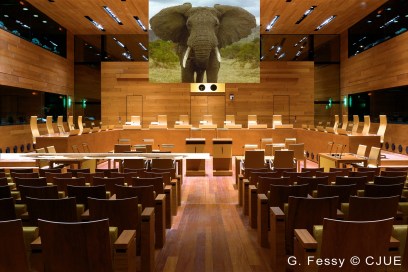
This blog has always been a bit Court-centric, in the sense that we typically pay more attention to what comes from Luxembourg rather than to what comes from Brussels. To our mind that is logical, but it also is certainly not the general rule. Our forthcoming workshop on EU Competition litigation (see here) is a testimony to that approach. And this post aims at giving you an example of the sort of issues that we would like to discuss at the workshop.
Most of the criticism to the case law of EU Courts in the competition field has focused on abuse of dominance cases. And when any commentator -ourselves included- criticizes or discusses the case law, we all tend to focus on the substantive legal tests applied to discern the legality of a given conduct (we discuss presumptions, capability, likelihood, the need to show foreclosure and the relevant extent of foreclosure, etc). All those are extremely relevant, and there are arguably gaps in the law, but we may be missing out something; the title of this post may admittedly give you a hint.
Back in March we organized a sort-of- high-level-Spring Meeting in Madrid to discuss the most important competition cases of the past 20 years with some of the people who worked closely on them. One of the speakers at this event was Eric Gippini-Fournier, from the Commission’s Legal Service. Readers of this blog know Eric from, among other things, his Friday Slot interview and for being –together with Fernando Castillo- the author of this gem of a book and –also with Fernando- co-organizer of our litigation workshop.
Many also credit –or rather blame- Eric for some of the case law regarding abuse of dominance, as he was a successful Commission lawyer in some of the most controversial unilateral conduct Court cases in recent years, including Michelin II, Lélos, Telefónica, Wanadoo, Astra Zeneca, Tomra or Post Danmark II. Few people, if anyone, have comparable litigation experience in Art. 102 cases. During his intervention in Madrid Eric logically defended the Court’s approach to several of these cases, and also made an important point that I had not really heard before, or not so clearly put. He explained that, in his view, the strict case law on Art. 102 and the concept of special responsibility as interpreted by the Courts only makes sense provided that the market definition and the assessment of dominance are serious, thorough and strict. He noted, however, that the Court’s ability to exercise its review, to give guidance and to advance the law has been hindered by applicants’ unwillingness or ineffectiveness to challenge market definition and/or dominance in Court (perhaps that also had to do with the Commission historically prioritizing cases where these questions were not in dispute). And as regards dominance, even when it is challenged, the discussion remains often at the level of market shares and there is comparatively little recourse to the sophisticated tools and methods routinely used, for example, in merger control, to assess the competitive constraints and the margin for independent action of the dominant company.
All this explains why in this area we are stuck in the same place as 30 years ago, using rudimentary tools and assessments and most often looking only at market shares (an approach that has been largely abandoned in other jurisdictions as well as in the EU when it comes to merger control). Even “old” cases such as Hoffmann-La Roche discuss in detail the competitive constraints faced by the company, in a manner that has become rare today.
There may be a negative externality in academic commentary in this area that has contributed to hiding a possible problem. Market definition and dominance issues are so factual and case-specific that commentary on the case law dealing with them is surprisingly scarce (people other than parties to the cases understandably care more about substantive principles of general application). I, for one, only know of one recent article in years that has tried to analyze the stance of the EU Courts in this regard (which underlines that market definition involves many legal, factual and logical assessments subject to full, nor marginal, judicial review).
Market definition and dominance may thus very well be the elephant in the room when it comes to judicial review of abuse of dominance cases (even if these are by now almost extinct –and I mean the Court cases, not the elephants) (for more on elephants from me –really- see here from min. 3.28 onwards). Whilst everyone acknowledges that market definition’s in-or-out methodology is by nature inaccurate and prone to errors, in the absence of a better tool we continue to rely on it. And with a sufficiently contrived/procrustean market definition (see here, also the comments, for our best examples), almost any case may fly. And that is partly because the inaccuracies inherent market definition fail to be corrected in the assessment of market power, due our excessive reliance on market shares [an exception –although again in the merger field was Microsoft/Skype-; by the way, given the Commission’s efforts to conveniently ignore this Judgment they could have as well let us win it! 😉 ]
Admittedly, one could try to see cause for optimism. If one reads carefully the Judgments in cases like Microsoft (2007), Clearstream (2009), Astra Zeneca (2010) or CEAHR (2010) the picture that emerges is one of thorough review of market definition (this even if the Court was formally undertaking a marginal review), and of abandonment of market-share only approach (Cisco, 2013)).
On the negative side, however, the problem is that these cases don’t get to the General Court anymore. Why would the Commission take the odds of facing such a scrutiny? And why would companies take the risk of not offering commitments when the (even if sometimes misleading) statistics suggest to them that taking a case to Court may be hopeless? And since commitments decisions do not require complex assessments of market definition and dominance, we are left without any Commission guidance on this front [a bit like what happens in Art.101(3)]. And this is a problem for national competition authorities and national judges as much as it is one for companies and their economic and legal advisors.
What now then? In my view, it is clear that the Commission is unlikely to shake things in this area, as relying on market shares in 102 cases is pretty comfortable, particularly when one gets to define the relevant market. With the General Court effectively sidelined from this debate for now, the initial reflex could be to expect the CJEU to provide guidance in the form of preliminary rulings. In this case, however, that might not happen, as national Courts are most unlikely to refer questions that they see as not having to do with the interpretation of law, but with economic of facts, and as such inadmissible.
For further reflections on this issue and on the possible way out, join us on the 3rd of July in Brussels.
CHILLIN’COMPETITION LITIGATION WORKSHOP – 3 JULY 2017- (SAVE THE DATE!)

In just four weeks, on Monday 3 July we will be holding a high-level half-day (15-19 p.m.) workshop in Brussels to discuss the role of the EU Courts in competition law.
This workshop will be jointly organized by Chillin’Competition (i.e. Pablo and myself), Fernando Castillo and Eric Gippini, from the Commission’s Legal Service, authors of the book “Evidence, Proof and Judicial Review in EU Competition Law”, that we will also be presenting at the workshop.
We would like to explore both what has happened in the past 60 years and what could, should or might happen in a new scenario, with an enlarged General Court, a fall in the number of annulment proceedings and an apparent rise in preliminary references following the decentralization (and delegalization?) of competition enforcement, among others. We intend to discuss theory and practice objectively, from different perspectives, and to identify possible myths, challenges or gaps concerning judicial review of competition cases.
These are, as you know, among our preferred topics here at the blog (see e.g. here and here) as well as the subject-matter (in part) of Pablo’s forthcoming book, “The Shaping of EU Law”.
In order to gather different expert views we will be inviting approximately 15 high-level speakers from the Institutions (we already have high level representatives from both Courts and the Commission), academia and private practice to share a brief reflection (within 5 minutes) on any issue related to judicial review on which they may have strong or interesting views (for an example, click here). We will then have some time to discuss every point also hearing the views of other attendees.
The workshop will take place at the University Foundation/Fondation Universitaire in Brussels (Rue d’Egmont, 11, 1000 Brussel)
We will very soon be back with more information. We will be personally inviting a number of people, and will then open up registrations (for free) to anyone interested (although places are limited this time to 140).
Registrations will be possible via a link that we will be making available on the blog on 19 June at 10.am
An exception: anyone willing to come from the GC / CJEU will have a guaranteed seat (in that case please just drop us a line).
P.S. We hear that at a recent conference at Oxford University attendees were given ice cream; well, we welcome competition and accept the challenge…
Book review: EU State Aid Control. Law and Economics, by Philipp Werner and Vincent Verouden

One of the big events of the season is the launch of Philipp Werner’s and Vincent Verouden’s, EU State Aid Control. Law and Economics, which came out a few months ago. It is a remarkable achievement for which they should be congratulated. Together with a large team of authors, they have truly managed to blend legal and economic analysis. It would have been already impressive as a law book tout court, but this aspect makes it special.
I was honoured that they asked me to review the book for the European State Aid Law Quarterly. My review has just come out, and has done so in a special 15th anniversary issue that matches the importance of the book (congratulations to the EStAL team, by the way: what they have achieved is wonderful too). When browsing through the review, I was proud to see an article co-authored by a former student of mine, Sylvain Petit, together with Adrien Giraud, a good friend of the blog.


 Chillin'Competition