Archive for the ‘Uncategorized’ Category
eBook on Competition and Platforms

A colleague just congratulated me for an article included in an ebook that was recently published on Competition and Platforms. Interestingly, I did not know that the book was out nor that it included my piece!
In any case I suggest you download it and take a look. It’s sponsored by our friends at CCIA and edited by a former colleague Aitor Ortiz (now at Competition Policy International). It compiles a number of interesting pieces on multi-sided markets.
Mine (“The double duality of two-sided markets”) was initially written as a speech for the Pros and Cons conference in Stockholm and was later published in Competition Law Journal, so it is also multi-published and multi-used. Talk of multi-homing….
The ebook is available here. It features the following pieces:
-Understanding Online Platform Competition: Common Misunderstandings By Daniel O’Connor
-The Move to Smart Mobile and its Implications for Antitrust Analysis of Online Markets By David S. Evans, Hermant K. Bhargava & Deepa Mani
– Failed Analogies: Net Neutrality vs. “Search” and “Platform” Neutrality By Marvin Ammori
-Antitrust Regulation and the Neutrality Trap: A plea for a Smart, Evidence-Based Internet Policy By Andrea Renda
-Multisided Platforms, Dynamic Competition, and the Assessment of Market Power for Internet-Based Firms By David S. Evans
-The Double Duality of Two-Sided Markets by me.
-Should Uber be Allowed to Compete in Europe? And if so, How? By Damien Geradin (Juan M. Delgado & Anna Tzanakis, ed.)
-Online Intermediation Platforms and Free Trade Principles – Some Reflections on the Uber Preliminary Ruling Case By Damien Geradin
-Competition Policy in Consumer Financial Services: The Disparate Regulation of Online Marketplace Lenders and Banks By Thomas P. Brown and Molly E. Swartz
-Legal Boundaries of Competition in the Era of the Internet: Challenges and Judicial Responses By Zhu Li
-Can Big Data Protect a Firm from Competition? By Anja Lambrecht & Catherine E. Tucker
Losing Litigation?

These days seem to be short on news on the competition front, as confirmed by several calls I have received from journalists asking whether we knew why nothing seems to be happening and when we expect something to happen. Well, no clue.
But what worries me the most about this apparent inactivity (a mirage in many ways, as I know for a fact that some Comp units are swamped) is that arguably there will certainly be less decisions to appeal. This is not news, but a clear tendency in our field as a result of less leniency (arguably related to the Damages directive?), more settlements, more commitments, etc. You may remember that I discussed all of this in a post titled “The diluted legality of competition law“.
That is worrying for many reasons (one of them being that the law should be driven by Courts, not political specialized agencies, who are primarily responsible for setting enforcement priorities), but today I’ll be selfish and underline the one that bothers me personally: it means that we are losing the most interesting, most legal and most fun part of this job, litigation.
Last week I made a joke about how I would work for free representing the supermodels targetted in a cartel probe [by the way, you should know that none of the supermodels who called me last week were interested in my work; it is frustating when people only judge one by the looks…;) ]
But last week I also intervened in hearings at the General Court (my colleagues also participated in a high-profile State aid one this Tuesday before the Grande Chambre of the ECJ) and I kept on thinking how I really would do that for free (Note for clients: please ignore this).
I’m particularly fortunate to be in a place where litigation is a great chunk of the work (I’m currently involved in more than 40 ongoing EU Court cases -admittedly many are joined- and in the past alone year intervened in, I think, 8 hearings) and there is nothing like it. Without a doubt, it is in Court, and drafting Court submissions where I’ve learnt the most. In fact, many of the best lawyers I know have significant litigation experience.
Inevitably, sometimes you win (this very same morning we entirely won 8 Joined cartel cases in which we represented the Commission before the General Court; since you won’t read the 116 page Judgment, here is the press release) and sometimes you lose. However frustating the defeat, I’ve thoroughly enjoyed every Court case in which I have worked. Some advice for young competition lawyers: when choosing a firm, make sure they are involved in many Court cases!
By the way, given the nowadays scarcer cartel appeals and the practical impossibility of succesfully appealing a merger decision (which I learnt the hard way), litigation is now likely to focus eminently on many state aid decisions and on a handful of abuse of dominance cases. Hopefully, the quite controversial addition of new judges to the General Court will imply a relaxation of the very strict rules of admissibility in State aid and a more thorough and detailed scrutiny of abuse of dominance decisions in which companies decide to trust Courts rather than conceding (on this latter question, see AG Wathelet’s “Commitment Decisions and the Paucirty of Precedent“).
Urgent- Free services offered
I offer my services for free to defend any individual affected by this investigation:
Supermodels colluded to fix prices, regulators say
Happy also to participate in the “beauty contests” that I suppose will be held to retain lawyers.
I’m also available and willing to meet informally to discuss the case in pre-contractual engagements.
Chillin’Competition goes to Cannes
A few weeks ago some of my statements on the impact of the Commission’s Pay TV case featured in The Hollywood Reporter (see here).
In essence, I explained that in spite of appearances, this case is not about TV licensing but about the financing of film productions, and that if the case were to go forward, the fragile financing structure of European filmmaking would collapse.
Back in January we tried to make the same point to the Commission. At the oral hearing I shared my floor time with Rebecca O’Brien, producer of Ken Loach films, who explained (this has all been made public elsewhere) how delicate the financing ecosystem of independent filmmaking is, and how the Commission’s case could put the EU industry at risk. She explained that without the current legal framework governing territorial exclusivity of films, Ken Loach’s films would simply not exist.
Well, yesterday Ken Loach’s new film won the Palme D’Or at Cannes. That’s a useful reminder of the importance of what we are talking about.
And Chillin’Competition was there to celebrate. This is one of the perks of our job. To see Pablo and myself marching on the red carpet (admittedly, I may have used too much facial make up….) 🙂

Back to the Alma Mater: Appointed Visiting Professor at the College of Europe!

Following Alfonso’s cliffhanger, I guess it is my turn to share the good news with you: I have been appointed Visiting Professor at the College of Europe! I will be in charge of the seminar on Network Industries, which has been taught this year by Pierre Larouche and was run in the past by Damien Geradin. In practice, it means that I will be in Bruges a few times every year, and, of course, that I will get to see Alfonso and his family more often
As you may imagine, I am delighted about it. Bruges is a very special place for me. It is where I realised that I wanted to do a PhD (or rather, that the only thing I wanted to do is a PhD) and where I discovered a field that I loved and that came naturally to me (I chose not to study economics as an undergraduate, but I did not know that the most economic of legal disciplines would choose me).
You will hear alumni of the College say that it is a great experience for students (like Alfonso did here). And they are right. But I would say that it is even better as a first stop for aspiring academics. During my time as an assistant there, I had complete freedom to read, think and write. On the other hand, being in contact with top academics and practitioners helped me develop a good understanding of the legal system and an instinct for meaningful research questions. The prospect of being closer to (and part of) that unique atmosphere is very exciting.
Have a very good weekend!
Conferences (including the theme of the 2nd Chillin’Competition conference)

We have already decided on the topic of the next Chillin’Competition conference. The common thread will be “Neutrality Everywhere“. The dates are yet to be determined (not likely to happen until after the summer). If any of you have original ideas (for a panel, for a paper you would like to present, for sponsors or even for a venue), please send them our way!
And speaking of conferences:
On 27 May the Brussels School of Competition will host a morning briefing on the very timely topic of mobile network consolidation. For more, see here.
On 2 June there wil be a couple of most interesting events in Brussels. First, Global Competition Review, Baker Botts and Shearman&Sterling will be holding the GCR Live 4th Annual IP and Antitrust event, and have managed to come up with a great program. That same day, a bit later, the Academy of European Law (ERA) will host a seminar under the title: What’s New in Art 102 TFEU? Latest Issues on Price and Non-price Related Conduct: for more info, see here.
On 8 June the GCLC and UCL have organized a conference under the title Competition Policy at the Intersection of Equity and Efficiency Honoring the Scholarship of Eleanor Fox. The programme is available here.
On 10 June Pablo will follow my footsteps 🙂 and will address the Association of European Competition Law Judges which this time is meeting in Madrid. The conference will address the competition – IP interface.
On 13 June Concurrences will host the New Frontiers of Antitrust Conference in Paris. The conference has been promoted with a teaser-interview with Nicolas Petit, available here.
On 14 June the College of Europe will hold the annual symposium organized by the ELEA (European Law and Economic Analysis) students. There will be a panel on geo-blocking that will feature big names such as Thomas Kramler and Mike Walker and small names like Pablo 😉
The big global event on 23 June will be the British referendum my intervention in a symposium titled Online platforms, Big Data and privacy: What role for competition policy?. It will be hosted by the Centre for Studies on Media Information and Telecommunication (SMIT) & the Brussels Centre for Competition Policy (BCCP) at Vrije Universiteit Brussel (VUB), Brussels. Those of you interested can download the program here.
On 4-8 July I will also be teaching at the College of Europe’s Summer Course on Competition Law taking place in Bruges. For more info, click here. I will also be lecturing at the College of Europe’s Summer Competition Law School for Chinese officials, but I fear you may not be eligible for that one…
And during 2016/2017 (and beyond) Pablo will be… Actually, he can tell you himself.
EU Net Neutrality Policy and the Mobile Sector: The Need for Competition Law Standards, by Peter Alexiadis

Peter Alexiadis needs no introduction. He is one of the leading competition and telecoms lawyers in Europe. He also runs a seminar on Competition Law & Regulated Network Industries down the road from the LSE, at King’s College London. Peter is in fact one of the most academically-minded practitioners that I know, and one from whom I have always learnt a great deal (including at the Chillin’ Competition conference, where he shared his thoughts on copyright licensing).
Alfonso and I are delighted that he has chosen Chillin’ Competition to issue his new paper, entitled ‘EU Net Neutrality Policy and the Mobile Sector: The Need for Competition Law Standards’. Click here to access it.
The paper is really timely. As most readers will know, net neutrality has progressively found its way into EU telecoms regulation. Regulation 2015/2120, which entered into force on 30 April, deals specifically with the so-called ‘open Internet’. The net neutrality provisions enshrined in this text are part of the zeitgeist, according to which there is always a good reason to impose strict non-discrimination obligations on firms.
Peter’s paper is a useful reminder that an overly zealous approach to net neutrality can have unintended consequences, in particular in mobile markets. He points out that EU competition law has been dealing with the same or related questions (‘access’, ‘non-discrimination’, ‘objective justification’) for decades. Accordingly, it is only sensible to interpret the provisions of the Regulation in light of the experience acquired by courts and competition authorities.
Here’s a hint of what the paper is about:
The much-awaited EU Net Neutrality rules contained in the TSM Regulation entered into force on 30 April 2016. These rules have the overarching aim of safeguarding the open Internet and, in doing so, seek to strike a balance between the interests of consumers and Internet Service Providers (“ISPs”). However, the natural consequence of seeking such a compromise is legislative uncertainty. Given the fact that the various Articles of the TSM Regulation offer very little by way of unambiguous guidance, there is a serious risk that many broadly formulated provisions of that Regulation are amenable to a restrictive interpretation, resulting in the over-regulation of ISPs. If that scenario were to materialise, the author believes that there would be a risk of consumer welfare benefits being unwittingly sacrificed on the otherwise laudable altar of the open Internet. Given the breadth of the language used in the TSM Regulation, the risk of over-enforcement is tangible, especially given the constantly evolving Internet value chain, the multi-sided nature of Internet-related markets and the disruptive nature of new Internet business models.
Enjoy the read!
The ECJ’s very own smartphone app
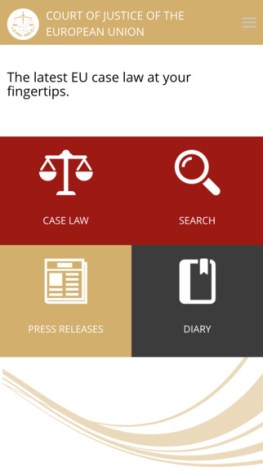
The ECJ has just launced its own app, CVRIA for smartphones and tablets, running on both iOS and Android. And no, we are not kidding.
As noted in the ECJ’s press release (see here), the app is available in 23 languages and has several functionalities, giving easy access to recent case law, press releases, judicial calendar and the Courts very own search tool covering all its case-law.
It is available here and here.
Not everyone must be happy about this app coming out. People like my-co-blogger Pablo or like Fernando Castillo, who know by heart case numbers, dates and paragraphs will from now onwards have it more difficult to impress people while having beers. All Court info is now a click away.
Hutchison/Telefónica UK blocked: BT wins, all the others lose. What lessons for competition law and regulation?

The prohibition of the Hutchison/Telefónica UK deal, which has been made official earlier today (see here), is a bit like Leicester City winning the Premier League. As the months passed, the impossible became likely, up to the point when it was certain that it would actually occur. So no big news today, as the only remaining question was when the decision to block the deal would be announced.
While we wait for the decision to be published, I can think of a couple of issues for discussion:
- The Commission powers in horizontal merger cases – law or discretion?: The Commission has the power to block horizontal mergers in a very broad range of scenarios. ‘Four to three’ mergers in telecoms markets illustrate this very well. The Commission does not need to establish (single or collective) dominance to block a merger between competitors (or non-competitors, for that matter). In the so-called ‘gap’ cases, it is enough to show that some parameters of competition will be significantly affected by the transaction.
This background is useful to understand why some commentators have started to ask whether the Commission has in fact too much power in horizontal merger cases, in particular in ‘gap’ ones. James Venit has recently written an article making this point (see here). Can the Commission prohibit just any horizontal merger it wants? It may be the case that the reasons to block Hutchison/Telefónica UK were compelling. The outcome may be perfectly sound. However, the decision might fuel the debate in this sense.
I see where the arguments of these commentators come from. The assessment of unilateral effects in merger cases is the privileged realm of the so-called ‘complex economic assessments’. Intervention depends on forecasts about post-merger effects (which, again, may be perfectly accurate).
The problem with ‘complex economic assessments’ is that they come with a ‘margin of appreciation’, and with a ‘margin of appreciation’ comes limited judicial review. Is it then a matter of discretion, and not of law, as it is in theory and it is meant to be? I guess it would probably help if the EU courts defined a set of principles and proxies for the assessment of mergers in ‘gap’ cases at some point.
- BT is the big winner: The overall effect of a series of individual decisions has been to tilt the game in favour of BT. After the acquisition of EE, BT is the only truly integrated operator in the UK. It has the largest fixed network and is the leader in retail mobile and fixed broadband. This landscape is not necessarily problematic in itself, but it is probably not ideal either.
Of the series of decisions that have been adopted in the past few years, there is only one that I would qualify as ‘manifestly incorrect’. I have written about it a few times (see for instance here). Some of you may remember that Ofcom created a brand new doctrine of non-essential facilities to force Sky to supply its premium sports channels to its rivals, including BT. In doing so, it neutralised an important source of competitive pressure. BT’s life is much easier after this decision, and the ability of Sky to challenge the position of the incumbent has been significantly impaired.
Some of you might react by saying that this obligation was formally removed in November last year. Well, yes and no. If you take a look at it, you will see Ofcom wrote something along the lines of: ‘I remove the duty to supply, but you better continue supplying’. Once an obligation to supply is imposed, it is likely that it is there to stay. Which is probably why the debate about interim measures has also become popular. My guess is that many people have the secret hope that a quick and dirty provisional measure will become permanent (it works for Uber when it enters new cities, so I guess some people have figured out it could work elsewhere).
NEW PAPERS: on market integration, Article 102 TFEU and network industries

Three new papers of mine have just been made available on ssrn. They touch upon some of the issues I discuss regularly on the blog, so they will not surprise frequent readers. As usual, I would very much welcome your comments (e-mail: P.Ibanez-Colomo@lse.ac.uk).
Article 101 TFEU and Market Integration: Entire libraries have been written about EU competition law and parallel trade. Some of the landmark judgments were handed down more than three decades ago. I wrote this paper because I realised that, in spite of the above, there is still considerable confusion about some key aspects of the case law. Has the Court of Justice ever ruled that absolute territorial protection is NOT restrictive by object? It has, for instance in Coditel II. Why did the Court rule that absolute territorial protection is acceptable in Coditel II but not in Nungesser? The two judgments were delivered at pretty much the same time, is there a contradiction between the two? If the Court confirmed Coditel II in Murphy, why do the two judgments seem to contradict each other?
My paper, forthcoming in the Journal of Competition Law & Economics, seeks to explain the case law and gives an answer to the above questions. I develop a framework based on the counterfactual. I find the approach of the Court of Justice to be consistent and persuasive. Agreements aimed at partitioning national markets are deemed restrictive by object except when the analysis of the counterfactual shows that they do not restrict competition that would have existed in their absence. This simple framework explains cases like Coditel II and Murphy, mentioned above, and provides insights for ongoing ones. I test the framework against leading rulings, including Glaxo Spain, Nungesser and Micro Leader.
Beyond the ‘More Economics-Based Approach’: A Legal Perspective on Article 102 TFEU Case Law: It might sound strange to provide a legal perspective on Article 102 TFEU case law. But scholars and practitioners have focused so much on economic considerations that many of them are no longer interested in what the Court of Justice actually does. My article seeks to identify trends in the case law and provides a framework to address the frictions that have emerged over the years. Some authors like to think about Article 102 TFEU as an epic battle between good and evil. My paper shows that ongoing controversies are more modest. They relate to minor inconsistencies that can be addressed as such. Cartes Bancaires provides a most useful template in this regard.
The paper, forthcoming in the Common Market Law Review, consolidates many of the ideas that I have published here and in the form of working papers. The first key idea I wanted to develop is that the object/effect divide exists also in the context of Article 102 TFEU. It is important that this reality is acknowledged in the literature. It is now clear that some practices, like exclusive dealing, are put on a par with cartels. The implementation of these practices is sufficient to trigger the prohibition. Other conduct is put on a par with ‘by effect’ agreements. This makes it necessary to show not only that the practice has been implemented, but also that it is likely to have an anticompetitive effect.
There are frictions in Article 102 TFEU case law. Again, this is a reality that cannot be denied. Some legal inconsistencies have emerged in the case law. Like practices are not always treated alike within Article 102 TFEU. Similarly, the same practice is not always treated in the same way across provisions. Suffice it to think of the 2007 GC ruling in Microsoft (Article 102 TFEU) and its 2013 ruling on the Microsoft/Skype transaction. These frictions are natural and inevitable in a field like EU competition law. More importantly, they are not fundamental ones. They can be addressed on an incremental basis, drawing from the lessons of experience and economic analysis.
EU Competition Law in the Regulated Network Industries: This piece is a contribution to a collection put together by Jonathan Galloway (Newcastle) that is forthcoming with Oxford University Press. The volume examines the intersection of competition law with other disciplines. My contribution focuses on the interface with the network industries, which is a topic in which I have long been interested. It examines three dimensions of the interaction between the two fields: (i) convergence (the two fields pursue compatible objectives); (ii) tension (the objectives may be compatible, but are not identical); and (iii) complementarity (EU competition law can achieve what sector-specific regulation alone may not be able to achieve).
Have a great weekend!


 Chillin'Competition