Archive for the ‘Uncategorized’ Category
Avoiding Judicial Review + Random thoughts on Setbacks and Victories in Court

During his presentation last week, Alfonso shed some light on why the Commission was so eager to settle abuse cases in the high tech sector. In brief, he argued that the Commission uses commitments decisions because it does not know how to handle those cases under the current Article 102 TFEU standards. Settlements arguably offer a convenient exit route, because remedies are brought to the table, and the Commission avoids the risks of annulment before the Court.
Similarly, in a comment a few weeks ago, Adrian made the following observation:
“Isn’t it because the EC shies herself away from building a rather complex novel case by reaching the compromise of commitments? And isn’t it the trend lately that the EC is less prone to take the risks of probing unwalked cases and prefers to plea bargain?!”
I quite like this judicial avoidance theory, not least because it also has a strong managerial angle. When DG COMP is taken to Court, the Legal Service normally deals with the case. But DG COMP is not entirely out of the picture. The case-handlers must indeed brief the agents of the Legal Service, and assist them throughout the proceedings. In other words, important human resources from DG COMP are diverted from case-handling to litigation. And this is somewhat disruptive from an enforcement perspective.
Now, this brings me to the substance of this post: we often are prompt to talk of cases as victories or failures either for the Commission or for the parties. On this blog, for instance, we have often written that the Commission had won (or lost, as the case may – more rarely – be) cases in Court. Whilst this language is clearly inappropriate from a formal standpoint – annulment proceedings are not trials against the Commission, but against decisions (“un procès à un acte” in the words of French administrative law) – it also shrouds that the Commission may “gain” when its decisions are set aside. In hindsight, for instance, the Airtours v. Commission case can be interpreted as a big win for the Commission, because it helped those in the Commission willing to adopt refined legal tools for merger analysis (amongst other things, the Guidelines on horizontal mergers) and it ushered in an unprecedented internal administrative reform that was praised by the whole antitrust community.
This reflection sprung to mind today when I read again the General Court’s judgment in T-427/08, CEAHR v. Commission. In this case, the Court quashed a Commission decision that had rejected a complaint out of market definition arguments. In essence, the Commission was arguing that the market for spare parts of luxury watches could be conflated with the primary market for luxury watches, and that all spare parts for luxury watches belonged to the same relevant market regardless of the brand. The General Court disagreed (rightly in my view), and forced the Commission to investigate the complaint. The General Court held that the Commission had not proven that a price increase in the secondary market would have led consumers (i) to switch to other secondary products; and (ii) to switch to other primary products. I note here in passing that contrary to routine decisional practice, the Commission was supporting here a very wide market definition.
Interestingly, the CEAHR v. Commission judgment – which had been at the time described as a big setback for the Commission (including by myself) – has served the Commission to an unexpected extent, providing it with useful ammunition to craft new abuse of dominance cases. The best proof of this is perhaps the IBM Mainframe case. In this decision, the Commission relied extensively on CEAHR v. Commission to suspect IBM of dominance on the markets for “inputs needed in order to provide maintenance services to IBM mainframes which cannot be sourced outside IBM” (see §24 of the Decision).
The upshot of the above point is that behind the Commission’s judicial misfortune, lurk possible advances for EU competition law, including some that benefit to the Commission itself. This, in turn, should prompt us to stop talking of cases in terms of victories and defeats. Otherwise, as mentioned by Cedric Argenton last week at the same lunch talk, we will witness less and less standard Article 7 decisions, and a propagation of Article 9 decisions which insulate the Commission from judicial review and yield only little, if no, guidance on the substance of the law.
More on Google: is scraping anticompetitive?

One of the good things about my powerpoint presentation on “Search engines and competition law” is that it does not give a clue about the substance of what I said 😉
As you can infer from my previous posts on this investigation, I’m quite skeptical (to put it mildly) with regard to the legal basis for the accusations against Google (partly because I don’t know whether there are any…).
Whereas in my presentation I mostly addressed search bias-related allegations, there is another issue that raises pretty fundamental questions. I’m referring to the claim that Google “scrapes” content from other websites and appropiates it (these allegations refer to the small portion of black letter text that contextualizes search results and that you find below the green web address shown below every result).
Allegations over this practice strike me for various reasons and raise a few important questions, mainly what on earth does it have to do with competition law?
If the content at issue is not copyright-protected; if they are short informative excerpts originating from content made publicly available; if they contribute to “scraped” pages getting more traffic; and if they’re necessary for users to understand search results; why should competition law ban their use? Why should competition law create a second level of protection stricter than copyright law? Why second-guess copyright law? This brings us back to an old debate: where does competition law stop? Should antitrust also second guess, for instance, environmental law, tax law, accountancy or data privacy? (I’ll come back to the data privacy-antitrust interface on a later post, for it “coincidentally” appears to be a hot academic topic nowadays).
Allegations on scraping were discussed within the framework of the FTC’s investigation. In fact, as part of the settlement with the FTC Google has committed to allow all websites to opt out of appearing on Google’s vertical sites while still appearing in organic results.
Given that complainants in the EU proceedings have also insisted on this matter [(probably scraping content from each others’ complaints ;)] it’s safe to guess that the European Commission might attempt to obtain a similar commitment, and I find this quite a problematic precedent. Againg: why is scraping a competition law issue?
I’m comforted not to be the only dissenter. Commissioner Rosch authored a dissenting opinion accompanying the FTC’s statement in which he articulates the view that these practices “do not violate the antitrust laws in any respect“. He notes that his colleagues manifested “strong concerns” about these practices, but that no one ever argued that they breached antitrust rules, not even Section 5 of the FTC Act.
For a sensible opinion on why the display of content from other websites in search results is a perfectly valid business practice, take a look at the German Supreme Court’s Judgment in the Paperboy case (click here for a summary in English)
Revolving doors (a markup)
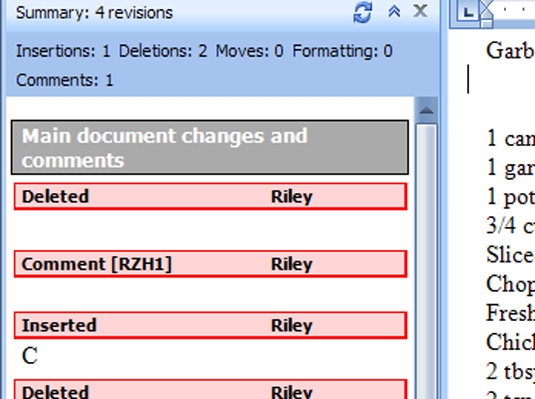
Below in CAPS my markup on Alphonso’s post:
Nico and I have come up with a way of duplicating posts out of one piece of news; one of us writes something and then the other disagrees  [WE NOW TRIPLICATE MATE]
Last Tuesday Nico wrote a post titled “Revolving doors” in which he expresses the concern that “the cumulative effect of appointing previous Commission officials as judges, plus the very many référendaires who have spent some time in the EU administration may give rise to a pro-Commission bias at the Court“.
[I was actually in Luxembourg for a Court hearing -my first one in the front lawyer’s row- when Nico wrote it, but I’ll tell you about that some other time].
Without entering into the debate on whether there is or there isn’t too much of a pro-Commission bias at the Court (in my view, there is the same deference towards the public authority that we find in any European administrative system – in the US, on the contrary, that deference is less visible-), I don’t at all share Nico’s concern [CHECK CONSISTENCY: YOU DONT WANT TO ENTER INTO THE DEBATE, YET YOU EXPRESS DISAGREEMENT. WOULD SUGGEST DELETING THE INITIAL CAVEAT].
Assuming that there was such bias [YOU DEPART FROM MY INITIAL ASSUMPTION, WHICH POSTULATED THE ABSENCE OF BIAS, YET ANTICIPATED A RISK OF BIAS], I would argue that it has nothing to do with former Commission officials becoming members of the Court: [CORRECT. TO BE MORE ACCURATE, THIS POSSIBLE BIAS HAS NOT ONLY TO DO WITH COMMISSION OFFICIALS BECOMING JUDGES AT THE COURT, BUT ALSO IS DUE TO SEVERAL OTHER FEATURES OF THE COURTS SYSTEM. A FREE PERSONAL SAMPLE: PRESUMPTION OF LEGALITY OF COMMISSION DECISION, DOCTRINE OF MARGINAL REVIEW OVER COMMISSION SUBSTANTIVE ANALYSIS, REPEATED APPEARANCE OF SPECIALIZED LEGAL SERVICE AGENTS ON BEHALF OF THE COMMISSION (AS COMPARED TO HIGH TURNOVER OF LAWYERS REPRESENTING CLIENTS IN COURT), INEQUALITY OF APPLICANTS CHALLENGING A X-HUNDRED PAGES DECISION UNDER A 50 PAGES CAP ON SUBMISSIONS; SYSTEMATIC RELIANCE OF THE COMMISSION (READ THE LEGAL SERVICE) ON FORMS-BASED DEFENSE ARGUMENTS, ETC.]
Only two current Judges at the GC have previously worked at the Commission: Marc van der Woude (who was also a private practitioner, which should offset any bias; ask anyone in the business their opinion on him and you won’t hear a single negative one), and Guido Berardis (of whom I’ve also heard very positive things) [THE ISSUE IS NOT ABOUT WHAT WE PERSONALLY AND SUBJECTIVELY THINK ABOUT THEM; I TOO HOLD THOSE JUDGES IN GREAT ADMIRATION. IT IS ABOUT COGNITIVE PROXIMITY TO CERTAIN IDEAS, OBJECTIVE QUIRKS AND BIASES, WHICH ARE HUMAN AND AFFECT ALL OF US, INCLUDING THOSE SEEN AS THE BEST PROFESSIONALS. THOSE THINGS HAVE BEEN ADUNDANTLY DOCUMENTED BY BEHAVIORAL ECONOMISTS]. 2 out of 27 (3 if the Committee gives the green light to Kreuschitz, which it undoubtedly should) does not appear to be an unreasonable proportion [UNLESS YOU PLEAD BEFORE A 3 JUDGES CHAMBER – THE STANDARD FORMAT FOR A GENERAL COURT CHAMBER – AND ALL THREE SIT IN IT]. Furthermore, all three of them were part of the Legal Service, which means that an important aspect of their work -aside from pleading- consisted in identifying flaws in the Commission’s work [NOT SURE THIS IS YOUR BEST SHOT. LET ME EXPLAIN. WHEN A DECISION IS APPEALED, THE LEGAL SERVICE HAS ALREADY CONCLUDED TO THE ABSENCE OF FLAWS [OTHERWISE THE DECISION WOULD NOT HAVE BEEN ADOPTED]. OUR JUDGES WHO IN THE PAST WORKED FOR THE LEGAL SERVICE WILL THUS LIKELY BE TEMPTED TO ASSUME THAT THE DECISION IS LAWFUL, AND DEFER TO THEIR FORMER COLLEAGUES ANALYSIS. WHY REDO THE ANALYSIS OF THEIR ***** PEERS? ].
If you ask me (and part of my job is to beat the Commission in Court), the problem lies not in Judge’s previous professional experience, but rather in Judges being appointed for political reasons other than their knowledge of the law (see here). And people who know about EU law are generally -there are a few exceptions- either academics (most of whom also have defined pro or anti Commission biases), practitioners (we may have the opposite bias, plus we’re too competition law oriented), and Commission officials.
In sum, I would argue that we need Judges that know their stuff inside out, no matter their nationality or whether they are national judges, academics, ex-Commission officials or former practitioners. [AGREED. I WOULD KEEP THE SENTENCE AS SUCH, AND SIMPLY ADD “IMPARTIAL” AT THE BEGINNING: “IN SUM, I WOULD ARGUE THAT WE NEED IMPARTIAL JUDGES THAT KNOW THEIR STUFF INSIDE OUT”]
A FEW OTHER COMMENTS/REMARKS:
YOU DO NOT ADDRESS THE REFERENDAIRES;
IN MOST MODERN SYSTEMS OF LAW, THERE IS A REAL SEPARATION BETWEEN PROSECUTORS AND JUDGES, AND FOR GOOD REASON;
THE QUESTION IS NOT SO MUCH ABOUT WHETHER THERE IS OR NOT A BIAS. WHEN IT COMES TO JUSTICE, THE MERE SUSPICION OF A POSSIBLE BIAS IS INTOLERABLE. JUSTICE IS THE LAST RESORT REMEDY AGAINST RISKS OF ARBITRARINESS. IT THUS MUST COMPLY WITH THE HIGHEST POSSIBLE STANDARDS OF IMPARTIALITY. PUT SIMPLY, IMPARTIAL JUSTICE MUST NOT ONLY BE DONE, IT MUST ALSO BE SEEN TO BE DONE.
Revolving doors

Those days, I feel strongly about conflicts of interests.
Not those that affect lawyers and economists. Almost inevitably, their prose is influenced by the business interests of their clients. We all know this. And subject to full disclosure, I see no evil in the fact that lawyers and economists publish papers in academic journals.
No, those that affect the EU institutions. Yesterday, M-Lex reported a blatant example of “revolving door“.
V. Kreuschitz will succeed to J. Azizi as the Austrian Judge at the General Court.
In a previous life, Kreuschitz served as a Commission legal adviser on State aid and antidumping.
It certainly makes sense to have this kind of expertise at the Court. But the cumulative effect of appointing previous Commission officials as judges, plus the very many référendaires who have spent some time in the EU administration may give rise to a pro-Commission bias at the Court. This, in turn, is not in line with the right to equality of arms in legal proceedings, as protected under Article 6 ECHR.
There would also be much to say about the conflicts of interests that plague academia. On this, I leave you with a reference to the great documentary the “Inside Job“, where Ferguson showed how the banking industry litteraly “bought” dozens of influential US scholars, to shut out any sort of academic criticism against nefarious financial practices.
The Odds of Commission v Google

A few days ago, a funny post of mine scheduled for publication was deleted by my one-handed friend Alfonso.
With his dysfunctional arm he can’t write. But he certainly can press the erase button.
I will not ressuscitate this post on pain of causing him a heart attack.
But I have decided to write something in the same spirit. After all, we (luckily) don’t live in North Korea. I leave it to our readers to guess what my censored post was about.
So here we go. With the expiration of Commissioner Almunia’s ultimatum on 31 January 2013, journalists were star crazy yesterday.
Habemus papam “It has arrived” said today a popelike Joaquin Almunia, alluding to Google’s proposed settlement package.
Now the question is as follows. In Commission v Google:
I will try to run more polls of this kind in the future (subject to the prior authorization of my learned co-blogger).
If you need a fix
Has the Commission turned into a settlement junkie addict?
Until now, the Commission was ready to go through all sorts of legal compromissions to bring cases under the Article 9 commitments procedure:
- In Microsoft II, the Commission settled a case which 3 years before had been solved with a fine (thereby violating the principle that settlements are not apposite in cases where fines are warranted, see recital 13 of Regulation 1/2003).
- In S&P, IBM and in a gaggle of energy cases, the Commission settled cases where anticompetitive effects had lasted over a significant period of time, thereby failing to punish past anticompetitive conduct (and in turn, denying justice to the victims of the infringement).
- In the upcoming Google settlement, the Commission will close a case which raises novel legal and economic issues. Yet, how can the Commission possibly suspect an infringement short of any significant precedent?
As I was hearing exams all day, I had the occasion to read more on the commitments from Apple and four publishing groups for the sale of e-books.
I was truly baffled when I realized, in this case, that the Commission had accepted to settle what it otherwise deems a “hardcore restriction“, namely an industry-wide resale price maintenance scheme.
With this new precedent, the next question is: will the Commission ever cross the rubicon and accept to settle a cartel case? The Libor investigations could provide good candidates for such a new policy. In those cases, the Commission may be reluctant to hammer the Libor participants with fines, on pain of undoing 5 years of accomodating State aid policy with Article 101 TFEU penalties. An article 9 settlement would provide the Commission with a “good looking” exit strategy.
From a more general standpoint, the Commission’s “Settle ‘Em All” policy finds no merit in our opinion, and may well have adverse effects. After all, if firms know they can settle anything and face no penalties, why should they observe the law in the first place?
Should I Stay or Should I Go?

Comes the end of the day, most young lawyers face this question.
And many decide to stay at the office even if they have nothing to do, just to look busy before partners.
Courtesy of a keen reader of this blog possibly underoccupied in her own professional organisation ;): a nice chart on when to go home

Not-so-mainstream pending cases (II)

I am back with a reference to another ‘not-so-mainstream’ case (you could all see that Alfonso cannot control his blogging urges)
This one is probably more mainstream than the previous one, but the whole field of State aid remains conveniently ‘underground’, so it probably belongs here too (incidentally, my State aid seminar has just started). This case brings us back to the good all days of the dot-com bubble (and we all thought that was a recession). As many other ‘convergent’ firms, France Telecom was in big trouble. In those dramatic circumstances, the French government stepped in and essentially announced that it would do anything to save the company. The goal was to stabilise the credit ratings of the firm. Now that we are undergoing a dramatic recession we understand the importance of ratings much better (just think of Mario Draghi’s bold statement in July last year).
The question raised in the case was that of whether the steps taken by the French government to preserve the viability and creditworthiness of France Telecom amounted to State aid. The General Court disagreed with the Commission and concluded that, while granting an advantage, such steps did not involve the use of State resources, as consistently required by the ECJ since Preussen Elektra. In an interesting opinion (in French only) issued in June last year, AG Mengozzi proposes to set aside the GC judgment. He considers that the interpretation given by the GC (at least as far as some of the measures are concerned) is excessively formalistic. I am looking forward to the judgment. If one considers the case law on guarantees and similar measures, AG Mengozzi is probably right.
A couple of thoughts in relation to the judgment:
- This is a good reminder of why the Trinko doctrine will never carry the day in Europe. I think Trinko is a sensible and thoughtful opinion that is widely misunderstood. However, if one takes account of the links between incumbent operators and Member States, it probably makes sense to leave room for the application of competition law in Europe. Let us not forget that the facts giving rise to the Wanadoo decision (predatory pricing) took place at roughly the same time.
- The GC and the ECJ have recently and notoriously disagreed on some high profile State aid cases. These cases relate to the notion of selectivity (British Aggregates, Gibraltar, NOx). The GC tends to side with Member States and the ECJ with the Commission. AG Mengozzi’s opinion suggests that this will be the case here. We will see
Pablo
‘Not-so-mainstream’ pending cases (I)

I am coming off the bench to replace Alfonso (fans do not worry: it is all temporary, and the All-Star blogger will be back and kicking very soon!).
When he asked me to prepare a post, I thought it would be a good idea to write on pending cases before EU courts with which our readers are maybe less familiar, but that raise most interesting issues nonetheless. Those who know me will not be surprised to know that it is once again all about electronic communications.
Today’s post is on a reference from a preliminary ruling coming from a Dutch court (Case C-518/11), that I find most intriguing. According to the information found on the website of the Court, the hearing took place on 22 November 2012.
The Gerechtshof te Amsterdam submitted a list of eight (very detailed) questions. It seems that the municipality of Hilversum included a ‘tariff-limiting clause’ when it sold its cable television activities to a third party. This factual scenario raises important questions relating to the scope of the Regulatory Framework for electronic communications and others relating to the scope of Article 101 TFEU.
- Scope of the Regulatory Framework: The Dutch court asks whether the provision of cable television services to end-users is subject to the Regulatory Framework and whether the fact for the municipality to cap retail tariffs is compatible with the sector-specific regime. This question is relevant not so much because of the (predictable) outcome but because it shows that the artificial content/network divide found in the Regulatory Framework is plain impracticable in the current technological landscape.
- Scope of Article 101(1) TFEU: Is it contrary to Article 101(1) TFEU to impose tariff-related conditions when selling a business? Because the seller in this case is a municipality, an array of sub-questions come to mind. Is the municipality engaged in an economic activity when imposing such conditions? Is this conduct contrary to ‘the obligation of Union loyalty’ (as drafted in the questions)? This set of questions is probably more interesting from a substantive perspective, at least so because the chances of an unexpected outcome are probably higher.
Another post on another not-so-mainstream case will follow soon!
Pablo
Missing in action

We are a disgrace:
Nico is missing in action in some lost island, and I’m on forced semi-vacation in Spain due to a humerus fracture provoked by a humorous ski fall, and unable to do anything but bad jokes (see above) and read (on the antitrust-related side I’ve particularly enjoyed the two in the pic above -Interop, and Antitrust and the bounds of power- which I would recommend you to read whenever you injure yourself..).
I’m telling you this because since Nico and I are unfit (that is, even more) to take care of the blog as we’d like, our friend Pablo Ibanez Colomo (LSE) has accepted to write some stuff in the coming days. We’re grateful to him, even if we know there’s a risk that you’ll like his posts more than ours! 😉
Write to you soon!


 Chillin'Competition