Archive for the ‘Uncategorized’ Category
It’s all about the money
–
Competition conference organisers are yield management experts.
Take a look: if you register now for GCR’s next telco, media and tech conference due on 2 July, you will benefit from a “super early booking rate” of £650.00!
You read well: £650.00 for a one day conference in one of the cheapest cities of Europe, London.
Sure, the programme mentions no such thing at this stage – I guess it is still too “super early” in GCR’s language – but you may even get a free coffee/meal and a bunch of great GCR brochures for this price. Wow!
In contrast, GCR seems less familiar with the output-enhancing effect of third degree price discrimination. Take a look:
| Registration type | Super early booking rates: |
| Standard | £650.00 |
| In-house Counsel/ Government Agency |
£425.00 |
–
–
–
There are no categories for “academics“, let alone “students”. Sheeze.
Maybe it’s just that the event has no academic ambition, as the list of stakeholders speakers suggests.
After all, it’s all bout the business. And Chinese-speaking academics do not write on those issues: #1; #2; #3; #4; #5; #6.
PS: Kaï-Uwe Kuhn is presented as CRA. Did he quit the CET yet?
PS2: If agencies seek a target for excessive pricing investigations, they should sure throw an eye on the lucrative conference business.
On the Proposed Branding Remedy in Google

Google is a clever company.
Remember: as part of a proposed settlement with the Commission, Google has offered to brand search results.
Under this remedy, users can spot if Google preferentially displays links towards its own related services.
But if my understanding is correct, the nub of the issue is not one of consumer information, but rather one of users’ reaction to Google’s preferential search tactics.
Put differently, what matters is how users behave when Google’s own related services appear prominently in search results lists.
I have qualms with the idea that a remedy of this kind can change anything. It may even backfire. Faced with branded search results, users may increasingly click on Google’s related services, at the expense of competing services. This is because a large number of users find value to using services that belong to one single IT ecosystem (a sort of service-based network externality, driven by economies in transaction costs – no need to login twice, for instance – technological stability and service integration). Not to talk of the fact that Google has strong image in the public that users may associate with higher quality.
This thought came whilst reading Josh Wright’s excellent paper on Evidence-Based Antitrust. In essence, Wright makes the point that antitrust enforcement should be based on existing empirical data and on robust economic analysis. In contrast, antitrust enforcement should stray from predictive analysis, and avoid using untested economic models, brought by parties and elaborated by economic consultants in the context of particular cases.
This paper is refreshing. It illustrates the profound intellectual schism that separates antitrust enforcement in the US and the EU. For a number of years, I had been leaning with the view that both sides of the Atlantic had achieved convergence . But Wright’s arguments that antitrust enforcers should display”humility” and avoid a too predictive approach to antitrust enforcement shines a bright light on the arrogant resilience, in the EU, of the object-based enforcement model. A must read.
Commission Bashing?

As any other bias – including prosecutorial bias – Commission bashing is bad (and boring).
So the other day, I thought to myself what makes a true”Commission basher” (I was told confidentially that my piece on conflicts of interests had been seen as Commission bashing :()?
Here’s a personal four-pronged proxy. To be a Commission basher one must:
- never say anything good about the Commission’s output
- reserve criticism only to the Commission, and fail to extend to other EU organs
- address criticism exclusively to the Commission, and not to other competition agencies
- express criticism in crushing language
At times, I reckon that the content of this blog may have read a bit like Commission bashing. Since we don’t want our readers to have this impression, two clarifications are in order.
Number 1 is that good news don’t sell. This may explain that this blog tends to focus on bad case-law, which is also funnier to comment upon. Note that we have never refrained from saying very good things on EU competition law developments, much to the contrary. Recent examples include our comments on Post Danmark, on DG COMP’s effects-based approach or on the Article 102 TFEU Guidance paper, etc. Alfonso even turned cyranesque, with his poignant love declaration to Commission officials.
Number 2 is that we tend to focus a lot on Commission’s output because it has kept a predominant position in EU competition enforcement. Yet, we often cover the case-law of the EU courts too, as well as interesting national competition developments when we can.
The bottom-line: at Chillin’competition we are not Commission bashers.
Scholarships for Admission in the ULg LL.M in IP and Competition Law

My university is offering scholarships for admission in LL.M programmes, including in our LL.M in IP and Competition Law. EU and non-EU students are eligible.
A full description of the scholarships can be found here.
Please do not hesitate to contact me, should you have any queries on this.
Law of Unintended Consequences

It is often overseen that there is a nexus between substantive competition law principles and procedural issues.
In this context, the current “resilience” of the forms-based approach in substantive competition law (see the recent Dole v. Commission case or the Expedia judgment) is likely to undermine the development of private enforcement.
If we follow §65 of the recent ECJ ruling in C-199/11, Europese Gemeenschap. v. Otis, national courts dealing with claims for damages in follow-on cases must comply with the agency’s prior decision, and admit the existence of an infringement akin to a fault.
Whilst it is true that, because of its obligation not to take decisions running counter to a Commission decision finding an infringement of Article 101 TFEU, the national court is required to accept that a prohibited agreement or practice exists, the existence of loss and of a direct causal link between the loss and the agreement or practice in question remains, by contrast, a matter to be assessed by the national court.
In this setting, the main role of national courts is thus confined to estimating the harm inflicted on victims and to establishing causality (assuming §65 also applies to NCAs).
But how can they possibly do this if the decision simply talks of anticompetitive “object” in the abstract, and fails to scrutinize the impact of the impugned practice?
In my opinion, if (i) we are serious about private enforcement; and (ii) we read Europese Gemeenschap. v. Otis in a “task sharing” perspective, then agencies must provide a necessary estimation of the anticompetitive impact of the unlawful practices. Alternatively, if they rely on “object” arguments, they should at least offer to national courts full access to the evidence in their possession, so the later can make the math.
Competition Bank Runs?
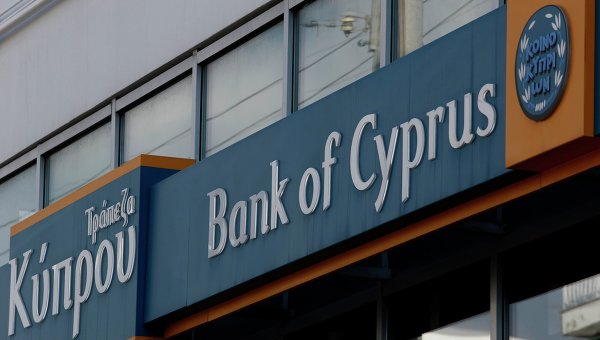
Jeroen Dijsselbloem triggered a spate of criticisms yesterday when he mentioned that the Cypriot deal was a “template” for future EU bailouts.
If this is true, the Commission may one day be subject to the sort of haircut imposed on wealthy Russian mobsters Cypriot bank account holders.
Up to this point, this is still sci-fi competition law. But take a look:
1. Fines paid to the Commission in cases with subsequent appeals are provisionally held in specific deposit accounts with commercial banks and they cannot be used to finance any other EU activities.
2. In 2009, a Special report of the Court of Auditors mentioned that the volume of fines held in such account lied in the ballpark of €5 billion.
3. At the time, the Commission had accounts with Fortis, BBVA, ING Belgium, KBC, ING NL and Citibank. In a not so distant past, several of those banks were bailed out. And it cannot be excluded they’ll have to be rescued again.
Interestingly, the 2009 Report warned at §47 that “this approach [i.e. leaving fines in such accounts] exposes the Commission to risk of loss in the event of banking failure. An optimum approach to better managing has not been established“.
I have no information on the status of this issue, but I understand that the Commission has been working on a better approach to address such risks (notably by using banks with good credit ratings…).
Yet, given the recent turn of events in Cyprus, I cannot help but thinking that one day the Commission could lose big money.
Not to think to the flood of legal consequences this may have, should the General court or the Court of Justice subsequently rescind (in part or full) the fines held in the Commission’s accounts.
Theories of Harm potentially applicable to Apple’s Distribution Tactics

On TV last week, I looked dumb reciting the obvious: in the EU, the law forbids RPM as an outright unlawful practice. So if it was proven that Apple is RPMing, then there could be trouble down the road.
Some voices blarred amongst some competition lawyers’ friends, as I had proferred accusation on Apple (I have not).
So I made some research in the WE. Upon inquiry, it seems that Apple’s tactics are more subtle. If I understand correctly, Apple tells its independent retailers that consumers can take a price up to a certain level (let’s say 500€), but no more. In turn, Apple sets in the contract a recommended maximum price of 500€. And then, it sells them the product at a price slighlty below this (let’s say 495€). On top of this, Apple would allegedly charge lower prices to its own retail distribution network.
On face value, such maximum prices are per se lawful. But the question is whether this can be akin to de facto RPM, given that with the high input price, Apple in essence gives little choice to its independent retailers but to apply the maximum price. Further evidence that this constitutes hidden RPM would stem from the fact that Apple accords much lower prices to its own retail operations (incl. over the Internet).
But there’s something puzzling with this theory of harm: why on earth would Apple seek to harm independent retailers? Possible options are (1) Apple engages into de facto RPM in countries where it does not have large retail operations of its own, so as to yield as much profit as possible; (2) Apple is reluctant to sell through independent retailers in countries where it has its own retail operations, but anticipates that with control over a “must store” product, it would be forced to supply.
In option 1, we are looking at a theory of anticompetitive exploitation, amenable to an infringement under the RPM framework, pursuant to 101 TFEU or to unfair pricing rules pursuant to 102 TFEU (if Apple is proven dominant).
In option 2, we are looking at a theory of anticompetitive exclusion, amenable to an infringement under article 102 TFEU (if Apple again is proven dominant), under the refusal to supply/price discrimination/margin squeeze doctrines.
A related puzzling thing is about retailers’ incentives to buy a product on which they make so little margin. But again, one may consider that they have incentives to do so at any rate, because this brings traffic towards their shop. And after all, each distributor is likely to believe that it is better to be the one to make the sale, rather than to leave it to another distributor.
All this, of course, should be backed by facts. The Commission is apparently looking into this, if I believe the latest news.
Nicolas on TV

Those of you watching Belgian TV on Wednesday night (not many, I guess) might have have come accross a program on RTBF about competition policy as seen from the perspective of consumers. Prix trop élevés : arnaques bien ficelées? (i.e. Too High Prices: a well set up robbery?; please excuse my French..).
The program features some big names, including our Friday slotee J.F Bellis, P. Nihoul and a certain Nicolas Petit (who’s becoming an ubiquitous TV presence; he’s becoming the Kim Kardashian of antitrust) 😉
Ckick here to watch the video:
http://www.rtbf.be/video/emissions/detail_questions-a-la-une?pid=10
Happy

To our lawyer readers: competition for rankings just got much tougher.
Today, Alfonso has become a contender for the 40 below 40 ranking.
Happy Bday mate.
Learning curve

Random thoughts following yesterday’s discussion:
- Google translate is an ordoliberal software
- Or … the systematic removal of “effect” from Treaty translations may be part of the settlement currently discussed with DG COMP (in a bid to please the ordos within the Commission)
- The bad news about inconsistencies in the various language versions of the horizontal cooperation guidelines and of the guidance paper? EU law not applied uniformly.
- The good news? Entitles to perform natural experiments, and test in real life the economic impact of distinct legal standards


