Archive for the ‘Uncategorized’ Category
Awareness and Public Outreach Programmes

Public outreach programmes were a key topic on the agenda of the ICN annual conference in the Hague.
Those programmes seek to raise awareness of the general public (including firms) to the scope, content, institutions and penalties of competition rules. They are particularly important in countries with young antitrust regimes. They induce firms to comply spontaneously with the new rules.
But they are also relevant to any agency seeking to improve its detection efficiency. To take one example only, too many individuals still believe that price-fixing is not unlawful. Through education, awareness programmes may prompt stakeholders to report infringements (by lodging complaints and leniency applications, for instance).
Now CAs accross the world have been very inventive in crafting such programmes, often with the active support of the ICN. The leniency movie is now a standard in many competition law jurisdictions. DG COMP has recently posted on its website a funny flash module which illustrates the scope of competition policy. The Norwegian and Brazilian CAs have produced t-shirts with competition-friendly slogans (would love to get one of them. My size S or M).
Without the shadow of a doubt, however, the prize of the best public outreach device must be awarded to the Competition Commission of Singapore (CCS). On its website, the CCS makes available (for free) a MANGA on abuse of dominance (in English). Bravo!
I am just back from the Hague with 6 paperback copies. They will be awarded to my best students this semester.
PS: A great experience. I am truly indebted to the DG COMP for its kind invitation.
Competition Parties

We recently received invitations to a new breed of parties. On 4 May, Compass Lexecon was having its “Exclusive Spring Party” (with “drinks and canapés“). Two days later, Crowell & Moring held its “CroMo Party” at Tour and Taxis (with DJ BENNY…).
Unfortunately, I could not attend any of those parties.
Yet, a question arose: what drives business law firms and economic consultancies to organize such summer parties?
In the case of Compass Lexecon, the answer is straightforward. The firm sought to celebrate the launch of Compass Lexecon Europe, following the acquisition of LECG’s EU Competition Policy Group. This party was a classic reception, similar in nature to many other receptions.
The case of Crowell and Moring is more interesting. The flyer and dressing code (“colorful casual”) suggest that CroMo’s party was primarily targeted at young professionals (from Cromo and elsewhere) rather than at partners and clients. No information was provided on drinks, but I suspect they came for free. There was no special thing to celebrate.
So why organize a loss-making party of this kind? Initially, the following reasons came to mind: acquiring information on competing law firms, possibly with the help of liquid substances; increasing busy associates’ procreation rate; assuaging partners’ midlife crisis.
On second thoughts, however, I dismissed most of them in favour of a more conventional explanation which has to do with “branding”. It plays at several levels.
First, with the commoditization of the profession, legal services are increasingly fungible. Clients shop around and competition amongst law firms becomes brutal. To prevail over rivals, law firms seek to be perceived as special. For a number of years now, law firms have organized academic conferences to look bright. Now, they organize parties to look cool, hype and creative.
Second, as stressed by Alfonso a while ago, there is an increasingly pervasive perception amongst students that working in a business law firm is “not cool”. Being an associate in a business law firm involves long working hours, little freedom and virtually no space for leisure and family life. This has dramatic consequences on law firms’ hiring opportunities. And unlike in the 1980s and 1990s, financial compensation no longer does the trick. No wonder why some law firms seek to change their image amongst young lawyers, and arguably organize parties to that end.
Please note that we are interested by pictures, feedback and stories in connection with those parties.
Day off for EU Civil Servants
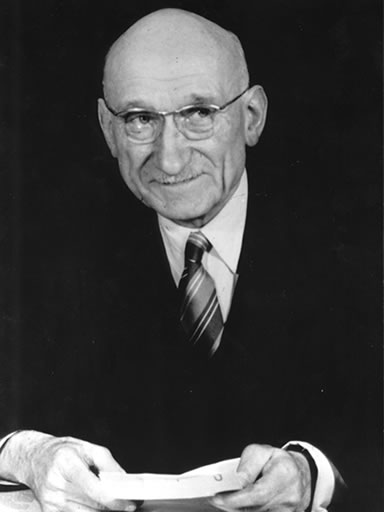
Felt like filing a merger today? Or having a call with a Commission official to discuss a case of common interest?
Unlikely to happen. Today is Europe day or in EU jargon, Schuman day. Most competition civil servants are off duty, chillin’.
What the EU institutions celebrate today is the anniversary of the Schuman declaration of 9 May 1950. In this declaration, R. Schuman, the French Minister of Foreign Affairs (see above picture), invited the governments of France, Germany and other European countries to team up and build a federal state.
The celebration of this event triggers the following remark on my end: as it stands today, the EU is a direct emanation of the Schuman declaration. Yet, 61 years after, and with the exception of competition policy perhaps, we are still far from a federal state with some sort of political existence (nota: I am a convinced federalist). This is true both internally – ever heard anyone saying he was a EU citizen? – and externally – think of the EU’s invisibility in relation to Lybia.
In addition, I am pessimistic on the future, given the increased fragmentation dynamics at the domestic level (think of the nefarious state of Belgian politics) and the somewhat mechanical, ever-enlarging nature of the EU (think of Turkey’s accession demands, backed to a large extent by those who only conceive the EU as a shopping mall).
Subversive thoughts (1) – Fines, Leniency and the Search for an Optimal Detection Policy

A somewhat heretical idea sprung to mind yesterday. The mainstream will not like it (fortunately disputes with the mainstream are not any longer settled by recourse to bonfires).
(Note to our readers: the mainstream comprises adepts of Chicago School thinking and Public Choice theory. It combats, with caricatural arguments, all attempts to intensify competition enforcement. As if we were subject to Pavlovian conditioning, all too often we lawyers side with the mainstream, thereby failing to remember that competition enforcement is a genuinely good thing).
But let´s get back to this idea: to improve cartelists incentives to report infringements to agencies, why not allocate the entire amount of the fines (or a significant proportion thereof) to the whistle blower?
As long as the ring leader(s) is (are) excluded from a such reward, I see no obvious perverse effects to the proposal.
Surely, it sounds quite immoral to reward financially what is plain and simple betrayal. But on the other hand, it is fair and efficient that society rewards those firms that exhibit the strongest desire to comply with the law.
Also, one cannot rule out that clever firms involved in multiple cartels will coordinate leniency applications so that each participant benefits at least once from the reward (some sort of market sharing on leniency applications). Yet, this hypothesis rests on restrictive factual assumptions. More importantly, given that the fine will likely change from one cartel to the other, cartelists will not withdraw equal benefits from leniency applications. In turn, this will undermine their incentives to join/observe the coordination.
Finally, some could be warry for the EU budget to which competition fines contribute. Again, the objection is not decisive. This is because competition fines do not increase the EU budget but finance it. Technically, they are deducted from MS contributions, who pay less when competition fines are high. The sole and whole issue there is thus distributional: shall we transfer the product of fines from MS to whistle blowers? I am not sure of the answer, but I am incline to believe that competition fines are just a drop in the sea of MS contributions.
Those thoughts came yesterday whilst I was preparing a lecture on public and private enforcement for the LL.M students of the University of Gent (see ppt. below). I am very grateful to Prof. Govaere for her kind invitation.
5 May 2011 – Public and Private Enforcement of Competition Law
Chillin´Competition Group on LinkedIn

We are that close to becoming IT geeks.
We have just created a Chillin´Competition group on LinkedIn! (you can click here to join it). The above picture is the group´s image.
In addition to the existing CompetitionProf Twitter account (see sidebar on this page), this will improve the ability of our readers/friends to meet and interact with us/each other.
This blog currently has more than 3000 visits a week, but we can only put a face to the people that contact us by email and to the 75 readers who have so far suscribed to the blog (by the way, in case you haven´t noticed, there is a “Suscribe” link on the right side of the screen). We also hope that by having a little more information on who you are, we will be able to improve the contents of this blog with “more targeted” posts. In turn, this will entitle us to obliterate our competitors chill competition even further.
Looking forward to linking up with you there
Nicolas & Alfonso
The end of the US Microsoft case

13 years ago the US Department of Justice together with several States filed a suit against Microsoft that marked the beginning of what still remains as the most significant case in contemporary antitrust, and one that led to many changes in the way we approach high-tech markets, and antitrust enforcement in general.
The history of the US v. Microsoft antitrust battles is too rich in details to be summarized here, but those interested in a great brief explanation should watch this video in which Phil Malone (who was one of the leading prosecutors for the Antitrust Division -and also my Professor at Harvard Law School- makes this long story short).
But now more than ever, all of that pertains to history. The oversight mandated by the 2001 settlement (reached right after the DC Circuit Corut reversed part of the District Corut´s decision which had ruled for the Governmment) will expire on May 12th. However, the last oversight hearing before Judge Colleen Kollar-Kotelly occurred on April 27th and marks, in practice, the end of the story. In the words of Judge Kollar-Kotelly, the effective end of the Microsoft case “will close an important chapter in the history of antitrust law“.
I missed this in the selection of news that had taken place during our days off, and I have, very rightly, been “reprehended” for this omission by Craig Farringer, Assistant Attorney General for the District of Columbia, and one of the members of the so-called “California Group”. (as some of you will recall, several States decided in November of 2001 that they did not want to accept the settlement proposed by Microsoft; this lead to a full evidentiary remedy hearing which resulted in the California Group Final Judgment). Craig Farringer (who also had extremely nice words for this blog, for which we´re grateful) has sent us a picture of some California Group lawyers and experts taken moments after the status conference outside the Prettyman courthouse in Washington. Here it is:
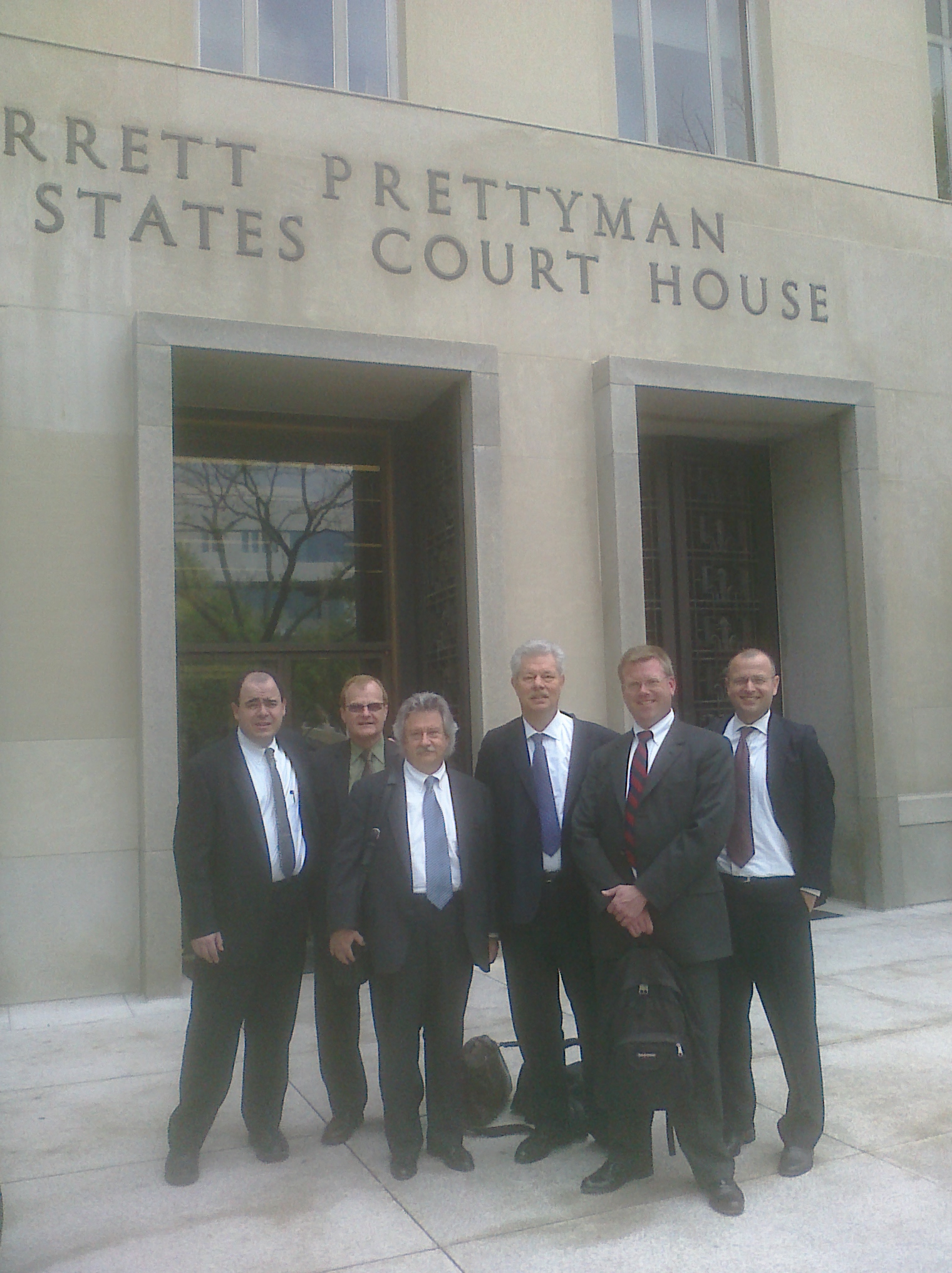
(Pictured from left to right is Adam Miller of California, the now famous technical expert Craig Hunt, Layne Lindebak of Iowa, Stephen Houck (who signed the original complaint lodged by the States in 1998), economics expert Chuck Clarke, and Craig Farringer).
Our congratulations to all those who worked on the case, be it for the DOJ, for the States, for Microsoft or for other third parties involved in the case.
And, by the way, on this side of the Atlantic the General Court has scheduled for May 24th the hearing on Microsoft’s appeal against the Commission´s findings of non-compliance with the 2004 decision, which led to an additional 899 million euro fine.
Competition Law and Sport (VII) Belgian Competition Authority investigates Pro League rules

Back in November we devoted another of our posts on competition law and sport to a couple of cases on which I have been/am imvolved. The core issue in one of those cases -currently pending before the Court of Arbitration for Sport- relates to whether, or under which circumstances, a total or partial closure of a league, the decision to eliminate some of its members, or a modification of the promotion/relegation rules governing the functioning of a given league (in that case, the basketball Euroleague) might constitute a restriction of competition attributable to the league itself or to those of its members having voted for the new rules.
Some of our readers have contacted us to inquire about our thoughts on a new belgian case that contradicts the idea (apparently shared by some officials within DG COMP) that such decisions cannot give rise to any competition concerns. Indeed, some weeks ago the Belgian Competition Authority formally expressed its concerns with the modification of the relegation rules of the Belgian football league (Pro League). (See here for the Press Release).
I won´t enter fully into the debate given that I´m not aware of the specificities of the case, and because my objectivity and freedom to express an opinion are somehow compromised. Nonetheless, I think it´s interesting to remark that this is not the first time that competition rules have affected similar decisions. There is an interesting precedent in relation to rugby leagues in Australia , and in the US it has been taken for granted that, absent antitrust exemptions, decisions on the shrinking of a league or even on the relocation of clubs/franchises would fall under the scope of the antitrust laws (a clear illustration of this was the 1991 proposal for a Fairness in Antitrast in National Sports (FANS) Act. (I often wonder if they hire someone specifically to come up with “original” acronyms over there…)
It´s clear to me that decisions of the sort of those outlined above fall in principle under the scope of Art. 101(1). Accordingly, any assessment on their legality should maily focus on the application of the criteria laid down by the ECJ in para. 42 of the Meca Medina Judgment and on whether the four Art. 101(3) conditions are satisfied.
We´ll keep you posted on any developments.
We´re back. And a few things happened while we were away

We´re back on track. Since, strangely enough, the world didn´t stop turning in our absence, there have been a number of interesting developments worth noting. Some of them will be the object of specific posts in the coming days, but, for the moment, here´s a choice of three: one from the EU, one from the US, and one from a third jurisdiction (Mexico), which are related to matters that have recently been/will soon be discussed on this blog:
Europe: Last Tuesday Commissioner Almunia delivered a speech at the GCLC´s Fifth Evening Policy Talk (by the way, the director of the host institution, who happens to be my co-blogger, Monsieur Petit, was absent; how rude is that?? 😉
Commissioner Almunia spoke about the “resilience and adaptability” of the competitition rules; he highlighted the four commitment decisions adopted by the Commission in the energy sector, pointed out that competition enforcement can achieve objectives other than the efficiency of markets (resorting to the example of facilitating generic entry into pharma markets), and insisted on the necessary complementarity of regulation and competition (with his eyes set on financial markets).
In addition, and very interestingly, Mr. Almunia announced plans to aim for a “better targetting” of State aid control, noting that the Commission´s services currently have too much on their plate. It will be most interesting to see the practicalities of how the Commission intends to “refocus” its resources on the State aid field. In the coming days one of the greatest experts on State aid matters will express his views on these plans on Chillin´Competition.
United States: More Google News (and this time we’re far from being the first ones commenting on them…). On earlier posts we referred to the controversy surrounding the Google/ ITA software deal. Some days ago the parties entered into a consent decree which imposes a set of detailed “regulatory” conditions upon Google’s future operation of ITA that would resolve all of the DOJ’s competitive concerns. Those concerns essentially related to the possibility of other flight search companies being foreclosed from access to QPX (ITA’s airfare pricing and shopping software). A press release from the DOJ briefly describes the conditions imposed by the consent decree in the following terms:
Under the proposed settlement, Google will be required to continue to license ITA’s QPX software to airfare websites on commercially reasonable terms. QPX conducts searches for air travel fares, schedules and availability. Google will also be required to continue to fund research and development of that product at least at similar levels to what ITA has invested in recent years. Google will also be required to further develop and offer ITA’s next generation InstaSearch product to travel websites, which will provide near instantaneous results to certain types of flexible airfare search queries. InstaSearch is currently not commercially available, but is in development by ITA.
To prevent abuse of commercially sensitive information, Google will be required to implement firewall restrictions within the company that prevent unauthorized use of competitively sensitive information and data gathered from ITA’s customers. The proposed settlement delineates when and for what purpose that data may be used by Google. Google is also prohibited from entering into agreements with airlines that would inappropriately restrict the airlines’ right to share seat and booking class information with Google’s competitors. Finally, the proposed settlement provides for a formal reporting mechanism for complainants if Google acts in an unfair manner.
(For a more detailed explanation on these conditions read the Proposed Final Judgment. Other documentation related to the case can be found here).
The consent decree is subject to the US District Court for the District of Columbia’s approval, and must now go through a 60 day comment period. As all Google-related stuff, the consent decree has instantly spurred different sorts of enthusiastic reactions. Google is excited because the deal is now “cleared for take off”, and rivals are happy too because one of the conditions imposed by the consent decree effectively creates a mechanism for the continued scrutiny of a narrow part of Google’s activities. Any reactions from our readers?
International antitrust: The impact of competition law is becoming increasingly more noticeable in Latin America. The Mexican Federal Competition Commission (COFECO) imposed a record MXN12 billion (USD 1 billion= 865 million euros) penalty on Telcel (a subsidiary of America Movil, owned by Carlos Slim). The sanction was announced some days ago, but it was only yesterday that COFECO gave details about its decision, explaining that Telcel had charged interconnection fees to terminate calls on the Telcel network that were above the implied charges for calls made within its own network, or even above the final charges Telcel makes to its own customers. The fact that Telcel was a repeat offender motivated the levying of the maximum possible sanction (i.e. 10% of Telcel´s turnover in the preceeding year). We don´t have much more info on this, but since I´ve been asked to write about it in the Mexican press, it´s quite likely that we´ll discuss the case more in depth in the near future.
Welcome back!
Time out

Chillin´Competition is asking for a time out. After some hectic weeks (during which we´re satisfied to have managed to keep the blog updated daily) we´ve decided to take some days off. Nicolas is currently missing in action somewhere in Indochina, and I should also be flying off to Spain in the coming days.
We´ll resume business as usual on April 25th.
Cheers!
A strong candidate

In the past few days we’ve learnt that President Obama will run for re-election in 2012 and that Zapatero won’t. But unfortunately not all candidate-related news could be so positive: we have a strong candidate for the 2011 worst antitrust development prize.
The Spanish CNC announced on Tuesday its decision to initiate a formal investigation concerning the Tourism Committee of the Confederation of Spanish Industries (CEOE) as well as one of its executives (well known in Spain as a former president of FC Barcelona) on the basis of allegations that the latter had stated at a tourism fair held in Madrid last January that it would be necessary to increase hotel rates for 2011.
I was completely puzzled when I read the CNC’s press release (and many of you will recall that this is the second time that this has happened lately with a press release from the CNC).
I don’t see how such a general non-developed statement could potentially have the effect of giving rise to a raise of prices (although in view of the prevailing trends, it’s likely that the CNC won’t discuss this and will rather consider that in addition to info exchanges or collective bargaining agreements, public speeches such as this one constitute a restriction by their object..) in view of the number of hotels operating in Spain, of the hundreds of relevant markets with different competitive conditions on which they operate, and given the absence of any reference to what the recommended raise was or of any other alternative focal point. According to economic theory it’s simply absurd to pretend that an statement such as the controverted one can, without more, generate any collusion at all.
What’s more shocking here is that almost no one within the sector was until now aware of the existence of such statement on the need of raising prices, and so the main effect of the CNC’s intervention has been to expand the reach of what it sees as an invitation to collude. A cynic could even argue that the CNC is mediating in an info exchange amongst competitors…
Looking at the positive side of it, the “good” news is that for as long as some competition authorities continue to measure theis success in terms of volume/number of cases dealt with, there’ll be plenty of competition..for the worst antitrust development prize.


 Chillin'Competition
