Dissertation Summaries (3) – LLM in IP and Competition Law 2009-2010
The Brussels I Regulation and intellectual property disputes : which way forward? – Willem de Vos
The present dissertation addresses two specific problems relating to the Brussels I Regulation and intellectual property disputes: the exclusive jurisdiction issue and jurisdictional problems arising in situations involving multiple defendants. Whilst it intends to review those problems in depth, the scope of the research is restricted to patent litigation. Following a brief historical background, the dissertation first provides an overview of the current state of the law. It then reviews the solutions enshrined in a General Study ordered by the European Commission and referred to in the Green Paper, and by the Principles for Conflict of Laws in Intellectual Property (CLIP) drafted by the European Max Planck Group. Finally, the proposed amendments to the Brussels I Regulation are discussed, with a specific emphasis being placed on issues of coherence and effectiveness. In this context, the dissertation also reviews proposals for an enhanced patent system (e.g., European Patent Court, Community patent, EPLA). In conclusion, the dissertation will seek to formulate public policy proposals.
Dissertation Summaries (2) – LLM in IP and Competition Law 2009-2010
Which Regulation for Search Engines? – A Review of the Intellectual Property, Competition and Privacy Law Issues – Anastacia Chaidron
Search engines’ business practices, and in particular those of the leading search company Google, raise an increasing number of issues at the intersection of several bodies of law. In so far as IP issues are concerned, the use of terms that are also trademarks for meta tags, keywords suggestion tools, keyword selling and linked advertisements, Google Images’ thumbnails, Google News and Google Book Search, generate a spate of intricate legal questions which range from trademark protection to copyright laws. The same holds true of Google’s prominent market position and conduct, which are increasingly being scrutinized by competition authorities, in the US and in Europe. Finally, the collection (and commercial use) of personal data sparks a great deal of issues in respect of privacy law – and consumer protection regulation.
The present dissertation purports to review those issues and, in turn, pleads for a regulation of search engines, by means of a balance of interests. It examines the costs and benefits of various regulatory approaches, and considers whether a search-engine-specific “hard”, binding regulatory framework is the most appropriate approach.
Dissertation Summaries (1) – LLM in IP and Competition Law 2009-2010
We are closed

With best wishes for the holiday season, Alfonso and I would like to thank you again for your visits over the past months. Feeding this blog is a lot of work great fun. Merry christmas and happy new year to all of you. We will be back in early January.
Meanwhile, I will post on this blog brief summaries of the dissertations which my students of the LLM in Competition and IP law have to submit in 2010.
Alfonso and Nicolas
Joke on Economists

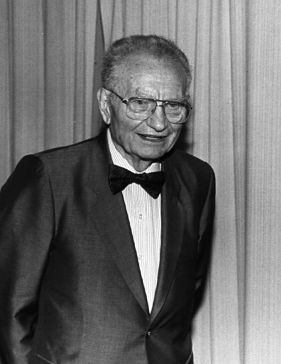
The joke was attributed to Paul Samuelson, a major american economist who passed away a few days ago. As explained here by Edward Glaeser, Samuelson’s is the person who “forever fused economics with math“.
(Image possibly subject to copyright: source here)
FTC sues Intel

Yesterday, practically coinciding with the European Commission’s announcement of the end of the infringement proceedings against Microsoft, the FTC decided to sue Intel.
The FCT charges Intel with a violation of the Sherman Act as well as with a stand-alone violation of Section 5 of the FTC Act, which targets ‘unfair methods of competition’. Chairman Leibowitz and Commissioner Rosh have issued a statement which deals primarily with the second alleged violation, and which is particularly interesting in as much as it foreshadows a possible new trend in antitrust enforcement by US agencies.
In essence, the statement proposes to consider an increased use of Section 5 of the FTC Act in order to avoid the implications of perceived private over-enforcement under the Sherman Act:
‘[C]oncern over class actions, treble damages awards, and costly jury trials have caused many courts in recent decades to limit the reach of antitrust. The result has been that some conduct harmful to consumers may be given a ‘free pass’ under antitrust jurisprudence, not because the conduct is benign but out of a fear that the harm might be outweighed by the collateral consequences created by private enforcement. For this reason, we have seen an interesting amount of potentially anticompetitive conduct that is not easily reached under the antitrust laws, and it is more important than ever that the Commission actively consider whether it may be appropriate to exercise its full Congressional authority under Section 5′.
Desk Cleaning

Massive desk cleaning operations are currently taking place in Brussels.
Following its decision to close proceedings against Qualcomm a few weeks ago, the Commission closed last week infringement proceedings against Rambus, and did just the same today in the Microsoft case. In the latter two cases, the Commission accepted commitments submitted by the firms under investigation. In both cases, the Commission adopted an Article 9 decision, which renders those commitments binding.
Again, I was right a few weeks ago.
(Image possibly subject to copyrights: source here)
The Orwellian Numbering of Article 101 TFEU
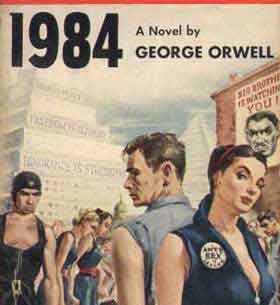
For all Orwell’s 1984 fans, the new numbering of former Article 81 EC involves a puzzling, unfortunate, coincidence. In Orwell’s brilliant novel, Article Room 101 is “a torture chamber in the Ministry of Love in which the Party attempts to subject a prisoner to his or her own worst nightmare, fear or phobia“.
As argued by many competition practitioners lately, the fact is that applying Article 101 TFEU – and in particular, Article 101(3) TFEU – is akin to entering into a room of intellectual contorsions, risks and uncertainties of Orwellian magnitude. Thanks to my colleague Christian Bergqvist for the pointer.
(Image possibly subject to copyright: source here)
We Can’t Talk about Pricing…

Skimming through some US antitrust cases I came across an interesting passage that I confess I’d never read before (it’s one of those ‘smoking gun’ sort of things that somehow always catches our eye). This is an unaltered excerpt of the 5th Circuit’s Opinion in US v. American Airlines 743 F2d 1114 United States v. American Airlines Inc L
“For some time before February 1982, American and Braniff were competing fiercely for passengers flying to, from and through Dallas Fort Worth, by offering lower fares and better service. During a telephone conversation between Robert Crandall, American’s president, and Howard Putnam, Braniff’s president, the following exchange occurred:
Crandall: I think it’s dumb as hell for Christ’s sake, all right, to sit here and pound the * * * * out of each other and neither one of us making a * * * * * * * dime.
Putnam: Well– Crandall: I mean, you know, goddamn, what the * * * * is the point of it?
Putnam: Nobody asked American to serve Harlingen. Nobody asked American to serve Kansas City, and there were low fares in there, you know, before. So–
Crandall: You better believe it, Howard. But, you, you, you know, the complex is here–ain’t gonna change a goddamn thing, all right. We can, we can both live here and there ain’t no room for Delta. But there’s, ah, no reason that I can see, all right, to put both companies out of business.
Putnam: But if you’re going to overlay every route of American’s on top of over, on top of every route that Braniff has–I can’t just sit here and allow you to bury us without giving our best effort.
Crandall: Oh sure, but Eastern and Delta do the same thing in Atlanta and have for years.
Putnam: Do you have a suggestion for me?
Crandall: Yes. I have a suggestion for you. Raise your goddamn fares twenty percent. I’ll raise mine the next morning.
Putnam: Robert, we–
Crandall: You’ll make more money and I will too. Putnam: We can’t talk about pricing.
Crandall: Oh bull * * * *, Howard. We can talk about any goddamn thing we want to talk about.
Putnam did not raise Braniff’s fares in response to Crandall’s proposal; instead he presented the government with a tape recording of the conversation.
(Image possibly subject to copyrights: source here)
Antitrust Figure of the Day – Quantifying Rebates

Preliminary observations: 1. The author of this blog hates sweeping, unsupported, antitrust law statements. 2. In the, past, the author of this blog has made a lot of work on rebates under Article 82 EC.
The mainstream scholarship on rebates often contends, without ever bringing quantitative evidence to this effect, that rebates, which are the essence of competition, significantly lower prices to customers. They ought therefore to be deemed pro-competitive. In turn, the recent scholarship argues, without much nuance, that the decision-making practice of competition authorities and, in particular, of the European Commission, would be overly restrictive. The case-law under Article 82 EC would allegedly chill competition in prohibiting a significant number of dominant firms’ pro-competitive rebates. A related assertion is that rebates are arguably pervasive. However, no robust evidence is ever given in support of the view that most industrial sectors have recourse to rebates.
Against this background, I recommend the reading of Matthew A. Edwards’s refreshing “The Law, Marketing and Behavioral Economics of Consumer Rebates”, (2007) Vol 12:2, Stanford Journal of Law, Business & Finance, 362. Whilst conceding methodological and informational problems, Edwards’ paper seeks to provide hard facts, and references, in support of the contention that rebates are pervasive, and overall entail significant price concessions to consumers. A few excerpts:
“During the past two decades, consumer rebates have become a major marketing method. Although exact figures are difficult to ascertain, estimates of total rebate offer volume now range from $4 to $10 billion per year. According to oneconsulting firm, over 80% of consumers participated in rebate offers in 2004,redeeming over five billion rebates worth more than $3 billion. The prevalence of rebates within the consumer electronics and high-tech products markets is particularly pronounced—one recent industry study indicated that 25% of all computer hardware product purchases, and almost 50% of personal computer sales included rebate offers”.