Antitrust goes political
In the global world we live in, US parliamentary representatives now directly write to the EU administration requesting it to speed up the review of business transactions involving US firms (!).
On 24 November, John Kerry and Orrin Hatch took the lead of a group of 59 Senators to request the EU Commission to quickly close its review of the Oracle/Sun Microsystems merger, approved earlier by the DoJ. Obviously, this is no more than political gesticulation. Yet, the context surrounding this letter exhibits again the GE-Honeywell-reminiscent “patronizing rethorics” which pollute transatlantic cooperation between competition agencies and, incidentally, affect adversely the interests of the firms under review.
In a nutshell, the Senators argue that since US agencies found no antitrust issue, it would be odd for the EU to raise competition concerns. The words used by Senator Hatch are crystal-clear:
“This transaction has been thoroughly reviewed by the United States Department of Justice, which has decided to take no action. Therefore, I hope the EC will quickly conclude their investigation into this transaction.”
Of course, there are many compelling reasons why an additional review of the EU is legitimate. The US review deals with the merger’s effects only on US territory, and not in the EU. In addition, one may argue that the intervention of a new agency is actually a good thing. First, the US agencies may be wrong on the substance. Second, the US may also be biased when it comes to a transaction involving US firms active on global markets.
Overall, rather than writing to an external agency on which they have no legal influence whatsoever, US Senators should seek to use their legislative powers (if my recollections are correct, they have a say on external relations) to devise a credible US position re. the way forward in terms of global antitrust.
This is also – although slightly different – the position of Commissioner Kroes, who urged the Senators to focus on other, more important, issues… As reported by the AP:
Kroes slammed the senators for “interfering in someone else’s decisions rather than taking the most important decision that you have control over: improving health care.”
“Is this really more important than fixing your own health care system?” she asked in a speech, adding that the senators needed to get their priorities straight.
I paste below the official text of the letter.
“As fellow government officials committed to the principle that competition is the cornerstone of healthy economic growth, we would like to take this opportunity to share our thoughts with you as to the proposed acquisition of Sun Microsystems, Inc. by Oracle Corporation. In addition, due to Sun Microsystems’ deteriorating financial condition and the possible negative effect on employment of the company’s workforce, we respectfully request the European Commission expedite the completion of its investigation into this transaction.
The United States Department of Justice, after an intensive investigation, closed its inquiry into this transaction without taking any action. In fact, the Justice Department did not find documentary evidence that this acquisition would harm competition. We recognize that the European Commission has a sovereign right to thoroughly investigate transactions where corporations utilize the European Union’s marketplace. Further, it is our understanding the Commission is concerned about competition in the database software market. However, we have been informed by Sun Microsystems that their subsidiary, which competes in this specific market, generates only €17 million in revenue and that the same market has competitors with capitalizations of tens of billions of Euros.
Unfortunately, Sun Microsystems’ financial position has become more precarious and the Commission’s inquiry has continued. Some have raised concerns over the company’s ability to continue to employ its thousands of workers. Accordingly, we respectfully request the European Commission complete its investigation of this transaction as quickly as possible.
Thank you for your attention to this matter“.
(Image possibly subject to copyrights: Source here)
Lost in Semantics

Pursuing the “Lost in” post series initiated a few weeks ago, and chasing possible inconsistencies in EU competition law, I recently noticed that Regulation 2658/2000 and its accompanying set of Guidelines on Horizontal Cooperation Agreements use a different wording to regulate the – almost – same categories of horizontal agreements.
Regulation 2658/2000 block exempts “specialisation agreements“. This expression is in turn defined under Article 1 of the Regulation. Pursuant to this provision, specialisation agreements cover:
“(a) unilateral specialisation agreements; or (b) reciprocal specialisation agreements; or (c) joint production agreements”.
Now, let’s turn to the Guidelines. At §§78 and following, the Guidelines refer generally to “production agreements” rather than to “specialisation agreements“. This, in and of itself, is already slightly confusing as what was a sub-example in the Regulation (see (c) above), becomes a generic type of agreements. The Guidelines further blur the dividing lines defined in the Regulation in stating that “production agreements” cover (§79):
“Joint production agreements; … unilateral or reciprocal specialisation agreements; … and subcontracting agreements (emphasis added)”…
The bottom line: messy semantics do not make good law.
(Image possibly subject to copyrights. Source here)
Chilling Competition’s Editorial Policy – A Clarification

It has been suggested yesterday in a comment to a previous post that the views expressed on this blog may be influenced by the fact that our previous employers represented specific interests in competition cases. Since this blog in no way constitutes a forum for pushing client related arguments, the author of the abovementioned comment, Alfonso and I have agreed to eliminate it.
As the authors of this blog, we nevertheless believe it is appropriate to make certain clarifications regarding Chilling Competition‘s general editorial policy. While in the past, both of us surely benefited from conversations with our former colleagues over pending competition law issues, we no longer are related to those law firms anymore.
In addition, whenever Alfonso or I have been personally involved in a case commented in the blog, we have always made that clear, applying a full disclosure rule.
The views expressed in all posts are thus strictly personal. They may be shared by clients of our former employers, but they may as well not be in line with their interests, or those of possible future employers.
We do however welcome comments from anyone who wishes to express substantiated views supporting, criticizing, or discarding our opinions. This is in fact the main purpose of our blog.
Alfonso and Nicolas
(Image possibly subject to copyrights: source here )
Dawn Raid Leaked?

Leaving aside energy law freaks, the news that the Commission and the Czech Competition Authority raided on 26 November the premises of ČEZ, the Czech energy incumbent, as well as two other related companies, might have passed relatively unnoticed.
This news comes, however, with a very unusual, and most unfortunate, development. The Commission’s purported dawn raid had apparently been leaked to the press and the concerned undertakings a few days before its occurence. The Prague Post reports:
“Czech news server Euro.cz posted a story telling of the raid on ČEZ 19 hours in advance. “The European Commission intends to initiate proceedings that will verify the behavior of operators in the Czech energy market,” the story read“
The Prague Post gives further information on the circumstances surrounding the leak (and seems to surmise that it might originate from the Czech Competition Authority itself):
“According to a Dec. 1 report in the daily Lidové noviny, Brussels told the ÚOHS [Czech Competition Authority] of its intention four to five days in advance, said director Petr Rafaj. The newspaper quoted an unnamed source at ČEZ as saying the paper shredders were running “at full speed” at ČEZ and EPH offices before the EC arrived. The companies denied the allegation“.
Since then, the Commission has acknowledged that the raid had not happened in full secrecy, and will inquire on the issue:
“Todd [the Commission’s spokesman] confirmed the EC’s unannounced raid had indeed been leaked to the media.”Yes, we know about the leak,” he said. “We are going to have to investigate it.”
In terms of legal implications, the source, if found, will likely to face tough disciplinary sanctions. Complainants might also file complaints for maladministration and the like. Thanks to my assistant, Norman, for the pointer.
(Image possibly subject to copyrights: source here)
Incomplete Price Discrimination

Global Competition Review (also known as GCR) knows how to design very nice competition law conference programmes (see the 2010 Dominance and Unilateral Conduct conference here). However, it seems less efficient when it comes to the pricing of those events, at least from an industrial economics perspective.
The above picture illustrates GCR’s system of price discrimination. What puzzles me is that through this system, GCR leaves aside a significant share of clients (me and my students academics, students, etc.) who might be interested to attend the conference, and ready to compensate for GCR’s costs. GCR could thus probably expand output, whithout incurring any loss… A little odd isn’t it?
Treaty of Lisbon enters into force (goodbye 81 and 82)
The Treaty of Lisbon entered into force on Monday. Probably its first impact in the daily life of many of us is that from now on we will no longer refer to Articles 81, 82, 86 or 87 EC, but to Articles 101, 102, 106 or 107 of the Treaty on the Functioning of the European Union; there isn’t anymore a Court of Justice of the European Comunities, but a Court of Justice of the European Union; the former CFI is now the General Court, and so on…
Btw, at the time of writing the Court’s web page was up to date on the changes, not yet the case of DG Comp’s web.
Behavioral Economics, Liberal Paternalism and Possible Antitrust Implications

In relation to Alfonso’s earlier post regarding behavioral economics, I was amazed to learn today that Cass Sunstein (Harvard Law School) and Richard Thaler (University of Chicago Booth School of Business) had been ranked by Foreign Policy in 7th position amongst the “100 Global Thinkers” of 2009. Sunstein and Thaller are well-known for their book entitled Nudge: Improving Decisions About Health, Wealth, and Happiness in which they challenge the pervasive neo-classical rationality assumptions and describe men as irrational, uninformed and rash.
The upshot of this is that individuals’ free decisions cannot – as predicted by neoclassical theory – lead to optimality. Hence Sunstein and Thaller consider that, whilst freedom of choice must be preserved, a certain sense of government direction (labelled “liberal paternalism“) is required to achieve optimal economic outcomes.
Thinking of potential antitrust law consequences, Sunstein and Thaller’s argument brings support to the strong remedies occasionally applied by agencies to resolve competition concerns. Whilst simple remedies removing antitrust offenses – think, for instance, of the arguably ineffective WMP unbundling requirement imposed on Microsoft by the Commission – might be in practice inappropriate to re-establish a competitive state of play (because customers do not bother to test alternative media players), more intrusive remedies forcing customers to make a choice – think for instance, of a must carry, ballot- screen remedy – might actually prove more efficient.
(Image possibly subject to copyrights: source here)
Almunia appointed Competition Commissioner
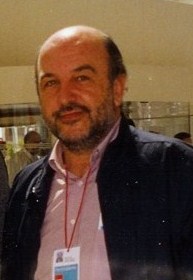
It’s official. As Nicolas anticipated last week, Joaquin Almunia will be the next Competition Commissioner.
Mr. Almunia is surely one of Spain’s most able politicians. He has earned wide recognition all throughout Europe because of his handling of the economic crisis as the Commissioner in charge of Economic Affairs, and he is also a well respected political figure at the national level despite many years under the spotlight (at 34 he was the youngest Minister of the first Gonzalez government; he held Ministerial offices for 9 years; later on he became the leader of the socialist party and ran for Prime Minister in 2000). By now his CV has widely circulated elsewhere, so there’s no point in insisting on that.
Apparently some are concerned about the fact that a socialist and former trade unionist will be taking over the Competition portfolio. In my view, at this point in time such concerns lack any basis, the consensus on the role of undistorted competition being widespread in both aisles of the political spectrum. Moreover, there is evidence of Commissioner Almunia’s longstanding commitment with strong and independent competition law enforcement.
Indeed, the fact that Mr. Almunia ran for Prime Minister against Aznar in 2000, means that his profile and policies were very carefully scrutinized at the time. Interviews, documents and press clips of the 2000 campaign provide nowadays very interesting information about his views on different issues. Not only do we know that he’s an opera fan and a supporter of Athletic de Bilbao (not doing bad so far this season), but, more interestingly, a review of those materials tells us that the promotion and defense of competition ranked, even then, at the top of his political priorities.
During the electoral campaign, then candidate Almunia explicitly distanced himself from the attitude towards public intervention prevailing in other Member States governed by socialist parties. He proposed to accelerate liberalization of the electricity, gas and telephone markets, and advocated for continuing the process of privatizations. He further affirmed that his policies defended ‘free competition, free market and the battle against oligopolies’ more than anyone else’s.
Such affirmations seemed not to be mere ‘lip service’, the urgent adoption of a new Competition Act being one the the top 10 priorities in his political program for the general elections (something quite unusual in Spanish politics).
Finally, l will recall one interesting episode, now almost forgotten, but which, at the time, received ample media attention:
At the end of February 2000, Mr. Almunia was speaking before an audience of businessmen about his economic program, and insisted on the necessity to grant the Competition Authority (then Tribunal de Defensa de la Competencia) greater powers enabling it to ‘act independently, without waiting for the Government to take the initiative’. At that moment, he was interrupted by the President of the employers association (late Jose Maria Cuevas, a very influential figure back then), who manifested its disbelief:
‘I start to doubt that not even you believe you will be elected Prime Minister because the last thing that anyone who wants to govern would do would be to grant more powers to the Tribunal de Defensa de la Competencia (…) If you really want to govern tell us what the f&%k you plan on doing with the Competition Authority’.
Almunia’s response:
‘I find it surprising that you want a Tribunal de Defensa de la Competencia kneeled before the government (…) That would introduce skepticism where there should be illusion’.
In sum, a decade ago Mr. Almunia stood up for independency in competition enforcement and made competition one of his political priorities. This record and his experience at the EU level make him, in theory, one of the best Competition Commissioners we could be hoping for. We wish him and his team the best of lucks.
BTW, while searching for info on this topic I found out that the news about appointment made its way into a website on ‘celebrity news, all the time’ under the heading ‘Antitrust Gossip’ (!) Is competition law getting glamorous??
(Image possibly subject to copyrights: source here)
2009 Worst Antitrust Law Development Prize
The end of the year is approaching fast. I copy, again, our call for suggestions re. the worst 2009 development in antitrust law. To date, I have received several submissions, and I would like to thank those of you who referred cases and quotes. For those who have not yet sent me an email, please note that I commit to treat confidentially all referred items and will under no circumstance disclose the identity of referrers.
With the awards season coming to a close, it is perfect timing to introduce the prize for the worst antitrust law development of the year. For the first time this year, this prize will reward a ruling, article, speech, career-move, research issue, policy initiative, or any other thing that has been undertaken, said or written that is stupid, infamous, crazy.
The prize will be awarded by the end of December 2009. Please refer to me anything that could qualify for it. I will keep all the info absolutely confidential, and will set up a jury of lawyers to award the prize (Alfonso and myself will be part of it). If you’d like to join, please let me know.
To give you an example: in 2005, a Dutch judge stated in 2005 that the Commission had exclusive competence to exempt an agreement under Article 81(3) EC (Rechtbank Zwolle-Lelystad, 4 April 2005, case n° 106345 / KG ZA 05-92, Walstock / Polar Electro). Surely, a strong candidate for this prize, had it been awarded in 2005.